Sunday, April 19, 2026
Home Blog Page 141

Leader rep. in IRGC: “We never surrender Islamic governance”

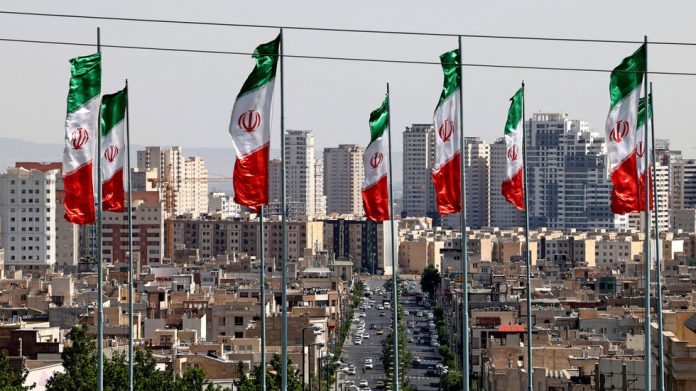
Iran Flag

He declared that the Iranian people may give martyrs, but will never allow enemies to harm their Supreme Leader or compromise the Islamic Republic.

Hajji Sadeghi said the 12-day war revealed the enemy’s miscalculations.

“Despite 46 years of experience with the Islamic Republic, they didn’t understand the force they were facing. They thought decades of economic and cultural pressure had worn down the people—but instead, they witnessed a surge of resilience and loyalty.”

He described the recent confrontation as not just a military conflict, but a war of wills.

“For over 20 years they’ve tried to break the people’s resolve and drive a wedge between them and the system. But they failed. The resistance shown has guaranteed the future of the Revolution.”

Echoing themes of sacrifice and steadfastness, he concluded, “We will offer our lives, but never surrender our guardianship or Islamic rule. And we will never allow our enemies to touch our Supreme Leader.”

Rubio says Trump ‘losing patience with Russia’, despite giving Putin 50-day peace accord deadline

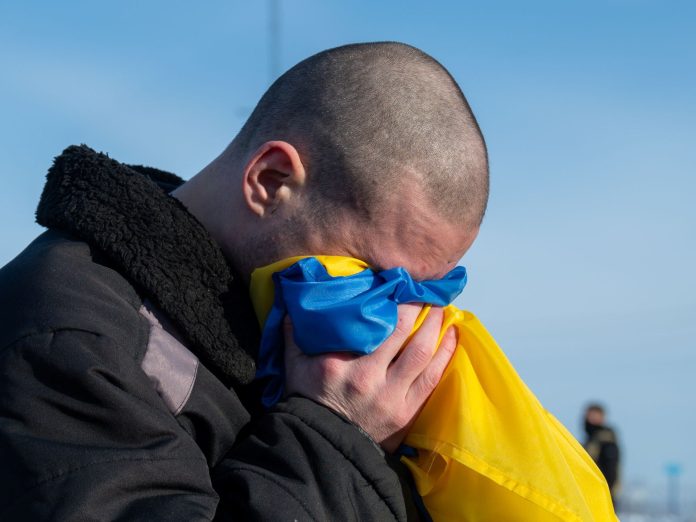
Russia Ukraine War

Rubio’s remarks come nearly two weeks after Trump gave Russia a 50-day deadline to agree to a peace deal or face “severe” tariffs. Since the announcement, Russia has only intensified its attacks on Ukrainian cities and continued to advance along the front line.

Rubio said Trump is eager to secure a peace deal and end the war he “inherited” from the Biden administration, and described the president’s growing frustration with Russian President Vladimir Putin.

“Despite having very good interactions with Vladimir Putin and phone calls, it never leads to anything,” Rubio continued, adding, “So, the time has come for some action.”

Critics say Trump’s latest 50-day timeline effectively gives the Kremlin seven more weeks to continue launching deadly airstrikes across Ukraine. The proposed tariffs, at around 100%, are also below the 500% rates proposed in a bipartisan Senate bill targeting countries that buy Russian oil.

Rubio also acknowledged in the Fox News interview China’s growing role in prolonging the war, accusing Beijing of propping up Moscow’s economy and military efforts.

“China is giving Russia as much aid as they can get away with without being discovered,” Rubio said, adding, “There’s no way Putin could have sustained this war without Chinese support, particularly buying his oil.”

Rubio also highlighted the geopolitical triangle between Russia, China, and Iran, suggesting Beijing benefits from a prolonged war that keeps the U.S. distracted.

Following talks with Foreign Minister Sergey Lavrov in Beijing earlier in July, Chinese President Xi Jinping vowed to deepen strategic cooperation and hailed the partnership as “a model for a new type of international relations.”

Despite China’s repeated claims of neutrality in the Russia-Ukraine war, its support for Russia’s economy and defense industry has established Beijing as one of Moscow’s most crucial partners.

Ukrainian officials reported the presence of Chinese components in Russian attack drones, and intelligence suggests Beijing may be helping Moscow bypass sanctions to ramp up drone production.

Iranian MP criticizes draft bill targeting ‘false news’ on social media

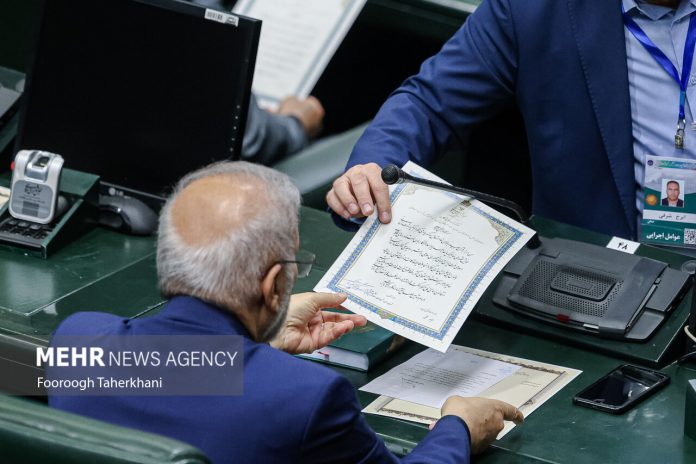
Iran's parliament

During a parliamentary session on Sunday, Azari voiced his opposition to the bill’s urgency status, warning that its approval would harm press freedom and the journalism profession.

Azari stated that the proposed legislation includes punishments for media outlets which, in his view, could create a “safe haven” for corrupt individuals in both governmental and non-governmental sectors.

“The bill is too underdeveloped to manage the complexities of cyberspace,” he said.

He further criticized the bill’s use of vague and interpretive language, citing terms like “false content,” “public confusion,” “stakeholder,” and “irreparable damage,” which, he argued, are open to arbitrary interpretation.

Azari warned that if passed, the bill could result in an overload of criminal cases and place additional strain on the judiciary.

He called for a more thoughtful and precise approach to regulating online content, emphasizing the need to uphold freedom of expression and prevent legislative overreach.

Iran’s health minister urges immediate global intervention to stop Gaza humanitarian catastrophe

Gaza War

In the letter, Zafarghandi expressed deep sorrow over the escalating humanitarian disaster, stressing that the scale and targeting of destruction against civilians, especially women and children, have surpassed all thresholds of crisis.

He warned that Gaza’s public health system has collapsed and accused Israeli regime forces of committing collective punishment, ethnic cleansing, and genocide.

He highlighted severe malnutrition, dehydration, and famine among children, noting that over 32% of children under two now suffer from acute malnutrition. “This represents the fastest-developing famine in recorded history,” he wrote.

Zafarghandi described horrifying scenes where mothers endure stillbirths and miscarriages in bombed hospitals lacking anesthesia, electricity, or water.

Many women, suffering from anemia and malnutrition, are unable to breastfeed, forced to witness their infants’ slow deaths.

The minister condemned Israel’s aggression and called for the deployment of field hospitals, nutritional crisis teams, UN humanitarian flights, and binding Islamic cooperation resolutions.

“Every hour of delay costs innocent lives,” he wrote, urging immediate global moral and medical response.

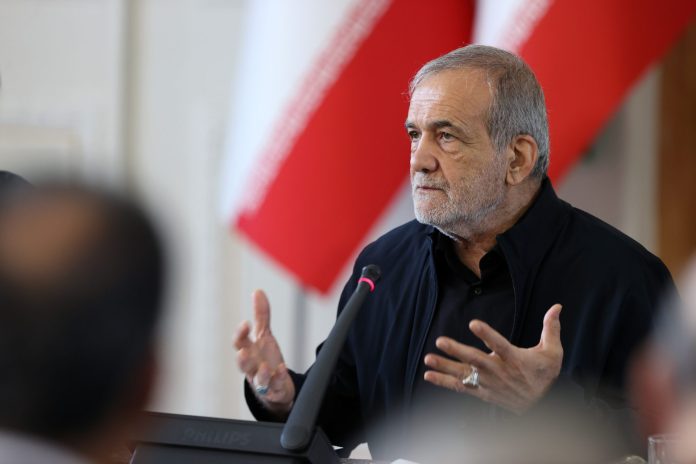
Iran’s president reflects on Israeli bombing of National Security Council

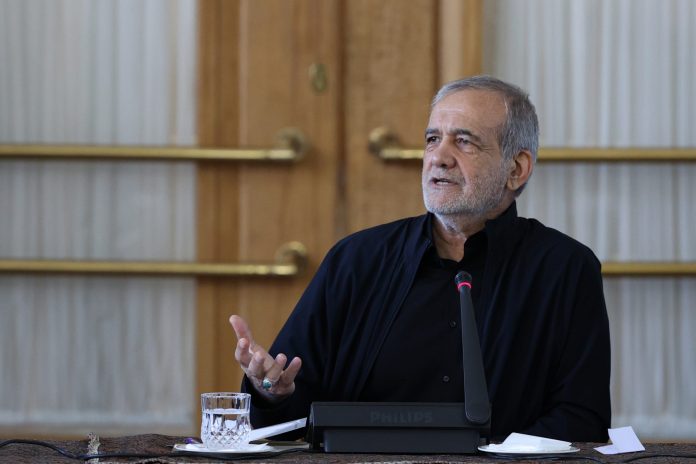
Masoud Pezeshkian

“If we had been martyred in that bombing, it would have been a great honor for us,” Pezeshkian said during a visit to Iran’s Qom province, adding, “But the country would have been thrown into disarray by the wrong people.”

He emphasized that the session had gathered all top officials, including heads of government branches, senior military commanders, and several cabinet ministers.

The president recalled the moment of the attack, saying, “There was just one hole, and we saw air coming through it. We said, at least we won’t suffocate now.”

Pezeshkian stressed that while life can be fleeting, service to the people remains paramount.

Several top Iranian military commanders and scientists along with over a thousand civilians were killed in the Israeli invasion, widely supported by the US, which started on June 13 and culminated in a ceasefire on June 24.

Iranian Parliament speaker: Any IAEA moves must follow domestic law

IAEA

Speaking during Sunday’s open session of parliament, he referred to the law mandating conditional cooperation with the agency, underscoring that the legislation is “clear and unambiguous.”

Ghalibaf stated, “Any movement toward suspending cooperation with the IAEA must be pursued within the legal framework.”

His comments followed a parliamentary discussion on national energy management and the proposed formation of an energy optimization body.

Earlier in the session, Tehran MP Hamid Rasaei criticized news of an upcoming visit by the IAEA Deputy Director General, Rafael Grossi, to Tehran.

He argued that such actions contradict legislation that makes cooperation conditional on safeguarding national sovereignty and nuclear security.

Rasaei questioned the utility of passing laws if the executive branch fails to implement them.

Tensions between Iran and the IAEA have escalated under Grossi, particularly after his recent report included disputed allegations that paved the way for an anti-Iran resolution.

Iran has also criticized Grossi for failing to condemn US-Israeli aggression against its nuclear facilities while maintaining close ties with Israeli officials.

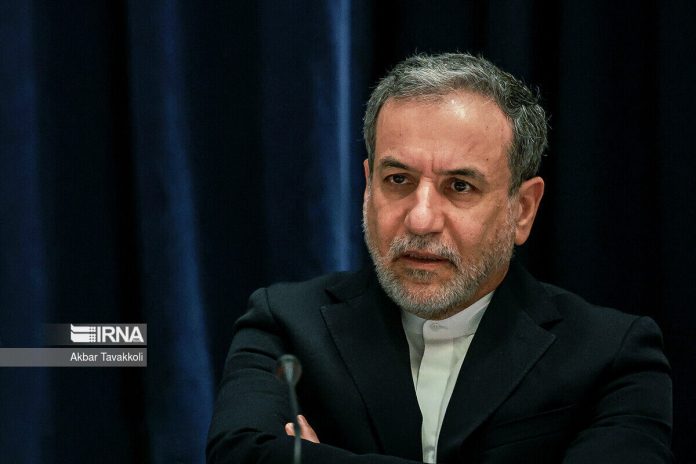
FM Araghchi rejects criticism, says Iran won the 12-day war with Israel

Abbas Araghchi

Responding to a question about direct communication with Iran’s Leader during the war, Araghchi dismissed doubts, stating, “Who says there is no direct contact?” He emphasized that full coordination was in place at the highest levels.

Araghchi also revealed he was in direct communication with US negotiator Steve Witkoff, saying, “I told him Israel is making excuses. Iran is not Lebanon.”

His remarks were featured in a preview of the upcoming documentary The Story of the War.

When asked about reports of an explosion near his residence, Araghchi nodded in confirmation. He asserted that Iran had been fully prepared for the conflict and not caught off guard.

Addressing criticism of the ceasefire, Araghchi said, “People should ask themselves, why the armed forces obeyed when the foreign minister announced a ceasefire?”

He argued that Iran emerged victorious, stating, “You say it was a draw. I say we won. We delivered the final blow.”

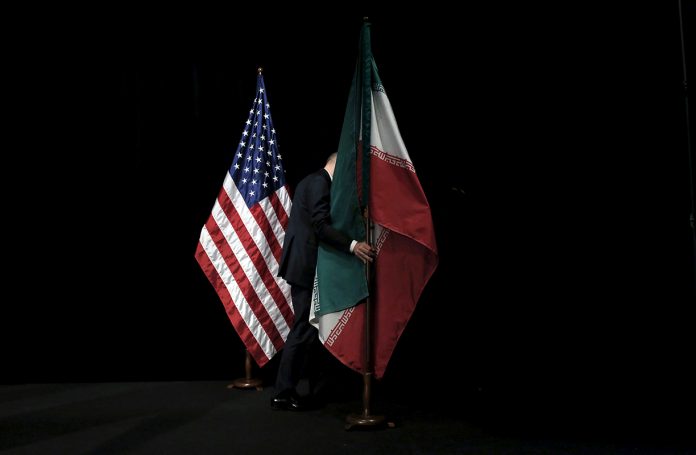
Iranian Deputy FM: Messages being exchanged with US via mediators

Iran US Flags

Takhte Ravanchi stressed that despite ongoing negotiations, Iran was targeted by attacks, first by the Zionist regime and then by the US.

“These strikes took place in the middle of diplomatic efforts and it was a betrayal of diplomacy, an assault on diplomacy”, he said.

Takhte Ravanchi stressed that before entering a new round of negotiations with the US, Iran must receive guarantees that similar attacks will not happen.

“We don’t want a repeat of the same game…the US must convince us that it won’t take such actions again”, he added.

The Iranian deputy foreign minister underlined that any agreement must be based on the principle of a win-win outcome.

“Both sides must feel they have achieved something. We cannot accept US impositions.”

Takhte Ravanchi further touched on the damage to Iranian nuclear facilities as a result of US and Israeli attacks. He said the extent of the damage is serious, though exact figures are still under evaluation by the Atomic Energy Organization of Iran (AEOI).

He confirmed that IAEA inspectors were aware of the location of Iran’s nuclear materials prior to the attack.

Takhte Ravanchi reaffirmed Iran’s commitment to the fatwa of Leader of Iran’s Islamic Revolution Ayatollah Seyyed Ali Khamenei banning nuclear weapons.

He said, “Nuclear weapons have no place in our defense doctrine and our uranium enrichment is for peaceful purposes and in line with the NPT”.

The deputy foreign minister of Iran also condemned the relentless aggression by the Zionist regime in the region, urging regional unity and international pressure on the US to halt its military and diplomatic support for Tel Aviv.

“Otherwise, the Zionist regime may consider attacking other countries, which would pose a grave danger to the wider region”, he warned.

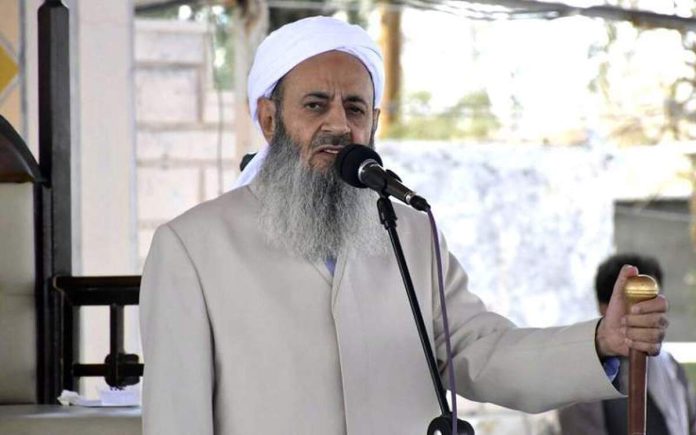
Sunni Friday prayer leader in SE Iran condemns terrorist attack on Zahedan courthouse

Mowlavi Abdolhamid

In a statement, Molavi Abdolhamid expressed deep sorrow over the deadly assault and underlined that any form of insecurity harms the interests of the people of the province. “Unfortunately, armed assailants attacked the provincial courthouse in Zahedan this morning, resulting in several people being killed and injured”, the statement said.

“I strongly condemn this inhumane attack, which targeted a public, non-military institution and led to the deaths of unarmed civilians, including a woman and a child.”

Molavi Abdolhamid added that such actions are religiously unjustifiable.

“Armed attacks do not serve the interests of the people of Sistan and Baluchestan”, he noted, saying, “Any form of insecurity undermines the well-being and prosperity of the province”.

Gunmen opened fire on the Zahedan courthouse earlier on Saturday, leading to multiple casualties.

The Quds Base of Iran’s Islamic Revolution Guard Corps (IRGC) confirmed that the terror attack claimed the lives of six people and injured at least 22 others.

Iran’s president vows to focus foreign policy on regional outreach, ties with Russia, China

Masoud Pezeshkian

Pezeshkian made the remarks on Saturday as he met with Iranian deputy foreign ministers and senior diplomats at the Ministry of Foreign Affairs in the capital Tehran.

“Through established coordination and policies, we will seek to prioritize expansion of closer, deeper, and better relations with our neighbors, and then develop and advance our ties with the countries with which we have good interactions, including Russia, China, the BRICS group, the Shanghai Cooperation Organization (SCO) and the Eurasian Union,” he said.

“We will also continue the process of cooperation with European countries and other countries based on wisdom, dignity, and expediency.”

Turning to the June 13-25 Israeli aggression on Iran that took place amid unprecedented American support, Pezeshkian said the occupying regime aggressively sought during the recent 12-day war to bring the country to its knees, but the dear Iranian nation took outstanding measures that need to be appreciated earnestly.

He underlined that Iran’s diplomacy, as shown by the Islamic Republic of Iran Broadcasting (IRIB) and other Iranian media outlets, was active round-the-clock throughout the war.

“Even though some departments were shuttered down for a while, our loved ones were present in relevant bodies and established international ties,” the president said.

Pezeshkian also pointed to the efforts of Iran’s diplomatic apparatus during the 12-day Israeli-imposed war, saying that the result of such efforts was that almost all international agencies, except for the Security Council and the United Nations, condemned the aggression.

He further said that the Israeli regime initiated a war that was fundamentally unlawful under all international principles and regulations. “Unfortunately, in today’s world, such aggressive actions are often justified by major powers,” he added.

He also said that the Leader of the Islamic Revolution, Ayatollah Seyyed Ali Khamenei, emphasized that Iranian security and defense forces must prepare themselves to defend the country, while also noting that diplomacy must be placed on the agenda.

The Iranian president finally expressed gratitude for the remarkable efforts of the staff of the Ministry of Foreign Affairs in implementing the Islamic Republic’s foreign policy and diplomacy.