Monday, December 22, 2025
Home Blog Page 1403

Iranian MP: Egyptian, Jordanian parliamentary groups invited to visit Tehran

Iranian Parliament

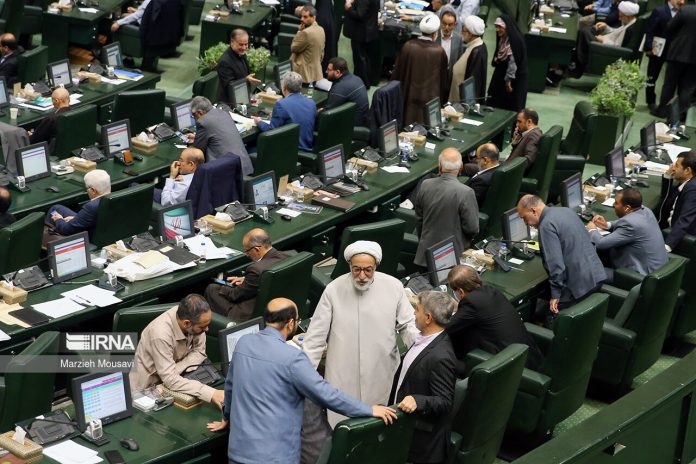
Abbas Golrou, head of the Foreign Relations Committee of the Parliament’s National Security and Foreign Policy Commission, said although Iran-Egypt ties are officially at the level of the interests sections for the moment, both sides have already introduced diplomatic representatives at the ambassador level, and they have direct relations.

In the Committee, he said, “we tried to pursue parliamentary consultations with countries with which diplomatic relations are at a lower level. In this regard, I had a meeting last week with the envoys of Egypt and Jordan and invited the parliamentary groups of these two countries to visit Tehran, and we hope that these visits will take place as soon as possible.”

In March, Iran and Saudi Arabia announced a China-brokered agreement for the reconciliation and resumption of diplomatic ties, following a 7-year-long rupture.

Interactions between Iran and the Persian Gulf neighbors have since witnessed a significant boost.

Iran has been pursuing similar agreements with Bahrain and Egypt, too.

Last week, Leader of the Islamic Revolution Ayatollah Seyyed Ali Khamenei said in a meeting with Oman’s visiting Sultan that he would welcome the restoration of full diplomatic ties with Egypt, raising the prospect of Cairo and Tehran normalizing relations after decades of strain.

Iran’s Central Bank governor meets IMF chief in Washington

International Monetary Fund (IMF)

In the meeting on Friday, Mohammad Reza Farzin said Tehran seeks to increase in its cooperation with the IMF while observing the national interests, especially under the tough American sanctions.

The CBI chief criticized the rejection of Iran’s request for a loan at height of the global battle against the coronavirus pandemic under pressure from the US.

Iran, however, managed to contain the deadly virus through interactions with foreign parties and development of its own vaccines at home, he added.

Farzin pointed to the Iranian administration’s agenda for policy reforms with the goal of achieving economic stability, despite the US sanctions, adding that the CBI will take great steps toward reducing the rising inflation rate by 30 percent in the current Persian calendar year, which will end on March 20, 2024.

For her part, the IMF chief thanked Iran for its efforts in supporting the Fund’s member states.

The meeting, she added, means a resumption of the CBI’s interactions with the IMF and could help present a positive image of the Iranian economy.

Erdogan sworn in as Turkey’s president after historic win

Recep Tayyip Erdogan

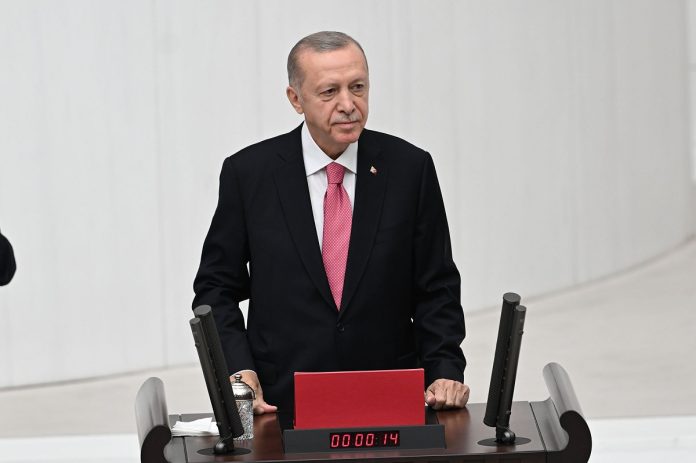
“I, as president, swear upon my honour and integrity before the great Turkish nation and history to safeguard the existence and independence of the state … to abide by the constitution, the rule of law, democracy, the principles and reforms of Ataturk, and the principles of the secular republic,” Erdogan said in a ceremony at the parliament in Ankara, which was broadcast live on television on Saturday.

The 69-year-old leader will later in the day name his cabinet, which will be tasked with handling an economic crisis that has witnessed runaway inflation and the collapse of the lira.

Turkey’s longest-serving leader faces considerable diplomatic challenges amid tensions with the West.

Saturday’s inauguration in parliament will be followed by a lavish ceremony at the presidential palace in the capital Ankara attended by dozens of world leaders.

He won the May 28 run-off against a powerful opposition coalition, and despite an economic crisis and severe criticism following a devastating February earthquake that killed more than 50,000 people.

Erdogan won 52.2 percent of the vote while his rival Kemal Kilicdaroglu 47.8 percent, official results show.

Addressing the country’s economic troubles will be Erdogan’s priority with inflation running at 43.70 percent, partly due to his unorthodox policy of cutting interest rates to stimulate growth.

Turkey’s new members of parliament started being sworn in on Friday in their first session after the May 14 election, also attended by Erdogan.

His alliance holds a majority in the 600-seat parliament.

Erdogan’s victory came against a unified opposition coalition led by Kilicdaroglu, whose future as leader of the CHP party remains in doubt following the defeat.

Belgium thanks Iran for release of European nationals

Belgian foreign minister Hadja Lahbib

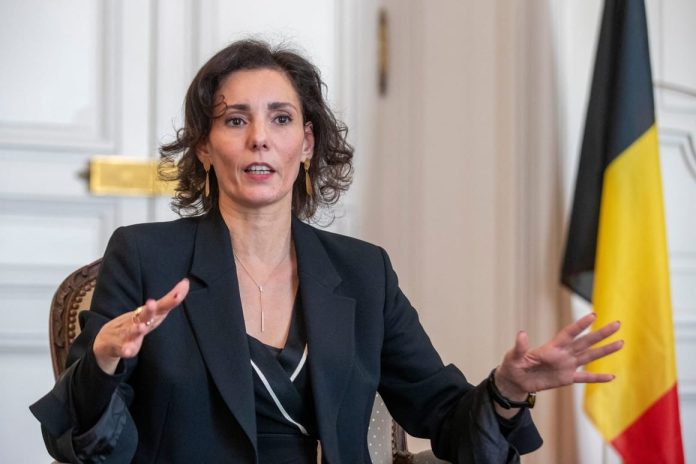
Hadja Lahbib, in a phone conversation with her Iranian counterpart Hossein Amirabdollahian, recalled Iran’s humanitarian move and expressed hope that a new horizon will open in ties between the two countries in the wake of the recent development.

Lahbib highlighted the position of her country in the European Union, and said Belgium is ready to help facilitate closer ties between the Islamic Republic of Iran and Europe.

Iran’s top human rights official confirmed the release of two Iranian-Austrian nationals and a Danish citizen, who were serving prison terms in Iran for security-related crimes, on “humanitarian grounds.”

“Two imprisoned Iranian citizens, namely Massoud Mosaheb and Kamran Qaderi, and a Danish prisoner were released today on humanitarian grounds,” read a tweet on Friday evening by Kazem Gharibabadi, the vice-president of the Judiciary for International Affairs and the Secretary-General of Iran’s High Council for Human Rights.

The news was earlier announced by Vienna and Copenhagen, who thanked Oman and Belgium for their helping in securing their release.

For his part, Iranian Foreign Minister Hossein Amirabdollahian expressed satisfaction with the results of the joint efforts that led to the release of the prisoners of the two sides.

He expressed hope that the recent development will have a positive impact on efforts to open a new page in the relations between the two sides as well as in ties between Iran and Europe.

Amirabdollahian added that considering the role of Belgium in the European Union, Iran can expect that goal-oriented and effective dialog will be placed on the agenda of the Islamic Republic of Iran and the European sides with mutual respect.

3 Israeli soldiers killed in shooting incident on Egypt border: Army

Israeli Army

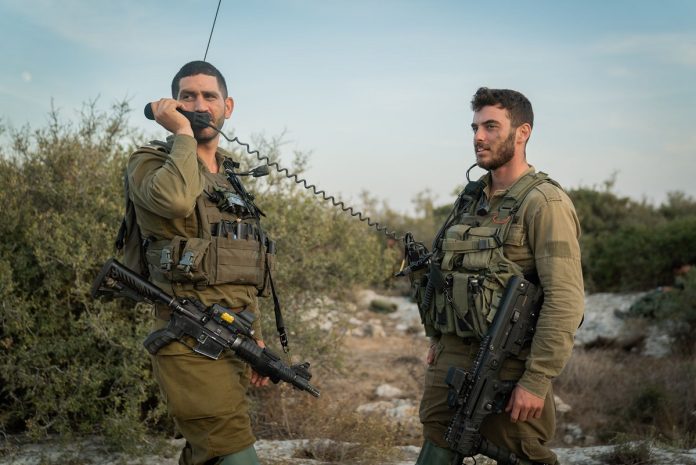
A shootout in southern Israel along the Egyptian border killed three Israeli soldiers Saturday, the army announced, in a rare instance of deadly violence along the frontier.

The military said an assailant was in “Israeli territory” when he opened fire at troops. The soldiers returned fire, killing the gunman.

The army added one of the killed soldiers was a woman.

The exchange of fire reportedly took place around the Nitzana border crossing between Israel and Egypt. The crossing is located about 40 kilometers (25 miles) southeast of the point where Israel’s border with Egypt and the Gaza Strip converge. It’s used to import goods from Egypt destined for Israel or the Hamas-ruled Gaza Strip.

Egypt was the first Arab country to sign a peace treaty with Israel in 1979.

Israel built a fence along the porous border a decade ago to halt the entry of African migrants and militants who are active in Egypt’s Sinai desert.

Donor countries provide $107mn out of $300mn needed for Palestinians

UN Gaza

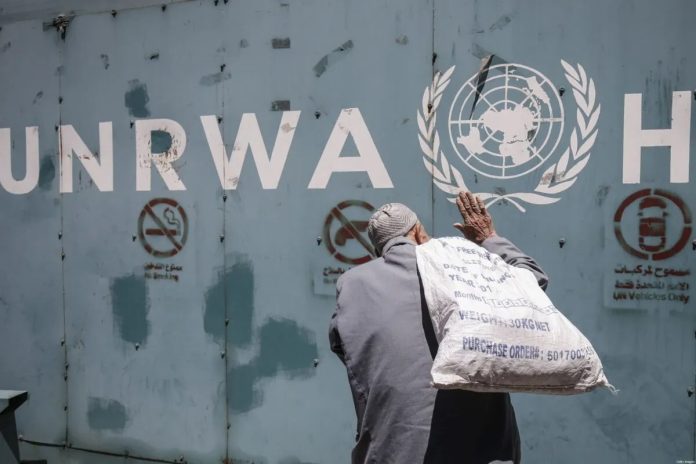
Philippe Lazzarini, commissioner general of the agency known as UNRWA, said in a statement he was grateful for the new pledges but they are below the funds needed to keep more than 700 schools and 140 clinics open from September through December.

“We will continue to work tirelessly with our partners, including host countries – the refugees’ top supporters – to raise the funds needed,” he added.

The pledging conference, which took place at the UN headquarters in New York on Friday, came as UN chief Antonio Guterres warned that the UNRWA “is on the verge of financial collapse”, pointing out that the agency is already running with a shortfall of nearly $75mn.

At the beginning of the year, the UNRWA appealed for $1.6bn for its programmes, operations and emergency responses across Syria, Lebanon, Jordan and the Israeli-occupied territories of the West Bank, East Jerusalem and the Gaza Strip. That includes nearly $850m for its core budget, which includes running schools and health clinics.

According to the UNRWA, donors on Friday announced $812.3mn in pledges, but just $107.2mn were new contributions. The countries pledging new funds were not announced.

Lazzarini told a press conference on Thursday that the UNRWA needs $150mn to keep all services running until the end of the year, and an additional $50m to start 2024 without liabilities. In addition, he said, the agency needs $75mn to keep the food pipeline in Gaza operating and about $30mn for its cash distribution programme in Syria and Lebanon.

The UNRWA was founded in the wake of the creation of the state of Israel in 1948 to provide hundreds of thousands of Palestinian refugees who were forcibly displaced from their homes with education, healthcare, social services and in some cases, jobs. Today, their numbers – with descendants – have grown to some 5.9 million people, most in the Gaza Strip and occupied West Bank, as well as neighbouring countries in the Middle East.

The UNRWA has faced a financial crisis for 10 years, but Lazzarini said the current crisis is “massive,” calling it “our main existential threat.”

“It is deepening, and our ability to muddle through is slowly but surely coming to an end,” he stated, adding, “The situation is even more critical now that some of our committed donors have indicated that they will substantially decrease their contribution to the agency.”

Guterres said in a speech read by his chief of staff at the start of the pledging conference that “when UNRWA’s future hangs in the balance, so do the lives of millions of Palestine refugees relying on essential services”.

Those services include education for more than half a million girls and boys, healthcare for about two million people, job opportunities for young people in Gaza and elsewhere, psycho-social support for hundreds of thousands of children, and a social safety net for nearly half a million of the poorest Palestinians, he added. More than 1.2 million Palestinians also receive humanitarian assistance.

Russia says progress made between Armenia and Azerbaijan in transportation issue

Armenia Azerbaijan

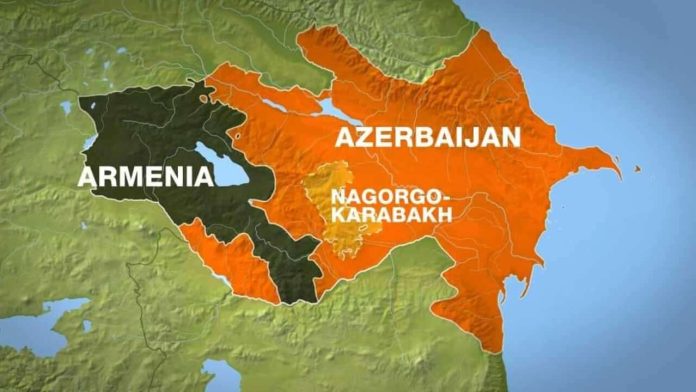
“With satisfaction, considerable progress has been stated in agreeing the modalities of unblocking transport communications between Azerbaijan and Armenia. Thus, a general understanding has been reached concerning the implementation of concrete steps toward restoring and organizing railway communication along the route Yeraskh-Julfa-Megri-Goradiz,” he stated Friday after the meeting of trilateral working group in Moscow.

“The sides agreed to continue working within the trilateral working group,” he added.

The working group held its 12th meeting in Moscow on Friday. The meeting was co-chaired ny Deputy Prime Ministers Shakhin Mustafayev of Azerbaijan, Mger Grigoryan of Armenia and Alexey Overchuk of Russia.

The conflict between Armenia and Azerbaijan over the highland region of Nagorno-Karabakh, a disputed territory that had been part of Azerbaijan before the Soviet Union’s break-up, but primarily populated by ethnic Armenians, broke out in February 1988 after the Nagorno-Karabakh Autonomous Region announced its withdrawal from the Azerbaijan Soviet Socialist Republic.

Renewed clashes between Azerbaijan and Armenia erupted on September 27, 2020, with intense battles raging in the disputed region of Nagorno-Karabakh. On November 9, 2020, Russian President Vladimir Putin, Azerbaijani President Ilham Aliyev and Armenian Prime Minister Nikol Pashinyan signed a joint statement on a complete ceasefire in Nagorno-Karabakh.

Later, the three leaders adopted several more joint statements on the situation in the region. Thus, on January 11, 2021, they agreed to set up a working group at a level of deputy foreign ministers to focus on establishing transport and economic ties in the region.

IEA says Iran’s oil output hits 2.750mn in April

Iran Oil and Gas

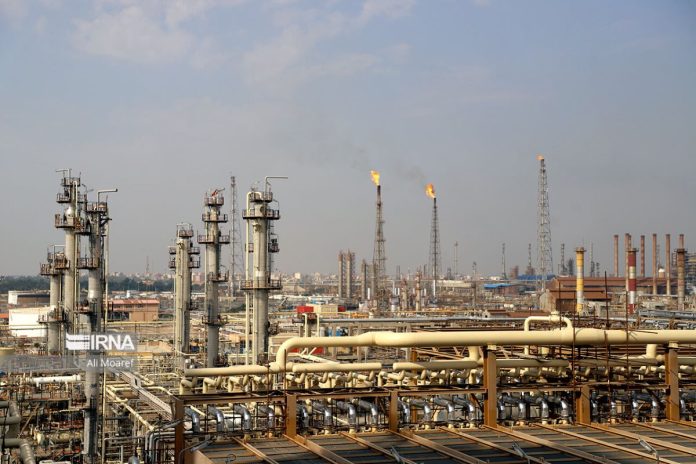
According to the report, Iran’s daily oil production increased 60,000 barrels of oil per day (bpd) in in the fourth month of 2023, according to which, Iran became the fourth largest oil producer in the Organization of Petroleum Exporting Countries (OPEC).

In its monthly report of the global oil market, the Agency put the total volume of oil produced by OPEC member states in April 2023 at 28.850 million barrels per day (bpd).

Accordingly, the total oil volume produced by 13 OPEC member-states in April 2023 has decreased as many as 310,000 barrels of oil per day compared to a month before.

In this regard, OPEC’s five members including Iran increased their oil output in April.

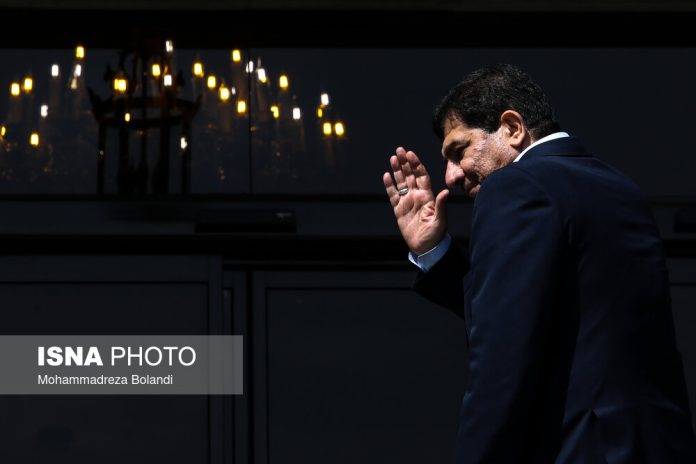
Iran’s 1st VP join’s Erdogan’s swearing-in ceremony in Ankara

Mohammad Mokhber

Turkish media said 21 heads of state, 13 prime ministers as well as parliamentary, ministerial-level representatives will attend Erdogan’s inauguration ceremony in Ankara on Saturday.

Erdogan will take the oath in the Grand National Assembly of Turkey at 1400 local time and will begin his new term.

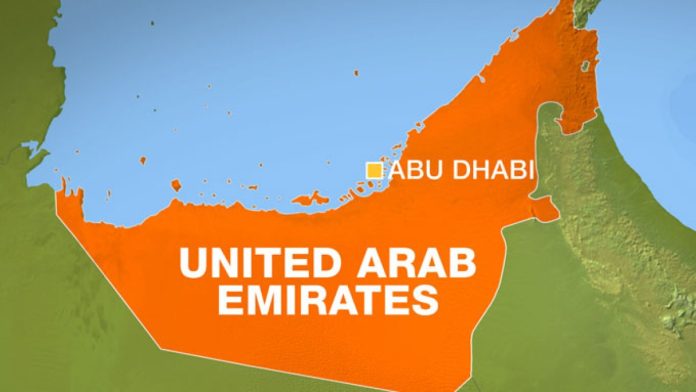
UN calls on UAE to ‘immediately’ release activists held past prison terms

UAE

In a report released on Friday, the UN’s Working Group on Arbitrary Detention said the men, who are part of what has been dubbed the UAE94 case, are being held arbitrarily.

The 2013 trial, held at the peak of the Arab uprisings and widely criticised by rights groups as grossly unfair, saw 94 lawyers, professors, activists, and students who had petitioned the government to institute democratic reforms tried for plotting to overthrow it.

The UN said it found the detention of the 12 men violated multiple articles of the Universal Declaration of Human Rights.

“The appropriate remedy would be to release all the 12 individuals immediately and accord them an enforceable right to compensation and other reparations, in accordance with international law,” it added.

UAE authorities have previously stated the allegations that the men were held beyond their prison terms were unsubstantiated and false.

Last month, rights activists and prisoners’ families said more than 50 people convicted in the trial or in related cases have been held past their sentences for months and years.

One man, Abdullah al-Helou, was sentenced to three years and finished his term in 2017, but remains behind bars.

Also last month, Khalaf al-Romaithi, who was convicted in the UAE 94 trial in absentia and had been living in exile in Turkey, is believed to have been extradited to the UAE from Jordan on a warrant issued at the UAE’s request.

Hamad al-Shamsi, executive director of the Emirates Detainees Advocacy Center (EDAC), said without international pressure on the UAE, he doesn’t believe the prisoners will be released.

“We think that the UAE is willing to keep them in prison until they die,” Shamsi told MEE on Friday, adding, “There is no force or any pressure. The community inside the UAE is very weak. Nobody can speak.”

The Cop28 climate conference, which the UAE will host in November, could be an opportunity for such pressure, he said, while also warning that holding the event in the country “puts all activists at risk”.

According to the Financial Times, some speakers have already been warned not to protest with written guidance that cites the UAE’s laws, and that “disruptive protesting” would be handled by local authorities.

A UAE Cop28 spokesperson told the Financial Times that conference organisers would ensure “there are safe spaces where all voices may be heard”.

Meanwhile, Shamsi said the extended detentions of the prisoners are difficult on their families, some of whom now live abroad so have no contact with their relatives, and some in the UAE who are only allowed sporadic prison visits since Covid19.

“It is very disturbing,” he continued, adding, “This is a kind of torture they are not only putting on the detainees. They are also torturing the family because they are waiting for their detainee.”