Monday, December 22, 2025
Home Blog Page 1402

Live Update: Russia’s “Special Operation” in Ukraine; Day 467

Russia Ukraine War

‘No prospects’ for grain deal extension: Russia

Russia’s foreign ministry says it sees no prospects for extending the Black Sea grain export deal, which is set to expire in mid-July, Russian news agencies reported.

The TASS news agency quoted the ministry as saying it was continuing consultations with the United Nations and that ship inspections had resumed.

The RIA Novosti news agency also reported that a new round of Russia-UN talks would occur in Geneva, Switzerland, on June 9.

Russia has repeatedly threatened to quit the deal, complaining that obstacles still remain to its food and fertiliser exports.


Two drones fell on highway near Moscow region

Two drones fell on a highway in Russia’s Kaluga region, which lies south of the Moscow region, with the governor saying on Monday that no explosives detonated.

“The area has been cordoned off,” the governor of the region, Vladislav Shapsha, said on the Telegram messaging app.

Based on the information provided by Shapsha, the drones fell some 280km-300km (174 miles-186 miles) from Moscow.

Last week, Russia said Ukrainian drones struck districts of Moscow. Kyiv has denied any involvement.


Russia says it repels Ukrainian attempt to cross into Belgorod

Russia’s Defence Ministry announced it repelled a Ukrainian attempt to cross into the Belgorod region on Sunday, Russian RIA news agency reported.

Moscow said “more than 10” Ukrainian fighters had been killed by air and artillery strikes.

On Sunday, an anti-Kremlin group stated it had captured several soldiers during a cross-border raid into the Belgorod region and would hand them over to Ukrainian authorities.

The governor of Belgorod, Vyacheslav Gladkov, also reported fighting in the town of Novaya Tavolzhanka with “Ukrainian saboteurs”.


Ukraine says it has no information on a counteroffensive

Ukraine’s military says it has no information about an offensive which Russia said Kyiv had launched at five points along the front line in Donetsk.

“We do not have such information and we do not comment on any kind of fake,” a spokesperson for the Ukrainian armed forces’ general staff said in response to a question from the Reuters news agency.

Kremlin spokesperson Dmitry Peskov did not answer questions about Ukraine’s counteroffensive during his daily press briefing, the Russian TASS news agency reported

Peskov told reporters that the Ministry of Defence could answer any questions about the “special military operation” and referred to the ministry’s statement on the alleged offensive.


Wagner boss says settlement near Bakhmut retaken by Ukraine

Leader of the Wagner Group, Yevgeny Prigozhin, says Ukrainian forces have retaken part of the settlement of Berkhivka, north of Bakhmut.

“Now part of the settlement of Berkhivka has already been lost; the troops are quietly running away. Disgrace!” Prigozhin said in an audio message published by his press service.

He urged Defence Minister Sergei Shoigu and the chief of the general staff, Valery Gerasimov, to come to the front to rally the troops.

“Come on, you can do it!” he said. “And if you can’t, you’ll die heroes,” he added.

Prigozhin’s private army captured Bakhmut last month after the longest battle of the war and handed its positions there to regular Russian troops.

Earlier in the day, the commander of Ukraine’s ground forces, Oleksandr Syrskyi, stated that Ukrainian troops continued “moving forward” near Bakhmut.


Ukrainian grain yields could fall by 20 percent

While most of Ukraine’s winter grain crops are in good condition, grain yields could fall by 20 percent if dry and hot weather persists, the APK-inform consultancy firm quotes agricultural scientists as saying.

Grain output decreased to about 53 million tonnes in 2022 from a record 86 million tonnes in 2021 after Russia launched its invasion of Ukraine in February last year.

The government has said that in 2023 the harvest could decline to 44.5 million tonnes.

“In general, weather conditions for most of the spring period were sufficiently favourable for growth and development of winter cereal crops,” Ukraine’s National Academy of Agrarian Sciences said in a report.

“However, in case of continuation of dry weather in the period of grain filling, especially on the background of high air temperatures. … the share of lost yields can be from 15 percent to 20 percent,” it added.


Ukraine forces ‘moving forward’ near Bakhmut: Ukrainian commander

The commander of Ukraine’s ground forces, Oleksandr Syrskyi, said on Monday that Ukrainian forces continued “moving forward” near Bakhmut.

Syrskyi stated that Ukrainian forces were successful in destroying a Russian position near the city.

“We continue moving forward,” Syrskyi said on the Telegram messaging app.


US statement on bilateral arms is ‘positive’: Kremlin

A statement by United States national security adviser Jake Sullivan calling for bilateral arms control discussions was “positive”, says the Kremlin.

On Friday, Sullivan said the US would abide by the nuclear weapons limits set in the New START treaty until it expires in 2026 if Russia did the same.

“This is an important and positive statement by Mr Sullivan. Of course, we expect it to be de facto confirmed by steps through diplomatic channels, and then the proposed formats for dialogue can be considered,” Kremlin spokesman Dmitry Peskov stated.

President Vladimir Putin suspended Moscow’s participation in the treaty in February.


Russia claims to have thwarted ‘large-scale’ Ukraine attack

Russia has said its forces thwarted a major Ukrainian offensive in the Ukrainian region of Donetsk, killing 250 Ukrainian troops and destroying tanks and armoured vehicles.

“On the morning of June 4, the enemy launched a large-scale offensive in five sectors of the front in the South Donetsk direction,” the Russian defence ministry said on its Telegram channel early on Monday.

There was no update from Ukraine on the alleged offensive. In its evening update on June 4, the General Staff of Ukraine’s Armed Forces said Moscow was focusing its military efforts on the full occupation of the Luhansk and Donetsk regions.

Donetsk is one of four Ukrainian territories that Russia annexed last September, along with Luhansk, Zaporizhia and Kherson.

Ukraine has been preparing for a counteroffensive to take back territory occupied by Russia since it began its full-scale invasion of Ukraine in February 2022, as as well as the Crimean Peninsula it seized in 2014.


Ukraine reports two advances along front line in east

The head of Ukraine’s Land Forces said the country’s troops achieved two small victories along the front line of the battlefield with Russia in the contested provinces of Donetsk and Luhansk.

The commander, Oleksandr Syrskyi, wrote on an official army website that Ukrainian forces had advanced 400 meters (1,300 feet) closer to the town of Svatove in Luhansk region. Svatove is situated along key Russian supply routes, so any eventual re-capture of the town would have important strategic implications.

While the front line has been static for months, hostilities in northern Donetsk and several parts of Luhansk “continue almost around the clock,” Syrskyi stated.

Syrskyi added Russia had launched fresh offensives in several locations in Luhansk region and the northern part of the Donetsk region partially using former prisoners who had been specifically trained for assault operations.

While Russian troop reinforcements have given their forces a numerical advantage, Syrskyi suggested that Ukraine’s superior agility gives Kyiv the edge on the battlefield.

“Not even superiority in numbers helps the enemy,” he said.

Luhansk and Donetsk make up Ukraine’s Donbas region, an industrial heartland when Russian-backed separatists seized control of two territories and declared breakaway republics in 2014. Shortly before the full-scale invasion in February 2022, Russian President Vladimir Putin recognized the two separatist territories as independent states, ordering the deployment of Russian troops there in defiance of international law.

Syrskyi also stated that Ukrainian troops had successfully liberated some territory to the south of Bakhmut, the city in Donetsk where some of the war’s fiercest fighting has taken place.

Another Ukrainian official, army spokesman Serhii Cherevatyi, said Kyiv’s forces were mostly engaged in “preparatory activities” and “reconnaissance.”

“We are trying to preserve our personnel and counterattack only when we believe there are opportunities to achieve success,” Cherevatyi added.


Dissident military groups claim they’ve captured two Russian soldiers in Belgorod region

Two dissident Russian military units said Sunday that they had captured two Russian soldiers in the Belgorod region and demanded a meeting with the local governor Vyacheslav Gladkov.

The Russian Volunteer Corps and the Freedom for Russia Legion, which are not officially part of Ukraine’s military but fight under Ukrainian command, have made several recent incursions in Belgorod that have helped bring the war to Russian soil.

Gladkov responded to the groups’ demand in a video message on his Telegram channel Sunday, saying he is prepared to talk to the units if the two soldiers they claim to have captured are still alive.

“The only thing that stops me from negotiating with them is our guys who are in their hands. Most likely they killed them, as hard as it is for me to say. But if they are alive, from 17:00 to 18:00 Shebekino International Automobile Checkpoint. I guarantee safety. That’s it,” Gladkov added, apparently offering a meeting.

The head of the Wagner private military company, Yevgeny Prigozhin, claimed in a Telegram post Sunday that “he is ready to send one of his high-ranking deputies” to pick up captured Russian soldiers if no one comes to their rescue.

Prigozhin, who frequently needles the Kremlin establishment, challenged Russian Defense Minister Sergei Shoigu and Chief of the General Staff Valery Gerasimov to come to the soldiers’ rescue as well.


Sweden has taken steps to address Turkey’s concerns about its NATO accession: Secretary-general

NATO Secretary-General Jens Stoltenberg met with Turkish President Recep Tayyip Erdogan in Istanbul on Sunday as they continue to work toward finding a path for Sweden to join the alliance.

Russia’s war in Ukraine prompted both Sweden and Finland to abandon decades of neutrality and seek to join the alliance, in what was viewed as a significant blow to Russian President Vladimir Putin, who has sought to undermine NATO. But Turkey has held up Sweden’s accession for several reasons, mainly accusing Stockholm of allowing terrorist organizations to stay in the country.

Stoltenberg confirmed officials from Sweden, Turkey and Finland will meet the week of June 12 to discuss Sweden’s NATO membership bid.

On Thursday, Sweden passed new anti-terrorism legislation amending its constitution, ending its arms embargo and stepping up its counter-terrorism operations including against the PKK (Kurdistan Workers’ Party).

In response to this new legislation, Stoltenberg said, “Sweden has taken significant concrete steps to meet Turkey’s concerns,” and that it has “fulfilled its obligations.”

Stoltenberg added he believes there is still time for Sweden to become a member by this year’s NATO summit in Vilnius on July 11-12, a goal set at last year’s summit in Madrid


US believes Ukraine’s counteroffensive will see Kyiv take back “strategically significant territory”

The United States believes the highly anticipated Ukrainian counteroffensive will result in Kyiv taking back “strategically significant territory,” Jake Sullivan, US President Joe Biden’s national security adviser, told CNN’s Fareed Zakaria.

“Exactly how much, in what places, that will be up to developments on the ground as the Ukrainians get this counteroffensive underway,” Sullivan said, adding, “But we believe that the Ukrainians will meet with success in this counteroffensive.”

Asked if this meant he expected some form of negotiations by the end of this year, Sullivan wouldn’t provide any sort of timetable but said that developments on the battlefield will have a “major impact” on any future negotiation.

“But what I will say is this: President [Volodymyr] Zelensky himself has said that this war will end ultimately through diplomacy,” Sullivan added.


UK MoD: Russia becoming increasingly paranoid as Ukraine war drags on

The United Kingdom’s Ministry of Defence has announced that Russia is becoming increasingly paranoid as the war on Ukraine drags on.

In its daily defence intelligence assessment, the ministry cited a case of a Russian care home worker, who was reportedly arrested after wearing a blue and yellow jacket to work.

“In recent days, Russian National Guard troops arrested a 22-year-old man in Volkhov near St Petersburg for displaying what was eventually determined to be the blue and yellow flag of Russia’s own Aerospace Forces,” it said.

“The clampdown highlights uncertainty within a paranoid Russian officialdom of what is and is deemed permissible within an increasingly totalitarian system,” it added.


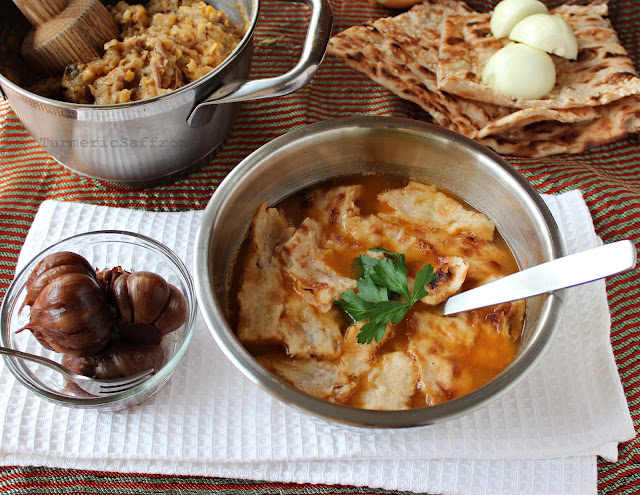
Dizi Recipe (Famous Iranian food)

Recipe for Dizi, Famous Traditional Persian Food

Iranian dishes excel at making people who have never tried them fall in love at the first bite. The unique combination of spices and flavorings with a wide range of vegetables, herbs, fruit, grains, nuts, meat and most importantly rice only needs the wand of Iranian cuisine to perform magic and leave an explosion of unforgettable tastes in the mouth.

dizi recipe

The delectable smell, delicious look and perfectly pleasant taste make it almost impossible to resist them. To share the gastronomic delights of Iran, IFP has decided to file a series of mouth-watering recipes for Iranian dishes.

dizi

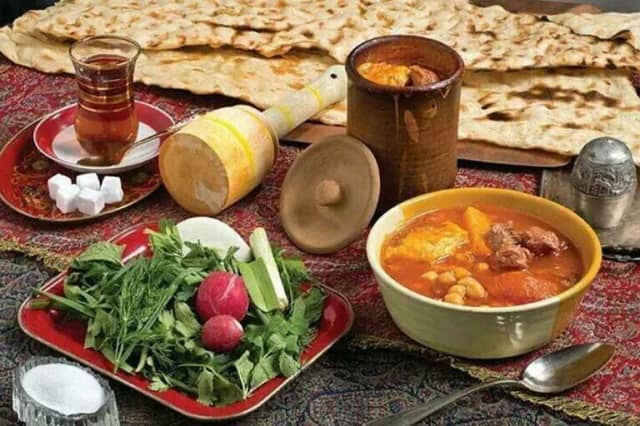
Dizi is a traditional, nutritious Iranian dish which looks like a soup served in two stages. Traditionally, small pieces of flat bread are mixed and eaten with the broth in the first stage. You can skip this part if you don’t like it. Other ingredients are later mashed and served with side dishes of pickles, fresh herbs [garden cress, wild leek, basil, squaw mint, scallion and radish], Doogh [a savory yoghurt-based beverage], raw onions and most importantly freshly-baked flat bread.

dizi

In Persian, Dizi refers to clay or stone pots in which the dish is cooked and served. In fact, in Iran, the dish is still served in small crocks in traditional restaurants where customers are provided with a masher to crush the meat and other ingredients after separating the solid part from the broth, known as Abgoosht.

Dizi Recipe (Famous Iranian food)
Dizi stone pots (source)

Ingredients for Persian Dizi

(Serves 6)

  1. 750 grams lamb shank/shoulder of lamb on the bone [Don’t remove the fat from the meat; the meat used should be fatty.]
  2. 100 grams chickpeas – Rinse and soak them for 24 hours
  3. 100 grams navy beans – Rinse and soak them for 24 hours
  4. Six small potatoes
  5. Six small tomatoes – chop them into pieces
  6. Two large onions which should be peeled and sliced.
  7. Two heaped tablespoons tomato paste
  8. Oil
  9. Water
  10. Salt, ground black pepper and turmeric to taste
How to Make Iranian Dizi
Dizi is a traditional, nutritious Iranian dish.

 Cooking Steps for Iranian Dizi

    • Fry the onions in a frying pan with ground black pepper and a liberal amount of turmeric until they turn golden brown.
    • Add in tomato pieces and fry them lightly for a few minutes. Put the chickpeas and navy beans in the pot and sauté them.
    • dizi recipe
    • Cut the meat into bite-size pieces, add them to other ingredients in the pot and fry them until browned on all sides. [You can use a pressure cooker to let the dish cook by the pressure of hot steam over a low heat. To have a tasty final dish, you need to give the dish enough time to be cooked gently.]
    • Tomato paste should be fried with the mixture until it turns deep red; stir it frequently to prevent it from burning. Cooking Steps for Iranian Dizi
  1. Pour 10 to 12 cups of water into the pot and bring it to a boil. Then, turn down the heat to let it simmer. The pot should be tightly covered, so if you don’t use a pressure cooker, opt for a pot with a close-fitting lid.
  2. Wash the potatoes well, but do not peel them [the skin prevents them from falling apart in the pot; they should be peeled later before being mashed]. By the time the meat and the grains are tender and cooked, add salt – toward the end of cooking to stop meat from toughening and prolonging the cooking time – and the potatoes to the pot.
  3. When the potatoes are cooked, drain the broth and pour them into serving bowls. If you want to mash the solid part before serving, do not forget to remove the bones.

Bon Appétit!

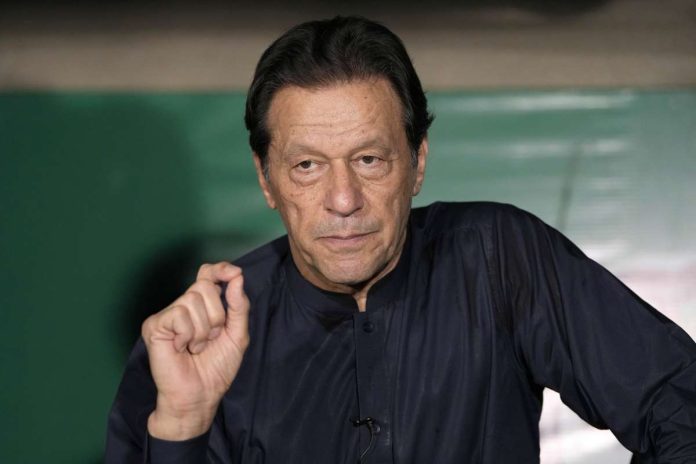
Ex-Pakistan PM says military seeking to destroy his party

Imran Khan

Khan has hinted previously at the military’s hand in a crackdown on his Pakistan Tehreek-e-Insaf (PTI) party, but his comments in an interview at his Lahore home on Saturday night were the most blunt yet.

“It is completely the establishment,” the former cricket hero told Reuters news agency when asked who was behind the crackdown.

“Establishment obviously means the military establishment, because they are really now openly – I mean, it’s not even hidden now – they’re just out in the open,” he added.

A spokesman for the military – which has run the country directly or indirectly for its 75-year history, and which has seldom faced the sort of public challenge to its power that it has from Khan – did not respond to a request for comment.

A bruising year-long standoff between Khan, Pakistan’s most popular leader according to polls, and the army came to a head when military buildings and property were ransacked last month, allegedly by his supporters.

The political unrest has increased uncertainty in the nuclear-armed country of 220 million, which is also beset by financial turmoil. Its $350bn economy is struggling to stave off default, control record inflation and deal with a plummeting currency.

Khan described the violent protests, which erupted after he was briefly arrested, a “false flag operation” meant to target him.

Authorities have begun the process of trying dozens of people, including members of Khan’s party, suspected of involvement in the protests in military court – usually reserved for service members or those categorised as enemies of the state.

“That’s the only way they are going to get me into prison,” Khan said, adding the military wanted to stop him from returning to power in elections due by November.

He said about 150 criminal cases filed against him were frivolous and would get thrown out in any civilian court.

“So their only hope, and because they are determined to get me out of the way, I think they will, their whole charade of military courts is to imprison me,” he continued, adding, “I have absolutely no doubt that the military courts are meant for me,” added Khan, who is out on bail.

Amnesty International says Pakistan’s military courts have previously shown disregard for due process, lack of transparency, coerced confessions and executions after unfair trials.

Khan said the country’s most powerful spy agency, the military’s Inter-Services Intelligence (ISI), was deeply involved in the crackdown.

He stated two senior members of his party were called by the agency for talks. “And when they went there, just they shut them up and said ‘You [won’t] leave unless you renounce being part of PTI.’”

Khan added he has tried to contact the military for talks to find a way out of the current crisis but got no response, and he did not know why the army chief, General Asim Munir, was “fixated” on sidelining him.

Before becoming army chief in November 2022, Munir was the head of the ISI – a post from which he was suddenly removed in 2019 while Khan was prime minister.

Khan himself was ousted from office in a parliamentary vote last year that he said was orchestrated by Pakistan’s top generals. The military denies this.

No official reason was given for Munir’s removal, but Khan acknowledged in the interview, for the first time, that he had wanted him gone from the role.

“I think that maybe he has a grudge because I asked him to resign” as ISI chief, Khan stated, adding, “I don’t know.”

When asked why he had asked Munir to resign, Khan said: “You know, I, as prime minister, felt that how the intelligence agency was run … I had my issues with that.” He did not elaborate.

Munir was later selected as the country’s top general by Khan’s successor and political rival, Prime Minister Shehbaz Sharif.

“He shouldn’t have issues with that now because he is the army chief,” Khan said, referring to Munir’s removal as ISI head.

“So why would he harbour that grudge?” he asked.

Khan stated he was puzzled by the campaign against him.

“[I am] someone who’s been known in this country for 50 years, who’s probably won all the awards in this country and probably the most well-known Pakistani, and suddenly being treated as a sort of alien, as an enemy of the state,” he added.

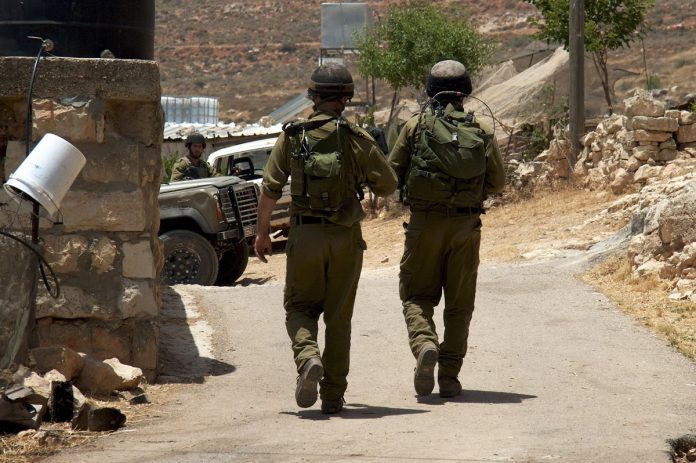
Egypt, Israel investigating deadly border shooting

Israeli forces

The defense chiefs agreed to take measures to “prevent the recurrence of such incidents in the future,” according to the statement from the Egyptian Armed Forces.

The Israel Defense Forces (IDF) said that “an investigation is being conducted in full cooperation with the Egyptian army.”

Both sides provided different versions of the skirmish.

The IDF initially reported that at around 2:30 am local time on Saturday its soldiers busted a cross-border smuggling operation. The Israeli army later noted that two of its soldiers, one of whom was a female sergeant, were gunned down at a border outpost. It added that a third IDF service member was later killed by “an Egyptian policeman” who had crossed into Israeli territory. The intruder was killed in the ensuing firefight, and a fourth IDF soldier received light injuries, the Israeli army announced.

The Egyptian Armed Forces said in a statement that the country’s border security personnel were “chasing drug smuggling elements” when one of Egypt’s security officials crossed the border and “exchanged fire” with the Israelis. Cairo did not explain how its official had entered Israeli territory.

The Egyptian-Israeli border has remained relatively calm since the countries signed a peace treaty in 1979. An IDF spokesperson was quoted by the media as saying that the last known incursion that ended in casualties occurred around 10 years ago.

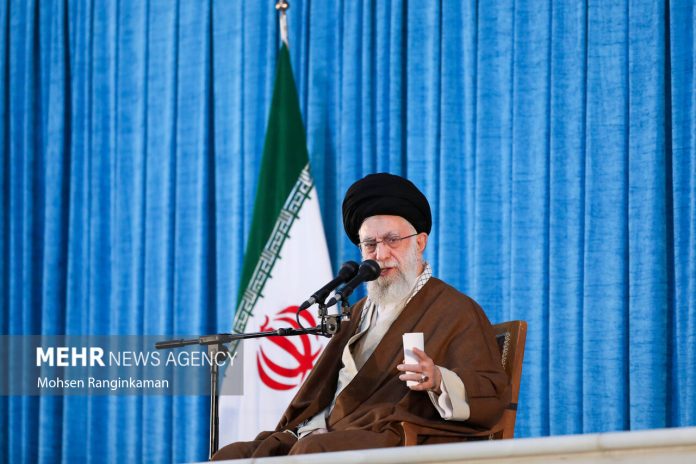
Iran Leader warns enemies using economic woes to sow despair among Iranians

Leader of the Islamic Revolution Ayatollah Seyyed Ali Khamenei

Ayatollah Khamenei made the comments at a large mourning procession on Sunday morning at the Mausoleum of Imam Khomeini on the 34th anniversary of the late Imam.
“Today, the enemy is making attempts to frustrate the Iranian youths,” said the Leader.

“Problems should not undermine hope. If we witness problems, we need to develop even a stronger motivation to find ways out of them and offer a helping hand to those who are trying to resolve them.”

The Leader said a source of hope for the country is the fact that the Iranian youths are standing strong against the enemy’s propaganda machine and working to overcome the challenges facing the country through hard work in various fields such as technology, science, agriculture, development of infrastructure, international relations and military power, among others.

“These facts generate hope. The enemy wants to make us and our youths forget them. These facts herald a bright future,” he said.

Ayatollah Khamenei pointed to a wave of riots and protests in the country last year, saying the unrest was the outcome of a comprehensive conspiracy hatched in the Western think tanks and advanced by a series of “treacherous elements” who left their homeland and sided with the enemies.

On the scene of the riots on the streets, the enemies used a group of “ignorant” people and armed hooligans to fuel violence and murder security forces, the Leader said.

The enemies, who sponsored the unrest, “thought it (the Islamic establishment) was over…they thought they could make the Iranian nation serve them. The fools made a mistake again! Once again, they failed to get to know the nation,” the Leader added.

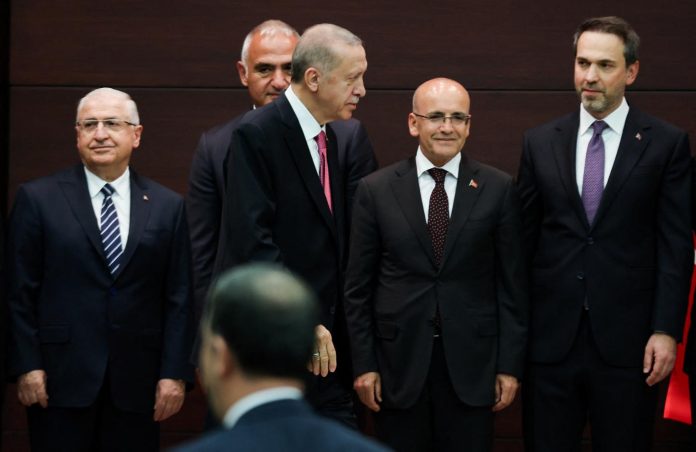
Turkey’s Erdogan unveils new cabinet, replaces finance, foreign, defence ministers

Recep Tayyip Erdogan

In a highly-anticipated appointment, Erdogan appointed the internationally respected ex-banker Mehmet Simsek as treasury and finance minister.

Simsek, an advocate of conventional economics, is highly regarded by the financial markets after serving as finance minister and deputy prime minister between 2009 and 2018.

His appointment is aimed at tackling Turkey’s cost-of-living crisis and could set the stage for interest rate hikes in the coming months, which could mark a turn around from Erdogan’s longstanding policy of slashing rates despite soaring inflation.

Speaking at his inauguration ceremony before the announcements, Erdogan called on Turks to set aside their differences and focus on the future.

“We will embrace all 85 million people, regardless of their political views, origins, creeds or sects,” he said at the event attended by high-level officials from 78 countries.

“Turkey needs unity and solidarity more than ever,” he added.

Analysts had predicted that Erdogan was almost certain to put Simsek in charge of the economy, marking a partial return to more free-market policies after years of increasing state control of forex, credit and debt markets.

Erdogan’s economic programme since 2021 stresses monetary stimulus and targeted credit to boost economic growth, exports and investments, pressing the central bank into action and badly eroding its independence.

As a result, annual inflation hit a 24-year peak beyond 85 percent last year before easing.

The lira has lost more than 90 percent of its value in the last decade after a series of crashes, the worst in late 2021. It hit new all-time lows beyond 20 to the dollar after the 28 May vote.

The cabinet reshuffle also saw the appointment of Cevdet Yilmaz as vice president.

Manwhile, Hakan Fidan, Erdogan’s intelligence chief and a former soldier, was named as new foreign minister.

Fidan led the National Intelligence Organisation (MIT) since 2010, and before that was an adviser to Erdogan in the prime minister’s office. Erdogan once called the 55-year-old his “secret-keeper”.

He replaced tenured diplomat Mevlut Cavusoglu, who had served in the role since 2014, and suggests a future potential shift in Turkey’s style of foreign relations.

Meanwhile, Yasar Guler, chief of general staff of the Turkish armed forces, was announced as defence minister, replacing Hulusi Akar.

The 69-year-old was the military chief during Turkey’s military operations into Syria in 2019 and 2020, and also oversaw subsequent military operations there and in Iraq.

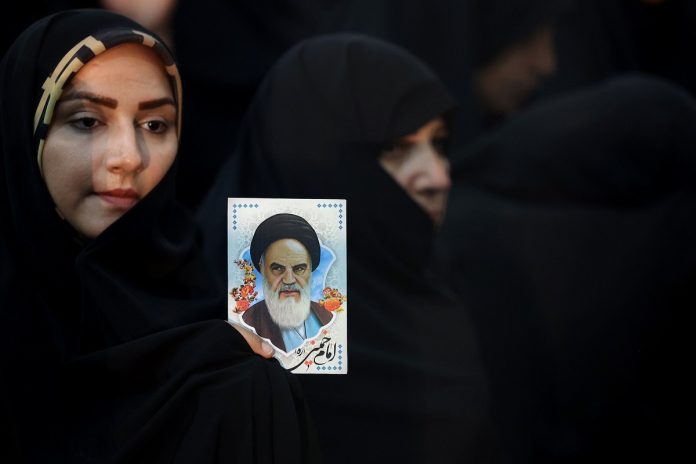
Iranians mark 34th anniversary of Imam Khomeini’s departure

Imam Khomeini

On Sunday morning, masses of people from all walks of life gathered at Imam Khomeini’s Mausoleum south of Tehran, along with the country’s top officials and military men as well as ambassadors and dignitaries of other countries.

Imam Khomeini’s successor, Leader of the Islamic Revolution Ayatollah Seyyed Ali Khamenei, led the large mourning procession at the venue.

Similar mourning ceremonies were also held a large gathering halls in many cities countrywide.

The Imam Khomeini-led Islamic Revolution put an end to centuries of autocratic rule in Iran, replacing it with a one-of-a-kind democratic system of governance based on Islam.

Imam Khomeini passed away in 1989 at the age of 87, almost a decade after the victory of the Islamic Revolution.

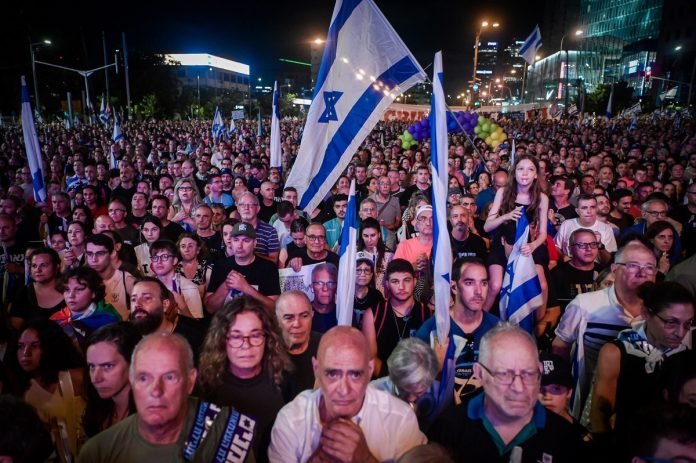
Huge rallies held against Israeli PM’s “judicial coup” for 22nd week

Israel Protest

The protests, now in their 22nd week, continued on Saturday despite Netanyahu’s announcement in March that the contentious legal proposals were being put on hold.

In the central city of Tel Aviv, some 100,000 people waved Israeli flags, lit torches and beat drums, according to Israeli media.

“We will keep demonstrating to show them that even if they have paused in the reform plan, we will stay mobilised – they will not be able to pass laws on the sly,” said Ilit Fayn, a 55-year-old dentist.

Netanyahu’s government, a coalition between his Likud party and extreme-right as well as ultra-Orthodox Jewish allies, argues the proposed changes are needed to rebalance powers between legislators and the judiciary.

Critics say it will grant the government unrestrained power and upend the country’s system of checks and balances.

The plan would weaken the judiciary and limit judicial oversight on laws and government decisions, which critics say directly threatens civil rights as well as the rights of minorities and marginalised groups.

Protests have continued even though the government and opposition are in talks to find a compromise on the plan.

“It’s important for us to eliminate the possibility of Israel becoming a dictatorship,” Arnon Oshri, a 66-year-old farmer, told the AFP news agency.

“This corrupt government is full of outlaws who are degrading our country to the level of a third-world country,” he continued, adding, “It took 2,000 years for the Jewish people to have a state and we cannot lose it because of a bunch of fanatics.”

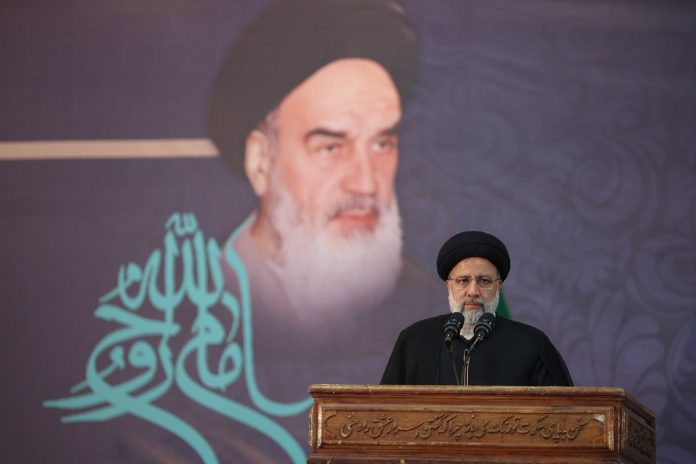
Raisi: Imam Khomeini’s Revolution changed all political equations in world

Ebrahim Raisi

Raisi made the remarks on Saturday evening during a speech at the Mausoleum of Imam Khomeini, on the eve of the anniversary of the departure of the influential politico-religious leader.

“The Imam’s Revolution disrupted all political equations in the world and formed new ones,” said Raisi.

He described the Islamic Revolution as one of the major factors behind the formation of a new world order today.

“Today, we see that the elements of American strength and unilateralism are declining, and new powers such as regional organizations, especially in Asia, are emerging,” the president added.

Raisi also highlighted the Islamic Republic’s role in the formation of a regional resistance front against Israeli occupation.

“Today, we clearly see that the situation of the Zionist regime, as the unholy child of America in the region, has never been as bad as it is today in the past 70 years since its establishment,” he added.

Today, Raisi added, all powerful countries acknowledge Iran’s regional might.

“Our power in the region is inevitable and undeniable, and no equation can be formed except with the involvement of Islamic Iran,” he said.

Live Update: Russia’s “Special Operation” in Ukraine; Day 466

Russia Ukraine War

Several drones tried to attack Crimea: Local leader

Five drones were shot down overnight over Russia’s Crimea, and four others were intercepted by means of electronic warfare and forced to land, the region’s leader Sergey Aksyonov has stated.

One of the destroyed UAVs crashed in the city of Dzhankoy in the north of the peninsula, Aksyonov said. Windows were shattered in three homes and several cars as a result, he added.

Another unexploded unmanned aircraft was discovered on the territory of a private house, according to the Crimean leader. Some 50 people had to be evacuated from the area before the drone was deactivated, he wrote.

“There were no casualties or injuries as a result of the overnight attack. I ask everyone to remain calm and trust only reliable sources of information,” Aksyonov said.

A week ago, six UAVs were intercepted using electronic warfare, or shot down above the peninsula. In early May, at least ten drones targeted Sevastopol, but the assault was repelled by Russian forces.


Ukrainian official: At least 20 people, including children, wounded in Russian attack near Dnipro

A Russian attack left at least 20 people wounded in Ukraine’s Dnipropetrovsk region Saturday, said Serhii Lysak, the head of the region’s military administration.

Five children are among those injured, Lysak added.

Lysak stated the explosion rocked Pidhorodne — a riverfront town outside Dnipro, the region’s administrative center and one of the largest cities in Ukraine. The blast hit a two-story residential building, trapping people under the rubble, according to the regional leader.

Ukrainian President Volodymyr Zelensky also blamed Russian forces for hitting the buildings, saying via Telegram that people were still buried in the wreckage.

Ukrainian State Emergency Services announced two buildings caught fire after they were hit, but one of the blazes was already extinguished


Wagner chief again criticizes Russian military and says his fighters may go to Belgorod

The head of the Wagner private military company, Yevgeny Prigozhin, claimed in a Telegram post Saturday that unidentified Kremlin factions “are destroying (the) Russian state” and trying to sow discord between him and Chechen leadership and its fighters.

Prigozhin said a conflict with Chechen leader Ramzan Kadyrov arose — but has since been settled — because of the Wagner chief’s criticism toward Russian Defense Minister Sergei Shoigu and Chief of the General Staff Valery Gerasimov.

Prigozhin claimed that he criticizes the defense minister and the chief of the general staff because “they don’t do their job correctly.”

Prigozhin repeatedly berated Russian military leadership during the grinding battle in the eastern city of Bakhmut, accusing top brass of not providing enough ammunition.

“They didn’t supply us with shells, and this is the reason why so many of my people got killed,” he stated Saturday.

But Prigozhin said he never talked negatively about the Chechen leader or his “Akhmat” detachment. He also added he is not interested in “stirring up ethnic conflicts.”

Prigozhin also commented on developments in Belgorod, the region that borders Ukraine and has seen recent shelling and cross-border incursions, which he called “a clear attempt to capture that area.”

He criticized the Russian Defense Ministry over the handling of the incursions, which Moscow blames on Ukraine. Ukrainian officials have insisted that the groups going across the border are anti-Putin Russian nationals acting independently.

“The Ministry of Defense is not in a state to do anything at all as it de-facto doesn’t exist — it is in chaos,” Prigozhin stressed.

“Dangerous games have become commonplace in the Kremlin towers,” the Wagner chief continued, referring to unidentified Kremlin factions.

“They have been playing games for a while now not understanding what they are doing. They are simply destroying the Russian state today,” he added.

“If the Ministry of Defense doesn’t stop what is happening in the Belgorod region soon enough, don’t stop that chaos that is happening around capturing of Russian Federation territory, then we (Wagner units) will certainly come to the Belgorod region and we will protect our people,” Prigozhin said, adding, “we won’t wait on the invitation.”


Russia continues to suffer “significant” losses near Bakhmut: Ukraine

Russia continues to suffer “significant losses” during fighting around Bakhmut in eastern Ukraine, the Commander of Ukraine’s Ground Forces Oleksandr Syrskyi said Saturday after visiting troops on the front line.

“The enemy continues to suffer significant losses in the Bakhmut direction,” Syrskyi said on the messaging app Telegram.

“Defense Forces (of Ukraine) continue to fight. We will win,” he added.

Syrskyi’s comments came after Yevgeny Prigozhin, the leader of the Russian private military company Wagner, said that 99% of his troops had left Bakhmut after handing over their positions to soldiers from the Russian military.

Bakhmut has been the site of one of the bloodiest battles between Russian and Ukrainian forces since the Kremlin launched its invasion last year. Prigozhin claimed victory and control of the city last month, though Ukraine says it continues to have a foothold on the southwestern edge of the city.

Reports suggest that front lines in and around the city have been largely static. In early May, while Wagner forces were pushing westward out from the center of Bakhmut, Ukrainian forces had been making limited territorial gains on higher ground to the northwest and southwest of the city.

In its daily operational update, Ukraine’s Armed Forces claimed on Saturday that Russia’s attempted offensive actions near Ivanivske, a small town around 5 miles west of Bakhmut, were unsuccessful.

Kyiv announced that Russian forces had carried out air strikes on nearby Bila Hora and Chasiv Yar, as well as a missile strike on the town of Druzhkivka, in the same part of the Donetsk region.


Growing number of attacks bring the war to Russian territory

Russian officials have reported deadly attacks in at least four locations in the Belgorod region and Ukrainian-aligned Russian units are ramping up their incursions, bringing the war to Russian territory.

At least seven people have been killed by shelling in Russian border regions since Friday, according to Belgorod’s regional Gov. Vyacheslav Gladkov.

Two men and a woman were killed in a barrage of 18 rockets fired on the village of Sobolevka, Gladkov said in a series of posts on his Telegram channel. A gas pipeline and a power line were also damaged in the strike.

Sobolevka, which is located in the Valuisky city district, is the easternmost location to have been struck over the past two weeks. A rail line runs through the village and enters Ukraine in Russian-occupied territory south of the attack, suggesting it may have been targeting Russia’s supply lines.

To the northwest along Russia’s border with Ukraine, two women were killed in the village of Maslova Pristan when their car was hit by fire, Gladkov said. Two other women were killed in separate shellings on nearby villages.

Two units responsible for recent assaults on the border regions – Freedom for Russia Legion and the Russian Volunteer Corps – are made up of Russian soldiers opposed to President Vladimir Putin. Though not officially part of the Ukrainian Armed Forces, they effectively fall under the command of Ukraine’s security forces.

While the cross-border attacks have a military impact, forcing Russia to consider redeploying resources to protect what have been shown to be weak borders, they also appear designed to have an impact on Russian morale.

Legion spokesperson Alexei Baranovksiy appeared on Ukrainian television Saturday and was asked about the aims of the incursions.

It was not about trying to “die heroically,” he stated.

“This is a task to distract the Russian army from other directions; it is a task to gain combat experience, to show Russia that resistance (against Putin) is possible, and it is necessary to join it,” Baranovskiy added.


Kremlin says France can hardly be a ‘moderator’ in Ukraine conflict

France can hardly be a “moderator” in the Ukrainian conflict due to its active participation in it, Kremlin Spokesman Dmitry Peskov said.

Peskov told Russian state television reporter Pavel Zarubin that, at the same time, President Vladimir Putin is open to any contacts in order to achieve Russia’s goals.


Kiev dismisses Indonesia’s ‘strange’ Ukraine peace plan

Ukraine’s defense minister has rejected a peace plan proposed by his Indonesian counterpart to end the war between Kiev and Moscow.

Ukrainian Defense Minister Oleksii Reznikov, who was attending the two-day Shangri-La Dialogue security summit in Singapore, dismissed the proposal suggested by Indonesian Defense Minister Prabowo Subianto, describing the peace plan as a “strange” and “Russian plan”.

“It sounds like a Russian plan, not an Indonesian plan,” Reznikov stated, adding, “We don’t need this mediator coming to us (with) this strange plan.”

The Indonesian defense minister had suggested an “immediate cessation of hostilities,” a ceasefire “at present positions,” and demilitarized zones that would be guaranteed by peace observers from the United Nations peacekeeping forces.

The former army ex-special forces general also proposed holding a “referendum in the disputed areas” under the auspices of the UN.

Indonesian President Joko Widodo traveled to Kiev and Moscow and met the countries’ leaders last year, while his country chaired the G20 bloc of major world economies.