Monday, December 22, 2025
Home Blog Page 1401

IAEA chief says progress made in Iran nuclear safeguards

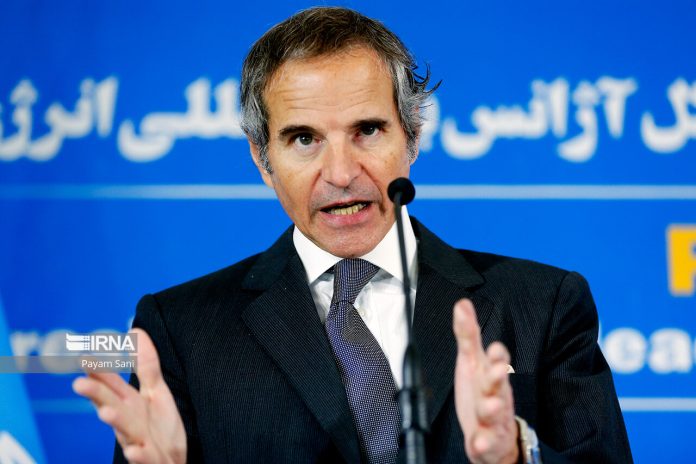
IAEA Grossi

Asked on Monday about criticism of his agency levelled by Israel’s Prime Minister Benjamin Netanyahu on Sunday, Grossi said that his agency’s work is “neutral, it is impartial, it is technical.”

“We will always say things as they are,” he stated.

Grossi added that he would “never enter into a polemic” with the head of government of a member of the IAEA, stressing, “We never politicize. We have our standards and apply them always,” he said.

“The politicization is in the eye of the beholder,” Grossi added.

“We never ever, never ever water down our standards. We stand by our standards, we apply our standards,” the IAEA head told the news conference.

Grossi also declared that the process of implementing a joint statement with Iran regarding the safeguards issues has started and that some progress has been made.

He stated that in early May, the IAEA had installed surveillance cameras at Iranian facilities where centrifuge equipment is produced.

Additionally, he said the nuclear agency has installed monitoring devices at the Fordow and Natanz enrichment plants to oversee the level of uranium enrichment.

Grossi added that these measures would help the agency identify any changes in enrichment levels at those facilities.

Iran and the IAEA agreed in March to take steps aimed at facilitating enhanced cooperation and expediting the resolution of outstanding safeguards issues.

In a meeting with Grossi in Tehran early in March, Iranian President Ebrahim Raisi said Tehran expects the IAEA to adopt a “professional and fair” approach to its nuclear energy program and refrain from being affected by certain powers which are pursuing their own specific goals.

Iran says to re-open embassy in Saudi Arabia on Tuesday

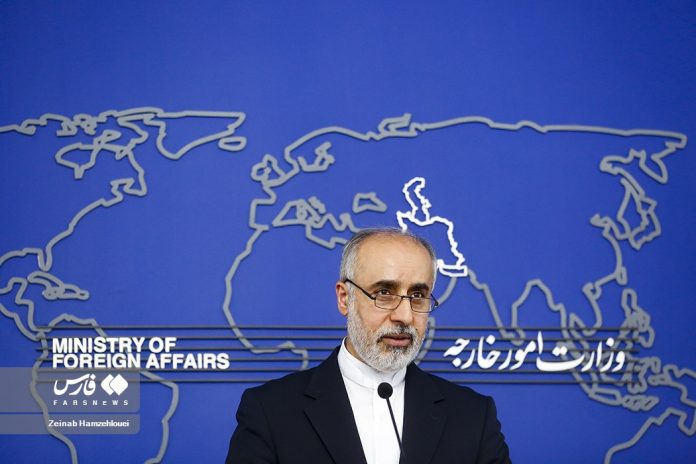
Nasser Kanaani

Nasser Kanaani, in reaction to media reports about the re-opening of Iran’s missions in Saudi Arabia, said, “In completing the implementation of the agreement reached between the Islamic Republic of Iran and Saudi Arabia for the resumption of bilateral ties, the embassy of the Islamic Republic of Iran in Riyadh, the Iranian Consulate in Jeddah and its Permanent Mission to the Organization of Islamic Cooperation will be officially re-opened in the course of Tuesday and Wednesday, 6-7 June,” he said.

Kanaani added Iran’s Embassy in Riyadh and its Consulate in the Saudi city of Jeddah already started their activities in practice before the departure of the Iranian pilgrims to Hajj in Saudi Arabia, and “now the mentioned missions will officially be re-opened in the presence of two countries’ Foreign Ministry officials.”

The re-opening of the Iranian missions in Saudi Arabia follows seven years of cut ties between the two countries.

Under a China-brokered agreement, Tehran and Riyadh agreed to restore diplomatic ties. The two countries also held many rounds of talks in Iraq and Oman.

Iran set to re-open embassy in Saudi Arabia on Tuesday: Source

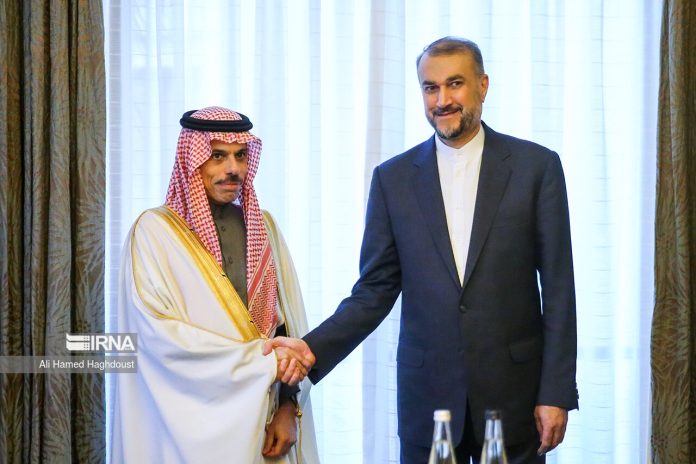
Amirabdollahian Bin Farhan

Iran is set to reopen its embassy in Saudi Arabia on Tuesday following a seven year closure, a diplomatic source in Riyadh told AFP, sealing a Chinese a brokered rapprochement deal announced in March.

Iran’s diplomatic mission will return under the leadership of Enayati, who previously served as Iran’s ambassador to Kuwait.

“The opening of the Iranian embassy will take place Tuesday at 6:00 pm local time (1500 GMT) with the presence of the newly appointed Iranian ambassador” to Saudi Arabia, the source stated.

After years of discord, the two Middle East heavyweights signed a surprise reconciliation agreement in China on March 10.

Kanaani: Azerbaijan warning against Iran visit, same policy as Israel

Nasser Kanaani

In a tweet on Monday, Nasser Kanaani said, “The foreign ministry of Azerbaijan has warned its nationals against travelling to Iran. This is the same policy that the President of the fake, infanticidal and occupying regime of Israel recently adopted in a visit to Baku.”

Kanaani was referring to the recent visit of Israel’s President Isaac Herzog to the Republic of Azerbaijan during which he described Baku as Israel’s close friend, claiming Iran is a threat to the region.

The Iranian foreign ministry spokesman added, “The Zionist regime is the one whom the people of Azerbaijan should be made afraid of, NOT the civilized and Islamic Iran.”

Reaffirming Iran’s policy of visa-free vis-a-vis the Azerbaijan Republic, Kanaani added we embrace our Azerbaijani brothers and sisters.

The spokesman, however, said Continued neighborliness is the policy we are pursuing, “but of course within the framework of mutual respect and observance of neighbor etiquette.”

Armenia says Yerevan, Baku likely to sign peace treaty by end of 2023

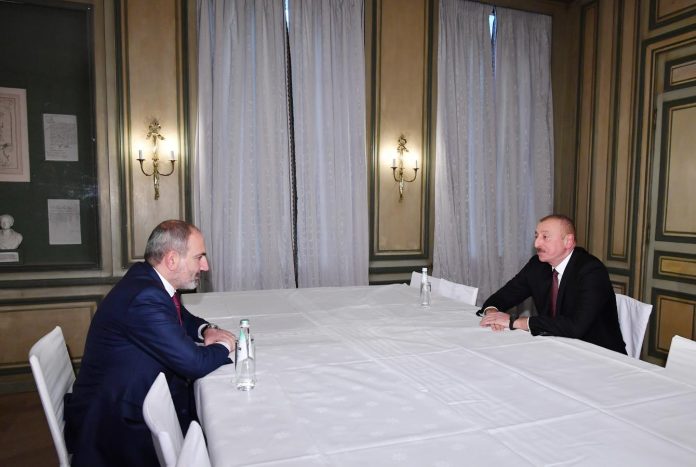
Pashinyan Aliyev

“Negotiations are going very intensively, if we maintain this intensity and there is strong support from the international community to achieve progress, then there is a chance to have a peace agreement by the end of the year,” Grigoryan told Armenia’s First Channel.

The Armenian side intends to achieve the conclusion of a peace treaty as soon as possible, Grigoryan added.

Grigoryan also noted that the country’s membership in the Collective Security Treaty Organization (CSTO) creates “certain problems” for Yerevan, but they do not limit cooperation with other countries.

“We are working intensively with our Western partners to strengthen our security cooperation and will continue this work,” Grigoryan continued.

The decades-long conflict between Armenia and Azerbaijan over Nagorno-Karabakh flared up in September 2020, marking the worst escalation since the 1990s. Hostilities ended with a Russia-brokered trilateral ceasefire declaration signed in November 2020. The two former Soviet states agreed to the deployment of Russian peacekeepers in the region. Since then, there have been occasional clashes along the border.

In mid-May, Grigoryan said that the Armenian government mulled leaving the CSTO, adding that the organization’s mechanism did not work properly and the member states failed to fulfill their commitments. Armenian Deputy Foreign Minister Mnatsakan Safaryan said later that the possibility of Armenia withdrawing from the CSTO is not currently on the agenda. Armenian Prime Minister Nikol Pashinyan has also repeatedly said that Yerevan witnessed the organization’s inaction in 2021-2022.

Venezuela’s Maduro begins official visit to Saudi Arabia

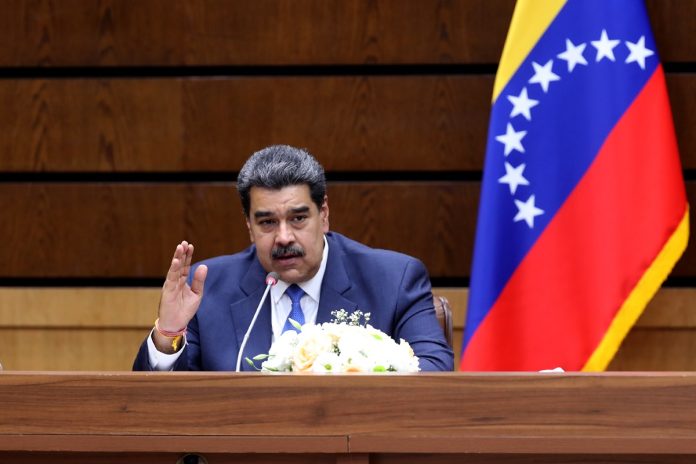
Venezuela Presidents Maduro

Maduro said on Monday that he had arrived on a working visit to Saudi Arabia.

“We continue our international agenda in Saudi Arabia,” Maduro wrote on Twitter.

Maduro is expected to discuss with Saudi leaders the development of relations in petrochemicals, agriculture, connection routes and other sectors.

On Saturday, the Venezuelan president attended the inauguration of his Turkish counterpart, Recep Tayyip Erdogan in Ankara.

Saudi Arabia says to slash oil output by 1 million barrels a day from July

Saudi Arabia Oil

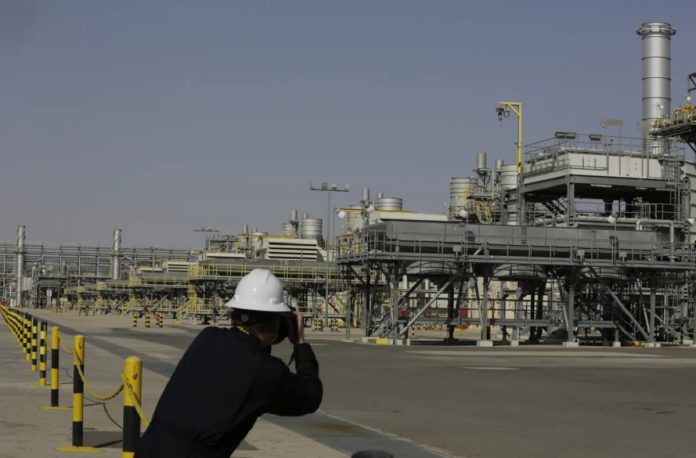
Saudi Arabia has announced it will reduce how much oil it sends to the global economy by one million barrels per day (bpd), as the OPEC+ alliance of major oil-producing countries faces flagging oil prices and a looming supply glut.

The kingdom said on Sunday that it would make these production cuts in July to support the sagging cost of crude after two earlier production cuts by OPEC+ members failed to push prices higher.

OPEC+, which groups the Organization of the Petroleum Exporting Countries and allies led by Russia, reached a deal on output policy after seven hours of talks at its headquarters in Vienna and agreed to extend earlier cuts in supply through the end of 2024 by a further total of 1.4 million barrels per day.

“This is a grand day for us, because the quality of the agreement is unprecedented,” Saudi Energy Minister Abdulaziz bin Salman stated in a news conference, adding that the new set of production targets is “much more transparent and much more fair”.

He also added that the cut by Riyadh could be extended beyond July if needed.

However, many of these reductions will not be real as the group lowered the targets for Russia, Nigeria and Angola to bring them into line with their actual current production levels.

In contrast, the United Arab Emirates was allowed to raise output.

OPEC+ pumps around 40 percent of the world’s crude, meaning its policy decisions can have a major impact on oil prices.

It already has in place a cut of 2 million bpd agreed to last year and amounting to 2 percent of global demand.

In April, it agreed to a surprise voluntary cut of 1.6 million bpd that took effect in May until the end of 2023.

However, those cuts gave little lasting boost to oil prices.

International benchmark Brent crude climbed as high as $87 per barrel but has given up its post-cut gains and has been lingering below $75 per barrel in recent days. United States crude has dipped below $70.

The slump in oil prices has helped US drivers fill their tanks more cheaply and given consumers worldwide some relief from inflation.

Falling energy prices also helped inflation in the 20 European countries that use the euro drop to the lowest level since before Russia’s invasion of Ukraine.

That the Saudis felt another cut was necessary underlines the uncertain outlook for demand for fuel in the months ahead.

There are concerns about economic weakness in the US and Europe, while China’s rebound from COVID-19 restrictions has been less robust than many had hoped.

Western nations have accused OPEC of manipulating oil prices and undermining the global economy through high energy costs. The West has also accused OPEC of siding with Russia despite Western sanctions over Moscow’s invasion of Ukraine.

In response, OPEC insiders have said the West’s money-printing over the last decade has driven inflation and forced oil-producing nations to act to maintain the value of their main export.

Asian countries, such as China and India, have bought the greatest share of Russian oil exports and refused to join Western sanctions against Russia.

It’s possible the latest production cut could send oil prices up and with them, petrol prices. But there is uncertainty about when the slow-growing global economy will regain its thirst for fuel for travel and industry.

Saudis need sustained high oil revenue to fund ambitious development projects aimed at diversifying the country’s economy away from oil.

The International Monetary Fund estimates the kingdom needs $80.90 per barrel to meet its envisioned spending commitments, which include a planned $500bn futuristic desert city project called Neom.

While oil producers need revenue to fund their state budgets, they also have to take into account the impact of higher prices on oil-consuming countries.

Oil prices that go too high can fuel inflation, sapping consumer purchasing power and pushing central banks such as the US Federal Reserve towards further interest rate hikes.

Higher rates target inflation but can slow economic growth by making credit harder to get for purchases or business investments.

Iran’s female taekwondo athlete wins gold medal at World Championships

Nahid Kiani

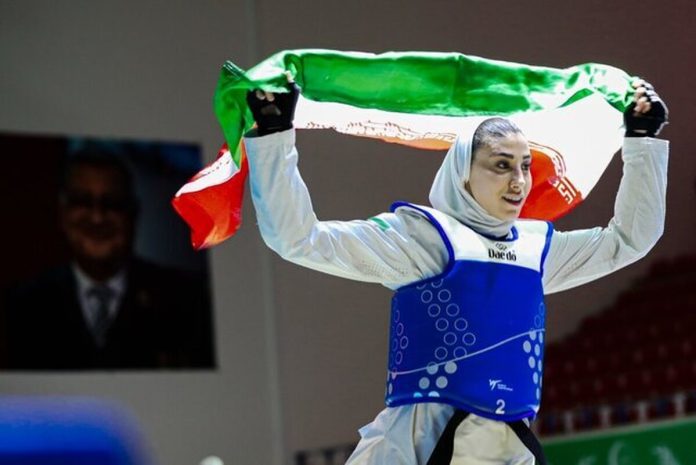
Facing off against China’s Ju Zuo in the women’s -53kg weight category, Kiani, a deserving member of the Iranian national team, emerged as the sole representative of Iran in the finals of the championships.

Kiani dominated the match on Sunday, scoring a 2-0 victory over her Chinese rival.

The remarkable victory marks the first time an Iranian female athlete has achieved a gold medal in the history of the world championships.

In the first round, Kiani delivered an impressive performance, overpowering Zuo with an emphatic 14-0 victory. She continued her winning streak in the second round, defeating Zuo 11-7 and securing the world title.

Throughout the championships, Kiani showcased her exceptional talent and athletic prowess by triumphing over formidable opponents from South Korea, Hungary, Croatia, and Russia.

In the semifinal, Kiani faced off against Russia’s Tatiana Minina, engaging in a thrilling three-round battle. Despite trailing behind until the final two seconds of the third round, Kiani delivered two powerful blows, earning a decisive 10-6 victory and securing her place in the final.

With her groundbreaking victory, Kiani has not only cemented Iran’s position on the global taekwondo stage, but has also etched her name in history as a trailblazer for Iranian women in sports.

Baku’s Heydar Aliyev Airport rejects reports on suspension of flights to Tehran

Heydar Aliyev Airport

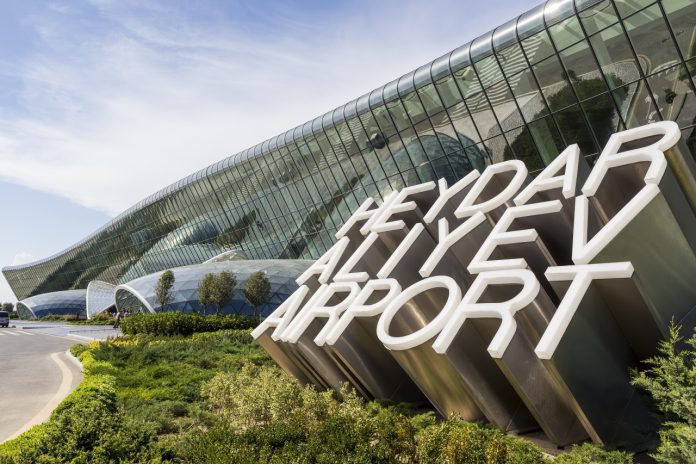
The airport said the Monday morning flights to Iran will go ahead according to schedule.

Earlier, media reports said the Azerbaijan Republic has suspended all flights from the capital Baku to Tehran without prior notice.

Azerbaijani media also said the flag carrier Azerbaijan Airlines will refund the tickets cancelled due to the development.

According to the Azeri media, the suspension of the flights would have meant all air and land access between Iran and the Azerbaijan Republic was limited to the crossing though Nakhchivan autonomous republic, as all other routes have already been blocked.

The development comes amid a war of words between Tehran and Baku over the latter’s ties with Israel, which Iran sees as a threat at its northwestern borders.

Foreign ministers of the two countries held phone talks on April 8 during which the Iranian side raised the “plot” by Israel against the solidarity, security and progress of regional countries.

During the talks the Iranian side had also called on Baku to better manage the media in line with the interests of the two countries.

Tensions between Iran and Azerbaijan have been steadily ramping up in recent months.

In late January, a man stormed the Azerbaijani embassy Tehran, killing its head of security and wounding others.

Investigations in Iran found the attacker had personal motives, but Baku blamed the Iranian government and later expelled a number of Iranian diplomats in April.

In a tit-for-tat move, Iran expelled four Azerbaijani diplomats last month.

Saudi Arabia executes 3 men over terror charges

Saudi Execution

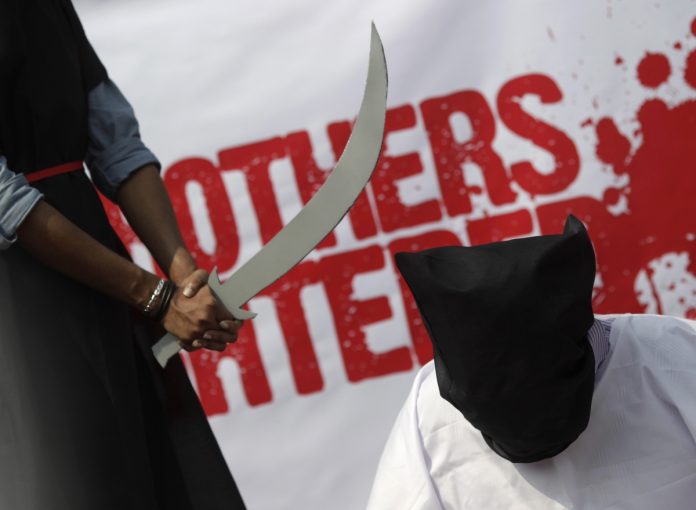
The announcement was made in a statement by the Interior Ministry on Sunday. The death penalties were carried out against Hussein bin Ali bin Muhammad al-Mohishi, Fazel bin Zaki bin Hossein Ansif and Zakaria bin Hassan bin Muhammad al-Mohishi.

The Interior Ministry claimed in the statement the three had been convicted of “joining a terrorist cell, possessing weapons and armed assault on security centers and security men” in the Eastern Region, also known as the Eastern Province.

The executions came less than two weeks after authorities implemented death sentences against three young men from the Shia-populated Qatif region over charges of involvement in sabotage activities.

Riyadh claimed the Saudi nationals “had joined a foreign-based network in order to carry out acts of terror against the kingdom.

They were found guilty of having received training in the use of firearms and making bombs, smuggling men wanted on security charges out of the country, bringing in ammunition and storing them for the purpose of disturbing internal security.”

Saudi Arabia’s oil-rich and predominantly Shia Eastern Province has been the scene of peaceful demonstrations since February 2011.

Protesters have been demanding reforms, freedom of expression, the release of political prisoners, and an end to economic and religious discrimination against the region.

The demonstrations have been met with a heavy-handed crackdown, with regime forces increasing security measures across the province.

Ever since Mohammed bin Salman became Saudi Arabia’s de facto leader in 2017, the kingdom has ramped up arrests of activists, bloggers, intellectuals, and others perceived as political opponents, showing almost zero tolerance for dissent even in the face of international condemnations of the crackdown.

As a result, Muslim scholars have been executed and women’s rights campaigners have been put behind bars and tortured as freedom of expression, association, and belief continue to be denied.