Sunday, December 21, 2025
Home Blog Page 1382

Rights groups say Macron is ‘main architect’ of rehabilitation of MbS

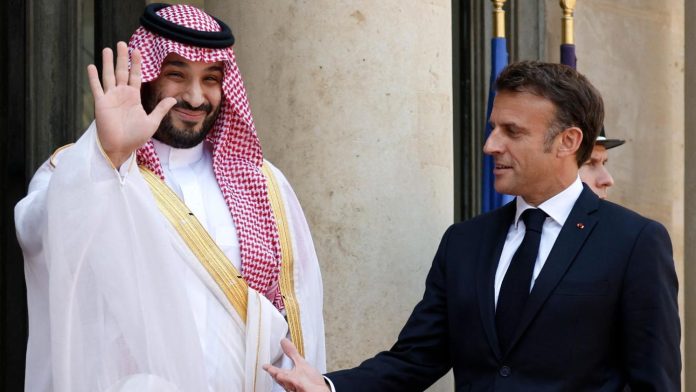
Macron and MbS

Macron and bin Salman met on Friday for a “working lunch” at the president’s official residence, Elysee Palace, where the two leaders discussed bilateral relations and regional issues.

The visit comes ahead of a global financial summit taking place in France. France is also a major weapons and defence supplier to Persian Gulf nations including Saudi Arabia.

Rights groups say that Macron’s welcoming of bin Salman, who has launched an economic pivot as well as a crackdown on civil society and rights activists, points to France’s hypocrisy, as it has slammed countries for staying neutral when it comes to Russia’s invasion of Ukraine.

Macron has been silent regarding the human rights situation in Saudi Arabia, despite a call from Amnesty International urging the French president to bring up the issue of several young men in Saudi Arabia that are facing execution.

A French official told the Associated Press that Macron planned to discuss human rights, as Paris firmly opposes the death penalty.

“Amnesty International will do everything to ask that this French president – who seems to enjoy the company of this prince – makes an effort and that he asks that these young people are never going be executed,” Amnesty’s secretary general Agnes Callamard told French news agency AFP.

Democracy for the Arab World Now (Dawn), a rights group founded by Saudi dissident Jamal Khashoggi, who was killed by Saudi Arabia, pointed to Macron’s remarks warning other countries against arming Russia while selling $850m worth of arms to Russia in 2021.

“While President Macron is lecturing other countries about international law and scolding them for harming human rights by selling weapons to Russia, he’s only been too eager to wine and dine the murderous tyrant of Saudi Arabia in a mad rush to sell him as many weapons as possible,” Sarah Leah Whitson, Dawn’s executive director, said in a statement.

Jean Claude Samouiller, president of Amnesty International France, noted that while Macron has openly welcomed bin Salman to the country, French civil society remains critical of the Saudi leader.

“Civil society is highly critical of this welcome, five years after the murder of Jamal Khashoggi, and I’m not just talking about NGOs,” Samouiller told Middle East Eye, adding, “Improving the kingdom’s image will not require hundreds of millions of euros, but rather concrete improvements in the situation of women activists and minorities, and the abolition of the death penalty.”

Rights advocates and researchers say Saudi Arabia has witnessed an ongoing pattern of systematic repression since 2017, after bin Salman became crown prince and de-facto ruler.

Since then, waves of arrests have targeted dozens of academic and religious scholars, preachers, activists, economists, human rights workers, and women’s rights activists.

“Peaceful activists like Salma al-Shehab are still being sentenced to decades in prison for simple tweets, and we have counted 196 cases of execution in 2022 in Saudi Arabia, seven times the 2020 figure,” Samouiller stated.

The crown prince’s visit to France comes as he has sought to rehabilitate his image in the western world, several years after the 2018 killing and dismemberment of Khashoggi at the Saudi consulate in Istanbul.

Saudi Arabia denies the prince’s involvement, but US intelligence agencies have concluded that Khashoggi’s killing likely occured with bin Salman’s knowledge.

The killing had caused massive outrage and a rift in Saudi Arabia’s relationship with western countries like the US, and while rights groups continue to call out Saudi Arabia for the killing as well as a number of other rights abuses, Washington has since sought to repair these ties.

US President Joe Biden had previously called Saudi Arabia a “pariah” but then last year, Biden made a visit to the kingdom where he met with bin Salman.

Macron also previously hosted the crown prince last year in Paris, in a meeting rights groups similarly criticised as France reconditioning bin Salman’s image on the world stage.

Sevag Kechichian, a researcher at Dawn, told Middle East Eye that it is difficult not to see a disconnect when it comes to France’s stances on human rights in other countries, given that he is welcoming the Saudi crown prince without similar criticisms made to the kingdom.

“It is impossible to avoid the perception that France’s commitments and rhetoric on human rights are self-serving and hypocritical, which further emboldens dictators and perpetrators to commit more abuses,” Sevag told MEE, adding, “There is no doubt that MBS will perceive Macron warmly welcoming him as validation that he can buy his way out of anything, including murder.”

Amnesty’s Callamard told AFP that “Macron has been the main architect of the rehabilitation of the Saudi prince since 2018”.
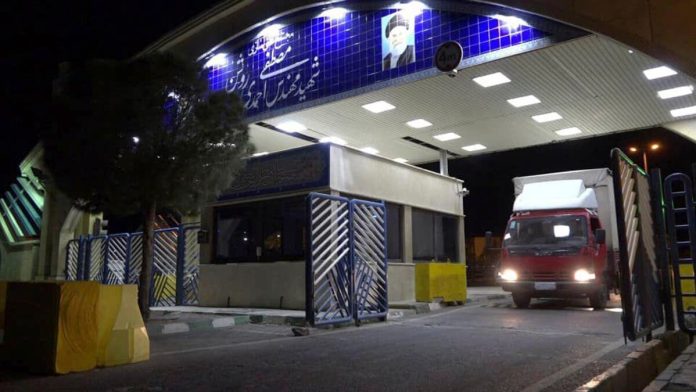
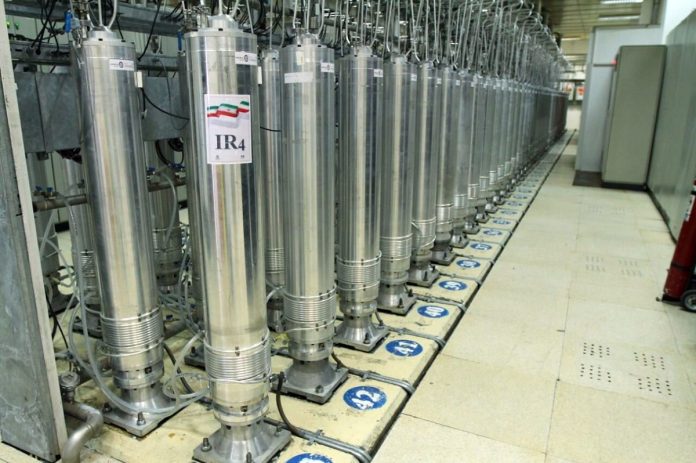
Iran atomic organization rejects media reports on installation of IAEA cameras at Natanz enrichment site

Natanz Nuclear Site

In a statement on Friday, the Iranian nuclear authority said its spokesman, Behrouz Kamalvandi, recently announced the reactivation of the cameras of the International Atomic Energy Agency (IAEA) at a facility in Isfahan.

In in the interview, Kamalvandi described the site as a “centrifuge manufacturing facility.”

The statement said some media outlets have mistakenly identified the site as Natanz.

It explained, “In this video interview, which is also available in full, Kamalvandi talked about the installation of cameras in Isfahan; however, in only one part of the interview, ‘Natanz’ was mentioned by mistake instead of ‘Isfahan facilities,’ and some media also mistakenly reported the installation of cameras in Natanz facilities.”

This is while there are basically no monitoring cameras active at the Martyr Ahmadi Roshan (Natanz) enrichment facility as part of the agreement between Iran and the IAEA, the statement clarifies.

Khashoggi’s widow sues Israeli spyware firm over phone hacking

NSO Group

Hanan Elatr is accusing the NSO Group of violating federal and Virginia hacking laws and negligence in selling its Pegasus spyware to hostile foreign actors.

Pegasus has drawn international attention due to reports of its use by the Israeli government on protesters, by authoritarian regimes on personal targets and even by the FBI.

The technology has been effectively banned in the United States since 2021.

A 2021 report found that UAE officials downloaded Pegasus onto Elatr’s phone while she was in custody in 2018.

Khashoggi, a fervent critic of the Saudi government, was murdered at the Saudi consulate in Istanbul in October 2018. A U.S. intelligence report found that Saudi Crown Prince Mohammed bin Salman approved the killing.

Following Khashoggi’s killing, Elatr was put under house arrest in Dubai before going into hiding in the U.S.

Elatr’s suit says the spyware “caused her immense harm, both through the tragic loss of her husband and through her own loss of safety, privacy, and autonomy, as well as the loss of her financial stability and career.”

“She lives in a state of constant hyper-vigilance, unable to safely participate in social activities, constantly looking over her shoulder,” the suit states.

Cybersecurity experts discovered traces of NSO Group spyware on Elatr’s cellphone in December 2021, they told The Washington Post. Time stamps of activity lined up with periods when she was detained by UAE authorities.

“We found the smoking gun on her phone,” cybersecurity expert Bill Marczak told The Post.

NSO Group has also been sued by Facebook owner Meta and Apple over the Pegasus software’s use on their products online.

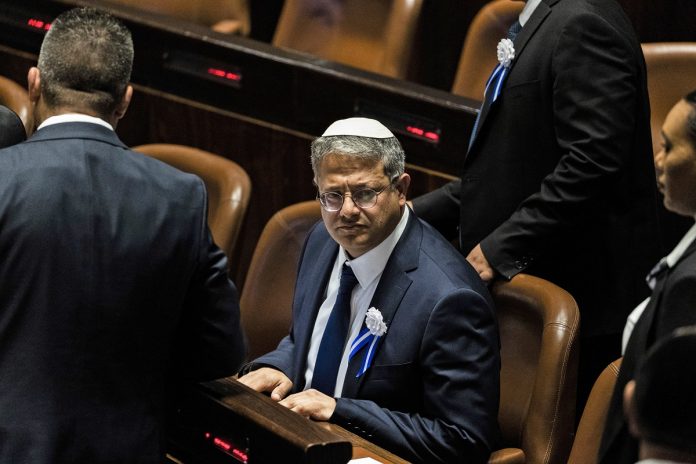
Far-right minister set to tighten grip on Israeli police

Itamar Ben-Gvir

The decision was leaked to the Israeli media but has not been formally announced to Police Commissioner Kobi Shabtai, whose term is set to end in January.

Shabtai has regularly clashed with Ben Gvir, with the latter seeking to exert greater political influence over who is appointed to important posts in Israel’s police force.

In recent days Ben Gvir has reportedly been holding a series of meetings with top police commanders, and even former military officials, to gauge their interest in the post of police commissioner.

Benny Gantz, the leader of the opposition National Unity party, condemned Ben Gvir’s reported plans.

“The leaks from Ben Gvir about his intention to end the term of the police commissioner – a man who actually has contributed dozens of years to the security of the state – at a time when he is overseas for a sensitive family issue, embarrasses the state of Israel,” said Gantz.

“Ben Gvir is not fit to oversee the internal security of Israel and is harming the ability of the police to deal with great challenges,” he added, calling on the Israeli Prime Minister Benjamin Netanyahu to fire the far-right minister “long before the commissioner’s term ends”.

According to the Israeli daily Haaretz, Shabtai wants to serve another year and was planning top appointments in the police force, which Ben Gvir was expected to reject.

A series of crises in recent weeks have resulted in Ben Gvir and Shabtai clashing over who should be appointed as chief of police in Tel Aviv, Israel’s economic and cultural hub that regularly sees opposition protests against the government.

Since becoming national security minister, Ben Gvir, has regularly courted controversy. At the beginning of this year, he stormed the Al-Aqsa Mosque’s courtyards in occupied East Jerusalem flanked by police, a move that inflamed tensions with Palestinians.

A former member of the banned anti-Arab Kach party, he has frequently called Palestinian members of parliament “terrorists”, and has called for the deportation of political opponents.

There is increasing pressure on Ben Gvir to account for the deadly crime wave sweeping the country, particularly amongst the country’s Palestinian population.

Last week, Ben Gvir blamed the sharp rise in the number of deaths on Shabtai’s desire “to appoint his friends to jobs”.

Since the start of the year, some 100 people have been killed in crime-related violence in Palestinian communities in Israel, according to NGOs.

Palestinians in Israel have long complained of discrimination and police inaction against violence and crime that disproportionately affects their communities.

They say the police have failed to ensure their safety against organised crime gangs that have plagued them for years.

Some accuse Israeli authorities of complicity with criminals in a bid to weaken the social fabric of their community and make them feel unsafe.

Last week six former Israeli police chiefs and 42 deputy police commissioners called on Netanyahu to fire his far-right coalition ally Ben Gvir from his post as national security minister.

Ben Gvir poses “a tangible and immediate danger to the security of the State of Israel”, they said in an open letter to Netanyahu.

The police chiefs also asked Netanyahu for a meeting without Ben Gvir’s presence to “present proposals that would strengthen the police force” and “expand on the factors that led to this situation”.

Earlier this year, Ben Gvir launched a series of punitive measures against Palestinians living in occupied East Jerusalem, which some Israeli officials said could result in increased tensions.

There are fears now that Ben Gvir’s attempts to replace the head of the police could result in more power in the minister’s hands, particularly in light of the April authorisation of the establishment of a national guard directly under Ben Gvir’s control.

He has said that the force would focus on policing Palestinians, with political rivals accusing him of working to set up a “militia”, and potentially using the force to crack down on opposition demonstrations.

IRGC member killed in clashes with counter-revolutionary bandits in Iran’s Kordestan

IRGC

The IRGC said in a statement that the local staff member, Ragar Tabireh, lost his life in the skirmishes on Friday.

The IRGC, it added, “will continue to take security-building measures until the northwest region is completely cleared of counter-revolutionary groups.”

Iran’s Kordestan Province borders Iraq’s semi-autonomous Kurdistan region, which has long served as a safe haven for anti-Iran terrorist separatist groups.

Earlier this week, the IRGC conducted a security maneuver in the province, clearing a mountainous region of counter-revolutionary groups in Sarvabad.

The IRGC has launched several rounds of military strikes on the positions of separatist groups based in the Iraqi Kurdistan, as officials of the Iraqi region failed to heed Tehran’s warnings and get rid of the anti-Iran terror bases there.

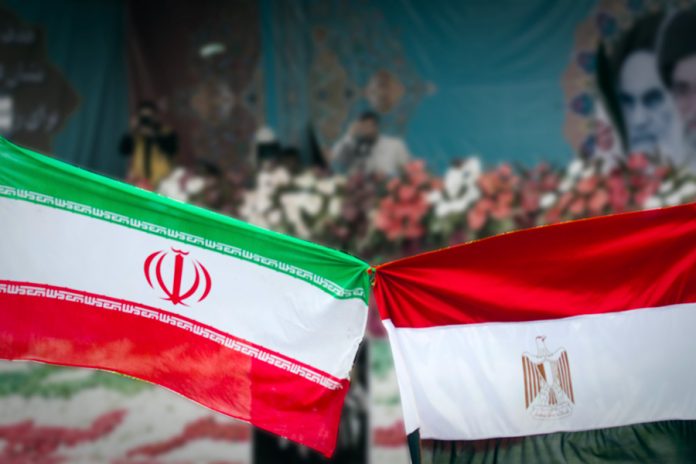
Iran and Egypt reach agreement on formation of committee to restore relations: Report

Iran Egypt Flags

The nascent Egypt-Iran détente puts normalization of Cairo-Tehran bilateral relations on the horizon, Saudi Arabia’s Al-Arabiya network reported on Friday, citing the informed sources.

No further details have been reported.

Earlier, the Leader of the Islamic Revolution Ayatollah Seyyed Ali Khamenei had welcomed the development of relations between Tehran and Cairo.

Ayatollah Khamenei last week publicly endorsed normalizing ties with Egypt, saying that Iran “welcomes Egypt’s interest in restoring relations.”

“We have no problem in this regard,” he added.

Iran and Egypt cut diplomatic ties in 1980 after Cairo admitted the former Shah of Iran and recognized Israel.

Live Update: Russia’s “Special Operation” in Ukraine; Day 479

Russia Ukraine War

Biden doesn’t think it should be made easier for Ukraine to join NATO

US President Joe Biden does not believe that it should be made easier for Ukraine to join NATO, as Kiev has to meet the mandatory standards of becoming a member of the alliance, according to Biden’s statement released by the White House press pool on Saturday.

When Biden was asked if he was “going to make it easier for Ukraine to join NATO,” he said, “No. Because they’ve got to meet the same standards. So we’re not going to make it easy.”


Leaders of 6 African countries arrive in Russia as part of peace mission

The leaders of six African countries have arrived in the Russian city of St Petersburg as part of a peace mission, according to Russian state media TASS.

The leaders of South Africa, Zambia, the Comoros, Congo Brazzaville, Egypt, Senegal, and Uganda are set to meet with Russian President Vladimir Putin.

The leaders previously met with Ukraine’s President, Volodymyr Zelensky, on Friday in Ukraine, as part of a peace mission to both countries.

Rebuffing their efforts to bring Kyiv to the negotiating table, Zelensky ruled out any peace negotiations with Russia in a press conference after their meeting.

“Today, I have clearly said repeatedly at our meeting that to allow any negotiations with Russia now that the occupier is on our land means to freeze the war, to freeze pain and suffering,” he told journalists.

On their arrival in Kyiv, the African leaders were greeted with explosions and forced to take shelter in bunkers as Russian air strikes hit the capital.


Blinken: US closely monitoring Russia-Belarus situation but has “no reason to adjust” its nuclear posture

US Secretary of State Antony Blinken said that President Joe Biden’s administration is closely monitoring the situation between Russia and Belarus after President Vladimir Putin claimed Friday that Moscow has deployed tactical nuclear weapons to the neighboring country.

The US has “no reason to adjust” its nuclear posture and doesn’t “see any indications” that Russia is preparing to use a nuclear weapon, Blinken said at a news conference Friday with Singapore’s Foreign Affairs Minister Vivian Balakrishnan at the State Department.

Blinken added the US remains committed to defending “every inch” of NATO territory.

“And as for Belarus itself, this is just another example of (Belarus President Alexander) Lukashenko making irresponsible, provocative choices to cede control of Belarus’s sovereignty against the will of the Belarusian people,” he continued.

What Russia and Belarus are saying: In remarks during an economic forum in St. Petersburg, Putin alleged earlier that the tactical nuclear weapons to be stored in Belarus have arrived.

His comments came after Russian state media TASS reported that the country’s main investigative authority had opened an office in Belarus in connection to a delivery of tactile nuclear weapons.

The Russian president also slammed NATO and warned that there is “serious danger of further drawing” the alliance into the military conflict by supplying military weaponry to Ukraine.

Belarus is one of Russia’s few allies in its war on Ukraine. It helped Russia launch its invasion of Ukraine in February 2022, allowing the Kremlin’s troops to enter the country from its territory.

Earlier this week, Belarusian President Aleksander Lukashenko said the country was set to receive the tactical nuclear weapons from Russia and claimed such weapons are needed to act as a “deterrent” against aggression.


Zelensky: There will be no negotiations until Russian forces withdraw from all occupied Ukrainian land

Ukrainian President Volodymyr Zelensky stated that any peace talks with Russia are possible only after the complete withdrawal of Russian troops from occupied territories.

“Today, I have clearly said repeatedly at our meeting that to allow any negotiations with Russia now that the occupier is on our land means to freeze the war, to freeze pain and suffering,” Zelensky said at a news conference after meeting with several African leaders in Kyiv.

“It is obvious that Russia is now trying to return to its old primitive tactics of deception. But fooling the world in Russia will no longer work. It is definitely impossible to deceive Ukraine. I emphasize once again: We need real peace, and therefore, a real withdrawal of Russian troops from our entire independent land,” he added.

Zelensky appeared to be at odds with the South African President Cyril Ramaphosa, who stood alongside him at the news conference and called for a de-escalation of the conflict.

Ramaphosa said “there must be de-escalation on both sides so that peace can find a way to resolve the problem.”

Zelensky noted he and the African leaders had also discussed the Black Sea grain deal, which is crucial for food security around the globe. Ukraine is one of the world’s leading grain exporters.

“We really help the world and precisely many peoples of Africa, Asia, Europe to maintain social stability and price predictability in the food market through our exports. Together with partners, we are working on grain hubs in Africa,” Zelensky added.

In May, the grain deal was extended for two months in an agreement brokered by Turkey and the United Nations.

“The food supply must be reliably guaranteed and everyone’s right to food must be ensured by stopping any attempts by states such as Russia to use the threat of hunger and social instability to blackmail the people,” he continued.


South African leader calls for de-escalation of Ukraine conflict after meeting with Zelensky in Kyiv

African countries are prepared to participate further in a peace pact in Ukraine, South African President Cyril Ramaphosa said on Friday after meeting with African leaders and Ukrainian President Volodymyr Zelensky in Kyiv.

“There must be a de-escalation of the conflict,” Ramaphosa said while outlining a 10-step peace initiative several African countries have agreed to participate in.

“And we argue that there must be de-escalation on both sides so that peace can find a way to resolve the problem,” he added.

Speaking alongside other African leaders and Zelensky, Ramaphosa called for diplomatic negotiations to take place, adding that he was listening to Zelensky today and will be hearing from Russian President Vladimir Putin tomorrow in St. Petersburg.

“There should be peace through negotiations and diplomatic means,” he said.

“And we should as we advance towards that peace because all wars, in the end, come to an end. I really believe that this war should be brought to an end as quickly as possible,” he continued.

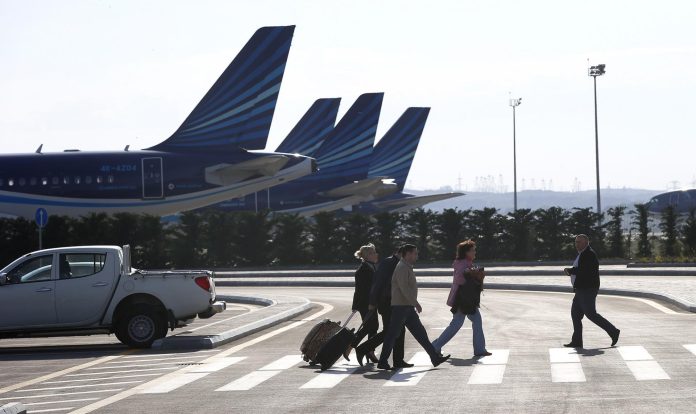
Azerbaijan to stop issuing visas to Iranians at airport from June 23

Heydar Aliyev International Airport

The Iranian Embassy in Baku said the decision was announced by the Azeri Ministry of Foreign Affairs.

It added that Iranian nationals who want to travel to the Republic of Azerbaijan need to visit the Azeri diplomatic missions in Iran to get their visas or apply for them on ww.mfa.gov.az, which is a website launched by the Azeri Ministry of Foreign Affairs for this purpose.

Relations between Tehran and Baku soured several months ago after a man attacked the Azeri Embassy in Tehran. Iran arrested the attacker, saying the man did the attack on a personal motive.

Other developments also increased tensions between Iran and Azerbaijan including Baku’s push to carve out a chunk of land for its Zangezur route that would obliterate Iran’s border with Armenia.

Tehran objected to this plan, vowing to not allow any change in the region’s geopolitical map.

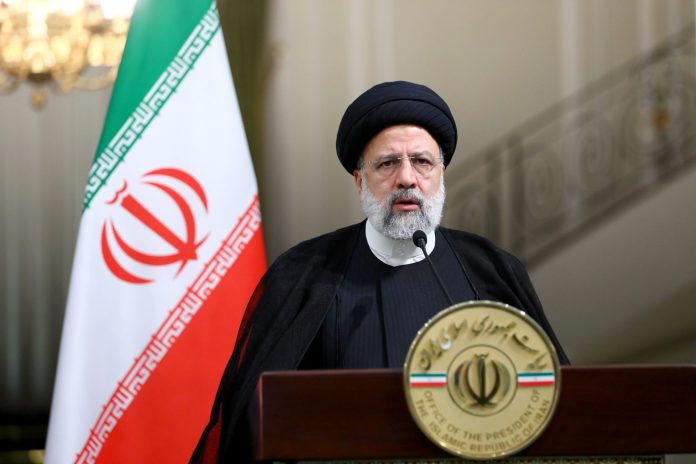
Iranian pres.: Tehran seeks good ties with all countries

Ebrahim Raisi

Speaking upon his return from Latin America on Friday, Raisi said any country which would seek to have good and constructive ties with Tehran with a view to the interests of both sides, there are no obstacles to such a decision.

He however warned that any government that would seek enmity toward Iran, then Tehran’s policy is to resist hostility.

The Iranian president noted that any move by his administration is aimed at safeguarding the country’s national interests.

Raisi also spoke about his visit to the Latin American countries of Venezuela, Nicaragua and Cuba.

He said that during the 3-leg tour, the Iranian delegation signed 35 deals in such fields as energy, industry and mining in the countries.

Raisi also said the Iranian delegation accompanying him also concluded 5 knowledge-based contracts there worth 90 million dollars.

The president added that if the agreements go into force, positive developments will happen.

He said Iran and Cuba also agreed to form an working group to start technological cooperation, underling that the Latin American nation has a good capability in bio-technology.

Raisi stressed that South American countries are rich in natural resources.

The president further hailed the Latin American nations for their resistance against the bullying powers over the past decades and said Iran and those countries are on the same page in this regard.

Raisi visited Venezuela, Nicaragua and Cuba at the invitation of the presidents of those countries.

Iran’s ex-nuclear chief: Tehran’s success in producing 20% nuclear fuel shocked West

Iran nuclear program

Salehi added that when Iran said it was able to produce the fuel, the Western countries described thas as a bluff on part of Tehran. According to the former director of the AEOI, the Western states also set dozens of conditions for supplying the nuclear fuel to Iran and also said it would take 2.5 years for them to give it to the Islamic Republic.

Salehi stressed that after the Iranian parliament approved the strategic action law and required the government to produce 120 kilograms of 20% nuclear fuel within a year, the AEOI managed to produce 400 kilograms of it during that period of time.

He however noted that for all its acceptance of some restrictions on its nuclear program under the 2015 nuclear deal, otherwise known as the JCPOA, Iran did not sustain any loss by entering into the agreement.