Sunday, December 21, 2025
Home Blog Page 1381

Iranian TV show ‘The Actor’ grabs int’l prize in German festival

The Actor

Directed by Nima Javidi and produced by Majid Motallebi, “The Actor” was awarded an honorable mention by the German festival held in Cologne June 13-17.

Navid Mohammadzadeh, the lead actor of the TV show, had already been granted a grand prize in the 2023 Series Mania in France for his impressive performance.

“The Actor” is also to be screened at the 2023 Transilvania International Film Festival, one of the reputable festivals in Eastern Europe, in a city in the northwest of Romania.

The series is a dazzling story about two impecunious actors who turn the world into their scene.

Iran condemns deadly attack on school in Uganda

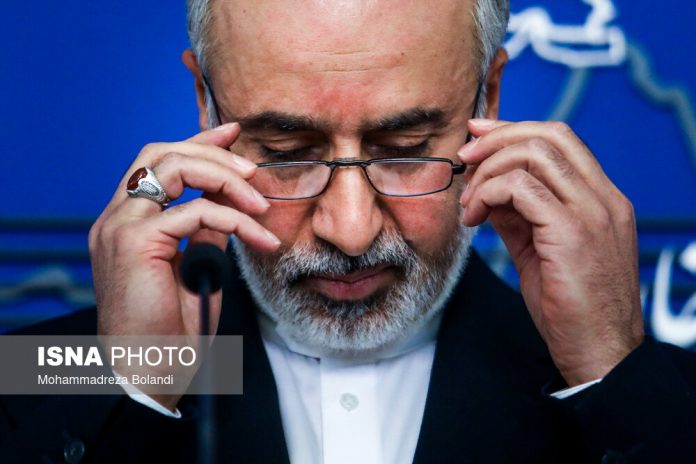
Nasser Kanaani

Kanaani said on Sunday the horrific act of terrorism in Uganda is a cause for concern.

The barbaric attack, Kanaani said, showed once again that terrorism and extremism are a pervasive danger to the world community, and an effective battle against it requires the cooperation and responsible action on the part of the world community and relevant international organizations.

Kanaani offered condolences to and sympathy with the government and nation of Uganda, the families of the victims, and the injured.

On Friday, militants linked to the Daesh  terror group killed around 40 people and abducted six others in an attack on a school in western Uganda near the border with the Democratic Republic of Congo, the African country’s  military announced on Saturday.

Israelis rally against PM’s judicial plan for 24th week

Israel Protest

Protests against government plans for judicial overhaul continued for the 24th straight week in Israel on Saturday.

Thousands of protesters demonstrated at Nahalal and Karkur in northern Israel. Other protests were reported in Tel Aviv, Haifa, Rehovot, Holon and Herzliya, The Jerusalem Post newspaper reported.

Protests in Tel Aviv were joined by opposition leader Yair Lapid and former Foreign Minister Tzipi Livni, according to Haaretz daily.

Israel has been in political turmoil over the past few months over plans by the government of Netanyahu for judicial reforms, which the opposition views as a power grab in favor of the executive authority.

Netanyahu, however, insists that his plan would enhance democracy and restore the balance among the legislative, executive and judicial branches of government.

In March, Netanyahu, who is on trial for corruption, bowed to pressure and announced a temporary halt to the plans amid protests across the country.

Russia says Iran’s full membership at SCO on agenda at next summit

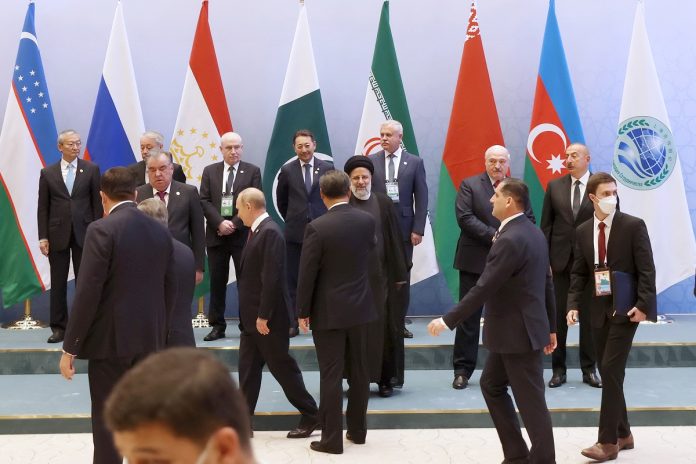
Shanghai Cooperation Organization (SCO)

Khakimov made the remarks on Saturday on the sidelines of the 26th annual St. Petersburg International Economic Forum (SPIEF).

“Iran’s accession as a full member will be one of the key decisions of the July 4 summit that will take place in New Delhi via video conference. Iran has completed the mandatory procedures and will join the family of SCO member states at the New Delhi summit,” he stated.

SCO is a transcontinental political, economic, and security alliance, which has a total of eight members. Iran is the observer SCO country that is set to become a full-time member of the charter.

Khakimov also added that at the upcoming SCO summit, a memorandum will also be signed on Belarus’ obligations aimed at obtaining the status of a member state in the organization.

Earlier, the Indian Foreign Ministry announced that a meeting of the SCO Council of Heads of State would take place online on July 4. In addition to the SCO’s eight member states, Belarus, Iran and Mongolia have been invited to the event as observer states.

Iranian Foreign Minister Hossein Amirabdollahian had said that the country’s full membership in the SCO would be finalized in July during the upcoming summit of the association.

The SCO was founded by China, Russia, Uzbekistan, Kazakhstan, Kyrgyzstan, and Tajikistan at a summit held in Shanghai in 2001.

China, Kyrgyzstan, Pakistan, Russia, Tajikistan, India, Kazakhstan, and Uzbekistan are its current full members. Iran, Afghanistan, Belarus, and Mongolia are observer states.

Iran first applied for membership in the alliance 15 years ago. The approval of Iran’s candidacy came at a summit in the Tajik capital of Dushanbe in September 2021.

The organization accounts for 40 percent of the world’s population and 28 percent of the global gross domestic product (GDP).

Hajj pilgrims leave Yemen for Saudi Arabia in first direct flight since 2016

Yemen Hajj pilgrims

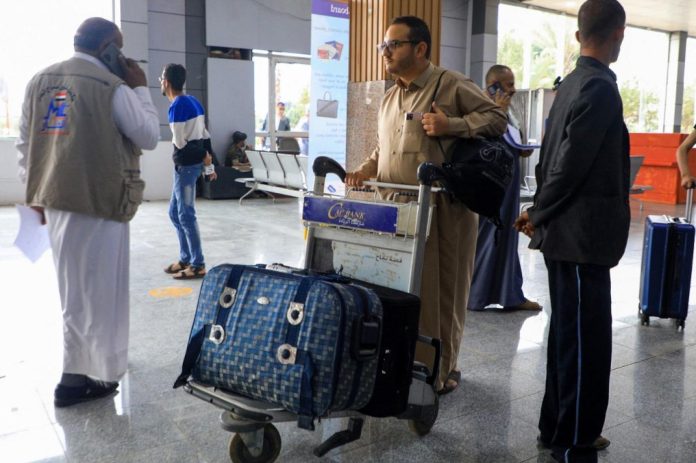
The first commercial flight carrying more than 270 Yemeni Hajj pilgrims has departed Sana’a to Saudi Arabia, in the latest sign of easing tensions after more than eight years of Saudi-led war against Yemen.

The flight by Yemen’s national carrier Yemenia — also known as Yemen Airways — took off from Sana’a International Airport at 8 p.m. local time (1700 GMT), heading to the Saudi coastal city of Jeddah, Khalid al-Shayyef, head of the Yemeni airport, said.

He told The Associated Press the flight was the first of five that would transfer this year’s Muslim pilgrims from Sana’a to Saudi Arabia for Hajj, the pilgrimage to Mecca required once in a lifetime of every Muslim who can afford it and is physically able to make it.

Along with Saturday’s flight, two more have been scheduled for Monday and Wednesday, while officials from Yemen’s popular Ansarullah resistance movement and Saudi authorities were working on scheduling two additional flights, he said.

Thousands of Yemeni pilgrims travel by bus to Saudi Arabia, or to the southern port city of Aden – an arduous 12-hour journey due to checkpoints – where they can fly to the neighboring country.

“We can no longer bear the burdens and hardships of traveling to Aden,” Akram Mohamed Murshid, one of the pilgrims boarding the plane, said.

“Hopefully, the blockade will end and the airport will remain open. We are very happy and relieved, and I cannot describe the feeling,” Mohammad Askar, another traveler said.

The Yemeni Minister of Public Works and Roads, Ghaleb Mutlaq, said about 200 flights would be needed to accommodate the 24,000 people who wanted to travel.

“We consider what is happening today as a good gesture, so that airports, especially Sana’a airport, will be opened to Yemeni travelers,” Najeeb al-Aji, Yemeni Minister of Guidance, Hajj and Umrah, told journalists.

Saudi Arabia started a brutal war of aggression against Yemen in March 2015, enlisting the assistance of some of its allies, including the United Arab Emirates.

The war, which has enjoyed generous arms, logistical, and political support from the United States and several other Western governments, has been seeking to restore power in Yemen to the country’s former Riyadh- and Washington-friendly government.

The former Yemeni government’s president Abd Rabbuh Mansur Hadi resigned from the presidency in late 2014 and later fled to Riyadh amid a political conflict with Ansarullah. The movement has been running Yemen’s affairs in the absence of a functioning administration.

The war has, meanwhile, killed tens of thousands of Yemenis and turned entire Yemen into the scene of the world’s worst humanitarian crisis.

Taliban make US withdrawal anniversary a national holiday

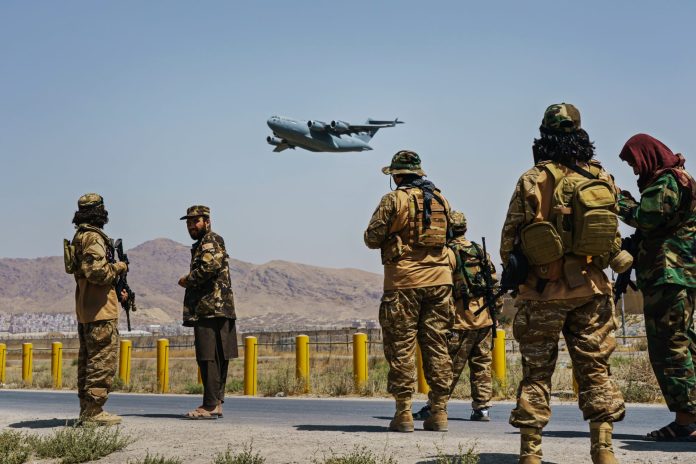
US Troops Afghanistan

Festivities were first organized last year, when the authorities and Taliban supporters marked the first anniversary of the withdrawal. Taliban fighters held a rally on Massoud Square in Kabul outside the former US embassy building.

The last American soldier, US Army Major General Chris Donahue, boarded a military transport plane shortly before the deadline for the withdrawal expired on August 31, 2021, ending the grueling 20-year campaign.

The US and its allies sent troops to Afghanistan in 2001 to fight Al-Qaeda and other jihadist groups as part of Washington’s global ‘War on Terror’ that was proclaimed following the 9/11 terrorist attacks.

The Western forces quickly took Kabul, but the Taliban remained active in large swaths of the country, and the war with insurgents dragged on for many years, while the campaign became more unpopular in the US.

The Taliban eventually recaptured several provincial capitals and seized Kabul with little to no resistance in August 2021. The unexpected fall of the city forced the Pentagon to carry out a hasty evacuation of diplomats, American nationals, and their Afghan helpers.

Washington has been roundly criticized for its handling of the evacuation, and for leaving thousands of allied Afghans behind.

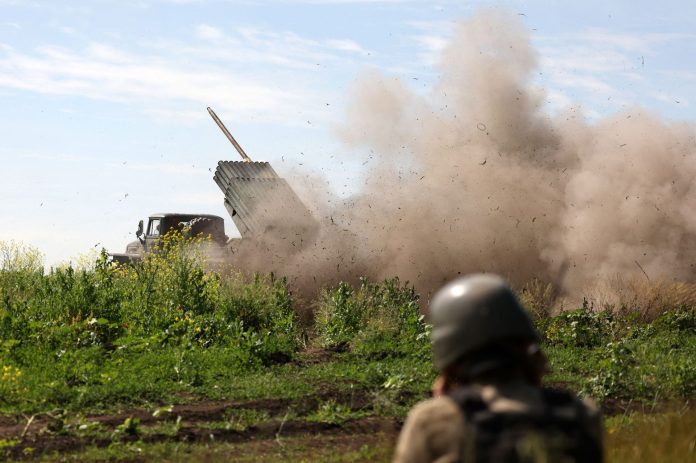
Live Update: Russia’s “Special Operation” in Ukraine; Day 480

Russia Ukraine War

EU says accelerating arms shipments to Ukraine

European Union industry chief Thierry Breton stated that the bloc is speeding up arms deliveries to Ukraine in support of the country’s counteroffensive against Russian forces.

“We are going to step up our efforts to deliver arms and ammunition, this is a war of high intensity in which they play a crucial role,” Breton said in an interview with the French daily Le Parisien.

“We are preparing for the war to last several more months, or even longer,” he added.


Ukrainian attacks on three sections of frontline repelled: Russia

Russia’s defence ministry says its forces have repelled a series of Ukrainian attacks across three sections of the frontline.

The ministry added Kyiv was pressing most actively in the Zaporizhzhia region.

The statement did not mention the settlement of Piatykhatky in Zaporizhzhia region, which a Russian-installed official said earlier had been taken by Ukraine.


Ukraine: 14 airstrikes launched on Russian positions

Ukraine says it launched 14 airstrikes on areas where Russian forces are concentrated.

The air force carried out 14 airstrikes over the past day, hitting areas where enemy personnel are stationed, Ukraine’s General Staff said in a statement on Facebook, adding: “Our defenders also destroyed two anti-aircraft missile systems.”

The statement also claimed that Ukrainian missiles and artillery struck three control points, five ammunition depots and three artillery units in the past day.

Russia is concentrating its war effort in the directions of Lyman, Bakhmut, Avdiivka and Marinka, the statement read.


Russia, Ukraine suffering heavy military casualties: UK

The UK says Russia and Ukraine are suffering high numbers of military casualties as Kyiv fights to dislodge the Kremlin’s forces from occupied areas in the early stages of its counteroffensive.

Russian losses are probably at their highest level since the peak of the battle for Bakhmut in March, UK military officials said in their regular assessment.

According to British intelligence, the most intense fighting has centered on the southeastern Zaporizhzhia province, around Bakhmut and further west in Ukraine’s eastern Donetsk province.

While the update reported that Ukraine was on the offensive in these areas and had “made small advances,” it said that Russian forces were conducting “relatively effective defensive operations” in Ukraine’s south.


Toll rises to at least 45 in flooding from Kakhovka dam collapse

The toll from the collapse of a major dam in Russian occupied Ukraine is now at least 45, after authorities on both sides gave updates.

Ukraine’s Ministry of Internal Affairs said Saturday at least 16 people died and 31 are missing from the flooding, while on the same day a Russian-backed Kherson official Andrey Alekseenko posted on Telegram that the toll had risen to 29 people

The Ukrainian ministry also said 3,614 people had been evacuated from the flooded areas “including 474 children and 80 people with reduced mobility.”

The Nova Kakhovka dam in southern Ukraine collapsed on June 6. As the largest reservoir of water in Ukraine, it holds a volume equal to the Great Salt Lake in the US state of Utah.

Russia and Ukraine accuse each other of destroying the Nova Kakhovka dam in the Russian-controlled part of the Kherson region

The dam collapse has repercussions for both nations.

For Ukraine, it has destroyed villages, flooded farmland, deprived thousands of power and clean water, and caused massive environmental damage. For Russian forces, it has washed up troops, flooded trenches and removed natural defenses they relied on along the Dnipro river.


US secretary of state will raise war in Ukraine and other “real concerns” with Chinese officials during visit

US Secretary of State Antony Blinken is en route to Beijing for a high-stakes visit meant to steer relations between the United States and China back on course after months of inflamed tensions between the two nations.

Officials from both governments have signaled low expectations for the visit, but Blinken has vowed to raise “our very real concerns on a range of issues,” including the war in Ukraine.

While Beijing has sought to play the part of peacemaker between Moscow and Kyiv, China’s messaging has been met with significant skepticism by US officials and other Western leaders.

China has released a vaguely worded position paper on a “political settlement” to the conflict, but it has been criticized for not calling on Russia to withdraw its troops from Ukrainian territory, as Kyiv and more than 100 governments around the world have done.

And Western officials raised concerns earlier this year that China could be considering providing Russia with lethal military assistance, an accusation denied by Beijing.

In April, senior US Treasury officials said they had not seen evidence China is providing extensive assistance to Russia for its war in Ukraine, but officials remain wary as the two countries forge closer ties.

Ahead of his visit Saturday, Blinken spoke by phone separately with Japanese Foreign Minister Yoshimasa Hayashi and South Korean Foreign Minister Park Jin. A US State Department spokesperson said Blinken discussed regional priorities with both leaders, as well as reaffirming each country’s continued support for Ukraine’s sovereignty.


Putin tells African leaders Russia is open to “constructive dialogue” about conflict in Ukraine

Russian President Vladimir Putin said Moscow is “open to a constructive dialogue” and praised African countries’ diplomatic approach to the war in Ukraine during a meeting he held with several leaders from the continent in St. Petersburg on Saturday.

“We salute the balanced approach of our African friends to the Ukrainian crisis. … We are open to a constructive dialogue with all those who want peace based on the principles of justice and consideration of the legitimate interests of the parties,” Putin stated.

He maintained that “Russia is ready to consider any African proposals for conflict settlement in Ukraine,” but blamed Kyiv for refusing to negotiate.

Ukrainian President Volodymyr Zelensky said Friday after meeting with the African leaders that any peace talks with Russia are possible only after the complete withdrawal of Russian troops from occupied territories.

Putin also claimed “the crisis on the global food market is not a consequence of conflict in Ukraine.”

“Ukrainian grain supply to the world’s markets doesn’t solve the problem of world hunger,” he added.

After invading Ukraine in February 2022, Russia initially blockaded vital grain exports from key Ukrainian Black Sea ports, including Odesa, Chornomorsk and Pivdennyi, which meant that millions of tons of Ukrainian grain were not exported to the many countries that rely on the country’s production. Last summer, Turkey and the United Nations helped broker an agreement to enable the safe passage of ships from Ukraine in the Black Sea grain deal.

“Exports of Ukrainian grain under the deal ensuring its safe passage through the Black Sea are not helping to resolve Africa’s problems with high global food prices, as only 3% have gone to the poorest countries,” Putin stated.

Data from the United Nations shows that about 802,000 metric tons of cargo has gone to low-income countries, and three of those five countries are located in Africa. Other African countries receiving cargo are classified as lower-middle income.

“Countries in need should not suffer, so Moscow went to great lengths to ensure the supply of Ukrainian grain to African countries,” Putin continued.

A June 15 update from the Office of the UN coordinator for the Black Sea Grain Initiative said that, “In 2022, Ukraine supplied more than half of (the World Food Programme’s) global wheat grain procurement, as was the case in 2021. The volume of food exported by the Initiative in May was the lowest since the start of the Initiative and well below shipping demand and Ukraine’s export capacity.”

On Saturday, the leaders offered to be a mediator in the Ukrainian war and encouraged “dialogue and compromise” as well as “de-escalation on both sides.”

South African President Cyril Ramaphosa called for “the war to be ended.”

Ramaphosa also pushed for “opening up of the movement of the grains across the Black Sea so whatever blockages there are should be released.”

He also called for “all children who have been caught up in this conflict to be returned to their homes.”

Putin told African leaders that “the Russian authorities absolutely legally took children out of the conflict zone in Ukraine and have never been against their reunification with their families.”

In March, the International Criminal Court issued an arrest warrant for Putin and Russian official Maria Lvova-Belova for an alleged scheme to deport Ukrainian children to Russia.


Biden says he wouldn’t ease barriers for Ukraine’s membership into NATO

When US President Joe Biden was asked whether he would ease barriers for Ukraine’s addition to NATO, he flatly said “no.”

“No. Because they gotta meet the same standards. So I’m not gonna make it easier,” he told reporters Saturday ahead of his departure to Philadelphia for his first official presidential campaign event.

“I think they’ve done everything related to demonstrating the ability to coordinate militarily, but there’s a whole issue of, is their system secure? Is it non-corrupt? Does it meet all the standards everyone, every other nation in NATO, does? I think it will. I think it can. But it’s not automatic,” he added.

Biden and his team are in the midst of a high-stakes conversation with fellow NATO members on how and when Ukraine may join – a debate that could expose strains in the alliance ahead of a key summit next month in Vilnius, Lithuania.

A source familiar with the situation told CNN Biden is comfortable with removing one of the hurdles for Ukraine to join NATO. According to the source, Biden would be willing to drop the Membership Action Plan (MAP) for Ukraine, which was described in a 2008 agreement as “the next step for Ukraine … on their direct way to membership.” The MAP, characterized as “the program of advice, assistance and practical support tailored to the individual needs of countries wishing to join the Alliance,” is a process that other nations have had to undertake to join NATO.

Its removal would represent a small step in easing Ukraine’s accession into the defensive alliance. It is part of a proposal from NATO Secretary General Jens Stoltenberg and was discussed when he met with Biden in Washington earlier this week, the source added.

Ukrainian President Volodymyr Zelensky has said he understands that his country cannot become a member of NATO while it is still at war.

Biden also stated that Russian President Vladimir Putin’s claim about the arrival of the first tactical nuclear weapons to be stored in Belarus is “totally irresponsible.”

On Friday, US Secretary of State Antony Blinken said the Biden administration is closely monitoring the situation between Russia and Belarus, but the US has “no reason to adjust” its nuclear posture and doesn’t “see any indications” that Russia is preparing to use a nuclear weapon.


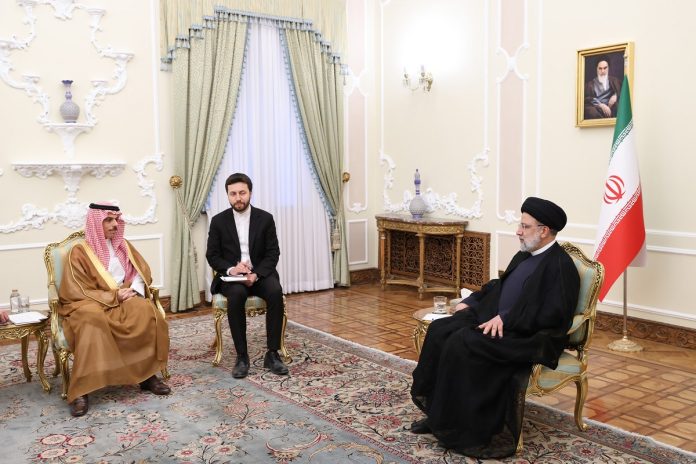
Iranian pres. to Saudi FM: Expansion of Tehran-Riyadh cooperation annoys only enemies of Muslims

Raisi and Bin Farhan

Raisi added that the Israeli regime is not only the enemy of Palestinians but it’s also a threat to all Muslims.

The president said normalization of ties with the regime by some countries not only does not bring security for them but it also goes against the will of the Muslim ummah.

He maintained that there are some problems in the West Asian region that have plagued the Muslim ummah, noting that cooperation and dialog between regional countries can help overcome the problems.

The Iranian president also said there is no need for extra-regional interference for this purpose.

Raisi then referred to Iran’s successful experience in fighting terrorism and defeating Takfiri terror groups, adding that the results of this successful fight are among areas in which Tehran and Riyadh can work together.

The Saudi foreign minister also expressed pleasure with the restoration of ties between his country and Iran and with his visit to Tehran.

He described the current state of ties as a golden opportunity which should be appreciated.

Bin Farhan stressed that cooperation with Tehran paves the way for both sides and the broader region to use this opportunity.

He then pointed to the Saudi king’s order to form various working groups to boost relations with Iran to a strategic level, saying economic, development and cultural cooperation is on the agenda of the two countries.

While noting that some countries do not want peace and progress in the region, bin Farhan said expansion of cooperation between his country and Iran will result in endless achievements and will guarantee non-interference by foreign players in regional affairs.

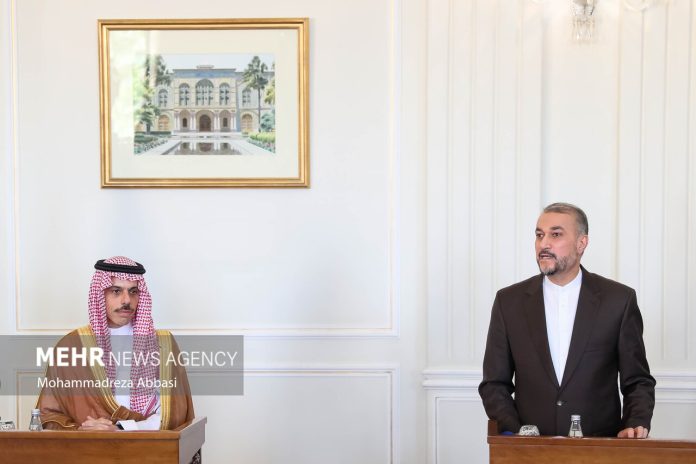
Iran and Saudi Arabia agree to form joint political and economic committees

Amirabdollahian Bin Farhan

He noted that following the approval of the agreements by the top officials of Iran and Saudi Arabia, the two sides will take action to implement those agreements.

The Iranian foreign minister added that he and bin Farhan were on the same page regarding the support of the oppressed Palestinian people.

The top Saudi diplomat for his part described his discussions with Amirabdollahin as positive and transparent, adding that the meeting in Tehran was aimed at completing the agreement that Tehran and Riyadh signed in Beijing a few months ago.

Bin Farhan said Iran and Saudi Arabia are making an effort to continue their diplomatic actions.

He noted that to this end, Iran’s Embassy in Saudi Arabia and its diplomatic mission at the Organization of Islamic Cooperation were reopened and that the Saudi Embassy in Tehran will be soon reopened too.

Bin Farhan underlined that the restoration of ties between Tehran and Riyadh was an important step because the two countries are highly important regional players.

The Saudi foreign minister said the Tehran-Riyadh ties are based on such principles as mutual respect and non-interference in internal affairs of the two countries as well as respecting the UN Charter.

Bin Farhan voiced hope that cooperation between Iran and Saudi Arabia will expand in order to serve the best interests of the two nations.

He also voiced hope that the resumption of diplomatic ties between the two countries will have a positive impact on the wider region and the Muslim world.

Bin Farhan noted that he will also meet with Iranian President Ebrahim Raisi during his stay in Tehran to give him warm greetings of Saudi King Salman bin Abdul Aziz.

FAO names Iran as largest dairy exporter in Asia

Iran dairy

It also said Iran ranks as the 13th largest producer of wheat, 13th largest producer of rice and also 11th largest producer of meat in Asia.

In its latest report on “World Food Prospects”, FAO has predicted that Iran’s production of cereals and grains will reach 18.8 million tons in 2023.

Meanwhile, FAO reported that wheat, rice and barley will be Iran’s predominant produced grains in 2023.

It is expected that 13 million tons of wheat will be produced in Iran in the 2023 Crop Year, so Iran’s production of wheat in the current year will remain unchanged compared to the previous year.

Iran had imported five million tons of wheat from overseas in 2022, FAO said, adding that the country is expected to import 4 million tons of wheat in the current year.

FAO put the total wheat production volume in the world in 2022 at over 137,700,000 tons.

Iran was the 13th largest producer of wheat in 2022 and it is expected that the country will retain its position in the current year without any change.

The European Union, China and India stood at first to third places in the world in terms of wheat production respectively, FAO added.