Sunday, December 21, 2025
Home Blog Page 1380

Ayatollah Khamenei says Iran and Uzbekistan should employ commonalities to bolster ties

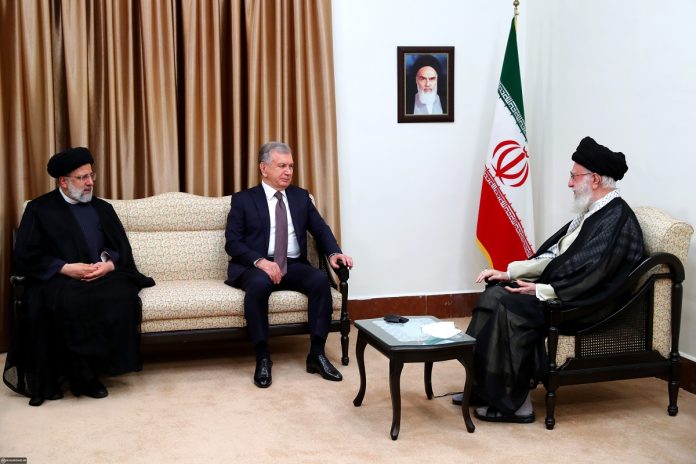
Ayatollah Khamenei and Uzbekistan President Shavkat Mirziyoyev

The Leader stated that the two countries share unique historical, cultural and scientific attributes.

Ayatollah Khamenei commended a new phase in bilateral relations after a long suspension and said that for years the scope of relations between Iran and Uzbekistan was “very limited.”

The Leader added that President Mirziyoyev’s visit and talks with senior Iranian officials would hopefully open the door to a better future in relations.

“The Islamic Republic of Iran has the capability to connect Uzbekistan to high seas through Turkmenistan and Afghanistan. And the grounds for bilateral cooperation exceed trade and transportation,” Ayatollah Khamenei continued.

The Leader stated innovations in a variety of scientific and technological fields can lead to the improvement of cooperation.

Ayatollah Khamenei urged Tehran and Tashkent to disregard those who are against the expansion of relations.

During the meeting, which was also attended by President Ebrahim Raisi, Mirziyoyev hailed his historic meeting with Ayatollah Khamenei.

The Uzbek president praised the Iranian nation’s resilience in the face of US-led sanctions and said Iran’s grand achievements, particularly in science and technology, proved that a nation can achieve major goals by pursuing the wise guidelines of its leader and through unity.

Iranian parliamentary delegation to visit Afghanistan to pursue water share

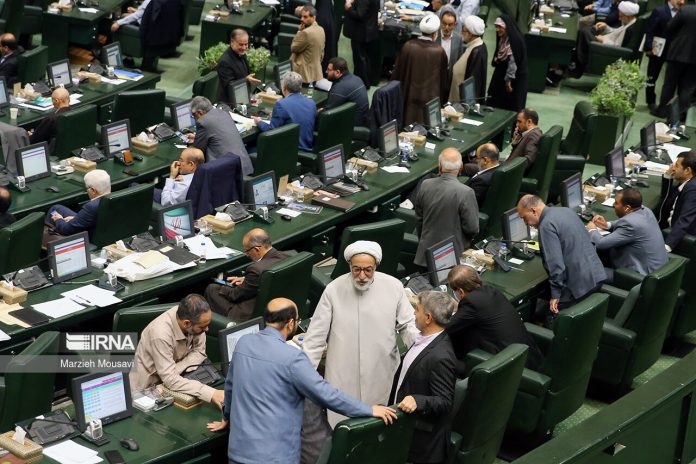
Iranian Parliament

Mohammad Sargazi, representing the city of Zabol in Sistan and Baluchestan Province at parliament, added that the Iranian foreign minister was notified of the planned trip.

He also said the parliamentary delegation will be made up of lawmakers representing Sistan and Baluchestan Province and members of the parliamentary friendship group of Iran and Afghanistan.

Sargazi referred to the planned visit by a team of Iranian experts to the Kajaki Dam in Afghanistan.

He said under the 1972 Treaty between Iran and Afghanistan, if the Afghan side declares that the water year is not normal, it should give the Iranian side information on the amount of Helmand River and Iran can then request a visit to the Dehravood water measurement station to check the level of the water of Helmand River.

The MP noted that the experts will report to the Iranian parliament on the amount of water of the Kajaki Dam.

Iran has said the Taliban have violated the 1972 agreement as sufficient water from Helmand River is not flowing toward Iranian side as per the treaty.

The Taliban deny having breached the agreement.

Iran and Uzbekistan sign 11 cooperation agreements 

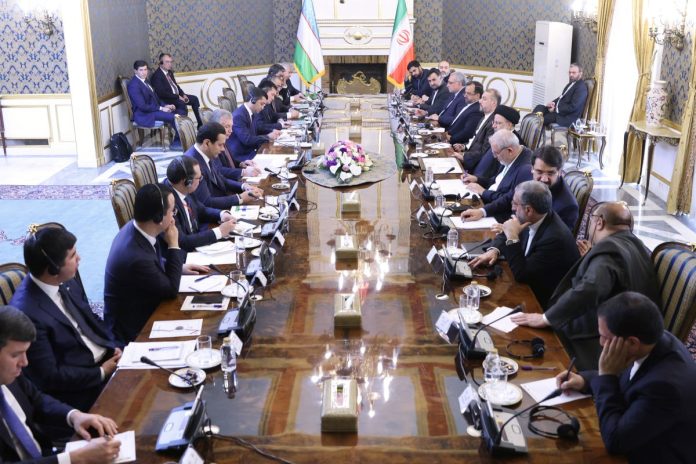
Iran and Uzbekistan Delegations

The ceremony in which the documents were signed happened in the presence of the presidents of the two countries in Tehran on Sunday.

The agreements are about preferential trade, free zones, pharmaceuticals, insurance and transportation.

The administration of President Ebrahim Raisi has made expansion of ties with neighbors and regional states as a centerpiece of its foreign policy.

The Raisi administration believes that this would help blunt Western sanctions against Iran. It however notes that Iran is open to improving ties with all world countries, but neighbors and regional countries are a top priority in this regard.

Biden’s senior ME adviser visits S. Arabia to discuss possible normalization with Israel

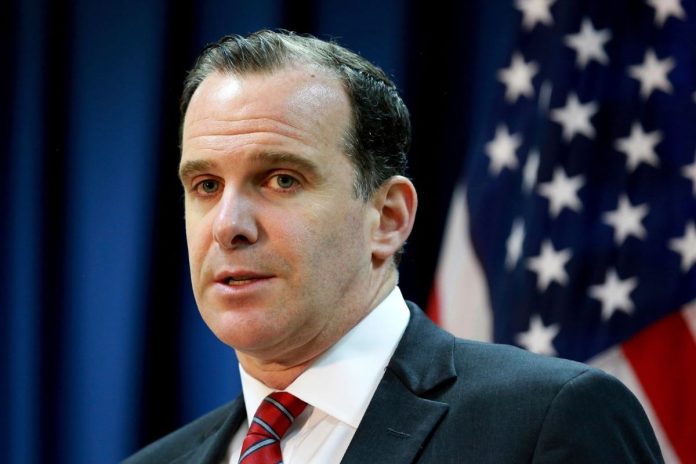
Brett McGurk

Axios has reported that McGurk had arrived in Saudi Arabia to hold “talks with Saudi officials that will focus on the administration’s efforts to reach a normalization agreement between the Israel and the kingdom as well as other issues.”

According to the report, McGurk was also expected to meet with Saudi Crown Prince Muhammed bin Salman to discuss the kingdom’s normalization of relations with Israel.

McGurk’s visit is part of attempts by the White House to push for a Saudi-Israeli deal in the next six to seven months before Biden’s presidential election campaigns.

The top advisor’s trip to Saudi Arabia comes less than two weeks after US Secretary of State Antony Blinken visited the kingdom and met bin Salman, with Saudi officials having snubbed the US diplomat’s latest push for the normalization deal.

Saudi Foreign Minister Prince Faisal bin Farhan Al Saud said at a joint press conference with Blinken that “without finding a pathway to peace for the Palestinian people…any normalization will have limited benefits.”

Saudi Arabia cautiously welcomed the US-brokered normalization deals between the Israeli regime and the United Arab Emirates, Bahrain, Sudan and Morocco in 2020.

The oil-rich kingdom itself, however, has been expected to jump on the bandwagon since then, as the two sides have seen growing contacts and de-facto rapprochement in recent years, despite claims that it is committed to the 2002 so-called Arab Peace Initiative, which conditions normalizing ties with Israel on the establishment of an independent, sovereign Palestinian state within the 1967 borders.

The Riyadh regime in November 2020 granted permission for Israeli airlines to use its airspace, hours before the first Israeli flight to the UAE was set to take off.

Palestinian leaders, activists and ordinary people have repeatedly rejected Arab-Israeli normalization deals as “a stab in the back of the Palestinian cause and the Palestinian people.”

Netanyahu seeking ‘active steps’ on Israel judicial overhaul despite mass rallies

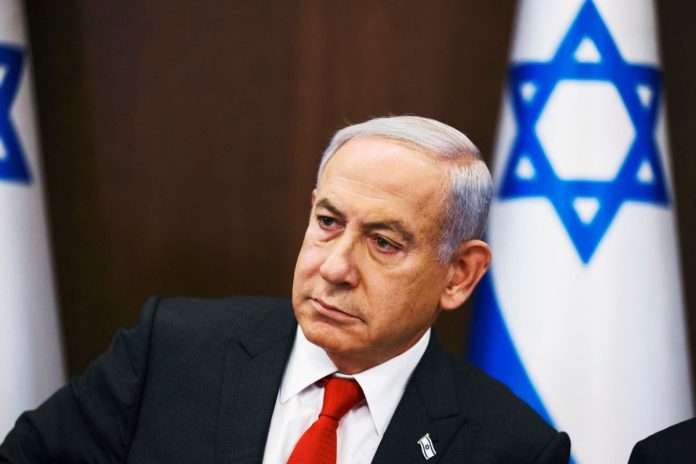
Benjamin Netanyahu

Netanyahu’s televised remarks to his cabinet were spare on detail and come after opposition leaders last week suspended negotiations pending the formation of a key panel for selecting judges.

Unveiled soon after Netanyahu’s religious-nationalist coalition took power in late December, the sweeping reforms would roll back some Supreme Court powers and give the government more control over appointments to the bench.

The proposed legislation set off unprecedented street protests, with critics of Netanyahu – who is on trial on corruption charges he denies – accusing him of trying to curb judicial independence.

He says he wants to balance out branches of government and end perceived court overreach. But with Israel’s economy bruised by the furore and foreign allies voicing worry for its democracy, he froze the reforms in March and entered into the compromise talks.

“We gave a month and then another month and then another month – three months. Their (opposition) representatives did not agree to the most basic understandings. The intention was just to waste time,” Netanyahu told his cabinet.

“Most of Israeli society understands that there need to be changes in the judicial system,” he continued, adding, “That’s why we will meet this week and commence with active steps … in a measured way commensurate with the mandate we were given.”

With his coalition wielding 64 of parliament’s 120 seats, the ratification of reform bills, should they be brought to vote, looked possible.

But opposition leader Yair Lapid suggested Netanyahu could not be certain of a majority, after some members of the coalition voted in a secret ballot last week in favour of an opposition lawmaker joining the Judicial Appointments Committee.

“If Netanyahu goes ahead with the coup unilaterally as he has stated, he will find that he is the prime minister of less than half of the people of Israel, less than half the economy, less than half of the defence establishment and less than half of the Knesset (parliament),” Lapid tweeted.

Raisi: Success in nuclear industry under bans must be model for other sectors in Iran

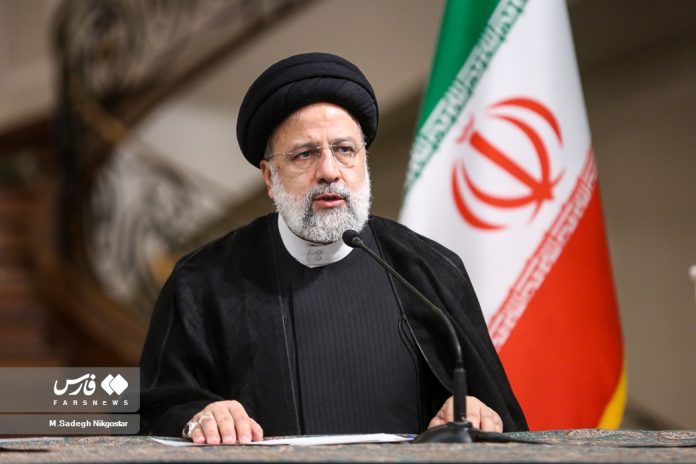
Ebrahim Raisi

Visiting an exhibition of Iran’s nuclear achievements on Sunday, Raisi said the gains made in the nuclear industry show how the Iranian youths and scientists “turned threats and sanctions into opportunities.”

“This exhibition is a message from the country’s nuclear industry to other sectors on how to achieve such a level of success despite the highest volume of sanctions and threats against the country. The success of the nuclear industry under sanctions is a model for other industries,” he said.

Raisi highlighted the positive effects of nuclear technology on people’s lives, especially in the fields of health and medicine, agriculture and industry, as well as in the oil and gas sectors, among others.

“Thanks to the resolve of the country’s scientists in converting knowledge into ability in the nuclear field, today millions of people have been saved from diseases, which is a great honor for the country,” he added.

The president said some parties in the world think that building power depends on the production of nuclear weapons, but Iran has repeatedly stated that even though there is such a capability in the country, it will never develop nuclear arms as part of its religious beliefs and a fatwa by Leader of the Islamic Revolution Ayatollah Seyyed Ali Khamenei.

Iran president welcomes Uzbek counterpart in Tehran

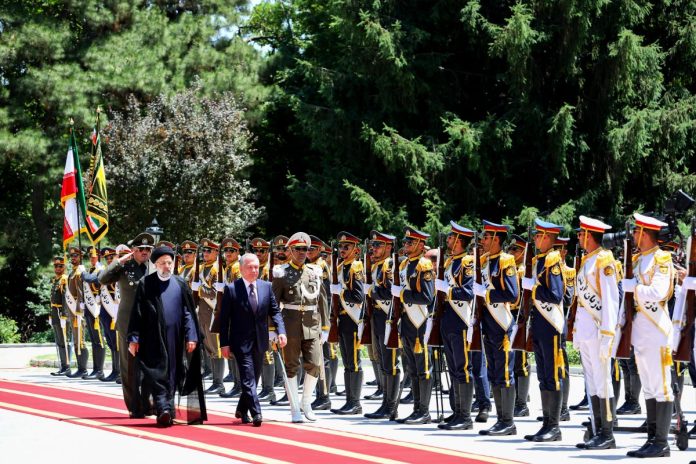
Ebrahim Raisi and Shavkat Mirziyoyev

President Mirziyoyev was accorded an official welcome by President Raisi at the Sa’dabad Cultural-Historical complex in Tehran on Sunday.

At the ceremony, after the national anthems of the Islamic Republic of Iran and Uzbekistan were played, the presidents of the two countries reviewed the honour guards and then introduced their accompanying high-ranking delegations to each other.

Mirziyoyev is to hold talks with Raisi and to co-chair high-ranking delegations meeting.

The two sides will also sign cooperation agreements before they attend a joint press conference.

Official: Number of people poisoned by fake alcohol tops 140; 12 dead

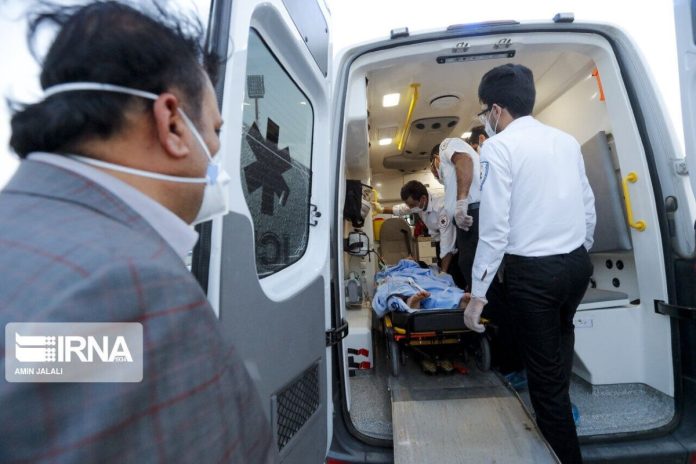
Ambulance Iran

Shahram Sayyadi, who heads the University of Medical Sciences in Karaj, near Tehran, said as of Sunday 141 people have been poisoned by fake alcoholic drinks, while four people are intubated in critical condition.

He said Saturday that all the poisoned people, most by methanol, have digestive symptoms, shortness of breath, blurred vision and dizziness, and their average age is between 16 and 50 years.

Iranian police have made a number of arrests in connection with the case.

Under the Iranian law, possession or consumption of alcohol is a crime as it is forbidden under the Islamic code.

7 dead, 2 missing as flooding hits 12 Iranian provinces

Iran Flood

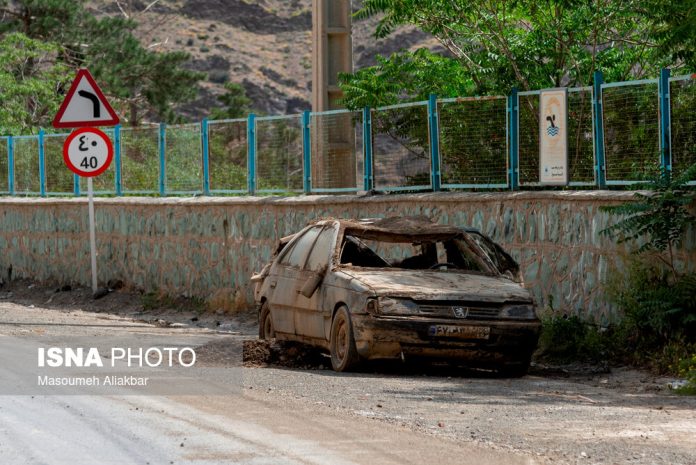
In a statement, the Society said the fatalities were caused in the flooding that wreaked havoc on a number of regions in the northwestern province of Ardebil.

Two people have also disappeared in the northern city of Chalous, Mazandaran Province, the statement added.

Search and rescue teams provided aid to around 5,200 people who suffered harm, mostly in Ardebil, it said.

Currently, the society added, 13 operational teams, three evaluation teams and one on-set team are at work in flood-hit areas.

Blinken meets Chinese FM on high-stakes mission to cool China-US tensions

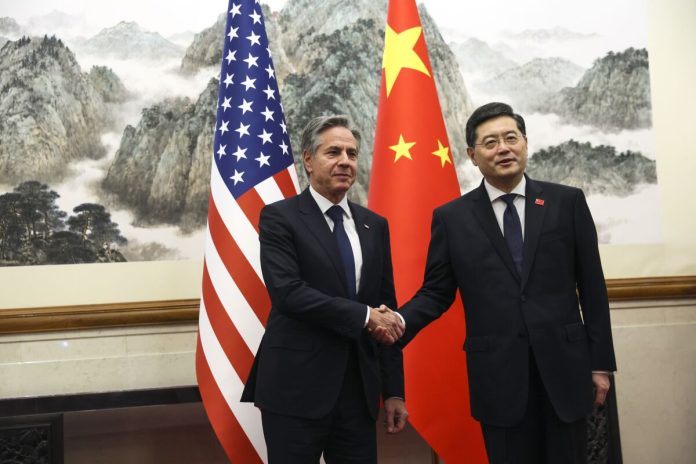
Antony Blinken and Qin Gang

The trip by Blinken makes him the highest-level American official to visit China since Joe Biden became U.S. president and the first U.S. secretary of state to make the trip in nearly five years.

Blinken’s original travel plans for February were disrupted by news of an alleged Chinese spy balloon flying over U.S. airspace. The U.S. ultimately shot down the alleged spy balloon, and tensions between the world’s two largest economies have since remained tense. Beijing insisted the balloon was an unnamed weather tracker that blew off course.

Blinken is set to have a working dinner later Sunday at the Diaoyutai State Guesthouse with Qin, who was previosuly China’s ambassador to the U.S. Some reports suggest there may also be a meeting with President Xi Jinping on Monday during Blinken’s two-day visit.

Expectations for a significant recovery in the U.S.-China relationship, especially as a result of Blinken’s trip, remain low. State department spokesperson Matthew Miller said in a statement last week that Blinken will discuss the importance of maintaining open lines of communication and will “raise bilateral issues of concern, global and regional matters, and potential cooperation on shared transnational challenges.”

At the annual Shangri-La Dialogue event in Singapore earlier this month, the U.S. defense chief and his Chinese counterpart didn’t have a formal meeting. And more broadly, international travel restrictions during the Covid-19 pandemic limited contact between the U.S. and Chinese governments.

In August, a controversial visit to Taiwan by Nancy Pelosi, then speaker of the U.S. House of Representatives, fueled Beijing’s ire. Beijing considers Taiwan part of its territory, with no right to conduct diplomatic relations on its own. The U.S. recognizes Beijing as the sole legal government of China, while maintaining unofficial relations with the island, a democratically self-governed region.

Biden’s visit to Beijing could also possibly pave the way for a November meeting between Biden and his Chinese counterpart Xi — their first since Bali in November, a day before a G-20 summit kicked off.

In late May, the U.S. commerce secretary and her Chinese counterpart met in Washington, D.C. And U.S. Treasury Secretary Janet Yellen is also expected to visit China at an unspecified time.

China’s new ambassador to the U.S., Xie Feng, arrived in the U.S. in late May after a period of about six months with no one in that position. Biden said around the same time that he expected U.S.-China tensions would “begin to thaw very shortly.”

A potential opportunity for Biden and Xi to meet again would be in November, during the Asia-Pacific Economic Cooperation Leaders’ Summit that’s set to be held in San Francisco.