Sunday, December 21, 2025
Home Blog Page 1383

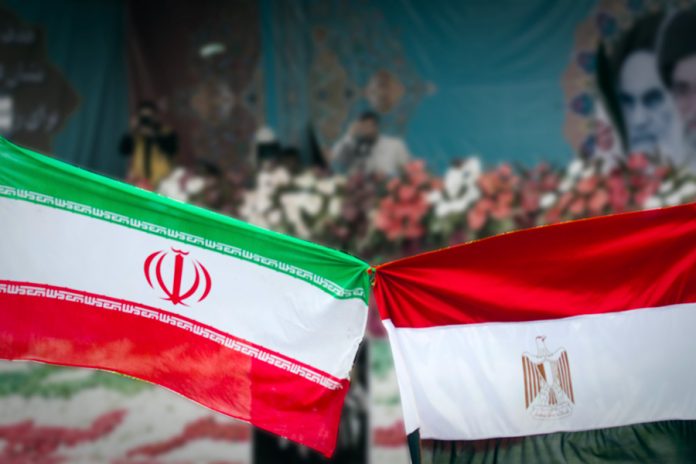
Iran and Egypt reach agreement on formation of committee to restore relations: Report

Iran Egypt Flags

The nascent Egypt-Iran détente puts normalization of Cairo-Tehran bilateral relations on the horizon, Saudi Arabia’s Al-Arabiya network reported on Friday, citing the informed sources.

No further details have been reported.

Earlier, the Leader of the Islamic Revolution Ayatollah Seyyed Ali Khamenei had welcomed the development of relations between Tehran and Cairo.

Ayatollah Khamenei last week publicly endorsed normalizing ties with Egypt, saying that Iran “welcomes Egypt’s interest in restoring relations.”

“We have no problem in this regard,” he added.

Iran and Egypt cut diplomatic ties in 1980 after Cairo admitted the former Shah of Iran and recognized Israel.

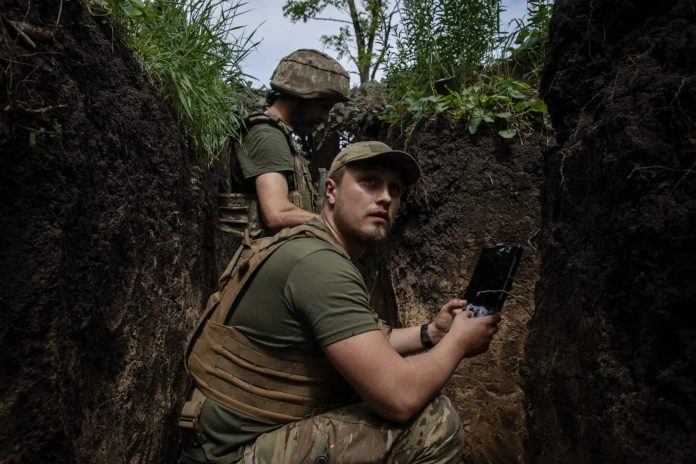
Live Update: Russia’s “Special Operation” in Ukraine; Day 479

Russia Ukraine War

Biden doesn’t think it should be made easier for Ukraine to join NATO

US President Joe Biden does not believe that it should be made easier for Ukraine to join NATO, as Kiev has to meet the mandatory standards of becoming a member of the alliance, according to Biden’s statement released by the White House press pool on Saturday.

When Biden was asked if he was “going to make it easier for Ukraine to join NATO,” he said, “No. Because they’ve got to meet the same standards. So we’re not going to make it easy.”


Leaders of 6 African countries arrive in Russia as part of peace mission

The leaders of six African countries have arrived in the Russian city of St Petersburg as part of a peace mission, according to Russian state media TASS.

The leaders of South Africa, Zambia, the Comoros, Congo Brazzaville, Egypt, Senegal, and Uganda are set to meet with Russian President Vladimir Putin.

The leaders previously met with Ukraine’s President, Volodymyr Zelensky, on Friday in Ukraine, as part of a peace mission to both countries.

Rebuffing their efforts to bring Kyiv to the negotiating table, Zelensky ruled out any peace negotiations with Russia in a press conference after their meeting.

“Today, I have clearly said repeatedly at our meeting that to allow any negotiations with Russia now that the occupier is on our land means to freeze the war, to freeze pain and suffering,” he told journalists.

On their arrival in Kyiv, the African leaders were greeted with explosions and forced to take shelter in bunkers as Russian air strikes hit the capital.


Blinken: US closely monitoring Russia-Belarus situation but has “no reason to adjust” its nuclear posture

US Secretary of State Antony Blinken said that President Joe Biden’s administration is closely monitoring the situation between Russia and Belarus after President Vladimir Putin claimed Friday that Moscow has deployed tactical nuclear weapons to the neighboring country.

The US has “no reason to adjust” its nuclear posture and doesn’t “see any indications” that Russia is preparing to use a nuclear weapon, Blinken said at a news conference Friday with Singapore’s Foreign Affairs Minister Vivian Balakrishnan at the State Department.

Blinken added the US remains committed to defending “every inch” of NATO territory.

“And as for Belarus itself, this is just another example of (Belarus President Alexander) Lukashenko making irresponsible, provocative choices to cede control of Belarus’s sovereignty against the will of the Belarusian people,” he continued.

What Russia and Belarus are saying: In remarks during an economic forum in St. Petersburg, Putin alleged earlier that the tactical nuclear weapons to be stored in Belarus have arrived.

His comments came after Russian state media TASS reported that the country’s main investigative authority had opened an office in Belarus in connection to a delivery of tactile nuclear weapons.

The Russian president also slammed NATO and warned that there is “serious danger of further drawing” the alliance into the military conflict by supplying military weaponry to Ukraine.

Belarus is one of Russia’s few allies in its war on Ukraine. It helped Russia launch its invasion of Ukraine in February 2022, allowing the Kremlin’s troops to enter the country from its territory.

Earlier this week, Belarusian President Aleksander Lukashenko said the country was set to receive the tactical nuclear weapons from Russia and claimed such weapons are needed to act as a “deterrent” against aggression.


Zelensky: There will be no negotiations until Russian forces withdraw from all occupied Ukrainian land

Ukrainian President Volodymyr Zelensky stated that any peace talks with Russia are possible only after the complete withdrawal of Russian troops from occupied territories.

“Today, I have clearly said repeatedly at our meeting that to allow any negotiations with Russia now that the occupier is on our land means to freeze the war, to freeze pain and suffering,” Zelensky said at a news conference after meeting with several African leaders in Kyiv.

“It is obvious that Russia is now trying to return to its old primitive tactics of deception. But fooling the world in Russia will no longer work. It is definitely impossible to deceive Ukraine. I emphasize once again: We need real peace, and therefore, a real withdrawal of Russian troops from our entire independent land,” he added.

Zelensky appeared to be at odds with the South African President Cyril Ramaphosa, who stood alongside him at the news conference and called for a de-escalation of the conflict.

Ramaphosa said “there must be de-escalation on both sides so that peace can find a way to resolve the problem.”

Zelensky noted he and the African leaders had also discussed the Black Sea grain deal, which is crucial for food security around the globe. Ukraine is one of the world’s leading grain exporters.

“We really help the world and precisely many peoples of Africa, Asia, Europe to maintain social stability and price predictability in the food market through our exports. Together with partners, we are working on grain hubs in Africa,” Zelensky added.

In May, the grain deal was extended for two months in an agreement brokered by Turkey and the United Nations.

“The food supply must be reliably guaranteed and everyone’s right to food must be ensured by stopping any attempts by states such as Russia to use the threat of hunger and social instability to blackmail the people,” he continued.


South African leader calls for de-escalation of Ukraine conflict after meeting with Zelensky in Kyiv

African countries are prepared to participate further in a peace pact in Ukraine, South African President Cyril Ramaphosa said on Friday after meeting with African leaders and Ukrainian President Volodymyr Zelensky in Kyiv.

“There must be a de-escalation of the conflict,” Ramaphosa said while outlining a 10-step peace initiative several African countries have agreed to participate in.

“And we argue that there must be de-escalation on both sides so that peace can find a way to resolve the problem,” he added.

Speaking alongside other African leaders and Zelensky, Ramaphosa called for diplomatic negotiations to take place, adding that he was listening to Zelensky today and will be hearing from Russian President Vladimir Putin tomorrow in St. Petersburg.

“There should be peace through negotiations and diplomatic means,” he said.

“And we should as we advance towards that peace because all wars, in the end, come to an end. I really believe that this war should be brought to an end as quickly as possible,” he continued.

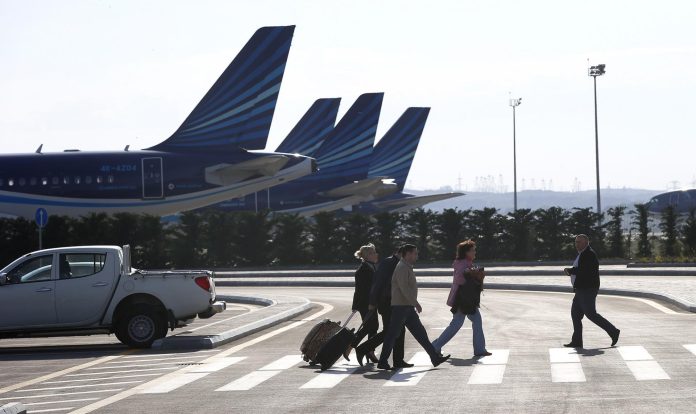
Azerbaijan to stop issuing visas to Iranians at airport from June 23

Heydar Aliyev International Airport

The Iranian Embassy in Baku said the decision was announced by the Azeri Ministry of Foreign Affairs.

It added that Iranian nationals who want to travel to the Republic of Azerbaijan need to visit the Azeri diplomatic missions in Iran to get their visas or apply for them on ww.mfa.gov.az, which is a website launched by the Azeri Ministry of Foreign Affairs for this purpose.

Relations between Tehran and Baku soured several months ago after a man attacked the Azeri Embassy in Tehran. Iran arrested the attacker, saying the man did the attack on a personal motive.

Other developments also increased tensions between Iran and Azerbaijan including Baku’s push to carve out a chunk of land for its Zangezur route that would obliterate Iran’s border with Armenia.

Tehran objected to this plan, vowing to not allow any change in the region’s geopolitical map.

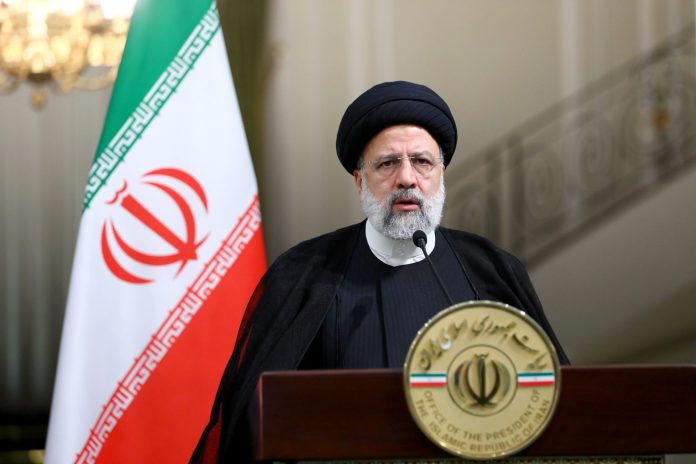
Iranian pres.: Tehran seeks good ties with all countries

Ebrahim Raisi

Speaking upon his return from Latin America on Friday, Raisi said any country which would seek to have good and constructive ties with Tehran with a view to the interests of both sides, there are no obstacles to such a decision.

He however warned that any government that would seek enmity toward Iran, then Tehran’s policy is to resist hostility.

The Iranian president noted that any move by his administration is aimed at safeguarding the country’s national interests.

Raisi also spoke about his visit to the Latin American countries of Venezuela, Nicaragua and Cuba.

He said that during the 3-leg tour, the Iranian delegation signed 35 deals in such fields as energy, industry and mining in the countries.

Raisi also said the Iranian delegation accompanying him also concluded 5 knowledge-based contracts there worth 90 million dollars.

The president added that if the agreements go into force, positive developments will happen.

He said Iran and Cuba also agreed to form an working group to start technological cooperation, underling that the Latin American nation has a good capability in bio-technology.

Raisi stressed that South American countries are rich in natural resources.

The president further hailed the Latin American nations for their resistance against the bullying powers over the past decades and said Iran and those countries are on the same page in this regard.

Raisi visited Venezuela, Nicaragua and Cuba at the invitation of the presidents of those countries.

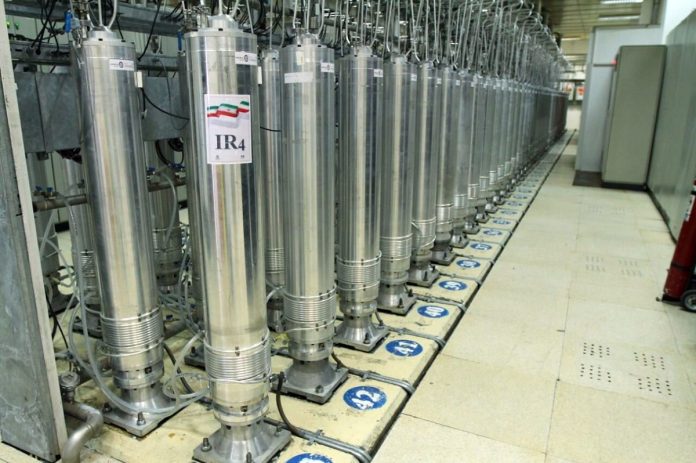
Iran’s ex-nuclear chief: Tehran’s success in producing 20% nuclear fuel shocked West

Iran nuclear program

Salehi added that when Iran said it was able to produce the fuel, the Western countries described thas as a bluff on part of Tehran. According to the former director of the AEOI, the Western states also set dozens of conditions for supplying the nuclear fuel to Iran and also said it would take 2.5 years for them to give it to the Islamic Republic.

Salehi stressed that after the Iranian parliament approved the strategic action law and required the government to produce 120 kilograms of 20% nuclear fuel within a year, the AEOI managed to produce 400 kilograms of it during that period of time.

He however noted that for all its acceptance of some restrictions on its nuclear program under the 2015 nuclear deal, otherwise known as the JCPOA, Iran did not sustain any loss by entering into the agreement.

Iran police engage drug smugglers in southeast, seize huge narcotics cargo

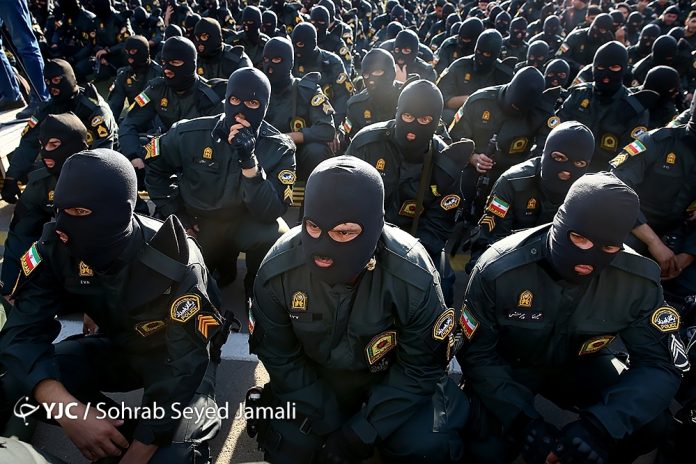
Iran Police

General Doustali Jalilian, a local police official, said law enforcement units in the province were tipped off that smugglers were transferring a huge cargo of drugs in the mountainous regions of Sistan and Baluchestan.

As police arrived on the scene, the smugglers opened fire and tried to escape, but police commandoes returned fire and killed two of the traffickers on the spot. Other bandits abandoned their vehicles and fled into the rocky regions, he explained.

General Jalilian said two smugglers were arrested. Two vehicles as well as a cache of Kalashnikov weapons, ammunition and wireless devices were seized in the operation.

Meanwhile, police confiscated 1.8 tons of narcotics including opium and Hashish.

Iranian media said a member of the local security personnel was also killed in the skirmishes.

Iran has been one of the main conduits for illegal drugs, which mainly originate in Afghanistan and are destined for markets in Europe and in the Persian Gulf region.

Iran has long been at the forefront of the global fight against narcotics and drawn the praise of the United Nations and the entire global community for its successful campaign against drug trafficking.

Around 4,000 people have died in Iran’s fight against drug traffickers over the last four decades.

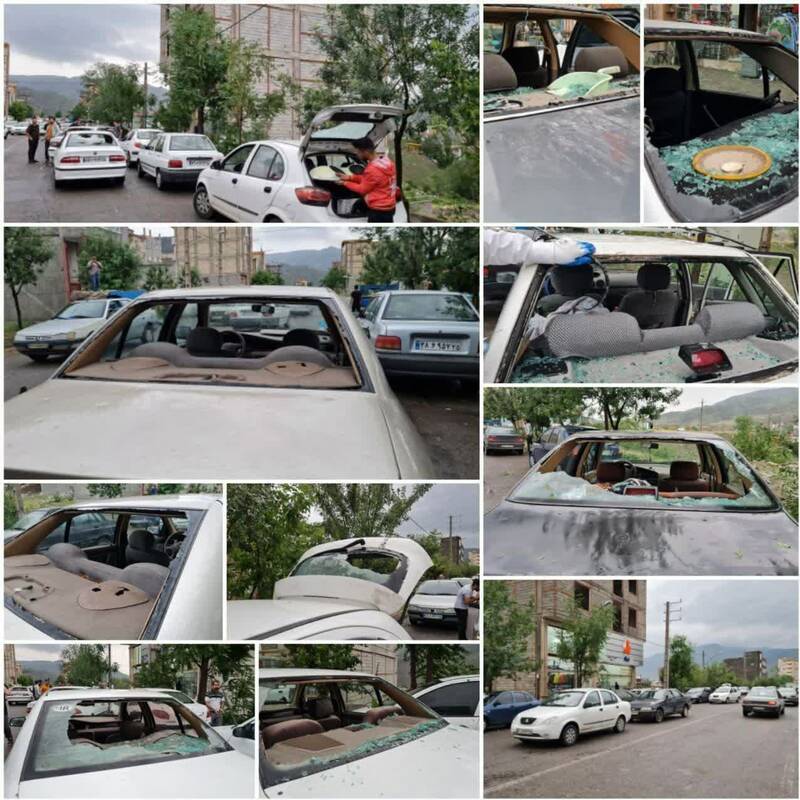
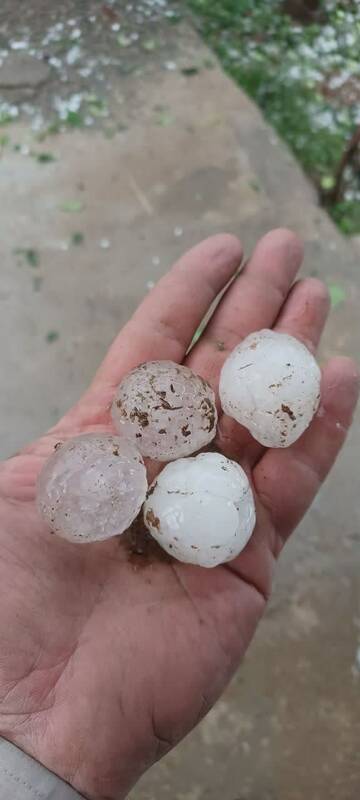
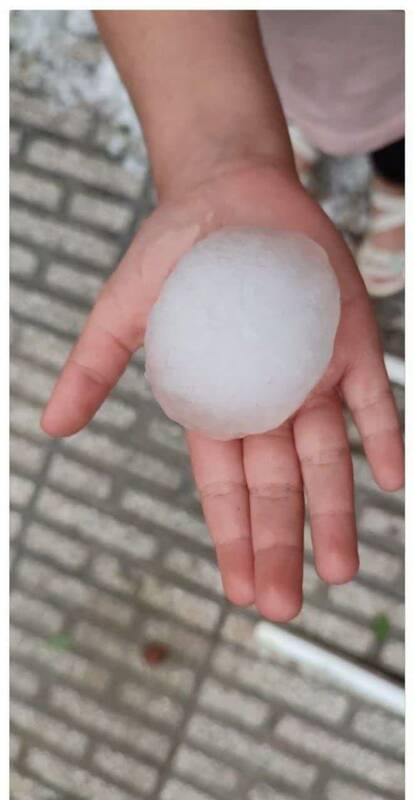
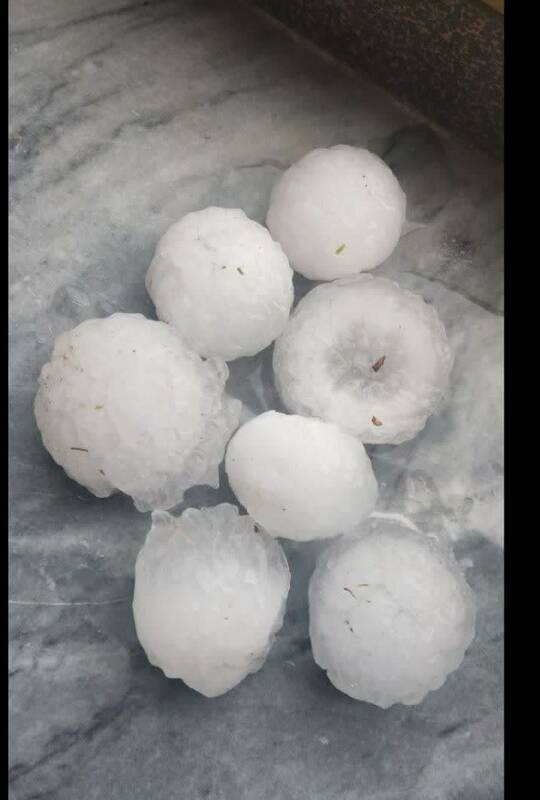
Large hail falls harm farms, cars in northwestern Iranian town

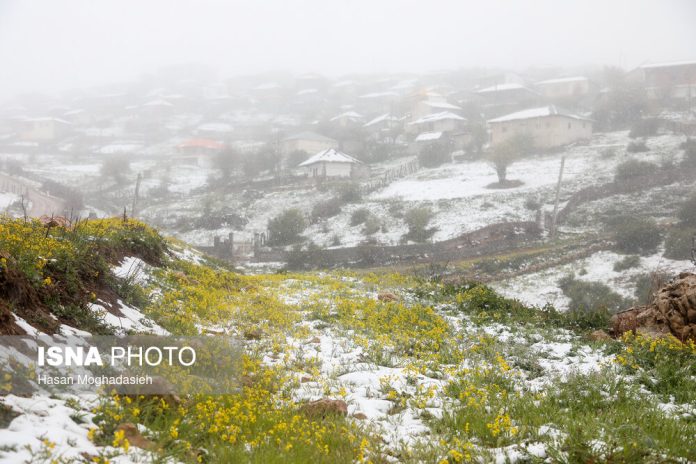
Snow whitens Iranian town in spring

More in pictures:

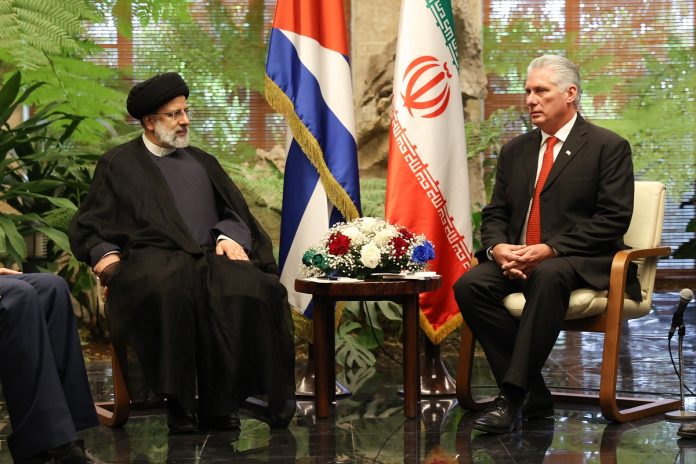
Cuba president says will ‘definitely’ visit Iran by year end

Ebrahim Raisi and Miguel Díaz-Canel

Meeting with Iranian President Ebrahim Raisi, the Cuban head of state said a visit to Iran had been planned much earlier but was put on hold due to some reasons, including the coronavirus pandemic.

He said the Iranian president’s visit to Cuba, at a time when the Latin American country is subjected to harsh US sanctions, strengthens the Cuban nation’s faith in Iran.

The friendship between Iran and Cuba is increasing day by day and it will definitely lead to an increase in political, commercial and economic relations between the two countries, Díaz-Canel added.

Díaz-Canel condemned the cruel US sanctions on Iran and expressed Cuba’s readiness to help the Islamic Republic neutralize the bans.

Addressing Raisi, he said, “The message of your trip to Latin America is that countries want to live in a new environment far from what imperialism wants to impose on nations. We are united and we will not back down from our beliefs in any way.”

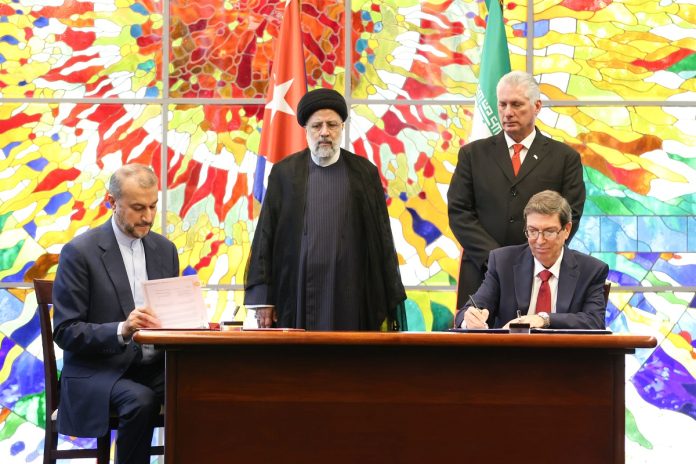
Iran, Cuba ink 6 cooperation agreements

Iran and Cuba

The MoUs were focused on judicial issues, political cooperation as well as on customs and information technology, according to a report by Iran’s official IRNA news agency.

Along with Raisi, Cuban president Miguel Díaz-Canel watched on as ministers and senior officials of Iran and Cuba signed the deals in the Palace of the Revolution in the Cuban capital Havana.

The agreements came less than a day after Raisi’s delegation signed three similar cooperation deals with officials in Nicaragua. Those agreements were in the fields of judicial cooperation, trade and supply of medical equipment, according to the IRNA.

Unconfirmed reports by Iranian media outlets suggested Tehran had secured tens of billions worth of economic and trade deals during Raisi’s four-day tour of Latin America where he has visited Venezuela, Nicaragua and Cuba.

The tour is part of Iran’s efforts to diversify its trade partners and to join ranks with countries that have been targeted by foreign sanctions.

Raeisi had said before leaving Tehran for Latin America earlier this week that Iran views relations with independent countries of the region as “strategic”.

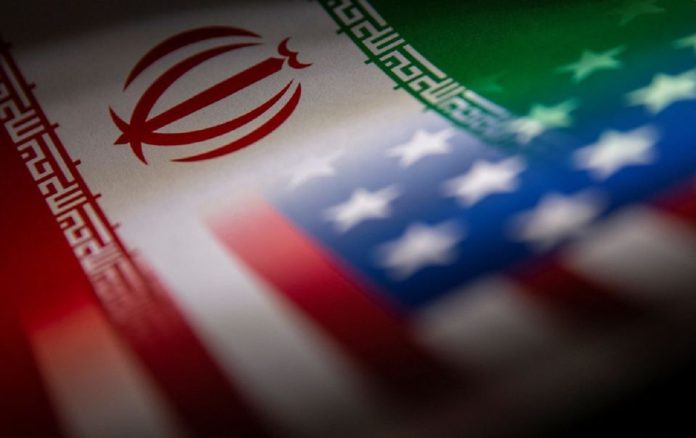
Iranian and western officials say Tehran and Washington in talks to ease tensions

Iran US Flags

These steps would be cast as an “understanding” rather than an agreement requiring review by the U.S. Congress, where many oppose giving Iran benefits.

Having failed to revive a 2015 Iran nuclear deal, Washington hopes to restore some limits on Iran to keep it from getting a nuclear weapon that could “threaten Israel and trigger a regional arms race.”

Tehran has repeatedly stated that it has no intention of developing nuclear weapons, with Iranian supreme leader Ayatollah Ali Khamenei even issuing religious edicts against the atom bomb and other weapons of mass destruction.

The U.S. government has dismissed reports it is seeking an interim deal, using carefully constructed denials that leave open the possibility of a less formal “understanding” that could avoid congressional review.

State Department spokesman Matt Miller denied there was any deal with Iran.

However, he said Washington wanted Tehran to “de-escalate tensions and curb its nuclear programme, cease support for regional proxy groups that carry out attacks, halt support for Russia’s war on Ukraine and release detained U.S. citizens.”

“We continue to use diplomatic engagements to pursue all of these goals,” he added, without giving details.

The spokesman for Iran’s Foreign Ministry, Nasser Kanaani, has also rejected reports of an interim agreement with the U.S. as media speculation.

He told reporters on Monday that no framework other than the Joint Comprehensive Plan of Action (JCPOA) is being considered and all reports on an interim deal are politicized and aimed at undermining the current talks.

An Iranian official stated: “Call it whatever you want, whether a temporary deal, an interim deal, or a mutual understanding – both sides want to prevent further escalation.”

In the first instance, “that will involve prisoner exchange and unblocking part of Iran’s frozen assets”, he continued.

Further steps might include U.S. sanctions waivers for Iran to export oil in return for ceasing 60% uranium enrichment and greater Iranian cooperation with the U.N. nuclear watchdog, he added.

“I’d call it a cooling-down understanding,” said a Western official on condition of anonymity, adding there had been more than one round of indirect talks in Oman between U.S. National Security Council official Brett McGurk and Iran’s chief nuclear negotiator, Ali Bagheri Kani.

U.S. Special Envoy for Iran Rob Malley has also met Iran’s ambassador to the U.N. after months of Iran refusing direct contact.

The Western official stated the idea was to create a status quo acceptable for all, getting Iran to avoid the Western redline of enriching to 90% purity, commonly viewed as weapons grade, and possibly even to “pause” its enrichment at 60%.

In addition to the 60% pause, both sides are discussing more Iranian cooperation with the International Atomic Energy Agency and not installing more advanced centrifuges in return for the “substantial transfer” of Iranian funds held abroad, the official continued.

The official did not specify whether the pause meant Iran would commit not to enrich above 60% or whether it would stop enriching to 60% itself.

The order of the steps and how they might relate to a release of three detained U.S. citizens held by Iran was also unclear.

Officials have previously stated freeing them might be connected to the release of frozen funds.

Iran’s foreign ministry spokesperson said on Monday the two nations could exchange prisoners soon if Washington showed goodwill, adding there were talks through intermediaries, without giving details.

The Western official said the key U.S. objective was to keep the nuclear situation from worsening and to avoid a potential clash between Israel and Iran.

“If (the) Iranians miscalculate, the potential for a strong Israeli response is something that we want to avoid,” he added.

Iran has cautioned the United States that the window of opportunity for an agreement on reviving the nuclear deal will not remain open forever, urging Washington to adopt a constructive approach to salvage the accord.

Iran showed to the world the peaceful nature of its nuclear program by signing the Joint Comprehensive Plan of Action (JCPOA) with six world states — namely the U.S., Germany, France, Britain, Russia and China. But, Washington’s unilateral withdrawal in May 2018 and its subsequent re-imposition of sanctions against Tehran left the future of the deal in limbo.

Negotiations between the parties to the landmark agreement kicked off in Vienna in April 2021, with the intention of bringing the U.S. back into the deal and putting an end to its “maximum pressure” campaign against Iran.

The discussions, however, have been at a standstill since August 2022 due to Washington’s insistence on not lifting all of the anti-Iran sanctions and offering the necessary guarantees that it will not exit the agreement again.