Monday, December 22, 2025
Home Blog Page 1361

UN Security Council to meet over violence in West Bank

Israel Palestine

The United Arab Emirates requested the meeting “in light of the alarming developments in Palestine,” diplomats said according to Reuters.

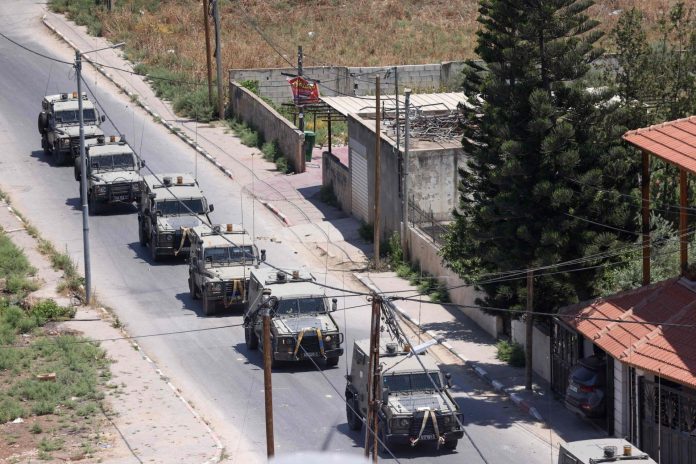
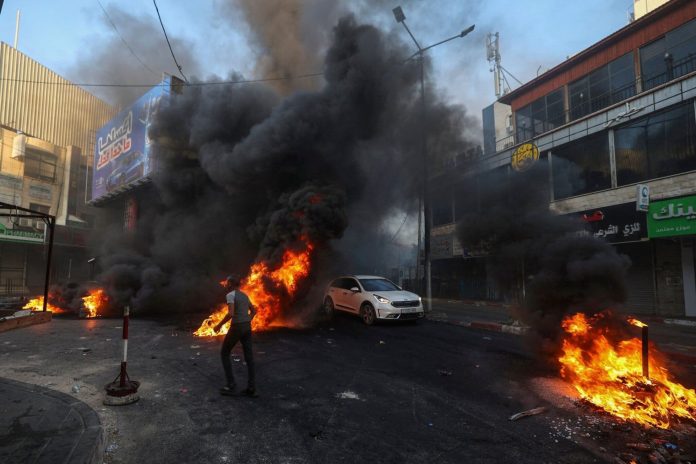
Israel’s raid on the occupied West Bank city of Jenin has killed at least 12 Palestinians as the military targeted the refugee camp and hospitals in the area, in what is one of the biggest military operations in the West Bank in years.

The offensive was widely described as one of the worst Israeli attacks on Jenin in two decades.

During its raid, Israeli forces also targeted hospitals, medical staff and ambulance units, according to Palestinian health minister May al-Kaila.

The Palestinian health ministry also annouced that over 100 people have sustained serious injuries as a result of Israel’s offensive in Jenin. Around 20 of those injured have been described as being in “serious condition”.

Almost 80% of homes in Jenin have been damaged following Israel’s 2-day raid, according to the city’s deputy governor Kamal Abu al-Rub, who spoke with the Anadolu news agency.

“Houses and infrastructure suffered heavy damage in the offensive,” Kamal Abu al-Rub told Anadolu, adding, “Almost 80% of houses in the Jenin refugee camp were either destroyed, damaged or burnt.”

The governor also stated that dozens of vehicles and utility lines were damaged in the Israeli raid.

Several news reports citing Israeli sources stated that Israel was beginning to withdraw on Tuesday, while Palestinian media outlets are reporting sporadic clashes with Israeli troops.

“Israeli forces have started withdrawing from Jenin camp,” an army spokesman told AFP late on Tuesday night, without offering further details.

However, Israeli Prime Minister Benjamin Netanyahu warned that the operation was not a one-time event, adding that Israel would “continue as long as necessary” to engage in military operations in Jenin.
Iranian nuclear chief denies cooperation with IAEA beyond Safeguards Agreements, NPT

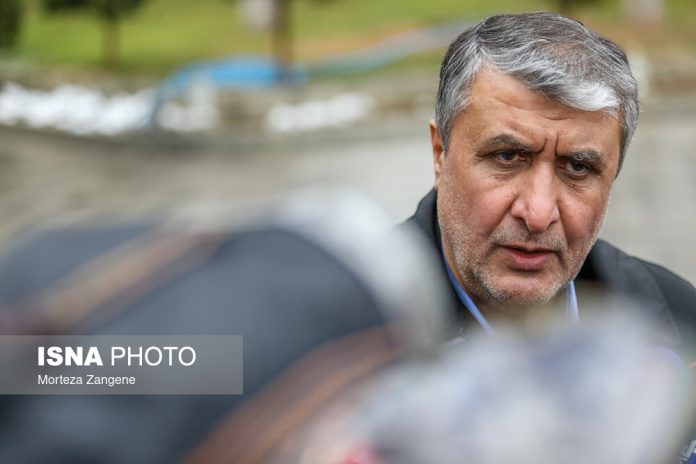
Mohammad Eslami

Mohammad Eslami, the director of the Atomic Energy Organization of Iran (AEOI), said on Wednesday that the administration of President Ebrahim Raisi was not involved in any cooperation with the IAEA beyond the Safeguards Agreements and the Non-Proliferation Treaty (NPT).

He also denied that the IAEA had installed 10 more cameras at a nuclear site in Esfahan.

“That’s not the case,” he said briefly answering questions by reporters, who were quoting an Iranian member of the Parliament who had said the Raisi administration was in breach of a law on relations with the IAEA.

“Relations between Iran and the Agency is based on the Safeguards [Agreements] and the NPT — not a word more, not a word less,” he said.

Iranian rapper receives death sentence, later commuted to imprisonment: Report

Toomaj Salehi

Tasnim news agency said in a report on Wednesday that, “based on the news received,” Salehi’s sentence had been commuted because of his “active cooperation” with authorities.

The report did not say where it had received the news from, or how long Salehi’s prison sentence was.

Protests erupted in Iran after the death of a 22-year-old woman, Mahsa Amini, in the custody of “morality police” for not wearing her hijab properly in September last year. Several months of protests gradually subsided.

A number of people have received death sentences on charges of killing security forces.

Tasnim said Salehi was arrested while attempting to flee the country at a border site.
It said he had encouraged “violence, confronting armed forces, and making Molotov cocktails” on his Twitter account and had “published fake news.”

Israel says all troops withdrawn from Jenin

Israel Palestine

The raid was aimed at eradicating a “terrorist stronghold” in the city’s refugee camp, and according to Prime Minister Benjamin Netanyahu and was supposed to last until the goal was achieved.

Some Israeli troops were seen leaving the West Bank while other units secured their pullout from Tuesday night into Wednesday morning, nearly two days into the operation, according to local media.

IDF spokesman Rear Adm. Daniel Hagari was quoted by media as saying all Israeli forces had left the area, and that the operation was complete.

A non-commissioned officer from the elite Egoz commando unit, was fatally wounded during sporadic clashes. The military was investigating whether he was killed by Palestinian gunfire or “friendly fire” by other Israeli units, according to Hagari.

On Monday, the Tel Aviv regime launched a major aerial and ground offensive in Jenin and its refugee camp, killing at least 12 Palestinians and injuring dozens, some of them listed in critical or serious condition. The attacks continued on Tuesday.

Israel launches air attacks on Gaza Strip

Israel Attack Gaza

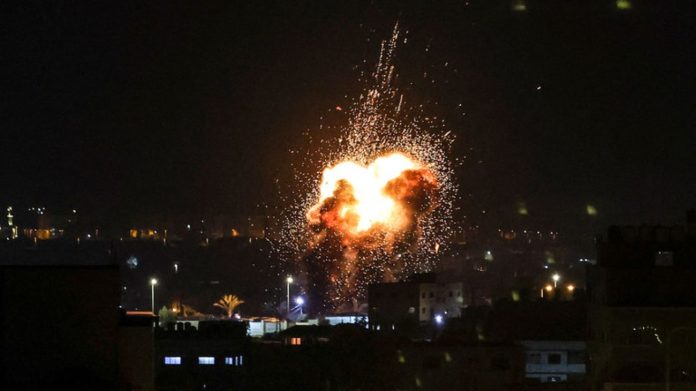
Israeli media, citing Palestinian news sources, reported Israel’s air force hit a target near Beit Lahia town in the northern Gaza Strip.

Palestinian media sources announced at least three air strikes hit locations in the town.

The Ministry of Health has not reported casualties from the attacks.

Later, the Israeli army confirmed it carried out air attacks on the Gaza Strip in response to rockets fired from the Palestinian coastal enclave.

“In response to the rockets launched earlier tonight [Wednesday], the IDF [Israel’s army] is currently striking in the Gaza Strip,” the Israeli army said.

A Palestinian security source stated the air attacks hit a Hamas military site in northern Gaza but caused no injuries.

At least 12 Palestinians have been killed in Jenin and one in Ramallah amid Israel’s largest raid in decades in the occupied West Bank.

Israeli forces have also confirmed that at least one soldier was killed by gunfire on Tuesday night.

Putin says Russian economy doing better than expected despite war

Vladimir Putin

GDP growth may exceed 2% this year and consumer price inflation may not rise above 5% in annual terms, Mishustin told Putin at a meeting at the Kremlin. The International Monetary Fund expects the Russian economy to grow 0.7% this year.

“Our results, at least for the time being, let’s say, cautiously, are better than previously expected, better than predicted,” Putin said, according to a transcript on the Kremlin’s website.

Analysts polled by Reuters at the end of June saw GDP growth of 1.2% and inflation at 5.7% in 2023.

Russia’s economy contracted 2.1% in 2022 and was under particular pressure in spring last year when Kyiv’s allies imposed sweeping sanctions against Moscow over its military campaign in Ukraine.

Russia’s technocrats have helped to offset some of the blow by repurposing the economy and propelling it with cash, with the finance ministry saying earlier that public spending was 26.5% higher year-on-year in the first five months of the year.

On Tuesday, Mishustin told Putin that he had confidence that if there was no force majeure circumstances, the economy would perform well this year.

“Dear Vladimir Vladimirovich (Putin), the country’s economy continues to confidently recover, despite the sanctions, despite all the impediments placed on our country,” Mishustin stated.

The effect of the sanctions has been painful, however, with Western financial markets and many export markets for Russian companies and commodities closed.

Crucial oil and gas revenues in January-May of this year were nearly half of what they were a year ago in the corresponding period, blamed on lower prices for Urals crude and lower natural gas export volumes.

Finance Minister Anton Siluanov has repeatedly said Russia’s budget deficit this year would be no more than 2% of GDP, although most analysts disagree.

The International Monetary Fund is among those expecting Russia to see a sharply wider budget deficit this year.

Top Iranian and Russian officials call for immediate implementation of agreements

Ali-Akbar Ahmadian and Igor Levitin

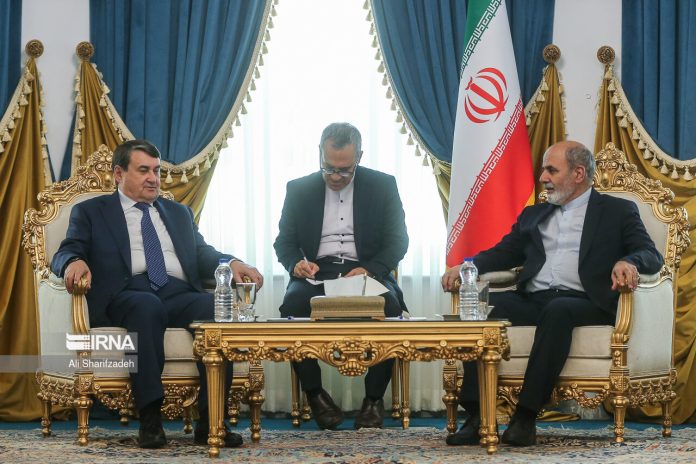
Ali-Akbar Ahmadian met with Igor Levitin, who is also Russia’s State Council Secretary, in the capital Tehran on Tuesday to discuss bilateral ties and agreements.

During the meeting, Ahmadian stressed that the administration of President Ebrahim Raiesi pays special attention to the promotion of relations with the country’s neighbors, particularly Russia.

He added that the Iranian administration also supports regional initiatives as well as bilateral and multilateral cooperation as an effective approach to secure the national interests of the two countries.

The SNSC chief further pointed to global developments and their impact on geopolitical and geo-strategic equations, saying these circumstances require that two countries operationalize all routes of the North-South Transit Corridor, the western branch, the sea route and the eastern branch as soon as possible.

Among the most important priorities of Iran in relations with Russia, the senior Iranian official said, is to speed up the implementation of the agreed projects, including the completion of the North-South Corridor and the signed memorandums of understanding (MoUs) in the field of oil and gas.

Ahmadian further hailed as “a giant step” the agreement on the construction of the Rasht-Astara railway, a strategic transport corridor that connects the existing railways of the two countries and Azerbaijan, which was signed earlier this year in May, saying it will consolidate economic relations and further contribute to the promotion of the country’s economy.

Levitin, for his part, congratulated Ahmadian on his appointment as the SNSC secretary and presented a report on the latest developments related to commercial relations, and banking and joint economic projects between the two nations.

The government of the Russian Federation will use its utmost efforts to implement the agreements signed between the two countries as quickly as possible and remove the existing barriers to their implementation, he said, while expressing satisfaction with the progress in the implementation of the agreements between the two countries.

He further stated that the broad cooperation between Tehran and Moscow in recent years is a result of the will of the leaders of the two countries.

The scheduled implementation of the agreements between the presidents of the two countries, including in the fields of transportation and transit, energy, medicine and science, will not only be a significant leap in enhancing the level of economic relations between the two countries but also will have a very positive and important effect on the development of the transit and commercial potentiality and capabilities in the region, he said.

Iraqi president calls for bolstering ties with Iran

Abdel Latif Rashid

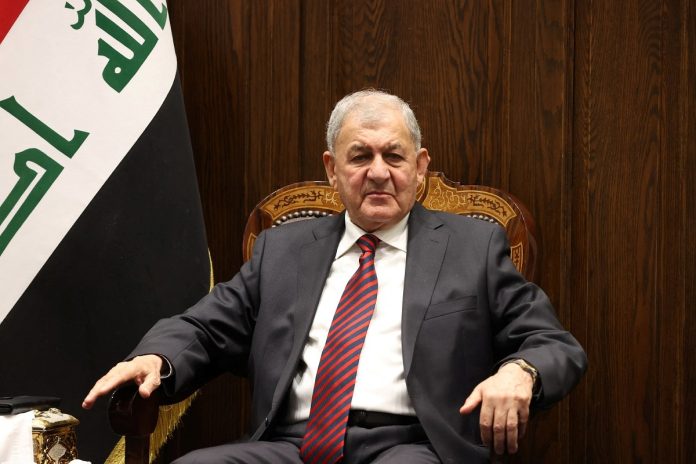
President Rashid made the remarks in a meeting with visiting Iranian delegation headed by deputy foreign minister, Ali Bagheri Kani.

The Iraqi president extended a cordial welcome to the high-ranking delegation from Iran’s Foreign Ministry at the presidential residence in Baghdad.

In the meeting, the Iraqi president lauded the Islamic Republic of Iran’s support for Iraq and emphasized the importance of coordination and cooperation between the two countries in areas of mutual interest.

President Rashid hailed the restoration of the Islamic Republic of Iran’s ties with the countries of the region and the resumption of relations with Saudi Arabia as a promising prelude to the entrenchment of security and peace in the region.

Iran’s deputy foreign minister for political affairs, for his part, emphasized the importance of developing relations between the two countries and broadening the prospect of cooperation in a way that serves the mutual interests of the two neighboring nations.

Bagheri Kani said, “Iraq and Iran have an outstanding history of joint cooperation. The two countries play a pivotal role in the region in terms of establishing security and stability.”

He thanked the President of Iraq for his position on strengthening the relations between the two countries and his strategic view on regional developments.

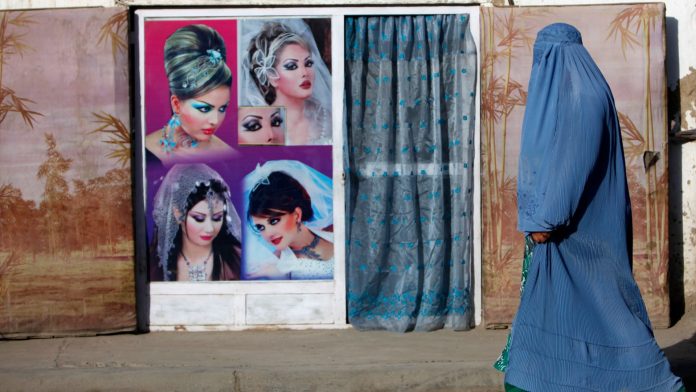
Taliban bans women’s beauty salons in Afghanistan

Afghanistan

“The deadline for the closing of beauty parlors for women is one month,” a spokesperson for the Ministry for the Prevention of Vice and Propagation of Virtue, Mohammad Sadiq Akif, told Reuters on Tuesday.

The directive, dated June 24, was reportedly “based on verbal instruction from the supreme leader” Mullah Hibatullah Akhundzada, but authorities did not explain the exact reasoning. The spokesman told AFP that “once they are closed then we will share the reason with the media.”

The United Nations Assistance Mission in Afghanistan (UNAMA) has urged authorities to revoke the ban, saying that this “new restriction on women’s rights will impact negatively on the economy.”

Since seizing control of Afghanistan amid the botched withdrawal of US forces in August 2021, the Taliban has introduced severe restrictions, prohibiting girls from attending school beyond the sixth grade and banning women from many jobs and public spaces. Women are required to cover their faces in public and are advised to stay home except in cases of necessity. They also must have a male chaperone on long trips.

The Taliban has also cracked down on press freedom, banning multiple Western outlets including the US government-controlled Voice of America (VOA) and Radio Free Europe/Radio Liberty (RFE/RL), as well as some programming by German state-sponsored broadcaster Deutsche Welle and the BBC, citing their alleged bias.

Among its less controversial restrictions, the Taliban has outlawed the cultivation of poppy and has reportedly accomplished in one year what America’s global ‘war on drugs’ has failed to pull off in several decades. The UK Telegraph newspaper called the move “the most successful counter-narcotics effort in human history,” after poppy production dropped by an estimated 80% in the past year.

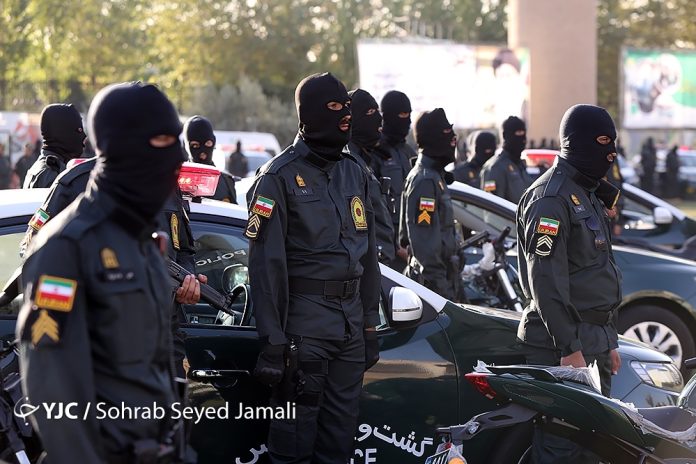
Iranian security forces respond to hostage crisis in Shiraz, kill assailant

Iran Police

According to the Iranian media, an armed assailant, in his 30s, stormed a drug store in the Sadra town of the provincial capital of Shiraz “with the intention of extortion,” shot live rounds, and took five people, including the employees and customers, hostage. Police forces quickly intervened.

The hostage-taker opened fire on the security forces and threatened to kill the captives.

The security forces eventually shot the attacker dead and safely freed the hostages.