Monday, December 22, 2025
Home Blog Page 1360

Russia’s Ruble drops below landmark rate against euro

Rouble

The ruble reached more than 102 to the euro during morning trade, according to exchange data, making it 3 rubles lower than at the close of trade on the previous day.

The Russian currency has also weakened against the dollar, trading at close to 94 rubles to the greenback. Rates against the euro and the dollar are at their lowest since March 2022.

The central bank could intervene in the currency market in the event of risks to national financial stability, although there are currently no such dangers, Bank of Russia governor Elvira Nabiullina said on Thursday.

The ruble depreciation is due to changes in the ratio between Russia’s imports and exports, she explained.

“We have seen that when the ruble rate weakens, various conspiracy theories appear suggesting that it is done on purpose to increase budget revenues. It is in fact the dynamics of foreign trade that largely determine the exchange rate,” Nabiullina told a financial congress in St. Petersburg.

She described the floating exchange rate as beneficial for the economy, helping it adapt to external shocks. The central bank has tools to smooth out short-term fluctuations of the ruble, Nabiullina added.

The currency has sharply lost ground since the short-lived rebellion by the Wagner private military company. The group, led by Evgeny Prigozhin, launched an insurrection against Russia’s military leadership on June 23-24.

The ruble has also been under pressure in recent weeks due to lower oil prices and Western sanctions, which limit foreign investment and restrict the currency supply from exporters.

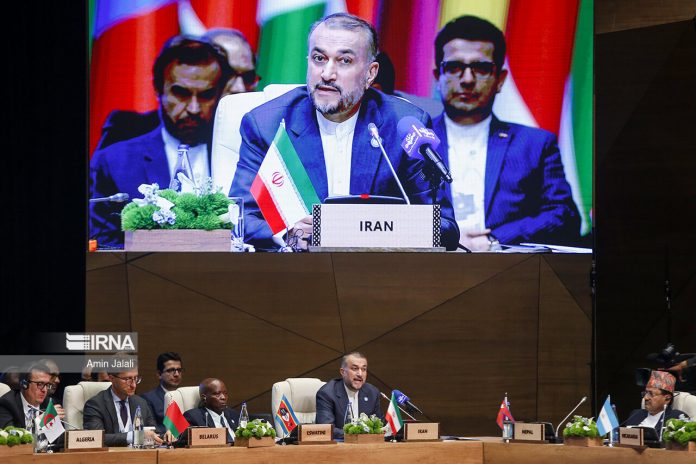
Iran FM says NAM has potential to affect global power equations

In an article published in Iran newspaper on Thursday, Amirabdollahian underlined the need to redefine the role of NAM in a bid to activate its presence on the world stage.

He also stated the forum, which is the largest grouping of countries outside of the UN, should be strengthened with the aim of promoting peace and stability, as well as overcoming unilateralism, insecurity and discrimination.

“Undoubtedly, the movement has the potential to influence global power equations and has special capacities for its member states. If the member states manage to use these capacities properly, the NAM would naturally play a constructive role in the field of global politics in the future,” he added.

“We must believe that NAM, even in its current condition, still possesses the potential to play a desirable role in global power equations. Using NAM’s existing facilities and capacities can greatly contribute to boosting political, economic and security convergence between the members and thus improving the movement’s global position,” the minister underscored.

The top Iranian diplomat further called on NAM countries to cooperate with each other in order to resolve the current challenges facing them in the security, social, environmental and health areas, along with the issues of refugees, drugs, international organized crimes and terrorism.

Since the 1979 Islamic Revolution, Iran – as a NAM member – has strongly supported any mechanisms toward the development and prosperity of the forum’s member states, Amirabdollahian asserted.

He also noted that the Islamic Republic and many NAM members share common views on a range of topics, including “a Middle East free of nuclear weapons,” “non-military intervention in regional issues,” “the enhancement of the regional alliance for peace,” and “public security.”

The article was published as the Iranian foreign minister is attending the Ministerial Meeting of the Coordinating Bureau of the Non-Aligned Movement in Azerbaijan’s capital of Baku.

UN experts say Israeli military operation in Jenin may constitute war crime

Israel Palestine

The experts sounded the warning on Wednesday, the official Palestinian Wafa news agency reported.

Nearly two days earlier, Tel Aviv deployed more than 1,000 of its military forces to Jenin as means of supposedly damaging the resistance “infrastructure” in the city and the refugee camp that it hosts.

At least 13 Palestinians died and more than 100 others were wounded as a result of the conflict.

The experts described the campaign as the fiercest to be waged by the regime against the city in more than two decades.

“Israeli forces’ operations in the occupied West Bank, killing and seriously injuring the occupied population, destroying their homes and infrastructure, and arbitrarily displacing thousands, amount to egregious violations of international law and standards on the use of force and may constitute a war crime,” they said.

They regretted the fact that some 4,000 Palestinians had been displaced by the operation. “It is heartbreaking to see thousands of Palestinian refugees originally displaced since 1947-1949, forced to march out of the camp in abject fear at the dead of night,” the experts said.

They said there were no justifications for the attacks under international law, noting, “The attacks constitute collective punishment of the Palestinian population, who have been labeled a ‘collective security threat’ in the eyes of Israeli authorities.”

The experts, meanwhile, expressed grave concern about the military weaponry and tactics that had been deployed by the occupying entity during the raids. They also highlighted multiple reports that pointed out that the Israeli forces prevented medics and ambulances from accessing the casualties of the operation.

“The impunity that Israel has enjoyed for its acts of violence over decades, only fuel and intensify the recurring cycle of violence,” they said.

The United States, Israel’s oldest and strongest ally, uniformly shields the regime against any accountability for its crimes against the Palestinians, by unwaveringly casting its veto power against anti-Israeli UN measures since 1948, when the regime claimed existence upon Palestinian land.

“For this relentless violence to end, Israel’s illegal occupation must end. It cannot be corrected or improved in the margins because it is wrong to the core,” the UN experts concluded.

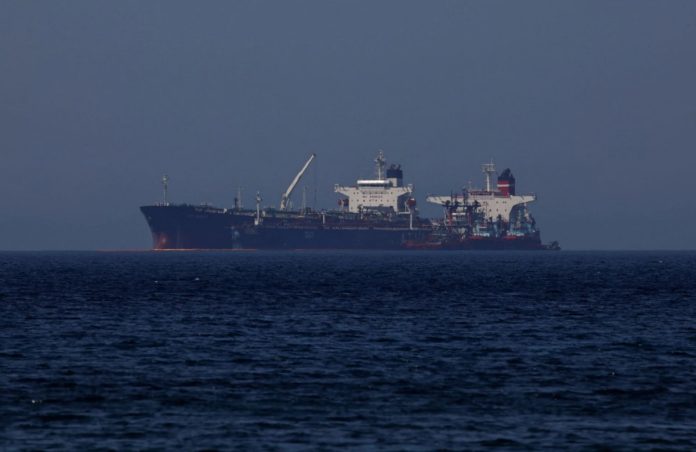
“Bahamian-flagged oil tanker collides with Iranian vessel, flees scene in Persian Gulf “

Oil Tanker

The organization, citing the coast guard in Iran’s Hormozgan Province along the Persian Gulf, said the Richmond Voyager tanker hit an Iranian vessel with an Iranian vessel with seven crew members on board, five of whom were severely wounded.

The tanker then continued to sail on regardless of international maritime law and regulations on accidents at sea, it added.

In the early hours of the collision, the owner of the Iranian vessel requested the immediate seizure of the offending tanker from the judicial authorities of Hormozgan.

The offending oil tanker was identified the next morning, but it fled into the territorial waters of Oman without paying attention to the warnings of the Iranian naval forces.

Oman, the report said, was informed of the incident and a legal process is ongoing into the case.

On Wednesday, the US Navy said that it prevented Iranian forces from seizing two oil tankers near the Strait of Hormuz.

US Naval Forces Central Command said a guided missile destroyer, the USS McFaul had driven off Iranian vessels attempting to intercept two oil tankers off the coast of Oman.

Iran rights chief denounces UN fact-finding mission as politically motivated

Iran Protests

Gharibabadi made the remarks on Wednesday on the 53rd session of the Human Rights Council (19 June to 14 July 2023) at the Palais des Nations in Geneva.

He stated that the very same countries that provoked the recent riots in Iran and of course were later caught in a similar situation have been the founders of the mechanism.

Gharibabadi said what happened in Iran last fall was “not simple and peaceful” gatherings, but violent riots and terrorist attacks engineered by think tanks in the West and carried out with the financial, arms and media support of West security services.

“Several Western countries were involved in fomenting the riots. Terrorists also entered the scene and nearly 100 persons affiliated with terrorist groups, mostly from Monafeqin (MKO), were arrested,” he stated.

During the three months of riots, “Over 75 law enforcement forces and people were martyred by the rioters, and more than 7,000 law enforcement forces were also injured,” he continued, adding, “Also, over 2,000 places and public and private property were destroyed by the rioters.”

Nowadays, France is using extreme force against peaceful protests, widespread arbitrary arrests, and extensive restrictions on the Internet and social networks, Gharibabadi highlighted.

He went on to say that in order to suppress the people, the French police force is resorting to the police of the child-killing Zionist regime of Israel.

Stating that today’s session should have investigated the situation in France, Gharibabadi regretted that hypocritical behavior has dominated the human rights mechanisms.

He added that those who claim to support human rights have deliberately kept silent.

Gharibabadi also said that unilateral and oppressive sanctions that have brought pain and suffering to Iranian women and children are crimes against humanity.

He further said Western states are not in a position to talk about the rights of women and children in Iran, while they themselves are violating the rights of women and children in their own countries.

He enumerated a number of crimes committed by certain countries against Iran, citing the role of Western states in providing former Iraqi regime with chemical weapons that were used in attacks against the Islamic Republic in 1980s, impacting thousands of Iranian women and children.

The official also pointed to the illegal and cruel sanctions on Iran by Western countries, saying the bans have caused many Iranian women and children to suffer, slamming the punitive measures as a crime against humanity.

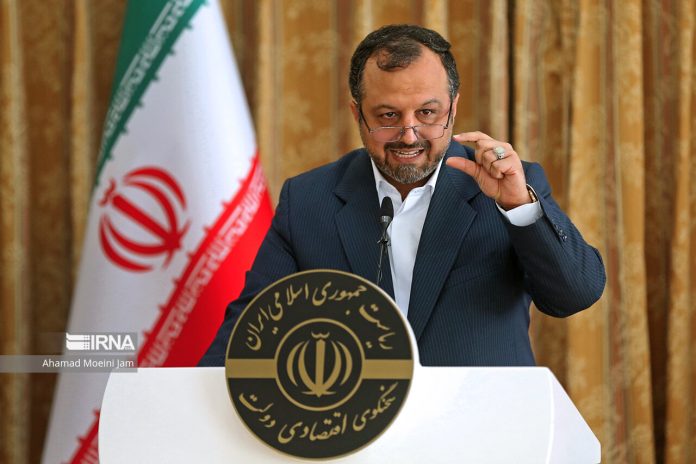
Iranian minister says Baghdad vowed to facilitate Tehran access to frozen assets

Ehsan Khandouzi

Khandouzi told IRNA on Wednesday that in a recent meeting in Baghdad between the governors of the central banks of Iran and Iraq, the Iraqi side promised to devise a mechanism so Iran can use the $10 billion of its assets in the country for imports of goods.

On June 25, Iranian Deputy Oil Minister Majid Chegeni stated that “the Iraqi Ministry of Electricity has paid all its gas arrears to Iran and this debt is now zero.”

“But sometimes there are problems to transfer money from TBI Bank to Iran,” he added.

Head of Iran-Iraq Joint Chamber of Commerce Yahya Al-Eshaq said a week later that Baghdad has paid its overdue debts to Iran to the Iraqi TBI Bank and the two countries have agreed that there will be no problem for using the money for non-sanctioned reasons such as the purchase of medicine.

The funds had been blocked as a result of US banking sanctions on Iran. Washington has previously issued several waivers to Baghdad, enabling it to release the funds.

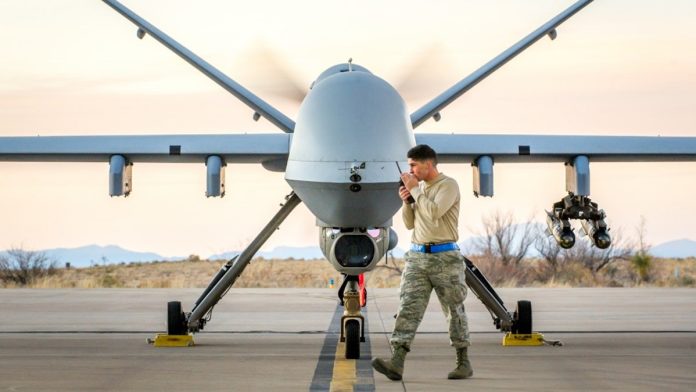
US says Russia ‘harassing’ drones in Syria

US Drone

US Air Forces Central released a video of Wednesday’s encounter, showing a Russian SU-35 fighter closing in on the drone.

Footage showed the Russian pilot positioning his aircraft in front of the Reaper and turning on the afterburner, dramatically increasing speed and air pressure and making it harder to operate the drone, the air force said in comments accompanying the video.

So-called parachute flares were also released.

“The Russian SU-35 fighter aircraft employed parachute flares in the flight path of US MQ-9 aircraft,” the air force said, adding, “Against established norms and protocols, this forced US aircraft to conduct evasive manoeuvres.”

Three US drones were airborne at the time of the incident on Wednesday morning, Lieutenant General Alexus Grynkewich, the commander of the Ninth Air Force in the Middle East, said in a statement.

He accused the Russian aircraft of “harassing the drones”, which he said were engaged in a mission against Daesh.

“Russian military aircraft engaged in unsafe and unprofessional behaviour while interacting with US aircraft in Syria,” he continued, adding that the actions threatened the safety not only of US forces but also Russian forces.

Army General Erik Kurilla, head of US Central Command, stated that Russia’s violation of ongoing efforts to clear the airspace over Syria “increases the risk of escalation or miscalculation”.

About 900 US forces are deployed to Syria to work with the Kurdish-led Syrian Democratic Forces against Daesh. No other details about the drone operation were released, and the statements did not reveal where the incidents took place.

Oleg Gurinov, deputy chief of the Russian Center for Reconciliation of the Opposing Parties in Syria (a division of the Russian defense ministry), also said on Wednesday the US-led international coalition’s drones were seen flying over an area of the Russian-Syrian drills five times during the past day in violation of flight safety rules.

According to Gurinov, the Russian side once again expresses concern over the systemic violations of the deconfliction protocols linked with the flights of the coalition’s drones.

“During the day, twelve violations were reported, including five over an area that was closed for flights due to the joint Russian-Syrian drills in northern Syria. We remind that the Russian side bears no responsibility for the safety of flight of unmanned aerial vehicles (UAV), which were not agreed with the Russian side,” he added.

He also stated that two shelling attacks on the positions of Syria’s government army were reported in the Idlib de-escalation zone during the day from the positions of the Jabhat al-Nusra terrorist group in the Aleppo and Latakia governorates.

The joint Russian-Syrian air force and air defense force drills began in Syria on July 5. It is planned to drill joint actions by aviation, air defense forces and electronic warfare to repel air attacks.

Russia’s “Special Operation” in Ukraine; Day 498: At least 5 killed, dozens injured in Russia missile strike on Ukraine’s Lviv

Russia Ukraine War
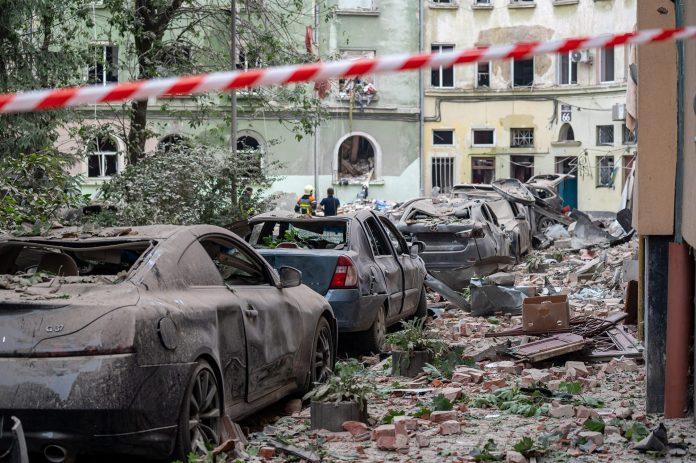
The aftermath of a missile attack on July 6, in Lviv, Ukraine.

Ukraine attacked Crimea more than 70 times this year: Russia

Ukraine targeted Crimea with more than 70 drone attacks this year and also attacked southern Russia’s Krasnodar and Rostov regions, the Russian RIA Novosti news agency quoted the secretary of Russia’s Security Council, Nikolai Patrushev, as saying.

“The targets, as a rule, are energy and industrial infrastructure facilities, the destruction or damage of which threatens peaceful life and human health,” Patrushev was quoted as saying during a security meeting in Krasnodar.

Russia annexed Crimea from Ukraine in 2014.


At least 5 dead and more than 30 injured in Lviv attack: Officials

The death toll in Thursday’s Russian attack on a residential building in Lviv has risen to at least five people, with at least 36 people injured, according to the State Emergency Service of Ukraine.

The State Emergency Service also said that seven people were rescued without injuries and 64 people were evacuated at the scene.

Earlier Thursday, the Lviv military administration announced the missile attack was “the most devastating attack on civilians in the Lviv region since the beginning of the full-scale war.”

Officials stated the missile attack destroyed more than 30 houses, over 250 apartments, 10 dormitories, two university buildings, an orphanage and a school. It also damaged one substation in Lviv.


Zelensky to visit Turkey on Friday

Ukrainian President Volodymyr Zelensky on Friday will pay a working visit to Istanbul and meet his Turkish counterpart Recep Tayyip Erdogan.

During one-on-one and interdelegation meetings, Erdogan and Zelensky are set to discuss relations between the two countries, as well as regional and international issues, including the latest developments in the Russia-Ukraine war, the Black Sea grain deal which is set to expire on July 17, and ensuring peace and stability in the Black Sea region.


US to announce cluster munitions for Ukraine: Report

The New York Times reports that the US is expected to announce it will give cluster munitions to Ukraine to fight back against Russian forces, according to an unnamed senior Biden administration official.

Last month, a senior Pentagon official said the US military believes cluster munitions would be useful for Ukraine but they had not been approved for delivery due to congressional restrictions and concerns among allies.

More than 120 countries have banned cluster munitions, which release large numbers of bomblets that can kill indiscriminately over a wide area and pose a threat to civilians.

Earlier in the day, Human Rights Watch said both Russian and Ukrainian forces had used cluster munitions that have killed Ukrainian civilians.


Zelensky’s visit to Sofia is proof it wants to expand conflict: Kremlin

The Kremlin says Ukrainian President Volodymyr Zelensky’s visit to Bulgaria shows that Kyiv is doing all it can to drag as many countries as possible into the conflict.

Kremlin Spokesman Dmitry Peskov said discussions, like those Zelensky was having in Bulgaria, would not affect the outcome of its “special military operation” in a big way and pointed to the situation on the frontline as evidence.

Earlier, Zelensky stated he was in the Bulgarian capital Sofia for talks with the country’s president and prime minister on security and next week’s NATO summit.


Russia is not tracking Wagner’s leader: Kremlin

The Kremlin announced it is not tracking the movements of Wagner Group’s leader after Belarus President Alexander Lukashenko said Yevgeny Prigozhin was no longer in Belarus.

Kremlin Spokesperson Dmitry Peskov told reporters that no date had been set for a meeting between President Vladimir Putin and Lukashenko and said he could not yet confirm discussion details.

Lukashenko had earlier said Prigozhin would be discussed.


Prigozhin is “free”: Lukashenko

Belarus President Alexander Lukashenko said he did not believe Russian President Vladimir Putin would seek vengeance on Yevgeny Prigozhin.

“I know for certain that Prigozhin is free. And right now, as well, he is free. We spoke several times on the phone. Yesterday after lunch, we talked with him on the phone and just discussed … further actions of Wagner [private military company].”

Lukashenko stated earlier that Prigozhin, who has not been seen in public since June 24, was now in Russia, despite an earlier claim that he would be exiled to Belarus.

Speaking at a news conference in Minsk on Tuesday, he added, “What will happen to Prigozhin next? Well, everything happens in life. But if you think that Putin is so malicious and vindictive that he will ‘kill’ Prigozhin tomorrow – no, this will not happen.”

Putin knows Prigozhin “much better than I do,” Lukashenko said.

“You have to understand that Putin knows Prigozhin much better than I do and knows him longer than I do, about 30 years, as they both lived and worked in St Petersburg. They had very good relations with each other, maybe even more than that,” he continued.

In the wake of Prigozhin’s aborted insurrection and Lukashenko’s intervention, the Kremlin touted Lukashenko’s relationship with Prigozhin.

“The fact is that Alexander Grigoryevich [Lukashenko] has known Prigozhin personally for a long time, for about 20 years,” Kremlin spokesman Dmitry Peskov said on June 24, adding, “And it was his personal proposal, which was agreed with Putin. We are grateful to the President of Belarus for these efforts.”


Problem of relocating Wagner fighters has not been resolved: Belarus

Belarusian President Alexander Lukashenko says the issue of relocating forces from Russia’s Wagner mercenary group has not yet been resolved, the TASS news agency reported.

Last month, Lukashenko brokered a deal to end an armed mutiny in Russia by allowing the Wagner Group’s leader Yevgeny Prigozhin to come to Belarus, but on Thursday, he said Prigozhin was still in Russia.

Lukashenko added his offer to accommodate some of Wagner’s fighters in Belarus still stood.

The fighters, Russia announced, can go to Belarus and sign up with its regular armed forces or demobilise.


Belarus president says Wagner chief is back in Russia

Belarusian President Alexander Lukashenko, who last month brokered a deal to end an armed mutiny in Russia, says Russian mercenary leader Yevgeny Prigozhin was no longer in Belarus.

Lukashenko stated on June 27 that Prigozhin had arrived in Belarus as part of the deal.

“As for Prigozhin, he’s in St Petersburg. He is not on the territory of Belarus,” Lukashenko told reporters.


Lviv missile strike “another tragedy and terrorist act”: Ukrainian official

The deadly Russian missile strike on an apartment building in western Ukraine Thursday was “another tragedy and terrorist act,” a senior Ukrainian official stated as rescue efforts were ongoing in the city of Lviv.

Andriy Yermak, head of the Ukrainian President’s Office, said preliminary information shows the attack was carried out with a Kalibr cruise missile.

“Russia manufactures missiles, uses Western components, and circumvents sanctions. It can only be stopped by force,” Yermak continued, adding, “We need more air and missile defense than we have now.”

Lviv Mayor Andrii Sadovyi said at least four people were killed.

Sadovyi added nearly 100 houses and 50 cars were damaged in the attack. Authorities have already allocated funding to restore the homes, and all residents who lost their houses have been offered temporary accommodation, he continued.

Prior to Thursday’s attack Lviv had largely been spared from the relentless bombardment seen across much of Ukraine during the Russian invasion.

The city is located close to the Polish border and Yermak warned there are “no guarantees” that Russian missiles “will not accidentally hit neighboring countries during the terror of Ukraine.”

He also urged NATO members to extend an invitation to Ukraine to join the defense alliance.

“Of course, the security guarantees and Ukraine’s membership in NATO are the real signals that [Russian President Vladimir] Putin is afraid of. Inviting our country to join NATO and strengthening our defense capabilities will help us defeat the Russians,” Yermak noted.


UN wants more access to Ukraine nuclear plant amid sabotage warnings

The United Nations’s nuclear watchdog, the International Atomic Energy Agency (IAEA), is seeking increased access to the Russian-controlled Zaporizhzhia nuclear plant in southern Ukraine as Moscow and Kyiv accused each other of planning acts of sabotage at what is Europe’s largest nuclear power facility.

The IAEA said it wants additional access to the Zaporizhzhia plant to “confirm the absence of mines or explosives at the site”.

“With military tension and activities increasing in the region where this major nuclear power plant is located, our experts must be able to verify the facts on the ground,” IAEA Director-General Rafael Grossi said in a statement.

Recent inspections at the site by IAEA staff had not found “any visible indications of mines or explosives”, but additional access “would help clarify the current situation at the site” at a time when “unconfirmed allegations and counter allegations” are circulating, Grossi added.


Number injured in Lviv strike attack rises to 34

At least four people have been killed, and 34 others injured, in a Russian missile strike on a residential building in Lviv early on Thursday morning, according to Ukrainian authorities.

The Russian missile struck at around 2:46 a.m. local time on Thursday (7:46 p.m. on Wednesday ET), according to the Prosecutor General’s Office.

The Lviv Regional Prosecutor’s Office has opened a pre-trial investigation into the violation of the laws and customs of war in relation to the attack.

“Search and rescue operations are underway to dismantle the collapsed building,” the Prosecutor General’s Office said in a statement.

“Priority measures are being taken to document the crime committed by the army of the aggressor country,” it added.


At least 3 killed in Russian missile attack on Lviv city

At least three people have been killed in a Russian missile attack on a residential apartment block in the western Ukrainian city of Lviv, one of the largest attacks on the city’s civilian infrastructure since the start of Russia’s invasion last year, officials said.

“Three people have been killed,” Lviv’s Mayor Andriy Sadovyi said on his Telegram channel on Thursday morning.

Emergency workers were continuing to “clear debris and pull out all the dead”, he added.

Sadovyi stated in an earlier post that eight people had been wounded, but it was unclear if the three who died were among those first reported with injuries.

President Volodymyr Zelensky offered his condolences to the victims’ families and vowed to respond to the attack.

“There will definitely be a response to the enemy. A tangible one,” Zelensky said in a Telegram post.


Ukrainian president signs bill adopting sanctions against 18 legal entities

Ukrainian President Volodymyr Zelensky has signed a bill that adopts sanctions against 18 entities which he claimed are linked to Russia.

“Our principle is clear: the activity of all individuals and legal entities, which is the foundation of the Russian regime’s ability to terrorize Ukraine and the rules-based international order, must be blocked,” Zelensky said in a statement on Telegram.

The statement, which was shared by the Ukrainian presidency, noted 18 legal entities registered in Russia, Luxembourg and the Republic of Cyprus.

The presidency announced Oleksiy Danilov, the head of Ukraine’s National Security and Defence Council, will be responsible for monitoring the implementation of the decision.


Zelensky says Russia uses Zaporizhzhia nuclear power plant as a cover for shelling nearby areas

Ukrainian President Volodymyr Zelensky claims that Russia has been using the Zaporizhzhia nuclear power plant as a cover for shelling neighboring cities.

Zaporizhzhia NPP, with six reactors, is the largest nuclear power station in Europe. It was mostly built in the Soviet era and became Ukrainian property after its declaration of independence from the Soviet Union in 1991.

Russia captured the plant in March 2022. Since then, international and local experts have voiced grave warnings, not only for the safety of the plant’s workers but also for fear of a nuclear disaster that could affect thousands of people in the surrounding area.

Russian forces have “set up artillery on the territory of the plant or near it and fire,” Zelensky said in a virtual address to students and professors from several universities in Argentina on Wednesday.

“Moscow is considering various scenarios, including those similar to the man-made disaster at the Kakhovka hydroelectric power station. That is, for cynical military purposes. But we should not even think about which scenario is most likely. We should only think about how to prevent any disaster scenario,” Zelensky added.

It’s not yet clear whether the Russian-occupied Nova Kakhovka dam collapsed in June because it was deliberately targeted or if the breach was caused by structural failure. Dozens of people died in the flooding, according to officials, while it also caused widespread damage to homes and farmland. Russia and Ukraine have blamed each other for the collapse.

Ukrainian officials earlier on Wednesday said that they are well prepared for a Russian attack at the Zaporizhzhia power plant, though they warned that Moscow is capable of anything, even “completely reckless actions” that it could try to pass off as sabotage by Ukraine.

Russia claimed to be taking precautionary measures to counter a threat at the plant by Ukraine amid increasing rhetoric. According to Dmitry Peskov, Kremlin spokesman, the situation at Europe’s largest nuclear station is “quite tense,” and the potential for “sabotage by the Kyiv regime” is “high,” which could have “catastrophic consequences.”

The UN’s nuclear watchdog said in an update on Wednesday that there are no visible indications of mines or explosives at the power plant, although it requested additional access to the site.


Ukraine’s military says Russia continues to focus main efforts in eastern areas, including Bakhmut

Russia continues to focus “its main efforts” on the areas of Lyman, Bakhmut, Avdiivka and Marinka in eastern Ukraine, with more than 30 combat engagements taking place there within the last day, according to Ukraine’s General Staff.

In the Lyman sector, more than 10 villages came under artillery fire as Russian forces unsuccessfully tried to force Ukrainian troops out of their positions near Novoyehorivka in the Luhansk region, the General Staff said in an update.

A further 10 localities were shelled in the Avdiivka sector, where Ukrainian defense forces claim to be continually holding back the Russian offensive in the city of Avdiivka.

“The enemy launched air strikes in the areas of Bohdanivka and Toretsk,” the General Staff said, adding, “More than 10 localities suffered from enemy artillery shelling, including Vasyukivka, Khromove, Oleksandr-Shultine and Pivnichne, in the Donetsk region.”

According to the General Staff, Ukrainian defenders “successfully repelled enemy attacks in the areas south of Berkhivka and Bohdanivka in the Donetsk region.”

“At the same time, they continue to conduct offensive operations south and north of the city of Bakhmut, strengthening their positions,” the update continued.

The commander of Ukraine’s “Terra” reconnaissance unit, Mykola Volokhov, described the situation in the Bakhmut area as “quite positive and optimistic.”

“Over the last month (in the Bakhmut sector) we have been making steady progress in moving forward: liberating Ukrainian land from the enemy, regaining what was lost. We are starting to enter the territories that we did not initially control,” Volokhov stated.

“The nature of the fighting is a lot of infantry battles, but lately, both our side and the enemy have been using a lot of tanks,” he continued, adding, “Previously, it was just infantry, but now the enemy is actively showing off their equipment. For us, this is a good sign, because it means that they are not able to cope and need to pull out reserves.”

Meanwhile, the Ukrainian military announced it also repelled all attacks around the town of Marinka.

“At the same time, the Ukrainian Defence Forces continue to conduct offensive operations in the Melitopol and Berdiansk directions, strengthening their positions, inflicting artillery fire on the identified enemy targets, and carrying out counter-battery measures,” the update continued.

Ukraine’s General Staff also noted that Russia launched five drones within the last day, two of which were destroyed by Ukrainian air defense.


US secretary of state calls on Turkey to support Sweden’s bid to join NATO

US Secretary of State Antony Blinken called on Turkey to support Sweden’s membership in NATO ahead of the alliance’s summit next week.

Blinken, on a call with Turkish Foreign Minister Hakan Fidan on Wednesday, emphasized the “importance of NATO unity in such a critical time” and asked Turkey to allow Sweden to join, according to state department spokesperson Matthew Miller.

The secretary of state said the United States and Turkey have “longstanding and deep bilateral defense ties” and that Turkey’s ability to work with NATO is a priority, the spokesperson said in a statement.

President Joe Biden stated Wednesday that the US “fully supports” Sweden’s membership in NATO after meeting with Swedish Prime Minister Ulf Kristersson.

Turkey has been blocking Sweden’s accession for a number of reasons.

Among them is the claim that Sweden allows members of recognized Kurdish terror groups to operate in the country, most notably the militant Kurdistan Workers’ Party (PKK).

Sweden changed its terrorism laws earlier this year, making it a crime to be part of these groups, but it is not clear whether this will convince Turkey to allow the country to join NATO.


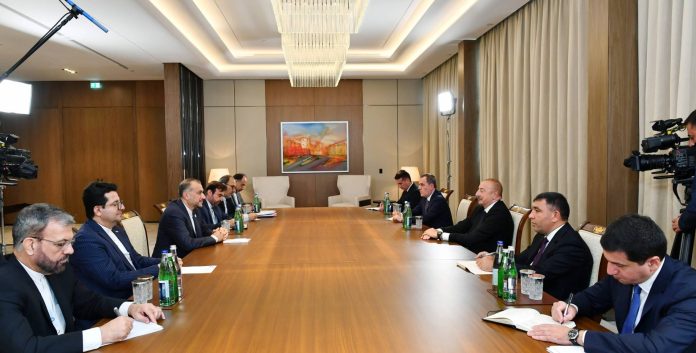
Azerbaijan president: No country allowed to use Azeri territory against Iran

Aliyev Amirabdollahian

They met on the sidelines of the meeting of the top diplomats of the Non-Aligned Movement’s member states in Baku on Wednesday.

Aliyev also stressed the importance of the ties between the two Muslim neighbors and also the significance of their economic relations, particularly in the transportation and transit fields.

The Azeri president underlined that his country will never allow anyone to use Azerbaijan’s territory to threaten the region and the Islamic Republic of Iran.

Aliyev said Azerbaijan wants to end the obstruction of transit routes in the region and respects all historical roads of Iran in the region.

Amirabdollahian and Aliyef exchanged views over ways of expanding relations between the two countries and about regional developments.

While congratulating Azerbaijan on the successful holding of the meeting of the NAM foreign ministers, Amirabdollahian also stressed the determination of the officials of Tehran and Baku to expand bilateral relations.

He said given the emerging positive atmosphere in the ties between the two nations and especially, their success in overcoming some misunderstandings, the Islamic Republic of Iran is ready to pursue and implement all previous agreements with Azerbaijan.

He noted that Iran’s principled foreign policy is to call for restoring peace, stability and security in the region.

Amirabdollahian and Aliyev then pointed to the completion of the probe into the January attack on Azerbaijan’s embassy in Tehran and discussed ways of resuming the Azeri embassy’s activity.

IRGC Quds Force chief: Palestinians slapped Israel in face

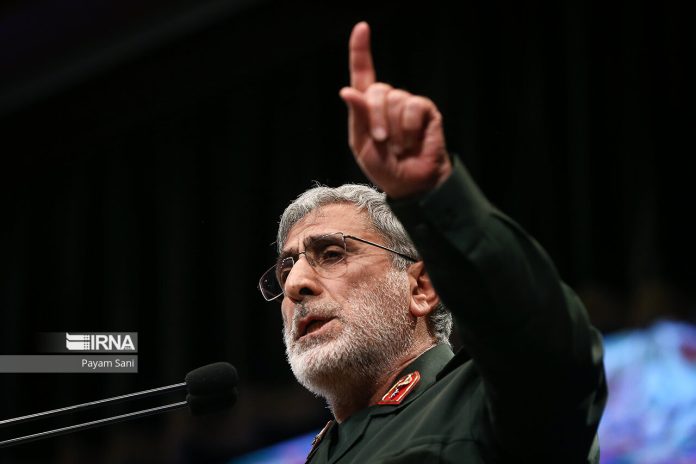
Brigadier General Esmaeil Ghaani

“Today, we witnessed the Zionist regime mobilizing all its forces in the Jenin camp, but the Palestinian youths struck them in their faces,” Qaani said during a speech on Wednesday morning.

The senior commander highlighted the significance of self-defense capabilities as well as defending others, affirming, “The Palestinian children have never been as dignified and steadfast as they are today, while the criminal Israelis face many difficulties, divisions, and misfortunes, like never before.”

He added that the “children of Palestine have learned from the Islamic Revolution to live with dignity and fight with honor.”

Addressing a letter by former Israeli prime minister Naftali Bennett titled “A Letter to the Silent Zionist People,” Qaani stressed, “In his 26 to 27-page letter, Bennett describes the calamities that this regime is facing in economic, military, ethical, women’s issues, and other matters, spanning six to seven pages. In the end, Bennett says, ‘The Jews had two periods of governance; the first one lasted 80 years, and conflicts escalated until the government fell. Then, they formed a government that lasted 75 years, and conflicts escalated until it fell.’ The former prime minister of the Zionist regime says, ‘The conflicts in our state have never been as significant as those in this government.’”

Qaani said that today, “We witnessed the Zionist regime mobilizing all its forces in the Jenin camp, but the Palestinian youth stand up against them. Some days, the Palestinians carry out more than 30 operations in the West Bank against the Zionist regime.”

Reiterating a quote from the Leader of the Islamic Revolution Ayatollah Seyed Ali Khamenei who said that the cost of compromise is greater than the cost of resistance, Qaani added that today “the resistance has proven itself in the defense arena.”

After a 44-hour-long incursion, Israeli troops finally withdrew from Jenin on Tuesday evening and Wednesday morning. At least 13 Palestinians have been killed in Jenin and one in Ramallah. The Palestinian Red Crescent announced it has evacuated about 3,000 people from the Jenin camp, where some 14,000 people live in an area of less than half a square kilometer.