Monday, December 29, 2025
Home Blog Page 131

Top Iranian lawmaker: Cooperation with IAEA currently suspended

Iran nuclear programe

Nabavian stated: “At present, our cooperation with the Agency is suspended in full. According to the law of the Parliament, any cooperation is conditional upon the protection of the security of our nuclear facilities and scientists, the guarantee of non-aggression against our territory, and the recognition of Iran’s inalienable right to enrichment under Article 4 of the NPT. Unless these are assured, we have no obligation to cooperate.”

The senior legislator further underlined: “There are no IAEA inspectors in Iran at the moment.”

Nabavian’s remarks come as Tehran has time and again stressed that the path to continued technical engagement with the IAEA depends on respect for its sovereign rights and full adherence to the provisions of the NPT by all parties, not selective or politically motivated enforcement.

Most Americans oppose more aid to Israel: Survey

According to the findings, 51% of Americans oppose sending “additional economic and military support to Israel,” while only 31% back further aid. Six out of ten voters (58%) say Tel Aviv should immediately end its Gaza campaign, even if hostages remain in captivity and Hamas is not eliminated.

The poll also found that 40% of US voters believe Israel is intentionally killing civilians in Gaza. A larger share (62%) say Israel is not taking enough precautions to avoid civilian casualties.

Overall, 34% of respondents side with Israel and 35% with the Palestinians in the conflict. The survey was conducted nationwide from September 22 to 27 among 1,313 registered US voters.

The findings contrast sharply with polling in the immediate aftermath of the Hamas attacks on Israel on October 7, 2023, when the group killed 1,200 people and seized more than 250 hostages. At that time, 47% of American voters sided with Israel and only 20% with the Palestinians.

Since the Gaza escalation in October 2023, Washington has approved billions in emergency weapons and defense aid to Israel. Its campaign in Gaza has killed more than 65,000 Palestinians – a toll that a UN committee this month labeled genocide. Israel also recently launched a ground offensive in Gaza City, one of the last areas outside of IDF control – spurring some countries to recognize a Palestinian state, while international bodies and hostage families have pressed for a settlement.

On Monday, the US unveiled a 20-point plan to end the Gaza war, calling for an immediate ceasefire, a hostages-for-prisoners exchange, a staged Israeli withdrawal, Hamas disarmament, and a transitional international administration.

Prime Minister Benjamin Netanyahu endorsed the framework but warned that Israel would “finish the job” militarily if Hamas refuses.


Iranian FM urges diplomacy, says nuclear technology is indigenous

Abbas Araghchi

In a wide-ranging interview, Seyed Abbas Araghchi reiterated that Iran has never sought nuclear weapons and pointed to the 2015 nuclear deal (JCPOA) as proof of its peaceful intent, saying Tehran complied while the US later withdrew.

Araghchi said five rounds of talks took place after Washington signaled readiness to return to negotiations in 2025; a sixth round scheduled for June 15 was disrupted when Israel and the US struck Iranian sites two days earlier.

He warned that military strikes and a push to trigger a UN “snapback” of sanctions would only complicate diplomacy, adding that Iran’s nuclear know-how is domestically developed and therefore not eliminated by attacks on facilities.

The Iranian foreign minister defended limited enrichment for medical and research reactors, noting Tehran’s legal right to peaceful nuclear activities under international agreements and urging multilateral negotiation rather than coercive measures.

On Gaza and regional diplomacy, Araghchi said Iran seeks an end to mass civilian casualties and will judge any peace proposals by whether they respect Palestinian rights to self-determination.

Iran dismisses rumors of poppy cultivation, reaffirms opposition to narcotics production

Speaking on a state television program, Mohammad Zarei said nearly 300 million people worldwide use some form of narcotic substance, with around 500,000 deaths each year linked to drug abuse.

He described addiction as one of the most serious social challenges globally, surpassing the toll of natural disasters and wars.

Zarei highlighted Iran’s heavy sacrifices in the fight against drug trafficking, noting that the country has lost nearly 4,000 personnel and more than 12,000 have been injured over the past four decades.
He emphasized that Iran, located on a major drug transit route, has borne significant costs for global security.

Addressing recent speculation, Zarei stated: “The policy of Iran, which is resolute opposition to poppy cultivation and narcotics production, remains firm.”

He clarified that while discussions exist over meeting medical needs for opioid-based medicines, no decision has been made to allow cultivation, and any such move would involve controlled production of a specific non-opium variety for pharmaceutical purposes only.

He concluded that Iran will continue to strengthen laws and enforcement against illegal cultivation, with harsher penalties under review in parliament.

Iran suspends IAEA cooperation but has not finalized NPT exit, lawmaker states

IAEA

Vahid Ahmadi, a member of parliament’s National Security and Foreign Policy Committee, told the media that discussions over leaving the NPT remain ongoing and need “greater precision.”

He emphasized that any decision must be backed collectively by Iran’s governing institutions. “If a decision is made, it should be one that the entire system supports so that it is implemented with unity,” he said.

Ahmadi noted that Iran has already suspended its cooperation with the International Atomic Energy Agency (IAEA), citing the agency’s violations of its own rules and international law.
He noted that while non-cooperation is already in effect, withdrawal from the NPT remains undecided.

He added that the issue is complex and requires weighing the benefits, costs, and national interests.
Future developments at the international level could influence Iran’s decision, he said, but for now, “the system has not reached a conclusion.”

Iran FM says UNSCR 2231 sanctions must end on October 18

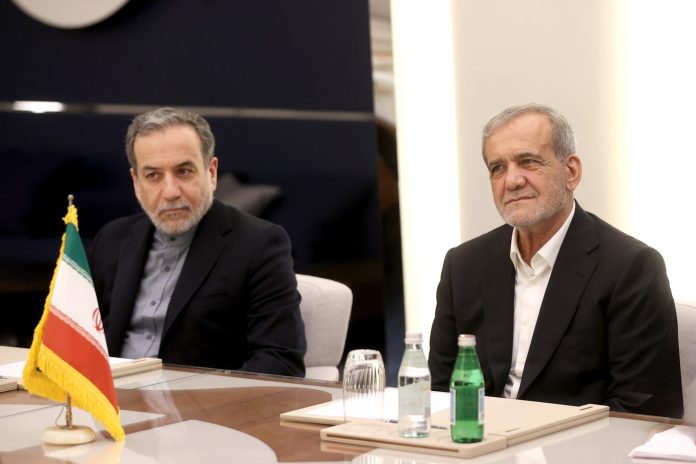
Araqchi made the remarks in a meeting with UN Secretary General Antonio Guterres in New York on Monday.

During the talks, Araqchi outlined Iran’s positions on the developments in West Asia, particularly the grave threat posed by the Israeli regime’s continued aggression and violations of international law to regional and international peace and stability.

He stressed the special responsibility of the United Nations and its secretary general in safeguarding the principles and objectives of the UN Charter.

Referring to the military aggression by the Israeli regime and the US against Iran’s sovereignty and territorial integrity in June, Araqchi condemned the unlawful attacks on Iran’s peaceful nuclear facilities amid ongoing diplomatic negotiations as a flagrant violation of international law and the UN Charter, describing it as a betrayal of diplomacy. He underlined the need to hold the aggressors accountable.

Araqchi further dismissed the US and EU3’s move to exploit the JCPOA’s snapback mechanism as baseless and illegal, warning that such an unprecedented blow to diplomacy exposes the absence of good faith in those countries. He reiterated that Resolution 2231 and all its nuclear-related restrictions must be deemed terminated in line with the resolution’s provisions on October 18.

For his part, Guterres stressed the importance of diplomacy and adherence by all sides to international commitments, reiterating the UN Secretariat’s readiness to provide any assistance in this regard.


Ukraine says wants war with Russia to end this year

Russia Ukraine War

Speaking at the Warsaw Security Forum in Poland on Monday, Sibiga said that “Ukrainian resilience is not the reason for endless war. We want to end this war this year.”

He urged Ukraine’s foreign backers to make continued hostilities “dangerous personally” for Russian President Vladimir Putin, calling for additional economic sanctions to be imposed under US leadership.

Sibiga also repeated Kiev’s demand that Putin meet directly with Ukrainian leader Volodymyr Zelensky, adding that “the outcome of this meeting should be [a] ceasefire.”

Moscow has announced it is willing to engage Zelensky in person if talks are properly prepared to yield results, but has rejected the idea of a simple ceasefire, arguing it would only allow Kiev to rebuild its forces and resume fighting later. Russian officials have said a diplomatic path towards achieving its security objectives is preferable.

Sibiga stated that Ukrainian expectations have been boosted by “positive signals” from US President Donald Trump, who met Zelensky in New York earlier this month. In contrast with his previous remarks, Trump has claimed that with European funding, Ukraine’s military could achieve its territorial goals.

Zelensky has interpreted Trump’s remarks as a commitment of continued US support, although others have suggested that the president is shifting responsibility to European NATO allies to avoid being blamed for a possible Ukrainian defeat.

EU foreign policy chief Kaja Kallas responded that Trump “was the one who promised to stop the killing,” adding, “it can’t be on us.”


20% of children in Gaza born underweight or premature amid Israeli blockade: UNICEF

Gaza War

“This week, UNICEF delivered urgently needed hygiene supplies to hospitals and health centres in Gaza City, but babies need more access to life-saving nutrition and health services,” the UN agency said in a post on the US social media company X.

“One in five babies in the Gaza Strip is born prematurely or underweight,” it added.

The organization renewed its call for the immediate delivery of large-scale aid for children, infants, and families in Gaza, alongside a ceasefire in the territory, which has been subjected to a severe blockade and deliberate starvation for months.

The Israeli-imposed siege has triggered an unprecedented famine, claiming the lives of 422 people, including 147 children, despite repeated international appeals to lift the blockade and allow aid access.

Last month, the Integrated Food Security Phase Classification declared famine in Gaza City, warning that it could spread to other areas of the territory.

Since March 2, Israel has tightened the blockade by closing all crossings into Gaza, preventing the entry of food, medicine, or humanitarian aid, pushing the enclave toward famine despite aid trucks accumulating at the border.

Limited aid is occasionally allowed, but it is insufficient to meet basic needs, and many aid trucks, according to Gaza authorities, are looted en route by gangs allegedly protected by Israel.

The Israeli army has killed over 66,000 Palestinians, most of them women and children, in Gaza since October 2023. The relentless bombardment has rendered the enclave uninhabitable and led to starvation and the spread of diseases.


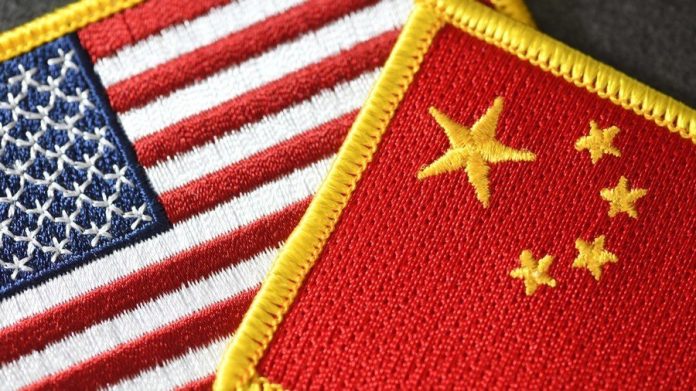
US gears up for possible conflict with China: WSJ

The US Department of Defense launched the drive in June, when it invited top missile makers to a Pentagon roundtable, sources told the daily.

Led by Defense Secretary Pete Hegseth and Joint Chiefs of Staff Gen. Dan Caine, the meeting drew major arms contractors, startups like Anduril Industries and crucial component suppliers.

Deputy Defense Secretary Steve Feinberg is playing an “unusually” hands-on role in the effort, reportedly known as the Munitions Acceleration Council. The WSJ noted that the top official personally calls some executives on a weekly basis to track their progress.

“President Trump and Secretary Hegseth are exploring extraordinary avenues to expand our military might and accelerate the production of munitions,” Pentagon spokesman Sean Parnell told the newspaper.

“This effort has been a collaboration between defense industry leaders and senior Pentagon officials.”

The new acceleration council is focused on 12 weapons that the Pentagon wants on hand for a potential conflict with China, the WSJ relayed.

Some officials and experts have reportedly expressed concerns that the Pentagon’s goals may be unrealistic, citing the fact that assembling certain missile systems can take up to two years. At the same time, certifying new suppliers requires hundreds of millions of dollars to ensure the products meet military standards.

Funding remains another major concern, according to analysts cited by the news outlet. While the “Big, Beautiful Bill” recently approved by Washington provided an extra $25 billion in munitions spending over five years, meeting the Pentagon’s new targets could require tens of billions more.

China is viewed by the US as its primary strategic rival due to its rapid military modernization, expanding influence in the Indo-Pacific, and alleged growing pressure on Taiwan. Washington fears that Beijing may attempt to forcibly reunify with the self-governing island, potentially triggering a regional conflict that could draw in American forces.

Beijing has rejected the allegations, maintaining that Taiwan is an internal matter and has repeatedly accused the US of stoking tensions by arming the island and encouraging separatist sentiment.


US deports dozens of Iranians to Tehran under bilateral deal: NYT

White House

Citing senior Iranian and US officials, the report said a US-chartered flight carrying deportees departed from the US state of Louisiana Monday night and is expected to reach Iran via Qatar on Tuesday.

A US official confirmed that plans for the flight were in the final stages.

Two officials said the deportees include men, women, and some couples, with some volunteering after months in detention, while most had either been denied asylum or not had a hearing yet before a judge.

Iranian officials described the deportation as a rare instance of US-Iran cooperation after months of talks, with Iran’s Foreign Ministry coordinating the return and assuring deportees of their safety.

The US has long struggled to deport migrants to countries like Iran due to limited diplomatic ties and delays in obtaining travel documents, often resulting in prolonged detention or release.

In 2024, the US deported just over two dozen Iranians, the highest number in years, via several commercial flights.