Sunday, December 21, 2025
Home Blog Page 11

Iran says IAEA Chief repeating claims, calls for technical and balanced approach

IAEA Grossi

Responding to Grossi’s remarks about Iran possessing around 400 kilograms of enriched uranium and his call for resuming the agency’s inspection activities, the spokesperson said Iran has demonstrated its commitment to its safeguards agreement and remains fully aware of its obligations.

He added that the IAEA chief should address parties responsible for the current situation rather than repeatedly singling out Iran.

The spokesperson criticized the “unfair approach” by the IAEA and its Board of Governors, noting that they have failed even to condemn US attacks on Iran’s nuclear facilities earlier this year.

“Targeting one side cannot resolve the issue,” he said, urging the IAEA director general to apply a strictly technical perspective in line with the agency’s statutory mandate.

Addressing questions about the prospects for renewed talks between Iran and the IAEA, the spokesperson said contacts remain in place and Iran’s mission in Vienna maintains communication with agency officials when necessary.

However, he said it is too early to speak of mediation in its conventional sense.

He stressed that Iran’s current framework for cooperation with the IAEA is based on legislation passed by the Iranian parliament, which clearly defines the scope and manner of engagement.

Russia ready to ‘test’ Europe in real conflict in next 4 years: Defense commissioner

Russian Army

Speaking to daily La Stampa after a meeting with Italian Defense Minister Guido Crosetto, Kubilius described the talks as “high-level strategic discussions” and emphasized the importance of continued cooperation to reinforce European security.

“The problem is not the present but the future. The Russian economy has become a war economy. That is why we must strengthen ourselves,” Kubilius said, highlighting two main challenges for the EU.

“There is the threat of a possible Russian aggression: our intelligence services state this publicly and clearly — in the next three or four years, Russia could be ready to ‘test us’ in a real conflict. The second challenge comes from the Americans, who are asking us to take on greater responsibility for European defense, as they need to allocate more and more resources to the Indo-Pacific,” he added.

Kubilius said that while achieving full European defense capabilities would take time, new financial instruments and strategic planning are accelerating progress.

He pointed to critical areas such as space-based data, intelligence, and satellite communications, where Europe currently relies heavily on US support.

On NATO’s future, the commissioner stressed that although he does not foresee the US abandoning the alliance, Europe must prepare to take on greater responsibility both within the bloc and in general security matters.

Addressing the ongoing war in Ukraine, Kubilius suggested integrating Ukrainian armed forces’ battlefield experience and industrial capabilities into European defense structures.

“We also need to discuss a possible European Defense Union, a new security architecture that could include the UK, Norway, and Ukraine, to consolidate Europe’s defensive capabilities. As for the idea of a European army, it is probably too early to say anything concrete. It is a difficult and complex path, but we must begin to discuss it openly, looking at the next five to ten years,” he added.

On financing Ukraine’s needs, Kubilius highlighted proposals to use Russian assets seized in Europe as a mechanism to support both military and budgetary requirements, stressing that the decision rests with EU heads of state and government.

“The best guarantee for Ukraine’s security is a strong army. At the same time, we should help Ukraine become a successful country after peace, including through EU integration,” he stated.


Iranian FM Araghchi: Imported solutions cannot bring stability to Afghanistan

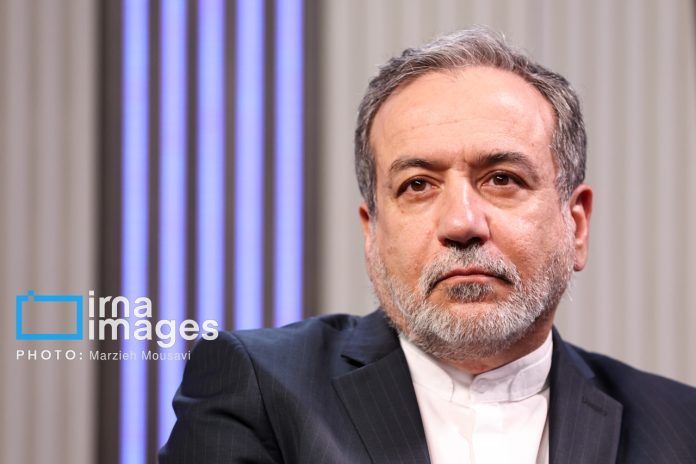
Speaking on Sunday at a meeting of special representatives of Afghanistan’s neighboring countries, along with Russia, Araghchi said decades of experience have shown that “no extra-regional formula can resolve regional crises.”

The meeting, hosted by Iran’s Foreign Ministry in Tehran, focused on recent developments in Afghanistan and regional cooperation.

Araghchi emphasized that Afghanistan’s stability is a strategic necessity for the entire region, citing the country’s geopolitical position linking Central Asia, West Asia and South Asia.

He pointed to the failure of security-driven approaches and the two-decade NATO presence in Afghanistan as evidence that foreign intervention does not guarantee sustainable development or peace.

“The neighbors are the most natural and reliable solution,” he said, adding that Iran has consistently advocated a neighbor-centered approach in all initiatives related to Afghanistan.

He called for stronger regional integration, dialogue based on mutual respect and the creation of coordinated mechanisms to manage shared challenges.

Araghchi also highlighted the importance of developing transit corridors, energy networks and trade routes to integrate Afghanistan into regional economic processes.

The meeting brought together representatives from Pakistan, Russia, Uzbekistan, China, Tajikistan and Turkmenistan.

Iran says the initiative aims to strengthen regional convergence, reduce tensions and support long-term stability in Afghanistan.

Snowfall in the Heights of Tarikdarreh, Iran’s Hamadan

BRICS offers new model for stronger member cooperation: Iran’s President

In a meeting with Speaker of the Ethiopian House of Peoples’ Representatives Tagesse Chafo in Tehran on Saturday, President Pezeshkian described BRICS as a new communication model that promotes respect for national sovereignty and diverse cultures, paving the way for equitable global cooperation.

The president expressed Iran’s interest in developing bilateral relations with Ethiopia. He emphasized that achieving this goal requires activating a joint cooperation commission, identifying common interests, recognizing complementary capacities, and fostering dialogue based on mutual benefits.

President Pezeshkian reiterated Iran’s readiness to play a responsible role in establishing and strengthening sustainable peace and security in the region, advocating for a world free from war, violence, and conflict. He believes that Individuals with deep insight into human nature prefer dialogue and cooperation over confrontation.

During the meeting, the Ethiopian speaker expressed his satisfaction with the discussions and underscored his country’s commitment to strengthening relations with Iran, particularly in diplomatic, economic, and security sectors. He noted that the parliaments of both countries would support their foreign ministries in enhancing diplomatic cooperation and deepening bilateral relations.

Highlighting the importance of economic collaboration, Chafo stated that Ethiopia is determined to increase trade exchanges, develop joint investments with Iran, and effectively utilize BRICS resources, including a new development bank, to bolster economic and financial cooperation.

He also acknowledged the extensive cultural and civilizational ties between the Iranian and Ethiopian peoples, recognizing Iran’s significant role in promoting peace and security in West Asia.

Chafo expressed Ethiopia’s aspiration to play a constructive and responsible role in the Horn of Africa, noting that collaboration between the two nations in peace and security could have a lasting positive impact on stability in both West Asia and Africa.


Moscow says EU’s tampering with Russian assets is ‘theft’ no matter how it’s framed

Russian Foreign Ministry Spokeswoman Maria Zakharova

Earlier this week, the Russian Central Bank initiated legal proceedings against Euroclear, the Belgian-based depository that holds the bulk of Russia’s frozen funds, as Ukraine’s European backers debate how to repurpose the assets to finance Kiev.

“Actions against sovereign assets taken without Russia’s consent – whether indefinite immobilization, confiscation, or attempts to portray them as a so-called reparations loan – are entirely illegal under international law,” Zakharova told reporters during her regular briefing on Saturday.

“No matter what pseudo-legal tricks Brussels employs to justify it, this is blatant theft,” she added.

Zakharova argued that, apart from “funding the failed Ukrainian project,” the EU was also seeking to use Russian funds to bolster its own economy, which had been damaged by sanctions targeting Moscow’s trade with the West.

Hungary and Slovakia have condemned the EU for invoking its rarely used emergency powers to circumvent potential vetoes from individual member states and make the asset freeze indefinite.

Politico reported earlier this week that Italy, Belgium, Bulgaria, and Malta had asked the European Commission to explore options for providing loans to Kiev other than seizing Russian assets. Belgian Prime Minister Bart De Wever has repeatedly warned that outright confiscation of Russian funds would undermine trust in the EU financial system, trigger capital flight, and expose Belgium to legal risks.


Israel claims to have killed senior Hamas commander in Gaza

Hamas

The attack on Saturday killed five people and wounded at least 25, according to Gaza health authorities.

Hamas in a statement did not confirm the death of Raed Saad. It announced that a civilian vehicle had been struck outside Gaza City and asserted it was a violation of the ceasefire that took effect on October.

In a post on Telegram, the army alleged that the commander had been operating to re-establish Hamas’s capabilities, which have been severely depleted by more than two years of Israel’s genocidal war on Gaza. It described him as one of the architects of the October 7, 2023, attacks on Israel.

If Saad was killed, it would be the highest-profile assassination of a senior Hamas figure since a fragile ceasefire deal came into effect in October.

An Israeli defence official told the Reuters news agency that Saad had been targeted in the attack, describing him as the head of Hamas’s weapons manufacturing force.

Hamas sources have also described him as the second-in-command of the group’s armed wing, after Izz al-Din al-Haddad.

Saad used to head Hamas’s Gaza City battalion, one of the group’s largest and best-equipped, those sources stated.

The Wafa news agency reported that an Israeli drone hit a vehicle at the Nabulsi junction in the west of Gaza City, resulting in casualties.

The agency did not report on specific numbers, and it was not clear if the attack was the one that allegedly killed the Hamas member.

Since the ceasefire started in October, Israel has continued to attack Gaza daily – reaching nearly 800 times and killing at least 386 people – in a clear breach of the agreement, according to authorities in Gaza.

Israel also continues to block the majority of aid trucks from entering the enclave. The United Nations General Assembly on Friday overwhelmingly backed a resolution demanding that Israel open unrestricted humanitarian access to the Gaza Strip, stop attacking UN facilities, and comply with international law, in line with its obligations as an occupying power.


Trump vows retaliation after three Americans killed in Daesh attack in Syria 

Daesh

The attack on US forces on Saturday was the first to inflict casualties since the fall of Syrian President Bashar al-Assad a year ago.

Three additional US military members were injured in the attack, as well as at least two Syrian troops, according to government and media reports.

In a social media post, Trump said he had received confirmation that the injured US soldiers were “doing well”.

He, however, warned that there would be serious consequences for what he described as an ISIL (ISIS) attack.

“This was an ISIS attack against the U.S., and Syria, in a very dangerous part of Syria, that is not fully controlled by them,” Trump wrote, adding, “The President of Syria, Ahmed al-Sharaa, is extremely angry and disturbed by this attack. There will be very serious retaliation.”

His remarks echoed those of Secretary of Defense Pete Hegseth, who likewise promised to take severe action against anyone who attacked US service members.

“Let it be known, if you target Americans — anywhere in the world — you will spend the rest of your brief, anxious life knowing the United States will hunt you, find you, and ruthlessly kill you,” Hegseth wrote on social media.

Saturday’s attack was first announced by US Central Command, also known as CENTCOM.

It characterised the attack as an “ambush” carried out by a lone ISIL gunman, who was subsequently “engaged and killed”. Hegseth later confirmed that the perpetrator “was killed by partner forces”.

The attack took place near Palmyra in Syria’s central Homs region, according to Pentagon spokesperson Sean Parnell.

“The attack occurred as the soldiers were conducting a key leader engagement,” he wrote in a statement.

“Their mission was in support of on-going counter-ISIS/counter-terrorism operations in the region.”

Tom Barrack, the US ambassador to Turkiye, meanwhile, described the incident as a “cowardly terrorist ambush targeting a joint U.S.–Syrian government patrol”. He noted there were “Syrian troops wounded in the attack” and wished them a “speedy recovery”.

But the details about the attack and the individuals involved remain unclear.

CENTCOM indicated the US government would withhold identifying information about the late US soldiers and their units “until 24 hours after their next of kin have been notified”.

The incident remains under “active investigation”, according to the US Department of Defense.

The identity of the suspect has also not been released to the public.

But three local officials told the Reuters news agency that the assailant was a member of the Syrian security forces.

A spokesperson for the Syrian Interior Ministry also told the television channel Al-Ikhbariah TV that the attacker did not have a leadership role in the country’s security forces. He did not say whether the man was a junior member.

“On December 10, an evaluation was issued indicating that this attacker might hold extremist ideas, and a decision regarding him was due to be issued tomorrow, on Sunday,” the spokesperson, Noureddine el-Baba, stated.

The official Syrian Arab News Agency (SANA) state news agency reported earlier that Syrian security forces and US troops came under fire during a joint patrol.

The news agency AFP, meanwhile, cited an anonymous Syrian military official as saying shots were fired “during a meeting between Syrian and American officers” at a Syrian base in Palmyra.

A witness in the city, who also asked to remain anonymous, told the agency that he heard the shots coming from inside the base.

Traffic on the Deir Az Zor–Damascus highway was temporarily halted as military aircraft conducted overflights in the area, the agency said.

A security source told SANA that US helicopters evacuated those who were wounded to the al-Tanf base near the Iraqi border.

In the aftermath of the attack, US officials pledged to double down on their efforts to combat ISIL (ISIS) in Syria.

“We will not waver in this mission until ISIS is utterly destroyed, and any attack on Americans will be met with swift and unrelenting justice,” Ambassador Barrack wrote on social media.

“Alongside the Syrian Government, we will relentlessly pursue every individual, facilitator, financier, and enabler involved in this heinous act. They will be identified and held accountable swiftly and decisively.”

The US has troops stationed in northeastern Syria as part of a decade-long effort to help a Kurdish-led force there combat ISIL (ISIS).

ISIL captured Palmyra in 2015, at the height of its military ascendancy in Syria, before losing the city 10 months later. During that time, it destroyed several ancient sites and artefacts while using others to stage mass executions.

ISIL (ISIS) was vanquished in Syria in 2018 but still carries out sporadic attacks without controlling any territory inside Syria.

As of December 2024, there were approximately 2,000 US troops stationed in Syria to continue the fight against ISIL (ISIS).

In late November, CENTCOM announced the destruction of “more than 15 sites containing ISIS weapons caches”, as the US continues its campaign against the armed group.

This month, Syria marked one year since the ouster of longtime leader Bashar al-Assad, but the war-ravaged nation continues to face stiff security and economic challenges as it seeks to rebuild and recover after 14 years of ruinous war.


US sets out condition for Ukraine security guarantees: Axios

The outlet cited unnamed US officials as saying that negotiations on security guarantees from the US and EU nations to Ukraine had made “significant progress.” An Axios source claimed that Washington wanted a guarantee “that will not be a blank check … but will be strong enough,” adding: “We are willing to send it to Congress to vote on it.”

The package proposal, the official continued, would entail territorial concessions, with Ukraine “retaining sovereignty over about 80% of its territory” and receiving “the biggest and strongest security guarantee it has ever got,” alongside a “very significant prosperity package.”

Russian Foreign Minister Sergey Lavrov has stated that Moscow is open to discussing a security guarantees framework on condition that it will not be aimed at Russia. He added that Moscow believes Washington to be “genuinely interested in a fair settlement that… safeguards the legitimate interests of all parties.”

The Axios report also reported that the US viewed as “progress” recent remarks by Ukrainian leader Volodymyr Zelensky suggesting Ukraine could hold a referendum on territorial concessions, particularly those concerning Donbass.

Moscow, however, has stressed that Donbass – which overwhelmingly voted to join Russia in 2022 – is sovereign Russian territory, and Ukrainian troops will be pushed out of the region one way or the other. It also suggested that Zelensky’s referendum play was a ploy to prolong the conflict and gain time for patching up the Ukrainian army.

Moscow insists that a sustainable peace could only be reached if Ukraine commits to staying out of NATO, demilitarization and denazification, limits the size of its army, and recognizes the new territorial reality on the ground.

Trump pressuring Zelensky to cede land to Russia: Bild

On Saturday, the German outlet reported that the White House is “exerting intense pressure on [the Ukrainian leader] to extract concessions.” According to the publication, the US president could “exploit [Zelensky’s] domestic weakness following a corruption scandal.”

Last month, Ukraine’s Western-backed anti-graft agencies announced preliminary findings from a probe into the alleged extortion of about $100 million in the energy sector by figures linked to Zelensky’s inner circle. Energy Minister Svetlana Grinchuk and Justice Minister German Galushchenko stepped down amid the scandal, followed by Zelensky’s top aide and close associate Andrey Yermak.

Bild claimed that US-mediated peace negotiations are at their most advanced stage since the escalation of the Ukraine conflict in February 2022. Trump is said to be seeking a deal between Moscow and Kiev in the near future, with Christmas reportedly set as a deadline.

Kiev has previously ruled out recognizing Donbass regions as part of Russia. The Donetsk and Lugansk People’s Republics voted to join Russia in referendums held in 2022. However, Zelensky has conceded that Ukraine may hold a referendum on possible territorial concessions.

Russian presidential aide Yury Ushakov stated in response that Donbass is sovereign Russian territory and that Moscow will sooner or later establish control over parts of the region still occupied by Ukraine. He added that Zelensky has so far opposed the withdrawal of Ukrainian troops from the region, despite this being among Washington’s peace proposals.

On Thursday, Trump told journalists at the White House that “other than President Zelensky, his people loved the concept of the [peace] deal” he submitted last month. The American president added that the process was a “little bit complicated because you’re cutting up land in a certain way.”

In an interview with Politico on Monday, Trump stressed that Zelensky was “gonna have to get on the ball and start accepting things.”