
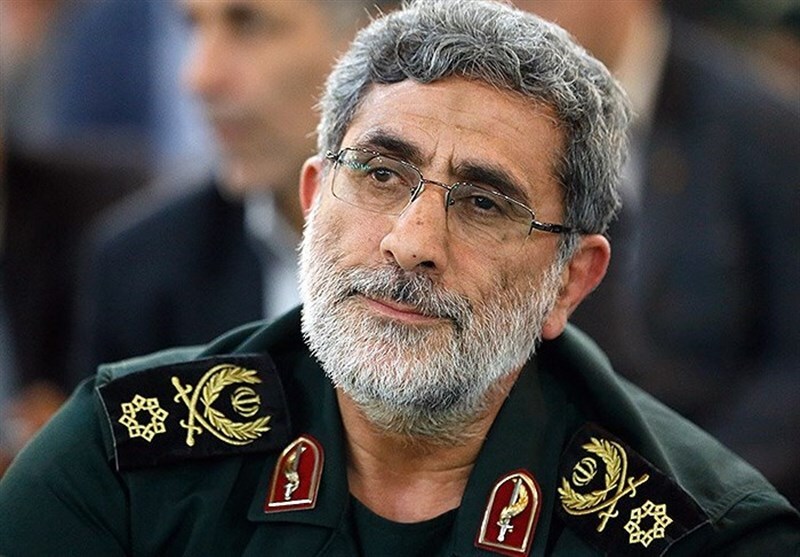
In a televised interview, Brigadier General Esmail Ghaani added that the attack was carried out with some of the heaviest bombs in the world, combined with chemical agents.
According to him, this was not only an explosion but a chemical assault, which he described as a war crime. Ghaani noted that Israel’s calls for a ceasefire show its inability to disarm Hezbollah through military means. “If the regime could do it by force, it would not ask for a ceasefire”, the Quds Force commander said.
He praised Nasrallah as “the tallest and strongest mountain of Lebanon”.
He also said the martyred leader of Hezbollah was seen by all Lebanese people, both Shia and non-Shia, as a refuge.
Despite Nasrallah’s martyrdom, Ghaani said, Hezbollah has entered one of its most powerful periods. Over the past year, the group has carried out targeted operations against Israeli settlements in northern occupied territories, showing that the loss of leaders has not weakened the resistance, he added.
Ghaani also recalled his meeting with Nasrallah on October 7, the day Hamas’s Operation Al-Aqsa Storm began. He said he arrived in Lebanon in the afternoon and found Nasrallah already focused on his religious and strategic duties required by the unfolding events.
Ghaani noted that neither Hezbollah nor Hamas leaders were fully aware of the details of the Gaza operation in advance, calling it a sign of careful planning and secrecy.
