
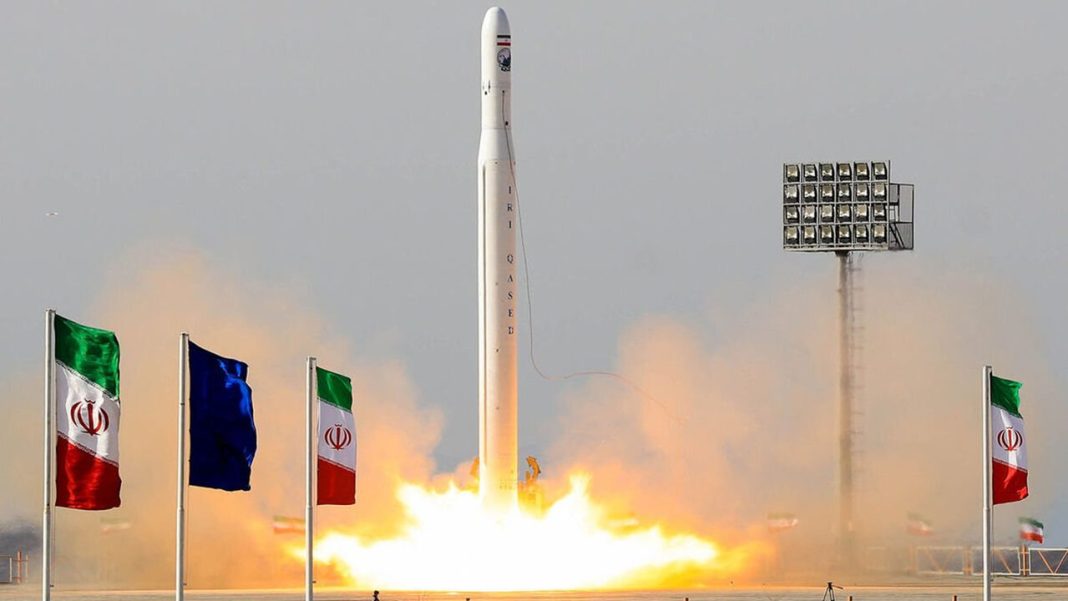
According to Hassan Salarieh, the Chabahar site, in southern Iran, is strategically located to provide access to orbits with various inclinations, making it vital for deploying satellite constellations and sun-synchronous missions.
He said the first phase of the center, designed for solid-fuel launch vehicles, is nearly complete, while the second phase, intended for liquid-fuel rockets capable of carrying heavier payloads to higher orbits, has been fully designed.
Salarieh added that upcoming missions include the launch of “Zafar-2” and “Paya” remote-sensing satellites aboard foreign launchers, while the domestically built “Nahid-2” satellite is scheduled to be launched using Iran’s “Simorgh” rocket.
He also highlighted progress on the “Martyr Soleimani” satellite constellation, initially comprising about 20 narrowband nano-satellites for data transmission across Iran.
In addition, he reported ongoing private-sector developments, including the “Kosar” satellite with four-meter imaging resolution, set for launch soon.
