
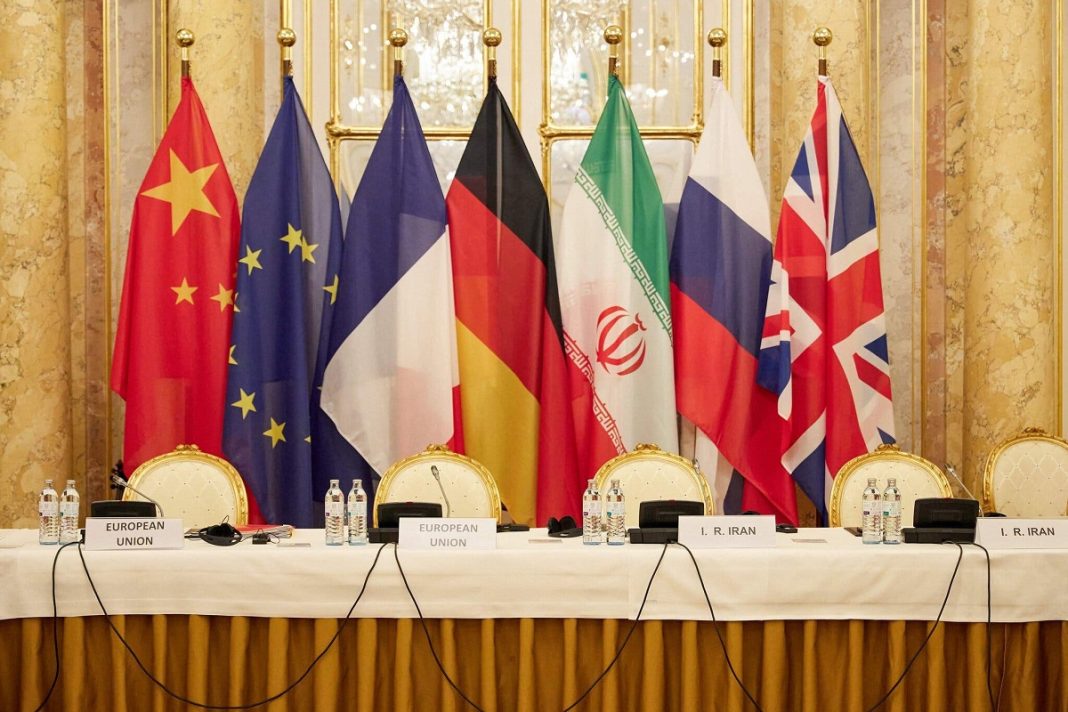
The three European countries, known as the E3, have been warning Tehran for weeks that United Nations sanctions could be reimposed by October when a 2015 nuclear agreement between Tehran and major powers expires.
The decision on Thursday – which will take effect in 30 days – comes after a spokesman for Iran’s Ministry of Foreign Affairs warned this week that renewing the sanctions would have consequences.
The E3 has accused Tehran of violating provisions of the 2015 nuclear agreement, formally known as the Joint Comprehensive Plan of Action (JCPOA), which saw Iran agree to curb its nuclear programme in exchange for a lifting of international sanctions on its economy.
A component of the nuclear deal, the “snapback” mechanism, allows sanctions to be reimposed quickly if Iran is found to be in violation of the accord.
“Since 2019 and as of today, Iran has increasingly and deliberately ceased performing its JCPoA commitments,” the French, German and British foreign ministers wrote in a letter to the UN Security Council on Thursday.
“This includes the accumulation of a high enriched uranium stockpile which lacks any credible civilian justification and is unprecedented for a state without a nuclear weapons programme,” they said, adding that they remain committed to reaching a diplomatic solution.
If implemented, the move would mean a return to wide-ranging UN sanctions that were in place before the 2015 accord, including a conventional arms embargo, restrictions on ballistic missile development and asset freezes.
On Tuesday, Iranian Foreign Ministry spokesman Esmaeil Baghaei said Iran told Europeans during a meeting in Geneva that they do not have the right to trigger the mechanism. But Baghaei had said that both sides would continue nuclear talks.
Kazem Gharibabadi, Iran’s deputy foreign minister for legal and international affairs, also had stated in a social media post after Tuesday’s talks that Tehran remained committed to diplomacy”.
“High time for the E3 and [UN Security Council] to make the right choice, and give diplomacy time and space,” Gharibabadi wrote on X.
Iran had been steadily increasing its nuclear enrichment after US President Donald Trump unilaterally withdrew from the Iranian nuclear deal in 2018.
But the country, which denies seeking a nuclear weapon, had been taking part in indirect talks with the US over its nuclear programme when Israel in June launched a massive bombing campaign against Iranian nuclear, military and civilian sites, killing hundreds of people.
The US also joined in Israel’s attacks against targets in Iran, prompting the Iranian government to withdraw from all diplomatic efforts.
Talks began again in July between Iranian and European officials, but they have so far failed to reach an agreement.
