
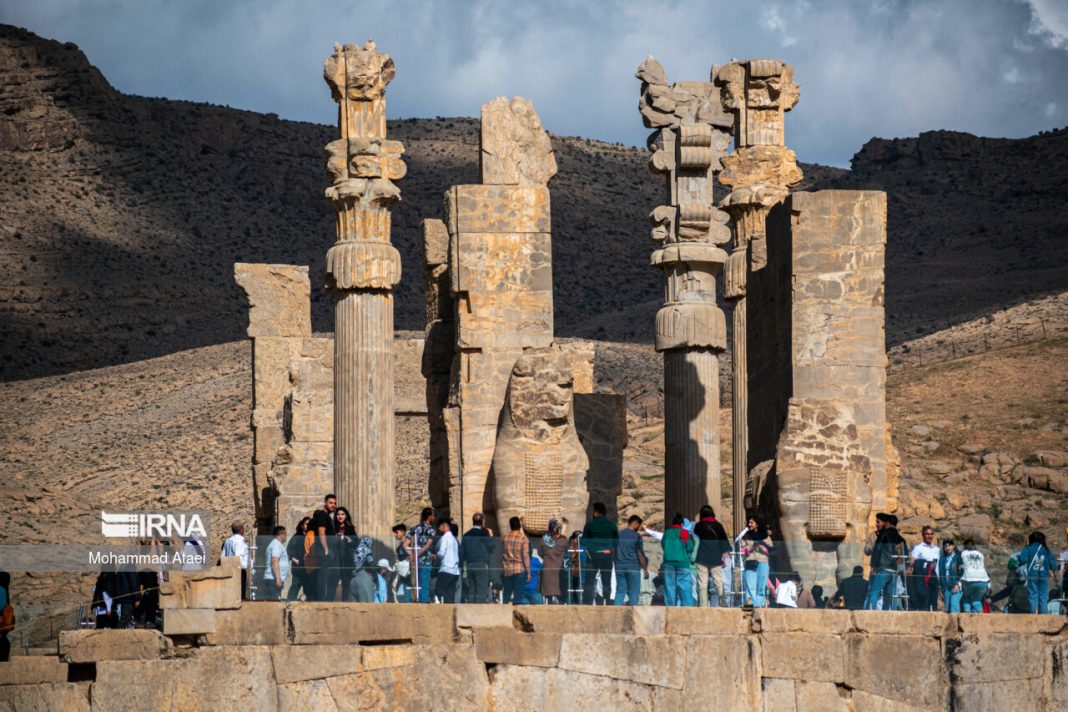
Experts warn that land subsidence in the region, driven by the over-extraction of groundwater, has reached critical levels.
Behnaz Bazoubandi, a cultural heritage activist, said around 5,000 illegal wells operate in the Marvdasht Plain, many of which continue to pump water despite closure orders.
“Every cultivation season, massive amounts of groundwater are drawn from around Persepolis, endangering the site’s stability,” she said.
Bazoubandi cautioned that continued subsidence could cause cracks in the western section of the Apadana Palace and other monuments. Unregulated urban expansion in the protected zone also threatens the area, she added.
Ali Nik-Ahd, Director of the Geological Survey of Southern Iran, emphasized that subsidence is not a natural phenomenon but a result of human mismanagement.
He noted that data from radar imaging software “GAMMA” shows land in Marvdasht sinking between two and 30 centimeters annually. Experts urge immediate groundwater management and aquifer recharge to prevent irreversible damage to Iran’s ancient heritage.
