Saturday, December 27, 2025
Home Blog Page 930

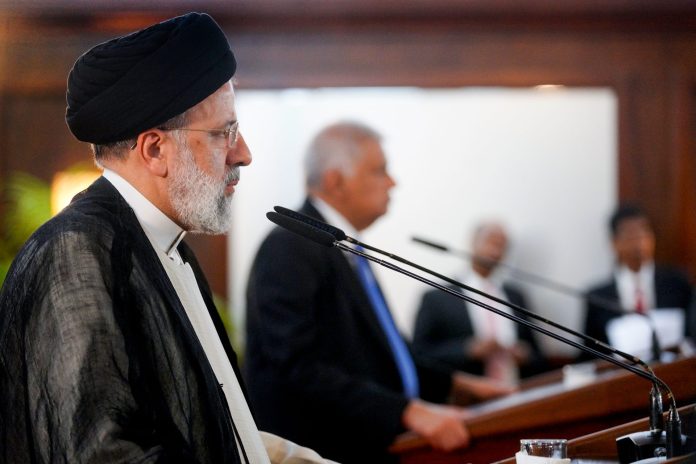
Indian Ocean Region to benefit from Iran-Sri Lanka cooperation: Raisi

Ebrahim Raisi

Raisi made the remarks in a joint press conference with Sri Lankan President Ranil Wickremesinghe in the Island nation’s capital of Colombo on Wednesday.

He said that Iran is ready to supply technical and engineering services to Sri Lanka to help the country boost its economic and industrial infrastructure.

The president made the comments hours after he opened a large hydroelectric project in Badulla, located some 230 kilometers to the east of Colombo. The Uma Oya Multipurpose Development Project, which is worth over $500 million, has been largely designed and built by Iranian companies to help Sri Lanka overcome its electricity and irrigation problems.

He stated Iran had progressed in various fields of technology over the past years despite being subject to a harsh regime of foreign sanctions.

He added that Iran and Sri Lanka will soon form an intergovernmental committee to significantly boost their trade and economic ties.

The Sri Lanka president, for his part, said in the joint press conference with Raeisi that his country has relied on Iran’s support to weather a major economic crisis in recent years.

Wickremesinghe stressed that Sri Lanka and Iran had agreed during Raeisi’s visit to teh country to cooperate more on issues related to the Indian Ocean and on joint initiatives in the United Nations.

He added that five memorandums of understanding signed earlier in the day between Sri Lankan and Iranian government ministers would lead to a further expansion in relations between the two countries.

Raisi arrived in Colombo early on Wednesday after a three-day visit to Pakistan and as part of his administration’s drive to boost ties with Asian countries. The short visit to Sri Lanka is the first by an Iranian president in 16 years.
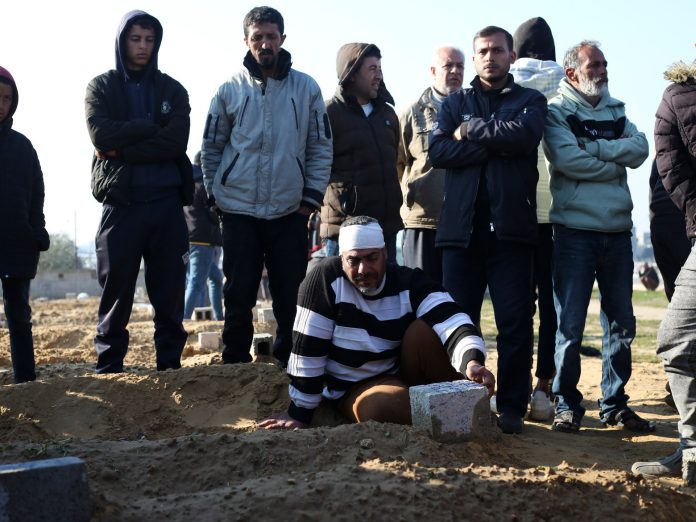
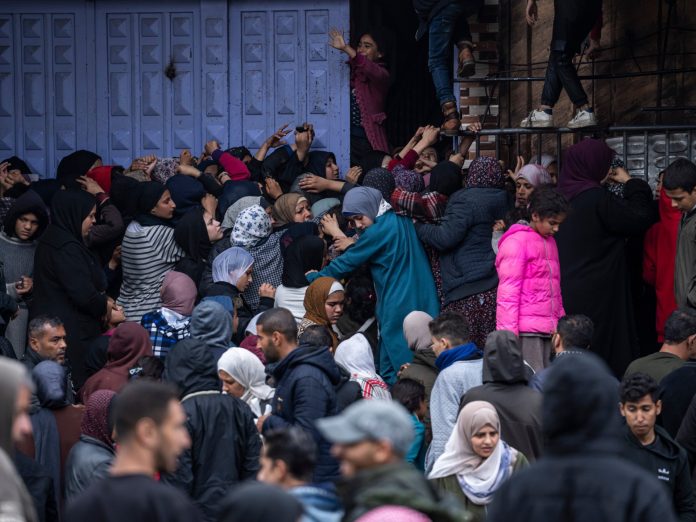
Amnesty says Israel committing war crimes in Gaza ‘using US-made munitions’

Gaza War

“That’s why we have been calling on the US to stop sending #weaponsforwarcrimes,” said Paul O’Brien in a post on X.

O’Brien thanked “the 37 members of Congress who voted NO on the Israel arms bill”.

The US Senate approved a $95-billion foreign aid package for Ukraine, Israel, and Taiwan on Tuesday.

The chamber passed the bill in a bipartisan 79-18 vote, sending it to President Joe Biden’s desk for his signature.

The bill was approved by the US House of Representatives on April 20.

Israel has waged a deadly offensive on the Gaza Strip since a cross-border attack by the Palestinian group Hamas on Oct. 7 last year, which Tel Aviv says killed nearly 1,200 people.

At least 34,260 Palestinians have since been killed, mostly women and children, and 77,200 others injured, according to local health authorities.

More than six months into the Israeli war, vast swathes of Gaza lay in ruins, pushing 85% of the enclave’s population into internal displacement amid a crippling blockade of food, clean water and medicine, according to the UN.

Israel stands accused of genocide at the International Court of Justice. An interim ruling in January ordered Tel Aviv to stop genocidal acts and take measures to guarantee that humanitarian assistance is provided to civilians in Gaza.

75 percent of Gaza’s population has been displaced: UNRWA

Gaza War

“There have been at least 435 Israeli attacks on health facilities or staff since October 7,” it said in a reports.

The rate of attacks per month on healthcare in Gaza is higher than in any other recent conflict globally, UNRWA added, citing the World Health Organization and Save the Children.

It noted aid deliveries to northern Gaza continue to be blocked by Israel

It said there has been “very little significant change” in the volume of humanitarian supplies entering Gaza or improved access to northern Gaza.

“At least 180 UNRWA employees have been killed since October 7,” the report added.

More than 270,000 tons of solid waste across the entire Gaza Strip remain uncollected, the UNRWA reported, as Israel’s military campaign has disrupted essential services in the enclave. In January and February, UNRWA and the UN’s Development Programme collected 10,000 tons of solid waste in Gaza.

As of April 17, eight out of 24 UNRWA health centers were operational across the north, central Gaza and in the south, as Israel’s siege in Gaza has diminished food, fuel and water supplies, and severely damaged the medical system.

Israel has waged a deadly offensive on the Gaza Strip since a cross-border attack by the Palestinian group Hamas on Oct. 7 last year, which Tel Aviv says killed nearly 1,200 people.

At least 34,260 Palestinians have since been killed, mostly women and children, and 77,200 others injured, according to local health authorities.

More than six months into the Israeli war, vast swathes of Gaza lay in ruins, pushing 85% of the enclave’s population into internal displacement amid a crippling blockade of food, clean water and medicine, according to the UN.

Israel stands accused of genocide at the International Court of Justice. An interim ruling in January ordered Tel Aviv to stop genocidal acts and take measures to guarantee that humanitarian assistance is provided to civilians in Gaza.

Iranian security chief warns against giving Israel base on cyberspace

Ali Akbar Ahmadian

Ahmadian issued the warning during a speech in the Saint Petersburg Security Conference, on Wednesday.

He said those countries who give Israel a base in cyberspace actually create significant infrastructure for threatening their own security.

The Iranian national security chief added that espionage against people and officials of the countries is only a small part of such a threat.

Ahmadian noted that Iran has long been a victim to cyberattacks by the US and Israel. He cited the malicious computer worm known as Stuxnet that was developed by the US and the Zionist regime for the purpose of targeting Iran’s nuclear facilities.

Ahmadian described the move as “dangerous”, noting that unfortunately, the Zionist regime has used bases it has been given on cyberspace for the recent attack on Iran’s Embassy in Damascus and also for assassinating Palestinians.

The Secretary of Iran’s Supreme National Security Council noted that a regime whose nature has been exposed due to its genocidal war on Palestinians and its killing of children and women and numerous crimes against humanity in Gaza does not have the moral high ground to enter this important arena.

Iranian says Argentine judges demand over Iranian nationals illegal, based on fabrications

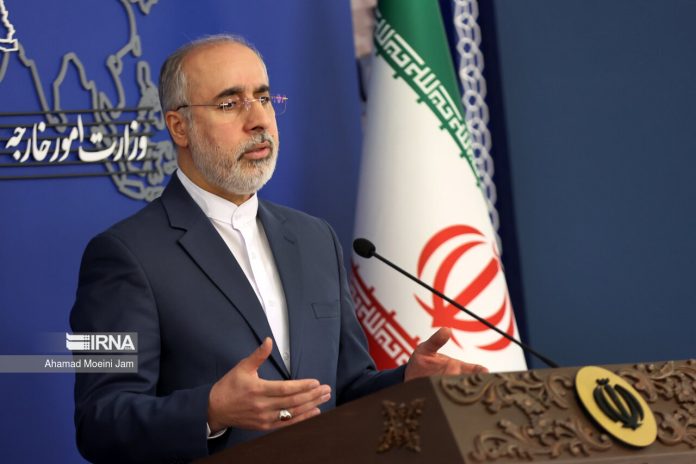
Nasser Kanaani

The judges in the case have called for the extradition of the Iranian interior minister for what they call his insult against the victims of the Amia bombing. 85 people were killed and hundreds more injured in the bombing at the Jewish center in July 1994.

The Iranian Foreign Ministry spokesman highlighted the previous scandal involving demands placed on the British judicial system for the extradition of an Iranian official that was later rejected on the grounds that there was not sufficient evidence to back up such a demand.

Kanaani then stressed that the accusations leveled against Iran in the Amia case has no credibility, adding that such demands put on judicial officials of other countries are unwarranted and baseless legally.

The Foreign Minister spokesman said the Islamic Republic of Iran supports any move to administer justice in the case and go after those who, by destroying the proof, derailed it and helped the culprits escape justice.

Kanaani recommended that Argentine officials should avoid making unfounded accusations against nationals of other countries and avoid being influenced by the claims of enemies of the Tehran-Buenos Aires relations.

The Leader: Iran’s defense sector example of turning sanctions into opportunity

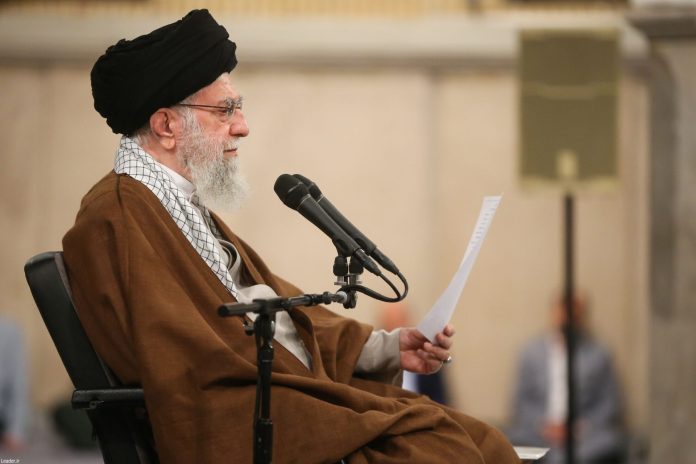
Ayatollah Khamenei

Ayatollah Khamenei made the remarks on Wednesday as he received a group of workers from across the country on the occasion of Labor Week.

The Leader said the anti-Iran sanctions aimed to put the Islamic Republic in a “tight spot” to force it to toe the line of imperialism and colonialism, asserting that, “It is self-evident that the Islamic Establishment, the Islamic zeal and a great nation with an Islamic history will by no means submit to such bullying.”

Ayatollah Khamenei added, “A lively nation creates opportunities for itself out of the enemy’s hostilities, a clear example of which is in the [Islamic Republic’s] arms sector. In other sectors, great progress has been achieved as well despite pressures.”

Underlining that the sanctions will fail to bring the Iranian nation to its knees as it has not pinned hopes on help from outside of the borders, the Leader said, “This spirit needs to be lifted.”

“The Iranian nation must showcase its strength through work, action and national unity,” Ayatollah Khamenei added.

Underscoring that the main goal of the US and the West in imposing sanctions on Iran is the complete submission and subjugation of the Islamic Establishment and nation, the Leader stressed, “The great nation of Iran which has historical roots and the Islamic Republic will not yield to bullying and excessive demands, and will reach a bright horizon in the future by turning sanctions into opportunities for progress and prosperity.”

Elsewhere in his remarks, the Leader pointed to the Iranian labor community and stressed that the country’s authorities are responsible for the job security of workers.

“In a period, we were beset by the closure of large factories, [but] thanks to the efforts by the authorities, many closed workshops were reopened in the past two years, and this must continue,” the Leader said, adding that power will increase in a society where there is work.

Ayatollah Khamenei also expressed his sincere gratitude to Iranian workers for their efforts and decency, and wished for the promotion of the country’s labor community.

President Raisi: Iran to implement major electricity, water projects in 20 countries

Ebrahim Raisi

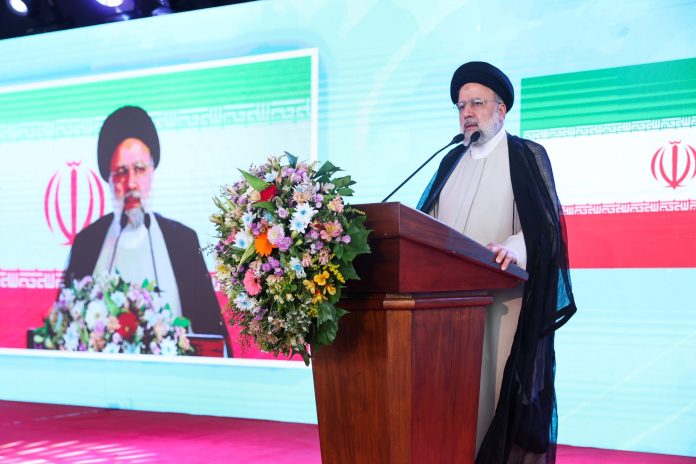
Addressing a ceremony for the inauguration of Iranian-financed Uma Oya hydropower complex outside the Sri Lankan capital on Wednesday, President Raisi said Iranian engineers and technicians have foiled Western efforts to induce the idea that technological knowhow is in their monopoly.

The president noted, “We have relations with Asian, neighboring, and independent countries, and the relationship between Iran and Sri Lanka is one of the relationships with independent Asian countries that can create a bright future for both countries.”

He said Iran is ready to share its technological achievements with Sri Lanka and assist it on the path of progress.

The $514mn Uma Oya hydropower complex, delayed due to Western sanctions, is slated to boost Sri Lanka’s national grid and supply water for agricultural and household consumption.

Ukrainian drones strike Russian oil facilities

Russia Ukraine War

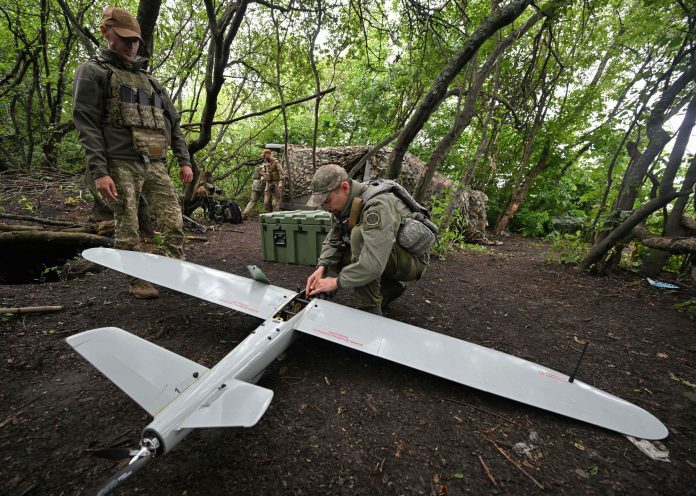
“Our region is again under attack by Ukrainian UAVs,” Anokhin wrote on Telegram at around 5am local time, adding that Russian air defenses were responding to the situation.

The drone attack targeted “civilian fuel and energy facilities” and resulted in several fires in the Smolensky and Yartsevsky districts, according to the official. Firefighters are tackling the blaze, Anokhin stated, urging the residents to remain calm.

Smolensk Region is around 300 kilometers southeast of Moscow and borders Belarus. The distance from the city of Smolensk to the border with Ukraine is 400km.

Ukraine attempted to bomb another undisclosed oil facility in Smolensk last week. The drones were downed, but debris fell onto a storage unit of oil and lubricants, resulting in a small fire, according to Anokhin.

On Saturday, Russian air defenses intercepted several Ukrainian drone raids across the western part of the country, destroying some 50 UAVs over the border regions of Belgorod, Bryansk and Kursk, and also deeper into Russia – in Smolensk, Ryazan, Kaluga, and Moscow Regions.

Since January, Ukraine has launched a series of long-range attacks on Russian energy facilities, including oil depots and refineries, using kamikaze drones. Russian Defense Minister Sergey Shoigu has suggested the strikes are meant to impress Kiev’s Western backers to compensate for a lack of progress on the frontline.

The Washington Post reported on Monday that US Vice President Kamala Harris met privately with Ukrainian President Volodymyr Zelensky on the sidelines of the Munich Security Conference in February, telling him to refrain from targeting Russian oil refineries. President Joe Biden’s administration reportedly believes that such attacks could raise global energy prices and provoke a massive Russian retaliation.

According to the media outlet, the Ukrainian head of state “brushed off the recommendation”. Despite the US becoming more and more insistent over the following weeks, Kiev doubled down on its strategy.

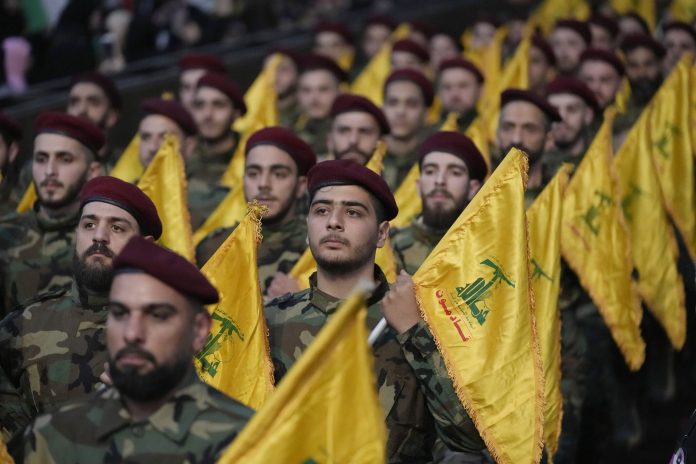
Hezbollah launches deepest attack inside Israel since outbreak of Gaza war

Hezbollah

Hezbollah launched “a combined air attack using decoy and explosive drones that targeted” two Israeli bases halfway between Acre and Nahariyya, it said in a statement on Tuesday.

The Iran-backed group added it acted in retaliation for an earlier Israeli attack killing one of its fighters. It published what appeared to be a satellite photo, with the location of the attack symbolised by a flash with a red circle around it.

The Israeli military said it had no knowledge of any of its facilities being hit by Hezbollah, but had said earlier that it intercepted two “aerial targets” off Israel’s northern coast.

Later on Tuesday, Lebanon’s official news agency NNA reported at least two people were killed and six others injured after an Israeli air raid hit a residential area in the southern Lebanese town of Hanin.

“Israeli warplanes struck a two-storey house with two air-to-surface missiles, completely destroying the building which was inhabited by a family that had not left the town since Israeli attacks began,” NNA added.

Hezbollah said it launched dozens of rockets at northern Israel late on Tuesday in response to the killing of two civilians.

Hezbollah fired “dozens of Katyusha rockets” at northern Israel “as part of the response to the Israeli enemy’s attacks on… civilian homes, specifically the horrific massacre in Hanin and the killing and injuring of civilians”, the group announced in a statement.

Earlier on Tuesday, the Israeli military said its air raids killed two Hezbollah fighters in southern Lebanon. Hezbollah later confirmed the death of one of its fighters, Hussein Azkoul, but provided no further details.

A separate Israeli attack overnight killed Muhammad Attiya, a fighter in Hezbollah’s elite Radwan Forces, the military said. There was no immediate comment from Hezbollah on the claim.

Since Hamas’s unprecedented October 7 attack triggered Israel’s war on Gaza, there have been near-daily cross-border exchanges of fire between Hezbollah and the Israeli army.

Israeli attacks have killed about 270 Hezbollah fighters, as well as about 50 civilians.

Hezbollah’s rocket and drone fire has killed about a dozen Israeli soldiers and half as many civilians. The shelling has displaced tens of thousands on each side.

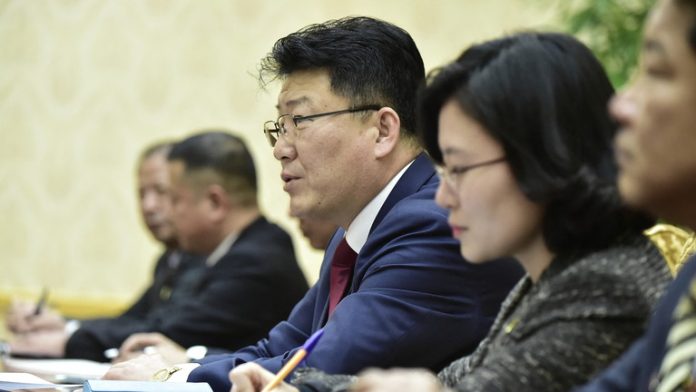
High-profile North Korean delegation makes rare public visit to Iran

Yun Jong Ho

A delegation headed by North Korea’s minister for external economic relations, Yun Jong Ho, departed for Iran by plane on Tuesday, according to the agency. KCNA did not reveal further details about the visit.

In February, North Korean leader Kim Jong-un sent a congratulatory message to Iranian President Ebrahim Raisi on the 45th anniversary of the Islamic Revolution. Kim expressed confidence that “the traditional relations of friendship and cooperation between our two countries forged on the road of joint struggle against imperialism will expand and develop in various fields”.

US State Department spokesperson Matthew Miller said last Tuesday that Washington is “incredibly concerned” about alleged cooperation between Tehran and Pyongyang in nuclear and ballistic missile development.

The two countries remain under harsh international sanctions over their weapons programs.

North Korea and Iran have been accused by the US and its allies of respectively providing artillery shells and drones to Russia amid the conflict with Ukraine. Pyongyang and Tehran have denied the claims, while Russia has insisted it relies on domestically produced weapons for its military operation.