Friday, December 26, 2025
Home Blog Page 93

Tehran police arrest 70 suspects, recover 350 stolen phones

Iran Police

Speaking to reporters on Wednesday, General Valipour Goudarzi said police recovered 350 stolen mobile phones, two firearms, and other stolen goods from the suspects’ hideouts. The recovered property will be returned to its rightful owners.

He noted that some of the suspects resisted arrest, and three individuals were shot and injured during the confrontation. All three are currently receiving medical treatment.

The police chief stressed that maintaining public safety is a top priority, warning that violent offenders will face firm legal action. “Security and peace of mind for citizens are our red lines, and there will be no leniency toward armed or violent criminals,” he said.

General Valipour Goudarzi also urged the public to take safety precautions and assured residents that police forces will act swiftly to ensure their security.

The suspects’ cases are now under judicial review for further legal proceedings.

Iran officially approves joining CFT

Masoud Pezeshkian

In a letter on Tuesday, Pezeshkian notified relevant executive institutions of the law approving Iran’s accession to the convention.

The Expediency Council had conditionally approved Iran’s accession to the CFT during its session on October 1.

Mohsen Dehnavi, spokesperson for the council, outlined the conditions set by Iran for joining the convention, explaining that the Parliament had stipulated that Iran’s compliance with the convention’s provisions would be within the framework of the Constitution.

The spokesperson added that the council introduced an additional condition, stating that the Islamic Republic would act in accordance with both its Constitution and domestic laws.

He emphasized that if any provisions of the convention were to conflict with Iran’s domestic regulations, domestic laws would take precedence.

The Financial Action Task Force (FATF), an international coalition for combating money laundering and terrorist financing, which is headquartered in Paris, blacklisted Iran in 2020 mainly for not adopting the Palermo Convention and the CFT.

After halting debates on the two conventions over concerns they might undermine Iran’s financial independence, the Expediency Council approved the Palermo convention in May.

Officials with the Iranian Ministry of Economic Affairs and Finance say the FATF would start to reconsider its designation of Iran only after the country approves the CFT.

Iran finally approved the CFT in early October, although the FATF has yet to be officially notified of the move by the Foreign Ministry, which would take place after the UN confirms Iran has joined the convention.

The finance ministry said in a statement on Tuesday that the FATF would probably discuss Iran’s approval of the CFT in its upcoming meetings.

Iran is under a harsh regime of unilateral US sanctions, which makes it difficult for the country to engage in normal banking and financial relations with other countries.

Economic experts say Iran should be removed from FATF’s blacklist to be able to maintain its ongoing trade and business relations with countries that reject UN and US sanction policies against Tehran.


Russian aerial attacks kill six, cut power across Ukraine

The attack comes a day after efforts to settle the nearly four-year war hit another roadblock, after a planned presidential meeting between US leader Donald Trump and his Russian counterpart Vladimir Putin was cancelled.

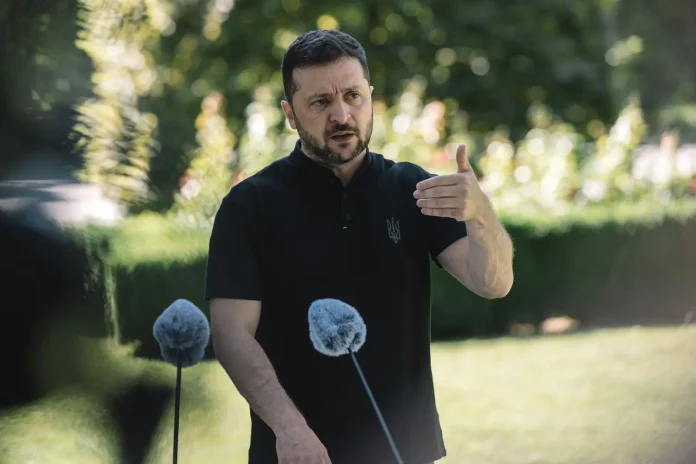
“Another night proving that Russia does not feel enough pressure for dragging out the war,” Ukrainian President Volodymyr Zelensky said on social media following the attack.

“As of now, 17 people are known to have been injured. Unfortunately, six people were killed, among them two children,” he added.

The strikes also targeted the country’s energy infrastructure, leaving thousands without heating and electricity across Ukraine in the cold season, according to the energy ministry.

“Due to a massive missile and drone attack on the energy infrastructure, emergency power outages have been introduced in most regions of Ukraine,” it announced in a statement.

Trump had stated he would meet Putin for peace talks in the Hungarian capital Budapest within two weeks, following what he called a productive phone call to end Russia’s war.

But on Tuesday he shelved those plans, saying he did not want a “wasted” meeting.

The US leader had earlier pressured Zelensky to give up the eastern Donbas region at talks in the White House on Friday, a senior Ukrainian official told AFP.

Ukraine has repeatedly rejected calls to give up land.

European allies have also rallied behind Ukraine, rejecting the idea of Kyiv giving up territory and instead proposing fighting should be frozen on the current front lines.

In a statement following the overnight attack, Zelensky stressed, “Russian words about diplomacy mean nothing as long as the Russian leadership does not feel critical problems.”

Putin ordered a full-scale invasion of Ukraine in February 2022, describing it as a “special military operation” to demilitarise the country and prevent the expansion of NATO.

Kyiv and its European allies say the war is an illegal land grab that has resulted in tens of thousands of civilian and military casualties and widespread destruction.

Russia now occupies around a fifth of Ukrainian territory — much of it ravaged by fighting — while tens of thousands of civilians and soldiers have been killed.


Iran Volleyball Federation working to transfer unconscious player Saber Kazemi from Qatar

Milad Taghavi, head of the federation, said no encouraging updates have been received from Qatari medical staff, prompting the start of administrative procedures to move Kazemi home.

According to Taghavi, the player reportedly suffered an electric shock followed by cardiac arrest. “We ask people to pray for his recovery,” he said.

Meanwhole, former national team player Farhad Ghaemi stated that Kazemi’s level of consciousness has not changed in recent days but stressed that laboratory results showed no banned substances in his system.

“All his medical tests came back clean,” he noted, adding that Kazemi had passed the Qatari club’s rigorous medical examinations prior to joining.

Iran’s ambassador in Doha and both Iranian and Qatari medical teams are coordinating the possible transfer using specialized equipment.
Officials said a new medical team in Qatar is re-evaluating his condition.

The sports community and residents of northern Iranian Golestan province, Kazemi’s hometown, have expressed deep concern and hope for his recovery.

Iranian scientist wins WHO regional award for NCD prevention

WHO

According to the Ministry of Health, the WHO annually recognizes scientists who make significant contributions to preventing and controlling NCDs, including cardiovascular diseases, diabetes, and cancer, in line with its mission to promote the highest attainable level of health for all people.

In 2024, the WHO’s Regional Office for the Eastern Mediterranean, supported by the State of Kuwait Prize Fund, selected Dr. Ghayour Mobarhan for his outstanding work in cardiovascular disease prevention.

He leads the “Cohort Study Project,” recognized as one of Asia’s top cohort studies, which has produced valuable research on the role of dietary and other risk factors in cardiovascular diseases among high-risk populations in Iran and beyond.

Dr. Ghayour Mobarhan is also the founder of the UNESCO International Center for Basic Medical Sciences and Human Nutrition in Iran.

Due to visa delays, the award was received on his behalf by Dr. Reza Raeisi, Iran’s Deputy Minister of Health.

Britain removes Hayat Tahrir al-Sham group from terrorist organization list

An order has been laid in parliament to de-proscribe the HTS, enabling “closer engagement with the new Syrian government” led by President Ahmed Al Sharaa, according to a government statement.

The Home Office said the decision supports a range of UK priorities, including counter-terrorism cooperation, migration management, and the elimination of Syria’s remaining chemical weapons.

The HTS, which was listed as an alias of al-Qaeda in 2017, was one of the most powerful armed groups opposing al-Assad’s forces during Syria’s war.

Its removal from the terrorist list comes amid renewed diplomatic engagement between London and Damascus.

“The UK will continue to press for genuine progress and hold the Syrian government accountable for its actions in fighting terrorism and restoring stability in Syria and the wider region,” the statement read.

“We will continue to judge the new Syrian government on their actions, not on their words.”

The announcement follows former Foreign Secretary David Lammy’s visit to Syria in July, which marked the first high-level diplomatic contact between the two countries in over a decade.

The government said de-proscribing the HTS would “support engagement on the counter-Daesh mission in Syria,” helping to reduce threats to the UK.

The UK also welcomed President Sharaa’s pledge to permanently dismantle the Assad government’s chemical weapons program.

Officials stressed that the decision had been made after “detailed consultation with operational partners and a robust assessment by the cross-government Proscription Review Group.”

“This government will always put the safety and security of the British people first,” the statement said, adding that the UK “reserves the right to reassess proscription decisions in response to any emerging threats.”

Following the order, 83 groups remain on the UK’s list of proscribed organizations under the Terrorism Act 2000.

Earlier this year, the US also removed HTS from its list of Foreign Terrorist Organizations.


Trump claims Middle East states offered to fight Hamas in Gaza

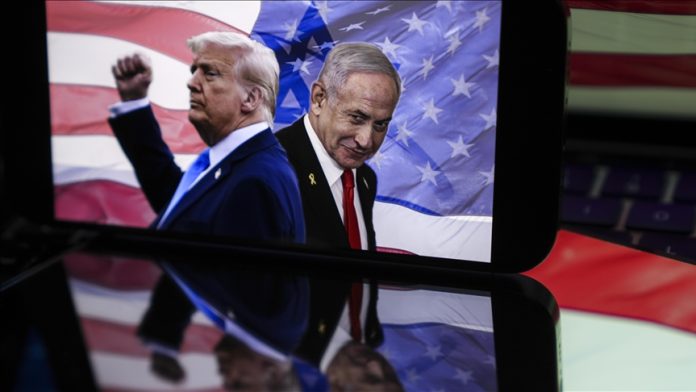
“Numerous of our NOW GREAT ALLIES in the Middle East, and areas surrounding the Middle East, have explicitly and strongly, with great enthusiasm, informed me that they would welcome the opportunity, at my request, to go into GAZA with a heavy force and ‘straighten our Hamas’ if Hamas continues to act badly, in violation of their agreement with us,” Trump wrote on Truth Social on Tuesday.

Trump did not specify which countries offered to go into Gaza, but he did single out Indonesia for its assistance in the region.

“I would like to thank the great and powerful country of Indonesia, and its wonderful leader, for all of the help they have shown and given to the Middle East, and to the USA,” Trump added.

Jakarta and other governments have offered to send peacekeeping troops to restore security and stability in Gaza, but no country has said that it would be willing to clash directly with Hamas.

“The love and spirit for the Middle East has not been seen like this in a thousand years! It is a beautiful thing to behold! I told these countries, and Israel, ‘NOT YET!’ There is still hope that Hamas will do what is right,” the US president said.

“If they do not, an end to Hamas will be FAST, FURIOUS, & BRUTAL!”

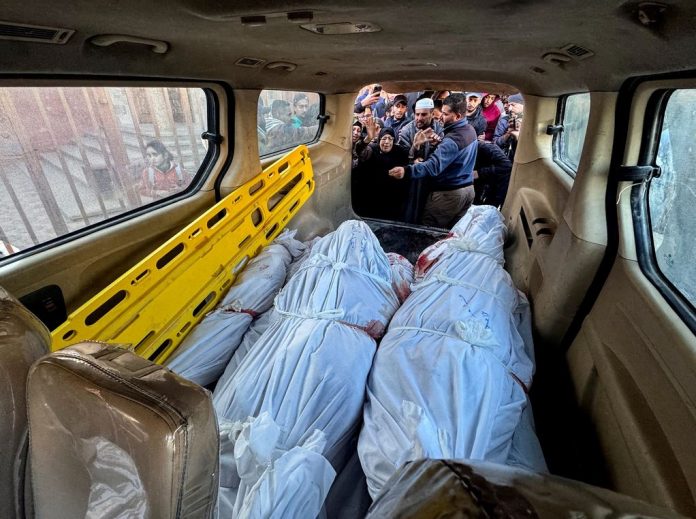
Israel has killed nearly 100 Palestinians since the ceasefire took effect on October 10.

Trump often issues similar threats to Hamas. But it is not clear what the US or any other force can do to strong-arm the Palestinian group that Israel has not.

Over the past two years, Israel has killed most of Hamas’s political and military leaders, while also killing more than 68,000 other Palestinians, levelling Gaza to the ground, and imposing famine on the territory in a campaign that leading rights groups and United Nations investigators say is a genocide.

Trump had been hailing the ceasefire, which his administration helped broker, as a historic turning point to bring peace to the region.

But from the outset of the truce, Israel has been killing Palestinians it claims were approaching areas under control of the Israeli military, which are not clearly marked.

Moreover, Israel has continued to restrict aid to Gaza despite commitments in the deal to allow a surge in humanitarian assistance to the territory.

According to the Gaza Government Media Office, Israel has only allowed the entry of 986 aid trucks into the enclave since the start of the ceasefire, a fraction of the expected 6,600 trucks, at a rate of 600 daily.

On Sunday, the deal was pushed to the brink when Israel launched a wave of air strikes that killed dozens of Palestinians and fully suspended the entry of aid to Gaza after two Israeli soldiers were killed in Rafah.

Israel blamed Hamas for killing the troops, but the Palestinian group denied any involvement, underscoring that the incident took place in an area under Israeli control.

Some US media outlets reported that the Israeli forces were killed after they drove over an unexploded ordnance.

Besides the day-to-day issues threatening the truce, question marks continue to hang over the long-term future of Gaza, including how the territory will be governed.

Trump has stressed that Hamas must disarm, but the Palestinian group has linked giving up its weapons to the establishment of a Palestinian state.

On Sunday, Trump told Fox News that there is no hard timeline for Hamas disarmament.

President Pezeshkian stresses significance of Iran-Iraq rail transport connectivity

In his remarks, President Pezeshkian stated that accelerating the implementation of this project by the Iraqi government would not only strengthen trade, economic, and cultural relations between the two countries but also facilitate broader connections among regional nations and enhance economic ties.

The president expressed satisfaction with the high level of relations between Iran and Iraq, noting that the continued expansion of these ties could foster enhanced cooperation in security, economic, scientific, and cultural fields, not only bilaterally but also in interactions with other Islamic countries.

Pezeshkian highlighted the importance of regular diplomatic exchanges and visits between officials from both nations, which will increase mutual understanding and create a shared perspective on bilateral, regional, and international issues.

He further stressed the need for unity among Islamic nations, asserting that such cohesion would thwart plots by the United States and the Israeli regime against the region’s peoples.

The connection of the rail transport network was described by Pezeshkian as one of the most important collaborative efforts between Iran and Iraq. He added that the completion of this railway network and the establishment of joint free trade zones would enhance regional security and spur economic growth.

From a broader perspective, Pezeshkian reiterated Iran’s commitment to viewing all people of Iraq and the Kurdistan Region as brothers, regardless of ethnic or religious divisions. He underscored that the strength and dignity of the Islamic community lie in fostering brotherly ties and avoiding internal conflicts instigated by adversaries.

The Iraqi official expressed his pleasure at meeting with the Iranian president, stating that the security of Iran and Iraq is inseparable. He reaffirmed Iraq’s commitment to the security treaty between the two nations and emphasized that the borders between Iran and Iraq should be among the safest in the region.

Al-Araji described the rail network connection as a strategic initiative that would promote economic and political convergence between the two countries, assuring that the Iraqi government firmly supports this project. He also noted that a historic opportunity has arisen for establishing security cooperation among regional countries, which could pave the way for broader economic and political interactions.

Rebar Ahmed Khalid Barzani, Minister of Interior of the Kurdistan Region of Iraq, expressed gratitude for the opportunity to meet the Iranian president and acknowledged the positive impact of President Pezeshkian’s visit to the region on political and public levels. He reiterated the Kurdistan Region’s commitment to supporting the stability and security of Iran and emphasized their adherence to the security agreement between the two nations.


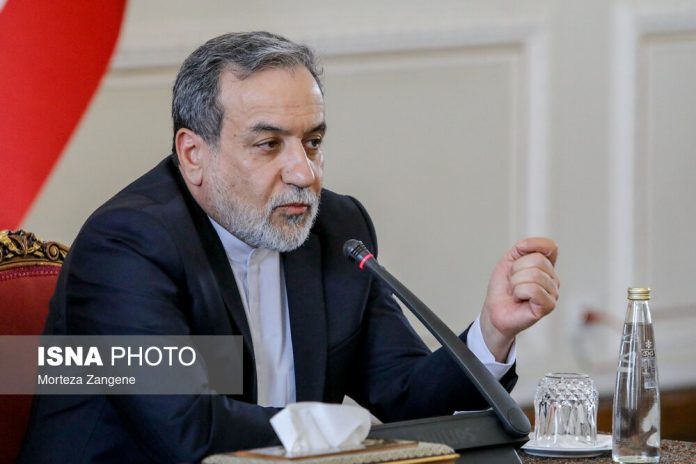
Iran, Iraq reaffirm commitment to security pact

General Mousavi emphasized the deep brotherhood between the Iranian and Iraqi nations, saying that the unity of the two peoples remains a source of concern for their adversaries.

He added that the complete enforcement of the bilateral security accord is essential for regional stability and preventing foreign interference.

Al-Araji, heading a high-ranking Iraqi delegation, reaffirmed Iraq’s commitment to the agreement and underlined that no country will be allowed to use Iraqi territory to launch actions against Iran or any neighboring state.

He highlighted the close cultural and historical ties between Iran and Iraq, noting that these relations cannot be undermined by external forces.

Referring to recent regional tensions, Al-Araji expressed Iraq’s determination to enhance military, political, and economic cooperation with Iran.

The Kurdish Regional Government’s interior minister, also present at the meeting, confirmed the region’s readiness to implement provisions of the security deal, including the disarmament of anti-Iran militant groups based in northern Iraq.

Israel’s PM fires national security chief

“Prime Minister Netanyahu informed me today of his intention to appoint a new head of the National Security Council,” Hanegbi said in a statement on Tuesday evening.

“In light of this, my term as national security adviser and head of the National Security Council ends today.”

Shortly afterwards, the prime minister’s office announced in a statement that Netanyahu will appoint deputy head of the National Security Council, Gil Reich, as acting head of the council.

“Prime Minister Benjamin Netanyahu thanks Tzachi Hanegbi for his service as head of the National Security Council for the past 3 years, and wishes him great success in his future endeavors and good health,” it added.

Hanegbi’s departure had been widely anticipated amid weeks of speculation in Israel over growing divisions between the two officials over Israel’s war on Gaza.

Israeli media reported there were long-running tensions over Hanegbi’s opposition to a full military takeover of Gaza City and his support for pursuing a partial deal with Hamas.

In his statement, Hanegbi also called for a “thorough investigation” of the failures leading to the Hamas-led attack on southern Israel on October 7, 2023, admitting he shares responsibility.

“The terrible failure … must be thoroughly investigated to ensure that the appropriate lessons are learned and to help restore the trust that has been shattered,” he wrote.

Netanyahu’s government has yet to set up a commission to investigate the matter, with Israel’s opposition accusing him of stalling the process.

Former Israeli army chief turned opposition politician Gadi Eisenkot criticised the firing, writing on X that it “is an expression of the continued evasion of responsibility by all Cabinet members and the Prime Minister of the October 7 debacle – in order to replace them with yes-men.”

A veteran Likud politician and longtime Netanyahu ally, Hanegbi was appointed national security adviser in 2023. He has held multiple ministerial roles, including in public security, intelligence, and regional cooperation.