Friday, December 26, 2025
Home Blog Page 92

Iranian Muay Thai champion Saba Chenari passes away at 25

Chenari was an accomplished martial artist with more than 12 years of experience as a fighter, coach, and referee in various combat sports.

She held the title of world vice-champion in Muay Thai and served as an official referee for the Iranian Martial Arts Federation, overseeing national and provincial kickboxing and Muay Thai events.

Born in 2000, Chenari also taught martial arts and headed the Women’s Competitions Committee in grappling kickboxing. Known for her discipline and passion, she was widely respected among Iran’s martial arts community for promoting women’s participation in combat sports.

In a recent interview, Chenari described the essentials of athletic excellence as “physical and mental readiness, tactics and strategy, technical skills, spirit and professionalism, as well as proper nutrition and rest.”

She was the daughter of Dr. Hossein Chenari, founder of the Avicenna International College in Georgia, where she also taught and mentored young martial arts enthusiasts.

Israel must allow aid into Gaza: ICJ

The panel of 11 judges said on Wednesday that Israel is forced to support the relief efforts provided by the United Nations in the bombarded Gaza Strip and its entities.

It includes UNRWA, the United Nations Relief and Works Agency for Palestine Refugees in the Near East, which Israel has banned from operating in Israel after accusing some of its staff of taking part in the October 7, 2023, Hamas-led attack.

As part of its findings, the ICJ said Israel has failed to show evidence that UNRWA also worked for Hamas as it claimed.

“The court finds that Israel has not substantiated its allegations that a significant part of UNRWA’s employees are ‘members of Hamas … or other terrorist factions’,” stated ICJ President Yuji Iwasawa.

Advisory opinions of the ICJ, also known as the world court, carry legal and political weight, but they are not binding, and the court has no enforcement power.

In April, lawyers for the United Nations and Palestinian representatives at the ICJ accused Israel of breaking international law by refusing to let aid into Gaza between March and May.

Since then, some humanitarian aid has been allowed in, but UN officials say the relief is nowhere near what is needed to ease a humanitarian disaster and an Israeli-induced famine in parts of the enclave.

The 20-point ceasefire plan mediated by the US earlier this month allows for 600 trucks of aid a day into Gaza. Israel has previously accused Hamas – without providing evidence – of stealing food delivered into the enclave, which the group strongly denies.

Israel has claimed the aid restriction, still in place despite provisions in the ceasefire stipulating that aid must enter Gaza at scale, was to put pressure on the group.

Israel’s ambassador to the UN, Danny Danon, slammed the ICJ’s advisory opinion as “shameful”, claiming UN institutions are “breeding grounds for terrorists”.

Israel did not take part in the proceedings, but it did submit its legal position in writing. In April, Israeli Foreign Minister Gideon Saar dismissed the hearings as a “circus” and said the court was being politicised.

Iwasawa noted that the court “rejects the argument that the request abuses and weaponises the international judicial process”.

On the eve of the ICJ ruling, Abeer Etefa, Middle East spokesperson for the UN’s World Food Programme (WFP), stressed that 530 of the organisation’s trucks had crossed into Gaza since the ceasefire.

Those trucks had delivered more than 6,700 tonnes of food, which she said was “enough for close to half a million people for two weeks”.

Etefa added about 750 tonnes a day were now coming through, which, although more than before the ceasefire, remains well below WFP’s target of about 2,000 tonnes daily.

The ICJ announced that Israel, as an occupying power, was under an obligation “to ensure the basic needs of the local population, including the supplies essential for their survival”.

At the same time, Israel was “also under a negative obligation not to impede the provision of these supplies”, the court said.

The court also recalled the obligation under international law not to use starvation as a method of warfare.

The UN General Assembly had asked the ICJ to clarify Israel’s obligations, as an occupying power, towards the UN and other bodies, “including to ensure and facilitate the unhindered provision of urgently needed supplies essential to the survival” of Palestinians.

ICJ judges heard a week of evidence in April from dozens of nations and organisations, much of which revolved around the status of UNRWA.

The ICJ at the time noted that UNRWA “cannot be replaced on short notice without a proper transition plan”.

Palestinian official Ammar Hijazi told the ICJ judges during the April hearings that Israel was blocking aid as a “weapon of war” and triggering starvation in Gaza.

Wednesday’s case was separate from the others Israel faces under international law over its assault in Gaza.

In July 2024, the ICJ issued another advisory opinion stating that Israel’s occupation of the Palestinian territory was “unlawful” and must end as soon as possible.

ICJ judges are also weighing accusations, brought by South Africa, that Israel has broken the 1948 UN Genocide Convention with its actions in Gaza.

EU agrees 19th sanctions package against Russia over Ukraine war

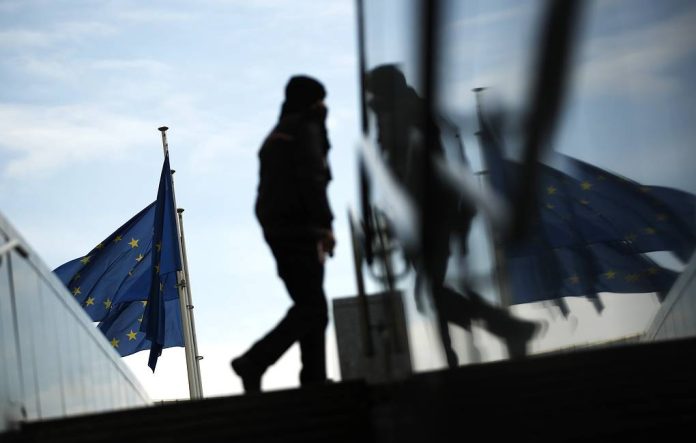
The package — the 19th from the EU since the Kremlin’s 2022 invasion — comes as Europe seeks to keep the pressure on Russia in the face of US President Donald Trump’s faltering peace push.

Kremlin-friendly Slovakia had held up adoption of the package over a separate issue as it sought protections for its car industry from EU climate legislation.

As part of the new measures, the 27-nation bloc is bringing forward a ban on the import of liquefied natural gas from Russia by a year to the start of 2027.

It is also blacklisting over 100 more tankers from the so-called “shadow fleet” of ageing vessels used to help Russia dodge restrictions on its oil exports.

Beyond efforts to hit Moscow’s revenues, the EU was also looking to crack down on Russian diplomats suspected of espionage by imposing controls on their travel around Europe.

Those new measures mean that Russian diplomats have to inform the authorities in countries where they are stationed of any travel abroad.

Slovakia’s Prime Minister Robert Fico agreed to drop his opposition to the sanctions on Wednesday after claiming to get adequate assurances on the car industry.

The package will be formally adopted tomorrow, just before Ukraine’s Volodymyr Zelensky joins EU leaders at a summit in Brussels.

Most Americans support U.S. recognition of Palestinian state: Survey

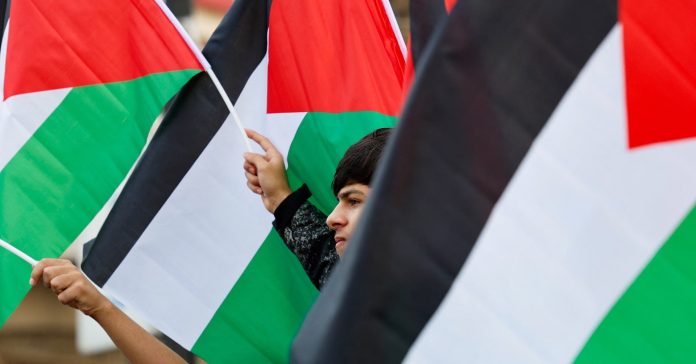
Palestine Rally

The six-day poll, which closed on Monday, found 59% of respondents backed U.S. recognition of a Palestinian state, while 33% were opposed and the rest were unsure or did not answer the question.

About half of Trump’s Republicans – 53% – opposed doing so, while 41% of Republicans said they would support the U.S. recognizing a Palestinian state.

A growing number of countries – including U.S. allies Britain, Canada, France and Australia – have formally recognized Palestinian statehood in recent weeks, drawing condemnation from Israel, whose founding in 1948 led to the displacement of hundreds of thousands of Palestinians and decades of conflict.

Israeli bombardments have leveled vast swaths of Palestinian neighborhoods in Gaza following an October 2023 surprise attack by Hamas militants on Israel.

Some 60% of poll respondents said Israel’s response in Gaza was excessive, compared to 32% who disagreed.

Trump, who returned to the White House in January, has largely backed Israel in the war and this month brokered a ceasefire, raising hopes that lasting peace could be in reach.

The Reuters/Ipsos poll gave signs the U.S. public was ready to give Trump credit should his plan work. Some 51% of poll respondents agreed with a statement that Trump “deserves significant credit” if peace efforts are successful, compared with 42% who disagreed.

While only one in 20 Democrats approve of Trump’s overall performance as president, one in four said he should get significant credit if the peace holds.

Success on that front appears far from certain. An explosion of violence over the weekend threatened to derail the week-old truce and U.S. diplomats stepped up pressure on Israel and Hamas to get Trump’s plan back on track.

Key questions of Hamas disarming, further Israeli troop pullbacks and future governance of the Palestinian enclave remain unresolved.

Trump’s approval rating on foreign policy appeared to be on a modest upswing, rising to 38% in the latest Reuters/Ipsos poll, compared to 33% in a poll conducted earlier this month just ahead of the ceasefire deal. The latest rating was Trump’s highest since July.

The Reuters/Ipsos poll was conducted online and gathered responses from 4,385 people nationwide. It had a margin of error of 2 percentage points.

Iran’s Esteghlal FC earn 1st win in AFC Champions League 2 with victory over Jordan’s Al-Wehdat

Esteghlal’s foreign stars led the way: Munir El Haddadi opened the scoring in the 8th minute, and Yasir Asani doubled the lead just before halftime in the 44th minute.

The Iranian side dominated throughout the match, showing clear superiority in possession and attacking play.

After suffering two early losses, 1–0 and 7–1, Esteghlal have demonstrated steady improvement in form and quality, marking a strong comeback in the competition.

Iran’s Intelligence Minister: 50 foreign spy agencies assisted Israel in its failed aggression against Iran

Esmaeil Khatib

Khatib said the enemy combined military operations using the latest Western technologies with extensive psychological and media warfare.

He noted that in recent years, adversaries had conducted multiple exercises and organized networks of anti-Iran and anti-revolutionary groups, deploying global media outlets to promote Iranophobia and Shiaphobia.

Despite the extensive coordination, he underlined, Iran emerged victorious over both the Zionist regime and the US, demonstrating the military might and unity of the Iranian nation.

Democratic senators call on Trump to oppose West Bank annexation

John Fetterman of Pennsylvania – a vocal Zionist who has adopted the far-right positions of the current Israeli government – was the only Democrat not to sign on.

“Since your plan for Gaza does not address the West Bank, it is imperative that your Administration reinforce your comments and emphasize its opposition to annexation,” the letter said.

“Steps by Israel to annex territory or expand settlements that prevent the establishment of a Palestinian state… have elicited deep concern and opposition from Arab partners and place at risk your past achievements under the Abraham Accords and the possibility of expanding them further,” the senators warned.

“In this moment, it is essential that the United States reject measures that undermine the viability of a negotiated resolution to the Israeli-Palestinian conflict,” they added.

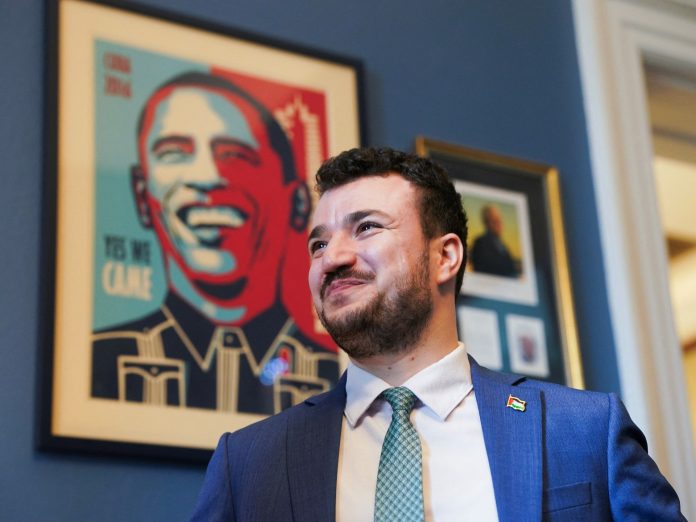
The letter was spearheaded by California Senator Adam Schiff, who has come under fire over the last two years from constituents for his expressions of unconditional support for Israel, while progressives in his state present more nuanced positions.

A Reuters-Ipsos poll released on Wednesday shows that 80 percent of Democratic voters now support the recognition of a Palestinian state, and 41 percent of Republican voters believe the same.

Trump had already pledged to Muslim leaders in a meeting in New York last month that he would not allow Israeli Prime Minister Benjamin Netanyahu to annex the occupied West Bank. That condition is widely believed to have been the now-removed 21st point of what became his 20-point plan for Gaza.

The problem is that much of the occupied West Bank is already de facto annexed – and US officials have either openly condoned it, such as US ambassador to Israel Mike Huckabee, or simply ignored it, like Secretary of State Marco Rubio.

Rubio is expected to visit Israel “soon” and take part in an event “organised by a settler group in a politically sensitive archaeological site” under the Palestinian village of Silwan in occupied East Jerusalem, very near al-Aqsa Mosque, Axios reported, citing Israeli officials.

Vice President JD Vance spent his second day in Israel on Wednesday, meeting with President Isaac Herzog and Netanyahu, in a trip that was billed as a confidence-building measure for the Gaza ceasefire agreement.

But as those meetings played out, the Knesset advanced a bill that would extend Israeli law to the whole of the occupied West Bank, and ultimately lead to the annexation of the land.

The bill will require three more rounds of votes before becoming law, but it passed with 25 MPs in support and 24 against.

“The State of Israel will apply its laws and sovereignty to the settlement areas in Judea and Samaria, in order to establish the status of these areas as an inseparable part of the sovereign State of Israel,” said the bill, using the Israeli name for the occupied West Bank.

Avigdor Lieberman of the Yisrael Beiteinu party also proposed a bill to extend Israeli sovereignty over the Maale Adumim settlement near Jerusalem, which also passed.

A senior Emirati official on Wednesday indicated that Trump’s landmark Abraham Accords, which normalised relations between Israel and three Arab nations in return for favourable US moves in 2020, would be at risk if Israel proceeds with annexation, which he referred to as a “red line” for the United Arab Emirates.

“Some policies are no longer valid and should not be reincarnated, the maximalist views on the Palestinian issue are no longer valid. We have to address the issue that we have two contending nationalisms fighting on one piece of land, and that land has to be divided,” Anwar Gargash, a top adviser to Emirati ruler Mohammed bin Zayed, stated at a Reuters summit held in Abu Dhabi.

“Are we going to continue with this sort of maximalist views on how to address the Palestinian issue? For example, by the Israeli right, which has to understand that this is not going to go away,” he added.


Tehran’s “Saint Mary” subway station: A symbol of art, inter-faith co-existence, and Unity

The station features a distinctive architectural design and elegant structure, which has drawn praise from both the public and observers.

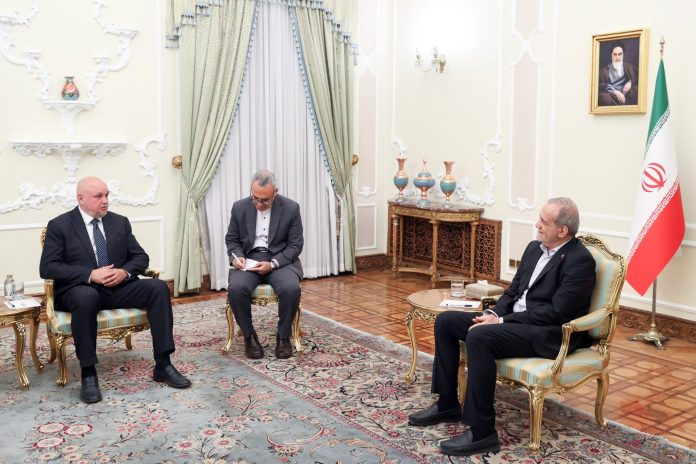
President Masoud Pezeshkian is expected to attend the station’s opening ceremony.

The priest of Saint Sarkis Church has expressed his satisfaction with naming the metro station after Saint Mary, describing it as a gesture of mutual respect.

According to IRNA, the Saint Mary Subway Station’s unique design reflects Iran’s tradition of respecting all religions, something deeply rooted in the country’s history.

More than just a transportation hub, the subway station stands as a symbol of artistic expression and interfaith harmony, showcasing national unity among followers of different religions in Iran.

Another notable example of this coexistence is Tehran’s “Crossroads of Religions”, where a church, a mosque, and a synagogue stand close to one another.

Iran says US must abandon its excessive demands, maximum pressure policy

Abbas Araghchi

Speaking to reporters on Wednesday upon his arrival in the city of Mashhad to attend the Regional Conference on Provincial Diplomacy, Araqchi stated that previous negotiations with the Americans — including the talks in New York — were halted due to Washington’s excessive demands.

He emphasized the need for the United States to abandon its coercive approach and end the so-called policy of maximum pressure against the Islamic Republic.

The second Provincial Diplomacy Conference opened on Wednesday in Mashhad with the participation of 12 Iranian ambassadors to neighboring countries, officials from national and provincial chambers of commerce, the governors of Razavi, South, and North Khorasan provinces, and senior officials from the Foreign Ministry.

The two-day conference aims to highlight the economic potential of Iran’s northeastern provinces, assess the supply of essential goods and needs from neighboring countries, explore ways to expand trade and economic cooperation under current conditions, and identify opportunities to strengthen economic relations with Iran’s neighbors.


Russia confirms still preparing for Putin-Trump summit

Kremlin

Trump has become increasingly frustrated with Russia’s refusal to agree to a ceasefire in the nearly four-year Ukraine war, having so far failed to convince Putin to back down on his maximalist demands.

The US leader met Putin at a summit in Alaska in August but the meeting failed to yield any sort of peace deal.

Trump announced last week he planned to meet Putin for a second round of talks in Budapest but then on Tuesday called off the plan, saying he did not want a “wasted” meeting.

When asked about Trump’s comments, Kremlin spokesman Dmitry Peskov told reporters: “No one wants to waste time, neither President Trump nor President Putin.”

Russian Deputy Foreign Minister Sergei Ryabkov stated preparations were continuing.

“We are saying that preparations for a summit are continuing,” he was quoted as saying by the state TASS news agency, without elaborating.