Friday, December 26, 2025
Home Blog Page 94

Trump says summit with Putin should not be ‘wasted time’

He made his comment after US media outlets reported that the summit in Budapest, agreed upon last week during a Putin-Trump phone call, had been placed on hold.

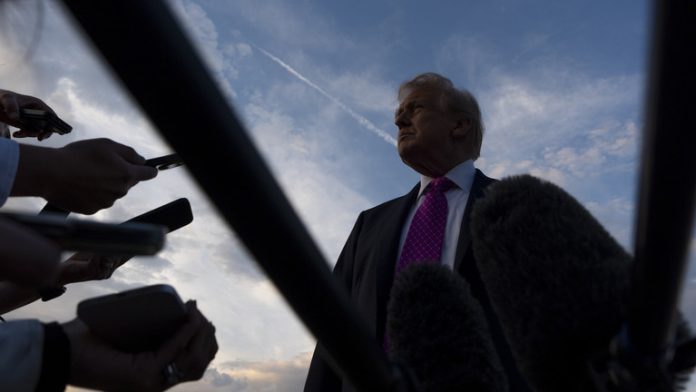
“I don’t want to have a wasted meeting, I don’t want to have a wasted time, so I’ll see what happens,” Trump told reporters at the Oval Office.

A journalist then asked the president why he thought the meeting “might be a wasted time.”

Trump replied, “I didn’t say it would. You never know what is going to happen. A lot of things are happening on the war front with Ukraine and Russia. We’ll be notifying you over the next two days as to what we are doing.” He would not say if the event was scrapped or postponed.

Putin and Trump held a rare in-person meeting in Alaska in August, and although no breakthroughs were achieved, both sides described it as a positive step toward peace in Ukraine and restoring bilateral ties.

Russian Foreign Minister Sergey Lavrov and US Secretary of State Marco Rubio spoke by phone on Monday, discussing ways to “collaborate on advancing a durable resolution to the Russia-Ukraine war,” according to the State Department.

US VP admits uncertainty over Gaza

Vance made the remarks on Tuesday while visiting a newly established coordination center in Israel. He was accompanied by President Donald Trump’s envoy Steve Witkoff and the president’s son-in-law, Jared Kushner.

Vance called the ceasefire progress “better” than anticipated and said he remained optimistic about prospects for a lasting deal to end the two-year war.

Asked by reporters who will govern Gaza, Vance replied: “I don’t know the answer to that question.”

“We need to reconstruct Gaza and make sure both the Palestinians living there and the Israelis can have some measure of security and stability…” he continued, adding, “Then we’ll worry about what the long-term governance of Gaza is.”

Israel and Hamas agreed to a ceasefire in early October under Trump’s 20-point peace plan. On Sunday, however, violence flared again as a Palestinian attack that killed two Israeli soldiers triggered Israeli airstrikes that killed dozens of people in Gaza. Afterwards, Israel and Hamas reaffirmed they were both committed to the ceasefire.

Vance downplayed suggestions that his visit was hastily arranged to preserve the truce, stating he felt “confident that we’re going to be in a place where this peace lasts,” but warned that if Hamas failed to cooperate, it would be “obliterated.”

Trump has threatened to send “heavy force” into Gaza if the Palestinian group “continues to act badly,” vowing that Hamas would be “eradicated” if it violated the terms of the deal.

Under the plan, the group is to disarm and give up control of the enclave. However, Hamas is acting as a security force there “for a period of time,” according to Trump.

Senior Iranian official reacts to leaked wedding video of daughter

The footage shows the bride wearing a strapless gown and being escorted by her father down the aisle at a hotel in Tehran.

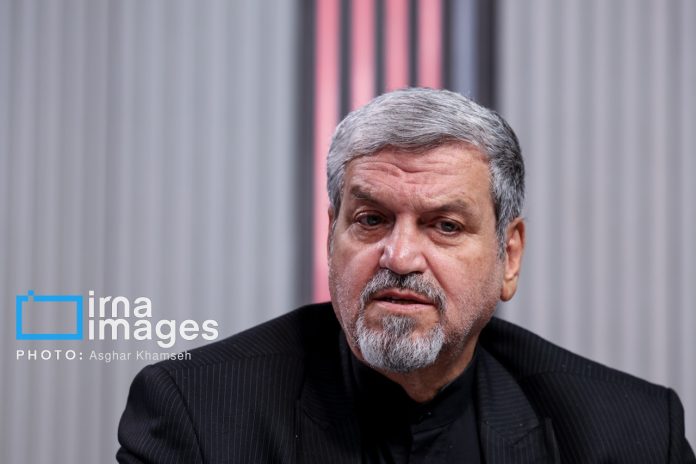
Shamkhani—who previously served as Secretary of Iran’s Supreme National Security Council—responded on social media, writing: “Hey you bastards, I’m still  alive!”, a reaction which quickly went viral across Persian-language social media platforms.

The former top security official further added that Israel’s Mossad spy agency had orchestrated the leak “to undermine his reputation and destabilize internal politics.”
Many outlets and figures suggested the ceremony was private and female-only, saying that “no religious or social norms were breached.” Conversely, several voices described the release of the footage as an act of “media assassination” by foreign adversaries.

Meanwhile, the daily Kayhan defended Shamkhani’s privacy while criticizing the extravagance of the event.

In an editorial, the paper wrote: “Holding a lavish wedding at a luxury hotel certainly deserves criticism, as luxury and excess erode social cohesion and stand contrary to the spirit of solidarity. Yet, publishing private images and violating personal sanctity reflects deep-seated malice and moral savagery.”

The controversy has reignited public debate on hijab, class divisions, elite privilege, and privacy in Iran, as officials face growing scrutiny from both domestic and international audiences.

Critics of the mandatory hijab laws argue that such incidents expose a stark double standard within the political elite.

Meanwhile, Elias Hazrati, head of the Iranian government’s Information Council, reacted to the circulation of a video from the wedding ceremony of Ali Shamkhani’s daughter, saying: “We must be alert to the fact that the main goal of this media war is to sow distrust and despair in society, not to criticize or reform individuals’ behavior.”

He added that the publication of such content on social media has always been part of the enemies’ agenda, and it has intensified in recent days. According to Hazrati, the sudden release and rapid spread of videos from ceremonies, conversations, or remarks is part of a broader project to tarnish public figures’ reputations.

Kremlin says it does not have dates for summit between Putin and Trump

Kremlin

The comments followed a CNN report that a planned preparatory meeting between U.S. Secretary of State Marco Rubio and Russian Foreign Minister Sergei Lavrov had been put on hold.

The session, expected this week, was seen as a key step toward organizing a Trump-Putin summit. But the Kremlin denied that anything had been postponed.

“We cannot postpone something that has not been finalised. Neither President Trump nor President Putin have given exact dates. Preparation is needed, serious preparation,” Kremlin spokesman Dmitry Peskov said.

He added that Moscow currently had “no understanding” of when a meeting between the two presidents might take place.


Syria reconstruction costs put at $216bn: World Bank

Reconstruction is one of the most significant challenges facing Syria’s new authorities after the overthrow of longtime ruler Bashar al-Assad in December.

“Syria’s reconstruction costs are estimated at $216 billion after more than thirteen years of conflict,” the World Bank announced in its latest report, which it said assessed “infrastructure and building assets, covering the period from 2011 to 2024”.

The Syrian war, which erupted in 2011 with Assad’s brutal repression of anti-government protests, killed over half a million people and devastated the country’s infrastructure.

“The conflict has damaged nearly one-third of Syria’s pre-conflict gross capital stock, with direct physical damages to infrastructure, residential buildings, and non-residential buildings estimated at $108 billion,” the report added.

Among the categories assessed, infrastructure was the hardest hit, accounting for 48 percent of total damage, equivalent to $52 billion.

The report estimates costs of physical assets to range between $140 billion and $345 billion, “with a conservative best estimate” of $216 billion.

Aleppo province and the Damascus countryside, major rebel strongholds subjected to heavy bombardment during the early years of the war, bore the brunt of the most of the destruction.

“The challenges ahead are immense, but the World Bank stands ready to work alongside the Syrian people and the international community to support recovery and reconstruction,” stated Jean-Christophe Carret, World Bank Middle East division director.

The World Bank estimates reconstruction costs to be ten times greater than Syria’s projected 2024 GDP.

Since Assad’s fall, Syria’s new authorities have worked to attract investment for reconstruction.

They have signed agreements with several companies and governments, including Gulf countries.

Syrian Finance Minister Mohammed Barnieh said the report “provides a critical baseline of the massive scale of the destruction and of the reconstruction costs ahead”.

“Now, more than ever, it is imperative for the international community to mobilise support and partnership to help Syria restore essential infrastructure, revitalise communities, and lay the foundation for a more resilient future for its people,” he added.


Iranian prominent actor, ex-football player detained in abduction and rape case

Judicial authorities confirmed that the case has entered the trial phase and that the suspect’s bail was converted into a detention order during a recent court session.

According to judicial sources, the case began when a woman in her early twenties lodged a formal complaint at Tehran’s Criminal Investigations Department, alleging that the actor had deceived her under the pretext of offering her a professional opportunity in the film industry, before forcibly taking her to a private residence where the assault reportedly occurred.

The investigation was subsequently divided between the Tehran Criminal Court, responsible for the kidnapping charge, and Branch 9 of the Criminal Court I, tasked with reviewing the assault allegations.

After multiple rounds of inquiry and expert evaluation, both the complainant and the accused appeared before the court in a closed session earlier this week. Following the session, the presiding judge ordered the defendant’s remand in custody.

The case continues to proceed under judicial review, and the accused has formally objected to the court’s decision. Authorities have not released the identity of the complainant.

Rare Qajar-era film reels unearthed at Iran’s Golestan palace

According to Afarin Emami, director of the Golestan Palace complex, the reels were identified during an ongoing project to catalog and preserve historical objects from the palace’s Album House collection. The films were found in boxes previously labeled as “raw film stock,” but close examination revealed that 31 of the reels contained actual recorded images.

The collection includes 28 reels of 35 mm film and 3 reels of 16 mm film. Specialists and custodians of the Album House made the discovery during archival review and preservation work.

Emami said that further technical study and expert analysis are required to determine the exact content and dating of the films, noting that they may extend the historical record of visual documentation from the late Qajar era, especially following the known footage from the reign of Mozaffar ad-Din Shah. “These films could provide invaluable insights into the Qajar period and may reshape our understanding of the earliest phase of Iranian cinematic history,” she added.

The Golestan Palace Album House currently holds over 61,000 historical artifacts, including early cameras and Qajar-era films, photo albums, paintings, glass negatives, and other related works.

It is recognized as the second most significant album collection in the world after the Windsor Album House in the United Kingdom.

Ukraine, Europe allies support peace negotiations based on current frontline

Trump is seeking to broker a peace deal to end the three-and-a-half-year war, triggered by Russia’s 2022 invasion. Last week, he called on Moscow and Kyiv to stop the fighting “where they are” after talks with both sides.

“We strongly support President Trump’s position that the fighting should stop immediately, and that the current line of contact should be the starting point of negotiations,” said a statement signed by Ukraine’s Volodymyr Zelensky, EU chiefs Antonio Costa and Ursula von der Leyen, France’s Emmanuel Macron, Germany’s Friedrich Merz, Britain’s Keir Starmer and Italy’s Giorgia Meloni.

“We remain committed to the principle that international borders must not be changed by force,” said the leaders, who also included those of Denmark, Finland, Norway and Poland.

EU leaders are set to close ranks in support of Ukraine at a Brussels summit on Thursday — followed a day later by a “coalition of the willing” meeting of European leaders in London to discuss the next steps to help Kyiv.

Trump has announced his intention to meet Russian President Vladimir Putin in Budapest in coming weeks, but it was not clear whether Zelensky — who was shut out from the previous meeting in August in Alaska — would attend.

“We are clear that Ukraine must be in the strongest possible position — before, during, and after any ceasefire,” the leaders on Tuesday noted.

“We must ramp up the pressure on Russia’s economy and its defence industry, until Putin is ready to make peace,” they added.

The European Union is considering a new 140-billion-euro ($163-billion) loan for Ukraine funded by frozen Russian central bank assets, which will be discussed at Thursday’s summit in Brussels.

Officials are hoping they will give a greenlight for a more detailed legal proposal to be drawn up.


Iran attends FATF plenary in Paris for first time in six years

France, Paris, Cityscape with french flag and Eiffel tower in background

The participation came at the official invitation of the global financial watchdog.

Hadi Khani, Deputy Minister of Economic Affairs and head of Iran’s Financial Intelligence Center, took part in the session to present updates on the country’s Action Plan, particularly regarding the recent approval of legislation to join the UN Convention against Transnational Organized Crime, known as the Palermo Convention.

During the meeting, the Iranian delegation outlined the legislative process and the government’s implementation efforts. Discussions also focused on scheduling follow-up sessions between Iran and FATF representatives to clarify outstanding issues and respond to member questions.

In addition to Iran, the plenary reviewed the progress of several countries on the FATF “grey list,” including Monaco, Bulgaria, Syria, Yemen, Algeria, Mozambique, Burkina Faso, Nigeria, South Africa, the Democratic Republic of Congo, South Sudan, Cameroon, Namibia, Angola, Gibraltar, Kenya, Myanmar, Vietnam, Nepal, Laos, and Venezuela.

The FATF plenary provides member and observer states an opportunity to assess each country’s efforts to strengthen anti–money laundering and counter-terrorism financing frameworks.

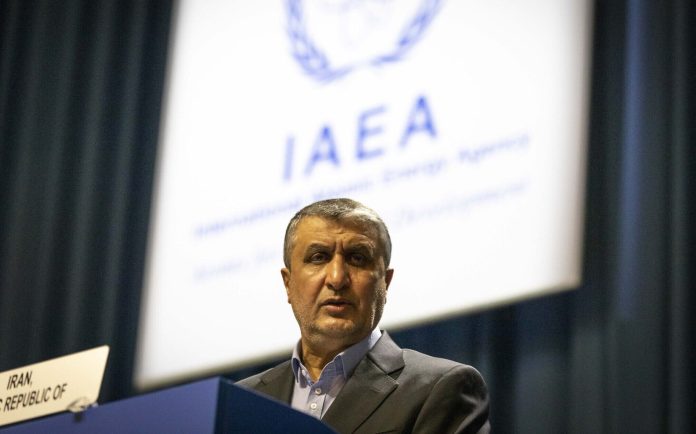
Deputy FM: IAEA seeks to inspect Iran’s undamaged nuclear sites

IAEA

Qaribabadi said on Monday that, under the Cairo understanding between Iran and the IAEA, such requests were previously answered within a week, but they now fall under the authority of the SNSC.

Referring to the Iranian Parliament’s resolution and the designation of the Supreme National Security Council as the decision-making body, he noted that any inspection request will be submitted to the Council and Iran will act according to its decision.

He added that during the implementation of the Cairo understanding, IAEA inspectors had visited several undamaged Iranian facilities, but such requests are no longer handled within that framework.

Iranian Foreign Minister Seyed Abbas Araqchi and IAEA Director General Rafael Grossi reached an understanding in Cairo on September 8 on a new cooperation mechanism following attacks on safeguarded nuclear facilities in Iran.

After the agreement was signed, Araqchi stated that the understanding would no longer be valid if any hostile act were committed against Iran or if the “Snapback” mechanism were triggered.

On October 4, following the move by the three European countries — the UK, France, and Germany — to activate the Snapback mechanism, Iran’s Foreign Minister declared that the Cairo agreement could no longer serve as a basis for cooperation with the IAEA.