Saturday, December 27, 2025
Home Blog Page 927

More Americans have little, no confidence in Israeli PM: Survey

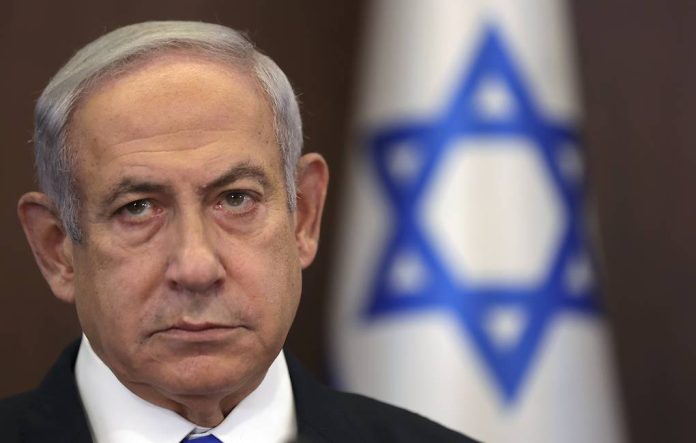
Benjamin Netanyahu

The report, issued by Pew Research Center, found 53 percent of U.S. adults said they have little or no confidence in Netanyahu doing the “right thing” regarding world affairs, including 25 percent who said they have no confidence in him at all.

The share of Americans with no confidence in the Israeli prime minister increased 11 percentage points since last year, when 42 percent shared the sentiment.

Only 9 percent of U.S. adults in the latest survey said they have “a lot” of confidence in his handling of world affairs, while 21 percent said they have some, Pew found. These are slight drops from last year, when 8 percent said they have a lot of confidence and 24 percent said they have some.

The center noted the decrease in confidence could be connected to a shift in recognition of Netanyahu. In 2023, 26 percent of Americans said they had never heard of him, while only about 15 percent said the same this year.

The findings come as Netanyahu faces mounting scrutiny over Israel’s wartime military campaign in Gaza, which has killed more than 34,000 Palestinians since early October, according to local health authorities.

He has pushed back against characterizations that Israel is not doing enough to protect civilian lives and vowed to push forward in eliminating the threat of Palestinian armed group Hamas, which has ruled Gaza since 2007.

The war has raged on for nearly seven months since Hamas launched a surprise attack on southern Israel last October, in which fighters killed about 1,200 people and took roughly 250 others hostage. Cease-fire negotiations remain stalled despite increasing pressure from leaders around the world.

Pew also found Americans’ sentiment about Netanyahu varies across party lines. Republicans and Republican-leaning independents have much more positive views of the Israeli leader than Democrats and those who lean Democratic — 51 percent to 13 percent.

About 38 percent of Democrats and Democratic leaners said they have no confidence in Netanyahu at all, compared to 13 percent of Republicans who said the same, according to the poll.

Views also vary among age groups, with older Americans more likely to have positive views of Netanyahu than younger ones.

Among Americans age 50 and older, 42 percent have at least some confidence in him to do the right thing with world affairs, while about a quarter of ages 30 to 49 said the same. Only 13 percent of adults under 30 have at least some trust, per the survey.
Iran, China defense chiefs call for Gaza ceasefire

Gaza War

Ashtiani was speaking in a meeting with his Chinese counterpart on the sidelines of the 21st confetence of defense ministers of the Shanghai Cooperation Organization in Astana, Kazakhstan.

He thanked China for its policy on the region, especially its condemnation of the Israeli regime’s attack on the consulate of the Islamic Republic of Iran in Damascus on April 1.

Referring to Iranian President Ebrahim Raisi’s visit to China and the signing of the comprehensive partnership treaty between the two sides, the Iranian defense minister said that in order to solve regional and international security issues, greater cooperation is necessary.

China’s defense chief also spoke about the developments in West Asia, condemning the Zionist regime’s attack on the Iranian consulate section.

Dong Jun said the attack violates international law and that China supports Iran’s legitimate right to respond to the act of aggression.

China’s defense minister further underscored the need for the continuation of cooperation between Tehran and Beijing in the military and defense spheres.

He called for a ceasefire in the Gaza Strip and the delivery of humanitarian aid to people in the region.

President Raisi: Iran, Africa determined to expand ties

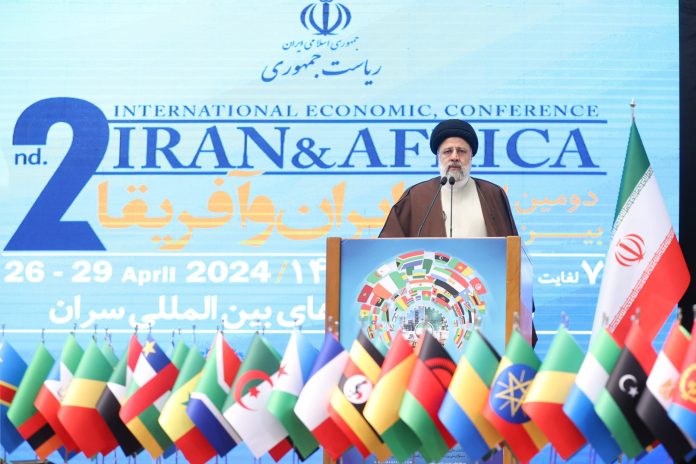
Addressing the 2nd Iran-Africa International Summit in the Iranian capital Tehran on Friday, President Raisi told the participants from over 30 African Union (AU) member states that the gathering is an indication that both sides are determined to further push their ties.

He drew a contrast between the Iranian and Western approaches towards Africa, saying “The westerners want Africa for themselves, but we want Africa for itself.”

The Iranian president highlighted the African continents’ colonial past when its wealth and resources were plundered.

President Raisi said Iran is ready to share its technological achievements with Africa despite the threats and sanctions by the West, but stressed that the existing problems for financial and money transfer should be removed to achieve the goals.

“We have some capabilities for exporting technical and engineering services, and there are capabilities in Africa. If these capabilities are combined, a complementary economy will be formed,” he said.

He noted that Iran has over 10,000 knowledge-based firms that have catapulted the country’s exports by over two billion dollars, adding their products can help Africa solve its problems in different spheres.

He named agriculture, industry, medicine, healthcare, and building refineries and power plants as some of the areas that can help Iran forge stronger ties with Africa.

“Overseas cultivation is another important capacity. Raw materials can be supplied for all economic operators and production centers by Africa at a reasonable price,” he explained.

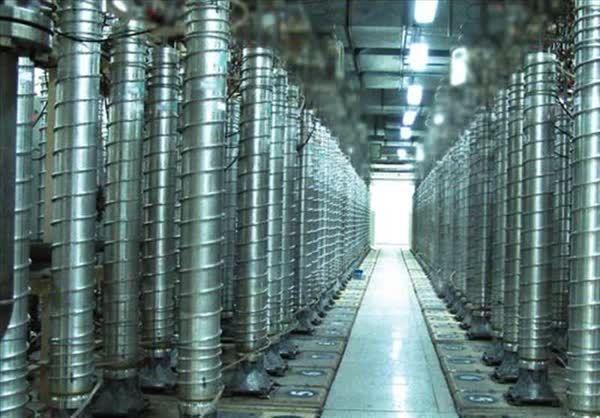
Iran says has become a leading pole in isotope separation

Addressing the Second National Conference on Digital Transformation and Intelligent Systems, which was held on Thursday in the southern city of Lar, Ali Noroozi explained, “Stable isotopes are used in the diagnosis and treatment of diseases and are widely used in pharmaceutical sciences as the main material or raw material for the production of various radiopharmaceuticals.”

Meanwhile, the atomic agency deputy head said Iran has used artificial intelligence to boost the security systems in its nuclear facilities and keep them safe from attacks.

Another area that the AI has rushed to the rescue of Iran’s nuclear activities is enrichment, Noroozi said.

“Enrichment is a long and complex process… artificial intelligence is used in this process to optimize the patterns and solve complex enrichment equations.”

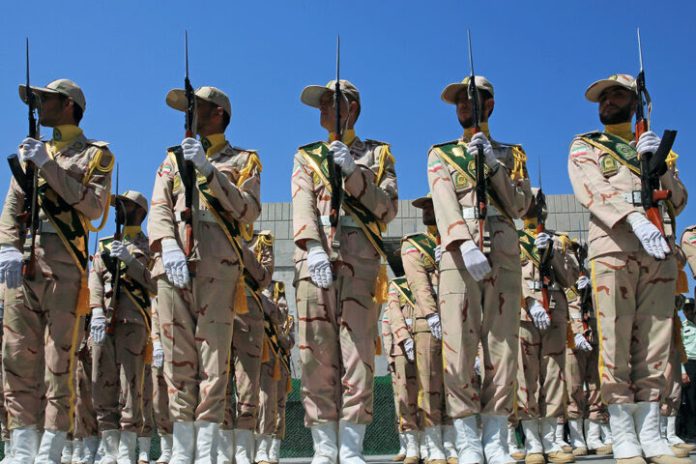
Six Iranian border guards detained briefly by Taliban released

The border guards were on patrol on the zero-point at the border when they were arrested by the Taliban forces for ‘illegal entry’ into Afghanistan.

Iranian officials held talks with the Taliban officials to sort out the issue and bring the border guards back home.

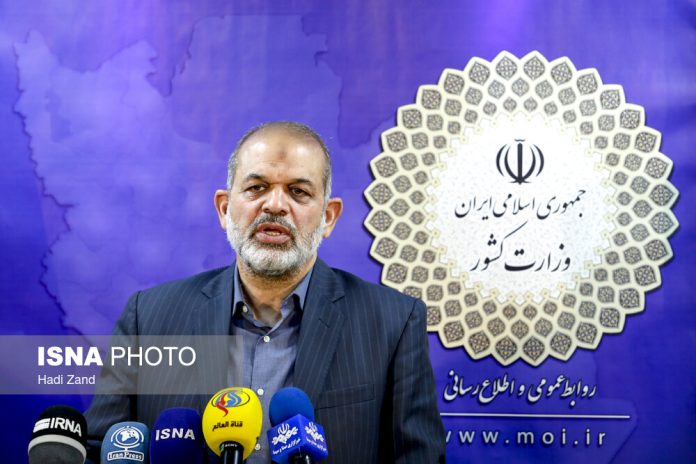
Interior minister: Iran set to hold runoff parliamentary elections

Iran’s Interior Minister Ahmad Vahidi

This round of the elections will be held in 22 constituencies across the country on April 10, and the votes will be cast electronically in 8 constituencies, the interior minister said.

The campaign for the vote will start on May 2.

The first round of the polls was held on March 1 to choose lawmakers from among over 15,000 candidates for the 290-seat legislative body for a four-year term.

Over 61 million people from the country’s 85 million-strong population were eligible to vote in the polls.

According to the official sources, the participation rate for the first round was at around 40 percent.

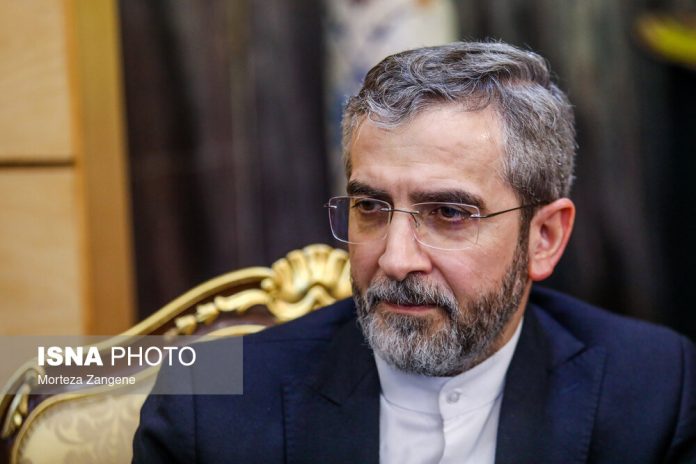
Iran deputy FM talks Islamic Republic’s strong response to Zionist aggression

Ali Bagheri Kani

Bagheri, who traveled to Moscow to participate in a meeting of deputy foreign ministers and special representatives of countries in the Middle East and North Africa, added that the BRICS meeting classified the Israeli aggression as consistent with the aggressive nature of the Zionists.

Bagheri noted: “We also emphasized in this meeting that responding to the Zionist regime’s crime in the Syrian capital city of Damascus was the legal right of the Islamic Republic of Iran as a form of countermeasure.”

He stressed: “The Islamic Republic of Iran will respond seriously, quickly, and very harshly to any violation of its territory, interests, or citizens.”

The Iranian deputy foreign minister for political affairs went on to say that Tehran’s response to the crime and aggression of the Zionists demonstrated that the key to protecting regional stability is holding the aggressor accountable.

He said: “As long as the aggressor is rewarded or appeased for their aggression, we cannot hope for stability in the region.”

Younger Americans less likely to support military aid to Israel: Report

Gaza War

About 30% of US adults over the age of 65 strongly favor providing military aid, while about 9% strongly oppose it, according to Pew Research Center.

According to Pew Research Center, there is no big age difference among US adults regarding whether the country should provide aid to Gaza, with 25-33% strongly in favor of doing so.

President Joe Biden on Wednesday signed into law an aid package worth $95 billion that includes $26 billion for Israel.

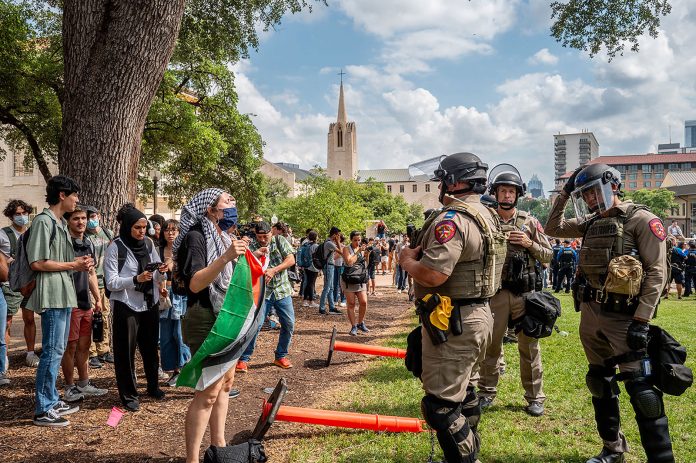
Student-led protests against Israel’s war on Gaza have intensified across the United States, as House Speaker Mike Johnson suggested the National Guard be brought in and police in riot gear arrested dozens of young people at the University of Texas at Austin (UT Austin) and the University of Southern California (USC).

The arrests on Wednesday in cities of Austin and Los Angeles came as students at Harvard University and Brown University on the east coast also defied threats of action and set up encampments in solidarity with Palestinians in Gaza.

The movement, which began at Columbia University in New York last week, is calling on universities cut financial ties to Israel and divest from companies they say are enabling its brutal war in Gaza. At least 34,300 Palestinians have been killed in Israeli attacks on the besieged enclave since October 7, when fighters from Hamas attacked southern Israel, killing 1,200 people and taking dozens of people captive.

The student protests against the war have been peaceful and largely respectful, but have been met by heavy-handed action from many universities amid allegations of anti-Semitism.

Palestinians retrieve hundreds of bodies from 3 mass graves in Gaza’s Khan Younis

Gaza War

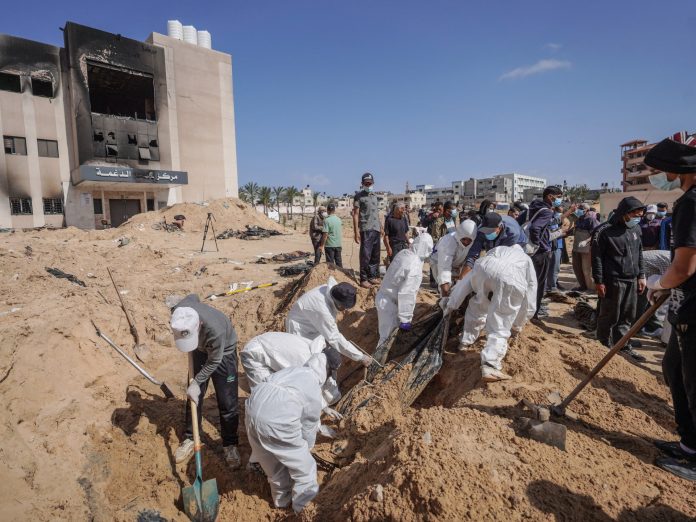
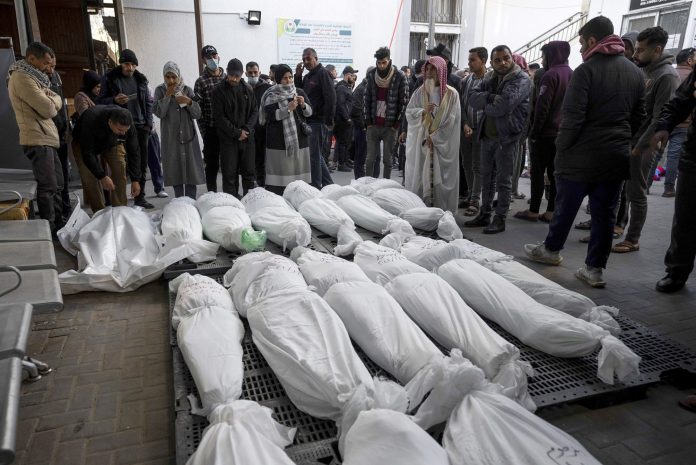
“Civil defense teams have dug up 392 bodies from the mass graves,” the agency said during a press conference in the southern city of Rafah.

Bodies of children were found among the victims.

“We don’t know the reason for the presence of children’s bodies in mass graves at the hospital,” the agency added.

According to the agency, signs of torture were found on the bodies of the victims.

“There are indications of carrying out field executions against some of the victims, while the bodies of other victims carried signs of torture and others were buried alive,” it said.

“Several victims were buried in plastic bags and placed at a depth of three meters, which accelerated their decomposition,” it added.

The bodies were discovered after the Israeli army withdrew from Khan Younis on April 7 following a 4-month ground offensive in the city.

Israel has waged a brutal offensive on the Gaza Strip since a cross-border attack by the Palestinian group Hamas on Oct. 7 last year, which Tel Aviv says killed nearly 1,200 people.

More than 34,300 Palestinians have since been killed, mostly women and children, and 77,300 others injured, according to local health authorities.

More than six months into the Israeli war, vast swathes of Gaza lay in ruins, pushing 85% of the enclave’s population into internal displacement amid a crippling blockade of food, clean water and medicine, according to the UN.

Israel stands accused of genocide at the International Court of Justice. An interim ruling in January ordered Tel Aviv to stop genocidal acts and take measures to guarantee that humanitarian assistance is provided to civilians in Gaza.

The Euro-Mediterranean Human Rights Monitor has also joined numerous rights groups and nations in calling for an independent investigation into the discovery of dozens of mass graves in Gaza.

It said its team members on the ground had witnessed the exhumation of hundreds of bodies found in the vicinity of Gaza City’s al-Shifa Hospital and saw victims “handcuffed … who were executed”.

In a statement, Euro-Med announced the high number of bodies that have been recovered is “alarming, and requires urgent international action, including the formation of an independent international investigation committee”.

Many of those who lost their lives were subjected to “premeditated murder as well as arbitrary and extrajudicial executions while they were detained and handcuffed”, it added.

Israeli officials admit campaign to kill UNRWA funding has failed: Report

UNRWA

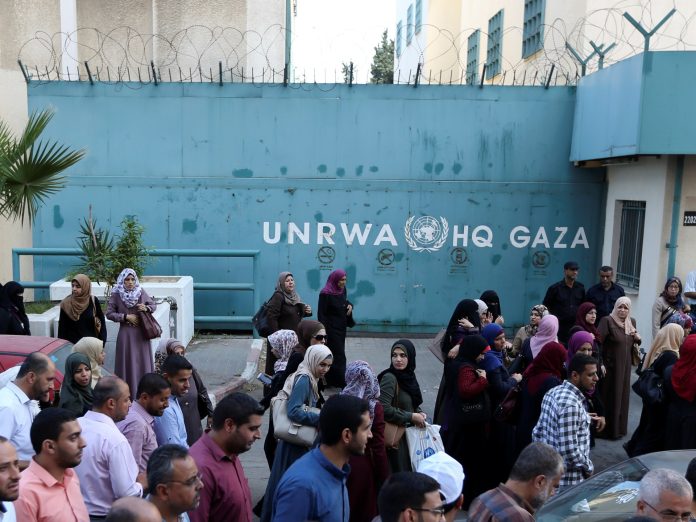
This news comes after Germany announced today that it would restore its funding to the agency, which it froze in January amid allegations by Israel that UNRWA staff had participated in the October 7 attacks on Israel. This week, a report from Catherine Colonna, former French foreign minister, discredited the Israeli allegations.

“Political sources in Israel have acknowledged in talks with foreign diplomats in recent days that Jerusalem had not succeeded in influencing the report in the way it had hoped,” Haaretz daily reported.

“An Israeli source involved in the diplomatic effort to halt funding to UNRWA told Haaretz that the failure was not in the field of public relations and communications, but rather stemmed from the lack of a convincing alternative to UNRWA,” it added.

Philippe Lazzarini, head of UNRWA, has told Al Jazeera that Israel’s campaign to discredit and defund the organisation had led to it facing an “unprecedented” crisis.

UNRWA plays a vital role in distributing desperately needed aid inside Gaza, where thousands are facing famine.

UNRWA has been hindered from doing its job since January, when Israel accused a handful of its thousands of employees of being involved in the Hamas attacks on Israel.

Amid a probe of the claims, several countries have cut off funding to the agency, and its aid work for Gaza’s famine-stricken population has suffered.

At least 18 countries initially suspended funding to the agency amid the allegations.

UNRWA was created by the UN General Assembly more than 70 years ago to assist Palestinians who were forcibly displaced from their land.

The agency provides crucial support to millions of Palestinian refugees in the Gaza Strip, West Bank, Jordan, Lebanon, Syria and other areas where large numbers of registered Palestinians live.