Friday, December 26, 2025
Home Blog Page 90

“Eysh-e Hara” Festival celebrates southern Iranian heritage on Qeshm Island

The local event attracted large crowds of residents and tourists who gathered to experience a lively showcase of camel racing, traditional cuisine, and children’s activities, along with performances by prominent Iranian artists.

Set against the scenic backdrop of the island’s plains, the festival featured the Gevarzin grass field and camel-racing track as its main venues.

“Eysh-e Hara” Festival celebrates southern Iranian heritage on Qeshm Island

The “Eysh-e Hara” celebration, whose name reflects joy, festivity, and connection to nature, offered a colorful glimpse into the deep-rooted customs of southern Iran’s desert communities

Organizers described the festival as part of an ongoing effort to preserve and promote local heritage, strengthen community ties, and attract cultural tourism to Qeshm, which is part of the UNESCO-designated Qeshm Geopark.

More in pictures…

Zargar: Iran’s enigmatic village with a European face

Often called “a piece of Europe in Iran,” Zargar lies about two hours from Tehran, near the town of Abyek.

Home to roughly 800 residents, the village is known for its people’s unique language, called Zargari or Romano, which shows traces of Indo-European roots and is spoken nowhere else in Iran.

The origin of Zargar’s community remains unclear.
Some believe their ancestors migrated from Europe centuries ago, while others say they are native Iranians shaped by cultural and linguistic blending over generations.

Zargar: Iran’s enigmatic village with a European face

Daily life in Zargar revolves around farming, livestock, and beekeeping, while women play a central role in dairy production and handicrafts.
Despite modernization, many traditions are still observed during local festivals and ceremonies.

Visitors to Zargar find a serene landscape of sloping-roof houses, wheat fields, and rolling hills, ideal for photography and short rural trips.
Spring offers the best weather, though the village remains pleasant through much of the year.

For travelers seeking mystery, culture, and simplicity, Zargar is a captivating journey into Iran’s living folklore.

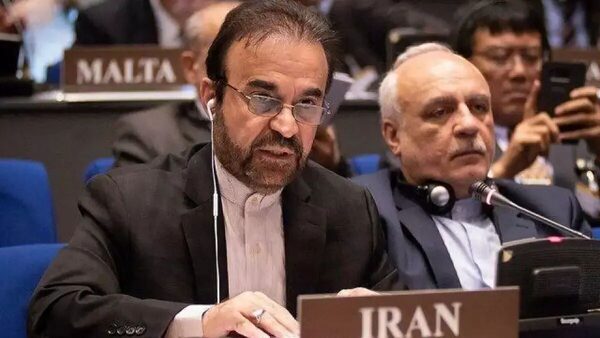
Iran UN Envoy: US Real Source of Instability in Region

Speaking on Thursday night at a UN Security Council session titled “The Situation in the Middle East: The Question of Palestine,” Amir Saeid Iravani said that the United States’ illegal military presence and destabilizing actions have intensified conflicts and instability across the region.

Iravani stated that the Zionist occupying regime has become a grave and undeniable threat to regional and international peace and security.

Referring to the ongoing genocide in Gaza, Iravani said that over the past two years, the Israeli regime has carried out systematic, indiscriminate, and disproportionate bombings against innocent civilians.

According to him, more than 68,000 Palestinians have been killed, thousands remain missing, and over 20,000 children have lost their lives. “All vital infrastructure has been destroyed—hospitals, schools, and water systems have been reduced to rubble. Gaza has truly become a land of devastation,” he said.

The Iranian envoy described this as “a living testament to the total impunity enjoyed by the Zionist regime.”

He added that as the military operations in Gaza come to an end, the world is only beginning to grasp the full scale of the catastrophe that has unfolded.

He stressed that the Islamic Republic of Iran supports any credible and effective initiative aimed at ending the genocide in Gaza, ensuring the full withdrawal of occupying forces, establishing a permanent ceasefire, facilitating the unhindered delivery of humanitarian aid, and restoring the fundamental rights of the Palestinian people.

Iravani also condemned the Zionist regime’s large-scale and unprecedented attacks in June against residential areas, hospitals, and peaceful nuclear facilities in Iran operating under full IAEA supervision. “In these unlawful assaults, 1,100 innocent civilians, including 132 women and 45 children, were killed, and more than 5,700 others were injured,” he noted.

Iravani emphasized that “those responsible for planning and committing war crimes, genocide, and crimes against humanity must be prosecuted, and the culture of impunity that has shielded the Zionist regime for decades must finally come to an end.”

Iran warns against continued colonial expansionism of Zionist regime 

Esmael baghaei

The spokesperson described the resolution as another step in the path of the Zionist regime’s colonial and criminal expansionism, which continues eight decades of persistent violations of the fundamental right of the Palestinian people to self-determination, and as a breach of peremptory norms of international law, particularly the right of nations to self-determination.

Referring to the ongoing grave violations of human rights and humanitarian law in the West Bank alongside the genocide in Gaza, the spokesperson emphasized that the declared and implemented policies of the Zionist regime in the West Bank, including repeating the illusion of a “Greater Israel,” the establishment of new settlements, and the adoption of new resolutions in the Knesset, confirm the regime’s plan for comprehensive ethnic cleansing throughout the entire occupied Palestine. This situation, he stressed, further reinforces the responsibility of all governments to adopt effective measures to prevent the “colonial erasure” of Palestine.

Baqaei called for immediate action by Islamic countries and the international community to prevent the blatant encroachment upon the historical rights of the Palestinian nation, and underlined the responsibility of the United Nations to halt the Zionist regime’s ongoing aggressions against Palestinian identity and rights.

Russia says it response to Tomahawk strikes would be ‘staggering’

Speaking to journalists after a meeting in Moscow, Putin cautioned that any use of Tomahawk missiles against Russian territory would provoke a powerful reaction. “This is an attempt at escalation,” he said.

“But if such weapons are used to strike Russian territory, the response will be very serious, if not downright staggering. Let them think about that.”

Ukrainian leader Volodymyr Zelensky reportedly raised the issue of obtaining Tomahawk missiles during his meeting with US President Donald Trump at the White House last week. According to Axios, the request was turned down, although US officials have stated that the option remains under review, with Trump expected to make the final decision.

The Tomahawk, a long-range cruise missile with a maximum range of around 2,500 kilometers (1,550 miles), requires lengthy and complex training to operate, Trump told reporters on Wednesday during talks with NATO Secretary-General Mark Rutte at the White House.

“This would be an escalation. It is an escalation attempt,” Putin stressed, commenting on a potential delivery.

“If Russian territory is hit… with such a weapon, the response will be very serious if not outright overwhelming,” the president added, encouraging Western leaders “to think about it.”

Moscow has previously warned that although Tomahawk deliveries would not affect the state of the battlefield of the Ukraine conflict, they would diminish peace prospects and strike a blow to US-Russian relations.

Putin discussed the issue with Trump during a phone call last week. Delivering the missiles would “severely undermine the prospects of a peaceful settlement,” he noted at the time. Following the call, Trump said it would be “not easy” for the US to provide Kiev with Tomahawks and maintained that Washington should not deplete its own arsenal for Ukraine.

Putin says Russia-US summit postponed

Vladimir Putin

The Russian leader admitted that it would have been a mistake to approach the summit without the necessary preparations, suggesting that a meeting might still take place at a later date. Putin emphasized that dialogue is always better than confrontation, arguments, and the continuation of war.

A Russia-US summit, which was planned to be held in the Hungarian capital, was announced last week by both the Kremlin and the White House after a phone call between Trump and Putin. On Wednesday, however, Trump announced that the meeting would be postponed. On the same day, Washington imposed sanctions on two major Russian oil companies, Rosneft and Lukoil.

Commenting on the sanctions, Putin described them as an “unfriendly move” that does not boost Russia-US relations.

At the same time, he noted that the new restrictions would not have a significant impact on the Russian economy.

Putin also stated that the US sanctions are yet another attempt by Washington to exert pressure on Moscow and stressed that “no self-respecting country ever does anything under pressure.”

He further suggested that there are certain people in the US administration that have been encouraging Trump to restrict Russian oil exports and called for considering who these individuals actually work for.

Putin insisted that Russia and the US actually have many areas in which they could cooperate if they would move away from pressure tactics and toward serious conversations about the long term.

Iran’s men’s Kabaddi team wins silver at Asian Youth Games in Bahrain

The Iranian squad delivered an impressive performance throughout the tournament, defeating Thailand 72–29 in their opening match before falling to Bangladesh 48–55 in their second game. They bounced back strongly, overpowering Pakistan 74–23, host nation Bahrain 92–17, and Sri Lanka 92–23 to advance to the final.

The competition featured teams from Iran, India, Pakistan, Bangladesh, Bahrain, Sri Lanka, and Thailand.

Following the final, Alireza Pakdel, head of Iran’s delegation to the Islamic Solidarity Games, praised the young team’s efforts, saying their silver medal was “no less than gold.” He noted that Iran played with determination and composure despite heavy crowd pressure from Indian fans.

“The boys fought hard and played much better than in their previous encounter against India,” Pakdel said.

“Their disappointment shows how determined they were to win gold, but this silver is just as valuable considering their courage and dedication.”

Pakdel also commended the Iranian women’s kabaddi team, which likewise earned a silver medal after a strong performance against India in the women’s final.

Zarif refuses to publish statement after Lavrov claims over snapback mechanism

Javad Zarif

Zarif revealed that he had drafted a full statement correcting what he called “a malicious misuse of my old colleague’s remarks,” but withdrew it at the request of senior figures. He had intended to release the text after the activation of Clause 8 of Resolution 2231.

Zarif accused Russia and France of presenting Iran with an unacceptable proposal in the 2015 negotiations — a plan to suspend U.N. resolutions every six months which would have significantly weakened Iran’s position. He said he challenged the idea directly and attributed it to Lavrov.

According to Zarif: “Lavrov and the French proposed a very bad plan regarding the status of past resolutions, and we worked hard to eliminate it,” he said during a recent private session.

Over 1.4 million undocumented foreign nationals leave Iran in 6 months

Afghan Refugee in Iran

Nader Yar-Ahmadi, head of the Bureau for Aliens and Foreign Immigrants Affairs at the Ministry of Interior, said the process is proceeding “naturally and legally” and that the government intends to facilitate the exit of a similar number in the near future.

Yar-Ahmadi explained that regular coordination meetings are held to implement policies aimed at regulating the status of immigrants and refugees in the country.

He added that a significant portion of Afghan nationals residing illegally in Iran were repatriated during the first six months of the year, in accordance with state policy.

Yar-Ahmadi also said that the Ministry plans to introduce a new framework for providing services to those who remain in Iran legally. The initiative, he explained, will bring together all relevant governmental and service agencies to ensure a more coordinated and organized approach to managing foreign residents.

According to the official, the registration documents of undocumented migrants are being annulled as part of the exit process, and the government’s goal—in line with international standards—is to limit the proportion of the foreign migrant population to about three percent of Iran’s total population.

He further referred to a new legislative initiative under Article 85 of the Constitution, being jointly developed by the government and parliament, which combines the administration’s draft bill on migration management with a parliamentary plan. The joint working group, he said, is expected to conclude its work early next week before sending the proposal to the Guardian Council for final approval.

Yar-Ahmadi also revealed that the total number of foreign nationals residing in Iran has decreased from six million to 4.5 million as a result of the repatriation program.

He added that there are currently around 80,000 registered marriages between Iranian citizens and foreign nationals—half involving Afghan men and Iranian women and vice versa—accounting, together with their children, for an estimated population of 250,000.

Haniyeh family refutes reports relatives left Gaza after Turkish request

Hamas Ismail Haniyeh

“Absolutely no one from the Haniyeh family has left,” said Abdul Salam Haniyeh, the late leader’s eldest son, in a statement to Middle East Eye.

“No one has left yet, and there are no arrangements in place for that or even a discussion about it.”

Middle East Eye reported on Monday that Israel had permitted at least 66 Palestinians and Turkish citizens to leave Gaza earlier this month following a request from the Turkish government.

While some of them were cited by sources as sharing the same family name, Abdul Salam Haniyeh stated that none of the late Hamas leader’s relatives had left, or intend to leave.

“The news is incorrect and is intended to cause confusion,” he added.

Fourteen Turkish citizens and 40 close relatives of Turkish nationals, including spouses, children, parents, and other immediate family members, were allowed to leave under a bilateral arrangement between Israel and Turkey, the sources noted.

The reported deal followed a Gaza ceasefire agreement between Israel and Hamas in early October, facilitated in part by Turkey.

Turkey maintained longstanding contact with Ismail Haniyeh, who led Hamas’s political bureau until he was assassinated by Israel in Tehran in July 2024.

An Israeli decision to allow Haniyeh’s relatives to leave Gaza would be particularly surprising, given that the Israeli military killed three of his sons and four of his grandchildren in an April 2024 air strike on their car in Gaza.

Around the same time, Israel also arrested Haniyeh’s sister, Sabah al-Salem Haniyeh, who was living in the southern Israeli town of Tel Sheva.