Friday, December 26, 2025
Home Blog Page 89

Demining Gaza could take up to 3 decades: Report

Gaza War

“The territory of the enclave has become a minefield, and the removal of unexploded bombs and shells left in Gaza as a result of shelling and bombing by Israeli forces could take 20 to 30 years,” the Maan news agency quoted the NGO representative as saying.

Moreover, in his view, it is “simply impossible” to defuse all unexploded objects in Gaza, as many are located very deep underground.

“It will take a whole generation just to locate and defuse the explosive objects on the surface,” the NGO representative stated.

He also noted that Israeli authorities do not allow the necessary equipment for detecting and destroying unexploded shells to be brought into Gaza. According to him, NGOs have also been denied permission to deliver equipment designed to incinerate explosive devices so they do not detonate on site and cannot be reused.

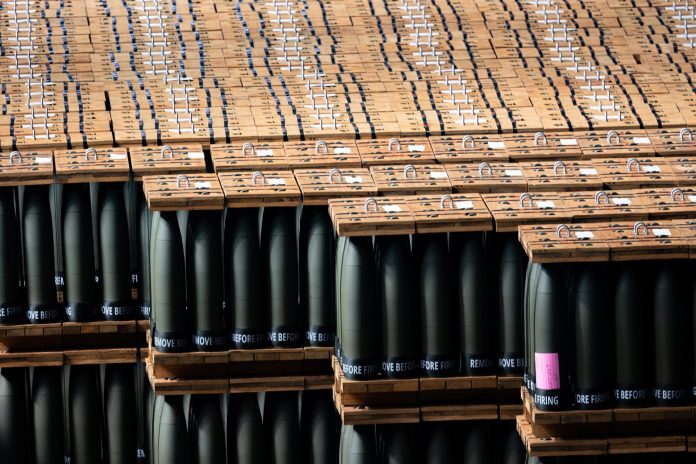
Earlier, a Handicap International representative, an NGO involved in explosive device disposal and victim assistance, reported that Israeli forces have dropped approximately 70,000 tons of shells and bombs on Gaza since October 2023. An analysis by a specialized UN agency found that between 5% and 10% of the bombs and shells dropped on Gaza by Israeli forces did not explode.

According to the press service of the Palestinian enclave’s administration, there are currently at least 20,000 explosive devices under the rubble of destroyed buildings and in the streets of settlements. These include artillery shells, mines, bombs, and projectiles launched by the Israeli army on Gaza. The press service emphasized that all unexploded shells “pose a real threat to local residents returning to their homes and to workers and specialists engaged in debris clearance in the settlements of the enclave.”

On October 6, delegations from Israel and Hamas resumed indirect talks on resolving the conflict in the Gaza Strip, mediated by Egypt, Qatar, and the United States, with Turkey also joining the consultations. On October 9, the sides signed an agreement to implement the first phase of the peace plan previously presented by US President Donald Trump. The following day, the ceasefire deal in Gaza came into force.


Gaza security force to include countries Israel ‘comfortable with’: US

Gaza War

Rubio said that the future of governance in Gaza still needs to be worked out among Israel and partner nations but could not include Hamas, adding that any potential role for the Palestinian Authority has yet to be determined.

The first phase of US President Donald Trump’s 20-point Gaza ceasefire deal was reached on Oct. 10.

Since the ceasefire took effect, the Israeli army has committed 80 violations, killing 97 Palestinians.

Phase one includes the release of Israeli hostages in exchange for Palestinian prisoners. The plan also envisages the rebuilding of Gaza and the establishment of a new governing mechanism without Hamas.

Since October 2023, the Israeli genocidal war has killed over 68,200 people and injured more than 170,300, according to the Gaza Health Ministry.


Kim, Trump have chance to meet next week: South Korea

Unification Minister Chung Dong-young, who is Seoul’s top policymaker on ties between the divided Koreas, said Trump’s trip to South Korea was an “opportunity from the heavens” that could help boost North Korea’s global standing and its economy.

“The leaders of North Korea and the U.S. must not miss this chance,” Chung was quoted by Yonhap as telling South Korean media.

“They need to make a bold decision.”

Trump met North Korean leader Kim Jong Un three times during his previous term as president but failed to reach agreement on ending Pyongyang’s nuclear program because of differences on lifting sanctions and over how to scrap the North’s nuclear facilities.

Officials in Seoul, including South Korean President Lee Jae Myung, have been sceptical that a new meeting could take place next week but welcomed the prospect of a breakthrough in diplomacy with Pyongyang if it were to happen.

Trump left Washington on Friday night for a five-day trip spanning Malaysia, Japan and South Korea — his first to the region since taking office in January.

Chung stated that the visit was a chance to bypass preparations and coordination normally required for a meeting between the leaders of the two old foes that would otherwise make it very difficult for them to see each other.

“It would help North Korea’s international standing and improve its people’s lives … and for that, peace and stability need to be guaranteed and that’s only possible by meeting President Trump,” Chung added.

Trump met Kim at the Panmunjom truce village straddling the inter-Korean border in 2019 in a hastily arranged trip immediately following his visit to Japan for a global summit.

Iran, Russia, China write letter to IAEA chief declaring UN Security Council Resolution 2231 terminated

Kazem Gharibabadi

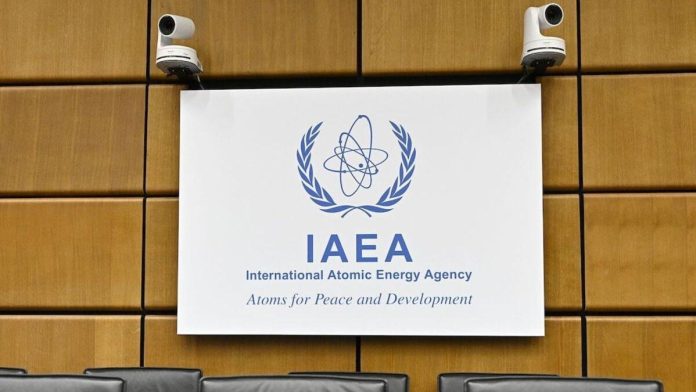
In a post on his X account on Friday, Iran’s Deputy Foreign Minister for Legal and International Affairs, Kazem Gharibabadi, said ambassadors and permanent representatives of China, Iran and Russia sent a letter to Director General of the International Atomic Energy Agency (IAEA) Rafael Mariano Grossi.

It came after the three countries’ joint letter to the Secretary General of the United Nations and President of the Security Council declaring the termination of Resolution 2231 on October 18, he added.

In the letter to the IAEA chief, he noted, the three countries reaffirmed the “illegal” move by the European trio — Britain, France and Germany — to invoke the so-called snapback mechanism and the expiration of all provisions of Resolution 2231 on October 18, 2025.

“But there is another key point which relates to the end of the mandate of the IAEA Director General’s reporting on verification and monitoring under the Resolution 2231 and the implementation of the JCPOA,” Gharibabadi emphasized, referring to the 2015 nuclear deal, formally known as the Joint Comprehensive Plan of Action.

According to the Iranian diplomat, the letter asserted that in the IAEA, “the implementation of the JCPOA, as well as verification and monitoring in the Islamic Republic of Iran in light of UNSCR 2231, were enacted by the resolution of the Board of Governors of 15 December 2015(GOV/2015/72).”

He stated, “Operative paragraph 14 of this Resolution unequivocally stipulates that the Board ‘decides to remain seized of the matter until ten years after the JCPOA Adoption Day or until the date on which the Director General reports that the Agency has reached the broader conclusion for Iran, whichever is earlier’.”

“Consequently, as of 18 October 2025, the related agenda item has been automatically removed from the agenda of the Board of Governors, and no further action is required in this regard,” Gharibabadi pointed out.

Iran has rejected the legality of E3’s triggering the snapback of UN sanctions, calling the mechanism “null and void” and a “fabricated” term.

On October 18, Tehran declared an end to all UN restrictions on its nuclear program following the expiration of Security Council resolution 2231.

Iran has faced sustained economic pressure in recent years, particularly after the United States unilaterally withdrew from the JCPOA in 2018 and re-imposed sweeping sanctions under the so-called “maximum pressure” policy.

Despite these pressures, Iran has sought to adapt through increased domestic production, non-dollar trade mechanisms, and expanding economic ties with partners in Asia and neighboring states.


France says to deliver to Ukraine additional Aster missiles, Mirage fighters

French President Emmanuel Macron

“We will deliver in the days to come additional Aster missiles, new training programs and new Mirages,” the French leader said in a video posted by the Elysee Palace on the X social network.

He added that France, together with some other members of the coalition, will “confirm some additional initiatives.”

Additionally, Macron asserted that the “coalition of the willing” “will also need to support Ukraine’s energy resilience.”

The Russian side has repeatedly noted that flooding Kiev with arms merely prolongs the conflict.

Israeli attacks in southern Lebanon kill two in latest truce violation

It’s the latest in near-daily Israeli violations of the United States-brokered ceasefire between Israel and the Lebanese armed group Hezbollah that began in November.

The attack in the town of Toul in the Nabatieh district on Friday also injured two people, the ministry announced. It did not provide details on their condition.

A security source told Al Jazeera that the drone fired a missile at a car, directly hitting the vehicle and causing it to catch fire.

The Israeli military claimed it attacked sites linked to Hezbollah, including “a military camp and a site for the production of precision missiles”, without providing evidence.

Later, the military claimed its forces killed Abbas Hassan Karky, whom it identifies as “the logistics commander of Hezbollah’s Southern Front headquarters”. The attack was carried out in the Nabatieh area of southern Lebanon, the Israeli army added.

There was no confirmation or comment from Hezbollah.

Separately, Lebanon’s state-run National News Agency reported that the Israeli military carried out an air strike on the Kroum al-Marah neighbourhood in the southern district of Marjayoun with no injuries reported.

On Thursday, Israeli forces targeted the eastern region of Bekaa, killing two people, and later targeted Arabsalim in southern Lebanon, killing two others, including an elderly woman.

Israel has continued launching its assaults on Lebanese territory, particularly in the south, while maintaining a military presence at five border outposts despite the truce requiring its full withdrawal earlier this year.

The ceasefire brought to an end more than a year of hostilities with Hezbollah that culminated in two months of open war.

Lebanese President Joseph Aoun has asked both the US and France to intervene to rein in Israel but to no avail. Last month, Aoun pushed to get more support from Washington after another deadly Israeli drone attack on southern Lebanon, which killed five people, including three children.

Israel’s prolonged violations have caused mounting civilian casualties and widespread destruction and hampered efforts by Lebanese authorities to implement the disarmament of Hezbollah in the south.

In August, the Lebanese government pledged to disarm Hezbollah by the end of the year, but Hezbollah leader Naim Qassem rejected the accelerated pressure, citing the ongoing Israeli attacks and occupation of Lebanese soil as a reason to hold onto its arms.


UK vows Ukraine allies will take Russian oil and gas off market after US sanctions

The prime minister urged other nations to follow the US and impose sanctions, and said allies had agreed on a “clear plan for the rest of the year” in supporting Kyiv.

Among the further pledges were plans to “push on with the progress” on Russian assets and “keep up the military pressure on Putin” as the conflict heads towards its fourth winter. The UK also announced it would “accelerate” its missile production programme to get more weapons to Ukraine.
It comes days after the White House imposed new sanctions on Russian oil in an attempt to squeeze Moscow.

Speaking in London after a coalition of the willing meeting alongside Zelensky, Sir Keir said: “We will act to take Russian oil and gas off the global market.

“Last week, the UK became the first country to sanction all of Russia’s oil majors. On Wednesday, the US acted decisively to join us together with further sanctions from the EU, and we’re choking off funding for Russia’s war machine.”

“I’m urging others to take these steps too, to go further to reduce their dependencies and incentivise third countries to stop buying these tainted resources,” he added.

The British and Ukrainian leaders were joined by NATO secretary general Mark Rutte, Dutch prime minister Dick Schoof and Danish prime minister Mette Frederiksen for a press conference at the Foreign Office in Westminster following their discussions.

Rutte described President Vladimir Putin’s refusal to engage in ceasefire talks as “deluded aggression” and said that “the truth is that Putin is running out of money, troops and ideas”.

The leaders in London were joined by others virtually. Zelensky stated that the group discussed “enhancing our air defence”.

In a post on social media on Friday afternoon, the Ukrainian leader stressed he is “grateful for the shared position on the need to further increase pressure on Russia and continue work with the United States on developing clear and reliable security guarantees for Ukraine”.

Sir Keir also added that the UK was “accelerating” the push to provide Kyiv with “more than 5,000 lightweight multirole missiles”. He told the press conference that the project is “creating 200 jobs and supporting 700 existing roles at Thales in Belfast”.

It comes amid a diplomacy push over the US providing Tomahawk missiles. Mr Rutte said the matter remains under “review”.

Earlier on Friday, Zelensky got a ceremonial welcome at Windsor Castle before a meeting with King Charles.

There was a royal salute as the Ukrainian leader shook hands with the King in the castle’s royal quadrangle – the first ceremonial welcome he has received in the UK.

Zelensky inspected the 1st Battalion of the Grenadier Guards and was then led inside the castle for an audience with the King.

The Ukrainian president told the press conference later that Russia “want to break Ukraine. They are doing everything to achieve it.”

While Zelensky continued to push for more military support from Europe, the Russian defence ministry said on Friday its forces had taken control of three more villages in eastern Ukraine.

According to the ministry, Russian troops have taken Bolohivka in the Kharkiv region, Promin in the Donetsk region, as well as Zlagoda in the Dnipropetrovsk region.

Earlier, the ministry also announced its forces had captured the settlement of Dronivka in the Donetsk region.

The reported gains come after Donald Trump ramped up pressure on Vladimir Putin with new sanctions on Russian oil.

The United States this week imposed sanctions on Russia’s largest oil companies, Lukoil and Rosneft, while EU countries approved their 19th package of sanctions on Moscow that included a ban on Russian liquefied natural gas imports.


Zahhak Castle in Iran’s Hashtrood lit up using solar energy

The lighting system, installed at an altitude of 1,800 meters above sea level, uses 34 photovoltaic panels generating 20 kilowatts of electricity.

The project, costing 15 billion rials, provides full nighttime illumination for the castle and its surrounding archaeological site.

Director General of East Azarbaijan’s Cultural Heritage, Handicrafts and Tourism Department Ahmad Hamzezadeh said the use of solar energy turns Zahhak Castle into a symbol of green tourism in the province.

He added that harnessing renewable energy in remote heritage sites reduces maintenance costs and ensures sustainable protection.

Zahhak Castle, also known as Narain Qala or Zahhak Qalasi, dates back over 2,000 years to the Parthian and Sassanid eras.

It was once a temple dedicated to Anahita, the goddess of water, and remains one of the most prominent archaeological landmarks in northwestern Iran.

Iran: Israeli airstrikes on Lebanon ‘terrorist crime’ fueled by US backing

Esmael baghaei

Several civilians, including school students in the Beqaa region of southern Lebanon, were martyred or injured in the Thursday attacks.

Baqaei stressed that the Zionist regime must be held accountable and prosecuted for its continued atrocities and aggression.

The spokesperson said Israel’s ongoing impunity—ensured by full American support—has emboldened it to persist in violating Lebanon’s sovereignty, territorial integrity, and ceasefire commitments. These actions, he added, clearly expose the regime’s terrorist and hegemonic nature.

Baqaei urged the international community and the United Nations Security Council to fulfill their responsibility in confronting the regime’s lawlessness and crimes. He also extended Iran’s condolences to the victims’ families and the people of Lebanon.

“Eysh-e Hara” Festival celebrates southern Iranian heritage on Qeshm Island

The local event attracted large crowds of residents and tourists who gathered to experience a lively showcase of camel racing, traditional cuisine, and children’s activities, along with performances by prominent Iranian artists.

Set against the scenic backdrop of the island’s plains, the festival featured the Gevarzin grass field and camel-racing track as its main venues.

“Eysh-e Hara” Festival celebrates southern Iranian heritage on Qeshm Island

The “Eysh-e Hara” celebration, whose name reflects joy, festivity, and connection to nature, offered a colorful glimpse into the deep-rooted customs of southern Iran’s desert communities

Organizers described the festival as part of an ongoing effort to preserve and promote local heritage, strengthen community ties, and attract cultural tourism to Qeshm, which is part of the UNESCO-designated Qeshm Geopark.

More in pictures…