Sunday, December 28, 2025
Home Blog Page 867

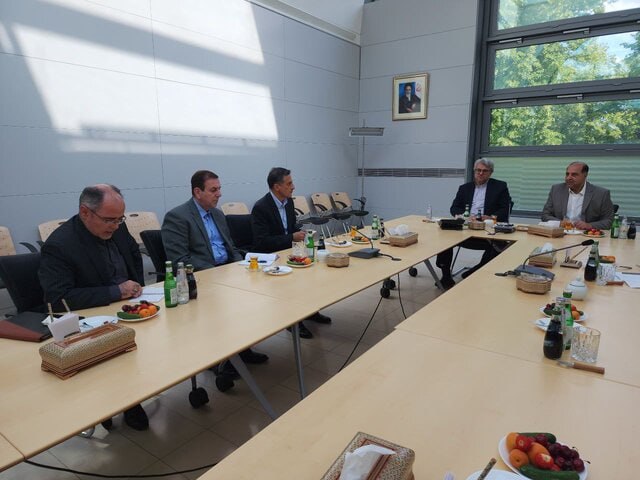
Iran unveils new sections for consular services at London embassy 

The Iranian charge d’affaires Ali Matinfar and a number of diplomats and embassy staff took part in the event to introduce the consular services.

Iranians in Britain can receive the services for issuance of smart passports and national identification cards before the end of the year, the charge d’affaires said.

He also assured that Iranian citizens in the UK can cast their ballots for the upcoming presidential elections scheduled to be held on June 28 at the embassy.

Iran: Preparations made for Iranians abroad to take part in presidential polls 

The Director General of Consular Affairs at the Iranian Foreign Ministry, Alireza Mahmoudi, expressed the ministry’s readiness for the polls in a meeting with the Iranian ambassador and consulate generals in Germany.

He put the recent remarks by the Iranian Leader stressing on the importance of a high turnout in the elections, as well as the instructions by the Iranian Acting Foreign Minister Ali Bagheri into perspective, saying the preparations have been made for millions of Iranians overseas to go to the polls and choose a successor to the late Iranian President Ebrahim Raisi.

Mahmoudi said that the presidential elections will be held simultaneously inside and outside the country.

He noted that Iranians living in Canada have sent messages to the foreign ministry expressing willingness to participate in the polls. He said Canadian authorities have been informed through diplomatic channels and Iran is waiting for Ottawa’s response.

Iran and Canada have no formal diplomatic ties despite a large community of Iranians living in Canada. Italy and Switzerland act as protector powers.

President Raisi and his accompanying delegation, including Foreign Minister Hossein Amirabdollahian, died in a helicopter crash on April 19 and left a void that has to be filled within 50 days, according to the Iranian Constitution.

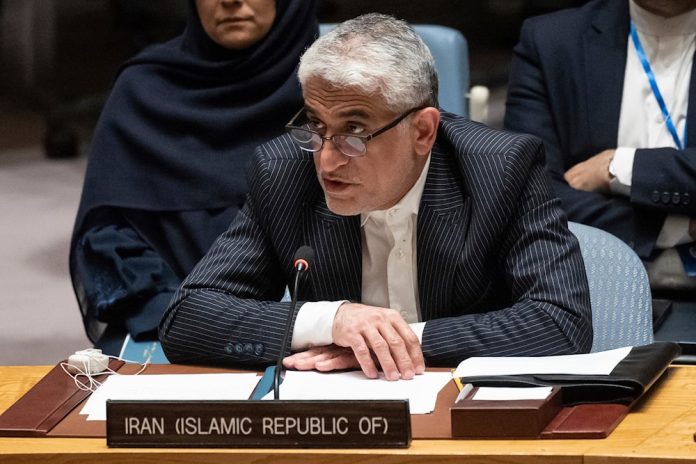
Iran slams E3 allegations in letter to UN Security Council

Amir Saeed Iravani

The letter, singed by Iran’s Ambassador and Permanent Representative to the UN, Amir Saeid Iravani, outlined Tehran’s position on its peaceful nuclear activities and the Joint Comprehensive Plan of Action (JCPOA), emphasizing the Islamic Republic’s commitment to international agreements and its rights under these frameworks.

The letter firmly denied the E3’s claims of Iran’s non-compliance with the JCPOA.

According to the letter, Iran’s remedial measures regarding its nuclear commitments were taken in response to the United States’ unilateral withdrawal from the JCPOA on 8 May 2018, and the subsequent failure of the E3 to honor their commitments.

Iran’s actions, which began a full year after the US withdrawal, aimed to restore the balance of reciprocal commitments and benefits under the agreement.

The Iranian UN Mission further said the E3 failed to fulfill their obligations under the JCPOA.

The letter highlighted that the E3 has not implemented the required sanctions-lifting measures as specified on Transition Day (October 18, 2023), marking a significant non-compliance that violates both the JCPOA and UNSC Resolution 2231 (2015), that endorsed the nuclear deal.

The letter reaffirmed Iran’s consistent compliance with its obligations under the Comprehensive Safeguard Agreements (CSA) and its cooperation with the International Atomic Energy Agency (IAEA).

Iran’s suspension of the modified Code 3.1 of the Subsidiary Arrangements was cited as a legitimate response to the re-imposition of sanctions by the US and the EU, in line with paragraphs 26 and 36 of the JCPOA.

The Iranian Mission to the UN stressed that Tehran’s decision to enrich uranium in the nuclear site of Fordow was a remedial measure in response to the non-compliance of the US and E3/EU with their legally binding obligations.

All such activities, the letter stressed, remain under the IAEA supervision, demonstrating Iran’s commitment to peaceful nuclear development.

The letter underscored Iran’s unwavering adherence to the Non-Proliferation Treaty (NPT) and its inalienable right to develop nuclear energy for peaceful purposes.

Iran categorically rejected allegations that its nuclear program poses a threat to international peace and security, reiterating its rejection of nuclear weapons based on ideological and strategic considerations.

The Iranian UN Mission reaffirmed its dedication to diplomacy and its willingness to resume talks aimed at the full implementation of the JCPOA by all participants.

The letter emphasized that the JCPOA remains the best option for resolving the nuclear issue, representing a significant diplomatic achievement that benefits all parties involved.

In conclusion, Iran’s letter to the UN Security Council called for a balanced and fair approach to the JCPOA and urged the E3 to honor their commitments, thereby contributing to the agreement’s revival and the maintenance of international peace and security.

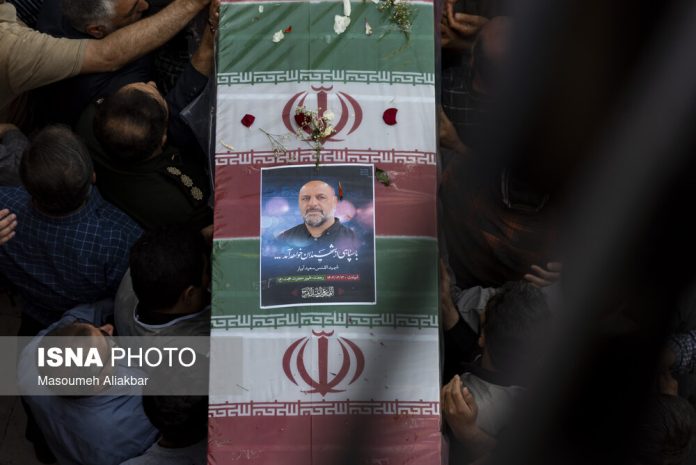
Body of IRGC cmdr. killed  in Syria laid to rest

Saeed Abyar

Abyar was killed on Sunday earlier this week in an airstrike by the Zionist regime’s warplanes around the city of Aleppo in northern Syria.

As a result of this attack, 17 people were killed, and 15 others were injured.

Abyar’s body was buried in the holy shrine of Shah Abdul Azim in Shahr-e-Rey, just south of the capital Tehran.

Brigadier General Mohammad Eslami,  commander in chief of Iran’s Islamic Revolution Guard Corps (IRGC) has said that the Israeli regime will pay the price for this crime.

Since 2011, the Israeli regime has carried out hundreds of attacks against Syria, a country embroiled in foreign-backed militancy and terrorism.

Iranian military advisors, officially invited by the Syrian government, have been pivotal in assisting Syrians in their fight against terrorism and in efforts to establish peace, stability, and lasting security in the region.

Tel Aviv has significantly ramped up its strikes since last October, coinciding with its war on the Gaza Strip, which observers describe as a move that risks further escalating regional tensions.

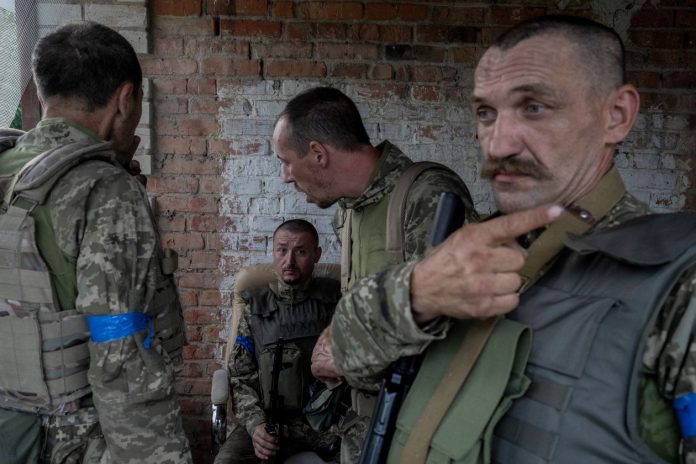
France says has no plans for sending forces to Ukraine

Russia Ukraine War

“There is a simple way to end this war, and that is for Russia to withdraw the troops it sent to Ukraine in February 2022, as it is the Russians who are responsible for the escalation,” he said.

At the same time, the French Prime Minister raised the issue of Paris’s support for Kyiv.

“We are doing this because they are fighting for the values we defend. Freedom, democracy, values for which people who were not French, young people, came to fight for us here in 1944,” he added.

The French government is considering sending military instructors to Ukraine. This was stated by the Commander-in-Chief of the Ukrainian Armed Forces, Oleksandr Syrskyi. According to him, the instructors would train Ukrainian soldiers to operate French weapons and military equipment.

An official representative of the French Ministry of Defense stated that the issue of sending instructors to Ukraine is under review. A final decision will be made soon.

France has been providing significant military assistance to Ukraine, including anti-tank missile systems Milan, self-propelled artillery units Caesar, howitzers TRF1, and other weapons. In addition, France has provided Ukraine with financial assistance amounting to over 1 billion euros.

90 percent of children in Gaza experiencing ‘severe food poverty’: UNICEF

Gaza War

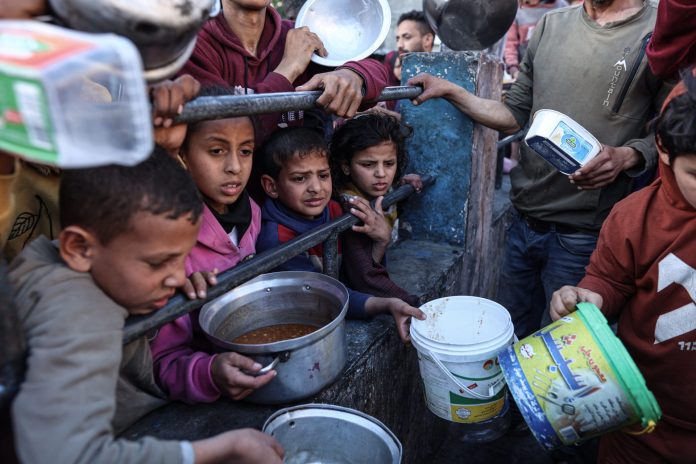
“Five rounds of data collected between December 2023 and April 2024 have consistently found that 9 out of 10 children in the Gaza Strip are experiencing severe food poverty, surviving on two or fewer food groups per day,” UNICEF said in a report.

It noted months of hostilities and restrictions on humanitarian aid have collapsed food and health systems, resulting in “catastrophic consequences” for children and their families in Gaza.

“This is evidence of the horrific impact the conflict and restrictions are having on families’ ability to meet children’s food needs – and the speed at which it places children at risk of life-threatening malnutrition,” it added.

The report also revealed that around 181 million children worldwide under 5 years of age are experiencing severe child food poverty, making them up to 50% more likely to experience wasting, a life-threatening form of malnutrition.

“Children living in severe food poverty are children living on the brink. Right now, that is the reality for millions of young children, and this can have an irreversible negative impact on their survival, growth and brain development,” said UNICEF Executive Director Catherine Russell.

Children who consume just two food groups per day, for example rice and some milk, are up to 50% more likely to experience severe forms of malnutrition, Russell added.

UNICEF also called on all governments and development and humanitarian partners to act to prioritize actions to end child food poverty.

Israel is deliberately blocking and delaying the flow of food and basic supplies into Gaza and using starvation of civilians as a method of warfare.

Iran says constructing Middle East’s largest space center

Iran satellite

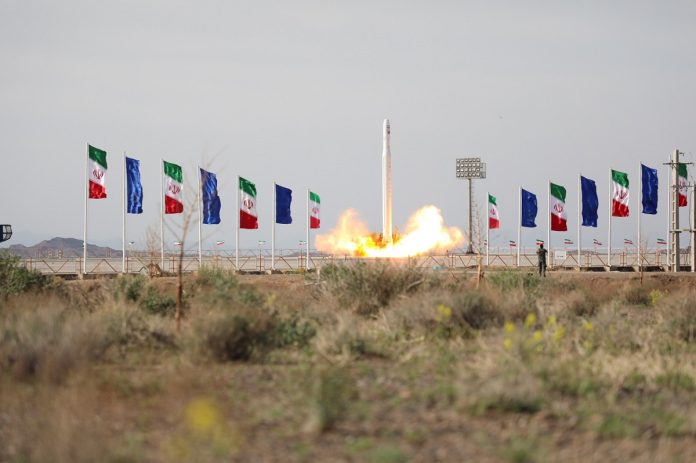
During a visit to Sistan and Balouchestan Province on Thursday, the ICT minister said the Chabahar Space Center, currently under construction, will become the largest space center in the Middle East.

The first phase of the center, 56% of which has been completed, will come into operation in early February 2025, he added.

Zarepoor also unveiled plans for the first launch from the new base in the current Persian year, which will end on March 20, 2025.

The space facility, planned to cater to Iranian satellite launches, will also promote the country’s cooperation with international partners and increase its revenue.

Iran’s pursuit of space exploration and its associated advantages has prompted the nation to take significant strides in satellite technology.

The Imam Khomeini National Space Center, Iran’s inaugural fixed launch site, has played a pivotal role in the country’s space endeavors since its inauguration in 2017. This facility encompasses all stages of space missions, from satellite preparation to launch, control, and guidance.

Situated in the northern province of Semnan, the Imam Khomeini National Space Center effectively fulfills Iran’s requirements in Low Earth Orbit (LEO) during its final phase.

The Chabahar Space Center is explicitly designated as a non-military launch center, intended for live payload launches, as well as the deployment of Earth observation and communication satellites into geosynchronous orbit. These operations necessitate specific conditions, ideally close to the equatorial region, to minimize launch costs and orbital adjustments.

The Chabahar Space Center is poised to unlock new possibilities in the realm of space exploration, enhancing both Iranian capabilities and international collaboration.

Iran defends human rights record, says hosts 8 million Afghan refugees

Iran Afghanistan

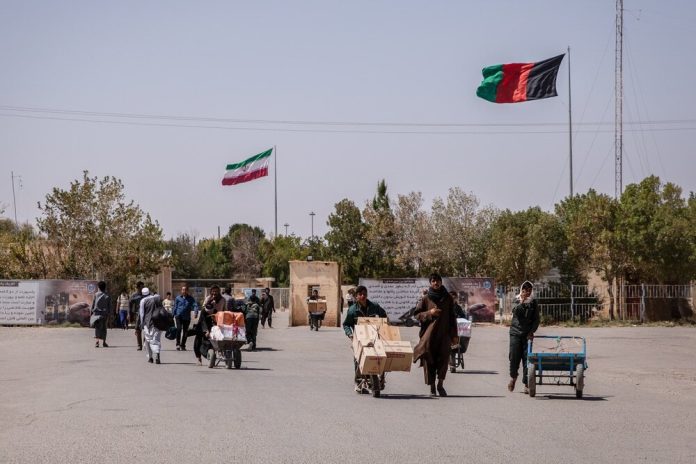
In a meeting dubbed Jurisprudence, Foreign Policy and Human Rights held in the northeastern Iranian city of Mashhad, Kazem Gharibabadi slammed the bleak US and Western rights record for “having turned human rights into a political and security tool.”

He also gave the Muslim nations the heads-up that the West is “seeking to target our religious foundations and our anti-arrogance policies,” stating that they use human rights as an excuse to achieve their goals.

Gharibabadi added that the West even does not dare to admit that democracy and religious democracy exist in Iran.

Over 500 Palestinians killed by Israeli forces, settlers in West Bank since start of Gaza war: UN

Israel Palestine

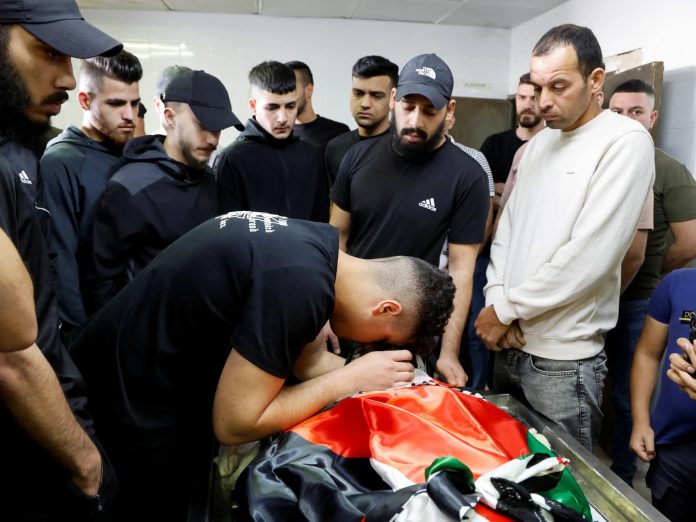
The UN Office for the Coordination of Humanitarian Affairs (OCHA) reports that “since 7 October, more than 500 Palestinians – nearly a quarter of them children – have been killed in the West Bank, including East Jerusalem,” Stephane Dujarric told reporters at a news conference.

Saying that Israeli forces are responsible for majority of the killings, Dujarric also noted that over “5,100 Palestinians were injured in these areas” during the same period.

“OCHA has also recorded more than 940 attacks by Israeli settlers against Palestinians in the West Bank, including East Jerusalem, since 7 October,” he added.

In the occupied West Bank as well as East Jerusalem, Israeli authorities “demolished, confiscated or forced the self-demolition of more than 900 Palestinian structures – nearly 40% of which were inhabited homes”, leading to the forced displacement of more than 2,000 people, according to Dujarric.

Citing the UN agency for Palestinian refugees (UNRWA), Dujarric said: “The ongoing Israeli military operation in Rafah (southern Gaza) is directly impacting the ability of aid agencies to bring critical humanitarian supplies into Gaza, as well as the ability to rotate critical humanitarian staff.”

He added that only 232 aid trucks were able to go through the Karem Shalom (Karem Abu Salem) border crossing into Gaza between May 28 and June 1, which he called “a significant reduction” compared to before the Rafah attack.

Tensions have been running high across the West Bank since Israel launched a deadly military offensive against the Gaza Strip after an attack by the Hamas group last Oct. 7.

Israel stands accused of “genocide” at the International Court of Justice, which in its latest ruling has ordered Tel Aviv to immediately halt its operation in Rafah in the southern Gaza Strip, where over a million Palestinians had sought refuge from the war before it was invaded in early May.

Israel bombs UN-run school in Gaza, kills dozens of displaced Palestinians

Gaza War

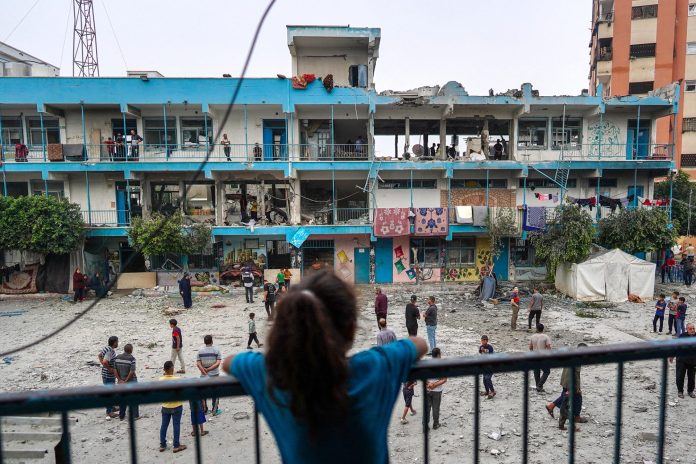
The Israeli army has bombed a United Nations-linked school in central Gaza where forcibly displaced Palestinians are sheltering, killing at least 40 and wounding more than 70.

Officials from Gaza’s government media office and the Health Ministry confirmed the death toll, which included 14 children and 9 women, following Thursday’s predawn strikes which hit al-Sardi school and homes in Nuseirat camp.

Hamas, which governs the Gaza Strip, condemned the predawn attack on Thursday as a “horrible massacre” and said many women and children were among those killed and wounded.

The Palestinian Wafa news agency said that thousands of displaced Palestinians were sheltering at al-Sardi school, which is linked to the UN agency for Palestinian refugees (UNRWA), when it came under attack.

Ismail al-Thawabta, a spokesman for Gaza’s Government Media Office, said “huge numbers of dead and wounded” were arriving at the Al-Aqsa Hospital in central Gaza.

“This horrible massacre committed by the Israeli occupation is clear evidence of genocide, ethnic cleansing against civilians, including women and children and displaced people in the Gaza Strip,” he told reporters.

The dead and wounded were overwhelming the hospital, “which is filled with wounded patients three times beyond its clinical capacity”, he added.

“This portends a real disaster that will lead to an even greater increase in the number of martyrs.”

Israel’s military confirmed the bombing, saying its fighter jets struck a “Hamas compound embedded inside an UNRWA school in the area of Nuseirat”. It claimed the bombing “eliminated terrorists who were planning to carry out attacks” against its forces.

Hamas rejected the Israeli statement.

“The occupation uses lying to the public opinion through false, fabricated stories to justify the brutal crime it conducted against dozens of displaced people,” al-Thawabta told the Reuters news agency.

The attack on al-Sardi came as Israeli forces stepped up their bombardment of Gaza even as the United States and mediators continued to press ahead with an effort to secure a ceasefire deal.

At least 36,600 Palestinians have been killed and 83,074 have been wounded in Israel’s eight-month war on Gaza. The brutal assault, which some countries and UN experts say amounts to genocide, began after Hamas fighters launched attacks inside Israel on October 7 of last year, killing nearly 1,200 people and taking dozens of others captive.

Efforts to end the war have so far made little headway, however.

William Burns, the director of the CIA, was in Qatar’s capital, Doha, on Wednesday to discuss a three-phase truce proposal touted last week by US President Joe Biden. The first phase calls for a six-week ceasefire, during which Hamas would free some of the captives and Israeli forces would withdraw from Gaza’s population centres and negotiations would continue for a permanent truce.

Regional and international powers have backed the proposal, but sticking points remain. Hamas has insisted on a permanent ceasefire and full withdrawal of Israeli troops.

Israel, however, has rejected those demands, saying it is prepared to discuss only temporary pauses until Hamas is defeated.

Ismail Haniyeh, the leader of Hamas, on Wednesday reiterated the group’s stance.

“The movement and factions of the resistance will deal seriously and positively with any agreement that is based on a comprehensive ending of the aggression and the complete withdrawal and prisoners swap,” he said.

Meanwhile, Israel’s Defense Minister Yoav Gallant said there would be no halt to the fighting.