Sunday, December 28, 2025
Home Blog Page 868

Israel used white phosphorus in Lebanon: HRW

Israel white phosphorus Lebanon

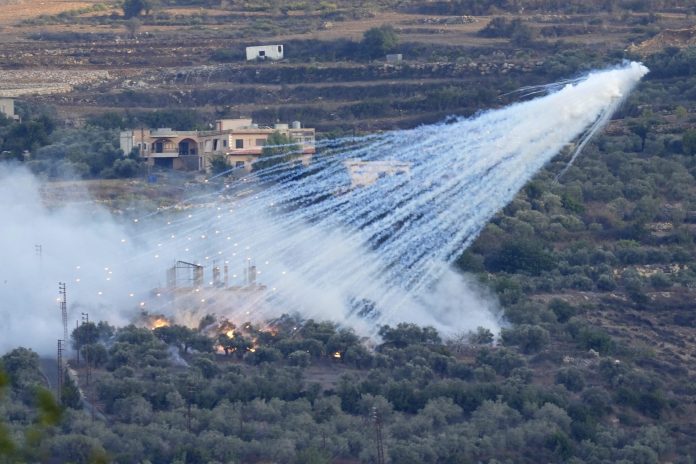
In a report released on Wednesday, the rights group said it had verified images and footage of multiple airbursts of artillery-fired white phosphorus in at least 17 municipalities since October 2023, including five municipalities where the phosphorus was used unlawfully on populated residential areas, resulting in civilian displacement.

The use of airburst white phosphorus on areas with a dense civilian population is prohibited under international law, as the weapon inflicts indiscriminate harm on civilians.

White phosphorus is an incendiary chemical that ignites when in contact with air and can cause severe burns in people or structures it comes into contact with.

Images and footage shared with researchers showed the munitions hitting residential buildings in the southern Lebanese border villages of Kafr Kila, Mays al-Jabal, Boustane, Markaba, and Aita al-Chaab.

White phosphorus has also caused hundreds of forest fires in Lebanon, with environmental experts warning of more wildfires as summer temperatures soar.

Following an attack on 15 October, two people from the village of Boustane were hospitalised due to asphyxiation from inhaling white phosphorus fumes, according to the village mayor.

According to Lebanon’s Ministry of Public Health, as of 28 May, 173 people have been wounded by exposure to white phosphorus.

People interviewed by HRW stated that the use of the weapon in populated areas had prompted many residents to flee from several villages on the Lebanon-Israel border.

“Israel’s widespread use of white phosphorus in south Lebanon highlights the need for stronger international law on incendiary weapons,” the HRW report said.

It added that Israel is not a party to Protocol III of the Convention on Conventional Weapons, the only legally binding instrument dedicated specifically to incendiary weapons. Lebanon is a party to the protocol.

Inhalation from white phosphorus fumes can cause respiratory injuries and asphyxiation, and inflict second- and third-degree burns to the skin.

In October, HRW revealed that Israeli forces had used the weapon on the densely populated Gaza Strip and on two rural areas along the Israel-Lebanon border.

Hostilities along the border, ongoing since the start of Israel’s war on Gaza in October 2023, have intensified in recent days, with both the Israeli military and Hezbollah extending their strikes beyond the usual border strip, where exchanges of fire have been concentrated.

Ukraine claims struck Russian territory with US weapons for first time

Russia Ukraine War

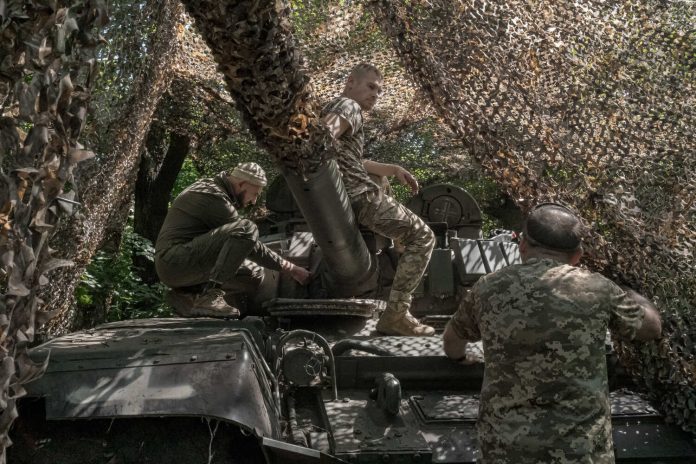
Ukrainian parliament member Yehor Cherniev confirmed that US-made High Mobility Artillery Rocket Systems (HIMARS) have hit Russian logistics and artillery locations inside of Russia near Ukraine’s northeast region of Kharkiv, where Moscow is conducting an offensive.

“We have already achieved some success and forced the Russians to stop shelling the city,” said Cherniev, the deputy chairman of the Committee on National Security, Defense and Intelligence in Ukraine’s parliament, in a text message.

“Also, thanks to the HIMARS strikes, we managed to reduce the offensive potential of Russian troops in this area.”

Unconfirmed videos shared on Russian Telegram sites appeared to show the aftermath of a HIMARS strike that caused an explosion in the Belgorod region of Russia, which borders Kharkiv.

The Biden administration last week announced a change in policy to allow Ukraine to strike inside of Russia from the region of Kharkiv.

The reversal was only partial, allowing for strikes in Russia from Kharkiv, where Russian forces are pressing forward in a major offensive. Ukraine is also prohibited from using the US-made Army Tactical Missile System (ATACMS) or long-range artillery to hit Russia, and from hitting civilian infrastructure.

Cherniev added Russia is still bombing Ukraine with guided bombs and pressed for more “air defense systems and permission from the United States to fire ATACMS missiles at Russian military airfields”.

Cherniev and other Ukrainian lawmakers had pressed Washington to reverse the policy after Russia launched the Kharkiv offensive in May. Ukrainian President Volodymyr Zelensky and other government officials in Kyiv also pushed the Biden administration on the issue, which Washington had in place to avoid escalation with Russia as Moscow continues to rattle the nuclear saber.

Ukraine has struck into Russia repeatedly during the more than two-year war, but until now has used its own weapons, including cheap drones that have targeted oil refineries.

The US weapons, however, will give Kyiv the ability to blunt Russian attacks from Belgorod and deal much more damage to military infrastructure.

Asked Tuesday if Ukraine using US weapons inside of Russia has helped to beat back Russia’s advance, Jake Sullivan, the White House national security advisor, said it was a “dynamic situation”.

But Sullivan added Ukraine was in a “deep hole” after a months-long delay of US military aid to the embattled country, and the arrival of more weapons was allowing Kyiv to “firm up the lines”.

“We certainly have seen the fact that weapons arriving on the battlefield, at scale at quantity in the last few weeks have made a difference, have made an impact,” he told reporters.

“And we hope they will continue to do so and that ultimately it will allow Ukraine not just to hold the line but to push back against Russian forces.”

MbZ meets Taliban leader wanted by US

MbZ Taliban Leader

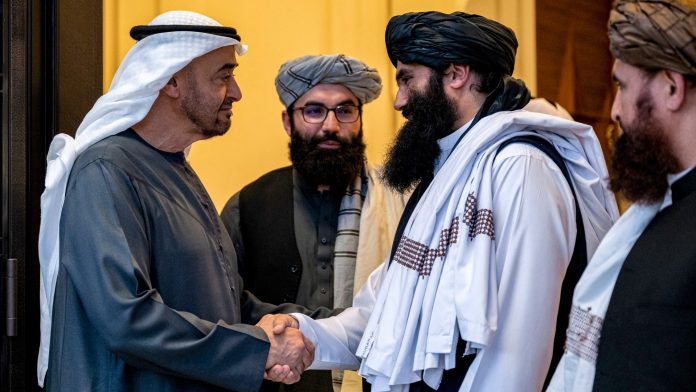
According to Emirati and Afghan media, Sirajuddin Haqqani’s meeting with the Emirati president, sometimes known as MbZ, marked the Taliban minister’s first official foreign trip.

In Kabul, aid workers and residents asked how Haqqani managed to leave the country and visit a US ally, given the fact he is among the Taliban leaders who faces both international sanctions and a multimillion dollar arrest warrant.

When leaders of the Islamic Emirate, as the Taliban call their government, do travel abroad it is usually with prior UN approval, stated one source, who asked not to be identified.

Despite these questions, the Taliban and its supporters inundated Afghan social media with images of Mohammed bin Zayed and Haqqani together in the Qasr al-Shati palace. Haqqani was even pictured in an Emirati plane en route to Abu Dhabi.

Haqqani was accompanied by the Taliban government’s intelligence chief.

An account on social media platform X belonging to a supporter of the Islamic Emirate, who is said to be close to Haqqani, said his “visit is expected to encourage other countries to invite IEA leaders, thereby weakening the impact of the blacklist”.

Despite the optimism among some on the streets and online, Mariam Maroof Arwin, who heads a Kabul-based human rights organisation, said she is disappointed to see countries in the region welcoming Islamic Emirate leaders.

Arwin added trips like this will “normalise” the Taliban, who have been accused of human rights abuses, particularly against women, in the nearly three years since they returned to power.

If they continue to invite the Taliban leadership, Arwin asked Middle East Eye by phone, “how can we be confident that these nations actually stand for human rights?”

An approach to the Islamic Emirate by other nations is “an affront to those of us who stand and fight for” human rights in Afghanistan, she continued.

This very public embrace of a notorious Taliban figure is seen by Obaidullah Baheer, a lecturer at the American University of Afghanistan, as evidence that Washington and the United Nations Security Council as a whole have “lost all its moral authority through its inaction over the war in Palestine”.

“The UAE’s first public reception of Taliban leaders seems to be one of many signs around the globe where we see countries disregarding international law for their own national interest,” Baheer told MEE.

“In this case, it serves the benefit of the Afghan people. Meetings and talks always work better than non-engagement and isolation.”

Andreas Krieg, associate professor at King’s College London, sees the visit more as an example of realpolitik in the Persian Gulf. He stated the well-publicised trip is part of the UAE’s efforts to get more involved in Afghanistan.

“This is the UAE looking for entry points to inject themselves into the discourse on Afghanistan,” Krieg told MEE.

Abu Dhabi has had a long relationship with Afghanistan, which includes the Taliban’s first period in power in the 1990s. At that time, the UAE was one of only three countries to officially recognise the Taliban government.

Since the Islamic Emirate returned to power in August 2021, the UAE has restarted flights from one of its airlines to Kabul and beat regional rival Qatar to sign a contract to manage three of Afghanistan’s biggest international airports.

Krieg noted that contract strengthened ties between Abu Dhabi and the Afghan Ministry of Interior, in particular.

“The UAE have been dealing with the Afghan MoI since 2022. That’s how they got the contract to run the security of the airports,” Krieg stated

Krieg, like Afghan sources who spoke to MEE on condition of anonymity, said the very public visit most likely also reflects on Abu Dhabi’s rivalry with Qatar, the country that Washington chose as its representative to the Taliban and where the group have had an office since 2011.

In fact, this is the second time Mohammed bin Zayed has publicly met a high-ranking Islamic Emirate official.

In December 2022, just as the Qatar World Cup was under way, the Emirati leader hosted the acting defence minister, Mawlawi Mohammad Yaqoub Mujahid, son of the founder of the Taliban movement, Mullah Mohammad Omar.

At the time, Yaqoub was accompanied by Haqqani’s brother, Anas. Yaqoub and the Haqqani brothers are reputed to be somewhat less strict than others in the Taliban government.

As such, Krieg said Mohammed bin Zayed’s overtures to certain Islamic Emirate leaders are “also a way to disrupt Qatar’s relations with the Taliban, as Doha was never very close to this side of the Taliban movement”.

Sources in Afghanistan and the UAE appeared keen to play up the Persian Gulf rivalry to explain the UAE’s warming ties with the Taliban. But Doha and Abu Dhabi are not alone in ramping up relations with Kabul.

Taliban officials attended the funeral services of Ebrahim Raisi in Tehran last month, after the Iranian president died in a helicopter crash. They also met with the Hamas leadership in Turkey last year.

And, most notably, Washington has recently announced that it is looking towards a policy of “pragmatic engagement” with the Islamic Emirate.

According to Haroun Rahimi, an Afghan academic based in the US, ultimately the trip was a boost for the Islamic Emirate’s image.

“It was a PR success for the Taliban,” he told MEE.

Israel seeking to influence US lawmakers to back Gaza war: Report

US Capitol

Citing unnamed officials and documents, The NY Times reported on Wednesday Israel’s so-called Ministry of Diaspora Affairs has paid at least $2 million for the covert campaign of convincing American lawmakers to back the regime’s atrocities in the war-torn Palestinian territory.

The report added the Israeli ministry has hired the Israeli-based firm STOIC, a political marketing firm in Tel Aviv, to carry out the campaign.

The firm has for months been generating anti-Hamas and pro-Israel content across the Internet.

According to the report, the influence campaign, which started in October and is still ongoing on X (formerly known as Twitter), has used hundreds of fake accounts that posed as real Americans on X, Facebook and Instagram to post pro-Israel comments.

The accounts, the report added, targeted US lawmakers, particularly those who are Black and Democrat, “such as Representative Hakeem Jeffries, the House minority leader from New York, and Senator Raphael Warnock of Georgia”, with posts urging them to continue funding Israel’s military.

“ChatGPT, the artificial intelligence-powered chatbot, was used to generate many of the posts. The campaign also created three fake English-language news sites featuring pro-Israel articles,” said the Times, which verified the influence operation with four current and former members of the so-called Ministry of Diaspora Affairs.

“The secretive campaign signals the lengths Israel was willing to go to sway American opinion on the war in Gaza,” it added.

Citing Meta and OpenAI, the report said the influence campaign has failed to generate a widespread impact.

Furthermore, FakeReporter, an Israeli misinformation watchdog, the fake accounts accumulated more than 40,000 followers across X, Facebook and Instagram, but as Meta said, many of those followers may have been bots and did not generate a large audience.

Israel’s bloody war machine has killed over 36,500 Palestinians since October 7, 2023. The vast majority of the fatalities are women and children.

The savage campaign was launched after Hamas carried out its historic Operation Al-Aqsa Storm against the usurping entity in retaliation for the regime’s intensified atrocities.

Israel has additionally enforced a comprehensive blockade on the coastal sliver, severing the supply of fuel, electricity, sustenance and water to the population of over two million Palestinians residing there.

Iran says resolved to continue nuclear work despite IAEA resolution

Iran Nuclear Program

The Foreign Ministry of the Islamic Republic of Iran issued a statement, saying Iran views the proposal and approval of this resolution as a politically-motivated and unconstructive move and the continuation of previously failed policies of some Western governments as well as a bid to politically abuse international mechanisms against independent nations.

It said the Islamic Republic of Iran is committed to continuing its technical cooperation with the International Atomic Energy Agency in line with its legal and international obligations based on the Non-proliferation Treaty and the safeguards agreement.

The statement pointed out the issuance of the resolution will have no effect on the Islamic Republic of Iran’s resolve to press ahead with its peaceful nuclear program and to implement its nuclear development plans in line with its rights under related international treaties.

The resolution drafted by Britain, France and Germany raps Iran for what it calls insufficient cooperation with the IAEA.

Iran UN mission: IAEA resolution will have destructive impact on future cooperation

IAEA board of governors

The diplomatic mission also criticized the Western governments that drafted the resolution, saying their decision was both hasty and unwise.

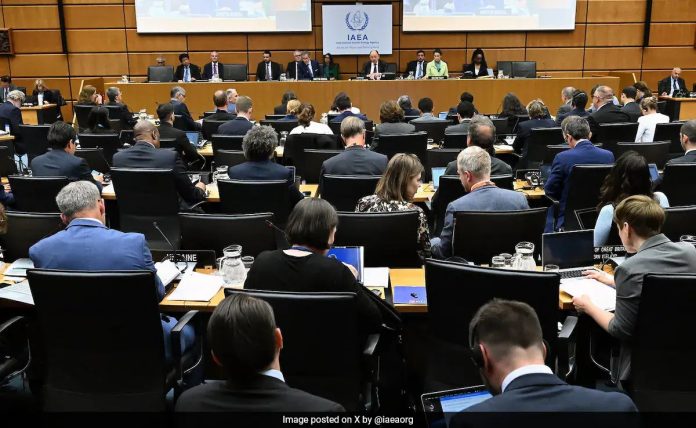
The U.N. nuclear watchdog’s 35-nation Board of Governors passed the resolution, drafted by Britain, France and Germany on Wednesday calling on Iran to step up “cooperation” with the IAEA and reverse its recent decision to bar the agency’s inspectors.

Twenty countries voted in favor and two against – Russia and China – with 12 abstentions.

Iran says arrested Israeli regime’s spy in Ardabil 

Iran Police

The prosecutor’s office in the northwestern city of Ardabil said the suspect comes from a southern province of Iran but was arrested in Ardabil.

The prosecutor’s office said the detainee was in touch with the high-ranking  agents of the Zionist regime’s intelligence agency, Mossad, via social media platforms and was gathering information for the Zionist entity under the guise of proof-reading activity.

The suspect was caught while trying to hide in Ardabil province and ultimately fleeing Iran.

Hundreds of Israeli settlers storm Al-Aqsa

Israeli Settlers Police

Around 800 Israelis raided the mosque on Wednesday morning, entering through the Moroccan Gate, according to a report by Wafa news agency.

They took provocative tours of the compound, and were joined by rabbis and politicians, including Israeli minister Yitzhak Wasserlauf, lawmaker Yitzhak Kreuzer and Moshe Feiglin, a far-right former MP.

The Israelis performed Jewish rituals near al-Qattanin market and Bab al-Qattanin (The Cotton Merchants’ Gate), one of the main entrances to the mosque’s courtyards.

Al-Aqsa Mosque is an Islamic site where unsolicited visits, prayers and rituals by non-Muslims are forbidden, according to decades-long international agreements.

Israeli groups, in coordination with authorities, have long violated the delicate arrangement and facilitated raids of the site, where they have then performed prayers and religious rituals.

Israeli troops regularly empty the mosque of Palestinians outside of the five daily prayers to facilitate these daily incursions.

The Islamic Christian Commission for Supporting Jerusalem and the Holy Sanctities warned of the dangers of an Israeli escalation at Al-Aqsa, and called on Palestinians to confront settlers storming the site.

Later on Wednesday, far-right Israelis attacked journalists and Palestinian shop owners, as hundreds marched through occupied East Jerusalem to celebrate Israel’s domination of the city.

The annual “flag march”, which is part of the Jerusalem Day holiday, commemorates the occupation of the city by Israel in 1967. It passes through Muslim-majority neighbourhoods in East Jerusalem’s Old City.

On Wednesday afternoon, a large number of Israeli settlers began marching in the vicinity of Damascus Gate, the chief entrance to the Old City for Palestinians in the occupied West Bank and East Jerusalem.

The settlers confronted Palestinian shop owners, demanding they close their shops ahead of the rally.

Settlers threw stones and bottles at the Palestinians, and chanted inflammatory slogans, including “death to Arabs”.

Several videographers and journalists were also attacked, as Israeli youths attempted to violently prevent reporters from filming them.

Over 3,000 Israeli security officers have been deployed in East Jerusalem for the event, setting up military checkpoints on several main roads.

Israeli MPs and ministers were due to participate in the march, including far-right National Security Minister Itamar Ben Gvir.

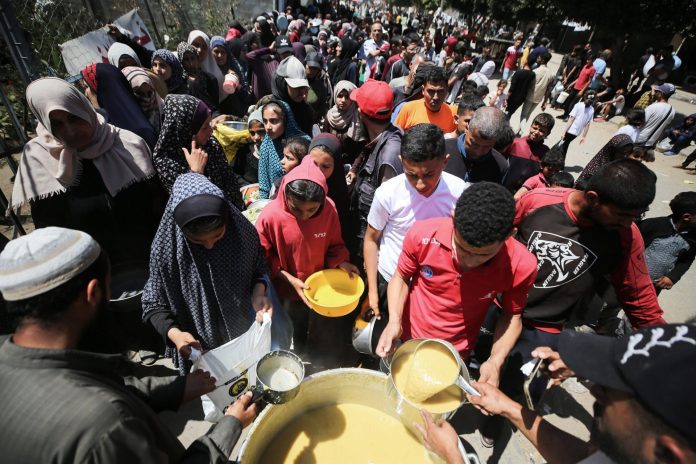
Almost half of Gaza population ‘expected to face death, starvation’ by mid-July: UN

Gaza War

In a report called Hunger Hotspots Report: famine looms in Gaza while the risk of starvation persists in Sudan, Haiti, Mali, and South Sudan, the FAO pointed out the dangers that the Israeli-Palestinian crisis has brought.

“The ongoing conflict in Palestine is expected to further aggravate already catastrophic levels of acute hunger, with starvation and death already taking place, alongside the unprecedented death toll, widespread destruction and displacement of nearly the total population of the Gaza Strip – the report warns,” the FAO said.

“In mid-March 2024, famine was projected to occur by the end of May in the two northern governorates of the Gaza Strip, unless hostilities ended, full access was granted to humanitarian agencies, and essential services were restored,” it noted.

The agency warned: “Over one million people – half the population of Gaza – are expected to face death and starvation (IPC Phase 5) by mid-July.”

The report also cautions about the wider regional consequences of the crisis, which could worsen the existing food security challenges in Lebanon and Syria.

Israel has continued its brutal offensive on Gaza since an Oct. 7 Hamas attack despite a UN Security Council resolution demanding an immediate cease-fire.

More than 36,500 Palestinians have since been killed in Gaza, the vast majority being women and children, and nearly 83,000 others injured, according to local health authorities.

Nearly eight months into the Israeli war, vast swathes of Gaza lay in ruins amid a crippling blockade of food, clean water, and medicine.

Israel stands accused of genocide at the International Court of Justice, which in its latest ruling has ordered Tel Aviv to immediately halt its operation in the southern city of Rafah, where over a million Palestinians had sought refuge from the war before it was invaded on May 6.

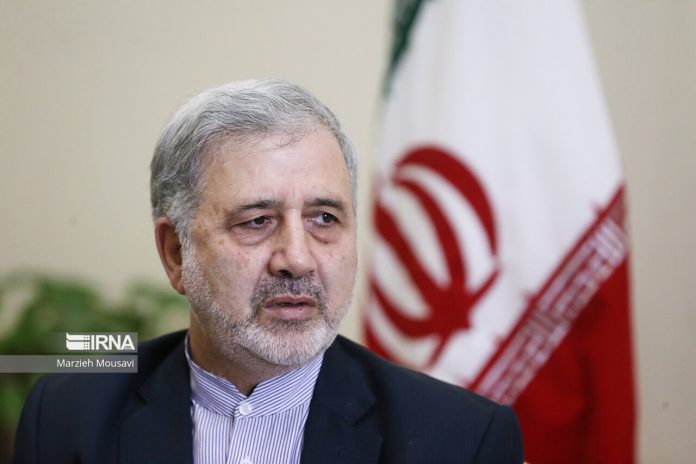
Iran’s ambassador to Riyadh: Tehran wants cooperation with all Persian Gulf states 

Alireza Enayati

Enyati made the remarks on the occasion of the anniversary of Iran and Saudi Arabia resuming their diplomatic relations several years after severed ties.

The Iranian ambassador to Riyadh noted that late president Ebrahim Raisi put forth the initiative to restore diplomatic ties with the Saudis, adding that following two years of talks, Tehran and Riyadh finalized a rapprochement agreement in Beijing on June 6, 2023.

According to Enayati, several spheres have been established for the relations between Iran and Saudi Arabia including in regional and international organizations where the two sides have held continuous consultations.

He said there was also very good and favorable cooperation between them on the issue of Palestine, and meetings were held between the late president and Saudi Crown Prince Mohammed bin Salman, as well as between the foreign ministers of both sides.

Enayati stressed that in those meetings, Tehran and Riyadh underscored the necessity of defending the rights of the Palestinian people.

He maintained that the expansion of relations between Iran and Saudi Arabia will definitely affect the process of regional cooperation, and Iran is seeking cooperation in all areas with Saudi Arabia and with the other countries of the Persian Gulf.