Sunday, December 28, 2025
Home Blog Page 869

Russia calls US ‘an enemy’ for first time

Kremlin

It remains unclear if the use of the word signals an official policy change, as the spokesman had previously argued that only President Vladimir Putin can make such decisions.

Washington’s refusal to allow former US marine, UN weapons inspector and RT contributor Scott Ritter to travel to St. Petersburg was “the latest manifestation of the rabid campaign to prevent US citizens from interacting with the Russian Federation” – which would only be “understandable” if it was somehow related to his former intelligence status, Peskov told journalists on Tuesday.

“We are now an enemy country for them – much like they are for us,” Peskov added, while acknowledging that restrictions applying to former intelligence officers, especially on travel “to a hostile country,” are common across the world.

The Kremlin previously called the United States and other Western countries that have supported and armed Ukraine and imposed sanctions on Moscow as “unfriendly states” or “opponents”.

The shift in language follows Washington’s decision to let Kiev use American-supplied weapons against targets inside Russia, beyond what the US considers Ukrainian territory.

In March, Peskov noted that Moscow objects to US officials who insult President Putin, but that in general there is “no anti-American sentiment” in Russia. He expressed hope that “sooner or later the realization that the peoples of America and Russia are not enemies will eventually come”.

Putin said in January that the elites of Western countries were the true enemy of Russia, while Ukraine is a mere tool in their hands.

“The point is not that they are helping our enemy, but that they are our enemy,” the Russian president stated, arguing that the conflict between Moscow and Kiev was orchestrated by Western elites who seek to inflict a “strategic defeat” on Russia.

Last month, Putin reiterated that “the entire Western community is working for our enemy, dreaming about Russia ceasing to exist in its current form”, but stopped short of branding any particular Western state an ‘enemy’.

Former Russian President Dmitry Medvedev, who now serves as deputy chair of Russia’s Security Council, and several other hawkish officials, have repeatedly branded Moscow’s adversaries as “enemies” over the past two years – but Peskov previously said that only President Putin can “formulate and state Russia’s official foreign policy position”.

Hamas says crimes against Palestinian prisoners among issues behind military operation against Israel

Israel Prison

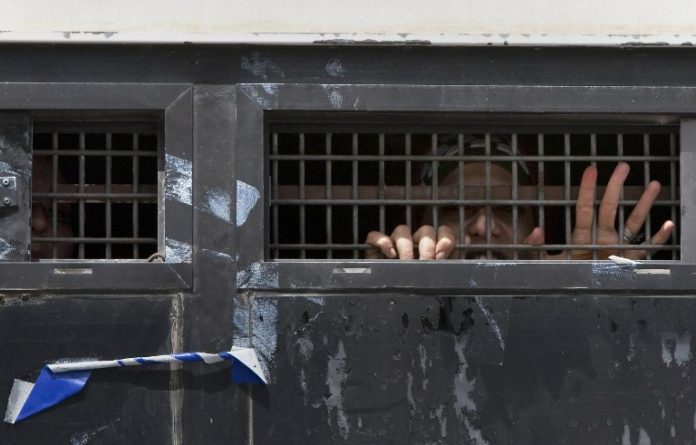
“The issue of Palestinian prisoners is one of the burning issues of the Hamas movement and the Palestinian nation. We cannot accept their continued suffering, and the Israeli aggression against them,” Osama Hamdan, the Palestinian resistance movement’s representative in Lebanon, told a news conference in Beirut on Tuesday.

Hamdan stressed that “one of the main causes of all uprisings and revolts against the Zionist enemy is the occupying regime’s horrifying crimes and systematic violations against both male and female Palestinian prisoners in its detention centers.”

He stressed that the issue of Palestinian prisoners was among the core issues of the Operation Al-Aqsa Storm.

The senior Hamas official also condemned the upsurge in the mistreatment of Palestinian hostages from the Gaza Strip, as well as abductees from the occupied West Bank and al-Quds – all of which he said is being exercised by the incumbent neo-Nazi and extremist Israeli administration.

Hamdan went on to highlight the enforced disappearance of Palestinians, and the systematic suppression of information concerning the real situation of abductees from the Gaza Strip in Israeli prisons and detention facilities since the start of the Israeli genocidal war against the Gaza Strip on October 7.

“What is being overlooked is the tragedy and suffering of Palestinian prisoners and detainees, which has been ongoing for the past 76 years and has intensified since October 7, 2023,” Hamdan added.

“This comes in light of the US administration and certain Western countries’ broad support for Israeli captives being held by Gaza-based resistance groups.”

He further noted that the Tel Aviv regime is abducting people from the Gaza Strip, executing them in the open air, torturing them both physically and psychologically, denying them access to food and medicine, and violating their most basic human rights.

The high-ranking Hamas official also pointed out that the number of Palestinian prisoners who lost their lives behind Israeli bars has soared dramatically.

“Since October 7, a total of 18 prisoners from the West Bank and occupied al-Quds have died in Israeli prisons. The number for prisoners from the Gaza Strip stands at 37,” he continued.

“Ever since Israel waged its deadly military offensive on Gaza, Zionist violations have registered an unprecedented increase and some 9,500 Palestinians have been detained. These individuals endure abhorrent conditions such as starvation, abuse, fracture of bones and damage to body organs. Several of them have died as a result of torture, deliberate medical negligence, or deprivation of food and medicine,” Hamdan stated.

Israel waged the atrocious onslaught against the Gaza Strip, targeting hospitals, residences, and houses of worship after Palestinian resistance movements launched a surprise attack, dubbed Operation Al-Aqsa Storm, against the usurping regime on October 7.

At least 36,550 Palestinians have been killed, most of them women and children, and another 82,900 have sustained injuries. More than 1.7 million people have been internally displaced during the war as well.

Turkey FM says Ankara likes to join BRICS

BRICS

“Certainly, we would like to become a member of BRICS. So we’ll see how it goes this year,” Fidan said during an event at the Centre for China and Globalisation (CCG) in Beijing, as quoted by the South China Morning Post daily newspaper.

BRICS was established in 2009 as a cooperation platform for the world’s largest emerging economies, bringing together Brazil, Russia, India, China and South Africa. On January 1, 2024, the bloc was expanded to include Egypt, Ethiopia, Iran and the United Arab Emirates.

The BRICS bloc outperformed the G7 – the conglomerate of wealthy industrialized nations – in GDP in 2022. According to a forecast, BRICS economies will account for more than 50 percent of global GDP by 2030.

Russian President Vladimir Putin said that BRICS and the Shanghai Cooperation Organization have become key pillars in the emerging multipolar world.

Economic experts stress that BRICS is also a locomotive of de-dollarization of the global economy since members of this bloc are increasingly switching to national currencies in trade relations – for instance, 90% of settlements between Russian and Chinese companies are now made in rubles and yuans.

The BRICS doubled its membership last year, becoming the BRICS+ after including Egypt, Ethiopia, Iran, Saudi Arabia and the United Arab Emirates on January 1, 2024.

Russia welcomes Turkey’s interest towards BRICS, Kremlin spokesman Dmitry Peskov said on Tuesday.

“We, of course, all welcome this increased interest in BRICS on the part of our neighboring states, including our important partners such as Turkey. Of course, the topic of this interest will be on the agenda of the BRICS summit, which will be chaired by Russia,” Peskov told reporters.

BRICS is unlikely to fully satisfy expectations of all countries that show interest in the group, but BRICS is interested in contacts, the official added.

US says west closer to tapping $300bn in frozen Russian funds

Rouble

The proposal comes as Washington and its G7 allies – the UK, Canada, France, Italy, and Japan – are seeking ways to urgently unlock more funding for Kiev, Yellen told the Senate Appropriations Committee on Tuesday.

According to Yellen, the US has been discussing with other G7 members the possibility of giving Ukraine a loan “allowing the windfall profits [from Russian assets] to be used” to pay it off. This approach, she said, “seems to be commanding considerable support.”

The flow of windfall profits earned on the immobilized Russian assets amounts to around $3-$5 billion per year, the treasury secretary added.

“So we’re hopeful that this can be worked into something to be presented to the leaders at the upcoming G7 meeting [in Italy in mid-June].”

The West has frozen roughly $300 billion in Russian sovereign funds since the start of the Ukraine conflict. Brussels-based clearinghouse Euroclear holds around €191 billion ($207 billion) of that amount, and has accrued nearly €4.4 billion ($4.7 billion) in interest over the past year.

The US has been pushing its allies to embrace a loan backed by income from the frozen assets that could provide Ukraine with as much as $50 billion in near-term funding, Reuters reported on Wednesday, citing a senior Treasury official.

Brent Neiman, deputy under-secretary for international finance at the Treasury, told the outlet that the proposed measure would give an immediate fiscal boost to Kiev, although there were still technical issues to be worked out.

The loan has emerged as the top option given that G7 countries remain at odds over seizing Russian assets outright.

The US had initially pushed for full confiscation of underlying assets in order to fund Ukraine’s government. However, it has since shifted towards taking only the interest amid resistance from France, Germany, and the European Central Bank, which are concerned that the euro could be affected if countries such as China start repatriating their massive foreign reserves as a precaution against possible confiscation in the future.

Russia has announced any actions taken against its assets would amount to theft and would violate international law. Moscow has warned it would respond in kind if the West went through with threats to confiscate Russian assets.

Top Iranian general: Israel should await response for assassinating military advisor

Saeed Abyar

Brigadier General Salami, in a statement released on Wednesday, said the child-killer Israeli regime should wait for a response from Iran for assassinating Iranian military advisor Saeed Abyar in an airstrike in the Syrian city of Aleppo.

The top commander also sympathized with Abyar’s family and his comrades, saying his struggle against militants in the region and the Israeli regime will leave ever-lasting and inspirational effects on the younger generations.

On Tuesday, funeral processions were held in commemoration of Abyar in the Syrian and Iranian capitals with crowds of mourners taking part in the events.

Iranian military advisors are in Syria at the request of the Syrian government to help Damascus fight the remnants of militant groups and their sleeper cells.

Israel occasionally targets Iranian and Syrian forces inside Syria to reverse the gains achieved in their fight against foreign-backed militants.

Tehran urges IAEA to observe impartiality in its reports on Iran’s nuclear program

IAEA

The remarks were made in an explanatory note issued by Iran’s Permanent Mission to the United Nations Office and other international organizations in Vienna on Tuesday, outlining the Islamic Republic’s views on two recent reports by the IAEA’s director general to its Board of Governors.

Iran has made every effort to enable the IAEA to effectively carry out its verification activities in the country, including safeguards and monitoring measures that are unique to the IAEA’s verification regime, the document said.

It also emphasized that Iran’s decision to suspend the implementation of its JCPOA (the Joint Comprehensive Plan of Action) commitments was fully in line with the country’s inherent rights under the nuclear deal, in response to the illegal US withdrawal from the agreement and the inability of the E3 to adhere to their commitments.

Iran further denounced E3’s decision to refrain from implementing their sanctions-lifting commitments, describing it as “an unlawful act” and another blatant example of their failure to fully comply with their obligations under both the JCPOA and UN Security Council Resolution 2231.

The document also stated that from a legal point of view, the IAEA’s assessments are based on unreliable information and invalid documents provided by Israel that not only constantly conspires against Iran’s relations with the agency, but also commits sabotage, attacks, and threat of attacks against the Islamic Republic.

Recently, persistent political pressure exerted by certain countries has reached a point where even technically resolved issues are subsequently changed in the IAEA’s reports, contrary to what was agreed upon, it stressed

These politically-motivated pressures prevent the agency from performing its professional and impartial role, the document added.

On Monday, Rafael Grossi, the director general of IAEA, repeated his previous claims about lack of cooperation on Iran’s side on certain issues, including its refusal to allow several Agency inspectors to continue to carry out missions in Iranian nuclear sites.

He also claimed that Iran has yet to provide the IAEA with “technically credible explanations” about the presence of uranium particles at two of its nuclear sites.

Iran and world powers reached a landmark nuclear agreement in 2015, under which Tehran curbed parts of its nuclear program in exchange for the removal of sanctions imposed on the Iranian economy.

Tehran started to suspend some of its obligations under the agreement in 2019, a year after the US government, under Donald Trump, abandoned the deal and reinstated sanctions on Iran.

Iran then agreed to some additional IAEA inspections under the Joint Statement and resolved issues related to one of the three sites and the alleged presence of uranium particles there.

Biden says Netanyahu prolonging Gaza war for political reasons

Gaza War

In a TIME Magazine interview published on Tuesday, the US president said there is “every reason for people to draw” the conclusion that Netanyahu is perpetuating the conflict for his own political ends.

Biden’s remarks come as his administration pushes for a truce deal and exchange of captives between Israel and Hamas that Washington says would lead to an “enduring ceasefire” and the eventual reconstruction of Gaza.

The US has presented the proposal as an Israeli plan, arguing that Hamas is the only obstacle to the agreement.

The Palestinian group said on Friday – hours after Biden made the proposal public – that it is dealing “positively and constructively” with the plan, but it has not issued a formal response to it.

Meanwhile, Netanyahu has said the deal would “enable Israel to continue the war until all its objectives are achieved, including the destruction of Hamas’s military and governing capabilities”.

The discrepancy between how US and Israeli officials are portraying the proposal has led to confusion.

Still, the push marks a shift in the position of the Biden administration, which had previously rejected a permanent end to the war, arguing that Israel must eliminate Hamas before a lasting ceasefire is achieved.

Biden criticised Israel’s war efforts on Friday, stating, “Indefinite war in pursuit of an unidentified notion of ‘total victory’ will … only bog down Israel in Gaza, draining the economic, military, and human resources, and furthering Israel’s isolation in the world.”

The US president’s remarks to TIME Magazine on Netanyahu appear to further underscore his growing frustration with the conflict.

Before the war broke out on October 7, Netanyahu was dealing with nationwide protests over a push to overhaul Israel’s judiciary. The Israeli prime minister is also facing corruption charges at home.

For months, Palestinian rights advocates have warned that Netanyahu has a personal, political interest in prolonging the war to boost his standing in Israel and extend his political career.

Recent surveys in Israel show Netanyahu recovering popularity amid the war and edging out his main rival, war cabinet minister Benny Gantz.

Later on Tuesday, Biden was asked whether he thinks Netanyahu was playing politics with the war. He said: “I don’t think so. He’s trying to work out a serious problem he has.”

Israeli officials close to Netanyahu have previously floated the possibility of a protracted conflict in Gaza.

Days before Biden unveiled the truce proposal, Israel’s National Security Adviser Tzachi Hanegbi said the fighting in Gaza would go on for at least another seven months.

In the US, Biden’s response to the war in Gaza could harm his re-election chances, with public opinion polls showing that Arab, Muslim and young voters are reluctant to vote for the Democratic president over his support for Israel.

Biden, a self-proclaimed Zionist, had been a staunch defender of the war. His administration has vetoed three United Nations Security Council draft resolutions that would have called for a ceasefire.

The US president also signed off in April on $14bn in additional military aid to Israel. And his administration has continued to transfer weapons to Tel Aviv despite growing claims of war crimes, including withholding aid, killing non-combatants, torturing detainees and targeting civilian infrastructure.

International Criminal Court prosecutor Karim Khan is seeking an arrest warrant for Netanyahu and his defence minister Yaov Gallant as well as Hamas leaders over alleged war crimes.

Last month, Biden rejected the ICC prosecutor’s move and called it “outrageous”, but the White House has opposed congressional efforts to impose sanctions on ICC officials for their investigation of Israeli conduct.

The Israeli offensive has killed more than 36,500 Palestinians and brought Gaza to the verge of famine.

In his interview with TIME Magazine, Biden stated it is “uncertain” that Israel is committing war crimes in Gaza.

In December, Biden noted Israel was losing support for its war on Gaza over its “indiscriminate bombing” of the territory – a war crime.

Iran, Russia, China: Provisions of JCPOA nuclear deal still valid

Iran nuclear programe

The trio declared their support for the 2015 landmark nuclear deal, despite Washington’s unilateral withdrawal in 2018 and the Western parties’ failure to fulfill their obligations as per the agreement.

The joint statement was issued as part of the agenda of the sixth meeting of the International Atomic Energy Agency (IAEA)’s Board of Governors.

It reads, “Our countries have consistently provided strong support to the JCPOA… Our support for the nuclear deal has not changed since 2018, when the United States illegally and unilaterally withdrew from this agreement, while the imposition of unilateral illegal sanctions and the implementation of a policy of maximum pressure on Iran became a turning point for this agreement.”

While several rounds of negotiations have failed to revive the dying deal, the statement called on the Western side to take bold steps to resuscitate the agreement.

The developments come as Britain, France and Germany submitted an anti-Iran draft resolution ahead of the International Atomic Energy Agency (IAEA)’s Board of Governors meeting.

There are reports that Washington had earlier abstained from joining the European troika, known as the E3, over fears that the resolution could further escalate the regional tensions whose ripple effects could rock US presidential election in November.

Iran has threatened it will retaliate any anti-Tehran resolution by the IAEA board of governors.

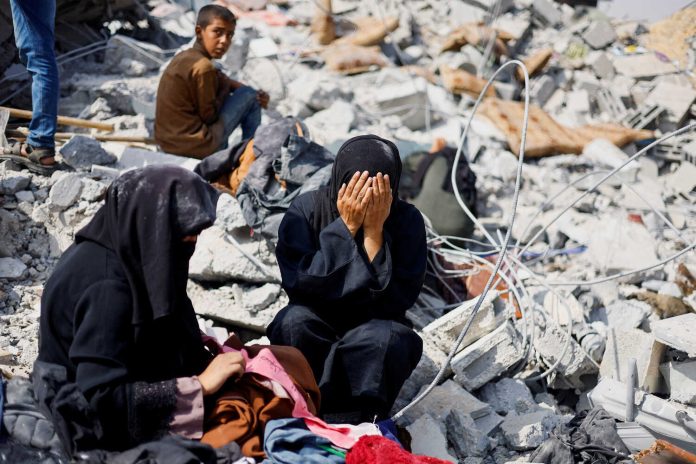
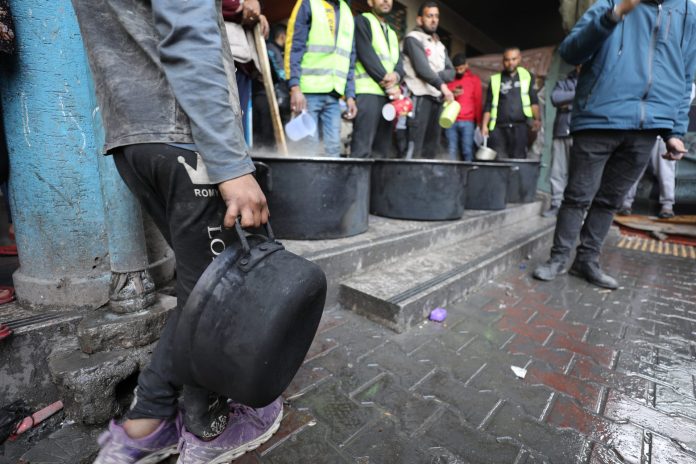
Oxfam warns famine risk in Gaza increases as Israeli bombardment hampers aid supply

Gaza War

“By the time a famine is officially declared, it will be too late to prevent widespread hunger and death,” the UK-based charity warned.

“When hunger claims many more lives, nobody will be able to deny the horrifying impact of Israel’s deliberate, illegal, and cruel obstruction of aid,” said Oxfam’s Middle East and North Africa Director Sally Abi Khalil.

Oxfam emphasized that Israel is legally obligated to allow the entry of goods necessary to meet Gaza residents’ basic needs and must ensure the continuous supply of all aid.

The charity noted that closed border crossings, ongoing airstrikes, evacuation notices, and a failing Israeli permission process have crippled the movement of humanitarian aid within Gaza.

These factors have created an untenable environment for effective aid operations, it added.

It highlighted that Kerem Shalom is the only crossing open for aid trucks and that delays in Israeli approval for aid collection and transport cause significant holdups and mission cancellations in aid deliveries.

It also criticized the types of aid being delivered, noting that items such as energy drinks, chocolate, and cookies are non-nutritious and sold at inflated prices that many people cannot afford.

The organization urged an immediate and permanent cease-fire, unrestricted access to all ground crossings for humanitarian aid, and the release of all hostages and unlawfully detained Palestinian prisoners.

NATO preparing troop plans for potential conflict with Russia: Report

US Army

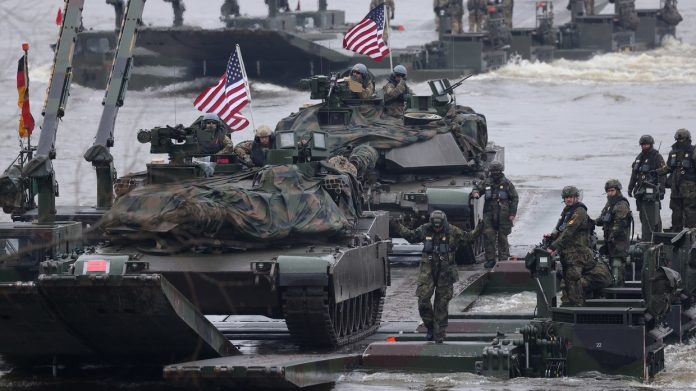
Last year, members of the US-led military bloc agreed to keep 300,000 troops ready for deployment, purportedly in response to a potential Russian attack. However, training exercises have exposed red tape and infrastructure bottlenecks that prevent the rapid transfer of personnel and materiel across the continent.

NATO military leadership is therefore working to ensure that the flow of troops would not be stopped by likely Russian strikes on ports used by the US military to unload its cargos, The Telegraph daily reported on Tuesday.

“It is clear that huge logistics bases, as we know it from Afghanistan and Iraq, are no longer possible because they will be attacked and destroyed very early on in a conflict situation,” Lieutenant General Alexander Sollfrank, head of NATO’s JSEC logistics command, told the newspaper.

The primary route for American troops in the event of war with Russia would be via the Dutch port of Rotterdam to Germany and Poland, the report said. Alternative corridors from Italy, Greece, and Türkiye would respectively run through Slovenia and Croatia to Hungary and through Bulgaria and Romania. There are also plans to involve Norway, Sweden, and Finland for backup logistics.

The US and its allies have claimed that Moscow could attack NATO, and that sending arms to Ukraine to fight Russia will help stall or prevent that outcome. Moscow has denied having any such intentions, and has accused Western governments of creating false threats to deceive their populations over the Ukraine conflict.

Russian officials have described the hostilities with Ukraine as a US-initiated proxy war aimed at undermining Russian development, in which Ukrainian soldiers serve as “cannon fodder” while weapons, intelligence, training, and planning is contributed by the West.

A direct conflict with NATO would be an existential threat to Russia, according to Moscow, considering the bloc’s superiority in conventional forces. Consequently, any such clash would warrant the deployment of nuclear weapons under Russian nuclear doctrine, it has warned.