Thursday, April 9, 2026
Home Blog Page 85

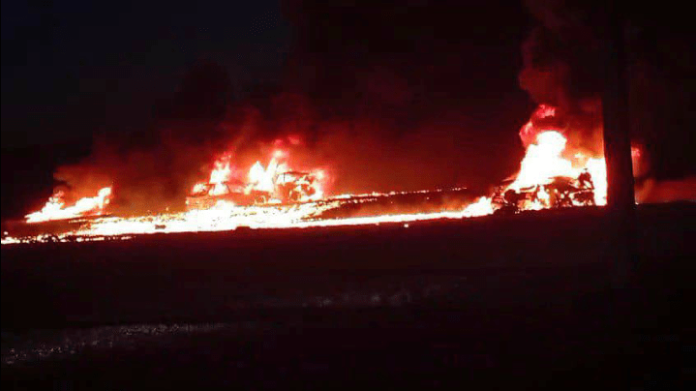
13 killed in southern Iran fuel carrier crash

The crash occurred on the Chahdadkhoda-Rameshk road in Kerman Province when a pickup truck carrying illicit gasoline struck two passenger cars.

The impact triggered an intense fire that rapidly engulfed all three vehicles. According to emergency responders, the blaze was so severe that none of the occupants were able to escape.

All 13 people inside the cars died at the scene. Among the victims were five members of the same family, officials confirmed.

Authorities have not yet released the identities of the victims or further details about the driver of the fuel carrier.
An investigation into the cause of the crash is underway.

The incident has renewed concerns over the long-standing issue of fuel smuggling in the region. Fuel-carrying vehicles, often overloaded and driven at high speeds to evade inspection, have been involved in numerous fatal accidents in southern provinces in recent years.

Local residents and safety advocates say the lack of effective enforcement has turned the problem into a persistent threat for communities and road users.

Iran denounces G7 communiqué as unfounded, unlawful, and deceitful

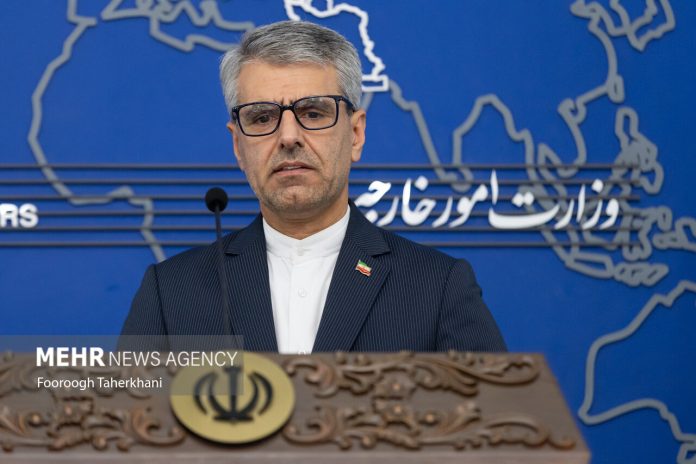
Esmael baghaei

He criticized the G7 countries for once again backing an illegal and unjustified attempt by three European states and the United States to misuse the JCPOA’s dispute-resolution mechanism in order to revive the annulled UN Security Council resolutions targeting Iran.
Baqaei stressed that the G7’s endorsement of this move does nothing to change its inherently unlawful and indefensible nature.

Referring to recent military aggressions by the United States and the Zionist regime against Iran—including attacks on Iranian peaceful nuclear facilities—he condemned the G7’s demand that Iran cooperate with the International Atomic Energy Agency, while ignoring these violations, as both hypocritical and intrusive.

He further highlighted that the United States, by withdrawing from the JCPOA in 2018 in violation of international commitments and by conducting military strikes on Iran’s civilian nuclear sites, bears primary responsibility for the current circumstances.

Regarding Palestine, Baqaei criticized the G7 for adopting an irresponsible position and inconsistent with their international duties to uphold the right to self-determination and to prevent genocide.

He argued that the unconditional backing of the Zionist regime by the United States and other G7 members, along with their tolerance of its occupation and actions against Palestinians, has stripped their human rights rhetoric of any legitimacy.

Baqaei also rejected the G7’s repetitive and baseless accusations about Iran’s involvement in the Ukraine conflict, reaffirming Iran’s consistent opposition to war and its belief that the crisis must be settled through dialogue and diplomatic engagement among the parties involved. He reiterated that Iran has played no role whatsoever in the Ukraine conflict.

Iran’s armed forces spokesman: “We never weaken”

Iran Missile Attack

Shekarchi said that this same spirit of devotion could be seen among other martyred commanders of the Aerospace Force. “The Aerospace Force, through its reliance on divine guidance, continues its luminous path with strength and honor,” he added.

Shekarchi emphasized that the Armed Forces are moving forward “with ever-greater power and determination” under the leadership of the Supreme Leader, working toward raising the flag of dignity and sovereignty of the Islamic Republic of Iran.

He highlighted Tehrani-Moghaddam’s vision of “the annihilation of the Zionist regime,” saying that this aspiration “will, by divine will, come true.”

Martyr Tehrani-Moghaddam is known as the father of Iran’s missile program.

Referring to the blood of the martyrs as the lifeblood of the Revolution, Shekarchi stated, “The pure blood of Tehrani-Moghaddam and his comrades is the source of our nation’s strength and vitality.”

Concluding his remarks, Shekarchi reaffirmed that the Islamic Republic grows more powerful with every sacrifice: “We never weaken; with the ascension of each of these beloved martyrs to the divine realm, the Islamic Republic of Iran becomes mightier and more resolute. This sacred and divine path will continue under the wise leadership of the Supreme Leader, as the Iranian nation upholds the banner of resistance and honor.”

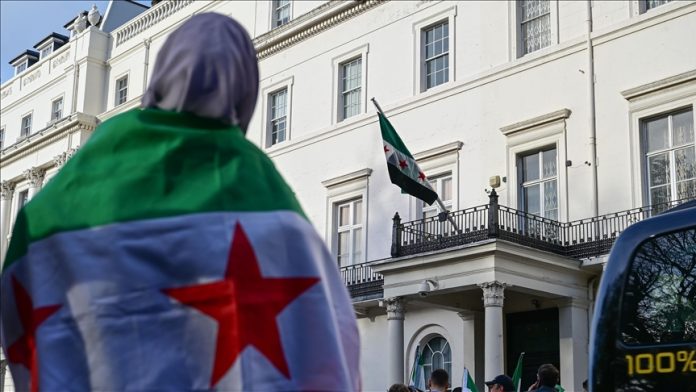
Syrian flag hoisted at Britain embassy after 12-year closure

Syrian Foreign Minister Asaad al-Shaibani, in the UK for an official visit, presided over the ceremony at the building in central London on Thursday.

The embassy had remained shut for more than a decade after the UK severed diplomatic ties with Damascus during the Syrian conflict.

In a post on the US social media company X, Sheybani described the moment as symbolic of a new chapter for his country, saying the reopening came “after years of isolation imposed by Assad’s chemical regime.”

“Syria is returning to the world with its free identity,” he added.

The UK government has not yet commented publicly on the ceremony or its implications for bilateral relations.

The flag raising represents the latest visible step in Syria’s efforts to restore diplomatic representation abroad after years of international isolation.

Ukraine will have to negotiate with Russia ‘sooner or later’: Kremlin

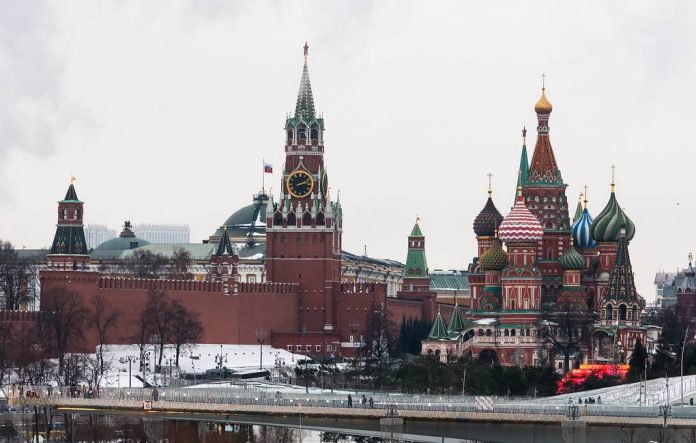
Kremlin

Moscow, whose forces are trying to take control of the city of Pokrovsk in eastern Ukraine, has accused Ukrainian officials of refusing to engage in peace talks. Kyiv says Moscow’s terms to end the war are unacceptable and tantamount to asking it to surrender.

Kremlin spokesman Dmitry Peskov told reporters on Thursday that Russia remained open to a political and diplomatic settlement and wanted peace.

But in the absence of such an opportunity, he stated Russia would continue fighting in order to protect its own security for the benefit of future generations.

“…the Ukrainian side should know that sooner or later it will have to negotiate, but from a much worse position. The position of the Kyiv regime will deteriorate day by day,” added Peskov.


EU chief insists using Russian frozen assets best way to fund Ukraine

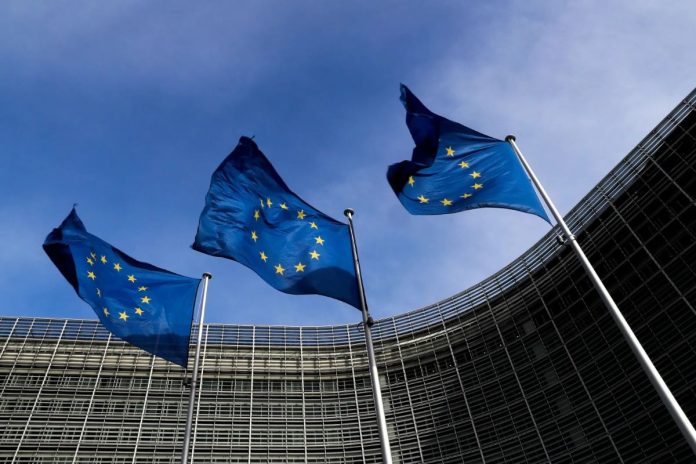
The European Union

The 27-nation bloc is scrambling for funds to help Kyiv plug looming budget black holes as Russia’s war drags on towards a fourth year.

Von der Leyen’s executive has put forward a plan to use Russian central bank assets immobilised in Belgium to generate a 140-billion-euro “reparations loan” for Ukraine.

But that has so far faced opposition from the Belgian government that fears it could face legal reprisals from Moscow.

“We are working closely with Belgium, and all member states, on options,” von der Leyen told EU lawmakers.

She remained adamant the frozen assets plan — under which the EU “gives a loan to Ukraine, that Ukraine pays back if Russia pays reparations” — remains the best choice.

“This is the most effective way to sustain Ukraine’s defence and its economy. And the clearest way to make Russia understand that time is not on its side,” the European Commission president added.

Von der Leyen set out two other options if there was no green light on that plan.

The first was to use wiggle room in the EU’s central budget to raise money on capital markets and the second was that member states agree to raise the money together themselves.

EU officials and diplomats warn that both plans would incur greater costs for countries at a time when national budgets are under strain.

Diplomats said that by setting them out, von der Leyen was looking to pile pressure on Belgium to agree to tap the frozen assets.

EU officials say they want to seal a deal on a financing plan for Ukraine at a summit of the bloc’s leaders in December.


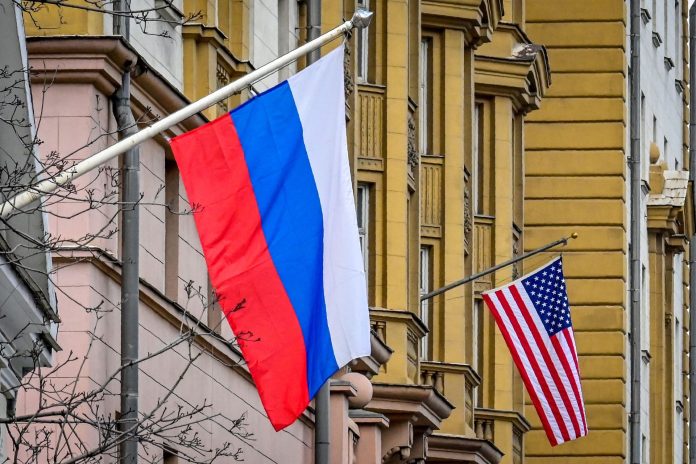
US says ‘running out of things to sanction’ in Russia

Russia US Flags

In late October, US President Donald Trump ordered new sanctions on energy majors Lukoil and Rosneft, a move that Rubio said was made at the request of Ukraine and its backers.

Washington also disrupted Lukoil’s attempt to sell its foreign assets to a Swiss-based energy trader, which the US Treasury Department claimed had ties to the Russian government.

“We hit their major oil companies, which is what everybody’s been asking for,” Rubio told reporters.

“I don’t know what more there is to do. I mean, we’re running out of things to sanction in that regard,” he added.

The top US diplomat added that targeting the so-called “Russian shadow fleet” – tankers that Western governments accuse of transporting oil covertly in defiance of their punitive measures – should now fall to European nations, as “a lot of these are happening in areas much closer to them.”

The US and its allies have sought to cripple the Russian economy with sanctions and provide an advantage to Ukraine in the ongoing conflict. However, Moscow maintains that its economy has adapted, redirecting trade to non-Western markets.

Meanwhile, Ukraine faces a worsening financial crisis, with reports suggesting that it may run out of cash as early as February without an increase of Western aid. The European Union is pushing for a €140 billion ($160 billion) “reparation loan” to keep Kiev afloat, using frozen Russian sovereign assets as collateral – a move Moscow has condemned as outright theft.

Belgium, which holds the majority of the immobilized Russian funds through the clearing house Euroclear, has blocked the proposal, demanding that other Western states share the financial and legal risks.


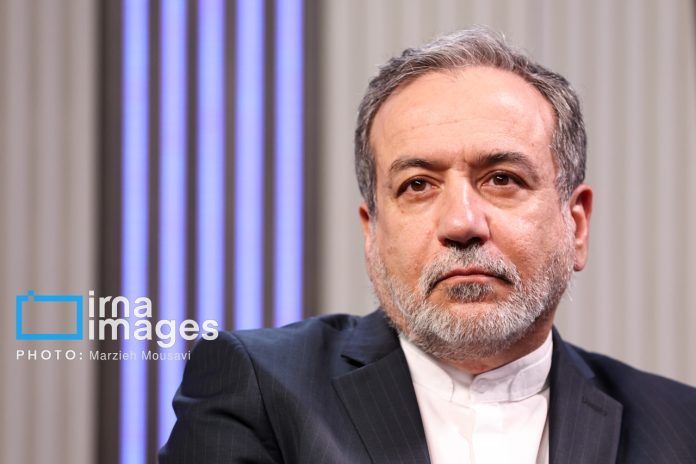
Iran FM urges UN to hold US, Israel accountable for ‘crime of aggression’ against Tehran

Abbas Araghchi

The Iranian foreign minister described the aggressive moves by the Zionist regime and the US against Iran, which resulted in the martyrdom of more than 1,100 innocent people, the injury of many others, and extensive material damage, as a flagrant violation of the principles of the UN Charter and the fundamental rules of international law.

Referring to the unlawful and criminal attacks against Iran’s peaceful nuclear facilities under the safeguards of the International Atomic Energy Agency (IAEA), Araghchi also considered them a clear violation of the UN Charter, the final documents of the Review Conferences of the Treaty on the Non-Proliferation of Nuclear Weapons (NPT), IAEA resolutions (including Resolutions 444 and 533), and Security Council Resolution 487 (1981).

In his letter, Araghchi explained that the international responsibility for the violations lies not only with the Israeli regime but also with the US, due to its direct participation and leadership in the attacks. He stressed that the US is obliged to fully compensate for the material and moral damages caused by the violations against Iran and its citizens.

The Iranian foreign minister further noted that the admission of the US president to participation and leadership in the crime of aggression by the Zionist regime against Iran entails individual criminal responsibility for the US president and any other American officials or individuals involved in these gross violations of international law.

He stated that, through committing the crime of aggression, directing attacks against Iranian citizens, including women and children, scientists, university professors, journalists, and prisoners, and deliberately targeting civilian objectives such as hospitals and ambulances, the Iranian national broadcasting center, a prison, and energy infrastructure including peaceful nuclear facilities, they have committed war crimes.

Araghchi emphasized in the letter the inherent right of the Islamic Republic of Iran to pursue accountability through all legal channels against responsible states and individuals, as well as to seek compensation for the damages incurred.

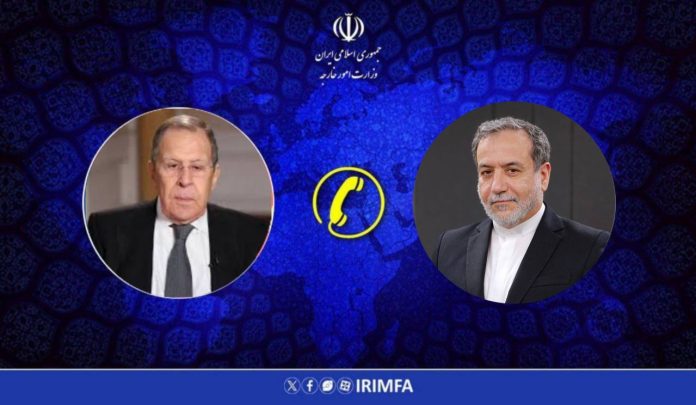
Iranian and Russian FMs discuss issues of mutual interest on the phone

Araghchi and Lavrov discussed the state of bilateral relations, reaffirming the firm determination of their countries to expand cooperation in all areas of mutual interest.

Araghchi expressed concern over the recent clashes between Afghanistan and Pakistan. He stressed the importance of constructive regional efforts to safeguard peace and stability, and called for enhanced dialogue and cooperation among regional countries in this regard. Araghchi also underlined the need for continued consultations between Iran and Russia, as well as with other regional partners, to explore ways of preserving peace and stability.

The top Iranian diplomat referred to the recent moves by the US and certain European countries at the UN Security Council regarding Palestine, including a draft resolution that would impose an international trusteeship over Gaza and Palestine. Araghchi warned that such initiatives contradict the Palestinian people’s right to self-determination and are doomed to fail.

For his part, Lavrov underscored the importance of strengthening cooperation among regional countries to maintain collective security. He further reaffirmed Moscow’s readiness to continue bilateral and regional consultations toward this goal.

The two foreign ministers also pointed to the upcoming meeting of the IAEA Board of Governors, exchanging views on Iran’s cooperation with the International Atomic Energy Agency. Araghchi and Lavrov underlined the need to maintain coordination and cooperation among Tehran, Moscow, and Beijing in this regard.

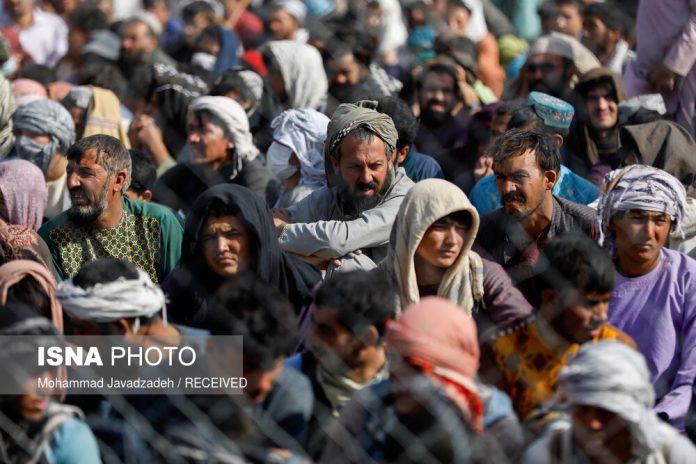
Official: Around 500 Afghan nationals caught and repatriated daily from Iran’s border

Afghan Refugee in Iran

Speaking to IRNA news agency on Thursday, Shamaghdari said tighter visa regulations for Afghan citizens have led to a sharp rise in illegal border crossings, with the number of unauthorized entries into Khorasan Razavi, bordering Afghanistan, more than doubling in recent months.

He noted that border guards apprehend these individuals, record their biometric data, and then repatriate them to Afghanistan.

“Thanks to the vigilance of our border forces, those who attempt to enter illegally are quickly identified and returned,” he added.

According to the official, over one million Afghan citizens have been repatriated through the Dogharoon border crossing since the beginning of the current Iranian year, in mid-March.

Shamaghdari also reported significant progress in fortifying and modernizing the province’s borders, including the installation of night-vision cameras, radar systems, and other surveillance technologies, which have enhanced security and reduced human resource risks.

Khorasan Razavi shares 835 kilometers of border with Turkmenistan and Afghanistan, including 297 kilometers under the Taybad border regiment’s jurisdiction.