Monday, December 29, 2025
Home Blog Page 845

Netanyahu walks back from comments that seemingly dismissed US-backed ceasefire proposal in Gaza

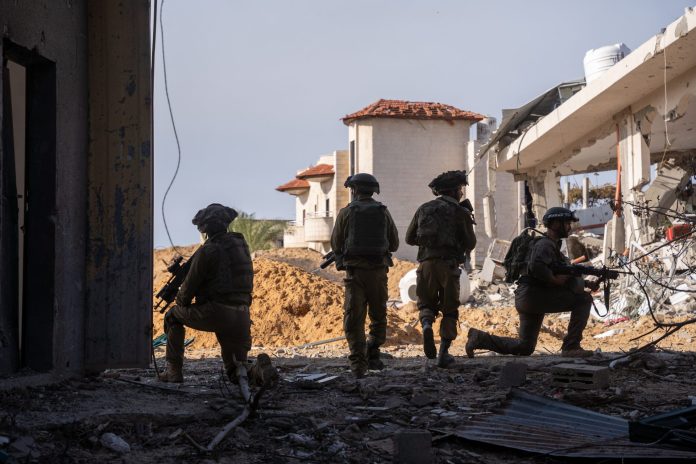
Israel Army

“We will not end the war until we return all of our hostages – 120 hostages, the living and the deceased. We are committed to the Israeli proposal, which President [Joe] Biden has welcomed. Our position has not changed,” he said speaking at the Knesset plenum on Monday.

His latest comments come the day after he stated in an interview with a local Israeli media that he was ready to make “a partial deal” with Hamas to return some hostages still being held captive in the besieged enclave, but reiterating his position that the war will still continue after a ceasefire “to achieve the goal of eliminating” Hamas.

Netanyahu’s comments were at odds with the aims of a broader proposal outlined by Biden last month. That plan, which Washington has announced is an Israeli one, sets out conditions intended to lead to the eventual release of all remaining hostages, in return for a permanent ceasefire and withdrawal of Israeli forces.

Tens of thousands of Israelis have consistently rallied against Netanyahu and his government, demanding early elections and a deal to return the captives.

The Gaza Strip has been gripped by more than eight months of war since a Hamas-led attack on Israel led to the deaths of 1,200 people, with dozens still held captive in Gaza.

Israel’s military offensive on Gaza has since killed at least 37,600 people, according to the Palestinian territory’s Ministry of Health.

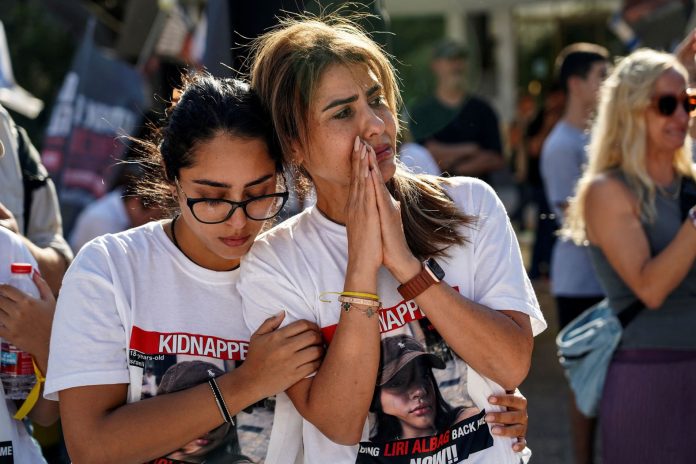
At least 42 Israeli hostages  believed to be dead: IDF

Hamas Israel Hostages

Sgt. Maj. Mohammad Alatrash, 39, was killed on October 7 and his body is being held by Hamas, the Israel Defense Forces (IDF) announced in a statement on Monday.

This brings the number of hostages believed to be dead from October 7 to 42.

The Hostages and Missing Families forum mourned Alatrash in a statement and announced it will stand by his family until his remains are returned to Israel.

The armed wing of the Palestinian group captured 251 people in the October 7 attack on southern Israel, in which 1,200 people were killed, triggering a bloody nine-month offensive by the regime.

The Israeli army freed four captives earlier this month, bringing the total number of those released or rescued to 116. The bodies of 19 hostages have been returned to Israel.

Another 116 people were being held in Gaza, but many of those are now believed to be dead, the Wall Street Journal has recently reported. The publication has cited mediators in the hostage negotiation and a US official familiar with the latest intelligence as saying the number of those hostages still living could be as low as 50.

However, the safe return of those survivors “may be at odds” with Israel’s goal of destroying Hamas, the WSJ wrote.

Ceasefire talks brokered by the US, Egypt and Qatar have not yet brought an agreement between the warring parties.

Hamas political chief Ismail Haniyeh has stated that he wants a deal that would end the fighting in besieged enclave and lead to an exchange of hostages for Palestinian prisoners held in Israeli jails. Such an accord would also require all Israeli soldiers to withdraw from the Palestinian enclave.

The Hamas stance is consistent with the ceasefire principles put forward by US President Joe Biden, who announced the three-phase proposal late last month, and a United Nations Security Council resolution calling for the plan to be implemented.

The Israeli insists that it will continue its offensive in Gaza until it destroys Hamas. The death toll in the blockaded enclave is nearing 37,600, according to the Gaza Health Ministry.

Russia summons US envoy over civilian deaths in Crimea attack

Russia Foreign Ministry

In a statement on Monday, the ministry said Ambassador Lynne Tracy had been presented with a demarche in connection with what it called “a new bloody crime of the Kiev regime patronized and armed by Washington”, referring to the Ukrainian shelling of Sevastopol the day before.

According to the Russian Defense Ministry, the Ukrainian attack occurred around noon local time on Sunday, involving five ATACMS missiles armed with cluster munitions, which are outlawed in more than 100 countries. Officials said four rockets had been destroyed in mid-air, while a fifth was damaged by air defenses, veered off course, and detonated over Sevastopol. Local authorities say the strike killed four people, including two children, and injured more than 150.

In conversation with Tracy, Russian officials emphasized that the United States was “waging a hybrid war against Russia”, and had become party to the Ukraine conflict by supplying Kiev with modern weapons, including ATACMS missiles with cluster munitions. The ministry also noted that American military specialists were actively engaged in designing the flight mission for ATACMS, which means they “bear the same responsibility for this atrocity as the Kiev regime.”

The ministry added that Tracy had been told that the US was “encouraging the pro-Nazi Ukrainian authorities to continue hostilities until the ‘last Ukrainian’” by approving strikes deep inside Russian territory. These actions by Washington “will not go unpunished,” Moscow warned.

Commenting on potential retaliation on Monday, Kremlin Press Secretary Dmitry Peskov recalled what he described as a “very important” statement by Russian President Vladimir Putin, in which he stated Moscow could send its long-range weapons to regions where they could be used to attack countries that provide Ukraine with military support.

Another Iranian national killed in Canada

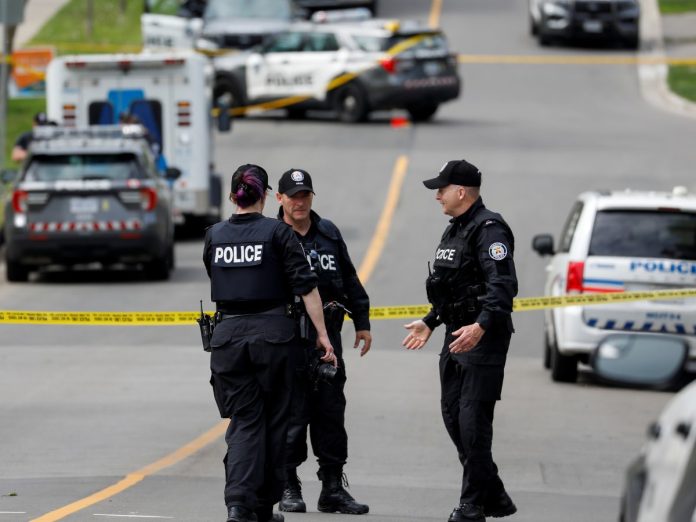
Canada Police

Reports say the victim was found unconscious by Canadian police last Monday while he had been stabbed multiple times.

The police rushed the man to a hospital where he succumbed to his wounds.

The two suspects are said to be from Afghanistan.

Canadian authorities say the three people seem to have known each other and that the motive for the murder was personal.

They also say the victim was a refugee in Canada.

In thecent padt, this is the third murder involving Iranian nationals in Canada.

Last week, two Iranians named Arash Misaghi and Samira Yousefi were murdered in a shooting in Toronto.

Misaghi had been implicated in a multi-million-dollar fraud case and the man who killed him and the woman, committed suicide after shooting them to death.

The man said in a letter who wrote before the incident that he had lost his wealth due to the schemes of Misaghi and Yousefi.

Iran election: Pezeshkian on the rise in opinion poll, turnout around 44%

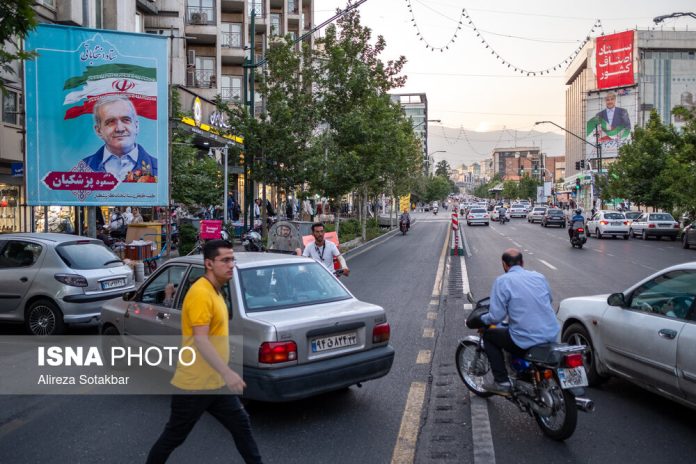
Masoud Pezeshkian

The IPSA survey group said the number of people who said they would vote for presidential candidate Masoud Pezeshkian has climbed from 19.8 percent to 24.4 percent.

The survey also found that the number of those who would vote for Saeed Jalili and Mohammad Baqer Qalibaf, both principlist, has decreased.

Accordingly, Jalili’s votes have fallen from 26.2 percent to 24 percent while Qalibaf’s has plunged from 19 percent to 14.7 percent.

The Iranian presidential election has been scheduled for June 28.

Six candidates are competing in the vote, with Pezeshkian as the only reformist.

90 people contract dengue fever in Iran, 3 killed

Ambulance Iran

Eynollahi said a total of 90 people have been stung by Aedes mosquito in the country. The mosquito is the only cause of Dengue fever.

Officials warn that Fars, Khuzestan, Hormozgan, Bushehr, Sistan, and Baluchistan in southern Iran, and Mazandaran, Gilan, and Golestan provinces in the country’s north are high-risk areas in terms of Dengue.

Earlier, medical sources in Iran said efforts are underway to prepare outpatient and inpatient treatment staff for diagnosis and treatment of the disease.

Dengue fever is more common in tropical and subtropical climates.

Most people who get this potentially deadly disease will not have symptoms. But for those who do, the most common symptoms are high fever, headache, body aches, nausea, and rash.

Thousands of Palestinian children missing in Gaza: Report

Gaza War

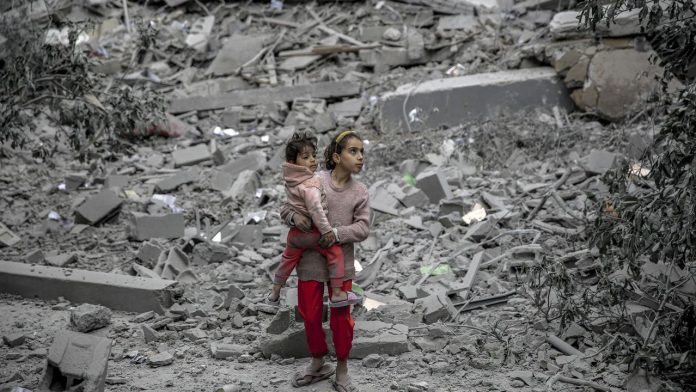
They include 4,000 who are likely trapped under the rubble and presumed dead and 17,000 who are unaccompanied and separated from their families, the charity said.

An unknown number are buried in unmarked graves, while others have been forcibly disappeared by Israeli forces, including those “detained and forcibly transferred out of Gaza [with] their whereabouts unknown to their families amidst reports of ill-treatment and torture”.

Jeremy Stoner, Save the Children’s regional director for the Middle East, stated, “Families are tortured by the uncertainty of the whereabouts of their loved ones. No parent should have to dig through rubble or mass graves to try and find their child’s body. No child should be alone, unprotected in a war zone. No child should be detained or held hostage”.

Stoner added a ceasefire was needed “desperately” to help “support the missing children who have survived and to prevent more families from being destroyed”.

Israel, flouting a United Nations Security Council resolution demanding an immediate cease-fire, has faced international condemnation amid its continued brutal offensive on Gaza since an October attack last year by the Palestinian resistance group Hamas.

Over 37,500 Palestinians have since been killed in Gaza, most of them women and children, and nearly 86,000 others injured, according to local health authorities.

More than eight months into the Israeli war, vast tracts of Gaza lie in ruins amid a crippling blockade of food, clean water, and medicine.

Israel is accused of genocide at the International Court of Justice, whose latest ruling ordered it to immediately halt its operation in the southern city of Rafah, where more than 1 million Palestinians had sought refuge from the war before it was invaded in early May.

FAO expects further increase in Iran’s grain output in 2024

Iran’s grain

Figures cited in a Monday report from FAO’s Food Outlook, a biannual publication focusing on developments affecting global food and feed markets, showed that Iran’s grain output is expected to reach 20.1 million metric tons (mt) on 2024.

Iran was the 10th largest grain producer in Asia in 2023 with 19.8 million mt of output. The country relied on imports for 14.9 million mt of its grain needs.

The FAO report estimated that Iran’s wheat output will reach 13.5 million mt this year, flat on last year.

Rice output in the country is expected to increase by 18% to 2.6 million mt in 2024, the figures showed.

Iran has introduced policies to encourage increased agricultural output in the country to prevent any shortage of basic foods that can be caused by US sanctions targeting its foreign trade.

Over half a million Israelis left occupied territories during 6 months of Gaza war: Report

Israeli Settlers

The authority’s data indicates that the number of Israelis who left the occupied territories since October last year is around 550,000 — more than those who returned by Easter this year in April.

What might have been a temporary escape for Israelis during the war or technical difficulties in returning has now turned into a permanent trend, or permanent migration, according to a report.

According to data from the Israel Central Bureau of Statistics, in April, Israel’s population stood at 9.9 million, including more than 2 million Palestinians, 400,000 Palestinians in East Jerusalem and 20,000 Syrians in the occupied Golan Heights.

Millions of Israelis hold dual citizenship as they possess at least one other nationality alongside their Israeli citizenship.

Israel, flouting a United Nations Security Council resolution demanding an immediate cease-fire, has faced international condemnation amid its continued brutal offensive on Gaza since an Oct. 7 attack last year by the Palestinian resistance group Hamas.

More than 37,500 Palestinians have since been killed in Gaza, most of them women and children, and nearly 86,000 others injured, according to local health authorities.

More than eight months into the Israeli war, vast tracts of Gaza lie in ruins amid a crippling blockade of food, clean water and medicine.

Israel is accused of genocide at the International Court of Justice, whose latest ruling ordered it to immediately halt its operation in the southern city of Rafah, where more than 1 million Palestinians had sought refuge from the war before it was invaded in early May.

Netanyahu says Gaza war will continue even if truce deal agreed with Hamas

Gaza War

Netanyahu has stated that he is open to a “partial” deal that would facilitate the return of some captives still held in Gaza, even if not all.

He reiterated, however, that he would not agree to any agreement that stipulated an end to Israel’s war on Gaza, despite previous claims by the United States that an Israeli proposal would be a pathway to ending the offensive.

“The goal is to return the kidnapped and uproot the Hamas regime in Gaza,” he said in an interview with Israeli media outlet Channel 14 on Sunday.

Tens of thousands of Israelis have consistently rallied against Netanyahu and his government, demanding early elections and a deal to return the captives.

Last month, US President Joe Biden announced a proposal for a ceasefire, which would see a six-week pause in fighting as well as the release of some Israeli captives in Gaza and Palestinian prisoners held in Israeli jails. These exchanges would then enable negotiations for a permanent ceasefire.

While US officials have insisted that Israel authored the proposal, various Israeli officials, including Netanyahu, have pledged to continue fighting until Hamas is eliminated, and have refused to publicly endorse it fully.

Netanyahu also told Channel 14 that Israel’s “intense” military offensive in the southern Gaza city of Rafah was nearly over.

“The intense phase of the fighting against Hamas is about to end,” he continued, adding, “It doesn’t mean that the war is about to end, but the war in its intense phase is about to end in Rafah.”

Netanyahu, in his first interview with an Israeli news outlet since the war in Gaza began, once again rejected the idea that the occupied West Bank-based Palestinian Authority run Gaza in place of Hamas.

“We also want to create a civilian administration, if possible with local Palestinians and maybe with external backing from countries in the region, to manage humanitarian supply and later on, civilian affairs in the Strip.”

“At the end of it, there’s two things that need to happen: we need ongoing demilitarisation by the [Israeli military] and the establishment of a civilian administration.”

The Gaza Strip has been gripped by more than eight months of war since a Hamas-led attack on Israel led to the deaths of 1,139 people, with dozens still held captive in Gaza.

Israel’s military offensive on Gaza has since killed at least 37,598 people, according to the Palestinian territory’s Ministry of Health.

Netanyahu said troops would soon be deployed to the northern border with Lebanon but for “defensive purposes”.

“After the intense phase is finished, we will have the possibility to move part of the forces north. And we will do this. First and foremost for defensive purposes. And secondly, to bring our [evacuated] residents home,” Netanyahu told Channel 14.

“If we can we will do this diplomatically. If not, we will do it another way. But we will bring [the residents] home,” he said.

Tens of thousands of civilians have been displaced from northern Israel and southern Lebanon, which have seen near-daily exchanges of fire between Israeli forces and Lebanese Hezbollah fighters since the war in Gaza began.