Monday, December 29, 2025
Home Blog Page 844

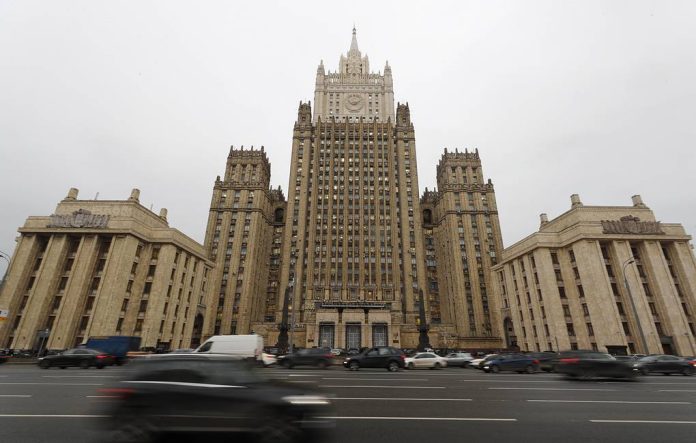
Moscow responds to EU sanctions

Russian Foreign Ministry

In its 14th package of sanctions revealed on Monday, the EU blacklisted 69 more individuals and 47 entities, as well as the shipping of Russian liquefied natural gas (LNG) and Russia’s banking payments system.

EU actions are “illegitimate from an international legal point of view, since they are carried out bypassing the UN Security Council”, the Russian Foreign Ministry said in a statement.

The measures are “absolutely futile and only undermine the trust of Global Majority states in the EU”, the ministry added.

In response to the EU’s unfriendly steps, Moscow has “significantly expanded” the list of persons banned from entering Russian territory. Among them are members of the European Council, lawmakers of EU member countries and national delegations to the European Parliament.

According to the foreign ministry, the ban has also been extended to bodies, enterprises, and individuals responsible for providing military aid to Ukraine; people involved in attempts to prosecute Russian officials; those advocating for the confiscation of frozen Russian sovereign assets and handing them over to Ukraine; and NGO activists engaging in anti-Russian rhetoric.

The full list of EU subjects affected has yet to be made public.

Brussels has so far sanctioned over 2,200 Russian individuals and entities for alleged “actions undermining or threatening the territorial integrity, sovereignty and independence of Ukraine”.

The latest sanctions package bans the import of Russian helium and targets operations for re-exporting Russian LNG via the EU. Deliveries of LNG for use within the bloc remain unaffected, however.

The European Council has also announced a ban on the System for Transfer of Financial Messages (SPFS), Russia’s replacement for the Western-controlled SWIFT. EU sanctions have also targeted dozens of companies in China, Kazakhstan, Kyrgyzstan, Turkey, and the UAE over their alleged supply of dual-use goods and technologies to Russia.

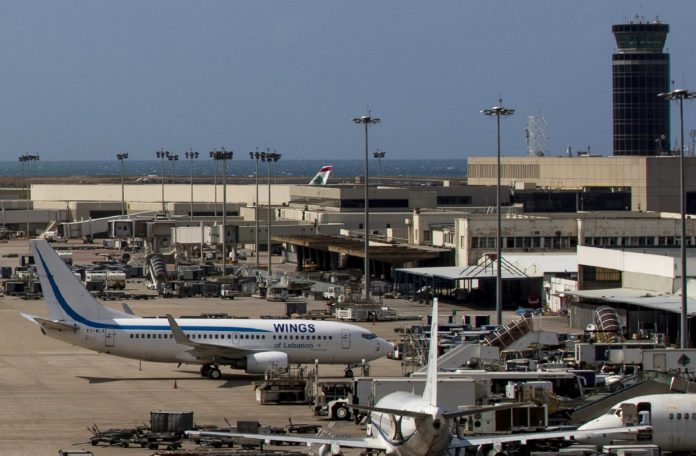
Lebanese officials visit Beirut airport after Israel’s claims of storing arms

Rafik Hariri International Airport in Beirut

Journalists also joined the tour of the airport, where Lebanese officials defended the airport’s procedures and said that the reports of weapons storage were false.

“The airport adheres to international standards,” stated Ali Hamieh, the transport minister who led the visit.

On Sunday, the British newspaper The Telegraph reported that the Lebanese group Hezbollah was storing weapons at the Beirut airport, claiming that there was an arrival of “unusually big boxes” that came from Iran.

The paper cited airport whistleblowers.

Hamieh described the reporting as psychological warfare, adding that it was also an attempt to damage the reputation of the country’s only international airport.

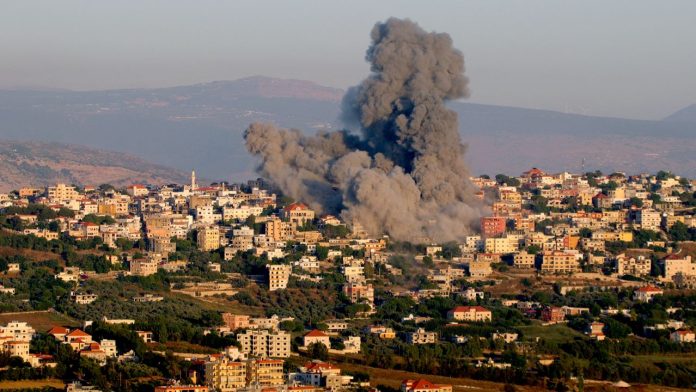
The claim made by The Telegraph comes as cross-border exchanges between Hezbollah and Israel have intensified in recent weeks.

The US has already signalled to Lebanon that it would back Israel if Tel Aviv were to launch an offensive onto Lebanese territory, with the risk of a potential Israel-Lebanon war having increased since October.

Israel and Hezbollah have exchanged near-daily fire since 8 October in response to Israel launching its war on Gaza, but the conflict escalated after Israel killed Taleb Sami Abdullah, one of Hezbollah’s most senior members. In response, Hezbollah launched hundreds of drones and rockets at the occupied territories.

The hostilities have displaced tens of thousands of Lebanese and Israelis living in border areas.

Last week, the Israeli army announced that it had approved plans for an offensive in Lebanon.

The announcement came as Hezbollah broadcast footage from a surveillance drone over the northern Israeli port city of Haifa in an apparent warning to Israel against starting a war.

For years, Israel has accused Hezbollah of storing weapons in installations across Lebanon, including at airports. Hezbollah denies these allegations.

The claim from The Telegraph has also raised fears that Israel could use the claim as a pretense to attack the airport. During the 2006 war, Israel bombed Beirut’s airport.

US urges Israel to avoid Lebanon ‘escalation’

Israel Lebanon

Blinken “stressed the importance of avoiding further escalation of the conflict and reaching a diplomatic resolution that allows both Israeli and Lebanese families to return to their homes”, department spokesman Matthew Miller said in a statement.

Tensions have been rising with growing exchanges of fire between Israel and Lebanon’s group Hezbollah.

Prime Minister Netanyahu has stated Israeli forces are winding up the most “intense fighting” of the Gaza war and will redeploy troops to the northern border, although he cast the move as defensive.

Netanyahu and Gallant have previously pledged to “turn Beirut into Gaza”. The Israeli army has also announced it had approved plans for an attack on Lebanon, raising concerns that the regime might try to realize its recurrent threats of turning Lebanon into another Gaza.

Joe Biden administration has repeatedly stated that it does not wish to see yet another war break out on the northern front, urging diplomatic de-escalation.

Hezbollah and the Zionist regime have been exchanging fire along Lebanon’s Southern border almost on a daily basis since the Gaza war began on October last year.

The tensions have flared over the past week especially after Israel killed a senior Hezbollah commander last week.

The movement has retaliated by firing hundreds of rockets into the Northern parts of the occupied territories. It also published footage gathered from its surveillance aircraft of strategic locations in the Northern part of the 1948 occupied territories, including sea and air ports in the city of Haifa.

Hezbollah’s Secretary-General Seyyed Hassan Nasrallah has warned that the powerful group is prepared for a full-scale conflict with Israel.

“The enemy knows it must expect us on land, in the air, and at sea, and if war is imposed, the resistance will fight without constraints, rules, or limits,” he said, adding that “there will be no place safe from our missiles and drones”.

He stated the number of Hezbollah’s operatives who are ready to fight against the Zionist regime has exceeded 100,000.

Iranian presidential hopefuls seek to coax more voters in final debate

Iran Presidential Election

The debate focused on foreign policy, and social, economic, and cultural issues, although discussions diverged from the main topics at times.

Veteran parliamentarian and the reformist camp’s sole candidate, Massoud Pezeshkian, zeroed in on removing the crippling Western-imposed sanctions and finding common grounds at home as the remedies for the pile of problems that continue to plague the country.

Unfulfilled promises, inefficiency, economic hardships, corruption, and mismanagement were some of the key words Parliament Speaker Mohammad Baqer Qalibaf promised he would tackle in case he wins the polls.

Principlist candidate Amir-Hossein Ghazizadeh Hashemi once again reiterated his campaign promise that he would follow in the footsteps of late President Ebrahim Raisi who died in a helicopter crash last month and left the top executive post vacant.

Former interior and justice minister Mostafa Pourmohammadi blamed mainly the “failing administrative system and dysfunctional bureaucracy” for a large chunk of the existing problems in the country.

Tehran Mayor Alireza Zakani, who is widely believed to be a stalking horse, unrelentingly targeted Pezeshkian for most of the debate and argued the former reformist and moderate presidents who have endorsed him are responsible for the current failures Iran is grappling with at home and on the international stage.

Extreme-right candidate Saeed Jalili claimed Iran can economically outperform many countries, including China, through efficient planning and by removing intermediary companies.

According to the Constitution, candidates should stop their campaigns 24 hours before polls open on Friday at 08:00 am local time (04:30 GMT).

Pezeshkian is leading the polls and Ghalibaf and Jalili are second and third respectively, opinion polls show.

Iran’s Leader says high voter turnout in presidential election disappoints foes

Ayatollah Khamenei

The Leader made the remarks on Tuesday in an address to thousands of Iranians from the provinces of Tehran, Gilan, Kohgiluyeh and Boyer-Ahmad, Markazi and North Khorasan on the occasion of Eid al-Ghadir and ahead of the Friday presidential election.

The Iranian nation is to face a test, Ayatollah Khamenei said, referring to the June 28 presidential election.

Iranians will go to the polls on Friday to elect the next president from among the six candidates vying to replace the late President Ebrahim Raisi.

“Elections are always a test, but now [they are] more [important] than ever,” the Leader added.

Ayatollah Khamenei also expressed hope that the election will be a source of pride for the Iranian nation through their “maximum participation” and choosing “the most qualified” candidate.

“One of the factors that enable the Islamic Republic to overcome its enemy is the election,” Ayatollah Khamenei asserted.

He further advised people to show a high voter turnout in the election to silence the country’s ill-wishers, noting whenever participation was low it served as a tool for the enemies to reproach the Islamic establishment.

The Leader criticized the politicians who believe in reliance on world powers, saying they “think all the ways of progress pass through the US; No, it is not like that”.

“The one who thinks that it is not possible to take steps without favors of the US, he will not manage [the country] well,” he emphasized.

Ayatollah Khamenei said that the most qualified candidate is the person who is capable of tapping into domestic opportunities and capacities, among them the country’s young, educated generation.

“The Islamic Republic has shown that it can advance without relying on foreigners and it has done so.”

The Leader added that he has always believed in interaction with the entire world, with one or two exceptions.

Ayatollah Khamenei further expounded that his call for not pinning hope on foreigners “does not translate into severing relations [with them], but it means national bravery and national independence”.

Nearly half a million Gazans facing catastrophic levels of food insecurity: UN report

Gaza War

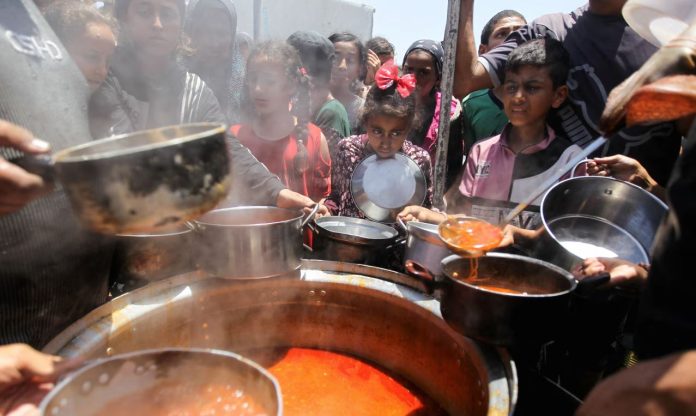
More than half of households in Gaza have had to sell or swap their clothes to be able to buy food, the UN is to report, as a high risk of famine remains across the whole of the territory after a new round of violence in recent weeks.

The latest “Special Snapshot” of Gaza from the UN’s hunger monitoring system, the Integrated Food Security Phase Classification (IPC), that will be published on Tuesday also says that one in five of the population – more than 495,000 people – are now “facing catastrophic levels of acute food insecurity” involving “an extreme lack of food, starvation, and exhaustion”.

The IPC announced that in March and April, the amount of food deliveries and nutrition services reaching northern Gaza sharply increased, “likely averting a famine” there and helping to improve conditions in the southern parts of the territory.

But in recent weeks, the situation had “started deteriorating again following renewed hostilities” and “a high risk of famine persists across the whole of the Gaza Strip as long as conflict continues and humanitarian access is restricted”, a draft report said.

“More than half [of households] also reported that, often, they do not have any food to eat in the house, and over 20% go entire days and nights without eating. The recent trajectory is negative and highly unstable. Should this continue, the improvements seen in April could be rapidly reversed.”

The warning comes despite months of US pressure on Israel to do more to facilitate aid efforts, the installation of a $230m US-built pier that has been beset by problems and repeated airdrops by multiple countries that aid agencies say are insufficient to meet vital needs.

Israel invaded Gaza after Hamas’s attack in October, in which Palestinian fighters killed about 1,200 people, and abducted about 250. The war has killed more than 37,500 Palestinians, according to the Gaza health ministry, which does not say how many were civilians or fighters.

Israel imposed a complete siege on the enclave at the start of the war and has only gradually eased it under pressure from Washington. The war has destroyed most of Gaza’s capacity to produce its own food.

New crossings allowing aid into northern Gaza slightly improved access to food supplies there from May. But in the south, the crisis deepened after an Israeli military push into Rafah choked off the main entry routes for humanitarian assistance.

The IPC has so far stopped short of the rare move of declaring a famine, a term which, when used by food and emergency aid professionals, has a strict technical definition, with three conditions that must be met in a specific area. The agency’s famine review panel, an external body which would normally confirm or reject initial findings of a famine, has said there is not enough data to do either. Research was blocked by “conflict and humanitarian access constraints”, it added.

Stage 5 hunger, which affects 22% of Gaza’s current population, is equivalent to famine, but the IPC declares an entire area to be in famine only when 20% of households have an extreme lack of food, 30% of children suffer from acute malnutrition and at least two adults or four children per 10,000 people die daily.

The UN high commissioner for human rights, Volker Türk, has stated Israeli restrictions on the entry of humanitarian aid into Gaza may amount to the war crime of deliberate starvation. Entry into Gaza is controlled by Israeli authorities, movements require military permission, roads are damaged by rubble, fuel is in short supply and power and communications networks barely function.

Israel claims it allows hundreds of trucks to enter through multiple crossings on a near-daily basis and blames UN agencies for not distributing it, saying containers are stacking up at Kerem Shalom, Gaza’s main cargo terminal. Israeli officials accuse Hamas of diverting aid meant for civilians to military purposes, a charge the group denies.

UN agencies and aid groups say they often cannot access Kerem Shalom because of fighting and that Israeli restrictions, difficulties coordinating with the army and the collapse of law and order greatly hinder their work. They say it is impossible to address the crisis without a complete ceasefire

The US has rallied international support behind a proposal that would lead to the release of the remaining hostages and a permanent ceasefire, but neither Israel nor Hamas have fully embraced it.

A food security report earlier in June warned that months of extreme hunger in Gaza had already killed many Palestinians and caused permanent damage to children through malnutrition. The US-based famine early warning system network (Fews Net) cautioned it was “possible, if not likely” that famine began in northern Gaza in April.

Two UN organisations warned more than 1 million people were “expected to face death and starvation” by mid-July. The World Food Programme and the Food and Agriculture Organization also warned of the toll hunger is taking even without a declaration of famine in their Hunger Hotspots report on global food insecurity

A joint statement this week from the EU foreign policy chief, Josep Borrell, and the EU crisis coordinator, Janez Lenarčič, said: “The crisis in Gaza has reached another breaking point … The delivery of any meaningful humanitarian assistance inside Gaza has become almost impossible and the very fabric of civil society is unraveling.”

Ahead of the release of the IPC report on Gaza, Kate Phillips-Barrasso, vice-president of global policy and advocacy at Mercy Corps, stated: “People are enduring subhuman conditions resorting to desperate measures like boiling weeds, eating animal feed, and exchanging clothes for money to stave off hunger and keep their children alive.

“The humanitarian situation is deteriorating rapidly, and the spectre of famine continues to hang over Gaza … Humanitarian aid is limited … The international community must apply relentless pressure to achieve a ceasefire and ensure sustained humanitarian access now. The population cannot endure these hardships any longer,” Phillips-Barrasso added.

Gaza has been decimated and become a “living hell” for more than 2 million people, the head of the UN agency for Palestinian refugees (UNRWA) said Monday.

Philippe Lazzarini’s remarks came in his opening address to the meeting of the agency’s Advisory Commission in Geneva.

“In the last nine months, we have witnessed unprecedented failures of humanity in a territory marked by decades of violence,” Lazzarini stated

Describing the situation as “a nightmare” that Gazans cannot wake, he lamented that “catastrophic levels” of hunger across the Gaza Strip are the result of human action.

“Children are dying of malnutrition and dehydration, while food and clean water wait in trucks,” he added.

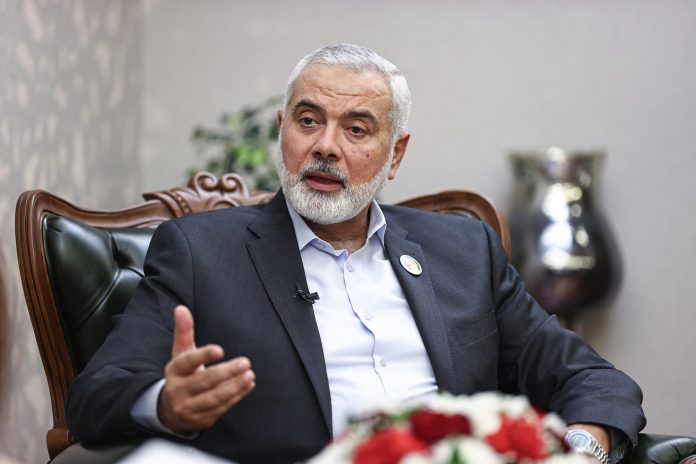
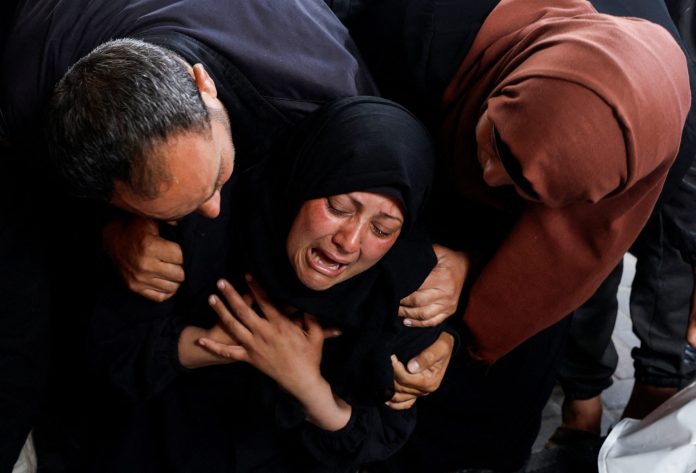
Family members of Hamas leader, including sister, killed in Israeli raid in Gaza

Ismail Haniyeh

According to medical sources, at least 10 people of the Haniyeh family were killed in an Israeli air attack against their home in the Beach refugee camp, western Gaza City.

On April 10, Haniyeh lost three of his sons in an Israeli airstrike on their car in the Beach camp.

Israel, flouting a United Nations Security Council resolution demanding an immediate cease-fire, has faced international condemnation amid its continued brutal offensive on Gaza since an Oct. 7 attack last year by Hamas.

More than 37,600 Palestinians have since been killed in Gaza, most of them women and children, and nearly 86,100 others injured, according to local health authorities.

More than eight months into the Israeli war, vast tracts of Gaza lie in ruins amid a crippling blockade of food, clean water, and medicine.

Israel is accused of genocide at the International Court of Justice, whose latest ruling ordered it to immediately halt its operation in the southern city of Rafah, where more than 1 million Palestinians had sought refuge from the war before it was invaded in early May.

Hamas: Netanyahu seeking to ‘stall for time, to continue genocide’

Gaza War

“Netanyahu’s true stance is to avoid reaching an agreement, to stall for time, and to continue the war of genocide,” he said.

“It’s become clear to the world that Netanyahu is the one who rejects and obstructs what was outlined in Biden’s speech and the recent UN Security Council resolution, not Hamas,” he added.

“Netanyahu’s talk of concluding a partial agreement and continuing the aggression confirms he’s lying to the families of the prisoners and does not care about their lives,” the Hamas official continued, stating, “The ball is now in the court of the war criminal Netanyahu, and the US administration must lift its cover of silence and bias and put pressure on Netanyahu and his government to stop the aggression and genocidal war.”

“We reiterate the positive stance of Hamas in dealing with the efforts of the mediators in Qatar and Egypt to reach an agreement that ensures a permanent cessation of the aggression, a complete withdrawal from the Gaza Strip and a prisoner exchange deal.”

Netanyahu has stated he is open to a “partial deal” with Hamas that allows him to continue the war on the besieged enclave after some of the captives are released.

A deal that permanently ends the war was not an option until Hamas is “eliminated”, he told Channel 14 on Sunday.

Eliminating Hamas is a goal believed unachievable by the Israeli military and many experts.

Netanyahu’s comments appeared to contradict several top US officials, who for weeks said Israel agreed to an outline presented by President Joe Biden in May, which leads to a permanent ceasefire.

“I’m not prepared to end the war and leave Hamas in place. I am prepared to do a partial deal, that’s no secret, that would return some of the people to us,” the premier said in the TV interview.

“We are obligated to continue the fighting after a pause to complete our goal of destroying Hamas,” he continued, adding, “I’m not prepared to give up on that.”

The Gaza Strip has been gripped by more than eight months of war since a Hamas-led attack on Israel led to the deaths of 1,200 people, with dozens still held captive in Gaza.

Israel’s military offensive on Gaza has since killed at least 37,600 people, according to the Palestinian territory’s Ministry of Health.

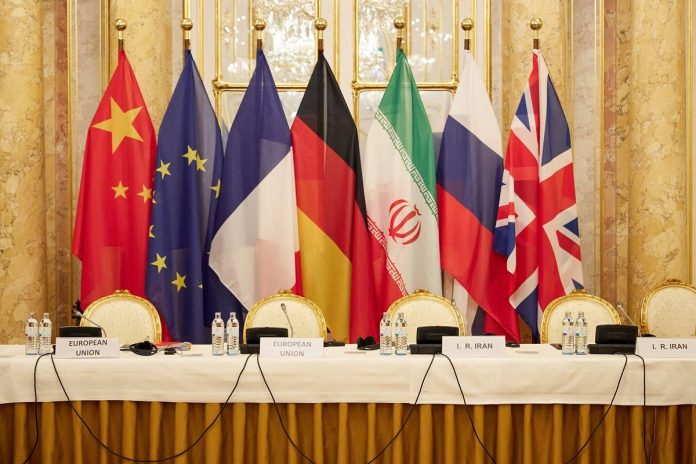
Iran UN envoy: No alternative to JCPOA nuclear deal

Nuclear Negotiations in Vienna

Addressing a UN Security Council meeting on “Non-Proliferation: Implementation of Security Council Resolution 2231”, on Monday, Amir Saeed Iravani blamed the US and the three European parties to the deal, namely Britain, France, and Germany, for failing to fulfill their commitments as per the nuclear agreement and sending the deal into a coma.

The UN Security Council Resolution 2231 endorsed the Iran nuclear deal, reached in 2015. The US, under former President Donald Trump, withdrew from the JCPOA in 2018, re-imposing anti-Tehran sanctions.

He stated, “The JCPOA was a multilateral diplomatic achievement that was clinched with hardship and in practice averted an unnecessary crisis.”

The senior Iranian diplomat said sincere dialogue and constructive cooperation are the only options for resuscitating the JCPOA and its revival is in the interest of all members.

Meanwhile, the Iranian envoy warned the West against resorting to pressure tactics, intimidation, threats, and confrontation vis-à-vis Iran.

Iravani emphasized Iran’s policy of peaceful use of nuclear energy, saying, “The fundamental policy of the Islamic Republic of Iran in rejecting nuclear weapons, as well as its strong determination to use nuclear energy for peaceful purposes, remains unchanged.”

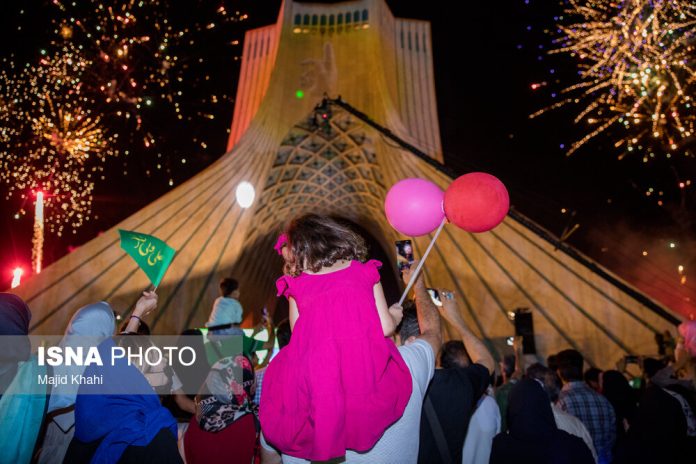
Millions of Iranians celebrating Eid al-Ghadir

Eid al-Ghadir

The event, which falls on the 18th of Dhul-Hajjah on the lunar calendar, is one of the most significant days for Shia Muslims worldwide.

In the capital Tehran, the streets are decorated with flags and decorative elements as part of the celebrations.

An event is organized in the capital Tehran to host a 10-km-long celebration march, which has gathered over 3 million people in previous years, hailed as the world’s largest celebration event of its kind.

The participants are treated with food and drinks and musical performances.

Large celebrations are also held on the streets in other cities on the occasion.

Imam Ali was the Prophet’s cousin and his son-in-law and is known as the first man who embraced the Prophet’s call for Islam.