Monday, December 29, 2025
Home Blog Page 846

Presidential hopeful Pezeshkian: Iran can overcome problems if Iranians help run country

Massoud Pezeshkian

In a campaign outside the capital Tehran on Sunday evening, Pezeshkian said mismanagement and embezzlement in the country have shattered people’s confidence in the government and have caused voter apathy.

He said, “Significant amount of money is lost in the country, amounting to 70,000 billion tomans, but it is not clear where it goes, while our people have to forage for a piece of bread in the dumpsters to make ends meet.”

On the international front, Pezeshkain distanced himself from the confrontational policy, saying, “We should not fight and argue with the world, but rather we should provide a basis to easily trade with the world and draw in investment.”

Pezeshkian, a cardiologist and a veteran lawmaker, appealed to the eligible voters for a high turnout, promising he would create a government of technocrats and experts in case he wins.

Six candidates are running for office in the snap elections to be held on Friday. According to opinion polls, Iran’s Parliament Speaker Mohammad Baqer Qalibaf and far-right politician Saeed Jalili are Pezeshkian’s main rivals for the post.

Qalibaf campaigns on a platform of economic prosperity and welfare while Jalili, who mistrusts the West, seeks to tackle the problems by relying on the capabilities and resources at home.

Russia blames US for deadly Crimea strike

Russia Ukraine war

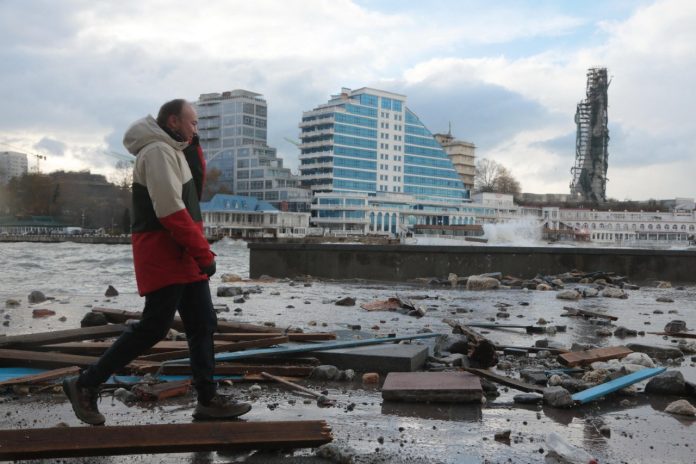
The Ukrainian military launched five ATACMS long-range missiles armed with highly controversial cluster warheads at the Crimean Peninsula earlier on Sunday, the ministry announced.

Four were destroyed by Russian air defenses. One missile was hit but veered off course and detonated over the Black Sea port city of Sevastopol. Falling fragments of its cluster munition warhead led to numerous civilian casualties.

“All the flight tasks for the… ATACMS missiles are assigned by American specialists on the basis of their own US satellite intelligence data,” the Defense Ministry said.

“Therefore, responsibility for the deliberate missile strike on civilians in Sevastopol lies primarily with Washington, which supplied these weapons to Ukraine, as well as the Kiev regime, from whose territory this attack was launched.”

The Russian military added that these actions will not be “left unanswered”.

In July 2023, the US announced that it would provide Ukraine with cluster munitions. The move sparked outrage in Moscow. These weapons scatter dozens of smaller bombs when detonated. The bomblets, usually spread over large areas, can remain unexploded for years and even decades, posing particularly high risks to densely populated areas.

The weapons are banned in more than 100 countries, including the UK, France, and Germany. However, neither the US, Ukraine, nor Russia signed the Convention on Cluster Munitions. Nevertheless, Moscow vowed not to use them in the conflict against Kiev in 2023.

Ukraine has previously targeted Crimea with US-made ATACMS missiles. In late May, ten ATACMS were shot down as they were targeting the strategic Crimean Bridge, Russian Defense Minister Andrey Belousov said at the time.

US media outlets reported that month that Washington had given the green light for the use of US-supplied weapons in Ukraine’s cross-border attacks into Russian territory from the northeastern Kharkov Region. Later, the Pentagon said Kiev could do so beyond Kharkov Region as well.

AP reported, citing sources, that the administration of US President Joe Biden still does not allow Ukraine to use ATACMS missiles with a range of up to 300km to strike deep inside Russia. President Vladimir Putin warned that the use of Western weapons in Ukrainian attacks on Russian territory is “close to aggression.”

Saudi Arabia says over 1,300 Hajj pilgrims died in extreme heat

Hajj

“Regrettably, the number of mortalities reached 1,301, with 83 percent being unauthorised to perform Hajj and having walked long distances under direct sunlight, without adequate shelter or comfort,” the official Saudi Press Agency reported.

The dead came from more than 10 countries stretching from the United States to Indonesia, and some governments are continuing to update their totals.

Arab diplomats told AFP last week that the cause of death in most cases was heat-related.

Temperatures in Mecca this year climbed as high as 51.8C (125F), according to Saudi Arabia’s national meteorological centre.

Riyadh had not publicly commented on the deaths or provided its own toll until Sunday.

The Saudi health minister, Fahd al-Jalajel, on Sunday described the management of the Hajj this year as “successful”, SPA reported.

He said the health system “provided more than 465,000 specialised treatment services, including 141,000 services to those who didn’t obtain official authorisation to perform Hajj”, according to SPA, which summarised an interview he gave to the state-affiliated al-Ekhbariya channel.

Jalajel did not specify how many deaths Saudi officials attributed to heat.

“The health system addressed numerous cases of heat stress this year, with some individuals still under care,” SPA reported.

“Among the deceased were several elderly and chronically ill individuals,” it added.

The Hajj is one of the five pillars of Islam that all Muslims with the means must complete at least once in their lives.

Saudi officials have stated 1.8 million pilgrims took part this year, a similar number to last year, and that 1.6 million came from abroad.

For the past several years the mainly outdoor rituals have fallen during the sweltering Saudi summer.

The timing of the Hajj moves forward about 11 days each year in the Gregorian calendar, meaning that next year it will take place earlier in June, potentially in cooler conditions.

A 2019 study by the journal Geophysical Research Letters said because of climate change, heat stress for Hajj pilgrims will exceed the “extreme danger threshold” from 2047 to 2052 and 2079 to 2086, “with increasing frequency and intensity as the century progresses”.

Over a dozen policemen killed in terrorist attack in Dagestan

Terror Attack Russia

Unknown assailants have launched a series of attacks on synagogues and Orthodox churches, as well as a traffic police station, in the southern Russian region of Dagestan.

The incidents took place in the regional capital, Makhachkala, and the southern city of Derbent.

At least 15 police officers have lost their lives in shootouts with the attackers and a raid on the regional capital’s traffic police station.

“Over fifteen police officers fell victims of the today’s terrorist act, protecting peace and calmness of Dagestan,” Melikov confirmed in a video posted on the Telegram channel.

Several civilians were also killed as a result of the terrorist act, including Father Nikolay, who served for more than forty years in the Orthodox church in Derbent, he added.

A total of five militants were neutralized during the counter-terrorism operation in Makhachkala and Derbent, the Head of the Republic of Dagestan, Melikov stated.

The assailants also broke into an Orthodox church in Derbent and killed a local priest. The synagogue in the city, which also came under attack, was set on fire.

Photos and videos of the burning building have surfaced on social media.

Three days of mourning were declared in Dagestan following the spate of terrorist attacks on Sunday, the region’s administration wrote on their official Telegram channel. All entertainment events on Monday, Tuesday and Wednesday will be canceled while flags will be flown at half-staff during the mourning period.

Iran, Bahrain agree to initiate rapprochement talks

Iran Bahrain

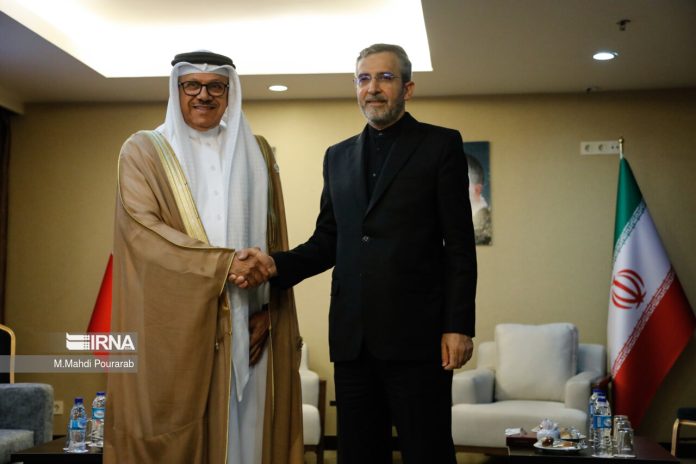
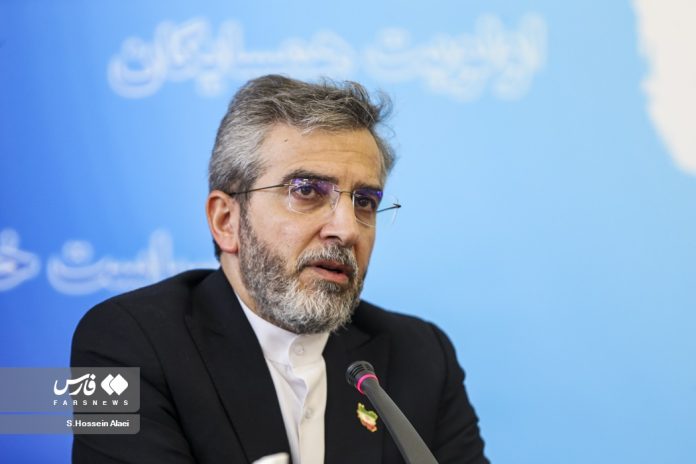
The agreement was made during a Sunday meeting between Abdullatif bin Rashid Al Zayani, Minister of Foreign Affairs of Bahrain, and Ali Bagheri Kani, Acting Minister of Foreign Affairs of the Islamic Republic of Iran in Tehran.

At the invitation of the acting Iranian foreign minister, the top Bahraini diplomat is in Tehran to attend the Asian Cooperation Dialogue (ACD) meeting.

Following the meeting, in a joint statement, the two countries reaffirmed the religious ties, neighborhood, common history, and mutual interests between the Islamic Republic of Iran and the Kingdom of Bahrain.

The statement read within the framework of the historical brotherly ties between the Kingdom of Bahrain and the Islamic Republic of Iran, Abdullatif bin Rashid Al Zayani, Minister of Foreign Affairs of Bahrain, and Ali Bagheri Kani, Acting Minister of Foreign Affairs of the Islamic Republic of Iran had a bilateral meeting on Sunday, June 23rd, in Tehran.

It added during the meeting, the two sides agreed to establish the necessary mechanisms to start talks between the two countries to examine the resumption of political ties.

Bahrain severed diplomatic ties with Iran on 4 January 2016, accusing Tehran of interference in Saudi internal affairs after Saudi Arabia executed prominent Shia cleric Nimr al-Nimr. The execution led to a protest rally in front of the Saudi embassy in Tehran and the raids by angry protestors at the mission.

The government of the Islamic Republic of Iran had at the time said the damage to the embassy was not justifiable.

Iran secures second place at Asian Junior Greco-Roman wrestling championship

Asian Junior Greco-Roman wrestling championship

Abolfazl Karami, competing in the 51 kg category, Emadreza Mohseninejad in the 80 kg category, and Danial Izadi in the 92 kg category, each clinched gold medals, highlighting their dominance in their respective weight classes.

Silver medals were awarded to Ahmad Badraddini (45 kg), Alireza Amiri (48 kg), Amir Mahdi Saeedi Nava (67 kg), and Mohammad Kazemi (71 kg).
Additionally, Amirali Heydari (55 kg), Abolfazl Shiri (60 kg), and Ayyoub Hoseinvand (110 kg) secured bronze medals, contributing to the team’s overall success.

In the team rankings, Iran accumulated a total of 200 points, placing them second behind Uzbekistan, which secured first place with 215 points. Kazakhstan followed in third place with 148 points.

Euro-Med says Israel uses starvation as weapon in Gaza

Gaza War

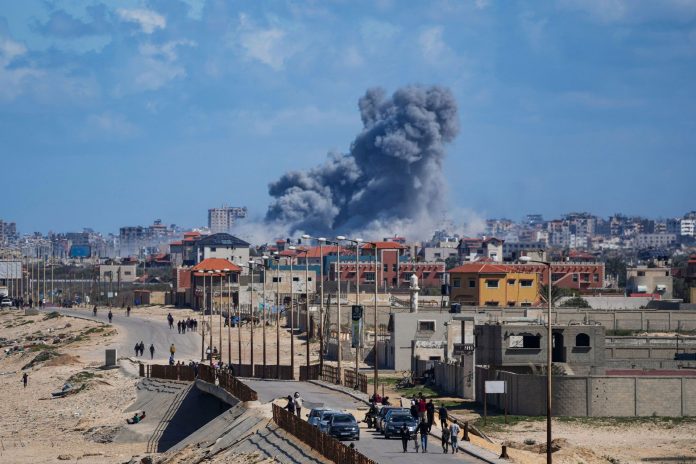
Euro-Mediterranean Human Rights Monitor made the comment in a Sunday report, adding that the regime’s forces seek to destroy Gaza’s food basket of vegetables, fruits and meat, in addition to destroying its local food production system.

The organization noted that “in addition to destruction of all components of local food production”, Israel is also preventing the entry of food supplies and humanitarian aid in order to “perpetuate famine in the Gaza Strip and use starvation as a weapon of war as part of its ongoing crime of genocide, which continues for the ninth month in a row”.

Euro-Med added that its teams have documented evidence of the occupation army intentionally killing farmers who were either working or attempting to access their lands and farms.

In addition, Euro-Med said it has also documented extensive destruction of farms, greenhouses, water wells and tanks, and agricultural equipment by the regime’s forces.

Euro-Med urged the international community “to ensure the entry of humanitarian aid into the Gaza Strip, including essential food and non-food items, in order to address the territory’s health and environmental disaster in an immediate, safe and effective manner”.

The organization’s report came after the Gaza media office decried the use of starvation as a tool by the United States and Israel to achieve their political goals in Gaza despite the catastrophic humanitarian situation in the besieged territory.

“We condemn the inhumane crime of starvation used by the occupation and the American administration in a gruesome manner to achieve political goals,” it said in a statement last Monday.

According to the statement, thousands of sick and wounded people have no access to food or medicine amid the continued closure of Gaza’s crossings by Israeli forces.

“The situation in the Gaza Strip is becoming increasingly catastrophic and difficult, with the humanitarian crisis significantly worsening, especially for children, the sick, and the wounded who lack food and treatment.”

Many Palestinians are getting food poisoning from eating expired canned food as food shortages worsen while famine and diseases spread, the local government in the besieged enclave said.

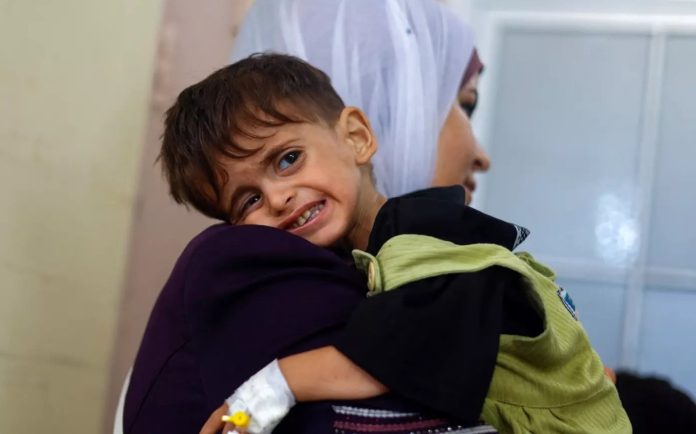
According to the government media office, children are most affected by the deteriorating starvation crises, caused by an Israeli siege banning basic food items from entering the Palestinian enclave.

“The occupation [authorities] are imposing a policy of systematic starvation and treatment prevention,” the office added.

“Famine and diseases are increasing among the residents of the Gaza Strip, especially among children.”

The United Nations has warned there are “catastrophic levels of hunger” across the blockaded territory resulting from “human action”.

“In the last nine months, we have witnessed unprecedented failures of humanity in a territory marked by decades of violence,” UNRWA chief Philippe Lazzarini told the UN agency’s advisory commission.

“Children are dying of malnutrition and dehydration, while food and clean water wait in trucks.”

Russia claims Ukraine killed civilians in Crimea with US-supplied missiles

Russia Ukraine War

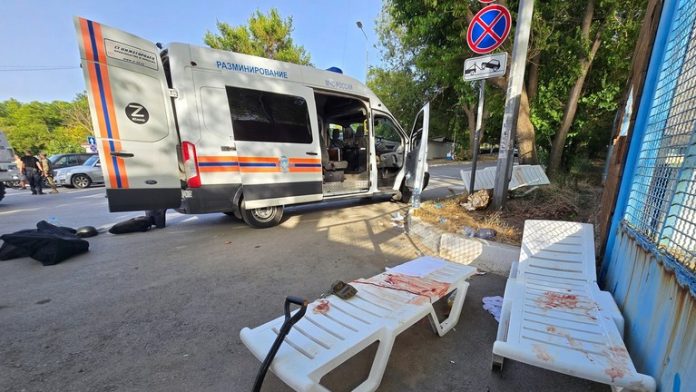
The strike was first reported by Sevastopol Governor Mikhail Razvozhaev on Sunday, who stated that the attack killed at least three people, including two children. Later on Sunday, Sevastopol Governor Mikhail Razvozhaev told journalists that the death toll had risen to five.

According to Russia’s Health Ministry, 124 people were injured, including 27 children.

The Russian Defense Ministry has confirmed the Ukrainian attack, which it said took place at around noon local time. Officials added that the shelling involved five ATACMS missiles, four of which were destroyed mid-air.

The remaining one, however, was damaged by air defenses, veered off course and detonated over the city of Sevastopol. As a result, the falling fragments of cluster munitions led to numerous civilian casualties, the statement read.

Сluster munitions – which scatter dozens of smaller bombs when denotated – are banned in more than 100 countries, including the UK, France, and Germany. This type of weapon is considered extremely dangerous to civilians, as the munitions typically spread over large areas and can remain unexploded in the ground for many years.

Neither the US, Ukraine, nor Russia has signed the Convention on Cluster Munitions. However, in the summer 2023 then-Russian Defense Minister Sergey Shoigu stated that Moscow would not deploy this type of weapon against Kiev for humanitarian reasons. He warned, however, that Russia might potentially reverse this policy.

The US announced in July 2023 that it would provide Ukraine with cluster munitions, sparking outrage in Moscow. At the time, US President Joe Biden called the decision “very difficult” but justified, arguing that the deliveries were needed to fuel a Ukrainian counteroffensive that subsequently failed with heavy losses for Kiev.

Ukraine has previously attempted to target the peninsula with ATACMS missiles, with one of the most notable attacks taking place in late May. Russian Defense Minister Andrey Belousov said that a total of ten ATACMS aimed at the strategic Crimean Bridge were shot down, saving hundreds of lives.

Israel targeted nearly 70% of schools sheltering displaced people in Gaza: UN

Gaza War

In a statement on Sunday, the agency said that “according to Global Education Cluster, 69% of school buildings where displaced families were seeking shelter have been directly hit or damaged.”

“This blatant disregard of humanitarian law must stop. We need a ceasefire now,” it added.

On Friday, the UNRWA noted that in Gaza, over 76% of schools require reconstruction or major rehabilitation to be operational again, according to the Global Education Cluster.

The Global Education Cluster, established in 2007 by the Inter-Agency Standing Committee, is led globally by UNICEF and the local Child Protection Network. It serves as a joint coordination mechanism among organizations engaged in humanitarian responses within the education sector during instances of internal displacement.

As of June 17, the Israeli war has resulted in the complete destruction of 110 schools and universities, with 321 schools and universities partially damaged. The war has also claimed the lives of over 10,000 male and female students, according to the government media office in Gaza.

Flouting a United Nations Security Council resolution demanding an immediate cease-fire, Israel has faced international condemnation amid its continued brutal offensive on Gaza since an Oct. 7 attack by Hamas.

More than 37,500 Palestinians have since been killed in Gaza, most of them women and children, and over 86,000 others injured, according to local health authorities.

More than eight months into the Israeli war, vast tracts of Gaza lie in ruins amid a crippling blockade of food, clean water, and medicine.

Israel is accused of genocide at the International Court of Justice, whose latest ruling ordered Tel Aviv to immediately halt its operation in Rafah, where more than 1 million Palestinians had sought refuge from the war before it was invaded on May 6.

Iran to host Asian Cooperation Dialogue ministerial meeting

Ali Bagheri Kani

Bagheri Kani mentioned that 41 delegations from various ministers and international organizations will participate in the meeting. He emphasized that this event will serve as a platform to strengthen cooperation among Asian countries and reflect the continent’s commitment to multilateralism and inclusivity.

Iran assumed the presidency of the ACD Foreign Ministers’ Meeting in October 2023. More than 30 countries will participate at the ministerial level, or through deputy ministers and special envoys, in the meeting hosted by Iran’s Ministry of Foreign Affairs.

The official session, featuring a speech by Ali Bagheri Kani, will take place on Monday.

The ACD was established in 2002 and has its secretariat in Kuwait. It includes 35 Asian countries.

The Islamic Republic of Iran has taken on the presidency of this significant Asian assembly for one year starting from October 2023. During its presidency, Iran has organized various programs, including the Foreign Ministers’ Meeting in Tehran, the Heads of Chambers of Commerce Meeting in Isfahan, and the Tourism Ministers’ Conference in Yazd.