Thursday, December 25, 2025
Home Blog Page 80

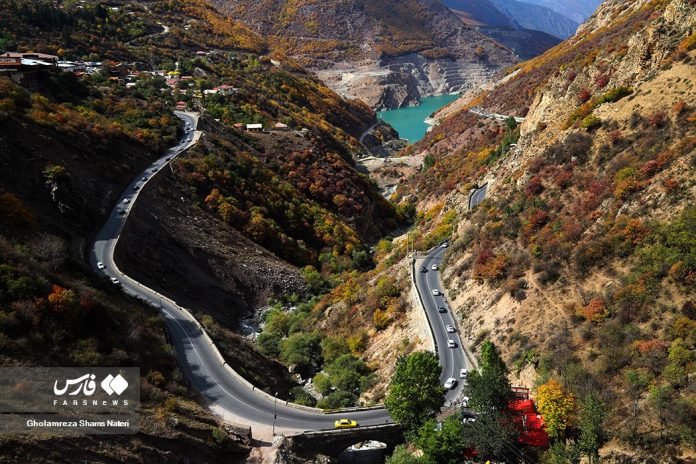
Tandoureh National Park: Guardians of Iran’s northern wilderness

These dedicated environmental guardians work far from urban centers, often from sunrise to midnight, protecting the country’s wildlife and natural habitats with minimal facilities and under harsh conditions.

Located near the Iranian-Turkmen border in the Dargaz region, Tandoureh National Park covers about 54 square kilometers and forms part of a 73,000-hectare protected area first established in 1968.

Around 10,000 hectares are officially designated as a conservation zone, while other sections serve as popular ecotourism and recreation areas.

Tandoureh is recognized as one of the world’s key genetic reservoirs, home to over 380 species of plants, many with medicinal properties, and a remarkable diversity of wildlife.

The park provides critical habitat for several endangered species, including the Persian leopard and the great bustard, making it one of Iran’s most valuable ecological reserves.

Iran FM condemns US resumption of nuclear tests after Pentagon name change

In a post on the social media platform X, Araghchi said the US, “a nuclear-armed bully”, had changed the name of its “Department of Defense” to the “Department of War” while restarting nuclear tests.

He noted that the same country portraying Iran’s peaceful nuclear program as a threat is now openly violating international law.

“This very bully,” Araghchi wrote, “depicts Iran’s peaceful nuclear activities as dangerous and threatens further attacks against our safeguarded facilities. All these actions are in clear breach of international law.”

He added that there is “no doubt the United States is the world’s most dangerous proliferator,” warning that Washington’s move to resume testing would normalize the spread of “such evil weapons.”

Araghchi urged the international community to speak with one voice and hold the US accountable for the normalization of nuclear proliferation.

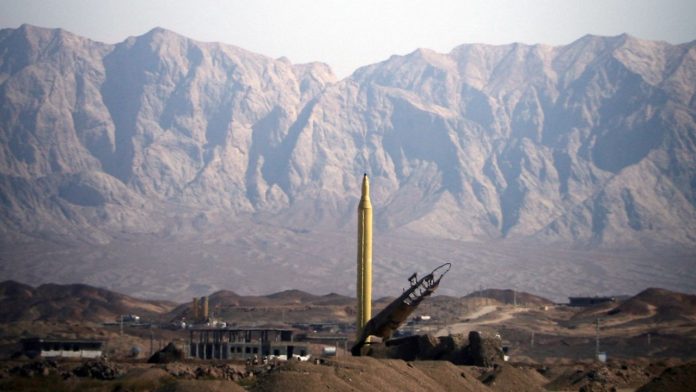
Iran’s Hormuz Ballistic Missile Elevates Deterrence in Persian Gulf and Gulf of Oman

Because of its unique geopolitical position in the Persian Gulf and the Gulf of Oman, the Islamic Republic of Iran has long been at the forefront of confronting maritime threats from adversaries.

The importance of these waters is unmatched not only in military terms but also in the fields of energy, commerce, and global security.

The presence of foreign forces in waters surrounding Iran has reinforced the necessity of strengthening naval defense and deterrence — especially given that a large portion of Iran’s oil exports and foreign trade transit this vital route.

Accordingly, enhancing the ability to counter maritime threats is not merely a military option but a strategic necessity to preserve Iran’s sovereignty, security, and national interests.

Given their strong similarity to the Fateh-class missile, the Hormuz-1 and Hormuz-2 missiles can be regarded as optimized and upgraded extensions of that family, and are considered among Iran’s most precise missiles.

The Hormuz missile’s range is reported to be approximately 300 kilometers, and the Hormuz-2’s speed has been described as between four and five times the speed of sound.

Unlike anti-ship missiles such as the Khalij-e Fars, which use optical guidance, or the Fateh-110, which relies on a precise inertial guidance system, the Hormuz (anti-radar) missile employs radar-wave seekers and attacks the source of emission.

The missile’s warhead is estimated to weigh between 450 and 600 kilograms.

Martyr Brigadier General Amir-Ali Haji-Zadeh, former commander of the IRGC Aerospace Force, said: “Hormuz-1 can destroy the radars aboard an aircraft carrier, a Patriot site on land, or a radar search site.”

Another potential target for the Hormuz missile is the many large military vessels that currently operate in the Persian Gulf.

Firing this missile in combination with one like the Khalij-e Fars could become a real nightmare for any enemy at sea.

Iran Returns to World Taekwondo Podium After Eight Years, Finishes Runner-Up in Wuxi, China

The tournament was held from October 23 to 30 in Wuxi, China, featuring 898 athletes from 179 countries.

Iranian athletes delivered a strong performance, earning three medals: a gold by Abolfazl Zandi, a silver by Mehdi Hajimousaei, and a bronze by Amirsina Bakhtiari.

Based on the final standings released by the World Taekwondo Federation, Iran secured second place overall, reclaiming its status among the world’s leading teams.

The achievement marks Iran’s first world podium finish since 2017, highlighting a successful comeback for the national team, which had been absent from top-tier global rankings for nearly a decade.

EU parliament seeking to block Russian media: Politico

The EU banned numerous Russian media outlets as part of sanctions imposed on Moscow after the escalation of the Ukraine conflict in February 2022. Despite the censorship, Russian outlets’ websites as well as multiple sites hosting RT and Sputnik content can still be viewed at the European Parliament, according to Latvian MEP Rihards Kols.

In mid-October, Kols, part of the right-wing European Conservatives and Reformists group, reportedly demanded that “Russian propaganda websites under EU sanctions” be made inaccessible at the legislature as a matter of “information security.”

The Latvian MEP told Politico that “this is a matter of information security, institutional coherence, and the credibility of the Parliament’s position against Russian disinformation.”

According to Kols, the Latvian media regulator has directly addressed European Parliament President Roberta Metsola on the issue.

“A solution is expected to be proposed in the near future,” he added.

Politico noted that the leaders of several political groups at the legislature expressed have concerns that the curbs on Russian media could set a precedent for other websites being blocked “for reasons other than security.” They also warned about technical and legal challenges when enforcing the restrictions, it said.

If approved, the ban would be similar to the one that the European Parliament imposed on Chinese-owned TikTok over network security concerns in March 2023, according to the outlet.

The EU lawmaking body’s press service confirmed that curbs on Russian media will be discussed at upcoming meetings of group leaders.

Russian Foreign Ministry spokeswoman Maria Zakharova previously stated that RT has been hit with over 110 separate sanctions, had its accounts frozen, and has seen its employees subjected to surveillance and harassment in the West.

Iran vows to keep window of diplomacy open despite challenges

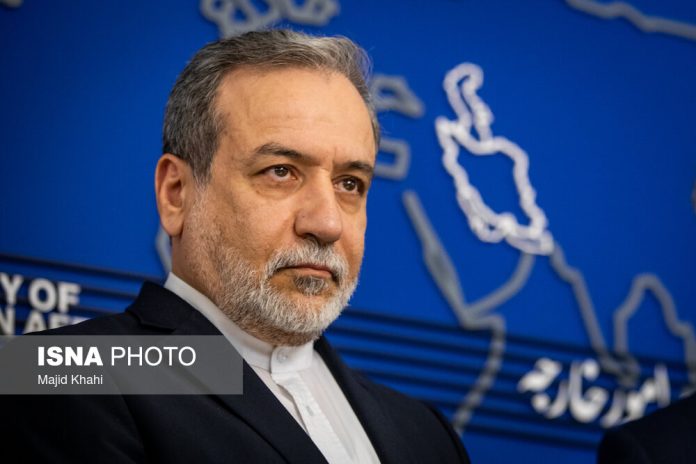
Abbas Araghchi

Iran’s diplomacy is fundamentally based on defending national dignity and interests, said Araghchi in Tabriz, northwest Iran, on Wednesday.

The country, Araghchi added, will not engage in negotiations with an adversary that resorts to threats and aggression instead of dialogue.

He emphasized that the continuation of any dialogue depends on both parties adhering to diplomacy based on equality and respecting the principle of mutual interests.

Araghchi reflected on the historical role of Iranian diplomats, commending their perseverance and determination in safeguarding a shared Iranian identity and in achieving significant milestones in Iran’s diplomatic history.

In Iran’s political history, he noted, diplomacy has never been merely a temporary tool for managing crises; rather, it represents an enduring and profound rationality.


Hamas ruled out role in Gaza governance, but disarmament talks ongoing: Qatar

“Hamas’s response to us was very clear…they are willing to give up the governance,” Qatari Prime Minister Mohammed bin Abdulrahman al-Thani said on Wednesday at a Council on Foreign Relations event in New York City.

“The weapons question, from their (Hamas’s) perspective, this is an obligation on all the factions, not on Hamas only. We are trying to push them [sic] to get to a point where they acknowledge that they need to disarm,” he added.

“We need to make sure that the Palestinians are safe and the Israelis are safe. That is the whole purpose of the decommissioning and disarmament.”

Qatar is one of the guarantors, along with the US, Turkey and Egypt, of the Gaza ceasefire deal that was signed earlier this month. The agreement has been marred by violations, including Israel’s refusal to open the Rafah border crossing and Israeli air strikes on the enclave.

On Tuesday, Israel launched its most devastating strikes on Gaza since the ceasefire was signed. At least 104 Palestinians were killed, including dozens of children, as strikes pummelled Gaza City, Khan Younis, and refugee camps in central Gaza.

Israel accused Hamas of violating the ceasefire, citing an alleged attack on troops in Rafah on Tuesday that left one soldier dead, and delays in handing over the bodies of dead captives.

Thani stressed that the attack was “very disappointing and frustrating”, adding that Qatar was focused on de-escalating the situation and preserving the ceasefire.

Hamas denied any involvement in the Rafah shooting.

Speaking with reporters during a trip to East Asia, US President Donald Trump echoed Israel’s claim before saying that he believes the agreement will hold.

“The Israelis hit back, and they should hit back,” Trump added.

Qatar, Turkey and Egypt were instrumental in pushing Hamas to agree to the ceasefire, while Trump appeared to put leverage on Israeli Prime Minister Benjamin Netanyahu, analysts and diplomats say.

Israel still occupies over half the Gaza Strip, and Trump’s advisor and son-in-law, Jared Kushner, floated an idea to rebuild the Israeli-occupied half of the enclave while leaving the part currently controlled by Hamas destroyed. The US wants Persian Gulf Arab states to invest in Gaza’s reconstruction, but there has been little evidence that they are willing to provide funds now.

When asked about Israel’s ongoing occupation of Gaza, Thani cited Trump’s 20-point ceasefire plan.

“When you look at President Trump’s plan, the major themes are ending the war, no occupation, and no annexation [of Gaza]. These are three key principles,” he said.

“Ultimately, they need to withdraw once the international stabilisation force comes into place,” he added.

Reconstruction should rely on investment, not aid: Syria’s president

Speaking at the Future Investment Initiative (FII) 2025 conference in Riyadh, Sharaa highlighted Saudi Arabia’s role in regional economic leadership and its support for Syria’s post-war recovery.

“We want to rebuild Syria through investment, not through aid and assistance,” he said, adding, “Saudi Arabia is a major player in the region, and under Crown Prince Mohammed bin Salman’s vision, it has become a hub for economists in the Middle East.”

Sharaa noted that the economy is closely tied to regional security and that instability in Syria during the war has posed strategic risks, including the spread of drugs and migration crises.

“The world has experienced Syria in turmoil over the past 14 years and as a generator of crises over the last 60 years.”

He emphasized that Syria has opened up to global investment, attracting $28 billion in the first six months after amending investment laws.

“Syria’s investment opportunities are rich, and major global economists recognize this,” he said, adding that the country has partnerships with Türkiye, Saudi Arabia, Qatar, the UAE, Bahrain, Jordan, and US companies.

“Saudi Arabia supports prosperity, stability, and development in Syria, and I have been following for years the vision put forward by the Saudi crown prince, which encompasses the entire region,” he continued.

Sharaa stressed the government’s commitment to protecting investors under the law and integrating Syria into the regional and global economy.

“We cannot live in isolation. Integration with other countries creates a fully connected future economy,” he stated.

The Syrian leader concluded by underscoring that Syria will achieve balanced economic rankings regionally and internationally and “will be among major economies within several years.”

Separately, Sharaa met with bin Salman to discuss bilateral cooperation, particularly in investment and economic ties, as well as exchanging views on regional and international developments, the Syrian presidency said in a statement.

A number of ministers and senior officials from both countries attended the talks, “reflecting the depth of the fraternal relations between the Syrian Arab Republic and the Kingdom of Saudi Arabia and their shared desire to strengthen and develop them,” the statement added.

Sharaa landed in Riyadh on Tuesday to participate in the third day of the ninth edition of the Future Investment Initiative (FII) conference, hosted by Riyadh through Oct. 30. The event brings together more than 8,000 participants, including senior officials from around the world.

This is the third visit by Sharaa to the kingdom since he assumed Syria’s presidency in January 2025.

Syria has been working to revive the country’s economy by attracting investors and signing trade agreements with regional states and companies after Bashar al-Assad fled to Russia in late 2024, ending the Baath Party’s decades-long rule since 1963.


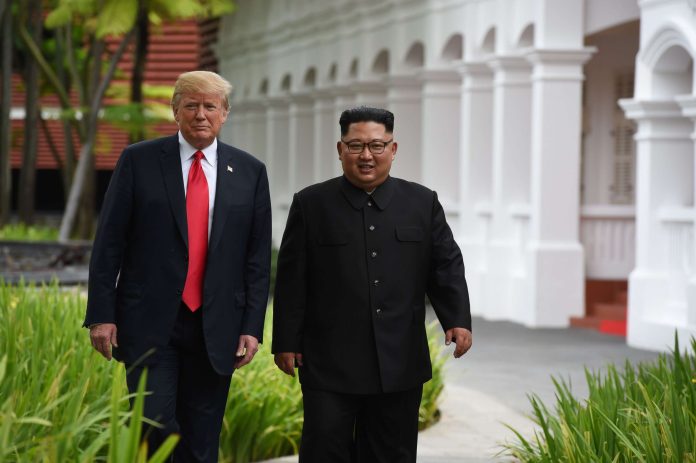
Trump directs Pentagon to start testing nuclear arms on equal basis to China and Russia

“The United States has more Nuclear Weapons than any other country,” Trump wrote.

“This was accomplished, including a complete update and renovation of existing weapons, during my First Term in office. Because of the tremendous destructive power, I HATED to do it, but had no choice! Russia is second, and China is a distant third, but will be even within 5 years.”

Trump’s announcement on TruthSocial came shortly before he was slated to meet face-to-face with Chinese President Xi Jinping for the first time since 2019 in South Korea on Thursday.

Trump later ignored a question from a reporter about the move while meeting with Xi and the Chinese delegation in South Korea just before reporters were ushered out of the room.

The U.S. halted the explosive testing of nuclear arms in 1992.

Russia claimed it tested its new nuclear-capable cruise missile, known as the Burevestnik, last week, which purportedly flew 8,700 miles.

The test was met with international condemnation, including from Trump, who called it “inappropriate” as he is pushing the Kremlin to come to the table and negotiate a deal to end the Russia-Ukraine war.

“You’ve got to get the war ended. A war that should have taken one week is now in its soon fourth year,” the president said on Monday.

“That’s what you ought to do, instead of testing missiles.”

“We test missiles all the time. They’re not playing games with us, and we’re not playing games with them either,” Trump added.

On Wednesday, Russian President Vladimir Putin claimed that Moscow successfully tested a new atomic-powered and nuclear-capable underwater drone. The test was conducted on Tuesday, with Putin claiming the nuclear reactor that powers the Poseidon drone is “100 times smaller” than those on submarines.


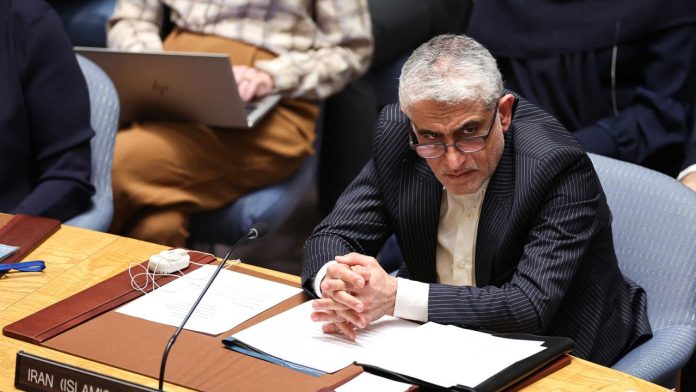
Iran urges IAEA chief to avoid “baseless remarks” on nuclear program

Rafael Grossi

In an interview with Al Jazeera, Baqaei criticized Grossi’s recent comments about Iran’s nuclear program, describing them as “catastrophic” and saying they could “pave the way for US and Israeli aggression against Iran.”

He urged the IAEA chief to refrain from making “unfounded statements” regarding the country’s nuclear activities.

Grossi told the Associated Press on Wednesday that while Iran is not currently engaged in active uranium enrichment, the agency has observed movements near storage facilities for enriched uranium.

He also said IAEA inspectors lack full access to Iranian sites but are monitoring developments through satellite imagery, which has shown no acceleration of enrichment beyond pre-conflict levels.

The IAEA chief added that uranium enriched up to 60 percent remains in Iran and that the agency must verify that it has not been diverted for other purposes.
He emphasized the importance of renewed access to confirm the status of the material.