Sunday, April 12, 2026
Home Blog Page 81

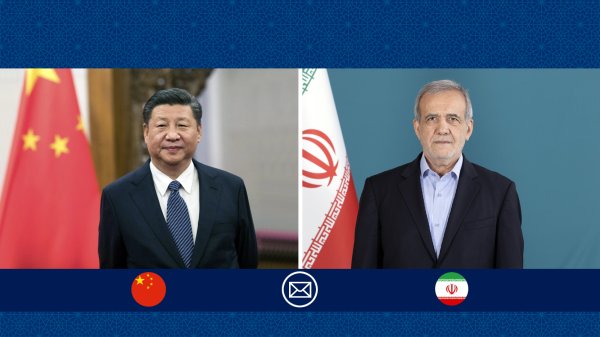
Iranian president congratulates China on National Day, highlights strategic ties

Pezeshkian Xi

In a message released on Wednesday, President Pezeshkian, on behalf of the Iranian people and government, praised China’s path of development, describing it as a foundation for shared prosperity among nations worldwide.

He recalled his recent meeting with President Xi in Beijing, stressing that a “comprehensive strategic partnership with the People’s Republic of China is a key priority for the Islamic Republic of Iran.”

President Pezeshkian said the shifting and complex regional and international environment made strengthening bilateral relations more necessary than ever.

The Iranian president also expressed hope that relations between Tehran and Beijing would continue to advance “under the principles of mutual respect and shared interests.”

China and Iran maintain close political and economic ties, with cooperation spanning trade, energy, infrastructure, and regional diplomacy. Tehran regards Beijing as a strategic partner in its efforts to counter Western economic pressure and expand regional influence.

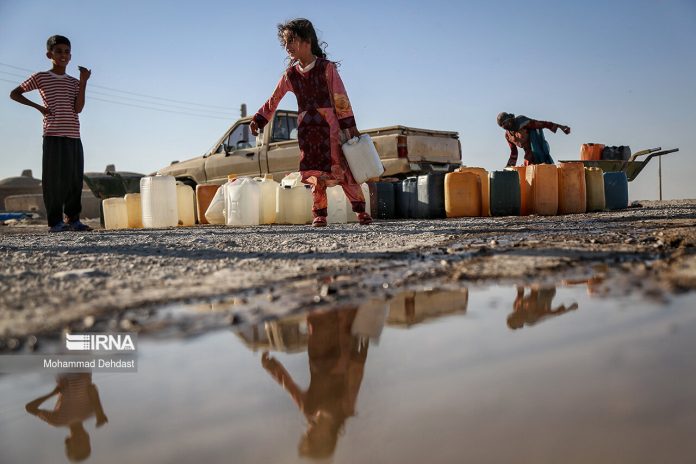
Iran’s water rights from Helmand river remain unfulfilled despite treaty with Afghanistan

Iran Water Crisis

Official data show that during the past water year, Iran received only about 119 million cubic meters, a fraction of its legal entitlement.

Satellite imagery indicates that Afghanistan’s Kajaki Dam reservoir is full and has even overflowed, yet Iran’s historical water rights remain unmet.

The shortfall has deepened agricultural and environmental challenges in eastern Iran, including the drying of the Hamoun wetlands, rising unemployment, migration, and social unrest in Sistan and Baluchestan province.

Issa Bozorgzadeh, spokesman for Iran’s water industry, said negotiations and verbal assurances from Afghanistan have not translated into practical action.

Lawmaker Farhad Shahraki added that the water share is a legal obligation, not a request, stressing that political considerations in Kabul have obstructed implementation.

Iran has signaled readiness to provide technical assistance for restoring the river’s natural flow, while urging Afghanistan to honor the 1973 accord.

Experts argue that Tehran must pursue both active diplomacy and stricter domestic water management to prevent the crisis from worsening.

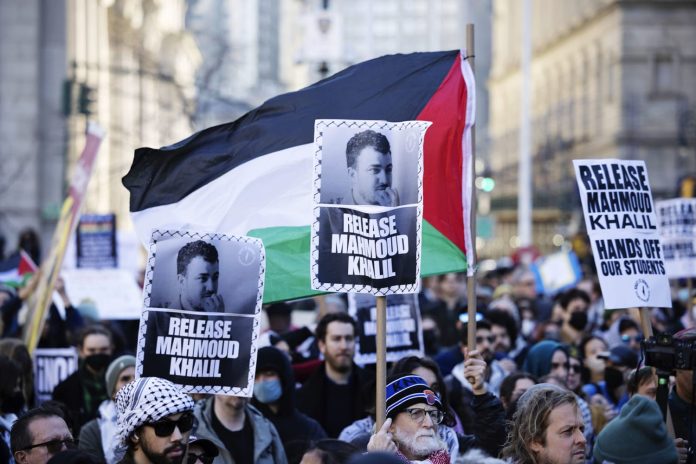
Judge rules US deportation drive against pro-Palestine students is illegal

In a blistering opinion on Tuesday, Federal District Judge William Young, an appointee of former President Ronald Reagan, said Secretary of State Marco Rubio and Secretary of Homeland Security Kristi Noem misused their powers in the deportation campaign.

“They did so in order to strike fear into similarly situated non-citizen pro-Palestinian individuals, pro-actively (and effectively) curbing lawful pro-Palestinian speech and intentionally denying such individuals … the freedom of speech that is their right,” Young wrote.

“Moreover, the effect of these targeted deportation proceedings continues unconstitutionally to chill freedom of speech to this day.”

The ruling represents a major rebuke to the Trump administration’s efforts to penalise non-citizens who participated in campus activism against the war on Gaza last year.

Rubio has stated that he revoked the visas of hundreds of students – including legal permanent residents – over their Palestine activism.

The case was brought forward by the American Association of University Professors, which has been pushing back on Trump’s campaign to reshape higher education to align more with his right-wing worldview.

During the proceedings, federal officials acknowledged relying on Canary Mission – a shadowy doxxing website that critics describe as a hate group – to identify foreign students for removal.

Young concluded that Trump’s aides cracked down on the students in order to make an example out of them, “terrorizing similarly situated non-citizen (and other) pro-Palestinians into silence”.

Columbia University’s Mahmoud Khalil was one of the first students to be targeted. He was detained in an immigration facility for three months and missed the birth of his first son before a judge ordered his release.

In another high-profile case, Turkish Tufts University scholar Rumeysa Ozturk was nabbed by masked federal agents and spent weeks in jail for co-authoring an op-ed in her school’s newspaper.

The article called on the university administration to uphold the student senate’s resolutions, including a call for divesting from companies complicit in Israeli human right abuses.

A federal court ordered federal authorities to release Ozturk in May. But she, Khalil and others continue to face deportation proceedings.

It is not immediately clear how Tuesday’s ruling will affect those cases individually.

To deport the activists, Rubio has been invoking a seldom-used provision of the Immigration and Nationality Act on the basis that the students’ presence has “adverse” effects on American foreign policy.

The Trump administration has been arguing that foreign students and non-citizens in general have minimal rights and could be removed for abusing the privileges of being in the US.

It has accused the students – without providing evidence – of supporting “terrorism”, promoting anti-Semitism and spreading Hamas propaganda.

While Judge Young agreed that non-citizens are guests, he stressed that they have constitutional protections.

“How we treat our guests is a question of constitutional scope, because who we are as a people and as a nation is an important part of how we must interpret the fundamental laws that constrain us,” he wrote.

“We are not, and we must not become, a nation that imprisons and deports people because we are afraid of what they have to tell us.”

The judge also rejected equating criticism of Israel with support for “terrorism”.

“If ‘terrorist’ is interpreted to mean ‘pro-Palestine’ or ‘anti-Israel,’ and ‘support’ encompasses pure political speech, then core free speech rights have been imperiled,” he said.

Young added it is not clear whether Trump directed the deportation campaign, but he noted that the US president celebrated and “wholeheartedly supported it”.

 

Trump: Russia and China catching up with US on submarines

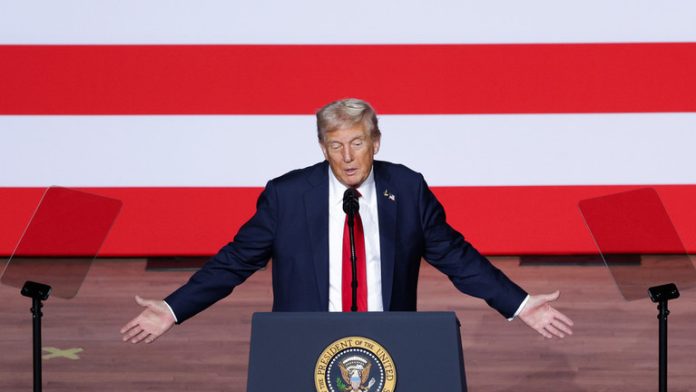
He made the remarks during a speech to top military officers at Quantico, a Marine Corps base outside Washington, on Tuesday.

“We’re 25 years ahead of Russia and China in submarines,” Trump claimed.

“Russia is actually second in submarines. China is third. But, you know, they’re coming up.”

“They’re way lower in nuclear, too, but in five years they’ll be equal,” he said, without elaborating whether he meant nuclear weapons or submarines.

He added that he deployed “a nuclear submarine” after being “a little bit threatened by Russia recently,” referring to former Russian President Dmitry Medvedev’s mention of the ‘Dead Hand’ – the rumored Soviet contingency system capable of launching every remaining nuke in the event the country’s leadership is killed by a first strike.

Trump referred to the nuclear submarine as “the most lethal weapon ever made.”

“It’s undetectable, totally. Ours is. Theirs isn’t,” he stated, claiming that the US has access to “genius apparatus that doesn’t allow detection.”

According to a defense industry study published in China in September, Beijing is working on an AI submarine detection system that could hunt down craft with a 95% accuracy rate. It reportedly collates and analyses data from sonar buoys, underwater sensors, radar and even water salt and temperature levels to find enemy vessels.

Russian President Vladimir Putin said in August that Russian submarines have a “military advantage,” because they are capable of diving under Arctic ice and thus vanishing from radar.

Moscow has expanded its roster of nuclear submarines with eight Borei-class vessels since the 2000s, the newest of which – the Knyaz Pozharsky – was launched earlier this year.

Putin recently extended a friendly gesture to the US, after Trump hinted that he wanted a nuclear deal with Russia and China.

In a speech at the Russian Security Council last week, Putin offered to abide by the New START treaty for one year after it lapses – provided Trump does the same. The agreement, which limits nuclear weapon stocks, is set to expire next February.


Hamas has ‘3-4 days’ to respond to Gaza peace plan: Trump

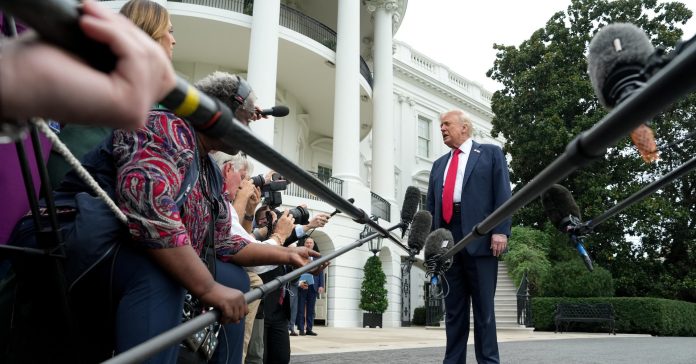
“We’re going to do about three or four days. We’ll see how it is,” Trump told reporters when asked about the timeline for a response from the Palestinian resistance group.

He said all Arab and Muslim countries, along with Israel, have signed up for the proposal.

“We’re just waiting for Hamas, and Hamas is either going to be doing it or not — and if it’s not, it’s going to be a very sad end,” he added.

Trump on Monday unveiled the 20-point plan to end Israel’s war on Gaza during a White House press conference with Israeli Prime Minister Benjamin Netanyahu.

The plan calls for the release of all Israeli captives in exchange for dozens of Palestinian prisoners, the complete disarmament of Hamas, a gradual withdrawal of Israeli forces, and the formation of a technocratic, apolitical Palestinian committee to govern the enclave.

The Israeli army has killed over 66,000 Palestinians, most of them women and children, in Gaza since October 2023. The relentless bombardment has rendered the enclave all but uninhabitable and led to starvation and the spread of diseases.


Rezaei: Trump’s letter to Leader raised nuclear talks, not missiles

Iran Missile

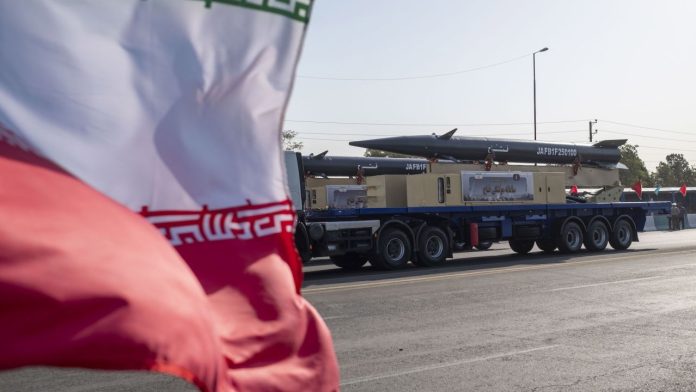
He criticized recent proposals to limit the range of Iran’s ballistic missiles, saying such caps—reportedly suggested at 400 kilometers—would leave the country unable to strike adversaries like the Israeli regime in retaliation.

“They bombed our nuclear sites thinking our program was finished,” Rezaei said, arguing that restrictions on missile range would undermine Iran’s ability to defend itself.

The remarks come amid ongoing diplomatic and security debates over Iran’s nuclear and missile programs, and follow calls chiefly from Western capitals for constraints on Tehran’s missile capabilities alongside negotiations on its nuclear activities.

Top Iranian lawmaker: Cooperation with IAEA currently suspended

Iran nuclear programe

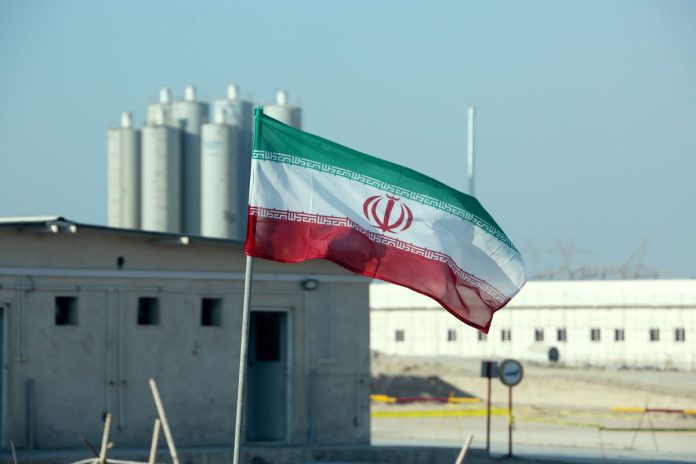
Nabavian stated: “At present, our cooperation with the Agency is suspended in full. According to the law of the Parliament, any cooperation is conditional upon the protection of the security of our nuclear facilities and scientists, the guarantee of non-aggression against our territory, and the recognition of Iran’s inalienable right to enrichment under Article 4 of the NPT. Unless these are assured, we have no obligation to cooperate.”

The senior legislator further underlined: “There are no IAEA inspectors in Iran at the moment.”

Nabavian’s remarks come as Tehran has time and again stressed that the path to continued technical engagement with the IAEA depends on respect for its sovereign rights and full adherence to the provisions of the NPT by all parties, not selective or politically motivated enforcement.

Most Americans oppose more aid to Israel: Survey

According to the findings, 51% of Americans oppose sending “additional economic and military support to Israel,” while only 31% back further aid. Six out of ten voters (58%) say Tel Aviv should immediately end its Gaza campaign, even if hostages remain in captivity and Hamas is not eliminated.

The poll also found that 40% of US voters believe Israel is intentionally killing civilians in Gaza. A larger share (62%) say Israel is not taking enough precautions to avoid civilian casualties.

Overall, 34% of respondents side with Israel and 35% with the Palestinians in the conflict. The survey was conducted nationwide from September 22 to 27 among 1,313 registered US voters.

The findings contrast sharply with polling in the immediate aftermath of the Hamas attacks on Israel on October 7, 2023, when the group killed 1,200 people and seized more than 250 hostages. At that time, 47% of American voters sided with Israel and only 20% with the Palestinians.

Since the Gaza escalation in October 2023, Washington has approved billions in emergency weapons and defense aid to Israel. Its campaign in Gaza has killed more than 65,000 Palestinians – a toll that a UN committee this month labeled genocide. Israel also recently launched a ground offensive in Gaza City, one of the last areas outside of IDF control – spurring some countries to recognize a Palestinian state, while international bodies and hostage families have pressed for a settlement.

On Monday, the US unveiled a 20-point plan to end the Gaza war, calling for an immediate ceasefire, a hostages-for-prisoners exchange, a staged Israeli withdrawal, Hamas disarmament, and a transitional international administration.

Prime Minister Benjamin Netanyahu endorsed the framework but warned that Israel would “finish the job” militarily if Hamas refuses.


Iranian FM urges diplomacy, says nuclear technology is indigenous

Abbas Araghchi

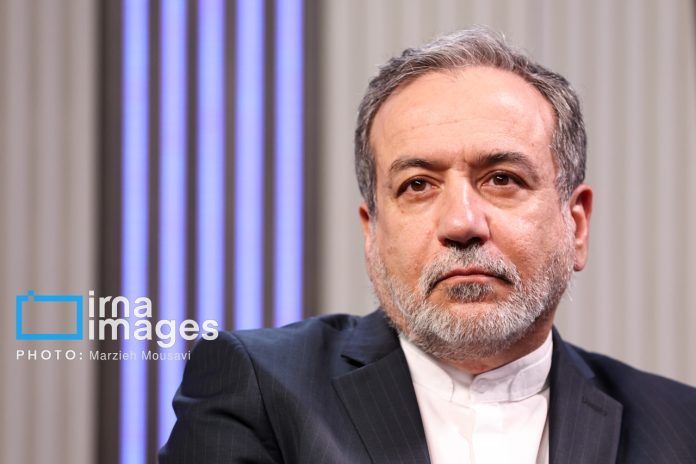
In a wide-ranging interview, Seyed Abbas Araghchi reiterated that Iran has never sought nuclear weapons and pointed to the 2015 nuclear deal (JCPOA) as proof of its peaceful intent, saying Tehran complied while the US later withdrew.

Araghchi said five rounds of talks took place after Washington signaled readiness to return to negotiations in 2025; a sixth round scheduled for June 15 was disrupted when Israel and the US struck Iranian sites two days earlier.

He warned that military strikes and a push to trigger a UN “snapback” of sanctions would only complicate diplomacy, adding that Iran’s nuclear know-how is domestically developed and therefore not eliminated by attacks on facilities.

The Iranian foreign minister defended limited enrichment for medical and research reactors, noting Tehran’s legal right to peaceful nuclear activities under international agreements and urging multilateral negotiation rather than coercive measures.

On Gaza and regional diplomacy, Araghchi said Iran seeks an end to mass civilian casualties and will judge any peace proposals by whether they respect Palestinian rights to self-determination.

Iran dismisses rumors of poppy cultivation, reaffirms opposition to narcotics production

Speaking on a state television program, Mohammad Zarei said nearly 300 million people worldwide use some form of narcotic substance, with around 500,000 deaths each year linked to drug abuse.

He described addiction as one of the most serious social challenges globally, surpassing the toll of natural disasters and wars.

Zarei highlighted Iran’s heavy sacrifices in the fight against drug trafficking, noting that the country has lost nearly 4,000 personnel and more than 12,000 have been injured over the past four decades.
He emphasized that Iran, located on a major drug transit route, has borne significant costs for global security.

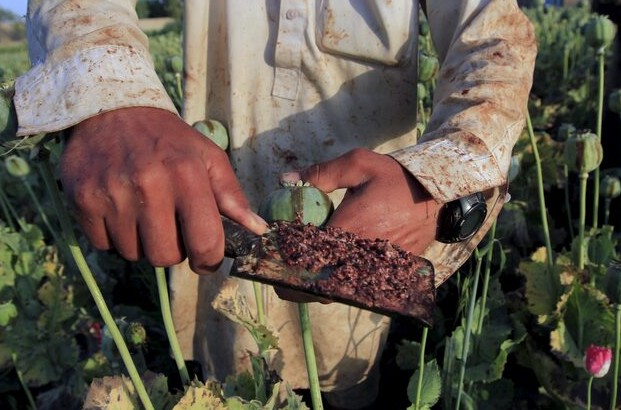
Addressing recent speculation, Zarei stated: “The policy of Iran, which is resolute opposition to poppy cultivation and narcotics production, remains firm.”

He clarified that while discussions exist over meeting medical needs for opioid-based medicines, no decision has been made to allow cultivation, and any such move would involve controlled production of a specific non-opium variety for pharmaceutical purposes only.

He concluded that Iran will continue to strengthen laws and enforcement against illegal cultivation, with harsher penalties under review in parliament.