Friday, December 26, 2025
Home Blog Page 82

Report discloses rising heat kills one person a minute worldwide

It says the world’s addiction to fossil fuels also causes toxic air pollution, wildfires and the spread of diseases such as dengue fever, and millions each year are dying owing to the failure to tackle global heating.

The report, the most comprehensive to date, adds the damage to health will get worse with leaders such as Donald Trump ripping up climate policies and oil companies continuing to exploit new reserves.

Governments gave out $2.5bn a day in direct subsidies to fossil fuels companies in 2023, the researchers found, while people lost about the same amount because of high temperatures preventing them from working on farms and building sites.

Reduced coal burning has saved about 400 lives a day in the last decade, the report says, and renewable energy production is rising fast. But the experts say a healthy future is impossible if fossil fuels continue to be financed at current rates.

Dr Marina Romanello, of University College London (UCL), who led the analysis, stated: “This [report] paints a bleak and undeniable picture of the devastating health harms reaching all corners of the world. The destruction to lives and livelihoods will continue to escalate until we end our fossil fuel addiction.”

“We’re seeing millions of deaths occurring needlessly every year because of our delay in mitigating climate change and our delay in adapting to the climate change that cannot be avoided. We’re seeing key leaders, governments and corporations backsliding on climate commitments and putting people increasingly in harm’s way.”

The report says the rate of heat-related deaths has surged by 23% since the 1990s, even after accounting for increases in populations, to an average of 546,000 a year between 2012 and 2021.

“That is approximately one heat-related death every minute throughout the year,” said Prof Ollie Jay, of the University of Sydney, Australia, who was part of the analysis team.

“It is a really startling number and the numbers are going up.”

Jay stated: “We constantly emphasise to people that heat stress can affect everybody and it can be deadly – I think a lot of people don’t understand that – and that every heat-related death is preventable.”

Laura Clarke, the chief executive of the environmental law firm ClientEarth, noted, “We are living through the era of climate consequences. Heatwaves, floods, drought and disease are no longer distant warnings – they’re here now. But as attribution science, climate litigation and grassroots activism grow, accountability for climate impacts is no longer a question of if but when.”

The 2025 edition of the Lancet Countdown on Health and Climate Change was led by UCL in collaboration with the World Health Organization and produced by 128 experts from more than 70 academic institutions and UN agencies.

In the past four years, the average person has been exposed to 19 days a year of life-threatening heat and 16 of those days would not have happened without human-caused global heating, the report says. Overall, exposure to high temperatures resulted in a record 639bn hours of lost labour in 2024, which caused losses of 6% of national GDP in the least developed nations.

The continued burning of fossil fuels not only heats the planet but also produces air pollution, causing millions of deaths a year. Wildfires, stoked by increasingly hot and dry conditions, are adding to the deaths caused by smoke, with a record 154,000 deaths recorded in 2024, the report says. Droughts and heatwaves damage crops and livestock and 123 million more people endured food insecurity in 2023, compared with the annual average between 1981 and 2010.

Despite the harm, the world’s governments provided $956bn in direct fossil fuel subsidies in 2023, which was the world’s hottest year on record until it was surpassed by 2024. The researchers said this dwarfed the $300bn a year pledged at the UN climate summit Cop29 in 2024 to support the most climate-vulnerable countries.

The report adds the UK provided $28bn in fossil fuel subsidies in 2023 and Australia allocated $11bn. Fifteen countries including Saudi Arabia, Egypt, Venezuela and Algeria spent more on fossil fuel subsidies than on their national health budgets.

The world’s 100 largest fossil fuel companies increased their projected production in the year up to March 2025, which would lead to carbon dioxide emissions three times those compatible with the Paris climate agreement target of limiting heating to 1.5C above preindustrial levels, the report says. Commercial banks are supporting this expansion, with the top 40 lenders to the fossil fuel sector collectively investing a five-year high of $611bn in 2024. Their green sector lending was lower at $532bn.

Romanello said: “If we keep on financing fossil fuels and enabling this expansion of fossil fuels, we know that a healthy future is not possible.”

She stated the solutions to avoid a climate catastrophe and protect lives existed, from clean energy to city adaptation to healthier, climate-friendly diets.

“If there’s any optimism it comes from the action by local communities and authorities, and by the health sector – those that are really in contact with people on the ground,” she continued.

“They are seeing the impacts with their own eyes and are stepping up because they just become undeniable, but we must keep up the momentum.”


Iran starts test flights of home-made cargo plane

Iran transport plane Simorgh

Simorgh’s test flights began in an airfield in the city of Shahin Shahr in central Iran on Tuesday after a ceremony attended by deputy heads of Iran’s ministries of defense and transportation.

The plane has to carry out 100 hours of test flights in various circumstances to get a final permit to join Iran’s aviation fleet, according to a statement from Iran’s Civil Aviation Organization (CAA).

CAA chief Hossein Pourfarzaneh said on Tuesday that Simorgh, whose indigenization process has taken more than 15 years, ranks Iran among fewer than 20 countries in the world that have the capability to design and manufacture aircraft.

Simorgh, named after a mythical bird in Persian mythology and literature, is equipped with two 2,500-horsepower engines that can carry 6 metric tons (mt) of cargo over a distance of 3,900 kilometers, while its maximum takeoff weight is 21.5 mt.

The plane carried out a fast-taxi test in May 2022, a year before it conducted its maiden flight.

Since then, the Iranian defense ministry, which is in charge of manufacturing Simorgh, has been trying to receive a test certificate for the plane from the CAA, a process that has involved obtaining a type certificate, a document that signifies the plane’s airworthiness.

Experts say Simorgh is a modified version of IrAn-140, an Iranian-Ukrainian joint project which is itself based Antonov An-140. However, former CAA officials have disputed that view, saying it is quite a different plane as it enjoys a modified engine and fuselage.

Simorgh has been described as an agile, light, and quick plane with a high cargo carriage capacity that is compatible with Iran’s weather conditions, making it a perfect choice for critical services like medical flights.

Authorities say the aircraft will boost the capacity of Iranian ground and navy forces to transport troops or equipment between their bases across the country.

They also believe that Simorgh can join Iran’s fleet of short-haul passenger jets in the future.

Reports in recent years have pointed to major achievements in Iran’s aircraft production and maintenance industry.

That has come against the backdrop of sanctions imposed on Iran, which prevent airlines in the country from purchasing new planes or aircraft parts.


Trump says ‘timing’ didn’t work out To meet N. Korea’s leader

Trump said on Wednesday he would aim to “straighten out” tensions between North Korea and South Korea as he met Seoul’s President Lee Jae Myung for a summit.

“I know Kim Jong Un very well… we really weren’t able to work out, timing,” Trump added.

Trump met Kim three times during his previous term as president but failed to reach accord on ending Pyongyang’s nuclear program because of differences on lifting sanctions and over how to scrap the North’s nuclear facilities.

US govt. shutdown could threaten American nuclear weapons production: CNN

Hundreds of thousands of federal employees have been furloughed after the US government shut down on October 1. The Democrats have reportedly said they will not greenlight a new spending bill in the Senate unless the Republicans fulfill all their demands, including extending subsidies under the Affordable Care Act.

The National Nuclear Security Administration (NNSA), which makes nuclear weapons and safeguards the existing stockpile, had asked the White House to take money from previously passed spending bills to keep the agency running during the shutdown, but the request has not been fulfilled, CNN reported on Monday, citing informed sources.

Last week, the NNSA announced it had to furlough most of its full-time staff, some 1,400 people, engaged in supervising the development of weapons and nuclear non-proliferation activities. The administration of US President Donald Trump was only able to keep the NNSA’s key weapons labs and plants operating by using contractors.

According to CNN, NNSA officials fear the shutdown could significantly undermine the output of nuclear weapons in the US. Even a brief pause in production could lead to lengthy delays as safely stopping work on nuclear materials is a complicated process that takes weeks, the sources explained.

The report comes on top of existing concerns about the depletion of US arsenals of conventional weapons.

Trump earlier complained that the administration of his predecessor, Joe Biden, had “emptied out our whole country” by giving weapons to Ukraine during the conflict with Russia.


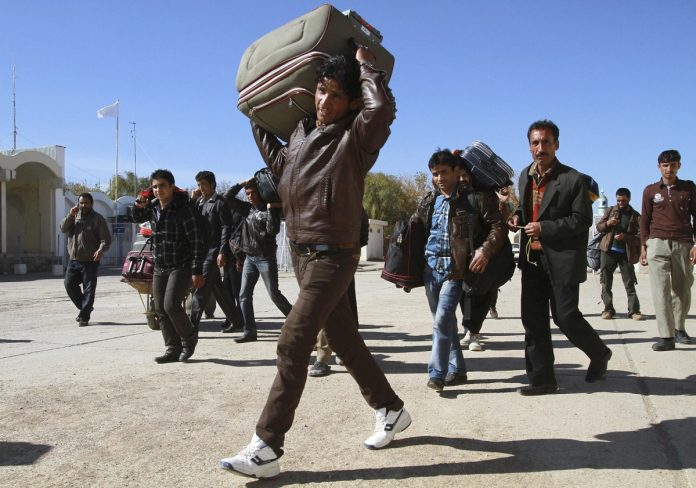
Iran offers online education to Afghan students who returned home

Nader Yarahmadi, head of the Bureau for Foreign Nationals and Immigrants’ Affairs at the Ministry of Interior, said that around 280,000 Afghan students left Iran after the enforcement of new migration regulations earlier this year.

“We are fully prepared to offer distance education to those who have returned to Afghanistan and can even provide our registration platform free of charge,” he stated, adding that families would only need to cover internet costs.

Yarahmadi noted that about 300,000 legally registered Afghan students have already enrolled for the new academic year in Iran.

He attributed the lack of response to the distance-learning initiative to families’ preference to keep their children studying in Iran rather than returning home.

He emphasized that Iran remains committed to ensuring that Afghan children who have returned to their country do not miss out on education and is ready to cooperate with private and international organizations to support the program.

Iranian forces eliminate Jaish al-Adl terrorist cell behind attack in southeast

Iran Police

According to local authorities on Wednesday, the operation was described as “swift and complex,” leading to the capture of several members of the group in their hideout.

The detainees confessed to receiving training in Pakistan and participating in the ambush that targeted two police patrols returning from a mission.

Officials said the attackers planted an explosive trap and opened fire on the vehicles, resulting in the deaths of ten officers, including Colonel Nematollah Nouri, the Goharkuh station commander.

One arrested member, identified as Younes Dahmarde, said the nine-member team used two vehicles to carry out the assault. Investigators confirmed that the group had been in contact with handlers abroad via encrypted communications.

The operation’s success, officials added, was made possible by intelligence provided by local residents, underscoring the region’s determination to resist terrorist activity and maintain security.

China: Xi, Trump to have ‘in depth’ negotiations on ‘major issues’

Trump Xi

Trump has stressed he expected their first face-to-face meeting of his second term to result in the United States lowering tariffs imposed on China in relation to fentanyl.

Beijing confirmed the face-to-face meeting on the sidelines of a summit of Asia-Pacific Economic Cooperation (APEC), which is taking place in the city of Gyeongju.

The Chinese foreign ministry announced that the talks would take place in Busan, a short flight from Gyeongju.

“During this meeting, the two leaders will have in depth communication on strategic and long-term issues concerning China-US relations, as well as major issues of mutual concern,” foreign ministry spokesman Guo Jiakun told a regular news conference on Wednesday.

“We are willing to work together with the US side to ensure that this meeting yields positive outcomes, provides new guidance, and injects new momentum into the stable development of China-US relations,” Guo added.

The US president stated Wednesday he was not sure whether he would discuss the sensitive topic of self-ruling Taiwan during his meeting with Xi.

“I don’t know that we’ll even speak about Taiwan. I’m not sure. He may want to ask about it. There’s not that much to ask about. Taiwan is Taiwan,” Trump told reporters aboard Air Force One.

The American leader added he expected a “lot of problems” to be solved in his upcoming meeting with Chinese leader Xi Jinping.

“I think we’re going to have a great meeting with President Xi of China, and a lot of problems are going to be solved,” Trump told reporters.

Iranian deputy FM urges use of cross-border provincial capacities in talks with Herat governor

According to Iran’s Foreign Ministry, Gharibabadi described his meetings in Kabul as “constructive and forward-looking,” noting that the policy of good neighborliness holds a special place in both countries’ foreign relations.

He called for strengthening collaboration based on shared religious and cultural ties and addressing outstanding bilateral issues through provincial-level initiatives.

Governor Islamjar welcomed the visit and highlighted growing economic cooperation between the two nations, citing joint projects such as the Khaf-Herat railway.

He expressed Afghanistan’s interest in extending the railway to Mazar-e-Sharif and proposed joint ventures in cross-border agriculture, whereby Afghan farmers could cultivate water-intensive crops under Iranian standards and deliver produce at the border.

Islamjar also invited Iranian cooperation in developing industrial livestock projects to help supply a significant portion of Iran’s meat demand.
Gharibabadi and his delegation later toured border areas to review ongoing issues and cooperation opportunities.

Persepolis sinking by 30 centimeters annually amid 5,000 illegal wells

Experts warn that land subsidence in the region, driven by the over-extraction of groundwater, has reached critical levels.

Behnaz Bazoubandi, a cultural heritage activist, said around 5,000 illegal wells operate in the Marvdasht Plain, many of which continue to pump water despite closure orders.

“Every cultivation season, massive amounts of groundwater are drawn from around Persepolis, endangering the site’s stability,” she said.

Bazoubandi cautioned that continued subsidence could cause cracks in the western section of the Apadana Palace and other monuments. Unregulated urban expansion in the protected zone also threatens the area, she added.

Ali Nik-Ahd, Director of the Geological Survey of Southern Iran, emphasized that subsidence is not a natural phenomenon but a result of human mismanagement.

He noted that data from radar imaging software “GAMMA” shows land in Marvdasht sinking between two and 30 centimeters annually. Experts urge immediate groundwater management and aquifer recharge to prevent irreversible damage to Iran’s ancient heritage.

Trump supports renewed Israeli attacks in Gaza

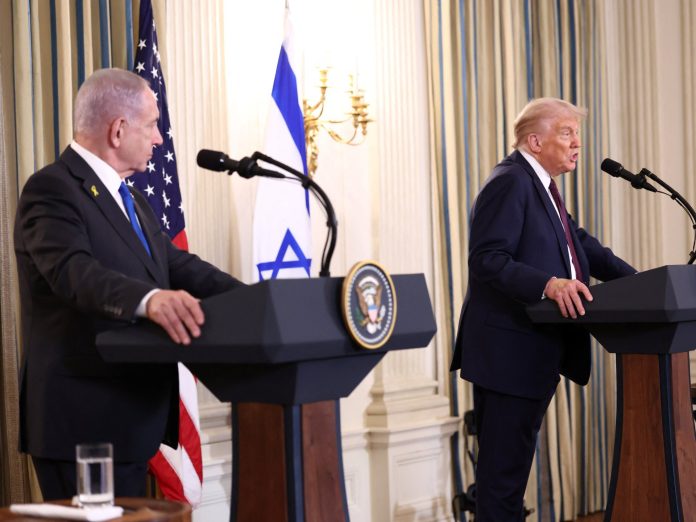
Israeli Prime Minister Benjamin Netanyahu ordered “immediate and powerful strikes” on Tuesday evening, citing Hamas attacks on Israeli soldiers still holding parts of the Palestinian enclave. Dozens of Palestinians were killed in the action, according to Gaza’s Hamas-run government.

“As I understand it, they took out an Israeli soldier,” Trump told reporters aboard Air Force One on Wednesday en route from Japan to South Korea.

“They killed an Israeli soldier. So the Israelis hit back – and they should hit back. When that happens, they should hit back,” he added.

Trump argued that “nothing is going to jeopardize” the ceasefire. He insisted that Hamas was “a very small part of peace in the Middle East, and they have to behave,” otherwise “their lives will be terminated.”

US Vice President J.D. Vance earlier said the ceasefire was holding despite “little skirmishes here and there.”

Axios cited unnamed senior US officials as saying the White House had urged Israel not to take “radical measures” that could collapse the truce.

According to the Israel Defense Forces (IDF), last week two of its soldiers were attacked and killed by Hamas in Rafah, southern Gaza, and more soldiers came under fire in the same area on Tuesday. Hamas denied involvement in both incidents, accusing Israel of “a blatant ceasefire violation.”

The Palestinian armed group warned that the escalation “will lead to a delay” in recovering and returning the bodies of the 13 remaining Israeli hostages in Gaza. Israeli officials earlier accused Hamas of dragging its feet in handing over all the remains, as agreed under the ceasefire mediated by the US, Egypt, Qatar, and Türkiye, which took effect on October 10.