Sunday, April 12, 2026
Home Blog Page 83

Taliban frees US citizen after Qatari mediation

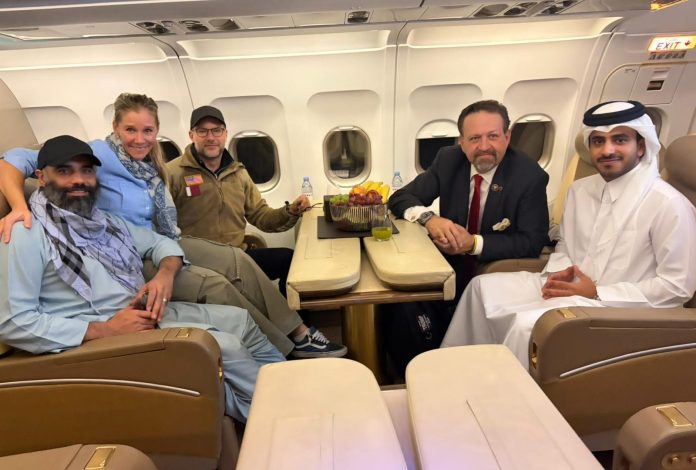
The release of Amir Amiri, who was on his way back to the United States on Sunday, is the fifth US citizen to be freed by Afghanistan’s Taliban rulers, who returned to power in August 2021 after the withdrawal of US-led forces from the country after 20 years of occupation and war.

Negotiations lasted several months after Qatari officials secured an initial meeting between Amiri and the US special envoy for hostage affairs, Adam Boehler, sources with knowledge of the matter told Al Jazeera. The breakthrough that secured his release was reached this weekend, they said.

US Secretary of State Marco Rubio welcomed Amiri’s release, saying it marked the US government’s determination to protect American nationals from wrongful detention abroad.

“While this marks an important step forward, additional Americans remain unjustly detained in Afghanistan,” he stated, adding, “President [Donald] Trump will not rest until all our captive citizens are back home.”

Rubio did not provide details as to why or where Amiri was detained.

The other four American citizens released this year are Ryan Corbett, William McKenty, George Glezmann and Faye Hall.

Qatar, a member of the Persian Gulf Cooperation Council, also helped in the release of a British couple on September 19. They were imprisoned for months.

Qatar has been assisting the Trump administration in mediating the release of captives since Taliban forces seized Kabul on August 15, 2021, after the US-backed government collapsed and its leaders fled into exile.

While no country in the world formally recognises the Taliban-led government in Afghanistan, Doha has maintained diplomatic channels with the Taliban to facilitate dialogue and provide an avenue for sensitive negotiations.

Qatar’s foreign minister said Amiri was on his way to Doha and would then continue his journey to the US.

Minister of State at the Ministry of Foreign Affairs, Mohammed bin Abdulaziz bin Saleh Al Khulaifi, said in a statement on X that his release “serves as a significant step toward encouraging direct dialogue and enhancing communication channels between parties.”

Afghan Foreign Minister Amir Khan Muttaqi added that the step taken by his government was positive and thanked Qatar for its effective role in facilitating the release.
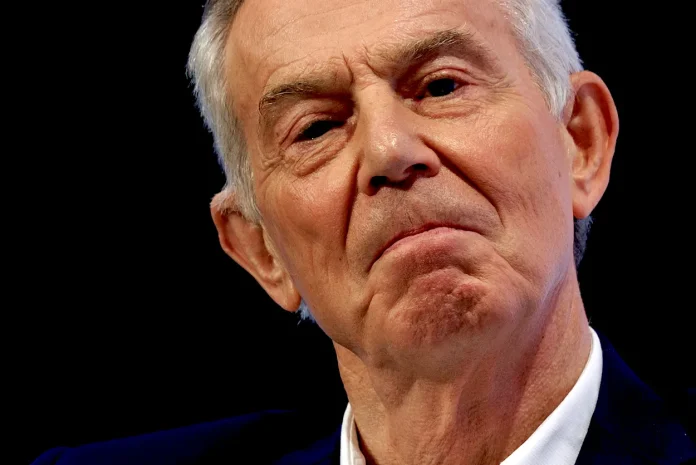
 

Hamas censures US plan to appoint Tony Blair in Gaza

The remarks came from senior Hamas political bureau member Husam Badran published by the group on Telegram.

They followed a report in Israel’s Haaretz daily newspaper quoting an Arab political source as saying the US administration has drawn up a plan to appoint Blair to head a temporary administration in Gaza.

Badran said linking any plan to Blair “is an ominous sign for the Palestinian people,” describing him as “a negative figure who deserves to stand before international courts for his crimes, especially his role in the war on Iraq (from 2003–2011).”

He went further, calling Blair “the devil’s brother,” and stated he “has brought nothing good to the Palestinian cause, the Arabs or the Muslims, and his criminal, destructive role has been well known for years.”

Badran stressed that managing Palestinian affairs in Gaza or the West Bank is an “internal matter that must be decided through national consensus, not imposed by any regional or international party.”

“The Palestinian people are capable of managing themselves; we have the resources and expertise to run our own affairs and our relations with the region and the world,” he added.

He revealed that since December 2023, Hamas’ leadership had made an internal decision — shared with Palestinian factions and friendly states — that it does not want to continue governing Gaza alone, even before the escalation of war and destruction.

On reported ceasefire proposals, Badran said: “We have not received any official proposal through mediators, which is the usual channel for such initiatives.”

He added that so far, everything being circulated “comes only through the media, whether attributed to (US President Donald) Trump or others.”

He noted this is not the first time that Washington, in coordination with Israel, has floated ideas and initiatives that later take time to be finalized and formally conveyed through mediators.

Earlier Sunday, Hamas announced in a separate statement that ceasefire talks have been suspended since Israel’s failed assassination attempt against Hamas leaders in Doha, Qatar on Sept. 9 and that it has received no new proposals in this regard.

This comes after Trump last Tuesday presented a 21-point plan to Arab and Muslim leaders on the sidelines of the 80th UN General Assembly in New York aimed at ending Israel’s two-year war on Gaza.

On Aug. 18, Hamas agreed to a mediator proposal for a partial ceasefire and prisoner exchange, but Israel failed to respond, despite the plan matching an earlier initiative put forward by US Middle East envoy Steve Witkoff and approved by Tel Aviv.

The Israeli opposition and families of captives accuse Prime Minister Benjamin Netanyahu of blocking any potential deal to end the war and bring home their relatives in order to protect his political survival.

Domestically, Netanyahu faces corruption charges that could land him in prison if convicted, while the International Criminal Court has issued an arrest warrant for him on charges of war crimes and crimes against humanity against Palestinians in Gaza.

The Israeli army has killed over 66,000 Palestinians, most of them women and children, in Gaza since October 2023. The relentless bombardment has rendered the enclave uninhabitable and led to starvation and the spread of diseases.

Senior Mossad agent executed in Iran

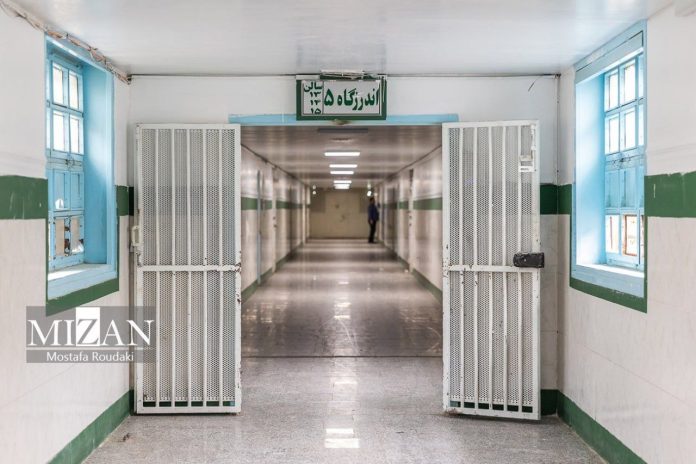
Iran Prison

The death sentence was carried out after a full judicial process and confirmation by Iran’s Supreme Court.

According to official reports quoting the judiciary, Choubi was accused of deliberately providing classified information to Mossad, receiving payments, foreign travel expenses, and specialized training in return.

He cooperated with the agency over several years, including 63 in-person meetings across nine international trips, and 95 remote communications with Mossad officers, according to the judiciary.

Countries where meetings took place included the United Arab Emirates, Armenia, India, Thailand, Vietnam, Ireland, and Bulgaria.

Authorities noted Choubi was trained in secure communication systems and provided with advanced espionage tools, including versions of a system known as “Windows Red.”

He was also charged with assisting sabotage efforts, particularly targeting Iran’s nuclear sector, by helping install faulty or compromised equipment.

The judiciary said Choubi’s case was tried with legal representation and documented evidence. Following his appeal, the Supreme Court upheld the sentence, and the execution was carried out on Monday morning.

Zarif: snapback of UN sanctions to destroy EU role in diplomacy with Iran

Javad Zarif

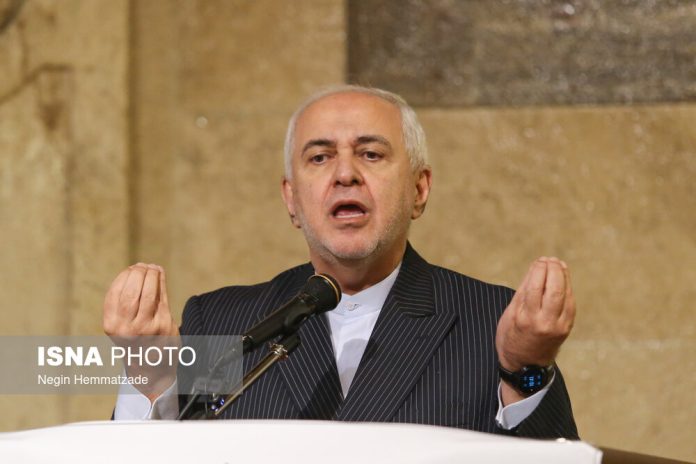
In a post on the social media platform X, Zarif wrote: “These three countries, which after six years of violating the JCPOA and twelve days of war failed to bring Iran to its knees, have now abused the UN Security Council to illegally reimpose resolutions that had been terminated.”

He stressed that the reimposition of sanctions would not provide the Europeans with “a better bargaining position,” adding: “It only eliminates their role in diplomacy with Iran.”

Zarif, who served as Iran’s chief negotiator during the JCPOA talks, underscored that such moves by the E3, Germany, France, and the UK, not only undermine international trust in diplomacy but also reinforce the perception that Europe acts in line with U.S. and the Israeli regime’s agendas rather than as an independent interlocutor.

Iran’s armed forces spokesman: Americans have no right to dictate missile range

Iran Drone Missile

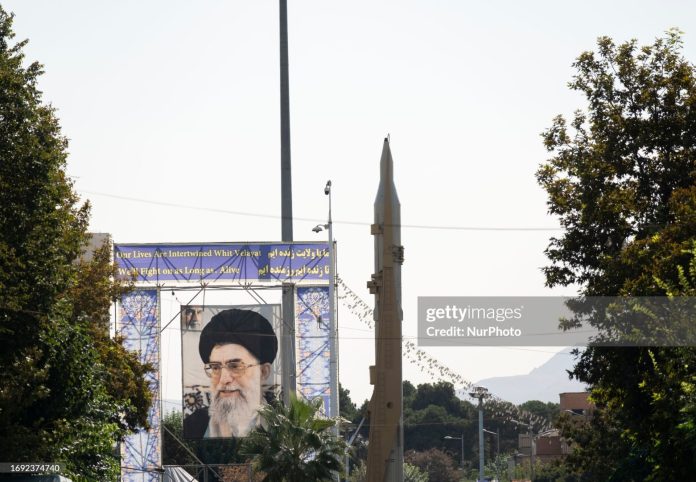
Shekarchi stressed: “The Americans are in no position to tell us to shorten the range of our missiles. It is none of their business how far our missiles can reach.”

Challenging Washington’s claims, he added: “Who do the Americans think they are to decide for us or for the world? I have one simple response to them: you are in no position, and you have no right.”

Shekarchi emphasized that Iran’s defense capabilities are a sovereign matter, rooted in the nation’s right to security and deterrence, and cannot be subjected to external dictates.

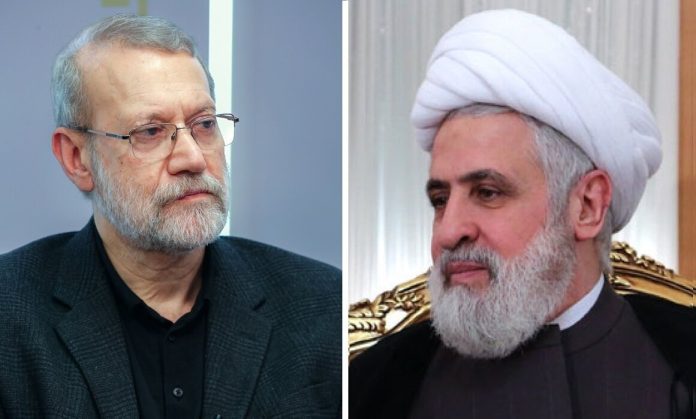
Larijani meets Hezbollah leader: “Iran ready to support Lebanon, resistance at all levels”

During the meeting, Larijani reaffirmed Tehran’s unwavering support for Lebanon and its resistance movement, in line with the directives of Ayatollah Seyyed Ali Khamenei, the Leader of the Islamic Revolution, stressing that Iran stands ready to assist Lebanon and its resistance at all levels.

Sheikh Naim Qassem expressed gratitude to the leadership, government, and people of Iran for their condolences on the anniversary of the martyrdom of Sayyed Hassan Nasrallah and Hashem Safieddine, as well as for Iran’s continuous support for Lebanon and the resistance.

Underscoring Lebanon’s resilience, he noted that the Lebanese nation remains steadfast in the face of U.S. and Israeli threats, standing firmly for dignity, freedom, and independence.

He stressed that those who witness the courageous stance of the Lebanese people will recognize that, in confronting the Zionist enemy, victory belongs to its allies.

Qassem further declared that Hezbollah is prepared to cooperate with all who resist the Zionist enemy, describing it as a threat to nations, governments, and resistance movements alike.

“We are certain that this aggressive hegemony of Israel will ultimately face a humiliating and ignominious end through the shining steadfastness of those who resist it,” he said.

Iran undermines UN snapback sanctions as ‘illegal,’ vows non-compliance

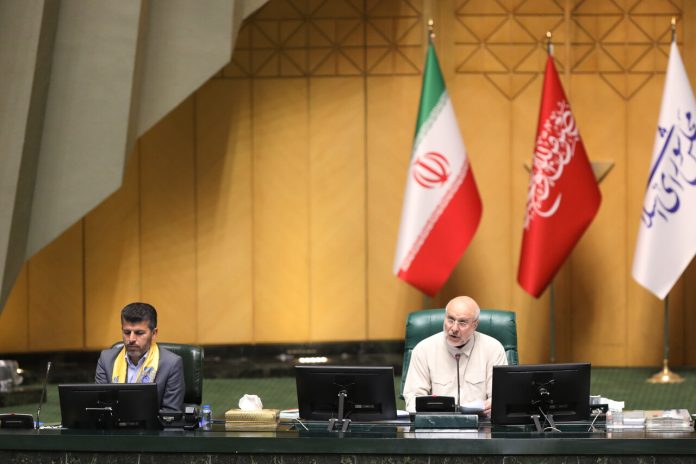
He said Iran would not comply with related resolutions, including demands to suspend uranium enrichment, which he asserted remained protected under international law.

Speaking during a parliamentary session marking the anniversary of Iran’s 1980-88 war with Iraq, Ghalibaf said Russia and China, as two permanent members of the UN Security Council, have publicly rejected the legality of the snapback process. Therefore, he added, no country is obligated to follow the revived sanctions.

He warned that Iran would deliver a “serious and reciprocal response” if any state acted against Tehran under the “illegal resolutions.”

The speaker also scolded the three European signatories to the 2015 nuclear accord, Britain, France, and Germany, for triggering the mechanism, saying they “will see Iran’s reaction.”

Ghalibaf emphasized that Iran has pursued diplomacy to resolve disputes but insisted negotiations without strengthening national power only serve as tools of pressure.

He pointed out that maintaining deterrence through military capability and national unity remains the primary safeguard of Iran’s security.

Top military advisor says Iran should join Saudi-Pakistan defense pact for regional cooperation

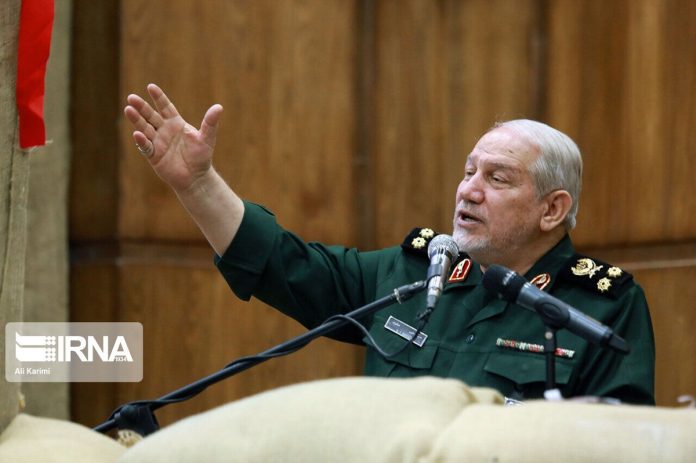
Major General Yahya Rahim Safavi

Major General Yahya Rahim Safavi, senior advisor to Iran’s Leader, said in a televised interview that Tehran should actively pursue participation in the pact, which Islamabad has indicated is open to additional members.

He suggested Iran, Saudi Arabia, Pakistan, and Iraq could work toward a collective security arrangement, while noting that external influence, particularly from the US, remains a downside in such agreements.

Reflecting on Iran’s 12-day conflict with the US-Israeli alliance in June, General Safavi clarified Iran had launched more than 500 long-range missiles during the fight and shifted the balance of power after initial setbacks.

He acknowledged weaknesses in air defense and intelligence but asserted that international assessments viewed Iran as having achieved victory, since Israel failed to meet its objectives.

General Safavi emphasized that Iran is working to rebuild its defensive and offensive capabilities after the conflict, pledging to strengthen deterrence across military, technological, and intelligence domains.

He underlined that national unity, public resilience, and government management during the conflict contributed to Iran’s performance.

Tehran won’t yield to coercion: Iran’s FM

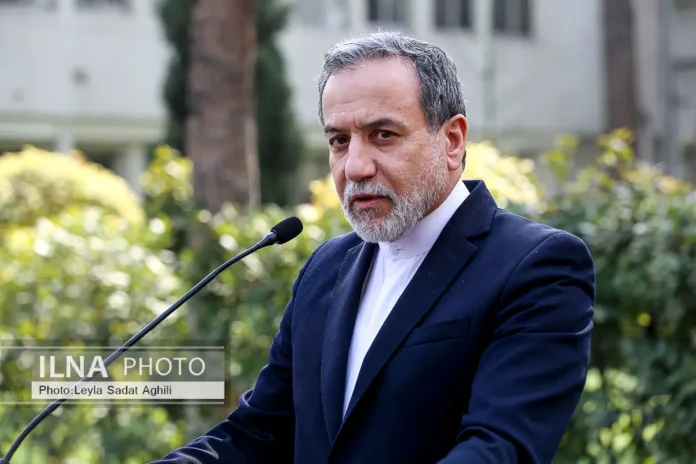
Abbas Araghchi

The top diplomat made the remarks in a letter addressed to United Nations Secretary-General Antonio Guterres on Saturday concerning efforts by the UK, France, and the United States to reinstate UN Security Council’s sanctions against the Islamic Republic.

The letter noted how the allies had chosen to go down the path of confrontation rather than cooperation, despite Tehran’s consistently demonstrating its readiness for diplomacy aimed at fair, balanced, and sustainable solutions.

He identified the stubborn approach to be rooted in the countries’ “wrongly assuming that Iran will yield to coercion.”

However, Araghchi asserted that “history has proven this assumption false — and it will do so again.”

“The Islamic Republic of Iran will continue to defend its sovereign rights and interests firmly,” the official added.

“Any attempt to harm Iran will be met with appropriate responses, and full responsibility will rest with those who choose confrontation and pressure over cooperation.”

In August, the European trio triggered the so-called “snapback” mechanism inside a 2015 nuclear deal between Iran and others in order to have the sanctions restored.

The move built upon decades of the countries’ wrongfully trying to accuse Iran of “diverting” its peaceful nuclear energy program, despite lack of any evidence provided by the International Atomic Energy Agency across no less than 15 thorough investigative reports.

On Friday, the US, the troika, and many countries supporting them vetoed a draft resolution submitted by China and Russia aimed at delaying enactment of the “snapback.”

Araghchi reiterated that such attempts were “legally and procedurally flawed and therefore null and void.”

He reminded that the Western states had already forfeited any right to trigger restoration of the sanctions due to their own sheer non-commitment to the nuclear accord.

The foreign minister reiterated Iran’s readiness for diplomacy, but cautioned that any harm inflicted on Iran as a result of the allies’ hostile measures would lead to “appropriate responses” with full responsibility falling on those who opt for confrontation rather than cooperation.

Additionally, the official called on the UN to prevent Western misuse of its mechanisms, saying “no UN resources should be allocated” to revive the sanctions committees or panels that were set up back in 2006 to enforce the economic bans.

Deal reached with Europe on snapback mechanism, but US opposes it: Iran’s president


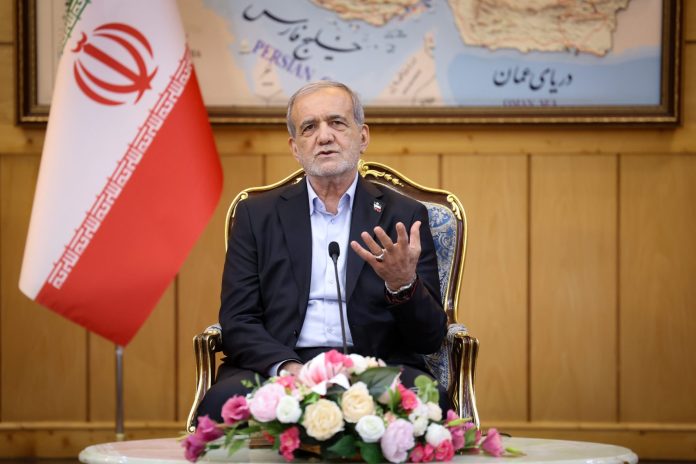
Pezeshkian noted that he had met with the President of France as well as officials from Norway, Finland, Switzerland, and the President of the European Council, during which he presented Iran’s positions.

“They also expressed dissatisfaction with the current situation,” he said, “but in practice, no action is taken. Dialogue with the Americans, too, was accompanied by constant excuse-making.”

He added that in meetings with think tanks and research centers, it became clear that “the United States does not want a powerful Iran and seeks to gradually weaken us. This requires us to be more vigilant.”

Referring to the nuclear issue and accusations made by some countries, the president stressed: “We have declared our readiness for dialogue and transparency regarding our nuclear program, but the other side, with continuous pretexts, shows no real willingness to resolve the issue.”