Saturday, December 27, 2025
Home Blog Page 784

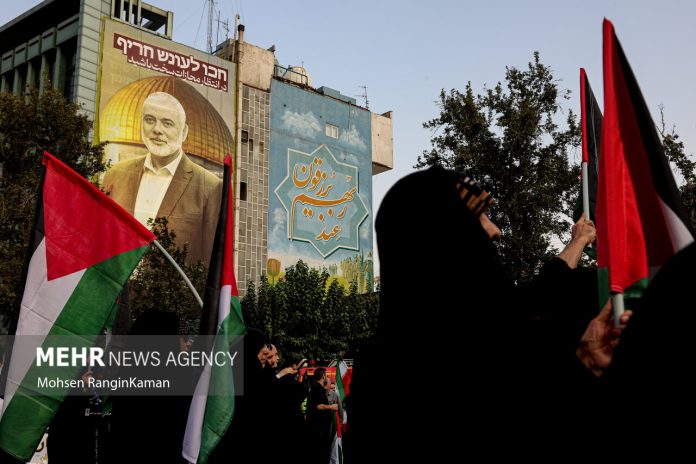
Iran parliament demands deterrent move against Israel

Mohammad Bagher Ghalibaf

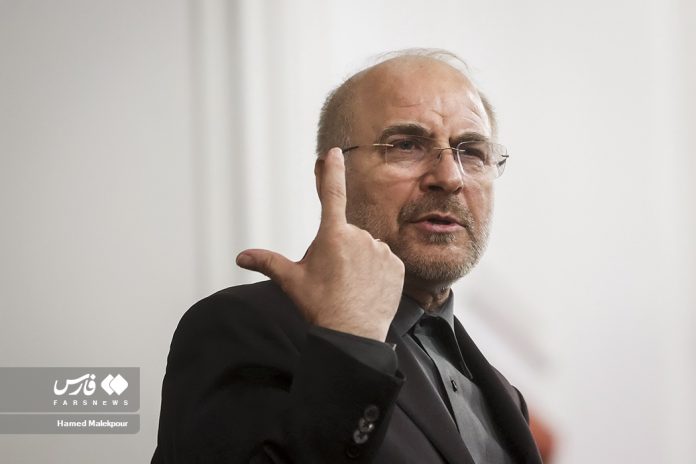
In a speech at the parliament on Sunday, Mohammad Baqer Qalibaf said, “I, on behalf of the lawmakers elected by the people, as well as the general public in Iran, declare that the parliament demands a deterrent response while preserving the national interests, to duly avenge the blood of our martyred guest.”

Qalibaf added the parliament fully supports the response, of any type and at any time, to the targeted Israeli assassination of Ismail Haniyeh on Wednesday.

He stressed that the Israeli aggression on Iran’s territorial integrity should not go unanswered and “our powerful military forces, by relying on God’s eternal power and popular support, will teach a historic lesson to the terrorist enemy and its deceitful supporter, the US.”

Qalibaf underscored that after Operation Al-Aqsa Flood, launched by Palestinian resistance factions and led by Hamas, on Oct 7 last year “the main security elements of the Zionist regime collapsed and it was the beginning of the end of Israel’s existence.”

The Iranian parliament speaker labeled the assassination as a “psychological operation” and an attempt to pass off Israel’s failures on the ground against resistance fighters as victory.

Iran vows crushing response to Israel assassination of Hamas leader in Tehran

Hamas Ismail Haniyeh

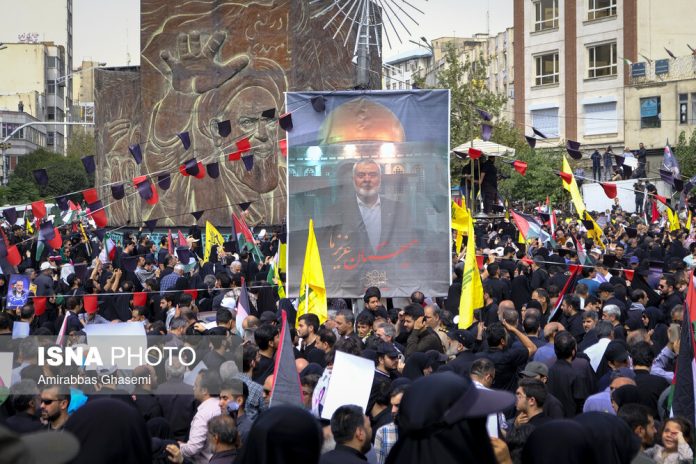
In an interview with IRNA on Sunday, Ebrahim Azizi said Iran is pursuing legal channels to make international organizations move beyond condemnation and take practical measures to deal with the Israeli regime following the Wednesday assassination of Ismail Haniyeh, who was attended the inauguration ceremony of President Massoud Pezeshkian as an official guest.

He reiterated that Iran would continue its unwavering support for the resistance factions in the region to confront Israel.

“Today, in practice, we only witness the condemnation of this amount of crime through words and double standards on human rights.” Azizi said and added, “Of course, we should not only resort to international organizations, but rather the duty of the resistance fronts and the Muslim nations is to be fully prepared to face the abusive behavior of the criminal regime.”

The top Iranian lawmaker said the Israeli regime has resorted to assassination and criminal actions because it is on the slope of fall and due to its successive failures in the battlefield against resistance fighters.

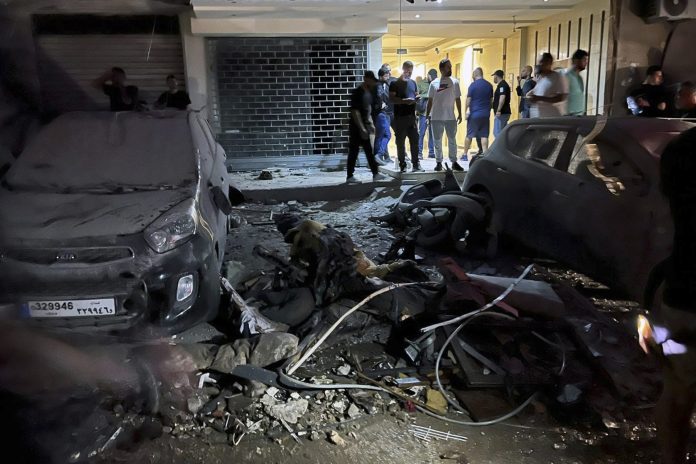
During the past few days, Israel also assassinated senior Hezbollah commander Fuad Shukr in Lebanon and several anti-terror fighters in Syria, which was slammed in worldwide rallies.

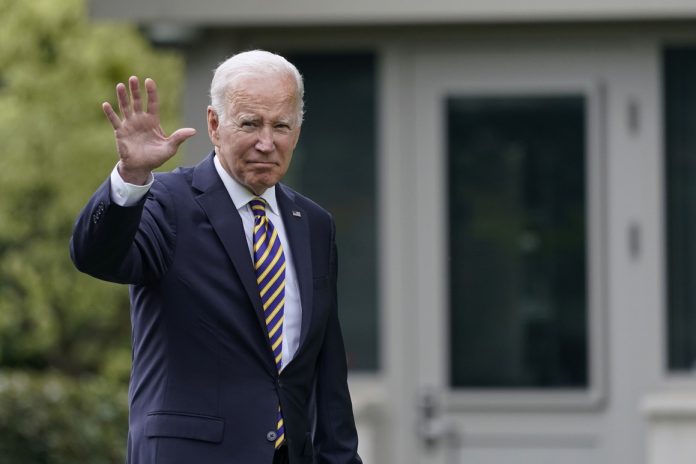
Biden expresses hope Iran will stand down but is uncertain

US President Joe Biden

Asked by reporters whether Iran would stand down, Biden said on Saturday in response to a shouted question, “I hope so. I don’t know.”

Seeking to bolster defenses in West Asia in response to threats from Israel’s foes, the Pentagon announced on Friday it would deploy additional fighter jets and Navy warships to the region.

The US and international partners including France, Britain, Italy and Egypt continued diplomatic contacts on Saturday seeking to prevent further regional escalation.

American officials say the anticipated Iranian attack against Israel in response to assassination of Haniyeh in Tehran could occur in the coming days.

Washington’s decision to send warships and fighter squadron to West Asia will mark perhaps the largest movement of US forces to the region since the early days of the Gaza war, when the Pentagon sent two carrier strike groups toward the Middle East in a very public warning to regional groups not to expand the fighting.

The region is bracing for an Iranian retaliation after Tehran vowed to attack Israel for the assassination of Haniyeh in Tehran earlier this week.

US officials said the anticipated Iranian attack could occur in the coming days, and Washington is closely watching the region for any indications of how it might play out.

Officials added the attack may be similar to the barrage of ballistic missiles and drones Tehran launched against Israel in April, but it could also be larger and more complex, coordinated with “Iranian proxies” in the region.

Haniyeh, who was in Tehran to attend the swearing-in ceremony of Iran’s newly-elected President Masoud Pezeshkian, alongside other Axis of Resistance leaders, was killed along with his bodyguard, in an attack early on Wednesday.

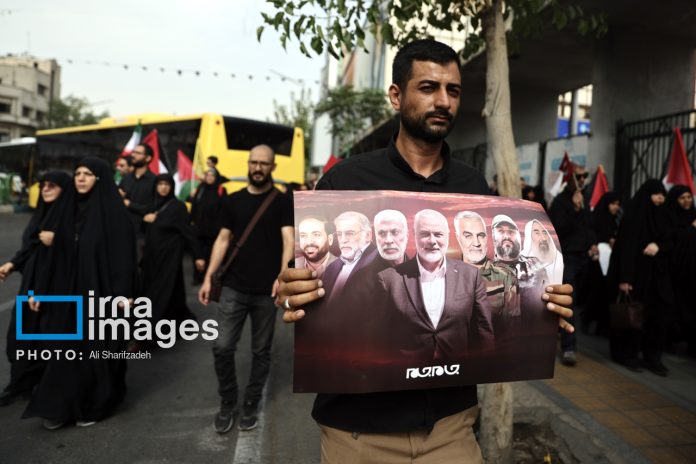
Leader of the Islamic Revolution Ayatollah Seyyed Ali Khamenei has warned the Israeli regime of a “harsh response” for Haniyeh’s assassination, calling it Tehran’s duty to avenge the Palestinian resistance leader’s blood.

“The criminal and terrorist Zionist regime martyred our dear guest in our homeland and left us bereaved, but it also set the ground for a harsh punishment for itself,” the Leader stressed.

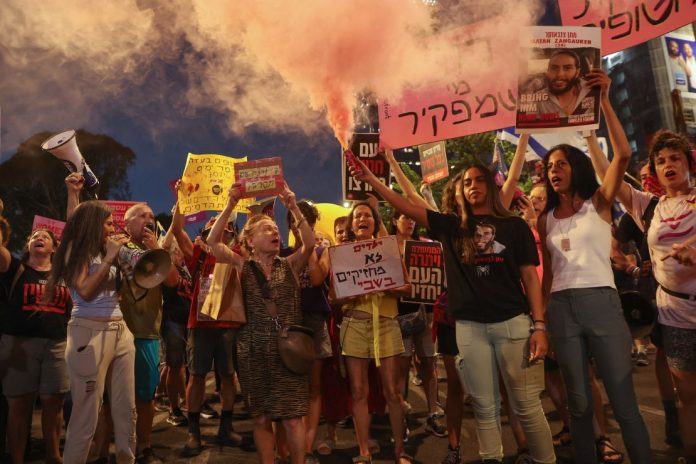
Anti-Netanyahu rallies erupt in Israel over delayed captive deal

Israel Protest

The demonstrations – a regular occurrence – were notable for taking place despite urgent security warnings as Israel braces for a possible strike from Iran. Some form of military retaliation has been widely expected in the region following the assassination of Hamas political leader Ismail Haniyeh in Tehran on Wednesday.

Despite the tense security situation, large crowds gathered to Begin Gate in Tel Aviv on Saturday to support the families of the hostages and to call for their release from captivity, according to protest organizers. Videos and photos showed protestors waving Israeli flags and holding up signs with images of the Israeli hostages.

At the Begin gate of the Kirya IDF headquarters in Tel Aviv, people were heard chanting, “We’re not letting up; release the hostages.” Others shouted, “Stop the death, stop the bereavement, human lives above all!” Some protestors stood surrounded by barricades, symbolizing hostages who are reported to have been kept in cages.

There are currently 115 total hostages, living and dead, being held in Gaza, according to Israel’s Prime Minister’s Office and the Hostages and Missing Families Forum. Of that number, 111 hostages were taken during the October 7 Hamas-led attack on Israel, which killed over 1,200 people.

Israeli’s ensuing military offensive in the isolated Palestinian enclave has killed nearly 40,000 Palestinians and displaced nearly 2 million, according to Gaza’s Ministry of Health and the United Nations.

Family members of captives held in the blockaded territory have harshly criticized Netanyahu’s approach to the conflict, and are now demanding a public explanation for his government’s failure so far to negotiate a deal that would see the remaining Israeli hostages liberated.

In a statement released Saturday, an association representing the families accused the Israeli leader of choosing “to escalate the situation instead of securing a deal that would save lives”.

Israeli opposition leader Yair Lapid also posted a statement on Telegram calling on Israel’s security chiefs to “tell the public the truth”, writing: “If the government of Israel has given up on the hostages, it needs to be honest with the families and stop playing games.”

Anger and impatience over the slow pace of hostage releases from Gaza flared this week following a new report that Netanyahu clashed with top advisors on whether to accept a new hostage and ceasefire deal proposal, which the Israeli Prime Minister Office has rejected as “incorrect”.

Israel’s Channel 12 reported that, at a tense meeting of Israel’s security council on Wednesday night, senior officials had urged Netanyahu to take a hostage and ceasefire deal with Hamas.

The report claimed that Mossad director David Barnea had said “there is a deal ready and that Israel must take it”, while Ronen Bar, the head of Israeli security agency Shin Bet, stated it appeared to him the prime minister did not want the outline of the deal on the table.

Netanyahu reportedly banged on the table and said the team “don’t know how to conduct negotiations”.

The Prime Minister’s office refuted the characterization of the alleged exchange in a statement, and announced that Netanyahu is committed to the hostages’ release.

“The head of the Mossad did not say that there was a deal ready and that it should be accepted. The description that Hamas supposedly agreed to the terms of the deal is false…” it added.

Netanyahu’s office on Saturday released another statement accusing “leaks and false briefings in the media” of misleading the public, and blaming Hamas for hindering negotiations.

“While Prime Minister Netanyahu agreed to the deal outline, Hamas has been trying to introduce dozens of changes that, de facto, nullify the outline,” the statement read.

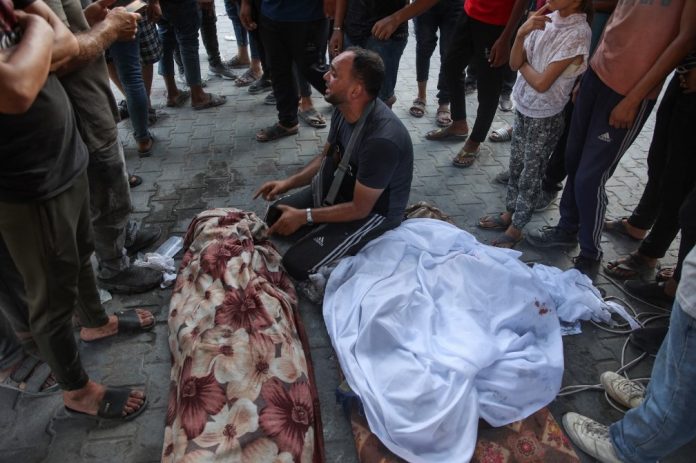
Israeli strike on Gaza school kills 17 Palestinians

Gaza War

Amongst the seriously wounded were children.

The hospital scenes were chaotic, with some of the injured lying on the floors and grieving Palestinian families filling the corridors.

One of the survivors reported that the strikes occurred without any prior warning.

Hamas has condemned the Israeli attack on Hamama School, which was sheltering thousands of internally displaced Palestinians.

“The occupation’s criminal attack on Hamama School, which shelters thousands of displaced persons, is an insistence on the brutal war of extermination,” the group stated.

“The occupation army continues its lies by claiming that civilian sites, including schools, hospitals, and displacement centres, are being used for military purposes.”

“The occupation army uses these lies as a pretext to target defenceless civilians in Gaza,” Hamas added.

In the occupied West Bank, two Israeli attacks killed nine fighters, including a local Hamas commander on Saturday.

The latest attacks came as a high-level Israeli delegation made a brief visit to Cairo on Saturday in an attempt to resume Gaza ceasefire negotiations, Egyptian airport authority sources said.

The delegation returned to Israel hours later, Israeli media said.

Chances of a breakthrough appear low as regional tension has soared following the assassination of Hamas’s leader Ismail Haniyeh in Tehran on Wednesday, a day after an Israeli strike in Beirut killed Fuad Shukr, a top military commander from Lebanese armed group Hezbollah, a Hamas ally.

Iran envoy: The hand that dares to reach out to Lebanon will be cut off

In a statement on Saturday, the Embassy drew a historical parallel, saying the courageous fight by the Lebanese army officers and soldiers in the southern town of al-Adisa on August 3, 2010, is a source of pride and a golden equation for border protection with sacrifices.

It added that the occasion is actually a new warning to those who dare to attack any part of Lebanon’s territory, because the whole of Lebanon will never tolerate such an eventuality, and any hand that reaches out to Lebanon will be cut off.

During the clashes on August 3, 2010, between the Lebanese forces and the Zionist regime troops along the border, three Lebanese soldiers were killed and four others and a civilian were injured. Several Zionist soldiers were also injured in the fighting.

The clashes erupted after an Israeli army vehicle trespassed into Lebanese soil. The Lebanese forces opened fire on the Israeli army vehicle with the government in Beirut condemning it as a violation of UNSC 1701.

US officials say Iranian retaliation against Israel could occur within days

Hamas Ismail Haniyeh

Washington’s decision to send warships and fighter squadron to West Asia will mark perhaps the largest movement of US forces to the region since the early days of the Gaza war, when the Pentagon sent two carrier strike groups toward the Middle East in a very public warning to regional groups not to expand the fighting.

The region is bracing for an Iranian retaliation after Tehran vowed to attack Israel for the assassination of Haniyeh in Tehran earlier this week.

US officials said the anticipated Iranian attack could occur in the coming days, and Washington is closely watching the region for any indications of how it might play out.

Officials added the attack may be similar to the barrage of ballistic missiles and drones Tehran launched against Israel in April, but it could also be larger and more complex, coordinated with “Iranian proxies” in the region.

Haniyeh, who was in Tehran to attend the swearing-in ceremony of Iran’s newly-elected President Masoud Pezeshkian, alongside other Axis of Resistance leaders, was killed along with his bodyguard, in an attack early on Wednesday.

Leader of the Islamic Revolution Ayatollah Seyyed Ali Khamenei has warned the Israeli regime of a “harsh response” for Haniyeh’s assassination, calling it Tehran’s duty to avenge the Palestinian resistance leader’s blood.

“The criminal and terrorist Zionist regime martyred our dear guest in our homeland and left us bereaved, but it also set the ground for a harsh punishment for itself,” the Leader stressed.

Expediency Council member: Netanyahu seeks to drag Iran into a war with US

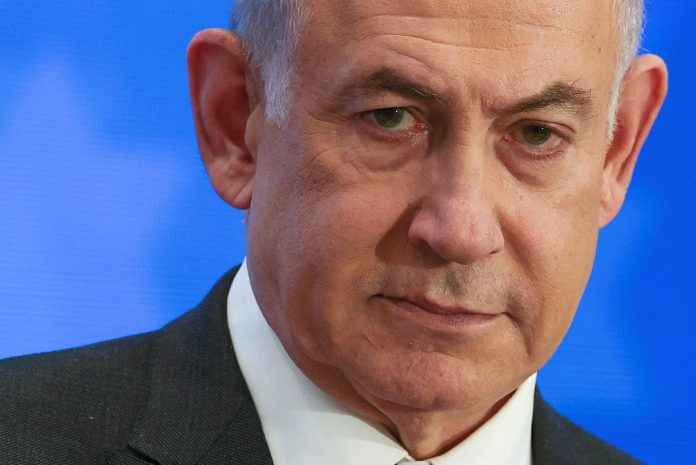
Benjamin Netanyahu

In an interview with Entekhab news outlet, Mohammad Sadr warned that the Israeli prime minister wants to drag Iran into a war with the US.

Sadr added that Iran should not hastily respond at this juncture, which he described as “sensitive”.

“I do not believe that we must respond today or tomorrow”, Sadr said, adding that this issue must be studied from all perspectives.

The member of the Expediency Council said Iran needs to be careful not to make any move that would benefit its adversaries.

Iran MP: Tehran’s Tochal Heights probably used in Haniyeh assassination

Hamas Ismail Haniyeh

In an interview with the Didban Iran website, Ahmad Bakhshayesh Ardestani added that another scenario is that infiltrators inside Iran, stationed at the second station of Tochal, used a missile-like weapon to target Haniyeh’s residence.

Bakhshayesh also said, “There are gaps and contaminations in Iran’s intelligence and security system.” He attributed this issue to the “parallel operations” conducted within Iran’s intelligence domain.

Iranian media reports indicate that Haniyeh and his guard were on the fourth floor of a building in the Zafaraniyeh neighborhoud in northern Tehran during the terrorist operation and were martyred at 2 AM last Wednesday.

Regarding Iran’s response to this terrorist act by Israel, the Iranian MP said that Iran should initially launch at least 600 missiles and drones towards Israel in a combined operation, and simultaneously, the Houthis in Yemen, Hezbollah in Lebanon, and Iraqi resistance groups should send missiles.

Iran’s Islamic Revolution Guard Corps (IRGC) announced on Saturday investigations and reviews indicate that the assassination attempt on Haniyeh was carried out with a short-range projectile with a warhead of approximately 7 kilograms, accompanied by a severe explosion, from outside his residence in Tehran.

Airlines suspend flights to Lebanon, Israel amid fears of wider conflict in West Asia

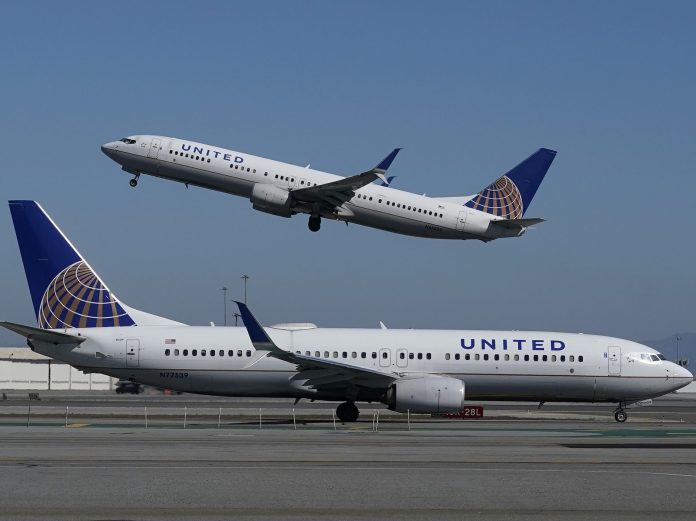
United Airline

The decision follows Wednesday’s assassination of Hamas political chief Ismail Haniyeh in Tehran. Expected retaliation from Iran against Israel has heightened security risks, impacting airline operations.

United Airlines, which operates 14 weekly flights between New York and Israel, has suspended flights to Israel until Aug. 6.

The US Delta Airlines also suspended flights to Israel, and British Airways canceled its flights to the country on Wednesday.

Air France-KLM, the parent company of both Air France and low-cost carrier Transavia France, says flights to and from the Lebanese capital will remain suspended until at least Tuesday due to “security” concerns in the region.

The two French airlines first stopped servicing the route on Monday, a day after Israel vowed to retaliate following a rocket fire that killed 12 people in the Israeli-occupied Golan Heights.

Swiss International Air Lines suspended flights between Zurich and Tel Aviv until at least Aug. 8, citing the safety of crew and passengers. Also, the suspension of Zurich-Beirut flights, initially set to end on July 29, has been extended to Aug. 12.

German airline Lufthansa announced it had suspended flights to Beirut and Tel Aviv until Aug. 8 and Aug. 12, respectively, due to security concerns.

The airline said it would monitor the situation on the ground to determine when flights can resume.

Spanish airline Iberia Express also canceled flights to Israel on Saturday and Sunday.

Air India also canceled its flights to Tel Aviv until Aug. 8, citing security concerns.

ITA Airways, Italy’s flag carrier, announced that flights to and from Tel Aviv are suspended until Aug. 6 “due to geopolitical developments in the Middle East and to ensure the safety of its passengers and crews”.

Poland’s national airline LOT canceled eight flights to Lebanon and Israel scheduled for Aug. 3-4, according to Polish news agency PAP.

Dutch airline KLM also canceled all its flights to and from Israel until Oct. 26.

Aegean Airlines and Condor Airlines also suspended flights from Athens to Beirut until Aug. 1 due to regional tensions.

Singapore Airlines (SIA) said it would avoid Iranian airspace due to rising Mideast tensions.

The suspensions come amid rising tensions and the potential for a broader conflict between Iran and the Lebanese Hezbollah group on one side and Israel on the other.

The flight halts follow the assassination of senior Hezbollah commander Fuad Shukr by Israel on Tuesday and accusations by the Palestinian group Hamas and Tehran that Israel assassinated Haniyeh in the Iranian capital on Wednesday.

Hamas and Iran have vowed to retaliate for Haniyeh’s assassination, while Hezbollah has pledged to respond to Shukr’s killing.