Saturday, December 27, 2025
Home Blog Page 783

Tel Aviv Stock Exchange hits lowest level since April amid fears of Iran’s retaliation

Tel Aviv Stock Exchange

In early trading, the TASE 35 index dropped 2.3% to 1,937 points, marking its lowest level since the last week of April, according to the Tel Aviv Stock Exchange.

The poor performance of Wall Street indices on Friday further exacerbated the negative start for the Tel Aviv Stock Exchange, which has been under pressure since mid-July due to escalating tensions with Hezbollah and Iran.

The TASE 35 Index, also known as the TA-35, is a stock market index that tracks the performance of the 35 largest and most traded companies listed on the Tel Aviv Stock Exchange in Israel.

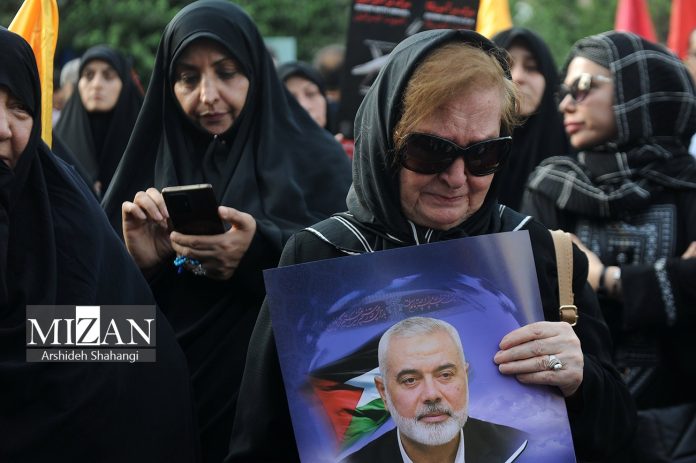
Tensions are running high amid speculation that Iran is preparing a military response to the assassination of Hamas political leader Ismail Haniyeh bigger than the one following an April attack on Iran’s Consulate in the Syrian capital Damascus.

Haniyeh was assassinated on Wednesday in Tehran, Iran’s capital. While Hamas and Iran accused Israel over the killing, Tel Aviv has not confirmed or denied responsibility.

The assassination came a day after Hezbollah commander Fuad Shukr was killed in an Israeli airstrike in Beirut.

Hamas and Iran have vowed to retaliate for Haniyeh’s assassination, while Hezbollah has pledged to respond to Shukr’s killing.

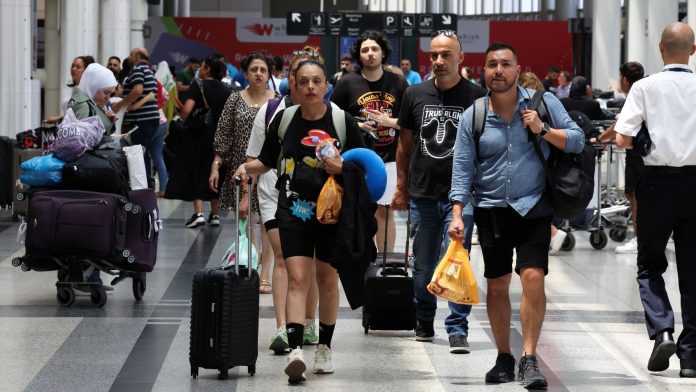
US, UK and France ask their citizens to leave Lebanon amid regional tensions

Lebanon Airport

Haniyeh’s killing in Tehran on Wednesday, hours after the Israeli assassination of Hezbollah’s military chief Fuad Shukr in Beirut, has triggered pledges of vengeance from Iran and the so-called “axis of resistance“.

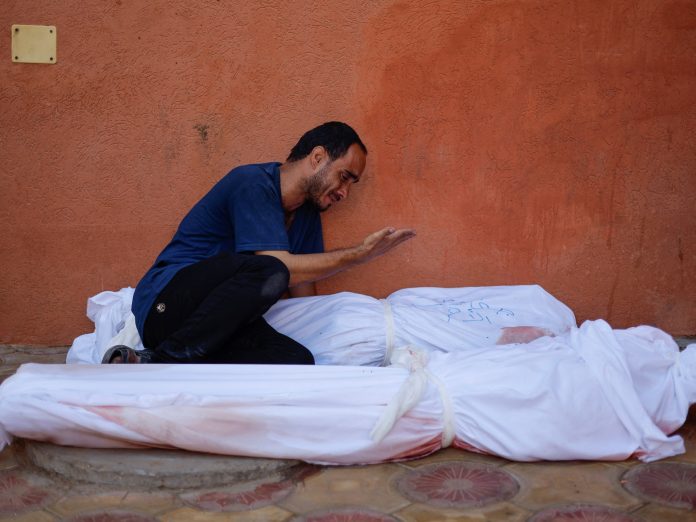
Lebanese group Hezbollah, an ally of the Palestinian group Hamas, and the Israeli army have been trading cross-border fire since the Israeli assault on Gaza began in October after Hamas led a rare attack inside the Israeli territory, killing an estimated 1,200 people and taking roughly 240 others captive. At least 39,550 Palestinians have been killed and 91,300 others wounded in Israel’s war on the besieged and bombarded enclave.

Iran-backed groups from Lebanon, Yemen, Iraq and Syria have already been drawn into Israel’s nearly 10-month war on Gaza. But the assassinations this week of Haniyeh and Shukr have heightened fears of a regional conflagration.

On Saturday, Israel’s ally, the US, said it would move additional warships and fighter jets to the region and asked its citizens in Lebanon to leave on “any ticket available”.

The US embassy in Beirut asked its nationals to “prepare contingency plans” if they choose to stay in Lebanon and be prepared to “shelter in place for an extended period of time”.

The UK’s Foreign Office also urged its citizens in Lebanon to leave “now while commercial options remain available”.

“Tensions are high, and the situation could deteriorate rapidly,” British Foreign Secretary David Lammy said in a statement.

“While we are working round the clock to strengthen our consular presence in Lebanon, my message to British nationals there is clear – leave now.”

On Sunday, the French Ministry for Europe and Foreign Affairs issued a travel advisory, inviting its citizens in Lebanon to leave “as soon as possible” due to the risk of a military escalation.

“In a highly volatile security context, we once again call the attention of French nationals, particularly those passing through, to the fact that direct commercial flights and ones with stopovers to France are still available,” the ministry said.

Meanwhile, Canada told its nationals to avoid all travel to Israel. “The security situation can deteriorate further without warning,” the Canadian government said in a travel advisory.

The soaring tensions have also forced major airlines, including Dutch airline KLM, Lufthansa, Emirates, Air France, Turkish Airlines, Singapore Airlines and Swiss Airlines, to ground their flights to Israel, Iran and Lebanon.

Russia reports record level of crimes linked with terrorism and extremism

Moscow Terror Attack

According to a document posted to the ministry’s official website earlier this week, 1,651 crimes classified as terrorism were recorded in the country in January-June 2024, a nearly 40% increase over the same period in 2023. The ministry noted that for the same period from 2006 to 2023, the figure did not reach 1,400. The previous record high was registered in the first half of 2022, when 1,332 terrorism-linked crimes were recorded.

Crimes associated with extremist activities have also reached a record high. From January to June, 819 such crimes were registered, a nearly 12% increase year-on-year. This figure had not surpassed 800 since 2018.

Crimes designated as terror-linked in Russia include making preparations for carrying out a terrorist attack, public calls for terrorism and justification of terrorism, as well as hostage-taking. Extremist crimes include those committed on the basis of political, ideological, racial, national or religious hatred, or enmity towards any social group.

Russia’s Federal Security Service (FSB) routinely makes public information on foiled terror plots, often describing the suspects as people linked with either Islamist terrorist groups or Ukrainian nationalists or collaborators.

In June, the FSB’s director, Aleksandr Bortnikov, revealed that the agency had prevented a total of 134 acts of terrorism and sabotage in central Russia alone since the outbreak of the conflict between Moscow and Kiev in February 2022. The country’s security agencies have also dismantled 32 international terrorist cells operating in the country over this period, he stated.

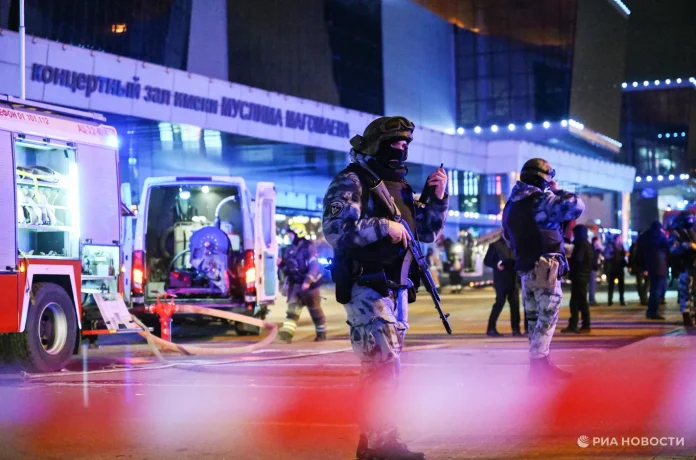
Russia saw one of the deadliest terror attacks in its history this past March, when four gunmen went on a shooting rampage at the Crocus City Hall concert venue outside Moscow. The attackers shot everyone in sight before setting the building on fire. The tragedy left 145 people dead and over 500 injured. A terrorist organization known as Islamic State-Khorasan (ISIS-K) claimed responsibility for the attack, but the FSB has alleged that Kiev was behind the massacre, possibly using militants as proxies.

At least 10k Israeli soldiers killed, wounded during Gaza war: Report

Israeli Army

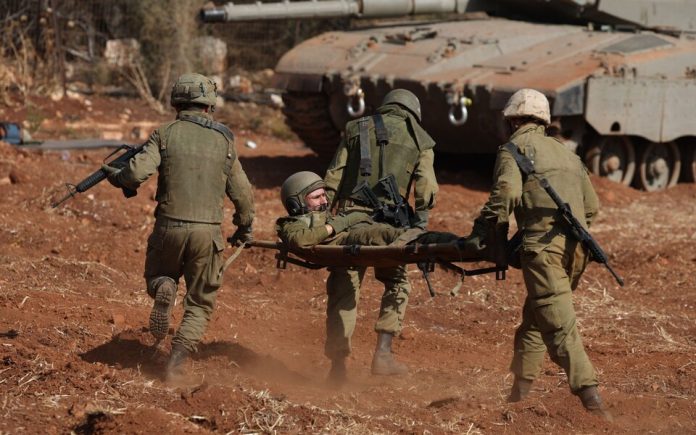
Yedioth Ahronoth newspaper reported some 1,000 soldiers are transferred every month to the Defense Ministry’s rehabilitation department due to injuries sustained in the Gaza war.

“The army is suffering from a shortage of at least 10,000 soldiers killed or wounded during the long months of fighting in the Gaza Strip,” the daily said.

The paper criticized the Knesset (Israel’s parliament) for going on summer break from July 22 until mid-October without passing legislation to extend mandatory military service.

“There has been no such a situation in the history of Israel’s wars…where soldiers fight inside enemy territory, under unfavorable conditions, for 10 consecutive months,” the mother of an Israeli soldier in the army’s Nahal Brigade told Yedioth Ahronoth.

According to the newspaper, female soldiers serving in Israel-occupied Syrian Golan Heights were unexpectedly informed of an additional four-month extension of their service.

Israel, flouting a UN Security Council resolution demanding an immediate cease-fire, has faced international condemnation amid its continued brutal offensive on Gaza since an attack last October by the Palestinian resistance group Hamas.

Nearly 39,600 Palestinians have since been killed, mostly women and children, and nearly 91,400 injured, according to local health authorities.

Almost 10 months into the Israeli war, vast tracts of Gaza lie in ruins amid a crippling blockade of food, clean water, and medicine.

Israel is accused of genocide at the International Court of Justice for its actions in the coastal enclave.

Iran to send strong Message to Jordanian FM regarding Israeli assassination of Hamas leader

Hamas Ismail Haniyeh

The source emphasized that Iran does not anticipate a lack of response or merely a symbolic reply. Instead, any response will be severe and painful.

“Israel has violated all taboos and must pay the price. We have no doubt that it will pay dearly,” the source stated.

The Jordanian Foreign Minister, who has engaged in two phone conversations with Iran’s acting foreign minister Ali Bagheri in recent days, is scheduled to visit Tehran on Sunday. Recent regional tensions and developments have intensified diplomatic consultations over the past week.

Haniyeh and a member of his security team were killed in an attack on their residence in northern Tehran Wednesday.

Iran has officially held Israel responsible for the terror attack.

Poll: More Ukrainians believe it is time for negotiations with Russia

Russia Ukraine War
Dozens of evacuees have arrived in the Ukraine-controlled Sumy region.

In addition, the share of Ukrainians who are open to making territorial concessions to Russia in exchange for an end to the conflict has tripled – from 10% to 32% – since July 2023. The online magazine said that the new results of the opinion polls show that the public opinion in Ukraine is “more divided”.

The magazine said, “Even though there is little agreement on what the endgame will or should look like, the trend in favor of some kind of compromise is clear.”

Recently, the Ukrainians have been urging the authorities via social networks to start peace talks as soon as possible. The goal of Ukrainian President Volodymyr Zelensky’s office to “return to the 1991 borders” was said to be unrealistic.

On June 14, Russian President Vladimir Putin held at a meeting with the Foreign Ministry leadership where he listed conditions for the settlement of the situation in Ukraine. Among them are the withdrawal of the Ukrainian Armed Forces from Donbass and Novorossiya and Kiev’s pledge not to join NATO or any other blocs. Ukraine should also remain neutral and commit to having no nuclear weapons, while sanctions against Russia should be dropped. Putin warned that if Ukraine and the West rejected these conditions, they could change in the future. Kiev rejected the Russian peace plan.

Over 1,000 Israeli attacks on healthcare recorded in Gaza, West Bank

Gaza War

Physicians for Human Rights (PHR) have announced the figure amounts to the most reported attacks on healthcare in “any other conflict over a 10-month period on record”.

“More than 1000 attacks on doctors, patients, clinics, and health infrastructure have fuelled a public health catastrophe in the OPT [Occupied Palestinian Territory]. This grim milestone has few if any precedents for the scale and magnitude of attacks on health in the OPT,” said Houssam al-Nahhas, PHR’s Middle East and North Africa researcher.

“These are not only attacks on brick-and-mortar buildings, but acts that take away hospital beds, essential medications, surgeries, and life-saving care from women, men, boys, and girls,” he added.

The New York-based group called for independent investigations into the attacks on healthcare and warned Israel that the moves could constitute a violation of international humanitarian law.

At least 350 healthcare workers have been killed and 520 others injured in the Gaza Strip since October 7, 2023, when the Israel-Hamas conflict escalated, UN Special Rapporteur on the right to health Tlaleng Mofokeng stated in late April.

Israel has waged a brutal offensive on the Gaza Strip since a cross-border attack by the Palestinian group Hamas on Oct. 7 last year, which Tel Aviv says killed nearly 1,200 people.

Nearly 39,600 Palestinians have since been killed, mostly women and children, and 91,200 others injured amid mass destruction and severe shortages of necessities.

The Israeli war has pushed 90% of Gaza’s population into internal displacement amid acute shortages of food, clean water and medicine, while 60% of the enclave’s infrastructure has been damaged or destroyed, according to the UN.

Ukraine claims Russian submarine sunk in Crimean port

Russian submarine

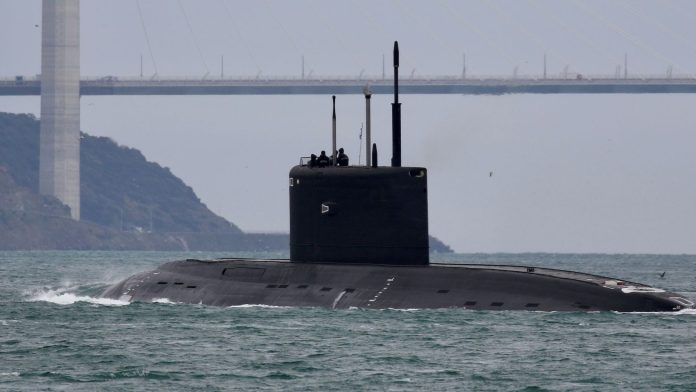
The submarine Rostov-on-Don was hit in the port of Sevastopol on Friday, the General Staff of Ukraine’s Armed Forces said in a statement Saturday.

“The boat sank on the spot,” the General Staff added, without providing further evidence.

If confirmed, the sinking would be Ukraine’s latest blow to Russia’s navy, which Kyiv claims has already lost a third of its Black Sea Fleet.

The alleged loss of the Rostov-on-Don “proves once again that there is no safe place for the Russian fleet in Ukrainian territorial waters of the Black Sea,” the General Staff noted.

The Ukrainian Defense Ministry hailed the attack, saying in a post on social media that “a Russian submarine went to the bottom of the Black Sea” after it was attacked in Sevastopol’s port.

“As a result of the attack, the submarine sank. Great work, warriors.”

Russia has occupied Crimea since its forces annexed the peninsula in 2014. Since the outbreak of the war in Ukraine more than two years ago, it has come under sporadic attack from Kyiv’s forces.

The Russian-appointed governor of Sevastopol, Mikhail Razvozhayev, stated submarine defense exercises were taking place on Saturday, and “everything is calm in the city”.

On a post on Saturday, Russian military blogger Boris Rozhin said the ship repair plant in Sevastopol, where the submarine was docked, appears to have been hit.

Commissioned in 2014, the Rostov-on-Don is a 73.8-meter (242-foot) Kilo II-class submarine and carries a crew of 52. With a submerged displacement of 3,100 tons, the diesel-electric-powered vessel can carry Kalibr cruise missiles.

Taking out Russian assets armed with Kalibr missiles is an important part of Kyiv’s military strategy because Russia has used Kalibr and missiles like it to attack vital Ukrainian infrastructure such as power plants, said Cedric Leighton, a CNN military analyst.

“Hitting this submarine is a big, big deal,” Leighton added.

Ukraine has targeted the Rostov-on-Don before.

The submarine was “severely damaged” in a Ukrainian missile attack in September 2023, according to Ukraine’s General Staff. After that attack, open-source intelligence photos, including ones cited by Britain’s defense ministry, showed what the ministry announced was “catastrophic damage.”

But Ukraine’s General Staff said the Rostov-on-Don was repaired and recently tested in the waters of Sevastopol harbor.

Kyiv’s forces have enjoyed sustained successes targeting Russia’s Black Sea Fleet, with either missile strikes or sea drone attacks.

More than 20 Russian naval vessels have now been disabled or destroyed, a third of the entire fleet. Though Ukraine has virtually no navy of its own, technological innovation, audacity and Russian incompetence have given it the upper hand in much of the Black Sea.

Russia’s worst naval loss of the war was the sinking of the guided-missile cruiser Moskva in April 2022.

In October last year, satellite imagery indicated that Russia relocated some of its naval ships away from Sevastopol after a series of Ukrainian attacks.

In addition to striking the submarine, Ukrainian forces also severely damaged four S-400 anti-aircraft missile launchers on Friday, the Ukrainian General Staff added.

Leighton said destruction of the anti-aircraft batteries could help open up the skies over Crimea for Ukrainian warplanes to take on more Russian targets on the occupied peninsula.


Biden believes Netanyahu ‘lying’ about Gaza ceasefire deal: Report

Biden Netanyahu

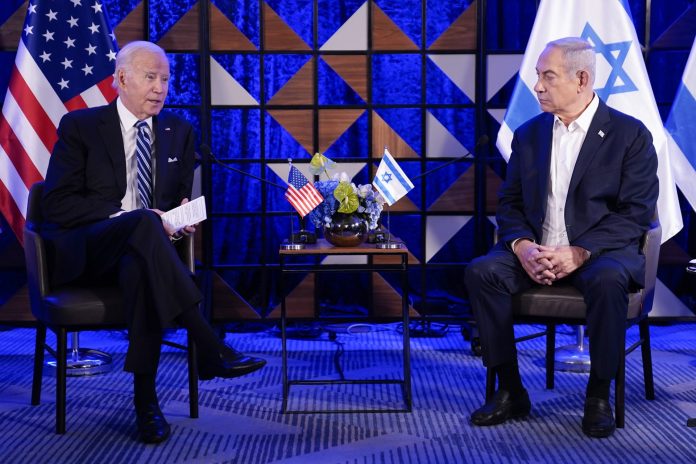
The official told the newspaper on Saturday that Netanyahu is ungrateful toward the United States and overlooks the substantial aid it has provided to Israel over the past 10 months of conflict.

“Biden realised that Netanyahu was lying to him about the hostages,” the official told Haaretz.

“He’s not saying it publicly yet, but in the meeting between them, he specifically told him, ‘Stop bullshitting me.'”

The recent development came as a high-level Israeli delegation made a brief visit to Cairo on Saturday in an attempt to resume Gaza ceasefire negotiations, Egyptian airport authority sources said.

The delegation returned to Israel hours later, Israeli media said.

Chances of a breakthrough appear low as regional tension has soared following the assassination of Hamas’s leader Ismail Haniyeh in Tehran on Wednesday, a day after an Israeli strike in Beirut killed Fuad Shukr, a top military commander from Lebanese armed group Hezbollah, a Hamas ally.

Iran president makes new appointments

Massoud Pezeshkian

Former economic minister Ali Tayebnia, 64, who was widely speculated to be at the helm of the ministry again, has been designated as the president’s senior adviser.

Tayebnia, as a veteran and decorated economist in Iran, is a graduate of the University of Tehran and the London School of Economics and is known for reining in the runaway inflation under former president Hassan Rouhani.

In another decree, Pezeshkian appointed Hamid Pourmohammadi as the vice president and head of the Planning and Budget Organization.

Pourmohammadi, 56, has served as the deputy head of the Central Bank and deputy chief of Banking Affairs of the Ministry of Economy among other posts.

Iranian politician and physician Shahram Dabiri will also be the president’s deputy for parliamentary affairs.

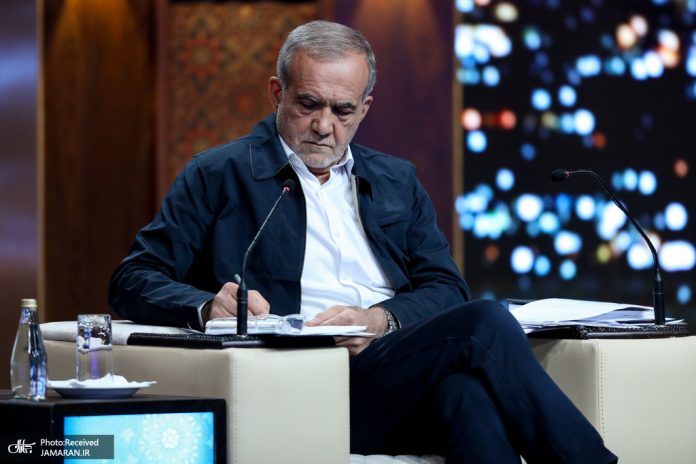
Pezeshkian, who was sworn in as Iran’s ninth president on Tuesday, is in the throes of putting together a cabinet, with former foreign minister and nuclear negotiator Mohammad Javad Zarif playing a leading role.

In an earlier decree, Pezeshkian appointed Zarif as deputy president for strategic affairs.