Sunday, April 12, 2026
Home Blog Page 78

Tomahawk supply to Ukraine would destroy relations between US and Russia: Putin

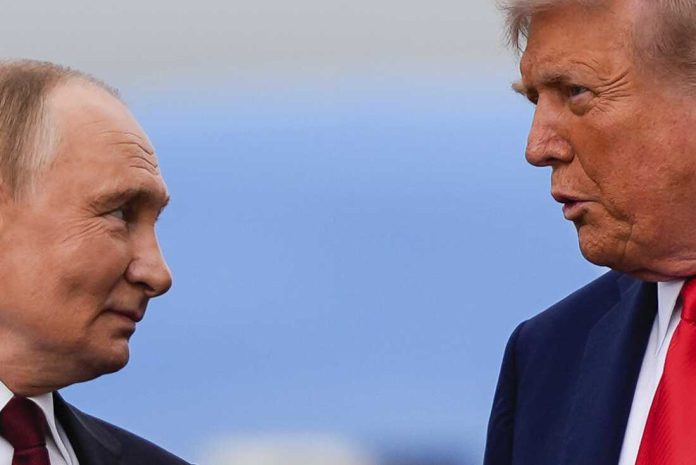
Trump and Putin

Less than two months since U.S. President Donald Trump met Putin at a summit in Alaska, peace looks even further away with Russian forces advancing in Ukraine, Russian drones allegedly flying in NATO airspace and now Washington talking about direct participation in striking deep into the world’s biggest nuclear power.

Trump has said he is disappointed with Putin for not making peace and has cast Russia as a “paper tiger” for failing to subdue Ukraine. Putin last week hit back, questioning if NATO was not the “paper tiger” for failing to stop Russia’s advance.

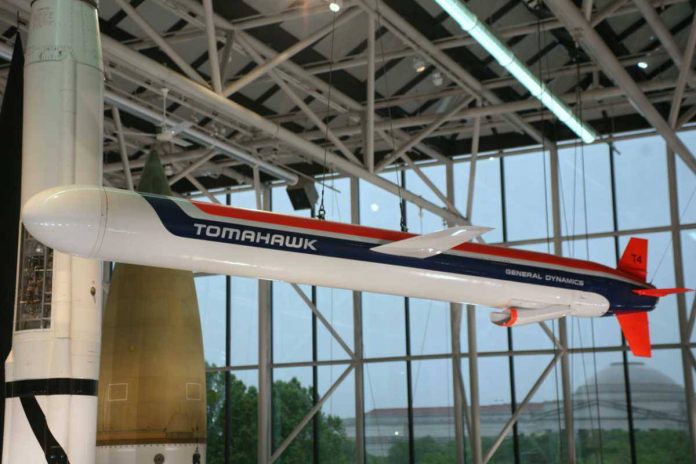
U.S. Vice President JD Vance stated last month that Washington was considering a Ukrainian request to obtain long-range Tomahawks that could strike deep into Russia, including Moscow, though it is unclear if a final decision has been made.

“This will lead to the destruction of our relations, or at least the positive trends that have emerged in these relations,” Putin stressed in a video clip released on Sunday by Russian state television reporter Pavel Zarubin.

The Wall Street Journal reported last week that the United States will provide Ukraine with intelligence on long-range energy infrastructure targets in Russia, as it weighs whether to send Kyiv missiles that could be used in such strikes.

But one U.S. official and three other sources told Reuters that the Trump Administration’s desire to send long-range Tomahawk missiles to Ukraine may not be viable because current inventories are committed to the U.S. Navy and other uses.

Tomahawk cruise missiles have a range of 2,500 kilometres (1,550 miles), which means that if Ukraine got the missiles then the Kremlin and all of European Russia would be within target.

Putin on Thursday said that it was impossible to use Tomahawks without the direct participation of U.S. military personnel and so any supply of such missiles to Ukraine would trigger a “qualitatively new stage of escalation”.

“This will mean a completely new, qualitatively new stage of escalation, including in relations between Russia and the United States,” Putin continued.

He added that Tomahawks could harm Russia, but that it would simply shoot them down and improve its own air defence.

Putin portrays the Ukraine war as a watershed moment in Moscow’s relations with the West, which he says humiliated Russia after the 1991 fall of the Soviet Union by enlarging NATO and encroaching on what he considers Moscow’s sphere of influence.

Western European leaders and Ukraine cast the war as an imperial-style land grab and have repeatedly vowed to defeat Russian forces. They argue that unless Russia is defeated, Putin will risk an attack on a NATO member, a claim Putin has repeatedly denied.
Iran FM: Western countries rejected talks due to excessive demands

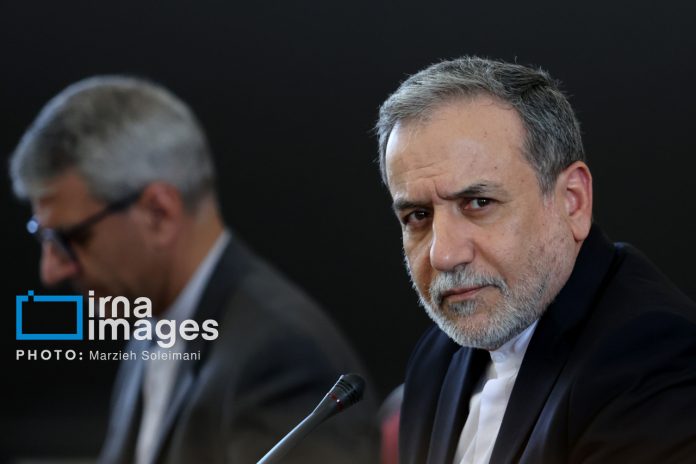
He made the remarks on the sidelines of a meeting with ambassadors and representatives of foreign missions based in Tehran.

The session was held to brief diplomats on recent developments on the Iranian delegation’s visit for the UN General Assembly’s annual meeting in New York and to clarify issues surrounding the activation of the “snapback” mechanism by European states.

“Experience has shown that there is no solution to Iran’s nuclear issue other than diplomacy,” he said, adding that the activation of the snapback mechanism by the European trio, namely the UK, France, and Germany, “failed to achieve any results.”

He stated that the three European countries had “weakened their own diplomatic position” and would play a lesser role in any future negotiations.

Araghchi also stressed that Iran’s talks have always been limited to nuclear issues, rejecting claims of broader conditions.

Commenting on cooperation with the International Atomic Energy Agency (IAEA), he said the Cairo Agreement could no longer serve as a framework after recent developments.

He reaffirmed Iran’s commitment to diplomacy but emphasized that future talks would differ in approach, asserting that “Iran will not relinquish its legitimate rights.”

Iran urges accountability for Israeli genocide, war crimes

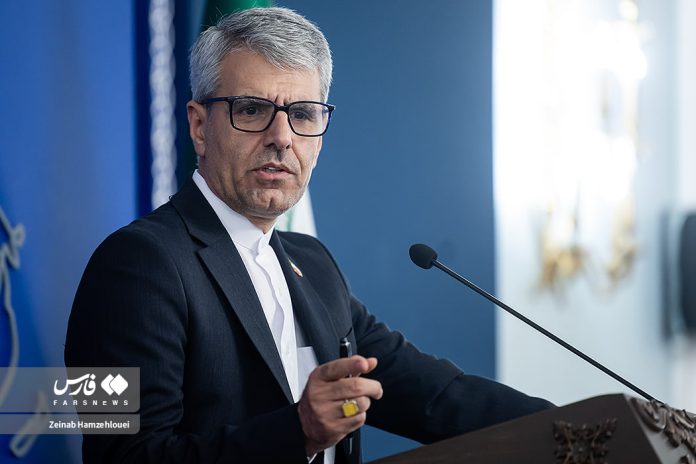
Baqaei wrote on his X social media account that a month after the incident, American media confirmed what everyone knew: “The drone attack on boats carrying humanitarian aid to Gaza off the coast of Tunisia was carried out on the orders of Netanyahu.”

He added: “This is simply further evidence of the Israeli regime’s complete disregard for the national sovereignty of countries, international law, and human life and dignity.”

Baqaei reiterated that the world must stop these brutal violations of the law, end the impunity of war criminals and genocidal perpetrators, and hold accountable those who justify these crimes.

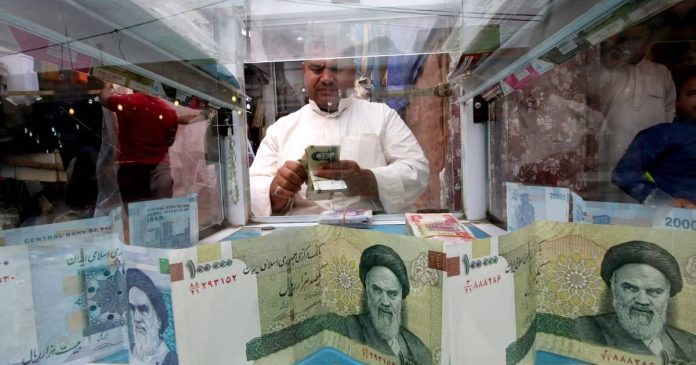
Iranian parliament approves plan to remove four zeros from national currency

The decision came after lawmakers resolved the Guardian Council’s objections to the bill during a public session on Sunday.

The bill was passed with 144 votes in favor, 108 against, and 3 abstentions out of 262 members present.
Once implemented, the reform will change the official unit of currency from the rial to the “new toman,” equal to 10,000 current rials or 100 qerans.

According to the approved legislation, the Central Bank of Iran will oversee a three-year transition period, during which both the rial and the new toman will circulate simultaneously.

The Central Bank must also prepare necessary executive measures within two years of the law’s enforcement and officially announce the start of the transition through public channels.

Additionally, the bank is tasked with determining foreign exchange rates in accordance with the country’s legal and economic framework.

The executive bylaw of the reform must be drafted within three months and approved by the Cabinet following endorsement by the Central Bank’s High Council.

US denies visas to Iranian football delegation for 2026 World Cup draw

The move effectively prevents their attendance at the 2026 FIFA World Cup draw in Washington DC on December 5.

According to Sports Business Journal, the decision contradicts an executive order issued earlier this year by President Donald Trump, which bars travelers from 12 countries, including Iran, but allows exceptions for major sporting events such as the World Cup and the Olympics.

FIFA Vice President Victor Montagliani said he was confident that Iran’s participation in next summer’s tournament would not be affected by US entry restrictions, noting that match locations would be determined by the December draw rather than political considerations.
He added that FIFA had received assurances from the US, Canada, and Mexico guaranteeing entry for all qualified teams.

Iran Expediency Council member: CFT accession was a measured decision

He underlined that implementation of the convention’s provisions will be subject to Iran’s Constitution and domestic laws.

According to Bahonar, the decision was made by a relative, not unanimous vote, following renewed deliberations authorized by the Supreme Leader and requested by the previous government.

He noted that the CFT bill originally belonged to the 10th parliament, and its recent review was part of Iran’s continuous legal process after the Guardian Council raised objections to the legislation.

Bahonar also said the conditional approval aims to reduce obstacles to international economic cooperation, particularly with countries such as China and Russia, both of which had officially urged Tehran to resolve the issue to facilitate trade and financial exchanges. “While the decision will not lead to the lifting of U.S. sanctions,” he said, “it could help alleviate part of the current economic pressures”.

He also addressed the concerns of critics who believe that joining the CFT under current political and economic pressures is not in the country’s best interest.
However, Bahonar argued that conditional accession would not harm Iran’s national security or sovereignty.

He noted that failure to join has already increased shipping insurance costs, financial transfer expenses, and oil trade discounts. Bahonar described the conditional approval of the CFT as a measured and lawful decision, saying it ensures that Iran’s participation remains fully aligned with its constitutional principles while potentially opening space for smoother economic cooperation with friendly nations.

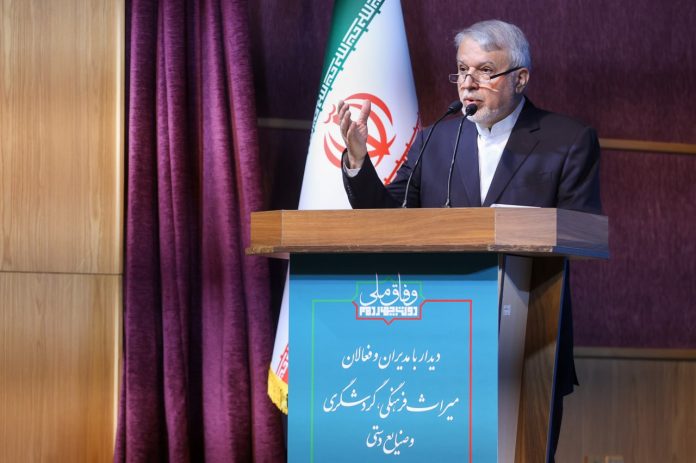
Iran cultural heritage minister: Mehregan Festival ‘symbol of justice, global solidarity’

In a message marking the celebration of Mehregan, Salehi-Amiri said the festival embodies values such as love, moderation, gratitude, and harmony between humans and nature.
He noted that Mehregan, jointly inscribed by Iran and Tajikistan on UNESCO’s Representative List of Intangible Cultural Heritage in 2024, carries a “strategic message” of peace and trust among nations.

“Culture and civilization form the lasting foundation of peace and mutual confidence between peoples,” the minister stated, adding that the recognition of Mehregan reflects both the cultural depth of the region and the responsibility to preserve and transmit its humanistic values.

He also referred to Mehregan as “a festival celebrating the unity of humanity and nature,” saying its message is especially relevant amid today’s global environmental and social challenges.

The term Mehregan derives from Mehr—meaning love, friendship, and the sun—combined with the suffix -gan, denoting celebration; together it signifies “the Festival of Mehr.”

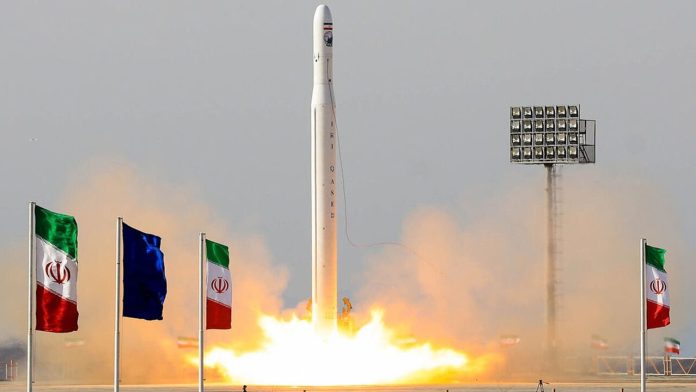
Iran to conduct first satellite launch using solid-fuel rocket

According to Hassan Salarieh, the Chabahar site, in southern Iran, is strategically located to provide access to orbits with various inclinations, making it vital for deploying satellite constellations and sun-synchronous missions.

He said the first phase of the center, designed for solid-fuel launch vehicles, is nearly complete, while the second phase, intended for liquid-fuel rockets capable of carrying heavier payloads to higher orbits, has been fully designed.

Salarieh added that upcoming missions include the launch of “Zafar-2” and “Paya” remote-sensing satellites aboard foreign launchers, while the domestically built “Nahid-2” satellite is scheduled to be launched using Iran’s “Simorgh” rocket.

He also highlighted progress on the “Martyr Soleimani” satellite constellation, initially comprising about 20 narrowband nano-satellites for data transmission across Iran.

In addition, he reported ongoing private-sector developments, including the “Kosar” satellite with four-meter imaging resolution, set for launch soon.

Guardiola calls for global action to end Israeli genocide in Gaza

According to reports from Arabic Sport and ISNA, the Spanish coach urged the global community to act swiftly to stop the “genocide in Gaza,” where thousands of civilians, including many children, have been killed.

“We are witnessing a genocide in Gaza, where thousands of children have lost their lives, and the number keeps rising,” Guardiola said. “The region has been destroyed, and countless people are living without shelter, food, clean water, or medicine.”

He added that civil society could play a crucial role by pressuring governments to take urgent measures to protect civilians and end the bloodshed perpetrated by the Israeli regime.

Guardiola also noted that demonstrations were planned across Catalonia at noon on Saturday, where protesters were expected to demand an end to the violence in Gaza.

The Manchester City coach has previously spoken out on humanitarian issues, calling for peace and justice in conflict-affected regions.

Tomahawk missiles deliveries to Ukraine ‘unlikely’: Reuters

US Vice President J.D. Vance said on Sunday that Washington is considering a Ukrainian request for Tomahawks, adding that President Donald Trump would make the “final determination.” Ukraine’s President Volodymyr Zelensky reportedly asked Trump for the missiles at a behind-closed-doors meeting, portraying the request as a way to expedite the end of the conflict with Russia.

However, the Trump administration’s interest in providing Tomahawks – which have a range of 2,500km and cost an estimated $1.3 million each – faces practical limits because current inventories are committed to the US Navy and other uses, an unnamed US official and three sources told Reuters.

The official emphasized there is no shortage of the weapon itself, which US forces often use for land-attack missions, but noted priorities elsewhere. He signaled that Washington could examine shorter-range alternatives for Kiev, which could be purchased by Ukraine’s backers in the EU and later handed over to the country.

Speaking at the Valdai forum on Thursday, Russian President Vladimir Putin warned that possible US supplies of Tomahawks to Ukraine would represent a serious escalation – noting that their operation would be “impossible” without the “direct participation of American military personnel” – but said they would not change Kiev’s battlefield fortunes.

“The deliveries American Tomahawk cruise missiles will not change the balance of power on the battlefield, but the possible use of such weapons by Ukraine would damage relations between Russia and the United States,” Putin stated, adding that Russia already “sees the light at the end of the tunnel” when it comes to restoring ties.

Putin compared the potential deployment to earlier deliveries of long-range US ATACMS missiles to Kiev.

“There were ATACMS, and what? Yes, they caused some damage, but in the end, Russia’s air defense systems adapted. Can Tomahawks cause damage? Well, we will shoot them down, we will improve our air defense system,” he continued.