Thursday, December 25, 2025
Home Blog Page 77

Iran’s FM voices deep concern over ‘tragic’ killing of civilians in Sudan

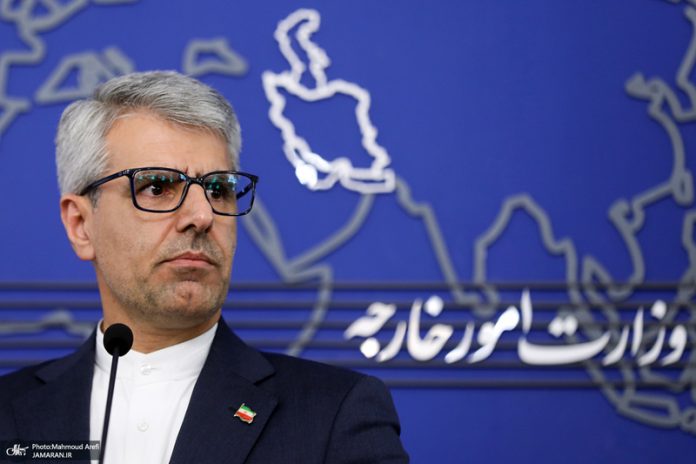
Abbas Araghchi

In a post on his X account on Saturday, Araghchi said he had conveyed Iran’s “deep sorrow and concern over the tragic killing of innocent civilians” in the southwestern city of El Fasher, during a phone conversation with his Sudanese counterpart, Mohieldin Salem.

He added that he also expressed Iran’s solidarity with Sudan.

El Fasher has emerged as the new epicenter of global concern amid a sharp escalation in Sudan’s prolonged conflict, marking a fresh phase of violence, siege, and mass displacement across North Darfur.

After an 18-month siege that trapped nearly 1.2 million civilians, the Rapid Support Forces (RSF) announced on Sunday that they had captured the Sudanese Armed Forces (SAF)’s final stronghold in El Fasher.

Araghchi criticized the division of terrorism into “good” and “bad” categories by some countries and their support for those who, in their own words, carry out the “dirty work” in pursuit of their interests.

“Such deplorable double-standards, long espoused by Western governments, have no place in 2025,” the top Iranian diplomat stated.

He stressed the importance of condemning “terrorism and violence against innocent people, in any form and anywhere in the world.”


President Pezeshkian: Iran fully supports peaceful nuclear development

During a visit to the Atomic Energy Organization of Iran (AEOI) on Sunday, President Pezeshkian toured an exhibition showcasing the latest achievements in nuclear medicine and radiopharmaceutical production and held talks with senior industry officials.

He commended Iranian scientists for their contributions to public health, describing their work as “a form of scientific jihad and sincere service to the nation.”

President Pezeshkian called for accelerating innovation in radiopharmaceuticals and nuclear technology, citing their vital role in healthcare and national economic growth.

“The world powers fear Iran’s scientific independence,” he said. “We have repeatedly declared that producing nuclear weapons is not on our agenda. Our goal is to meet human needs through technology, not to build bombs.”

The president also urged greater efforts to communicate the peaceful applications of nuclear technology and to counter “biased propaganda that equates nuclear energy with weaponry.”

He concluded that his government will “rebuild nuclear facilities with even greater strength” and ensure Iran secures a stronger position in the global technology market.

Iran confirms receiving messages on possible resumption of talks with US

Iran US Flags

Government Spokesperson Fatemeh Mohajerani said on Sunday that the Ministry of Foreign Affairs “has received messages for the resumption of talks” with Washington, adding that it would elaborate on their content “at an appropriate time.”

Her remarks followed reports by the Iraqi outlet Baghdad Al-Youm, which claimed that Washington had sent a message to Tehran via Oman expressing readiness to restart nuclear negotiations that have been stalled.

The report further alleged that the message conveyed the intention of US President Donald Trump to pursue a new agreement with Iran.

However, senior Iranian lawmaker Esmaeil Kowsari, a member of the Parliament’s National Security and Foreign Policy Committee, said the moves to resume talks were “psychological operations.”

He said, “Whenever we have negotiated with the Americans, directly or indirectly, they have failed to honor their commitments.”

Kowsari cited historical examples of US noncompliance, including the unfulfilled promise to release Iran’s frozen assets following the 1979 takeover of US embassy in Tehran.

Iranian officials have not confirmed any ongoing or scheduled negotiations but maintain that messages between parties are routinely exchanged through diplomatic intermediaries such as Oman.

Tomahawks won’t bring Ukraine peace: Russia

Maria Zakharova

She made the remark after CNN reported that the Pentagon had given the White House approval to supply the Tomahawks to Ukraine, after concluding that the move would not deplete US stockpiles. Nevertheless, President Donald Trump has declined to provide the missile, which is capable of striking targets deep inside Russia.

“As the current situation and previous years have shown, it is clear that militarization and arms deliveries – especially to a terrorist regime – will not lead to a settlement. Moreover, such actions would contradict the campaign promises made by the current US administration,” Zakharova told reporters on Saturday.

Trump has long promised to mediate an end to the conflict between Russia and Ukraine and revived direct negotiations with Russia earlier this year. However, no breakthroughs were achieved during his rare summit with Russian President Vladimir Putin in Alaska in August or in the renewed Russian-Ukrainian talks in Istanbul.

Trump recently postponed a planned summit with Putin in Hungary’s capital, Budapest, and imposed additional sanctions on Russia’s oil trade. At the same time, he rejected Ukrainian leader Vladimir Zelensky’s request for the Tomahawks, saying the weapons were needed “to protect our country.”

Trump also stated that Ukrainian troops would have to undergo extensive training to operate the missiles.

“We know how to use it, and we’re not going to be teaching other people,” he added.

Putin warned last month that he would consider the delivery of Tomahawks as a further escalation and promised a “very strong response.”


Israeli air attack kills four in Lebanon, straining fragile ceasefire

In a statement on Saturday, the Lebanese Health Ministry announced that the Israeli raid in the town of Kfarsir in the Nabatieh district also wounded three.

The state-run Lebanon News Agency reported that the strike, which involved a “guided missile”, targeted a car at about 2:15pm (16:15 GMT).

The attack came a day after Lebanese President Joseph Aoun accused Israel of escalating strikes in response to his offer to negotiate a more lasting end to the cross-border attacks.

The conflict began in 2023 when Hezbollah began launching attacks on Israel in solidarity with Palestinians in Gaza, in the wake of the Hamas-led October 7 attacks on southern Israel. After more than a year of fighting, the two sides agreed to a ceasefire in November 2024.

Despite the truce, Israel has kept troops in five areas of southern Lebanon and has continued near-daily air raids, repeatedly violating the truce. Israel claims it is targeting Hezbollah, but civilians, first responders and journalists have also been killed.

According to the United Nations, Israeli troops have killed at least 111 civilians in Lebanon since the ceasefire went into effect.

Aoun, who called for negotiations with Israel in mid-October, after United States President Donald Trump brokered a ceasefire, said his proposed talks seek to “end the Israeli occupation”.

For its part, Israel has claimed Lebanon’s government has not upheld its side of the ceasefire by failing to constrain and disarm Hezbollah.

The armed group rejects the pressure for it to disarm.

In another sign of heightening tensions, Aoun earlier this week instructed Lebanon’s armed forces to confront any new Israeli incursion in the south.

The order came hours after Israeli soldiers entered the border town of Blida.

They stormed the town hall, killing municipal worker Ibrahim Salameh, who had been sleeping there, the state-owned National News Agency (NNA) said.

Israel’s military said the operation was meant to destroy Hezbollah infrastructure, saying that soldiers had opened fire in response to an “immediate threat”.

They did not provide further details or evidence behind the killing.


Russia unveils new nuclear submarine

The ceremony took place in Severodvinsk, and was attended by Russian Defense Minister Andrey Belousov and other top brass.

“Today is a significant event for us: the heavy nuclear-powered missile cruiser Khabarovsk is being launched from the slipway of the renowned Sevmash shipyard,” Belousov stated.

“Carrying underwater weapons and robotic systems, it will enable us to successfully accomplish missions related to ensuring the security of Russia’s maritime borders and protecting its national interests in various parts of the world’s oceans,” he said.

The minister added that the submarine still has to complete a series of sea tests, and wished its crew and builders further success.

The ‘Khabarovsk’ “was specifically designed and built for the Poseidon,” former Chief of the Russian Navy’s General Staff, Admiral Viktor Kravchenko, told RIA Novosti on Saturday.

The Poseidon cannot currently be intercepted by any means, according to Russian President Vladimir Putin.

Earlier this week, Russia successfully carried out tests involving the state-of-the-art drone, as well as the unlimited-range Burevestnik cruise missile, Putin announced on Wednesday.

The announcement came amid a stall in Ukraine peace talks, and discussions of potential US Tomahawk supplies to Kiev.

US President Donald Trump announced on Thursday that he had instructed the Department of War to start testing nuclear weapons, citing strategic competition with Russia and China.

However, Russia is “still not” in an arms race with the US, Kremlin spokesman Dmitry Peskov said on Thursday, when asked to comment on the recent arms tests.


Two local Basij members killed in terrorist attack in southeastern Iran

Crime Scene

According to a statement, the attack occurred near Eskelabad when armed members of terrorist groups ambushed the vehicle of Mohammadreza Shahouzehi, a local tribal leader, during a patrol of the security zone.

The two Basij volunteers, identified as Esmaeil Shavarzi and Mokhtar Shahouzehi, both Sunni locals participating in the regional security plan, sustained severe injuries during the assault and later succumbed to their wounds despite extensive medical efforts.

The Quds Headquarters condemned the attack and emphasized that such “terrorist acts will not weaken the determination of local security forces and the people of the region to preserve peace and stability.”

The border province of Sistan and Baluchestan has in recent years witnessed sporadic attacks by militant groups, mostly based in neighboring Pakistan, targeting security personnel involved in maintaining regional security as well as civilians.

Syrian president to visit Washington in November: US Envoy

Asked by reporters on the sidelines of the Manama Dialogue in Bahrain whether Sharaa would head to Washington this month, Tom Barrack said “yes”, adding that Sharaa would “hopefully” sign up to the Global Coalition to Defeat Daesh.

It would be the Syrian leader’s first visit to Washington and his second visit to the US after a landmark UN trip in September where the former militant became the first Syrian president in decades to address the General Assembly in New York.

Formerly affiliated with Al-Qaeda, Sharaa’s group, Hayat Tahrir al-Sham (HTS), was delisted as a terrorist group by Washington as recently as July.

Since taking power, Syria’s new leaders have sought to break from their own radical past and present a moderate image more tolerable to ordinary Syrians and foreign powers.

The United States had already been collaborating with the Kurdish-led Syrian Democratic Forces (SDF) to fight Daesh in Syria.


Ukraine claims has hit nearly 160 Russian oil facilities in 2025

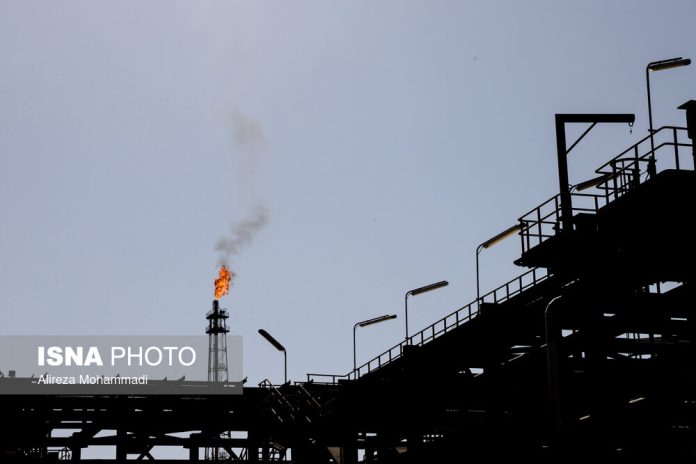
Maliuk said that at least 20 of those strikes were conducted in September and October alone, targeting six oil refineries, two oil terminals, three fuel depots, and nine pumping stations.

“These are legitimate military targets. Oil extraction and refining make up around 90% of Russia’s defense budget. These are the dirty petro-rubles funding the war against us,” he added.

Maliuk claimed that Russian domestic fuel shortages have reached up to 20%, with 37% of its refining capacity forced to shut down. Fuel deficits were reported in 57 Russian regions, prompting Moscow to ban gasoline exports until the end of the year.

Strikes on Russian oil infrastructure and military-industrial sites are part of an ongoing campaign carried out primarily by domestically produced Ukrainian drones.

The operations are designed to disrupt Russia’s war economy and its military capabilities.

Russian missile attacks on Ukraine hit 2.5-year high: AFP

Russian strikes have caused sweeping blackouts affecting tens of thousands of people, with Moscow targeting Ukraine’s power grid for the fourth winter running in what Kyiv and its backers say is a deliberate and cynical strategy to wear down Ukraine’s civilian population.

Russia’s army fired 270 missiles over October, up 46 percent on the previous month, according to an AFP analysis of daily data published by Ukraine’s air force.

That was the highest one-month tally since Kyiv started routinely publishing statistics at the beginning of 2023.

Ukrainian President Volodymyr Zelensky has accused Russia of wanting to sow “chaos” by striking the country’s energy grid so intensely.

“Russia’s task is to create chaos and apply psychological pressure on the population through strikes on energy facilities and railways,” Zelensky told journalists at a briefing last month.

As in previous winters, rolling blackouts have been introduced in every region of the country, including Kyiv, throughout October to deal with shortfalls in power.

The International Criminal Court (ICC) in the Hague last year issued arrest warrants for top Russian army officials for the “war crime of causing excessive” harm to civilians by striking Ukrainian energy sites.

Russia also fired 5,298 long-range drones at Ukraine in October, the same data showed — down by around six percent on the number it fired in September but still close to record highs.

Russia fires drones at Ukrainian cities and energy sites on a daily basis.

Kyiv has retaliated with strikes on Russian oil depots and refineries, seeking to cut off Moscow’s vital energy exports and trigger fuel shortages across the country.