Saturday, December 27, 2025
Home Blog Page 721

Israel seeking to drag West Asia into a full-blown war: Iran President

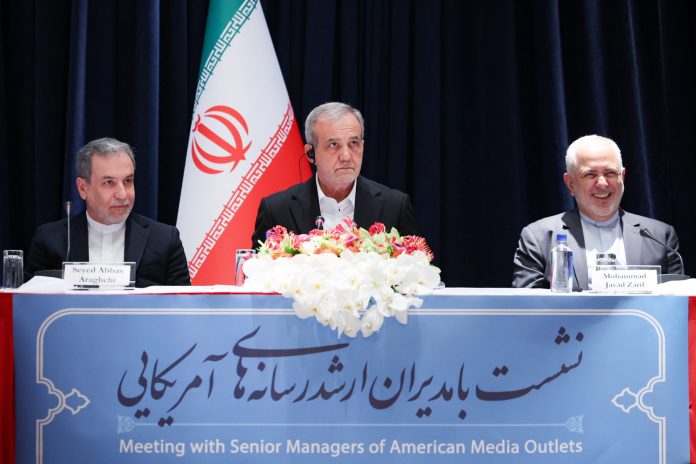
Pezeshkian Zarif Araghchi

Pezeshkian, who is in New York to attend the 79th session of the United Nations General Assembly, made the remarks in a meeting with senior managers of American media outlets on Monday.

“We do believe that if a larger war were to erupt in the region, it will not benefit any country. It is the Zionist regime (Israel) that seeks warmongering and the expansion of insecurity in the region.”

Pezeshkian said Iran defends the oppressed people of Palestine. The Iranian president criticized the inaction of leading international media on Israel’s ongoing genocidal war in the Gaza Strip.

In response to a question about Iran’s defense power, Pezeshkian stated that Tehran does not seek to wage a war and spread insecurity and has never launched any attack against a country but it has been invaded by others many times.

“We want defense power to maintain [national] security and defend our people and country. However, the Zionist regime has repeatedly conducted terrorist acts against our country,” the Iranian president emphasized.

Asked about Iran’s response to Israel’s assassination of Ismail Haniyeh, the head of the political bureau of the Palestinian resistance movement Hamas, in Tehran in late July, Pezeshkian said the move, which is condemned based on all international rules, will not remain unanswered.

He noted that Iran has proved it is capable of giving a proper response to the crimes of Israel but the country does not seek to spread instability and insecurity in the region.

Haniyeh was assassinated on July 31 while he was in Tehran to attend the swearing-in ceremony of President Pezeshkian.

Iranian political and military leadership, including Leader of the Islamic Revolution Ayatollah Seyyed Ali Khamenei, have vowed to avenge Haniyeh’s blood.

The Iranian president once again reiterated his administration’s policy of expanding interaction with world countries based on mutual respect.

He added Iran seeks “constructive, healthy and equal” interaction with all world countries.

“We are trying to replace war and bloodshed with peace and security and create a world in which people have coexistence on the basis of justice, peace, prosperity and security instead of killing each other.”

He criticized certain Western media outlets for portraying a tarnished image of Iran and said he would convey his country’s message of peace and friendship to the world during the General Assembly meeting.

The Iranian chief executive, however, warned that it will not be possible to establish peace and security in the region as long as the Israeli regime continues its crimes.

Pezeshkian also rejected allegations about Iran’s supplying of weapons to Russia to be used in the war in Ukraine.

“Iran has never supported and will never support Russia’s war against Ukraine.”

Iran, Pezeshkian stressed, respects the national sovereignty and territorial integrity of all countries, but no one should keep silent on the crimes of Israel in Gaza while accusing others of pursuing aggressive policies.

Russia launched what it called a special military operation in Ukraine in February 2022 partly to prevent NATO’s eastward expansion after warning that the US-led military alliance was following an “aggressive line” against Moscow.

Iran has maintained its policy of impartiality regarding the conflict.

However, the US and its Western allies have repeatedly claimed that Iran is supplying weapons to Russia for direct use in the Ukraine war.

Iran has categorically rejected the unfounded accusations, saying the Western countries are escalating the war through the supply of advanced weaponry to Kiev.
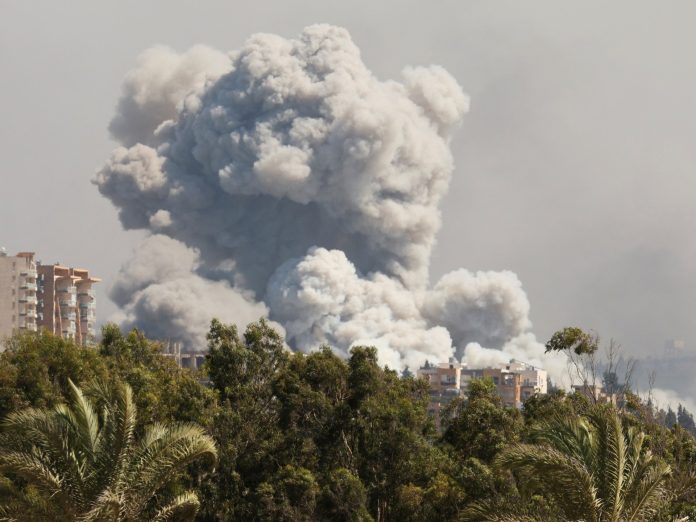
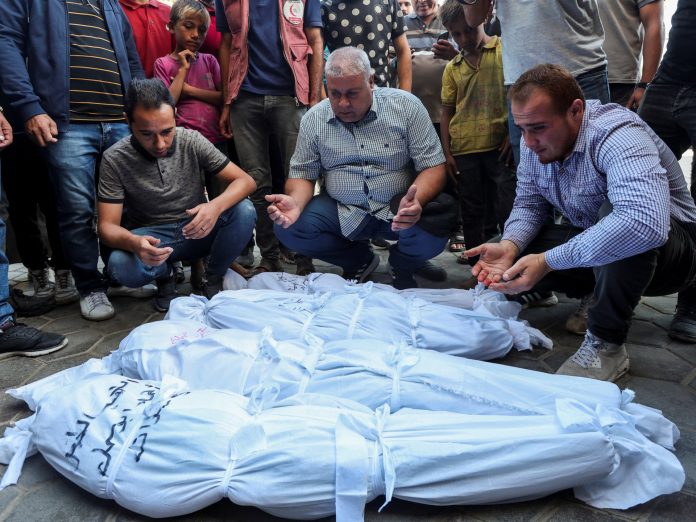
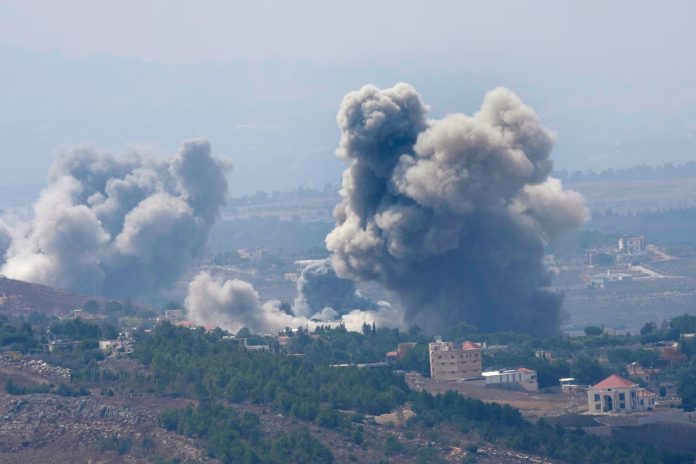
Death toll from Israel’s strikes on Lebanon climbs to 492, deadliest day since civil war

Lebanon War

It is the deadliest day of conflict in Lebanon since its 1975-90 civil war.

Lebanon’s media outlets reported the Israeli aircraft had bombed all the towns and villages lying on the southern border as well as their surroundings.

Israeli warplanes also reportedly targeted eastern Lebanese areas, including the Bekaa Valley and Baalbek.

Lebanese sources stated that Israeli fighter jets had pounded a total of more than 40 areas in Lebanon during the attacks.

Videos and photos show large queues of traffic as people flee towns across the country for the capital, Beirut.

Israeli military spokesman Danieh Hagari has stated the regime “will engage in [more] extensive and precise strikes” against Lebanon, adding that the attacks would “go on for the near future”. Tel Aviv recently declared that it was shifting more focus to the fighting with Hezbollah in a bid to allow the 60,000 or so Israelis evacuated from the border areas to return.

Tel Aviv has markedly intensified its attacks against the country since October 7, when it launched a genocidal war on the Gaza Strip.

Hezbollah resistance movement has responded with numerous strikes against the occupied Palestinian territories as a means of both retaliating against the regime and displaying support for the war-hit Gazans.

Israel’s shift of focus was initiated in a wave of unprecedented attacks. On Tuesday and Wednesday, thousands of pagers and other devices exploded in Beirut targeting Hezbollah’s rank and file members, as well as civilians, sending shockwaves across the country.

At least 37 people were killed and more than 3,000 were wounded in the blasts. These were widely blamed on Israel which has neither confirmed nor denied responsibility.

On Friday, an Israeli strike killed a senior commander of Hezbollah’s Radwan unit, and the second-in-command of the group’s armed force Ibrahim Aqil. The strike in the Beirut suburb of Dahiyeh killed at least 45 people, including 10 civilians.

Top UN officials demand ‘end to humanitarian catastrophe in Gaza’

Gaza Strip

In a joint statement, UN officials “mourn the loss of innocent life everywhere, including those killed on October 7 and during the 11 months of conflict since then”.

Calling for “a sustained, immediate and unconditional ceasefire”, UN officials also urged for the immediate release of all “hostages and all those arbitrarily detained”.

“Humanitarians must have safe and unimpeded access to those in need,” the statement added.

Highlighting the devastating toll of the ongoing conflict, with over 41,000 Palestinians killed and more than 95,500 injured since October, the statement noted that “more than 2 million Palestinians are without protection, food, water, sanitation, shelter, health care, education, electricity and fuel – the basic necessities to survive”.

“Women and girls’ dignity, safety, health and rights have been severely compromised,” it added.

Saying that “the risk of famine persists”, the UN officials stressed that all 2.1 million residents are in urgent need of food and livelihood assistance.

It stated that the healthcare has been devastated, with over 500 attacks on medical facilities in Gaza.

“Our capacity to deliver is indisputable if we are granted the access we need,” they said, pointing to polio vaccination campaigns that reached hundreds of thousands of children despite the conflict.

Citing the “unnecessary and disproportionate force unleashed in the West Bank”, the statement added “escalating settler violence, house demolitions, forced displacement and discriminatory movement restrictions, have caused increased fatalities and casualties”.

“The war is also jeopardizing the future for all Palestinians and rendering eventual recovery far from reach.”

UN officials further called for accountability for serious violations of international humanitarian law, insisting that “allowing the abhorrent, downward spiral caused by this war in the Occupied Palestinian Territory to continue will have unimaginable, global consequences”.

The statement also urged world leaders to exert diplomatic pressure, declaring, “Let us be clear: The protection of civilians is a bedrock principle for the global community and in all countries’ interest.”

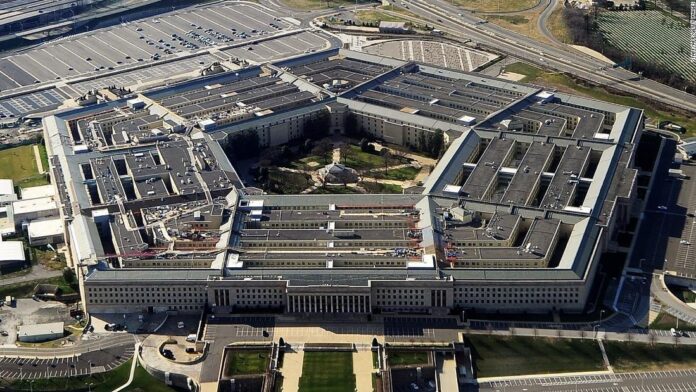
Pentagon dispatching additional troops to West Asia as tensions escalate

Pentagon

Defense Department press secretary Maj. Gen. Pat Ryder told reporters the new detachment was being sent “in light of increased tension in the Middle East and out of an abundance of caution”.

“We are sending a small number of additional U.S. military personnel to augment our forces that are already in the region,” Ryder added, declining to offer specifics about the new contingent, though he referred to them as ground troops.

The U.S. already has an array of forces positioned in the Middle East, including the USS Abraham Lincoln aircraft carrier strike group and the ballistic missile submarine USS Georgia, along with an additional squadron of F-22 fighter jets. In the eastern Mediterranean Sea, there are six U.S. warships, including the USS Wasp amphibious assault ship.

Israel has launched a barrage of airstrikes into southern and eastern Lebanon, with Lebanese health authorities saying that at least 492 people have been killed, including 35 children, and 1,645 injured in the attacks since Monday morning, which have also forced thousands of civilians to flee their homes.

The escalation comes after intense Israeli strikes last week that killed top Hezbollah commanders in Lebanon.

Israel is also accused of detonating pager and handheld radio devices in Lebanon last week, killing at least 37 people and wounding thousands.

Hezbollah and Israel have been engaged in cross-border warfare since the beginning of Israel’s war on Gaza, which has killed over 41,400 people, the majority of whom are women and children, following a cross-border attack by the Palestinian group Hamas on Oct. 7 last year.

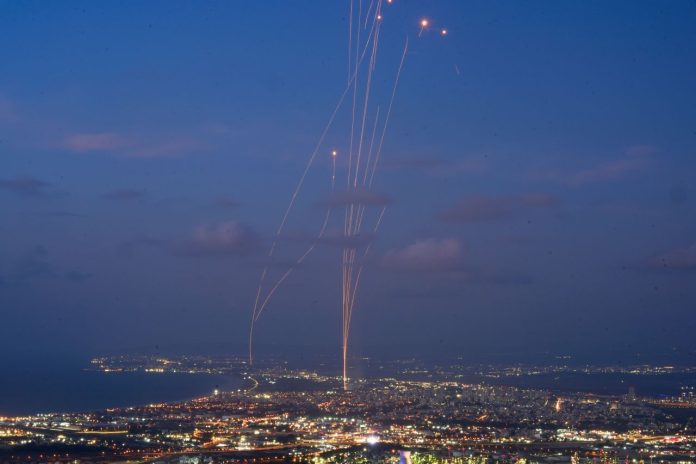
State of emergency declared in Israel until late Sept. amid tensions with Hezbollah

Israel Iron Dome

According to Israeli daily Yedioth Ahronoth, Israeli Cabinet ministers voted to declare a “special home front situation” throughout Israel.

The vote was done by telephone, as proposed by Defense Minister Yoav Gallant, the newspaper added.

Haaretz also reported that under the declaration, the army is granted powers to issue instructions to the Israeli public, allowing it to ban gatherings, limit studies, and issue “additional instructions required to save lives”.

Lebanese health authorities said at least 492 people, including children, had been killed and 1,645 others injured in Israeli attacks since Monday morning, with thousands of civilians forced to flee their homes.

The international community has warned against the raids, as they raise the specter of spreading the Gaza conflict regionally.

Hezbollah and Israel have been engaged in cross-border warfare since the start of the Israeli war on Gaza, which has killed over 41,400 people, mostly women and children, following a cross-border attack by Hamas last Oct. 7.

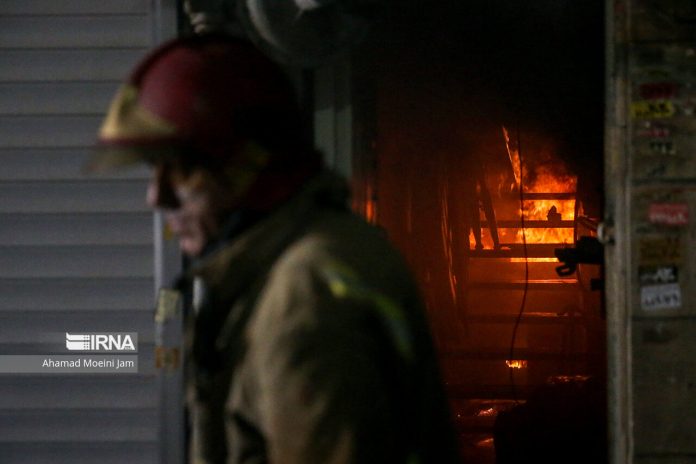
10 injured following fire, blasts in Iranian industrial town

Iran Firefighters

Emergency crews and firefighters from Semnan and Tehran provinces are on site responding to the incident. Heavy smoke is bellowing in the area.

The fuel storage in the industrial town are causing explosions and exacerbating the situation.

The Semnan province governorate’s crisis management said there is no accurate information about the amount of fuel stored in the fuel storage of the oil condensate factory, so it is impossible to predict when the fire will be contained.

The cause of the blaze at the Fajr industrial town remains unclear.

Iconic singer of Iran protests and deadly riots says pardoned, his case closed

Shervin Hajipour

Hajipour released a video earlier on Monday announcing that the judicial case against him has been closed as a recent general amnesty declared over Prophet Muhammad’s birth anniversary applied to him.

While expressing condolences over a mine blast in northeastern Iran that claimed dozens of lives on Saturday, Hajipour said, he felt obliged to keep his fans posted over the good news in order to allay their concerns over the legal proceedings.

Hajipour, a Grammy Award winner, also thanked another renowned Iranian singer Mohsen Chavoshi for his efforts to resolve the case.

In an initial court ruling, the 27-year-old singer had been sentenced to over 8 years behind bars for ‘propagation against the establishment,’ but an appeals court declared the ruling null and void.

Hajipour rose to fame after the release of his song which was described as ‘the anthem’ for the protests and deadly riots, triggered by the death of 22-year-old Iranian woman Mahsa Amini in police custody over her improper Islamic hijab.

Lebanon says over 270 killed in Israeli strikes

Lebanon War

Israeli air raids mostly hitting southern and eastern Lebanon have killed at least 274 people and wounded at least 1,024 others, according to the country’s health minister, in the deadliest day of conflict in Lebanon since the 2006 Israel-Hezbollah war.

Firass Abiad said the death toll on Monday included 21 children, 39 women and two medics as the bombardment hit homes, medical centres, ambulances, and cars of people trying to flee.

Thousands of Lebanese fled the south, and the main highway out of the southern port city of Sidon was jammed with cars heading towards Beirut in the biggest exodus since the 2006 fighting.

The government ordered schools and universities to close across most of the country and began preparing shelters for people displaced from the south.

The Israeli army has claimed that it had struck more than 800 sites used by Hezbollah.

The increased hostilities raise further fears of an all-out war between Israel and Hezbollah or even a wider regional conflagration.

Israel’s military warned civilians to move away from places it claimed were being used by Hezbollah, which launched a barrage of rockets into northern Israel the previous day.

The warnings ignored the possibility that some residents could live in or near targeted structures without knowing that they are risk.

Many people who received warnings told Al Jazeera that they did not know where to go.

Lebanese media reported that people across the country, including the capital, Beirut, in central Lebanon, have been receiving Israeli phone warnings telling them to evacuate.

The intensification of the fighting across the shared border, which has seen low-level skirmishes since Israel launched its war on Gaza in October, follows last week’s explosions of pagers and walkie-talkies which killed dozens in Lebanon.

In the early hours of Monday, Israeli army spokesperson Daniel Hagari said its forces conducted “extensive strikes” against Hezbollah posts after identifying attempts to fire rockets.

Tel Aviv recently declared that it was shifting more focus to the fighting with Hezbollah in a bid to allow the 60,000 or so Israelis evacuated from the border areas to return.

Asked by a reporter whether the army was planning a ground invasion into the neighbouring country, Hagari added, “We will do everything necessary to return the residents of the north to their homes safely.”

Israeli Defence Minister Yoav Gallant called on the public to remain calm as the military broadened its assault.

“We are deepening our attacks in Lebanon, the actions will continue until we achieve our goal to return the northern residents safely to their homes,” Gallant said in a video published by his office on Monday.

“These are days in which the Israeli public will have to show composure.”

Israeli Prime Minister Benjamin Netanyahu also said on Monday after the strikes Israel faced “complicated days” and called on Israelis to stay united as the campaign unfolded.

“I promised that we would change the security balance, the balance of power in the north – that is exactly what we are doing,” he added in a message issued following a situational assessment at military headquarters in Tel Aviv.

On Saturday, Hezbollah launched dozens of rockets at Israel’s Ramat David Airbase, east of Haifa in its farthest-reaching attack inside Israel.

Monday’s salvo was among the heaviest cross-border fire exchanges between Israel and Hezbollah since the start of the war in Gaza.

The two parties have been exchanging nearly daily fire since October 8, with Hezbollah saying it would stop only once a ceasefire was achieved in the Palestinian enclave.

But while those exchanges were largely confined to border areas and were aimed at primarily military targets, they have escalated dramatically this week.

Israel’s shift of focus was initiated in a wave of unprecedented attacks. On Tuesday and Wednesday, thousands of pagers and other devices exploded in Beirut targeting Hezbollah’s rank and file members, as well as civilians, sending shockwaves across the country.

At least 37 people were killed and more than 3,000 were wounded in the blasts. These were widely blamed on Israel which has neither confirmed nor denied responsibility.

On Friday, an Israeli strike killed a senior commander of Hezbollah’s Radwan unit, and the second-in-command of the group’s armed force Ibrahim Aqil.

The strike in the Beirut suburb of Dahiyeh killed at least 45 people, including 10 civilians.

UK predicts Ukraine war could persist beyond 2026

Russia Ukraine War
People react to the Russian missile strike in Chernihiv, Ukraine.

David Lammy gave a speech at a conference of the governing Labour Party in Liverpool on Sunday, stressing Britain’s commitment to supporting Kiev. He noted that the government has committed to providing Ukraine with £3 billion ($3.99 billion) in military aid annually “for as long as it takes”.

On the same day, the foreign secretary attended an event on the sidelines of the conference, warning that the hostilities could persist into “the back end of 2025 into 2026” and beyond.

The hardship and challenges arising from the Russia-Ukraine conflict are set to become “deeper and harsher” in the coming years, he added.

“This is a critical time for nerve and guts and patience and for fortitude on behalf of allies who stand with Ukraine,” Lammy insisted.

The foreign secretary’s remarks apparently referred to the unwillingness of US President Joe Biden’s administration to allow Ukraine to use Western-supplied weapons for long-range strikes into Russia’s internationally recognized territory. Moscow has warned that giving such permission, which Ukrainian leader Vladimir Zelensky has been demanding for months, would make NATO countries direct participants in the conflict and be met with an appropriate Russian response.

“There is a very real-time discussion across allies about how we can support Ukraine as we head into winter,” the British foreign secretary noted.

However, he refused to reveal details, saying that would only “only aid [Russian President Vladimir] Putin”.

Lammy’s view on the likely duration of the fighting appears to clash with plans set out by Zelensky – who claimed last week that he had developed a scheme to end the hostilities by the end of this year if the West makes “quick decisions” on increasing its support for Kiev.

The Ukrainian leader is now in the US, where he plans to show his so-called ‘victory plan’ to Biden, members of Congress, and both presidential contenders – Kamala Harris and Donald Trump.

Russia has never set deadlines when it comes to the conflict with Ukraine, and has repeatedly announced that its military operation, which started in February 2022, will continue until its goals are achieved. Kremlin spokesman Dmitry Peskov reiterated on Sunday that “there is no alternative to our [Russian] victory”.

Iran FM says efforts underway to start nuclear talks in New York, messages exchanged

Abbas Araghchi

In an interview, Araghchi emphasized, “Our effort is to start a new round of negotiations regarding the nuclear issue. We are prepared, and if the other parties are also ready, we can start a new round of talks during this trip.”

Regarding the readiness of the other parties for such negotiations, Araghchi added, “Messages have been exchanged, and there is a general expression of readiness. However, given the current international conditions, restarting nuclear talks is somewhat more difficult and complex than before.”

The Iranian Foreign Minister also rejected the possibility of meeting with US Secretary of State Antony Blinken in New York, stating, “At the moment, I don’t see such an opportunity, and in my opinion, it is not expedient right now to hold such a conversation. We are still far from reaching a point where, like in previous negotiations, direct talks between the two sides would be possible.”

He emphasized that past experiences cannot be ignored, saying, “The Americans need to show that they are ready to change the course they took after exiting the JCPOA (the Iran nuclear deal) and are willing to return to the 5+1 negotiating table. In that case, direct talks might once again become possible, but within the framework of the 5+1 negotiations.”

The US, under President Donald Trump, withdrew from the JCPOA in 2018 and re-imposed sanctions on Iran. The deal was the result of difficult negotiations between Iran and the 5+1 group, which includes the US, Russia, France, China, the UK, and Germany.