Monday, December 29, 2025
Home Blog Page 699

UN Security Council says UNIFIL should be protected after Israeli attacks in Lebanon

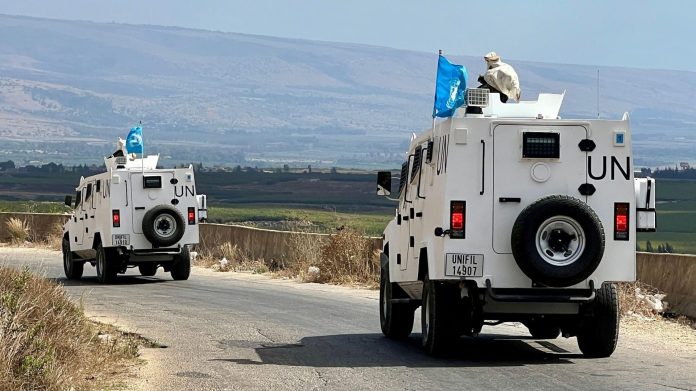
In a statement on Monday that did not specifically mention Israel, the 15-member council urged “all parties to respect the safety and security of UNIFIL personnel and premises”.

“They recalled that UN peacekeepers and UN premises must never be the target of an attack,” the statement reads.

“They reiterated their support to UNIFIL, underscoring its role in supporting regional instability.”

The statement comes as Israeli Prime Minister Benjamin Netanyahu escalated his rhetoric against the UN peacekeepers, calling on them to “heed Israel’s request and to temporarily get out of harm’s way”.

The Israeli government has demanded that UNIFIL leave its positions in Lebanon, where Israel has stepped up ground operations and a campaign of heavy bombing that has killed hundreds of people and displaced a quarter of the country’s population.

The UN peacekeepers say Israeli forces have attacked their positions several times over the last week. Israeli tanks also smashed through the gates of a UNIFIL position over the weekend.

Those attacks have been widely condemned, including by UN Secretary-General Antonio Guterres, who said in a social media post on Sunday that attacks against UN peacekeepers were a violation of international law and “may constitute a war crime”.

The UN force has stressed that it would remain in place, despite pressure from Israel to leave its positions.

“We are staying. We are in the south of Lebanon under a Security Council mandate, so it’s important to keep an international presence and to keep the UN flag in the area,” a spokesman for the group said on Monday.

UNIFIL consists of some 10,000 peacekeepers from more than 50 countries, including Indonesia, India and Ireland.

On Sunday, the UN announced it had observed 1,557 incidents across the Blue Line, a demarcation point between Lebanese and occupied territories, with 93 percent of that fire coming from Israel into Lebanon.

IRGC Quds Force commander seen on state media after 2-week public absence

Qaani was shown in a live report by Iranian state broadcaster IRINN on Tuesday morning as the body of a senior IRGC figure killed in Lebanon arrived at Tehran’s Mehrabad airport.

Sitting alongside other officials, Qaani was seen attending a ceremony to receive the body of Abbas Nilforoushan before the slain commander’s funeral, expected to take place later Tuesday.

Nilforoushan was killed along with Hezbollah leader Seyyed Hassan Nasrallah in an Israeli trike on Beirut in September. Qaani’s absence from official events since the start of October had fueled speculation about whether the top general had met a similar fate.

Iranian officials and state media had repeatedly denied the rumors of Qaani’s death.

Qaani took charge of Iran’s vast paramilitary network across the Middle East in 2020 after replacing Lieutenant General Qasem Soleimani following the assassination of the former Quds Force chief in a US drone raid. He is sanctioned by the United States, the United Kingdom and other Western nations.

Britain puts sanctions on Iranian military figures following missile strike on Israel

Iran Missile

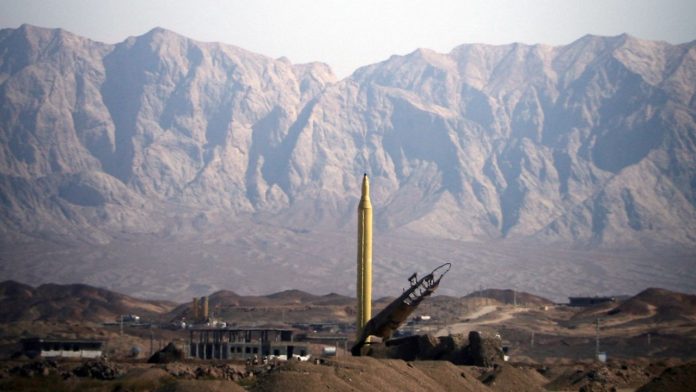
The sanctions target senior figures in Iran’s army, air force and organisations linked to Iran’s ballistic and cruise missile development.

“Despite repeated warnings, the dangerous actions of Iran and its proxies are driving further escalation in the Middle East,” British Foreign Minister David Lammy said in a statement.

“Following its ballistic missile attack on Israel, we are holding Iran to account and exposing those who facilitated these acts.”

Lammy also discussed Iran’s actions with European partners at the EU Foreign Affairs Council in Luxembourg earlier on Monday, the Foreign Office added.

Those sanctioned include Abdolrahim Mousavi, the Commander-in Chief of the Islamic Republic of Iran Army, Mohammad Kazemi, Islamic Revolutionary Guard Corps (IRGC) Intelligence Chief, Habibollah Sayyari, Head of the Joint Staff of the Iranian Army and Deputy Chief for Coordination of the Iranian Army, Ali-Mohammad Naini, IRGC Spokesperson, the Farzanegan Propulsion Systems Design Bureau and the Iranian Space Agency.

Iran has launched a missile barrage at Israeli military and intelligence bases in retaliation for the Israeli assassination of Hamas political chief Ismail Haniyeh in Tehran as well as Hezbollah leader Seyyed Hassan Nasrallah and a senior IRGC commander, who were both killed in a massive Israeli air attack on southern Beirut.

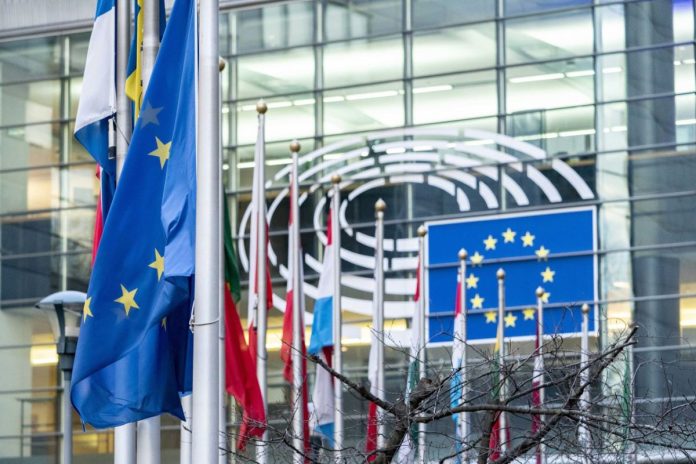
EU imposes sanctions on Iran over ‘missiles transfer’ to Russia

European Parliament

Foreign ministers approved the sanctions on 14 entities and individuals, including Iran Air, Saha Airlines and Mahan Air, a deputy defence minister and senior officials of the Islamic Revolutionary Guard Corps Quds Force, an EU statement read.

Iran and Russia have dismissed reports claiming that Tehran had transferred ballistic missiles to Moscow.

Britain, Germany, and France, alongside the US, have announced fresh sanctions on Iran over the issue.

Tehran has repeatedly stressed that it has never been a party to the conflict in Ukraine, adding the Islamic Republic supports any political solution to the Ukraine war.

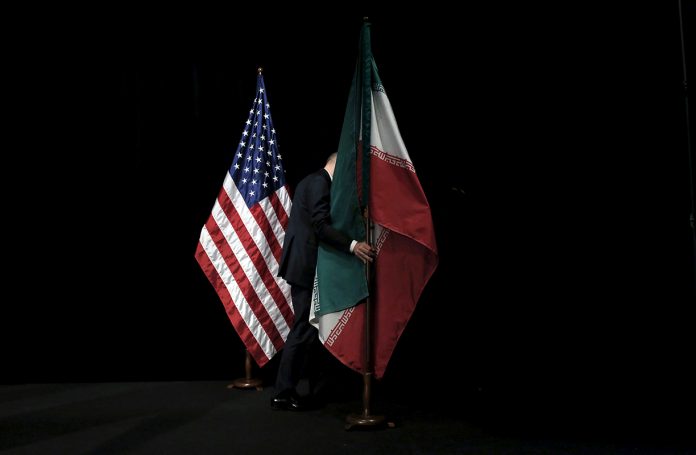
Iran says indirect contacts with US halted due to regional tensions

Iran US Flags

Araghchi, speaking in Muscat, where he is holding talks on the ongoing Israeli crimes in Palestine and Lebanon, stated on Monday that there is currently no room for such indirect negotiations, which had previously been facilitated by Oman.

Referring to the specific regional circumstances, the top diplomat acknowledged Oman’s ongoing efforts in addressing regional issues, including its positive role in mediating between Iran and the US, whether through the exchange of messages or setting the stage for talks.

He added that due to the current crisis and the special circumstances in the region, the process has been halted. Future decisions on whether to re-engage will be made after further assessment.

Araghchi also noted that during his trip to Oman, the Islamic Republic clearly communicated its positions, to be relayed to all relevant countries, including the US and European states.

The minister emphasized that while Iran is fully prepared for war, it does not seek conflict, believing that diplomacy should be the first course of action to prevent war.

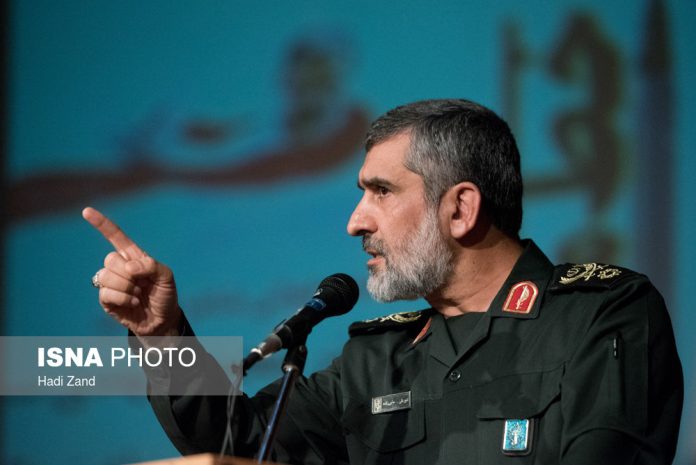
IRGC commander says Iran ready to respond to “any misstep” by Israel

Amir Ali Hajizadeh

“We are ready to respond to any misstep taken by Israel,” IRGC Aerospace Commander Amir Ali Hajizadeh said.

Last week, Iran launched 200 missiles towards Israeli military and intelligence bases all over the occupied territories as part of Operation True Promise II in response to the Israeli regime’s deadly aggression against the country and other regional nations.

The aggression that prompted the retaliation had, among other things, led to the martyrdom of Hamas’s political leader Ismail Haniyeh, Hezbollah’s leader Seyyed Hassan Nasrallah, and Abbas Nilforoushan, a senior commander of Iran’s Islamic Revolution Guards Corps (IRGC).

Iranian officials warn Tehran will give a stronger response to any Israeli attack, stressing the regime can once again test the Islamic Republic’s will.

Back in April too, the country had fired more than 300 missiles and drones against the territories in an operation codenamed True Promise in reprisal for deadly aggression by the regime against Iranian diplomatic facilities in the Syrian capital of Damascus.

Report: Israel considering plan to starve Gazans to death

Under the proposed plan, seen by the Associated Press, civilians who remain in northern Gaza would be classified as combatants, allowing Israeli troops to kill them. They would be denied access to food, water, medicine, and fuel.

The plan proposed to Netanyahu by a group of retired generals, calls for Israel to maintain control over the north for an indefinite period to attempt to create a new administration, splitting the Gaza Strip in two.

Israeli media reported that Netanyahu told a closed parliamentary committee session that he was considering the plan.

Israeli authorities with knowledge of the matter said parts of the plan are already being implemented.

The plan gave Palestinians a week to leave the northern third of the Gaza Strip, including Gaza City, before declaring it a closed military zone.

Israel has issued many evacuation orders for the north throughout the yearlong campaign of death and destruction, the most recent of which was Sunday.

Israeli troops widened their brutal military offensive on north Gaza early on Sunday, after killing 300 people over tens days in a ramped-up ground offensive targeting the Jabalia refugee camp.

Israeli tanks made their way to the north edge of Gaza City, while airstrikes from above continued.

Residents say they have been isolated from the rest of the besieged enclave, with Israeli forces not allowing anyone to enter or exit the north.

No trucks of food, water, or medicine have entered the north since Sept. 30, according to the UN.

So far, very few Palestinians have heeded the latest evacuation order. Much fear there’s nowhere safe to go and that they will never be allowed back. Israel has prevented those who fled earlier in the war from returning.

Philippe Lazzarini, head of the UN’s agency for Palestinian refugees, wrote on X Thursday that at least 400,000 people are trapped in the area.

“With almost no basic supplies available, hunger is spreading.”

Human rights groups say the plan would likely starve civilians and that it flies in the face of international law, which prohibits using food as a weapon and forcible transfers.

The fact that Israel is intentionally limiting food to Gaza is central to the genocide case brought against it at the International Court of Justice.

Israeli authorities say that if the strategy is successful in northern Gaza it could then be replicated in other areas, including tent camps further to the south sheltering hundreds of thousands of Palestinians.

The Israeli military presses ahead with its relentless bombardment of the blockaded territory now more than one year into the genocidal war.

The Israeli aggression on Gaza began in October last year, claiming the lives of more than 42,000 so far. Over 98,000 d others have also been injured since then.

A senior Palestinian diplomat to the United Nations has sounded alarm over Israel’s ongoing siege of northern Gaza, in which hundreds of Palestinians have been killed over the last week and hundreds of thousands of civilian residents are either trapped or ordered to flee amid intense bombardment.

“What is happening in northern Gaza now is a genocide within the genocide,” Palestinian Ambassador Majed Bamya, the deputy permanent observer to the UN, wrote on X.

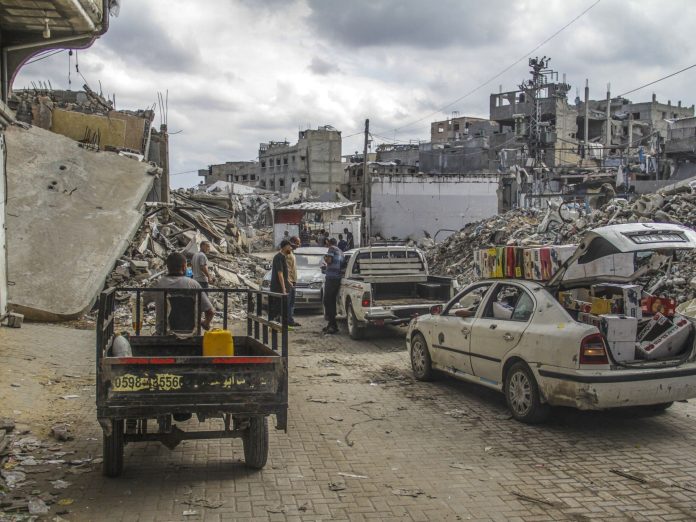
‘Burned and charred bodies’ as Israel strikes tents at Gaza hospital

Gaza War

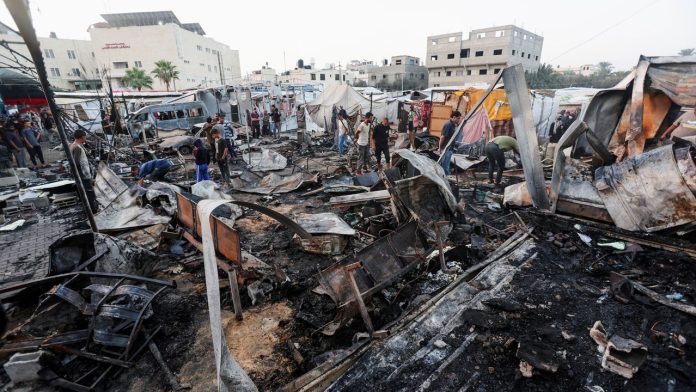
The attack at Al-Aqsa Martyrs Hospital in central Gaza’s Deir el-Balah city in the early hours of Monday hit tents where many displaced Palestinians had been sheltering.

Videos and photos showed rescuers scrambling to save people as they struggled to contain a major fire. The death toll is expected to rise further.

“What happened was that we woke up to smoke, flames, fire and burning pieces falling on the tents from every direction. The explosions terrified us in our tents and outside where we live behind Al-Aqsa Hospital,” Om Ahmad Radi, a survivor at the scene, told Al Jazeera.

“The fire trucks couldn’t get here. There were so many burned and charred bodies all over the place. The amount of fire and explosions was enormous. We witnessed one of the most horrible and brutal nights,”

Gaza’s Media Office announced it was the seventh time this year that Israel has hit the grounds of Al-Aqsa Hospital and the third in the past couple of weeks, killing Palestinians who were forced to flee their homes.

Israeli forces have repeatedly attacked medical facilities in Gaza since the assault began more than a year ago, with the enclave’s health sector already overwhelmed and infrastructure destroyed.

Last week, a United Nations Independent International Commission of Inquiry (CoI) released a report which found Israel perpetrating “a concerted policy to destroy Gaza’s healthcare system”.

Meanwhile, At least 10 Palestinians were killed and dozens injured in Israeli artillery shelling targeting a food distribution center in Jabalia in the northern Gaza Strip on Monday, according to medical sources.

Meantime, at least 22 more Palestinians were confirmed dead and 80 others wounded on Sunday when Israeli tanks shelled a school sheltering the displaced in Nuseirat, also in central Gaza.

Israel’s genocide has destroyed large areas of Gaza and displaced about 90 percent of its population of 2.3 million people, many of them multiple times.

In northern Gaza, Israeli air and ground forces have laid a siege on Jabalia for days, claiming the Hamas fighters have regrouped there. Over the past year, Israeli troops have repeatedly returned to the refugee camp in Jabalia, which dates to the 1948 war surrounding Israel’s creation.

The attack on Jabalia follows Israeli orders to fully evacuate northern Gaza, including Gaza City. An estimated 400,000 Palestinians remain in the north. The UN says no food has entered northern Gaza since October 1.

The military confirmed that hospitals were also included in its evacuation orders, adding that it had not set a timetable and was working with local authorities to facilitate patient transfers.

But Fares Abu Hamza, an official with Gaza Health Ministry’s emergency service, told The Associated Press news agency that bodies of a “large number of martyrs” remain uncollected from the streets and under the rubble in the north.

“We are unable to reach them,” he added, asserting that dogs were eating some remains.

Israel has continued a brutal offensive on Gaza following a cross-border attack by Hamas on October 7 last year, despite a UN Security Council resolution calling for an immediate ceasefire.

More than 42,200 people have since been killed, mostly women and children, and about 98,400 injured, according to local health authorities.

Iran-Israel conflict could ‘shut down oil coming out of Middle East’: Ex-NATO commander

Iran Oil Tanker

“What makes this moment dangerous, just like the days before World War II, is the rise of strategic tension with China in the Pacific,” he told radio host John Catsimatidis in a Sunday interview on “The Cats Roundtable” on WABC 770 AM.

“You’ve got a pretty significant ground war going in Europe, of course, because of the invasion of Ukraine by Vladimir Putin. And you’ve got this enormous disturbance parked on the Middle East between Israel and Iran, which could, in the worst case scenario, shut down oil coming out of the Middle East.”

“When you put all that together, it’s as turbulent a moment as I think you could find going back to the late 1930s,” he added.

Stavridis shared that he remains hopeful that the next American leader will help prevent more fatal conflict and promote some form of peace in the Middle East.

“Whoever you are hoping is our next president, after the election, let us join hands together. We’ll certainly have some legal controversies […] But once this is decided […] I […] believe that we need to come together as Americans,” Stavridis stated.

His comments come weeks after General Jens Stoltenberg stepped down from the helm of NATO and ushered in a new wave of leadership with newly appointed Mark Rutte. Rutte has been guiding the alliance’s approach to funding Ukraine in the middle of a contested American election.

Iran’s intelligence forces arrest two terrorist teams in Sistan and Baluchestan

Iran Police

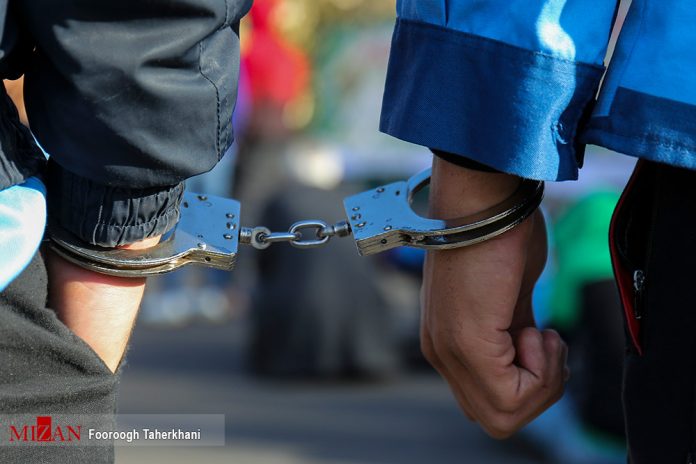
The operation was carried out by the provincial intelligence department, with effective support from the provincial police force.

Continuous intelligence monitoring and offensive operations led to the identification and arrest of all members of the terrorist teams, the intelligence department of the province announced.

Based on prior information and the confessions of the arrested individuals, they intended to carry out terrorist activities and create insecurity in the province using assault weapons and explosive devices. However, they were apprehended before any anti-security operations could be executed, according to Fars.

The terrorists’ hideout and their weapons and explosive cache were discovered and seized by using a tip-off provided by the people in the province.

The arrest is part of a broader effort by Iranian security forces to combat terrorists that infiltrate from neighboring countries.

In recent years, Iran has faced multiple threats from several extremist groups.

Jaish al-Adl is a Pakistan-based separatist group that seeks to cede Sistan and Baluchestan province, and has a history of bloody terrorist attacks in Iran’s southeastern border region.

Iran has called on Pakistan on several occasions to harness the terrorist group.