Wednesday, December 24, 2025
Home Blog Page 634

Over 200 children killed in Lebanon amid Israeli attacks: UNICEF

Lebanon War

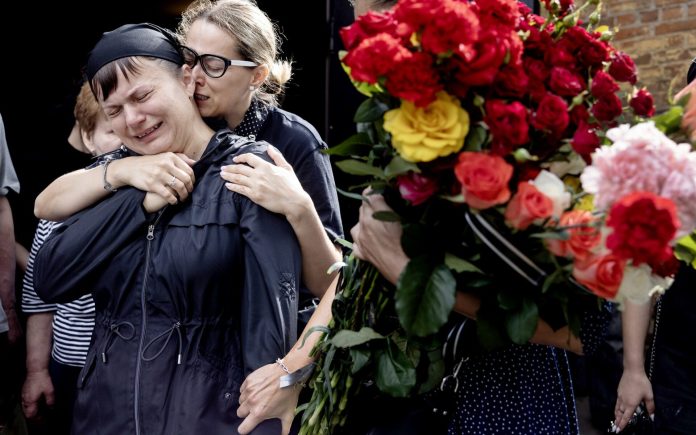
An average of three children have been killed every day in Lebanon, UNICEF told reporters on Tuesday, as Israel has intensified its bombing campaign across the country.

It warned that as in Gaza, despite the horrific toll on Lebanon’s children “those with influence” were failing to mount a meaningful response.

“Despite more than 200 children killed in Lebanon in less than two months, a disconcerting pattern has emerged: their deaths are met with inertia from those able to stop this violence,” UNICEF’s spokesperson James Elder told reporters.

“For the children of Lebanon, it has become a silent normalisation of horror,” he added.

Elder listed at least six attacks across Lebanon where children were killed, most of the time along with their families, over just the past 10 days.

The UN official noted “chilling similarities” between what is happening to children in Lebanon with those in Gaza, which has been pounded by Israeli air raids for more than a year.

At least 17,400 children have been killed in Gaza, according to the Palestinian Ministry of Health.

“In Lebanon, much the same as has become the case in Gaza, the intolerable is quietly transforming into the acceptable. And the appalling is slipping into the realm of the expected,” the UNICEF official said.

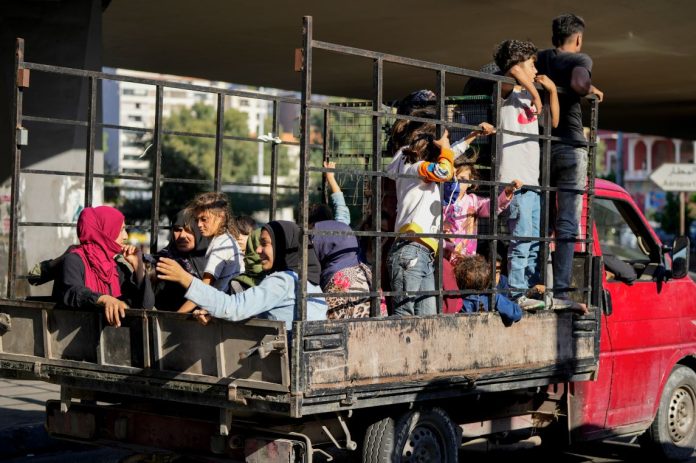
As in the besieged Strip, hundreds of thousands of children in Lebanon are now homeless; schools remain closed due to widespread attacks; signs of emotional turmoil are evident and no meaningful response has been put in place, Elder added.

According to the Lebanese Ministry of Public Health, more than 230 children are among 3,500 people killed since the start of the war. Of the 15,000 people wounded, at least 1,330 of them are children.

Israel launched a massive air campaign in late September in Lebanon against what it claims are Hezbollah targets in an escalation in a year of cross-border warfare between Israel and the group since the start of Israel’s onslaught against Gaza.

Israel expanded the conflict by launching an incursion into southern Lebanon in early October.
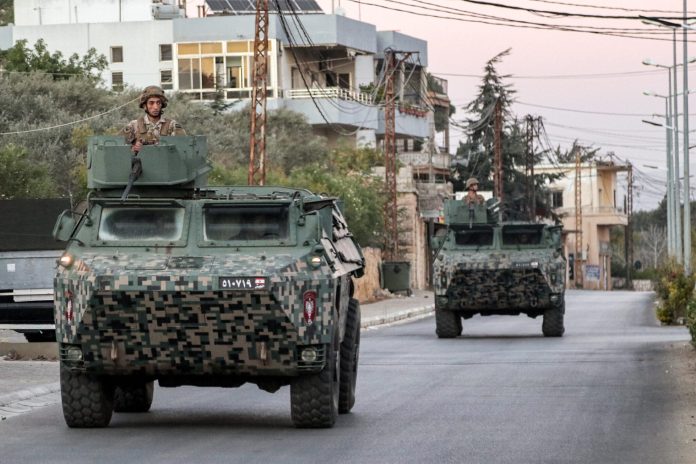
3 more Lebanese soldiers killed in Israeli attack

Lebanon Army

“The Israeli enemy targeted an army centre in the town of Sarafand in the south, which led to the martyrdom of three soldiers,” the Lebanese military wrote in a post on social media late on Tuesday.

Iran defeats Kyrgyzstan 3-2 in thrilling world cup qualifier

Iran Football Team

The match began with Iran displaying dominance, taking the lead in the 12th minute when Mehdi Taremi capitalized on a rebound.

A corner by Mohammad Karimi set up Saeid Ezzatollahi’s header, which was saved by Kyrgyzstan’s goalkeeper but deflected off a defender, allowing Taremi to score.

Iran extended their lead in the 33rd minute. Sardar Azmoun’s brilliant through-ball found Saleh Hardani, who skillfully dribbled past a defender and slotted the ball into the net with precision.

Kyrgyzstan fought back in the second half, reducing the deficit in the 52nd minute through a well-placed header. They also equalized in the 64th minute from the penalty spot after a foul in the box.

Iran sealed victory in the 76th minute when Milad Mohammadi’s cross from the right found Sardar Azmoun, whose powerful header secured the win.

This crucial victory keeps Iran on track for World Cup qualification, while Kyrgyzstan’s chances remain slim despite a spirited performance.

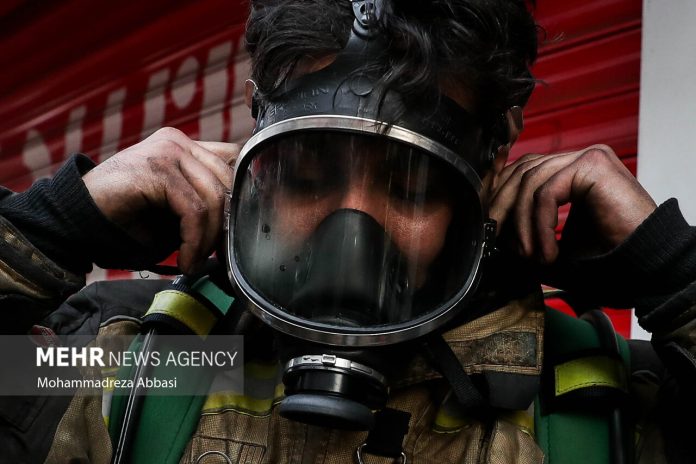
Chemical warehouse fire in Tehran contained without injuries

Firefighter

Jalal Maleki, the fire department’s spokesperson, confirmed that the blaze was reported around 3 PM on Tuesday, leading to the deployment of six fire stations with full equipment to the site.

The fire, which engulfed a four-story building storing flammable materials such as adhesives, thinners, and chemicals, was described as intense.

Firefighters worked diligently to prevent the flames from spreading to neighboring buildings and shops. After approximately an hour, the fire was brought under control.

Maleki noted that the situation reached the flame-control stage, with firefighters conducting spot extinguishing and cleanup efforts to fully secure the site.

Thankfully, no injuries or casualties were reported in the incident.

Investigations are underway to determine the cause of the fire.

Syrian FM: We support Iran’s right to self-defense

Araghchi and Sabbagh

He condemned Israel’s recent attack on Iran’s consular building in Damascus, labeling it an assault on Iranian sovereignty, and called for an unconditional end to Israeli aggression.

Sabbagh criticized escalating Israeli tensions as part of a longstanding American-Zionist agenda to redraw the map of the Middle East.

He emphasized the necessity of ending Israeli occupation, including in Syria’s Golan Heights, declaring that peace is unattainable as long as these regions remain occupied.

On bilateral relations, Sabbagh expressed satisfaction with progress made, including the establishment of the High Joint Commission and plans for the upcoming Iran-Syria Joint Economic Commission meeting to strengthen economic ties.

He also discussed joint strategies to counter sanctions, emphasizing the need for mechanisms to mitigate their harmful effects.

Sabbagh highlighted the ongoing fight against terrorism, saying the U.S. and Israel are bolstering terrorist groups in Syria as tools to further their geopolitical goals.

Despite progress in reclaiming territories since 2011, he noted challenges in northern and western Syria. He concluded by urging greater regional cooperation to counter foreign interventions undermining Syria’s sovereignty.

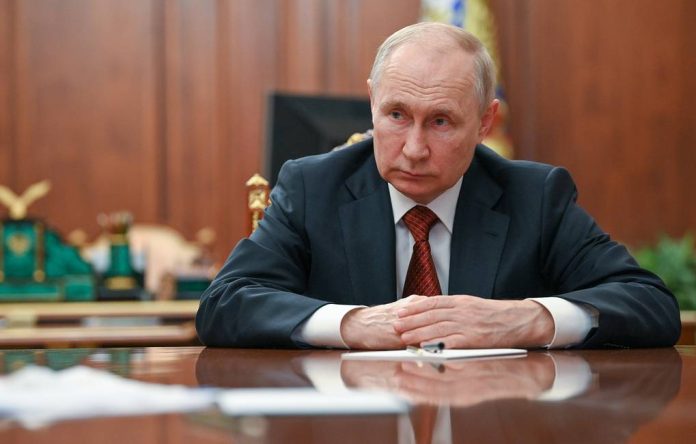
Putin approves updated Russian nuclear doctrine

Vladimir Putin

In a key section of the document, Russia has expanded the list of criteria that require a nuclear response to include “aggression by any non-nuclear state, but with the participation or support of a nuclear country”.

Such actions, the doctrine says, will be considered a joint attack.

In another passage the document states: “In addition, a nuclear response from Russia is possible in the event of a critical threat to its sovereignty, even with conventional weapons, in the event of an attack on Belarus as a member of the Union State, [or] in the event of a massive launch of military aircraft, cruise missiles, drones, other aircraft and their crossing the Russian border.”

Putin ordered changes to the nuclear doctrine in the weeks leading up to the US election.

The president of Russia remains the official making the decision on whether to use the country’s nuclear arsenal. He also has the authority to communicate his intentions and actions regarding such weapons to foreign nations.

The revised doctrine was published days after US President Joe Biden reportedly granted Ukraine permission to use long-range weapons donated by Washington for strikes deep inside Russia. Putin previously warned that such an attack would constitute a direct war between NATO and Russia.

Kremlin Spokesperson Dmitry Peskov has noted the use of western non-nuclear missiles by the Ukrainian armed forces against the Russian Federation under the new doctrine could lead to a nuclear response.

Speaking at his regular daily press briefing, Peskov stated that the new nuclear doctrine should become the subject of deep analysis both in the country and abroad.

He added that the Russian Federation considers the use of nuclear weapons to be an extreme measure, but that updating the doctrine was needed to bring the document into line with the current political situation.

The spokesman stressed that the “special operation” – Moscow’s preferred term for its full-scale invasion of Ukraine – was being conducted in the context of a war unleashed by the west against the Russian Federation, and that the Russian military is closely monitoring the reports about plans to use longer-range US missiles in the Kursk region of Russia.

Iran strongly condemns EU, UK sanctions on shipping lines

Esmail Baghaei

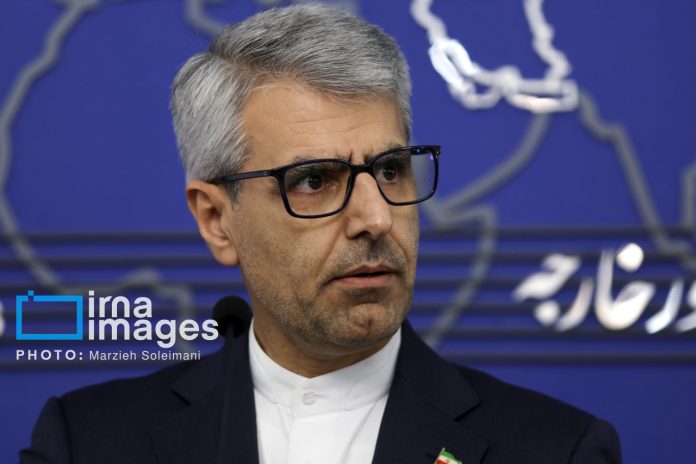
The Iranian Foreign Ministry Spokesperson Esmaeil Baghaei has strongly condemned the new sanctions imposed by the European Union and the United Kingdom on several Iranian entities and individuals, including the IRISL.

The sanctions were imposed over accusations of ballistic missile transfers to Russia, which Baghaei slammed as unfounded, unjustified, and in violation of international law as well as the EU and UK’s commitments under the Joint Comprehensive Plan of Action (JCPOA) nuclear accord.

The spokesperson reiterated that the claims of ballistic missile transfers from Iran to Russia, as dismissed by Ukraine’s president himself, are baseless.

“The EU and UK’s sanctions against Iran on this pretext are entirely unjustifiable and lack any legitimacy or legal or rational basis,” he stated.

Baghaei emphasized that the EU and UK sanctions, particularly those targeting civil aviation and the latest sanctions on IRISL, affect the fundamental human rights of Iranians, are a clear example of systematic human rights violations, and hold the originators and imposers of such sanctions internationally accountable.

“Freedom of navigation and maritime trade are fundamental principles of international maritime law,” Baghaei affirmed, holding European parties responsible for breaching international law.

Baghaei also condemned the EU and UK’s interventionist policies in the legitimate and legal defensive-military relations between states.

He stressed that the Islamic Republic of Iran will use all its capacities to cooperate with its partners in order to safeguard its national interests and security.

The European Commission, the EU’s executive arm, said on Monday that it had imposed sanctions on the Islamic Republic of Iran Shipping Lines (IRISL), its director Mohammad Reza Khiabani, and several other entities and individuals.

It added that vessels, ports, and docks owned, operated, or controlled by those individuals and entities will be targeted by the sanctions, thereby prohibiting any transaction with them.

The EU claimed the individuals and entities have been involved in transporting Iranian-made Unmanned Aerial Vehicles (UAVs), missiles, and related technologies and components to Russia to use in the war in Ukraine.

Acting in parallel, Britain also announced fresh sanctions against Iran Monday, freezing the assets of IRISL as well as national airline Iran Air over the same allegation.

Russia launched what it called a special military operation in Ukraine in February 2022 partly to prevent NATO’s eastward expansion. Moscow had already warned that the US-led military alliance was following an “aggressive line.”

Iran has maintained its policy of impartiality toward the conflict.

However, the US and its Western allies have claimed that Iran is supplying ballistic missiles to Russia for direct use in the Ukraine war.

Tehran categorically rejects the unfounded accusation, saying it is the Western countries that are escalating the war through the supply of advanced weaponry to Kiev. Russia has also warned that the flow of Western arms to Ukraine is prolonging the conflict.

Iranian daily: Officials can’t even make clear decisions for country

Iran Flag

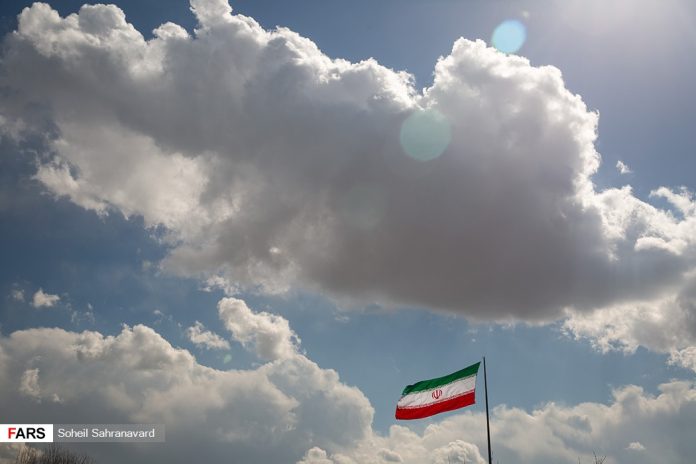
In an article published on Tuesday, the newspaper questioned why officials fail to make clear decisions on vital issues, resulting in division, distrust, and skepticism instead of unity.

The article pointed out, “While officials from top to bottom frequently speak about unity and hold numerous conferences, the outcomes of these efforts do not contribute to national cohesion and instead, the society is witnessing increasing polarization and division.”

The newspaper criticized the lack of clarity on many issues, including diplomatic negotiations, the anti-money laundering Financial Action Task Force (FATF), internet filtering, and the boundaries of individual and social freedoms.

“In rational societies, the most knowledgeable, prudent, and righteous individuals are expected to hold key positions,” Jomhouri-e Eslami emphasized and added, “Therefore, it is expected that these officials resolve unresolved issues and alleviate public confusion.”

The newspaper concluded by questioning, “Is it not time to prove that Islam is not a religion of indecision?”

Iran says reserves right to respond to Israeli attack

Abbas Araghchi

Araghchi reaffirmed Tehran’s stance on addressing Israel’s recent hostilities, stating that Iran has not relinquished its right to respond to the Zionist regime’s aggression.

“We will react at the proper time and in a manner we deem appropriate,” he declared during an online meeting with commanders and staff of the Islamic Revolution Guard Corps (IRGC).

The top diplomat described the recent Israeli actions against the Islamic Republic as a new escalation. He explained that the “True Promise 2″, like its predecessor, was a defensive operation. However, the latest attacks demand a fitting response. He was referring to the retaliatory attacks by Iran’s armed forces against Israel in recent months.

“Our decisions over the past 12 months have been guided by wisdom and prudence, not impulsive emotions,” he continued, adding, “We have responded to aggressions while preventing further escalation of war, carefully considering all conditions and possible traps laid by the enemy.”

He stated the same approach will apply to ‘True Promise 3,’ with decisions taken at the highest levels of the system to ensure a well-calculated and effective response.

The minister emphasized that Iran’s strategy involves balancing retaliation with deterrence to prevent future attacks.

He pointed out failing to respond to aggressions would embolden the enemy, leading them to believe they can strike without consequence.

“We will not allow that calculation to prevail,” he underscored.

Araghchi also underlined the diplomatic dimension of Iran’s defense strategy, adding that following the “True Promise 2” operation, the Foreign Ministry worked to establish political deterrence by rallying regional and international allies against Israeli aggression.

“This political shield complements military deterrence but does not replace it,” he explained.

Ukraine marks 1,000 days since Russia unleashed full-scale war

Russia Ukraine War

Russia launched a full-scale aggression of Ukraine on Feb. 24, 2022, extending tits assault beyond the occupied Donbas region in a bid to bring the entire country under Moscow’s control.

Thousands of Ukrainian citizens have died, more than six million live as refugees abroad and the population has fallen by a quarter since Vladimir Putin ordered the incursion that began Europe’s biggest conflict since the second world war.

“For 1,000 days, the Armed Forces of Ukraine have been confronting the enemy on the front line, which stretches over 1,000 kilometers,” Commander-in-Chief Oleksandr Syrskyi said on Tuesday.

“In the frozen trenches of Donetsk Oblast and in the burning steppes of Kherson Oblast under shells, hail, and anti-aircraft guns, we are fighting for the right to life. For us and our children.”

The milestone comes as Ukraine braces for a difficult and uncertain winter.

The future of US military aid to Ukraine is also in question, as President-elect Trump prepares to take office in January.

Meanwhile, thousands of Russian and North Korean forces have amassed in Russia’s Kursk Oblast, preparing to launch a counteroffensive against Ukrainian troops. The escalating situation in Kursk reportedly prompted US President Joe Biden to grant Ukraine permission to use American long-range weapons on Russian territory.

“Every dark night, even if there are a thousand of them, always ends with dawn,” Syrskyi added.