Wednesday, December 24, 2025
Home Blog Page 635

Ayatollah Khamenei expresses deep solidarity with Lebanon amid Israel’s attacks

Leader of the Islamic Revolution Ayatollah Seyyed Ali Khamenei

In his message, he emphasized unity and shared suffering with the Lebanese nation during these challenging times.

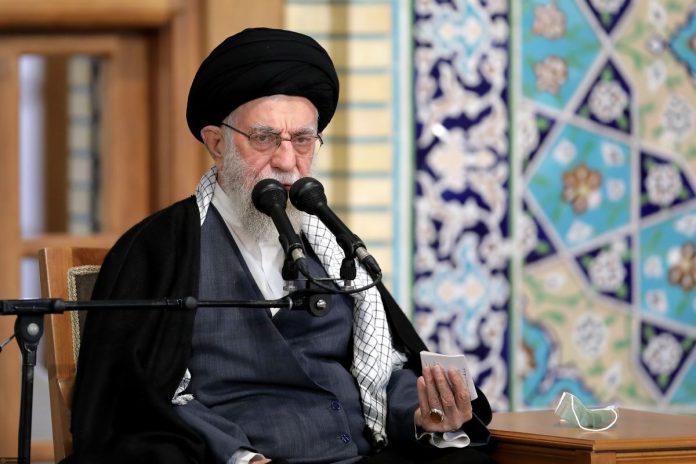
“We stand with you and are not separate from you. We are one in your pain, suffering, and struggles. Your pain is ours, and your hardships are ours,” the Leader declared in his message.

The oral statement was conveyed in response to a letter from Meysam Motiee, an Iranian activist who, alongside a group of jihadist volunteers, recently visited Lebanon to distribute aid collected through the “#IranTogether” campaign.

The initiative underscores Iran’s commitment to supporting Lebanon amid ongoing hardships.

The “#IranTogether” campaign is a collaborative effort to provide relief to the people of Lebanon, demonstrating the unity and shared values between the Iranian and Lebanese nations.

Following its military onslaught on the Gaza Strip in October 2023, the Israeli regime escalated aggression against Lebanon, unleashing relentless and deadly attacks on Lebanese territory.

At least 3,500 people have been killed and more than 14,900 wounded in Lebanon in over a year of Israeli military campaign.

Heavy Israeli bombardment have forced many families to flee the densely populated neighbourhoods in Beirut.

As the Zionist regime continues its bombing campaign, Hezbollah pledges it will continue to confront Israel in support of Lebanon and the besieged enclave of Gaza.

US sanctioning Israeli settler group over violence against Palestinians

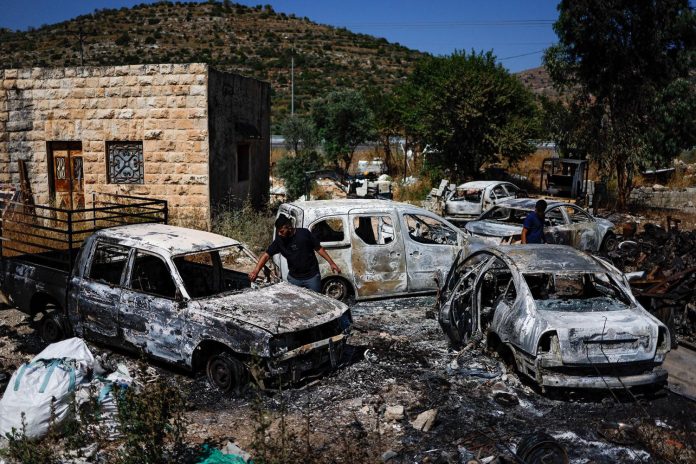
Israeli settlers violence

The sanctions target the Amana settler group, which the Treasury Department describes as a “key part of the Israeli extremist settlement movement”.

The department announced the group also “maintains ties to various persons previously sanctioned by the US government and its partners for perpetrating violence in the West Bank”.

The sanctions will also target one of Amana’s subsidiaries, Binyanei Bar Amana, which the US said is a company that builds and sells homes in Israeli settlements and settler outposts.

The UK imposed sanctions on Amana last month.

The Joe Biden administration also announced sanctions on several individual Israeli settlers: Itamar Yehuda Levi; Eyal Hari; Shabtai Koshlevsky; and Zohar Sabah.

Israeli settlements in the occupied West Bank are illegal under international law. However, Israel has continued to build settlements across the occupied territory over the past several decades. The settlement infrastructure, which has carved out lands which only Israeli citizens are allowed to access, has been described by several human rights groups as a system of apartheid.

In recent months, the Biden administration has announced several rounds of sanctions targeting individual Israeli settlers and settler organisations operating in the West Bank. All of the sanctions have been tied to settler violence against Palestinians living in the West Bank.

Israeli settler violence against Palestinians has been on the rise for several years now. Since Israel began its war on Gaza last October, the attacks in the occupied West Bank have spiked even more.

A report last month from the International Crisis Group found that there had been 1,000 such settler attacks since October 2023, which have led to 1,300 Palestinians being forced out of their homes.

While the US has imposed some sanctions on settler groups, human rights groups have long called on Washington to impose punishments on the leadership of these settlements and Israeli government officials involved in settlement activity.

Meanwhile, within the United States, there have been several Israeli real estate events in recent months advertising properties located in settlements in the occupied West Bank. These events have drawn significant backlash from members of those communities and pro-Palestinian activists.

And with the incoming administration of Donald Trump, it’s unclear how effective these sanctions will be.

The previous Donald Trump administration had deemed Israel’s settlements as not “inconsistent with international law”. President-elect Trump has also recently appointed real estate tycoon Steven Witcoff as his pick for Middle East envoy.

Iran rejects claims of plotting to assassinate Canadian national

The Iranian Foreign Ministry

The Director General for the Department of the Americas at the Islamic Republic of Iran’s Ministry of Foreign Affairs has dismissed claims made by a Canadian media outlet that Tehran attempted to assassinate a Canadian national.

Issa Kameli slammed the allegation as a ridiculous fabrication and part of a campaign to spread misinformation about Iran.

The foreign ministry official condemned such baseless accusations from a country that has become a safe haven for fugitive terrorists and wanted fraudsters, calling it a form of projection.

He stated that such unfounded accusations against the Islamic Republic of Iran cannot divert public attention from the Zionist regime’s crimes of genocide against the oppressed people of Palestine and Canada’s complicity as one of the main supporters of the occupying regime.

This came after Cotler’s office said he had been informed by the Royal Canadian Mounted Police (RCMP) of an Iranian-backed attempt on his life on October 26, two days before he was purportedly set to be attacked, according to the Globe and Mail newspaper in Canada.

Cotler, who is now retired, was a member of parliament in Canada from 1999 to 2015. He served as the minister of justice and attorney general under the Liberal government of former prime minister Paul Martin from 2003 until 2006.

He has strong ties to Israel, and had previously tabled a motion in the Canadian parliament in 2013 asking that Iran’s Islamic Revolution Guards Corps (IRGC) be sanctioned and designated as a terrorist entity. Canada officially took the measure against the IRGC in June of this year.

His daughter, Michal Cotler-Wunsh, is an Israeli politician and diplomat who previously served as a member of the Israeli Knesset (parliament).

Cordial relations between Iran, Saudi Arabia to benefit region: Deputy FM

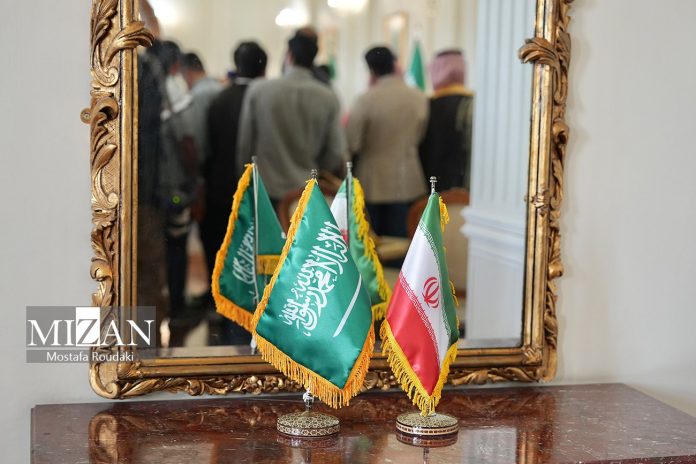
Iran and Saudi Arabia Flags

Majid Takht Ravanchi made the remarks in an X post after meeting his Saudi counterpart, Waleed el-Khereiji, in Riyadh on Monday.

The Iranian diplomat said that he had a “very constructive and fruitful” meeting with Khereiji, during which they discussed different issues of mutual interest, including bilateral ties as well as regional and international developments.

“Iran and Saudi Arabia are two brotherly and neighboring countries with many commonalities, and their close ties serve the interests of the entire region,” he added.

Meanwhile, the Saudi Press Agency (SPA) reported that during the meeting, the two sides explored ways to strengthen Iran-Saudi ties in various fields and exchanged views on latest regional and international developments.

Saudi Arabia’s Ambassador to Tehran Abdullah bin Saud al-Anzi and his counterpart in Riyadh, Alireza Enayati, were also present at Monday’s meeting, according to the report.

Iran and Saudi Arabia resumed relations following a seven-year hiatus under a China-brokered deal in March 2023, which saw the two sides re-open diplomatic missions.

In a joint statement after signing the agreement, Tehran and Riyadh highlighted the need to respect each others’ national sovereignty and refrain from interfering in the internal affairs of one another.

They also agreed to implement a security cooperation agreement signed in April 2001 and another accord reached in May 1998 to boost economic, commercial, investment, technical, scientific, cultural, sports, and youth affairs cooperation.

Moscow says its response to attacks with Western missiles on Russian soil to be felt

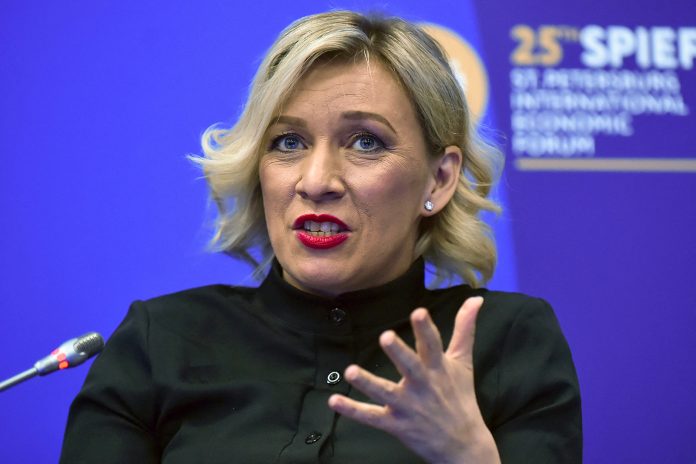
Russian Foreign Ministry spokeswoman Maria Zakharova

“The Kiev regime’s use of long-range projectiles for attacks on our territory will mean the direct involvement of the US and its satellites in combat against Russia, as well as a radical change in the conflict’s essence and nature. In this event, Russia’s response will be appropriate and tangible,” the diplomat noted.

She added that “it is not yet clear whether such news is based on official sources”.

“One thing is obvious: amid the failures of the Kiev regime, its Western handlers are banking on the utmost escalation of the hybrid war unleashed against Russia, trying to attain the illusory goal of ‘strategically defeating Moscow.’ However, no matter how much Zelensky and his henchmen hope and pray for it, there is no ‘wonder-weapon’ capable of affecting the course of the special military operation,” Zakharova continued.

The statement from the Russian Foreign Ministry comes amid unconfirmed reports that US President Joe Biden has authorized Kiev to use American-supplied ATACMS missiles to target sites inside Moscow’s pre-2014 borders.

While the White House has neither confirmed nor denied the claim, the very possibility of such a policy shift has elicited a strong reaction from Moscow.

London feared Israel arms ban would ‘undermine US confidence’ in UK, NATO: Report

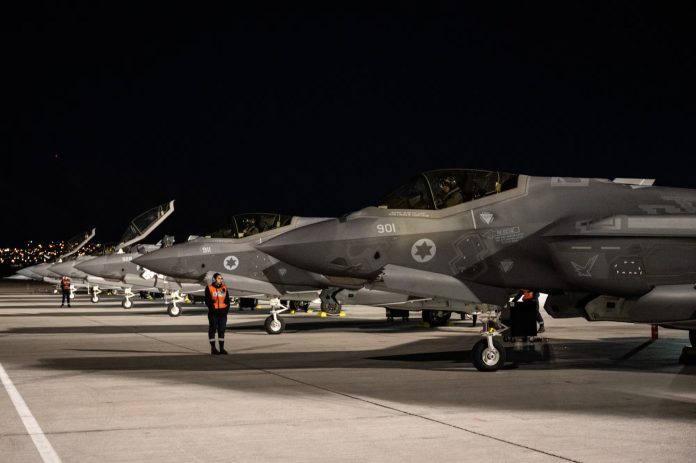
Israel F-35

The revelation came in a written submission from the government’s lawyer for a hearing in the legal challenge brought by two organisations, Al Haq and the Global Legal Action Network, over British arms exports to Israel.

According to the submission from barrister James Eadie, Defence Secretary John Healey advised the Trade Secretary Jonathan Reynolds on 18 July that it would not be possible to suspend licences for the components for Israel’s use “without wide impacts to the whole F-35 programme”.

“Such a suspension of F-35 licensing leading to the consequent disruption for partner aircraft, even for a brief period, would have a profound impact on international peace and security,” Healey advised Reynolds.

“It would undermine US confidence in the UK and Nato at a critical juncture in our collective history and set back relations. Our adversaries would not wait to take advantage of any perceived weakness, having global ramifications.”

Six weeks later, the government suspended 30 licences for the export of UK arms to Israel based on a review which showed there was a clear risk they could be used by Israel to violate international humanitarian law (IHL) in Gaza.

According to Eadie’s submission, that 2 September decision was made based “on the assessment that Israel is overall not committed to compliance with IHL in Gaza, including in the conduct of hostilities”.

But despite this assessment, the submission says that for the reasons laid out by the defence secretary, it was “determined that there is a good reason to depart” from the criteria normally followed and not suspend exports into the F-35 programme.

“The F-35 Carve Out accepts that there is clear risk that F-35 components might be used to commit or facilitate a serious violation of IHL but determines that in the exceptional circumstances outlined by the defence secretary, these exports should nonetheless continue,” the submission said.

On the day the suspension was announced, there were five active licences related to the export of UK-made F-35 parts.

When Al-Haq and Glan launched their legal challenge last December, they argued that the UK should ban all arms exports over a clear risk that Israel might use British-made weapons to violate international humanitarian law in Gaza.

But after the Labour goverment’s suspension in September, the focus of the case shifted to UK-manufactured F-35 components, which can still be exported through third countries, with Israel as the final destination.

Arms control experts and researchers say Israel has relied on F-35s for a high volume of air strikes in Gaza and, more recently, in Lebanon over the past 13 months. UK-made parts make up 15 percent of the jets.

The government has said it cannot suspend F-35 components exported through third countries without undermining the global F-35 programme, saying that tracking parts across the programme’s complex, 20-plus country supply chain is difficult.

Last month, a spokesperson for the F-35 Joint Programme Office told MEE that the F-35 supply chain was capable of “controlling material movement based on part number/configuration” but that no system was in place to do so.

Foreign Secretary David Lammy was asked in Parliament if the government has held conversations with the US government or Lockheed Martin, prime contractor of the F-35, about initiating tracking and tracing, but did not answer.

Along with the case in the UK, legal challenges involving F-35 components destined for Israel have been brought in the Netherlands, Canada and Denmark, all partners in the global programme.

Monday’s hearing in London focused on procedural questions, including the scope of the case moving forward, and ended without a definitive conclusion. The next hearing in the case is set for January.

Hamas refutes reports about political bureau relocation

Hamas

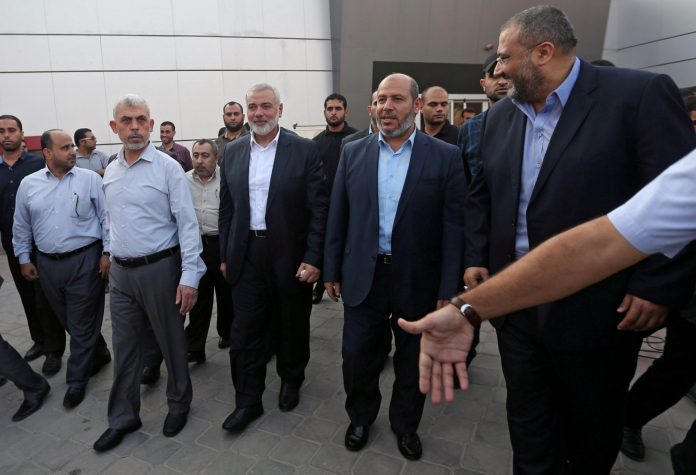
Sources close to Hamas said on Monday that such claims are “wild rumors that the occupying regime tends to spread from time to time”.

Additionally, a diplomatic source in Ankara denied reports regarding the relocation of Hamas’ political bureau to Turkey.

“Members of the Hamas’s political office visit Turkey from time to time. The allegations that the Hamas’s politburo has moved to Turkey are not true,” the source indicated.

Sources from the Turkish Foreign Ministry also dismissed claims that Hamas’s political bureau has relocated to Turkey.

“The claims that the Hamas’s Political Bureau has relocated to Turkey do not reflect the truth,” the sources said.

Earlier in the day, the Times of Israel, citing an Arab diplomat, reported that senior members of Hamas’s abroad leadership left Qatar last week for Turkey.

Qatari Foreign Ministry Spokesman Majed bin Mohammed Al Ansari has described reports about Doha’s departure from mediation efforts for a ceasefire in Gaza and exchange of Israeli captives with Palestinian prisoners as “inaccurate”.

He clarified his country’s standing on the matter by saying that Doha had notified the concerned parties 10 days ago during the last attempts to reach an agreement, “that it would stall its efforts to mediate between Hamas and Israel if an agreement was not reached in that round.”

The spokesperson has dismissed media report claiming that Qatar had called on the leaders representing the Gaza-based Palestinian resistance movement Hamas to leave the country.

Describing those reports as “inaccurate”, the official stated the main goal served by the movement’s office in Qatar was to be a channel of communication between concerned parties.

Since 2012, Qatar has housed Hamas’ political leaders in Doha as part of an agreement to facilitate negotiations, particularly during periods of intense conflict between Hamas and the Israeli regime.

EU imposes sanctions on Iran’s shipping lines

The European Union

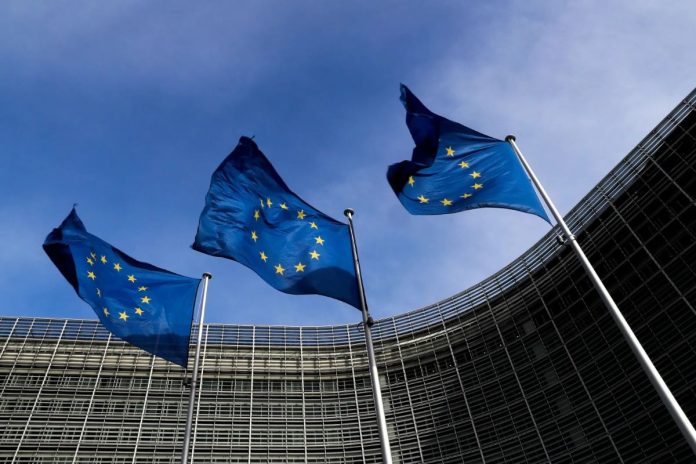
The European Commission, the EU’s executive arm, said that it had imposed sanctions on the Islamic Republic of Iran Shipping Lines (IRISL), its director Mohammad Reza Khiabani, and several other entities and individuals.

It added vessels, ports, and locks owned, operated, or controlled by those individuals and entities will be targeted by the sanctions, thereby prohibiting any transaction with them.

The EU claimed the individuals and entities have been involved in transporting Iranian-made Unmanned Aerial Vehicles (UAVs), missiles, and related technologies and components to Russia to use in the war in Ukraine.

The sanctions come more than a month after the bloc imposed sanctions on Iran’s national airline Iran Air over the same claims.

Iran has repeatedly rejected accusations it has been supplying weapons to Russia for use in the ongoing war in Ukraine.

Foreign Minister Seyyed Abbas Araghchi said in a post on the X on Sunday that sanctions on the IRISL would backfire, adding that they would be against freedom of navigation as a basic principle of the law of the sea.

He stated the EU’s targeting of Iran’s transport systems and travelers showed its behavior toward Iran has no legal, logical, or moral basis.

The minister added that even the Ukrainian President Volodymyr Zelensky himself had confirmed that no Iranian ballistic missiles have been delivered to Russia.

Iranian police chief: 800k Afghan illegals forced out of country 

Afghan Refugees

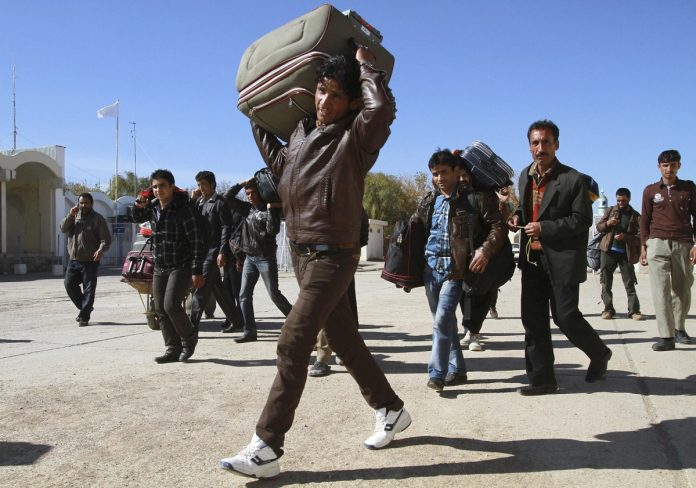
He added that the law enforcement force will definitely follow through its promise to deport 2 million Afghan illegals.

Radan added that the deportations are now ongoing and by the end of this year, 2 millions of them will be pushed out of Iran.

Meanwhile, an insurance organization official in Iran said under Article 181 of the Iranian Labor Law, employers who hire illegal foreign nationals without a work permit will be punished.

Mohajeri urged all employers to notify the Social Security Organization if they employ foreign nationals.

He noted that hiring foreign nationals by employers is both a violation of the law and a crime and carries imprisonment from 91 days to 180 days plus a fine.

Millions of Afghans are now living in Iran illegally and have put a strain on the Iranian economy at a time when the nation is grappling with draconian Western sanctions.

US ‘fuelling fire’ of Ukraine conflict with missiles decision: Russia

Kremlin

Several US outlets reported on Sunday that the Biden administration has decided to allow Ukraine to conduct strikes with US-made weapons deep into sovereign Russian territory.

“It is clear that the outgoing administration in Washington intends to take steps to continue to add fuel to the fire and to further inflame tensions around this conflict,” Vladimir Putin’s spokesperson, Dmitry Peskov, told reporters on Monday.

The Ukrainian president, Volodymyr Zelensky, had long pushed for authorisation from Washington to use the powerful Army Tactical Missile System, known by its initials Atacms, to hit targets inside Russia.

Peskov added Putin had expressed Russia’s position clearly in September when the Russian leader warned that the move to let Kyiv use longer-range weapons against targets inside Russia would mean NATO would be directly “at war” with Moscow.

Without going into specifics, Putin said at the time Moscow would “take the appropriate decisions based on the threats that we will face”.

On Monday, Russian officials similarly pledged that Moscow would react to President Biden’s decision, though they did not elaborate on what that response might entail.