Tuesday, January 13, 2026
Home Blog Page 615

Mass grave found near Damascus could contain thousands of bodies

Mass Grave Syria

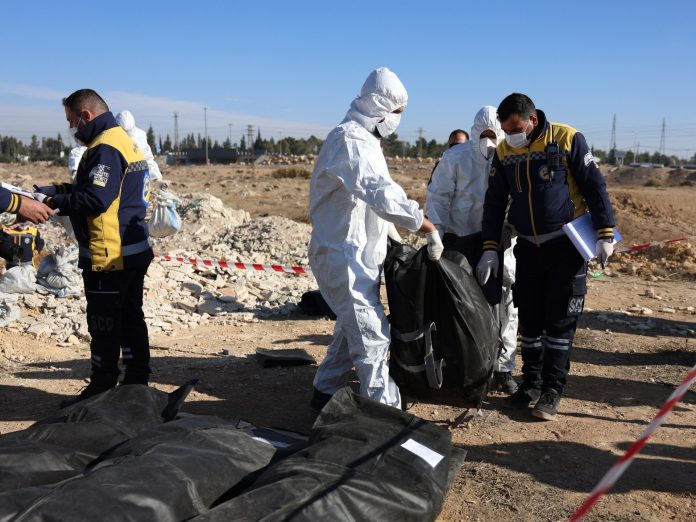
The site at al-Qutayfah, located 40km (25 miles) north of the capital, was one of several mass graves identified across the country after the collapse of the decades-long rule of the al-Assad family.

Twelve mass graves were also discovered in southern Syria. At one site, 22 bodies, including those of women and children, exhibited signs of execution and torture.

Al-Assad and his father Hafez, who preceded him as president and died in 2000, are accused of killing hundreds of thousands through extrajudicial killings, including in the country’s notorious prison system.

Ugur Umit Ungor, professor of genocide studies at the University of Amsterdam, told Al Jazeera that the discovery of the “centralised mass grave” in al-Qutayfah was “a reflection of the killing machine of the Assad regime”.

“The true scale of exactly how many mass graves are out there is only to be found in the archives of the Assad regime, that’s why it is absolutely crucial that they are handled in a professional way and that people don’t go pillaging them,” he added.

Ungor said creating a DNA depository of the families whose relatives are missing would help match the remains to a name, giving closure to those still looking for their loved ones.

The professor was among a handful of academics who received videos and other evidence from anonymous sources as part of a yearlong investigation into the burial sites.

Al Jazeera’s Mohammed Vall, reporting from Qatana, said the Syrian air force intelligence was believed to have been in charge of transferring the bodies from the hospitals – where they were collected from after having been killed in prison – and taking them to the mass graves.

“These mass graves hold the secrets of 54 years of despotism, torture and dictatorship,” Vall continued, adding, “This is only the beginning.”

Last week, Human Rights Watch visited the southern Damascus neighbourhood of Tadamon, where it found human remains that showed signs consistent with executions. The New York-based organisation called on the transitional Syrian authorities to preserve physical evidence across the country.

The commander-in-chief of the new administration, Ahmed al-Sharaa, told Al Jazeera that those who committed crimes against the Syrian people or who actively helped al-Assad commit those crimes would be brought to justice.

“We won’t give up on delivering the justice our people expect and we will not let the atrocities committed against our people be forgotten,” al-Sharaa, also known as Abu Mohammed al-Julani, said.

He added that “we’re gathering and collecting evidence” and called on the United Nations and other international institutions to help document the crimes committed by the regime.

On Monday, al-Assad put out his first statement since he was ousted, saying he fled Syria for Russia only after Damascus had fallen, and he denounced the country’s new leaders as “terrorists”.

Al-Sharaa’s Hayat Tahrir al-Sham (HTS) is listed as a “terrorist” group by many governments. It has sought to assuage fears, assuring protection for minorities, security and a peaceful political transition.
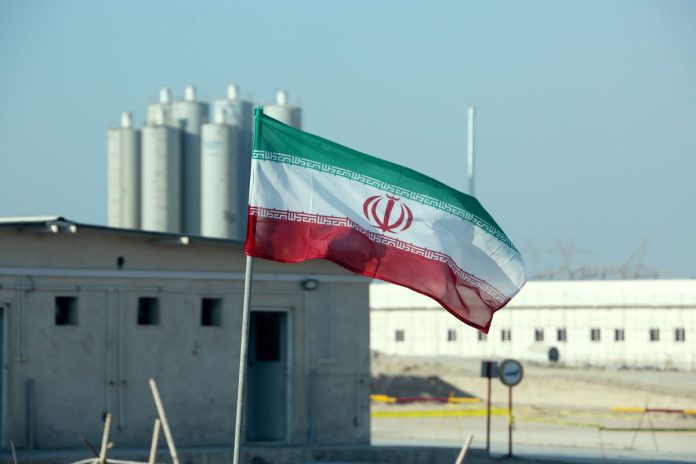
Analyst: NPT withdrawal would turn Iran into North Korea

Iran nuclear programe

Talking to Etemadonline news outlet, Makki highlighted the possible trajectory of Trump’s second administration, predicting a continuation of the “carrot and stick” policy: offering negotiations while keeping the military option as leverage.

He urged Iran to take regional threats seriously, particularly Israel’s growing confidence following advances in Syria and pressures on Gaza and Lebanon.

Discussing the internal and regional changes since 2015, Makki emphasized the importance of restoring economic stability and achieving national unity to counter external pressures.

He argued that diplomacy remains the best option to shield Iran from war, suggesting that while negotiations might not yield immediate results, they would help mitigate long-term risks.

On U.S. pressure, Makki acknowledged Washington’s intent to extract maximum concessions from Iran, fueled by Tehran’s need to lift sanctions.

The analyst also dismissed a full-scale military option, citing its immense costs and risks for all parties involved. However, he urged Iran not to disregard the threat entirely, given evolving geopolitical realities.

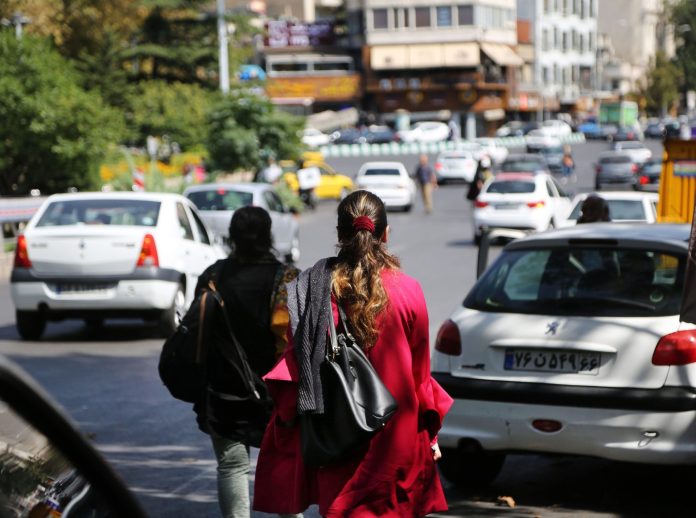
Official: Iranian govt. halts implementation of Hijab law amendment

Iran Hijab

Shahram Dabiri, the parliamentary deputy to the president told Hammihan news outlet that the government has chosen not to enforce the amendment at this time.

He explained that the current conditions in the country are not suitable for the law’s execution.

Dabiri stated: “Some laws, like the satellite ban, have faced similar challenges due to a lack of infrastructure. The hijab law amendment, too, will remain on hold until the appropriate conditions are met.”

Analysts believe that the government’s decision highlights a cautious approach to addressing the issue, with a focus on ensuring proper review and consensus before implementation.

Opponents of the hijab law in Iran argue that enforcing the law in its current form, which involves harsh punishments for violators, will lead to social unrest.

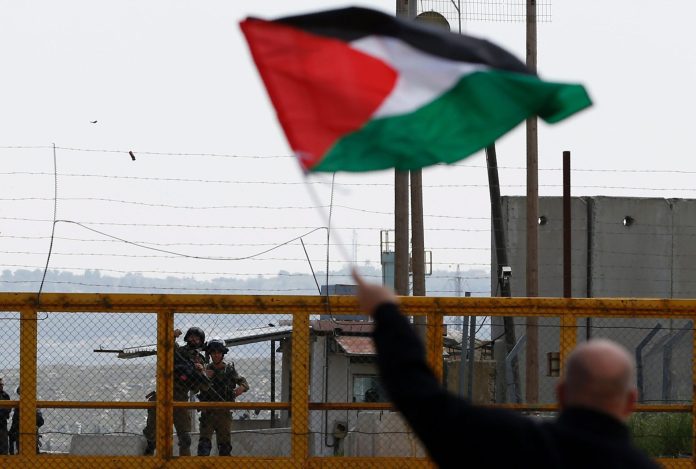
UNGA adopts resolution stressing Palestinians right to self-determination

Palestine Israel

A total of 172 countries voted in favor of the resolution, while only Israel, the United States, Micronesia, Argentina, Paraguay and Papua New Guinea opposed it: Eight countries abstained, including Ecuador, Liberia, Togo, Tonga, Panama, Palau, Tuvalu and Kiribati.

It is noteworthy that the presence of far-right and extremist governments in Argentina, Paraguay and Ecuador contributed to their opposition to this resolution, as well as other resolutions concerning human rights in general.

The adoption of this resolution reflects a global rejection of Israel’s occupation and colonial activities, which hinder the Palestinian people from achieving their right to self-determination and living with dignity in an independent state.

The resolution highlights the International Court of Justice’s advisory opinion, which declares Israel’s occupation of Palestinian territories illegal and calls for its immediate end due to its devastating impact on the Palestinian people’s ability to exercise their right to self-determination, as guaranteed by the UN Charter and international law.

The Palestinian Ministry of Foreign Affairs and Expatriates welcomed the UN General Assembly’s adoption of the resolution, emphasizing that it represents a fundamental and inalienable right, as well as a cornerstone of the United Nations Charter.

The ministry expressed its gratitude to the sisterly and friendly countries, as well as those that sponsored and voted in favor of the resolution, at a time when the Palestinian people are enduring genocide and ongoing violations of all their rights, including the right to self-determination.

The ministry highlighted the importance of implementing the General Assembly’s resolution, which endorsed the advisory opinion of the International Court of Justice on the illegality of the Israeli occupation.

The Ministry of Foreign Affairs urged the countries that did not support the resolution and voted negatively to reconsider their positions and join the moral majority in line with international law. It also reaffirmed its commitment to working with members of the international community to implement these resolutions and turn them into effective mechanisms for action.

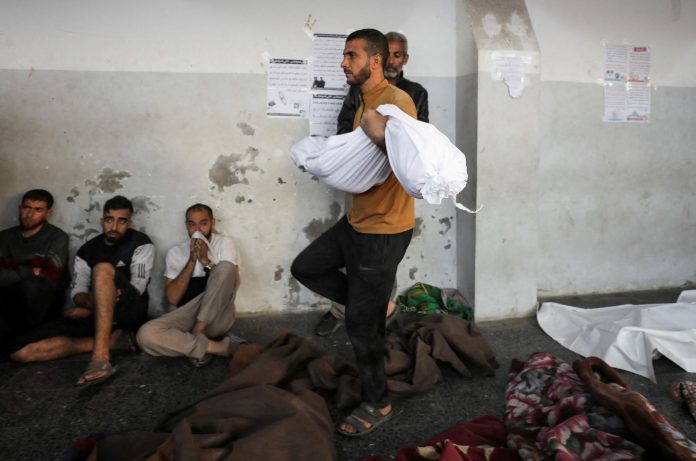
Almost 13k students killed in Gaza, West Bank since October 2023

Gaza War

The Palestinian Ministry of Education said more than 12,799 students have been killed and at least 20,942 others wounded in Gaza and the West Bank.

The overwhelming majority of casualties were in Gaza, the ministry added.

At least 598 teachers and school administrators were also killed, and 3,801 others were wounded.

Israeli forces have also abducted at least 538 students and 158 teachers and administrators in the West Bank.

The Israeli military forces have bombed more than 420 government schools, universities and their buildings, along with 65 affiliated with the UN’s agency for Palestinian refugees. The buildings are damaged or completely destroyed.

According to the ministry, more than 788,000 students in Gaza have been unable to attend school or university since October 7, 2023.

United Nations Children’s Fund (UNICEF) says all of Gaza’s children have been exposed to the traumatic experiences of war, the consequences of which will last a lifetime.

“Gaza’s children have endured unimaginable horrors – they deserve an immediate ceasefire and a chance for a peaceful future,” it said.

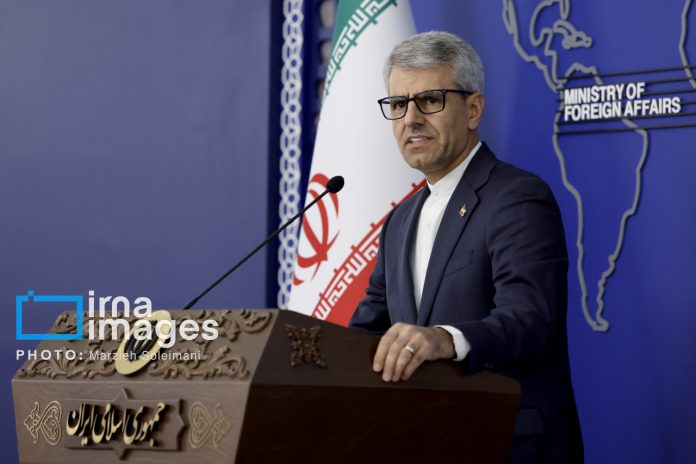
Reopening of Iran’s embassy in Syria on agenda: Foreign Ministry

Esmail Baghaei

“The reopening of the embassy in Damascus requires preparations, the most important of which is ensuring the security and safety of the embassy and its staff,” Baqaei said at a weekly press briefing in the capital Tehran on Monday.

He did not provide a specific timeline, but added that Iran will work toward the objective “as soon as the necessary conditions are provided”.

Militants, led by Hay’at Tahrir al-Sham (HTS), stormed and ransacked the Iranian embassy in Damascus following the fall of President Bashar al-Assad’s government on December 8.

Baqaei said that the deployment of Iranian military advisers to Syria was fundamental and anchored in certain principles, while their departure was also a responsible move.

“We were neither seeking to conquer Syria nor to revive past empires. What was important in Syria was to help ensure public safety and security against terrorism.”

“We were there for such a purpose and at the invitation of the [former] Syrian government. We were not in Syria to support a specific individual or group. It was important for us to help safeguard the territorial integrity of Syria until the last moment. We believe that prevalence of security in regional countries will guarantee security in West Asia,” the Iranian diplomat stated.

He went on to denounce recent Israeli acts of aggression against Syria, stating that the Arab nation’s territorial integrity has been undermined and portions of its territory have been occupied in blatant violation of United Nations Security Council resolutions.

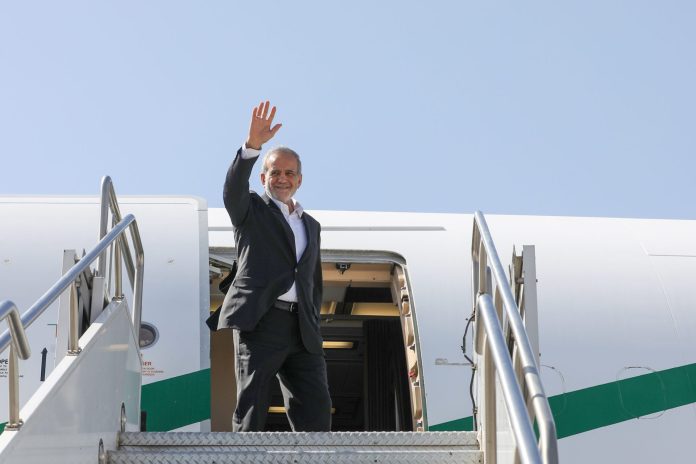
President Pezeshkian to visit Egypt for D-8 summit

Masoud Pezeshkian

“We have the important summit… known as D-8 in Egypt; the foreign minister will take part in the ministerial conference and then the summit will be held with the participation of the president,” Esmael Baqaei said in the weekly televised news conference.

Iranian delegates will discuss regional and bilateral issues with the participating countries on the sidelines of the summit, he added.

The D-8 was established in 1997 to improve cooperation among big Muslim countries stretching from Southeast Asia to Africa. Its member states include Bangladesh, Egypt, Indonesia, Iran, Malaysia, Nigeria, Pakistan and Turkey.

Pezeshkian’s visit to Egypt will mark the first by an Iranian president to the North African country in more than a decade.

Egypt severed its diplomatic relations with Iran in 1980 after it welcomed the deposed Pahlavi ruler of Iran and also recognized the apartheid Israeli regime.

Back in October, Iranian Foreign Minister Seyyed Abbas Araghchi visited Cairo amid Israel’s year-long intensified attacks on Gaza to exchange viewpoints on the latest developments in West Asia and issues of mutual concern and interest.

Tehran police chief: Deportation of illegal immigrants diminishes crime rates

Afghan Refugee in Iran

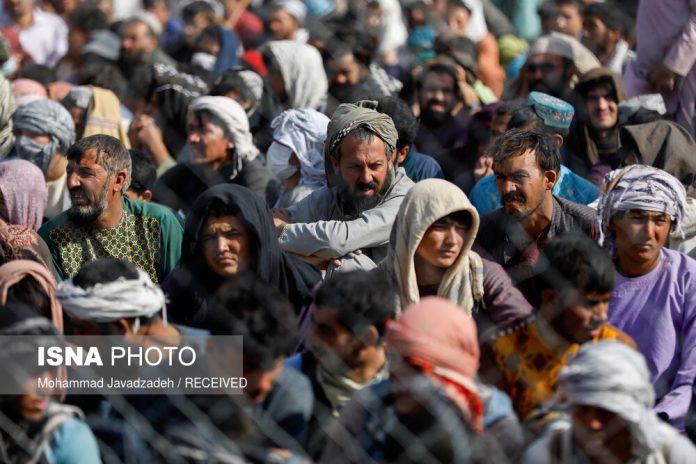
Brigadier General Abbasali Mohammadian, Commander of Greater Tehran Police, told reporters on Tuesday about the effects of deporting illegal immigrants on reducing crimes such as theft and murder in the capital.

He asserted, “The deportation has definitely had a positive effect on reducing crime rates.”

The police chief added that the number of deported illegal immigrants from Tehran is roughly equivalent to the population of a small city, with around 160,000 to 170,000 individuals identified, arrested, and deported.

“Of these, about 90,000 were identified and arrested by the police, while 70,000 voluntarily left the country,” he added.

The ongoing plan to deport illegal immigrants in Tehran aims to reduce crime and improve public security. The initiative involves identifying, collecting, and deporting foreign nationals without residence permits, he added.

General Ahmadreza Radan, the Commander-in-Chief of the Police, has previously stated that 850,000 illegal immigrants have been deported from Iran so far this year and emphasized that the measure has a significant impact on reducing crime, although it requires long-term evaluation.

Officials put the number of Afghan migrants in Iran at 6 million.

Trump claims Turkey behind overthrow of Assad government in Syria

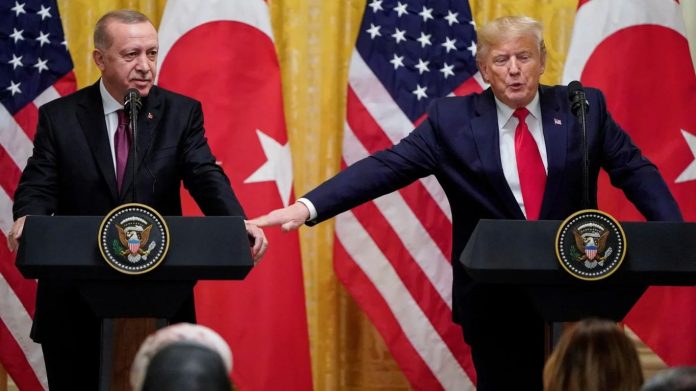
“He’s a very smart guy and he’s very tough. But Turkey did an unfriendly takeover without a lot of lives being lost. I can say Assad was a butcher, what he did to children,” Trump said during a news conference at his Mar-a-Lago resort in Florida, adding that he didn’t know what the outcome of Assad’s collapse would be.

“One of the sides has been essentially wiped out. Nobody knows who the other side is. But I do. You know who it is? Turkey. Okay? Turkey is the one behind it. He’s [Erdogan] a very smart guy. They’ve wanted it for thousands of years, and he got it.”

Trump went on to say that “those people who went in and got it” – referring to the rebel offensive led by Hay’at Tahrir al-Sham (HTS) that culminated in December – are controlled by Turkey.

“And that’s okay, that’s another way to fight,” he noted.

Trump said he got along well with Erdogan and credited him for creating a “major military force” that had not yet been worn out with war.

“I mean, he’s built a very strong, powerful army,” he stated.

The US and Turkey, despite being NATO allies, have for years been at loggerheads during Syria’swar.

Trump has opposed a US military presence in Syria and in 2018 ordered the withdrawal of 2,000-2500 US troops from the country during his first tenure as president.

On Monday he added that the remaining 900 US troops in Syria were no longer a danger because “the other side had been decimated”.

The US presence in Syria was primarily focused on the Syrian Democratic Forces and has been a sore point in its relationship with Turkey, which views the SDF as an extension of the outlawed Kurdistan Workers’ Party (PKK). The PKK has waged a decades-long guerrilla war in southern Turkey and is labelled a terrorist organisation by the US and the European Union.

The US worked with and trained the SDF to prevent the Islamic State group (IS) from establishing a foothold in Syria.

Turkey’s concerns about the PKK led it to launch an invasion of Syria in 2016, with the aim of depriving Kurdish fighters of a quasi-state along its border. Two more military forays followed in 2018 and 2019. The SDF did not play a role in the recent rebel offensive and received little support from the US as they suffered territorial losses to Turkey-backed rebels.

During his news conference Trump said that he honoured the US’ so-called “red line” against chemical weapons use in Syria by firing missiles at the country, and accused former President Barack Obama of not honouring the commitment he had made.

Top Russian general, his aide killed in Moscow explosion

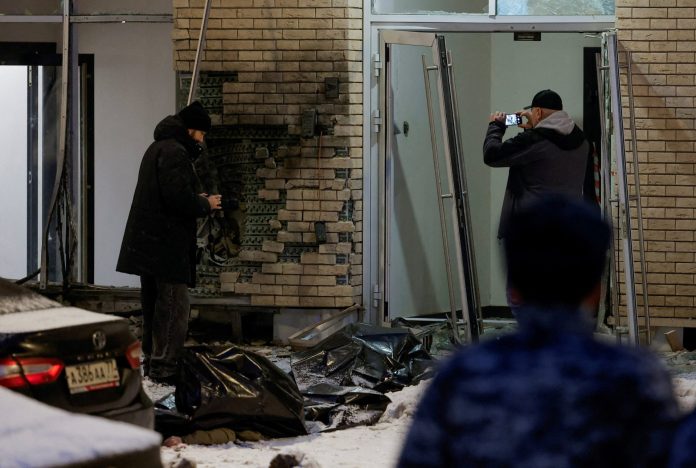
The blast was caused by an explosive device that had been planted in an electric scooter, Spokeswoman for the Russian Investigative Committee Svetlana Petrenko said.

“On the morning of December 17, an explosive device planted in a scooter went off near a residential building entrance on Ryazansky Avenue in Moscow, the investigation showed. Chief of Russia’s Radiation, Chemical and Biological Protection Troops Lieutenant General Igor Kirillov and his aide were killed in the explosion,” she added.

According to Petrenko, the Committee’s Moscow department has launched a criminal probe into the attack.

Circumstances behind the crime are currently being investigated.

Kirillov led Russia’s chemical, biological, and radiological defense forces since 2017.

Ukraine’s Security Service (SBU) was behind the assassination of Russian General Igor Kirillov, multiple media outlets reported on Tuesday, citing anonymous sources in the agency.

Reuters, the BBC, and Ukrainian media outlets have cited what appears to be the same statement by an SBU source describing the 54-year-old Russian officer as “a war criminal and an absolutely legitimate target” for assassination.