Tuesday, January 13, 2026
Home Blog Page 616

Iran Leader: End of resistance a ‘misconception’

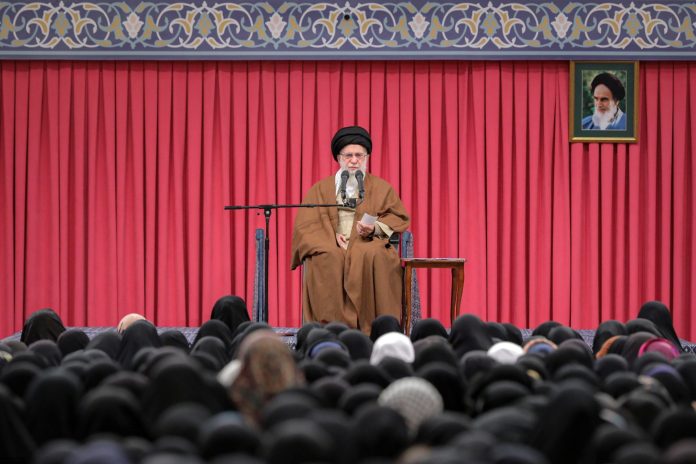
In a meeting on Tuesday with a group of women on the occasion of the birth anniversary of Hazrat Fatima Zahra, the Prophet’s daughter and Imam Ali’s wife, Ayatollah Khamenei asserted, “It is Israel that will be eradicated.”

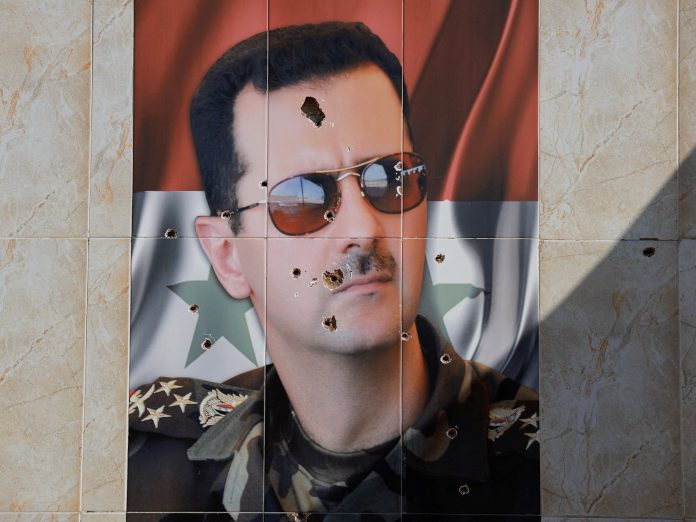
During the meeting, the Leader highlighted that despite the move taken in Syria to topple Bashar al-Assad’s government, the resistance is far from over.

The Leader affirmed that the spirit and ideology of Sayyed Hassan Nasrallah and Yahya Sinwar, the two martyred leaders of Hezbollah and Hamas resistance movements, remain alive.

Ayatollah Khamenei pointed out that Israel, thinking it could encircle Hezbollah forces through Syria, is the one that will ultimately be uprooted.

The Leader also emphasized the importance of vigilance against the subtle tactics of the enemy, specifically urging women to be cautious and not to be deceived by slogans and temptations.

AEOI chief says nuclear technology in Iran not to be limited

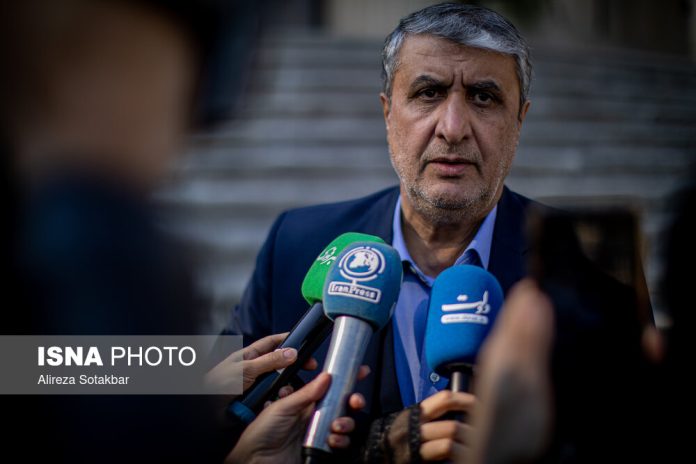
Mohammad Eslami

Eslami stated at a ceremony commemorating the martyrs of the Al-Aqsa Storm in Isfahan that dominating countries are trying to halt advanced technologies, especially nuclear technology, in developing countries.

He added that science and technology are among the main factors of power and authority; a country that can pursue its development independently, without reliance on others, especially the dominant system, will be able to maintain its independence and progress.

He further stated advanced sciences and technologies in the fields of nuclear energy, aerospace, information technology, nanotechnology, and biotechnology are power-generating and authority-creating, and are usually monopolized by the dominant system.

Eslami emphasized that entering these fields for independent countries is often accompanied by conditions. However, Iran, whose people have paid a heavy price for independence, freedom, and the Islamic Republic, cannot be subject to the dominant system and accept their conditions.

The head of the Atomic Energy Organization of Iran, referring to the efforts of some countries to stop heavy water production in Iran and destroy related facilities, added that today, this heavy water is one of Iran’s most important products, used in various industries, including medicine.

In explaining the added value of nuclear technology products, he said that one ton of methanol produced from this technology is valued at over $1.2 million, while ordinary methanol produced in petrochemicals is priced at less than $500.

No place for Russia, or Iran in Syria’s future: EU

Speaking to reporters after a meeting with European foreign ministers on Monday, Kallas outlined the EU’s vision for a stable and inclusive Syria, free from extremism and foreign interference.

“Many foreign ministers emphasized that it should be a condition for the new leadership to eliminate Russian influence in Syria,” Kallas told reporters.

“There is no place for extremism, Russia, or Iran in Syria’s future,” she added.

She also said the EU is also gearing up to host the ninth Brussels Syria Conference, a major fundraising effort, as part of its ongoing support for the country’s recovery.

“We stand with the Syrian people throughout this transition, just as we did during (Bashar) Assad’s brutal rule,” Kallas stated, referring to the deposed Syrian leader.

Reflecting on past interventions, Kallas warned against creating a power vacuum, as seen in Libya and Afghanistan, stating: “We also need to be present, because if we are the ones helping with reconstruction, we need to be around the table with regional actors. Avoiding a vacuum is key to ensuring stability.”

The EU’s vision for Syria includes fostering peace among the country’s diverse groups, enabling the return of refugees, and ensuring long-term stability in the region.

While Kallas acknowledged the positive rhetoric from Syria’s current leadership, she expressed caution.

“Right now, they’re saying the right things, but not everyone is convinced they’re doing the right things,” she added.

With the international community aiming to secure a brighter future for Syria, Kallas stressed the collective desire for a peaceful and stable nation.

“Everybody wants stability in Syria. Everybody wants all groups to live there peacefully so that refugees can return to a stable country in the region.”

Despite these aspirations, Kallas described Syria’s future as “hopeful but uncertain”, urging continued vigilance to guide the country toward positive and lasting change.

Assad, who ruled Syria with an iron fist for nearly 25 years, fled to Russia on Dec. 8 after armed groups seized control of the capital Damascus. The takeover came after Hayat Tahrir al-Sham (HTS) fighters captured key cities across the country in a swift offensive that lasted less than two weeks.

Iran says airspace remains open with no flight restrictions

Iran Airport

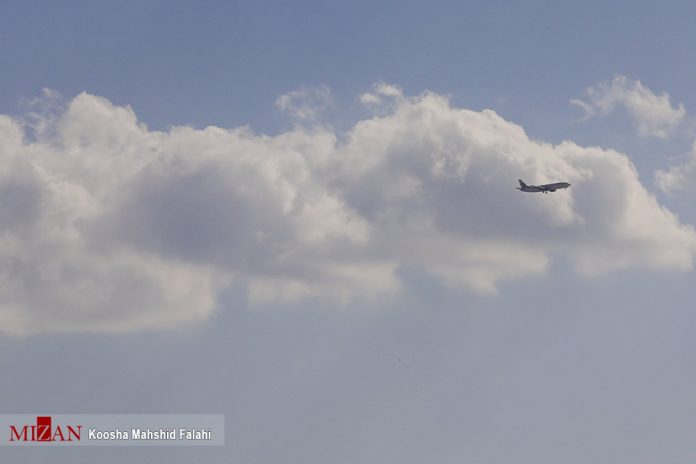
Jafar Yazarloo stated on Monday evening that flights are being conducted as planned by all airlines.

Yazarloo further clarified that no new aviation notices have been issued in recent days.

He noted that aviation notices for activities in areas used by various military sectors are issued monthly in advance and do not interfere with civil aviation operations.

Palestinian source says Gaza ceasefire deal close

Gaza War

The source, who is informed on the latest round of indirect talks, told MEE that a number of factors had led to the breakthrough, adding that last month’s ceasefire in Lebanon provided a blueprint for a similar ceasefire in Gaza.

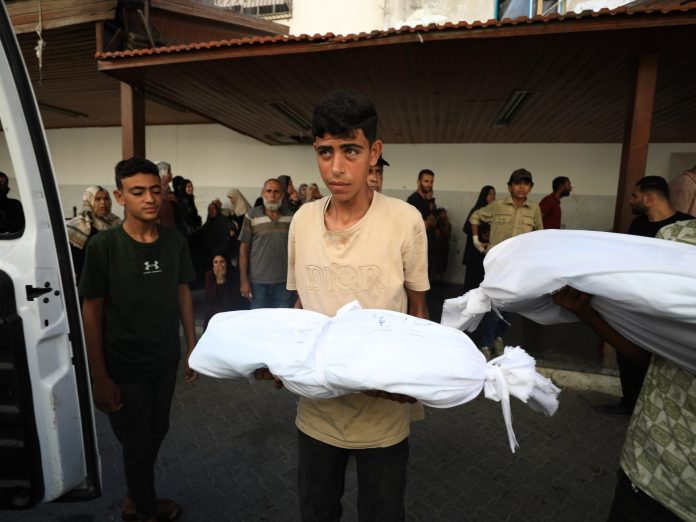
Israel and its primary backer, the United States, have faced renewed criticism over the war on Gaza, where more than 45,000 people have since been killed, most of the population has been driven from their homes multiple times and hundreds of thousands are at risk of famine.

Meanwhile, the captives’ families have increased their criticism of Israeli Prime Minister Benjamin Netanyahu for the lack of progress in releasing their loved ones.

“The Israeli operation did not achieve its goals [in Lebanon] and they opted for a ceasefire,” the Palestinian source said, adding that the Israeli government was now looking to do the same in Gaza.

The source’s comments came as several Israeli media outlets reported that a ceasefire deal could be completed as early as Hanukkah, which coincides this year with 25 December.

Public support has largely shifted in favour of a ceasefire deal with a majority of Israelis saying they support an end to the war for the release of all captives.

The Palestinian source said that Donald Trump’s resounding election victory last month last month had released a new life into the talks that had collapsed several months ago, and there was renewed optimism that he would seek to end wars overseas.

“Trump presents himself as a leader. When he orders, people listen. Therefore, there is a new dynamic that could allow for a ceasefire.

“But this is not guaranteed because of Netanyahu’s unwillingness to stop this war,” the source stated.

As the conflict has dragged on, Netanyahu has persistently been accused of prioritising his precarious political position over a ceasefire deal and end to the war.

Some of his fiercest critics have accused him of maintaining a war footing to prevent elections from being held and the possible resumption of criminal proceedings for graft and other allegations against him.

Of the 251 people who were taken captive after the 7 October attacks, more than 100 were released in the first prisoner and hostage exchange in November 2023, whilst only eight have been freed in Israeli military operations since then.

The Palestinian source told MEE that another obstacle in the on-off negotiations was Israel walking away from a commitment to release over 100 named prisoners held in Israeli prisoners.

Israel had initially signalled acceptance of a list of about 100 big names of prisoners it would release. They would include some of the top leaders of resistance groups of all Palestinian factions, including Fatah, notably Marwan Barghouti.

Since July it has taken that off the table and at one point insisted it alone would decide the names to be released.

That has now changed, but nothing is certain, the source said.

Meanwhile, the source denied reports in US and Israeli media that Hamas had conceded on its red lines, namely that there should be a permanent ceasefire, that there should be a full withdrawal of Israeli troops and that all people should be allowed to return to their homes.

The source said that Hamas had shown “realism and flexibility” on the implementation of ceasefire conditions it had agreed to in July this year, a document which at the time had the backing of US President Joe Biden, CIA chief Bill Burns and Egyptian and Qatari mediators.

Referring to these red lines, the source noted: “These demands are on the table, and negotiations are carrying on with those conditions.

“The negotiations are about finding ways in which they can be implemented.”

Last week, the Wall Street Journal reported that the two sides were considering a 60-day ceasefire in which up to 30 captives, including US citizens, would be released.

In turn, Israel would release Palestinian prisoners and allow larger amounts of humanitarian aid into Gaza.

The Journal added that Hamas had submitted a list of captives including US nationals, women, those with medical conditions and the names of five dead Israelis.

It was the first time a list of captives had been handed over since the temporary truce in November.

According to Arab mediators, who spoke with the Journal on condition of anonymity, Israeli troops would remain in Gaza during the truce on what would be a temporary basis.

The source also told MEE that as of yet, Palestinian Authority (PA) President Mahmoud Abbas had yet to accept a plan that would see the establishment of a technocratic government that would govern Gaza after the end of the war.

The source said Hamas had held a number of meetings with Fatah officials in Cairo and other places, and had agreed that the best outcome would be a coalition government for the West Bank and Gaza.

“This was agreed by all factions, but Abu Mazen [Abbas] rejected it. So another option was discussed to create a local administration in Gaza formed by locals that both Hamas and Fatah agreed on. The Egyptians presented a paper and the negotiations were positive and detailed,” the source added.

“It looks positive but Abu Mazen [Abbas] needs to agree on it. But it seems he will not. Abu Mazen [Abbas] seems to have guarantees that he will be presented to Trump and he is prioritising his meeting with Trump over the needs of his own people.”

Several Middle Eastern states condemn Israeli plans to expand settlements in Golan Heights

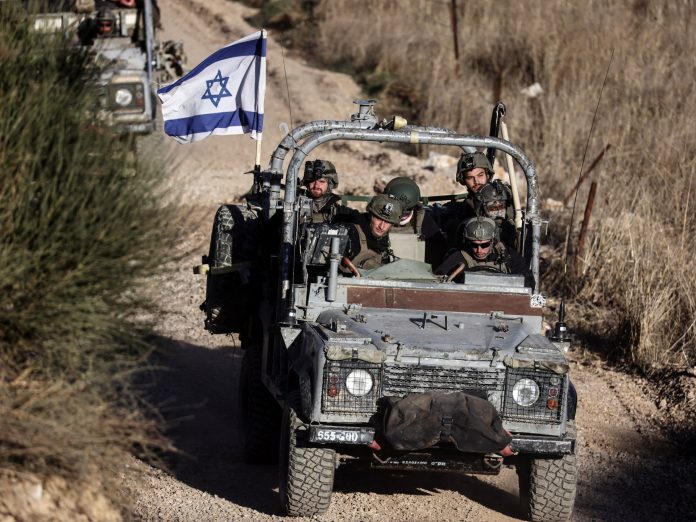
Multiple Middle Eastern nations on Monday denounced Israel’s decision to double the Israeli settler population in the illegally occupied Syrian territory.

The criticism comes amid a flurry of diplomatic activity in Syria after the ouster of al-Assad as the new caretaker government takes over.

Israel approved the settlement expansion days after the Israeli military seized more Syrian territory after al-Assad’s fall.

Syria has also been under intense Israeli bombardment with hundreds of attacks targeting military sites and research centres across the country.

Several countries have denounced Israel’s attacks on Syria. This week, more countries criticised Israel’s plans for the Golan Heights:

  • Qatar rebuked the scheme as a “new episode in a series of Israeli aggressions on Syrian territories”.
  • Jordan called it a “blatant violation of international law”.
  • Turkiye denounced the move as a bid by Israel to “expand its borders”.
  • Saudi Arabia slammed “continued sabotage of Syria’s chances of restoring its security and stability”.
  • Egypt condemned the plans as “a flagrant violation of Syria’s sovereignty and territorial integrity”.

Israel occupied the Golan in 1967 and subsequently annexed it in 1981 in a move that is seen as illegitimate by most of the international community.

The recent Israeli plan will allocate more than 40 million shekels ($11m) to increase the settler population.

“Strengthening the Golan is strengthening the State of Israel, and it is especially important at this time. We will continue to hold onto it, cause it to blossom and settle in it,” Israeli Prime Minister Benjamin Netanyahu stated on Sunday.

The new authorities in Syria have signalled that they do not seek confrontation with Israel.

Meanwhile, the United States announced on Monday that its forces have conducted air strikes in Syria that killed 12 ISIL (ISIS or Daesh) “terrorists”.

“The strikes against the ISIS leaders, operatives, and camps were conducted as part of the ongoing mission to disrupt, degrade, and defeat ISIS, preventing the terrorist group from conducting external operations and to ensure that ISIS does not seek opportunities to reconstitute in central Syria,” the US military said in a statement.

Russian leader warns of limits to defense spending

Russian Army

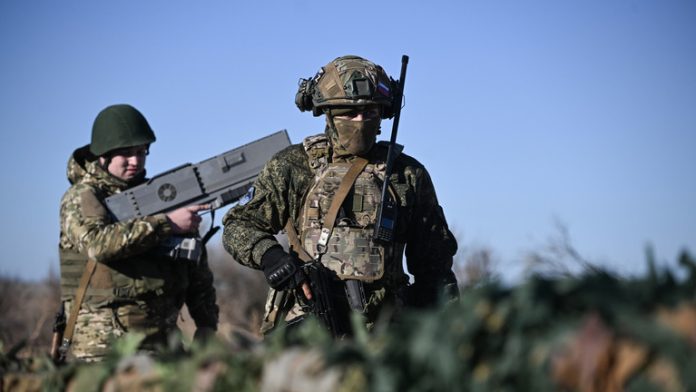
Addressing a meeting of top Russian Defense Ministry officials on Monday, Putin revealed that Moscow is currently spending 6.3% of its gross domestic product on defense.

“In order for all in the components of the country’s life – the economy, the social sphere in the broadest sense of the word, science, education, healthcare – to develop, we can’t increase these expenses infinitely,” the president said.

Putin noted that Russia’s current level of defense spending is still not as high as in some countries around the world not currently engaged in armed conflicts.

“Nevertheless, this is a lot of money, and we need to use it very reasonably,” he added, from payments to troops and the effective work of the military industry to supplying the military with equipment, weapons and ammunition.

“It is very important to receive everything on time, to correctly evaluate what is received, to be able to use it and to train personnel, to do it correctly and effectively,” Putin told the Russian Defense Ministry leadership.

While Russia will take measures to ensure the security of itself and its allies, this will be done “carefully and thoughtfully, without getting drawn into a full-scale arms race to the detriment of the social and economic development of our country”, the president explained.

Lessons of the military operation in Ukraine need to be applied to the defense industry, in terms of priorities for weapons development and the introduction of advanced technologies, Putin said, adding that the production of drones in particular needs to be increased.

During the meeting, Putin revealed that more than 430,000 Russians have enlisted voluntarily in the armed forces.

Strategic nuclear forces remain one of the key instruments for defending Russia’s sovereignty and their modernization has already reached 95%, the president stated. The new intermediate-range hypersonic missile, Oreshnik, can be as powerful as a nuclear weapon if used in volleys, but without any fallout, according to Putin.

The West’s support for Ukraine is pushing Russia to the point where it cannot help but retaliate, Putin said, while warning the US against deploying medium-range missiles.

He accused the US of seeking “to weaken our country and inflict a strategic defeat” on Moscow by continuing “to pump a de facto illegitimate ruling regime in Kiev with weapons and money, sending mercenaries and military advisers, thereby encouraging further escalation of the conflict”.

Washington is instilling fear in Americans by resorting to “simple tactics,” Putin stated.

“They push us to the red line… we begin to respond, and then they frighten their population,” he added, suggesting that the US used the same approach during its rivalry with the Soviet Union.

The Russian president also slammed the West for what he described as attempts to impose its own rules on the rest of the world while waging “hybrid wars” against anyone who resists, including Russia.

In this vein, NATO is boosting its defense spending and forming “strike groups” near Russia’s borders, he continued.

“The number of American service members in Europe has already exceeded 100,000 troops,” he noted.

Data: Over 60,000 Afghan university students study in Iran, surpassing Kabul’s numbers

Afghan Women School

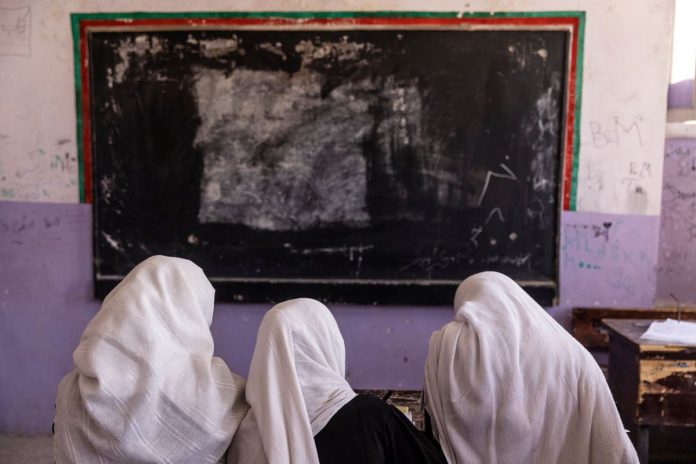
Experts highlighted the multifaceted nature of the Afghan migrant issue in Iran during a seminar titled “Understanding the Challenges of Afghan Migrants in Iran: Political Requirements and Imperatives.”

Tisheyar discussed the dire economic conditions in Afghanistan, with 85% of the population living below the poverty line and severe political repression under the current caretaker administration.

She underscored the need for comprehensive and integrated policies to address the diverse challenges faced by Afghan migrants in Iran.

The event moderator, Ahmad Derahki, emphasized the deep cultural and historical ties between Iran and Afghanistan, noting the shared Persian language, common literary figures like Rumi, and a history of mutual influence.

He asserted that migration significantly impacts both the origin and destination societies, transforming their social fabrics.

Abbas Alipour from the interior ministry noted that effective management of the Afghan migrant population in Iran requires accurate data and coordinated efforts among various agencies.

Iran, sheltering over 10 million Afghans, has expelled over 1.5 million undocumented migrants over the past year and is working towards regularizing the status of legal migrants.

Rasoul Sadeghi, Tehran University professor, proposed establishing a dedicated migration agency to streamline efforts and enhance cooperation among the 24 agencies currently involved in migrant affairs.

Pentagon claims North Korean forces suffer casualties in Russia’s Kursk

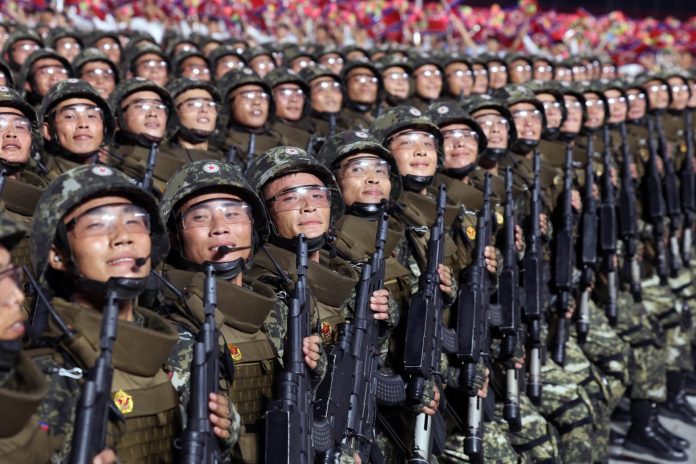
“We do assess that North Korean soldiers have engaged in combat in Kursk. We have indications that they have suffered casualties, both killed and wounded,” Ryder said, as reported by Reuters.

While the US lacks precise casualty figures, Ryder added that North Korean troops began combat operations last week.

Ukraine’s military intelligence (HUR) claimed that at least 30 North Korean soldiers were killed or wounded during assault operations near the villages of Plekhovo, Vorozhba, and Martynovka on Dec. 14-15.

Fresh reinforcements from North Korea’s 94th Separate Brigade are reportedly being deployed to replace the losses.

North Korean soldiers have been present in Kursk Oblast since October, initially serving in support roles.

Their recent participation in ground operations reflects a deepening military collaboration between Pyongyang and Moscow amidst ongoing war in Ukraine.

President Volodymyr Zelensky has claimed that the Russian military is attempting to hide the losses of North Korean soldiers fighting in the war against Ukraine.

“Russia is not only involving North Korean soldiers in assaults on Ukrainian positions, but is also trying to hide the losses of these people,” Zelensky said via his official Telegram channel.

The Russian military has attempted to keep the presence of North Korean units secret throughout their training and deployment, Zelensky added. He also claimed that Moscow has resorted to extreme tactics to disguise the identities of North Korean soldiers killed in combat.

Yemen’s Houthis says conducted hypersonic missile strike against Israel

Yemen Houthi

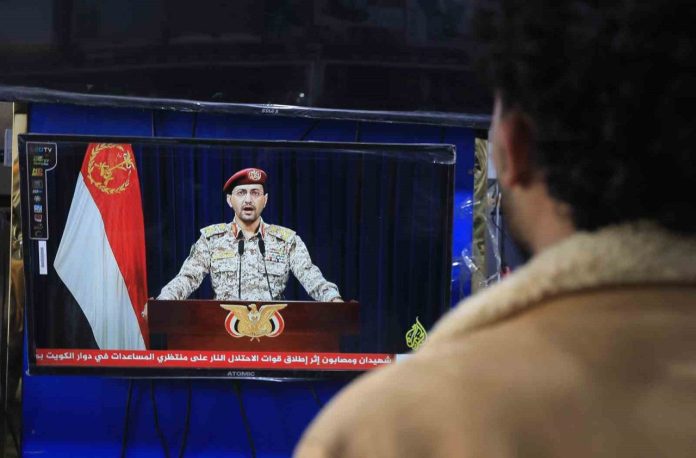
The Houthi military spokesman, Yahya Saree, said in a televised address that the operation on Monday was carried out using a hypersonic ballistic missile called “Palestine 2”.

The Houthis said the attack was in response to Israel’s “massacres” against Palestinians in the besieged Gaza Strip, where the regime has been waging a war for more than a year, killing more than 45,000 people.

The Israeli military claimed a missile launched from Yemen’s territory was intercepted before it crossed into Israel.

“Alerts for missile and rocket firing were activated due to fears of falling fragments from the interception,” a spokesperson stated.

Israeli media reported that the missile activated sirens across Tel Aviv.

However, the Houthis, who present themselves as Yemen’s official military, announced the operation “successfully achieved its objectives” without providing details.

“The Yemeni Armed Forces continue to carry out their military operations and strike all targets linked to the Israeli enemy in the occupied territories, and these operations will not stop until the aggression on Gaza stops and the siege is lifted,” the group added.

Israel has placed Gaza under a suffocating blockade that has caused food shortages and deadly hunger in the territory.

Last week, a Yemeni drone struck a building in the city of Yavne near Tel Aviv.

The Houthis have continued their attacks against Israel even after a ceasefire in Lebanon came into effect on November 27, putting an end to another Gaza “support front” by Hezbollah.

In addition to launching missiles and drones at Israel, the Houthis have been carrying out attacks on shipping in and around the Red Sea in a campaign that they say is in solidarity with Palestinians in Gaza.

Over the past year, the Houthis have targeted dozens of vessels with missiles and drones, killing four sailors and sinking two ships. The crew of one vessel – the Galaxy Leader, a British-owned and Japanese-operated cargo ship captured in November 2023 – remain detained in Yemen.

The United States, meanwhile, is leading a military coalition that has been bombing Houthi targets in Yemen, but that has not deterred the Houthi attacks. Israel has also carried out air strikes against areas under the control of the group.

United Nations experts and rights groups have accused Israel of committing genocide in Gaza.