Thursday, December 25, 2025
Home Blog Page 608

Analyst: Multiple regional, international actors shape Syrian landscape

Syria War

In a new op-ed published a day before the fall of the government in Damascus, former Iranian diplomat and political analyst, Sabah Zanganeh, wrote that Syria’s proximity to the Mediterranean, Palestine, and Jordan makes it a pivotal area of contention.

“Russia, with its significant presence in Syria, particularly in Tartus and Hmeimim, seeks to maintain its influence in the region. Conversely, the US is active in northern Syria, primarily aiming to control oil and gas resources and support Israel,” he noted.

Zanganeh further explained that Turkey’s historical ties to Syria trace back to the Ottoman era, and it continues to assert its influence, particularly in Idlib, where Ankara supports opposition groups and proxies.

However, the picture is not complete yet, as he argues the ongoing conflict in the country has drawn in other actors.

“Ukraine, currently at odds with Russia, is reportedly providing training to insurgents, including in drone operations, to exert pressure on Iranian allies in Syria,” he elaborated.

The situation is so grave that Persian Gulf states like the UAE and Saudi Arabia have expressed concerns over the presence of terrorists and advocate for stability, he stated.

The complex web of interests and alliances underscores the multifaceted nature of the Syrian conflict, where geopolitical strategies and historical ties intertwine to shape the country’s future, Zanganeh wrote.

Iran says its nuclear program being monitored by IAEA

Iran nuclear program

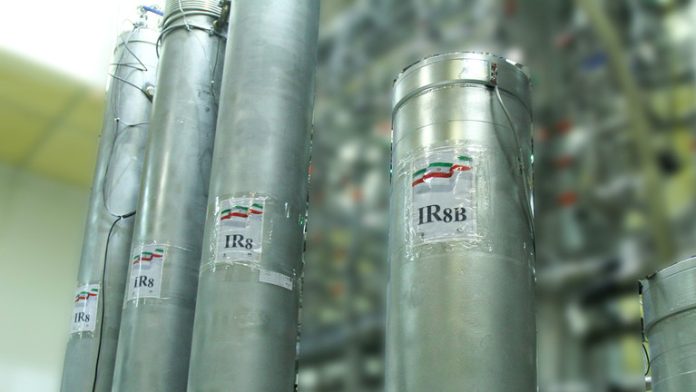
Baqaei has reacted to comments made by the Director General of the International Atomic Energy Agency (IAEA), Rafael Grossi, about Iran’s increased capability to produce enriched uranium up to 60% purity.

Answering journalists’ questions regarding the issue, Baqaei said, “Mr. Grossi’s remarks pointed to the confrontational and unconstructive moves of the three European countries and the US in the Board of Governors, where they proposed and passed a resolution against Iran without any logical justification or legal basis”, referring to Britain, Germany, and France.

Highlighting Grossi’s recent visit to Tehran and the agreements made to step up technical cooperation between Iran and the atomic agency, Baqaei noted, “Mr. Grossi came to Iran with initiatives, but it was the three European countries and the United States that, by pursuing a policy of pressure and abusing the Board of Governors, rendered the director general’s efforts fruitless.”

Baqaei emphasized that Iran’s peaceful nuclear program is being pursued transparently and under IAEA supervision within the framework of the Non-Proliferation Treaty and the Comprehensive Safeguards Agreement.

He also noted that recent activities were carried out with precise information provided to the IAEA and are under constant supervision of the agency.

IAEA’s Board of Governors on November 21 voted 19 to 3, with 12 abstentions, for a resolution, brought by Britain, France, and Germany (E3), that alleged Tehran had poor cooperation with the agency and requested a “comprehensive” report on its nuclear activities “at the latest” by spring 2025.

On November 27, the head of the Atomic Energy Organization of Iran (AEOI) said the country had started injecting uranium gas into its advanced centrifuges following a recent anti-Tehran resolution by the UN nuclear agency’s Board of Governors.

In 2015, Iran proved the peaceful nature of its nuclear program to the world by signing the Joint Comprehensive Plan of Action (JCPOA) with six world powers.

However, Washington’s unilateral withdrawal in 2018 and its subsequent re-imposition of sanctions against Tehran left the future of the deal in limbo.

In 2019, Iran started to roll back the limits it had accepted under the JCPOA after the other parties failed to live up to their commitments.

Israel deploys forces to buffer zone with Syria amid fall of Damascus

Israeli Army

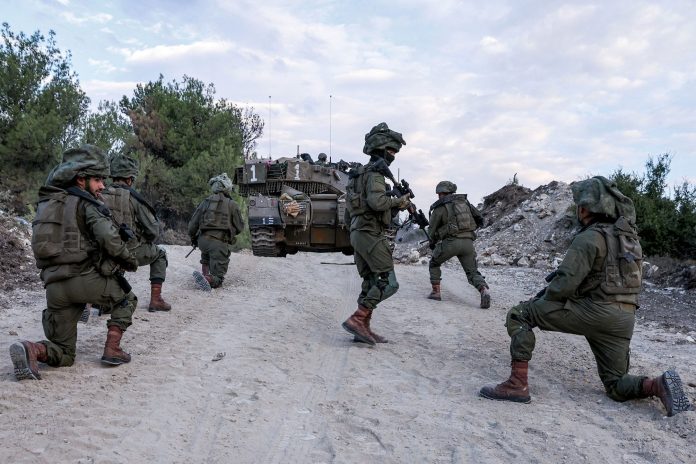
In a statement released on Sunday, the IDF stressed that the troops are not interfering in Syria’s “internal events.”

“The IDF will continue to operate as long as necessary in order to preserve the buffer zone and defend Israel and its civilians,” the statement read.

Israeli tanks have reportedly moved into the buffer zone near Quneitra, close to the Golan Heights, which have been under Israeli occupation since the 1967 Six-Day War. Artillery strikes were launched in the region, although the specific targets remain unclear. Local sources say that Israeli patrols entered the town of Khan Arnabah in Quneitra province, killing one man.

Israel has a history of conducting airstrikes in Syria, often targeting border crossings and urban areas.

The situation in Syria continues to evolve rapidly as militant groups, including Hayat Tahrir-al-Sham, assert control over key regions following their entry into Damascus on Saturday.

172 historical artifacts to be returned to Iran from four countries

According to Iran’s Cultural Heritage News Agency on Sunday, the artifacts include 55 cultural items from Erzurum, Turkey, such as a Sassanid sword, Islamic period relics, and various Sassanid coins.

Denmark will return 29 cultural and historical items, including pins, figurines, daggers, and bronze spearheads from the first millennium BCE.

Australia will send back one 7th-century Neishabur-style bowl and three cultural items, including two maces and one bronze bracelet from the first millennium BCE in Iran’s Lorestan.

Finally, 84 cultural and historical artifacts related to the Iran’s Jiroft culture and civilization from the third millennium BCE will be returned from the UK.

The repatriation process for these artifacts has been completed for several months, and the items are packed and ready to be shipped. However, due to delays within the Cultural Heritage Department, the artifacts have not yet been sent back.
Sources indicate that these historical items will soon be on their way to Iran.

Report: Armed group attacks Iranian embassy in Damascus

Israeli strike on Iranian consulate in Syria

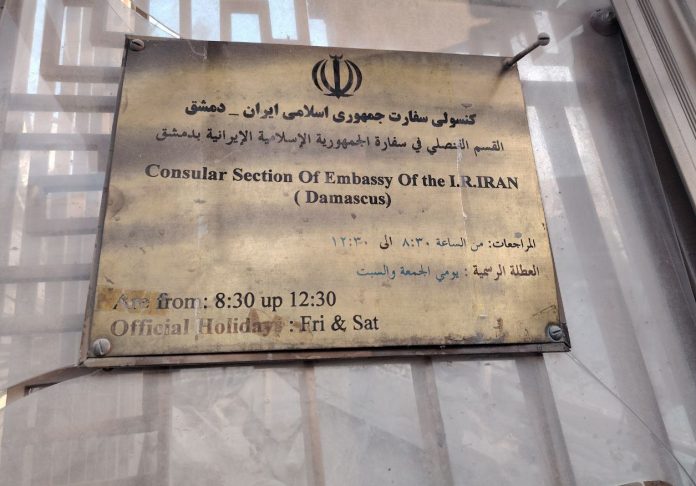
Al Arabiya network released footage showing individuals entering the diplomatic mission of Iran, a stanch supporter of the Syrian government during the years of insurgency and foreign-backed militancy that ravaged the Arab nation.

Sabereen News Telegram channel also shared images of the embassy after the armed group’s entry, reporting that the intruders looted and stole items from the premises.

Following the armed opposition groups’ rapid advances in Syria in recent days, they managed to take control of Damascus, announcing an end to Assad’s rule.

Israeli attacks on southern Lebanese villages kill six: Health ministry

Lebanon War

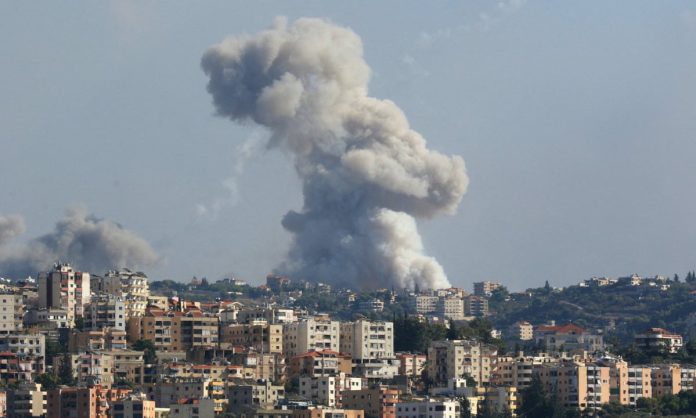
Five people were killed in an attack on Beit Lif village while one person was killed in a drone raid on Deir Seryan, the health ministry announced in a statement.

This brings the number of casualties from Israeli violations of the ceasefire in Lebanon to 20 dead and 24 injured to date.

On Nov. 27, a cease-fire deal between Israel and Lebanon came into force in the hope of ending 14 months of fighting between the Israeli army and Hezbollah. It is, however, described as fragile, as nearly 160 Israeli violations were documented by Lebanon.

Under the cease-fire terms, Israel is required to withdraw its forces south of the Blue Line—a de facto border—in phases, while the Lebanese army is to deploy in southern Lebanon within 60 days.

Implementation of the agreement is to be overseen by the US and France, but details on enforcement mechanisms remain unclear.

Over 4,000 people have been killed and more than 16,500 injured in Israeli attacks in Lebanon and over 1 million others have been displaced since October 2023, according to Lebanese health authorities.

Schools in multiple Iranian provinces remain closed due to air pollution

Iran Air Pollution

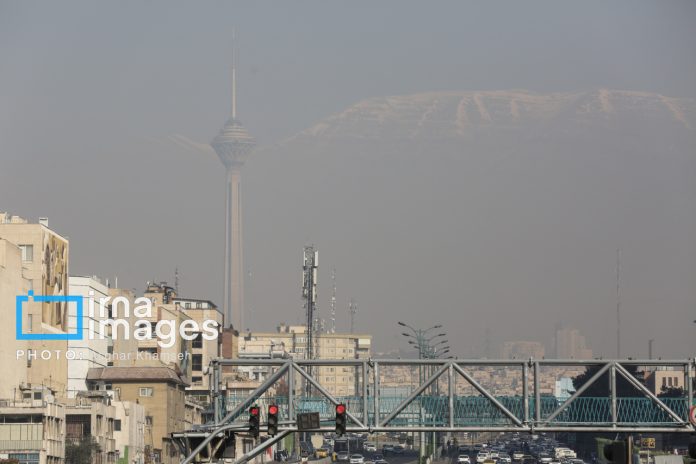
In Tehran, all schools switched to remote learning for Sunday and Monday.

Meanwhile, government offices operate with 50% of their staff, prioritizing vulnerable groups.

The decision follows a meeting of the Tehran Emergency Air Pollution Committee, which also resulted in the closure of kindergartens and the suspension of daily traffic permits.

In West Azarbaijan province, schools in Urmia, Mahabad, Oshnavieh, and Shahindezh remained closed on Sunday due to increased air pollution, with classes continuing virtually.

Similarly, in Alborz province and Abyek county in Qazvin province, pre-school, elementary, and special education schools are closed on Sunday, with remote classes conducted through the popular Shad (happy) platform.

Like previous years, the government takes the measures to reduce the harmful effects of air pollution and protect the well-being of students and staff across the affected regions.

But the policy has its opponents who believe that the government should implement immediate and effective measures such as strengthening pollution control, expanding public transportation, using renewable energy, and replacing polluting fuels in industries.

US announces nearly $1bn in military support for Ukraine

Western Weapons

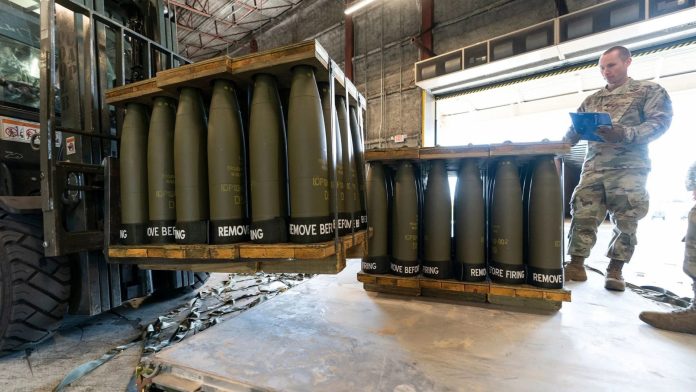
The latest package will include more drones and munitions for the High Mobility Artillery Rocket Systems, or HIMARS, that the U.S. has provided. While these weapons are critically needed now, they will be funded through the Ukraine Security Assistance Initiative, which pays for longer-term systems to be put on contract.

The weapon systems purchased are often intended to support Ukraine’s future military capabilities, not make an immediate difference on the battlefield.

The $988 million package is on top of an additional $725 million in U.S. military assistance, including counter-drone systems and HIMARS munitions, announced Monday that would be drawn from the Pentagon’s stockpiles to more quickly get to the front lines. The U.S. has provided Ukraine with more than $62 billion in military aid since Russia’s invasion in February 2022.

“The baton will soon be passed,” Austin said.

“Others will decide the course ahead. And I hope that they will build on the strength that we have forged over the past four years,” he added.

Ukraine is facing an intensified onslaught by Russia. Moscow also has launched an intermediate-range ballistic missile and regularly strikes Kyiv’s civilian infrastructure.

With questions about whether Trump will maintain military support to Ukraine, the Biden administration has been trying to spend every dollar remaining from a massive foreign aid bill passed earlier this year to put Ukraine in the strongest position possible.

“This administration has made its choice. So has a bipartisan coalition in Congress. The next administration must make its own choice,” Austin stated in a speech at an annual gathering of national security officials, defense firms and lawmakers at the Ronald Reagan Presidential Library in Simi Valley, California.

Trump had a hastily arranged meeting Saturday with Ukrainian President Volodymyr Zelensky and France’s Emmanuel Macron while in Paris for the reopening of Notre Dame Cathedral. Macron and other European leaders are trying to persuade Trump to maintain support for Ukraine.

Trump, a longtime admirer of Russian President Vladimir Putin, has criticized U.S. aid for Ukraine and called for bringing a quick end to the war, raising concerns in Ukraine about what terms may be laid out for any future negotiations.

Austin noted he was “confident that President Reagan would have stood on the side of Ukraine, American security and human freedom”.

It was one of Austin’s last major speeches as President Biden’s defense secretary and a cap to his more than 41 years serving as a soldier and general.

Under Austin’s watch, the Pentagon in 2022 launched a regular meeting that now counts more than 50 countries to figure out how to get the tens of millions of rounds of ammunition and billions of dollars in advanced weaponry to Ukraine. Without that flow of support, it’s possible the country would have fallen to Russia after it invaded.

“Together, we have helped Ukraine survive an all-out assault by the largest military in Europe,” Austin stressed.

Opposition fighters seize Syrian capital, President Assad flees country

Syria War

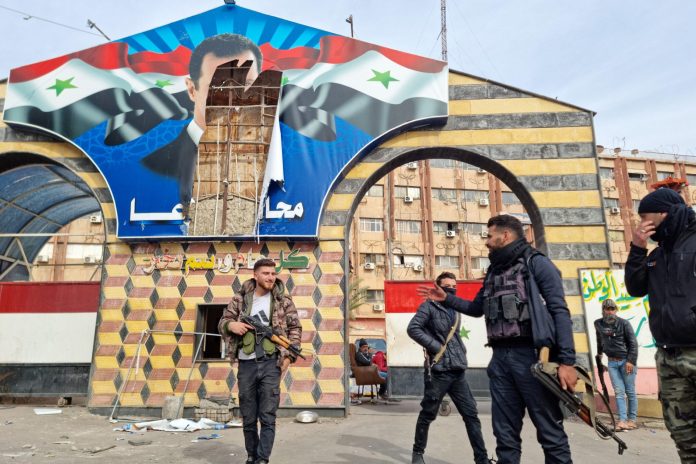
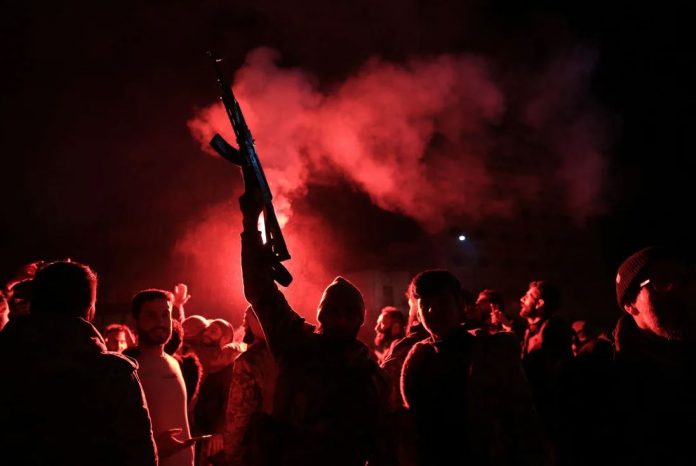
Fighters have entered the heart of Damascus and declared a “new era” free of revenge, inviting Syrians overseas to return.

Hadi al-Bahra, who heads the Syrian political opposition coalition overseas, declared Damascus “free of al-Assad” and congratulated the Syrian people.

Syrian Prime Minister Mohammad Ghazi al-Jalali has stated he remains in his home, willing to cooperate with the opposition, and wants to ensure public institutions continue to function.

At the same time, Abu Mohamed al-Julani, head of main fighting group Hayat Tahrir al-Sham, has ordered opposition fighters to not attack any public institutions and services.

The HTS chief noted all opposition forces in Damascus are prohibited from taking over public institutions, “which will remain under the supervision of the former prime minister until it is handed over officially”.

“Celebratory gunfire is also prohibited,” al-Julani added in a statement.

The Syrian opposition leader has been signing his statements with his legal name, Ahmed al-Sharaa, in an apparent effort to distance himself from his past ties to al-Qaeda.

Witnesses report jubilation in Damascus, with chants of “Freedom! Freedom!” as Syrians celebrate an end to more than 50 years of rule by Bashar al-Assad and his father Hafez before him.

Fighters released the prisoners held in Sednaya Prison north of Damascus, as they have done in other cities they have taken during their lightning advance over the past 10 days or so.

Soldiers are reported to have dropped their weapons in the face of the advancing rebel fighters and, early on Sunday morning, the army command confirmed that al-Assad’s rule was done, Reuters reported.

The Administration of Political Affairs, an arm of the Syrian opposition, reiterates its pledge to work for all Syrians.

“The liberation of Syria is a victory for all of its children who have sacrificed for the unity of its land and people,” it announced in a statement.

“In this occasion, we assert our commitment to strengthening social unity and confirming the principles of justice and dignity for all the components of Syrian society.”

Ukraine president says more F-16 fighter jets delivered to Kiev

Zelensky F16

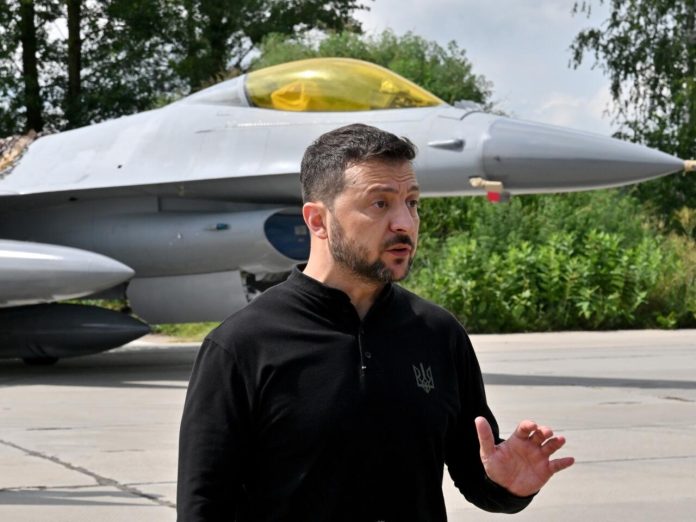
In a message on Telegram, Zelensky praised Denmark and lamented a lack of dedication from other allies.

“The first batch of planes provided by the Danes are already shooting down Russian missiles: rescuing our people and our infrastructure. Now our air shield is reinforced even further,” he said.

The president added, “If all partners were so determined, we would have been able to make Russian terror impossible.”

The announcement comes as Ukraine’s Zaporizhzhia region marks a day of mourning for 10 people killed in a Russian attack on Friday. A further 24 people, including two children, were injured when a missile struck a local service station.

Another three people were killed in a strike on the Ukrainian city of Kryvyi Rih Friday, Ukraine’s State Emergency Service confirmed.

Addressing the attacks, Zelensky said that Russian President Vladimir Putin did not seek “real peace”.

Putin “only seeks the ability to treat any country this way, with bombs, missiles, and all other forms of violence”, Zelensky continued, adding, “Only through strength can we resist this. And only through strength can real peace be established.”