Wednesday, December 24, 2025
Home Blog Page 59

Iran’s UN envoy slams ‘systemic double standards’ in nuclear arena

Amir Saeed Iravani

Iravani made the comments on Friday, addressing the 80th Session of the United Nations General Assembly dedicated to the International Atomic Energy Agency (IAEA)’s latest report on the country.

The envoy opened his remarks by asserting that the IAEA had to remain “professional, factual, and free from political influence,” warning that its credibility depended on strict impartiality.

Nuclear energy, he added, was indispensable to national development, and access to peaceful nuclear technology under Article IV of the Nuclear Non-Proliferation Treaty (NPT) was an “inalienable right” that must not be curtailed under any pretext.

The official noted that safeguards were meant to enable peaceful nuclear activities, not obstruct them, and condemned entrenched double standards that restricted developing nations, while granting political, military, and nuclear cover to the Israeli regime, a non-NPT entity possessing an undeclared arsenal of weapons of mass destruction.

“These practices do not protect non-proliferation,” he said. “They erode it, and they fundamentally undermine the agency’s technical cooperation mandate.”

The ambassador then turned to the unprovoked and illegal Israeli-American strikes on Iran’s safeguarded nuclear facilities between June 13 and 25, which amounted to “an unprecedented act of aggression.”

According to Iravani, “the Israeli regime, only hours after a politically-motivated resolution in the IAEA Board of Governors, launched massive military strikes” on fully monitored facilities, killing and injuring thousands of Iranians.

On June 22, the United States joined the assault, directly targeting IAEA-supervised sites in clear violation of the United Nations Charter, international law, the IAEA Statute, and UN Security Council Resolution 487, he added.

“This was not merely an attack on Iran,” he said. “It was an assault on the authority of the United Nations and on the integrity of the safeguards system itself.”

Iravani criticized both the agency’s officials and the Security Council for failing to condemn the attacks, despite decades of General Conference resolutions affirming that nuclear facilities must never be targeted under any circumstances.

Reaffirming the Islamic Republic’s long-standing commitment to the NPT, he rejected Western allegations regarding Iran’s compliance. He said the United States and the European trio of the UK, France, and Germany (E3) had repeatedly echoed “Israeli regime fabrications” concerning the Islamic Republic’s peaceful nuclear energy program, while ignoring Tel Aviv’s own nuclear arsenal and refusal to submit to international oversight.

He stressed that, in addition to fully complying with the NPT and its safeguards obligations, Iran has never violated the Joint Comprehensive Plan of Action (JCPOA), a 2015 nuclear agreement between the Islamic Republic and world powers, including the United States and the E3.

Citing the IAEA’s own reports, he said Tehran’s temporary suspension of cooperation with the agency had stemmed solely from the military strikes. He called for a new international framework to protect nuclear facilities and personnel from armed attacks, warning that the credibility of the entire global safeguards system depended on such protections.

Iravani, meanwhile, reminded that the Islamic Republic and the IAEA had achieved progress through a September 9 memorandum of understanding signed in Cairo, which established procedures to resume cooperation under post-attack conditions. But, he said, this progress was jeopardized by renewed hostility from the US and Europe, including the E3’s attempt to trigger so-called “snapback” sanctions against the country. Tehran considers the recourse to “snapback” to be legally void after legal expiration on October 18 of Resolution 2231 that had endorsed the JCPOA.

The envoy’s remarks came as the IAEA prepares to present a new report that seeks to estimate Iran’s enriched-uranium stockpile using pre-attack data, while avoiding any judgment on the Israeli-US strikes or assassinations of Iranian nuclear scientists during the June aggression.

The report also fails to address the agency’s own role in enabling the Israeli-American assault through its earlier Board of Governors’ resolution, and makes no mention of the E3’s unlawful attempt to invoke the “snapback” mechanism.

Iravani closed his address by rebuffing continued attempts at threats and coercion against the Islamic Republic, underscoring, “We respond only to respect, legality, and equality.”


President Pezeshkian congratulates Iraqi PM on parliamentary elections

During a telephone conversation with the Iraqi prime minister, the Iranian president expressed hope that in the forthcoming term, relations and cooperation between Iran and Iraq would deepen and become more cordial across all sectors.

President Pezeshkian also emphasized the importance of this electoral process as a testament to the democratic values upheld by the Iraqi people.

Prime Minister al-Sudani, in response, expressed gratitude for President Pezeshkian’s call and warm congratulations, recognizing it as a reflection of the deep and sincere ties between the two nations.

He noted that this election marked the sixth since the political system in Iraq changed in 2003, highlighting its transparency, tranquility, and success throughout the country.

The prime minister pointed out that the most significant achievement of this election was the highest level of public participation since 2015, indicating an increase in trust in Iraq’s political system.

He emphasized that the Iraqi people once again demonstrated their commitment to the democratic experience they have gained. He also expressed hope that the results of this election would positively impact the ongoing development and progress of Iraq in the coming years.

Al-Sudani reiterated his commitment to enhancing bilateral and regional cooperation with their Iranian counterparts in all areas during the upcoming term.


Displaced Gazans suffer as heavy rains flood tent camps

Abdulrahman Asaliyah, a displaced Palestinian man, told Al Jazeera on Friday that residents’ mattresses, clothes and other belongings were soaked in the flooding.

“We are calling for help, for new tents that can at least protect people from the winter cold,” he said, explaining that nearly two dozen people had been working for hours to get the water to drain from the area.

“This winter rain is a blessing from God, but there are families who no longer wish for it to fall, fearing for the lives of their children and their own survival,” Asaliyah added.

Gaza’s civil defence agency said Friday’s flooding primarily affected Palestinians in the north of the Strip, where hundreds of thousands of people have returned following last month’s ceasefire agreement between Israel and Hamas.

Flooding was also reported in central Gaza’s Deir el-Balah, said the rescue agency, which urged the international community to do more to “address the suffering” of Palestinians whose homes were destroyed in Israel’s two-year war on the enclave.

“We urge the swift delivery of homes, caravans, and tents to these displaced families to help alleviate their suffering, especially as we are at the beginning of winter,” it announced in a statement.

While the October 10 ceasefire has allowed more aid to get into the Gaza Strip, the UN and other humanitarian groups say Palestinians still lack adequate food, medicine and other critical supplies, including shelter.

Aid groups working to provide shelter assistance in the occupied Palestinian territory said in early November that about 260,000 Palestinian families, totalling almost 1.5 million people, were vulnerable as the cold winter months approached.

The UN agency for Palestinian refugees (UNRWA) said this week that it has enough shelter supplies to help as many as 1.3 million Palestinians.

But UNRWA noted Israel continues to block its efforts to bring aid into Gaza despite the ceasefire deal, which stipulated that humanitarian assistance must be delivered to Palestinians in need.

“We have a very short chance to protect families from the winter rains and cold,” Angelita Caredda, Middle East and North Africa director at the Norwegian Refugee Council (NRC), stated in a statement on November 5.

In Gaza City, another displaced Palestinian man affected by the heavy rains, Abu Ghassan, said he and his family “no longer have a normal life”.

“I’m lifting the mattresses so the children don’t get soaked,” he told Al Jazeera, adding, “But the little ones were already drenched here. We don’t even have proper tents.”


Iran dismisses Canada’s latest allegations as unfounded

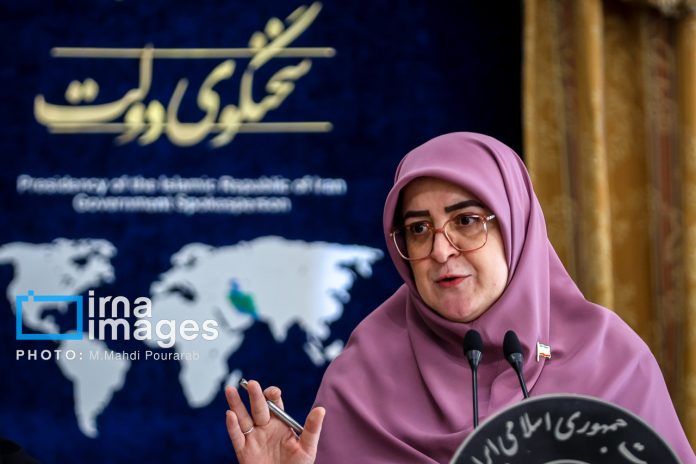
Zahra Ershadi

Condemning Canada’s continued support for the Zionist regime and its complicity in the genocide of Palestinians, Ershadi stressed that the absurd accusations by Canada’s security agency against Iran serve no purpose other than diverting attention from the lawbreaking and crimes currently being committed by the Zionist regime in West Asia, and from Canada’s support for it.

“Dan Rogers,” the Director of the Canadian Security Intelligence Service (CSIS), had alleged that the agency had thwarted several “potentially lethal threats” attributed to Iran this year.

The Iranian diplomat also denounced the obstruction by Canadian officials in providing standard consular services to Iranians residing in Canada, calling for the correction of the irresponsible and unjustifiable approaches of the Canadian government toward Iran.

Congresswoman introduces US Congress resolution to recognise Gaza genocide

Gaza War

While the proposal released on Friday has little chance of passing in the Republican-controlled House of Representatives, it underscores the growing criticism of Israel in US politics.

If the resolution did pass, it would officially recognise that “Israel has committed the crime of genocide against the Palestinian people in Gaza” and call for an end to the transfer of weapons suspected of being used to commit atrocities to the US ally.

The bill also backs “facilitating investigations and domestic proceedings and taking action, including imposing targeted, lawful sanctions, with respect to the State of Israel”.

The resolution has been co-sponsored by 20 other Democratic members of Congress, including some prominent legislators.

Key progressive Alexandria Ocasio-Cortez, potential presidential candidate Ro Khanna, and Gen Z Congressman Maxwell Alejandro Frost, who is seen as a rising star in the party, are backing the measure.

The resolution comes as the 10-year Memorandum of Understanding (MOU) that granted Israel $3.8bn in US military aid annually is set to expire next year – likely renewing the debate over the assistance as Israeli officials seek a new package.

Over the past two years, the US government provided additional assistance to Israel to help fund the war on Gaza – totalling more than $21bn.

Israel’s military campaign in Gaza has killed more than 69,000 Palestinians, including at least 20,000 children, and turned most of the territory into rubble.

Throughout the war, Israel imposed a blockade on aid to Gaza, sparking a deadly famine in the enclave.

Even after a US-brokered ceasefire came into effect last month, Israel has continued to restrict the entry of food and fuel to Gaza. The Israeli military has also been carrying out air strikes and shootings in Gaza daily in violation of the truce.

Tlaib, who is of Palestinian descent, said the genocide in Gaza is ongoing.

“Since the so-called ‘ceasefire’ was announced, Israeli forces haven’t stopped killing Palestinians,” the congresswoman said in a statement on Friday..

“Impunity only enables more atrocity. As our government continues to send a blank check for war crimes and ethnic cleansing, Palestinian children’s smiles are extinguished by bombs and bullets that say ‘made in the USA’.”

United Nations investigators and leading rights groups – including Amnesty International and Israel’s B’Tselem – have concluded that the Israeli offensive is a genocide.

A UN convention defines genocide as “acts committed with intent to destroy, in whole or in part, a national, ethnical, racial or religious group”.

Genocidal acts include killing and injuring members of the targeted group, preventing births and imposing “conditions of life calculated to bring about” the physical destruction of the group.


Rocket attack in Syria’s Damascus injures one

Rockets were fired at a home in Syria’s capital on Friday night, causing injury as well as material damage, the Syrian Arab News Agency (SANA) reported.

The attack in the city’s western Mezzeh 86 neighbourhood was caused by “unknown assailants”, state media said.

A security source told state TV channel Al-Ikhbariah TV that security forces have launched an investigation into the circumstances of the incident and are pursuing those responsible.

SANA reported that the party behind the attack and the exact weapons “remain unknown so far”.

However, it added that the rockets were fired from a mobile launcher.

Explosions aren’t uncommon in the Syrian capital, but have decreased in recent months.

Since the fall of Bashar al-Assad’s government in December last year by armed rebels who took over his seat of power in the capital, there have been several explosions in Damascus.

Israel has also carried out hundreds of air strikes around the country since the end of the 54-year Assad dynasty, mainly targeting assets of the Syrian army.


Report: YouTube removes Tasnim’s first Hebrew-language documentary hours after release

The platform has not yet issued a public statement explaining the reason for the removal.

The film, titled “Missiles Over Bazan,” is presented by Tasnim as the first documentary produced by an Iranian media outlet specifically for an Israeli audience.

The documentary examines elements of the recent 12-day confrontation between Iran and Israel and highlights lesser-known aspects of the hostility, including targeting the energy infrastructure of both sides.

According to the agency, the documentary features expert commentary, analytical segments, and reconstructed scenes intended to outline Iran’s strategic considerations during the conflict.
Its release marks a rare effort by an Iranian news organization to engage Hebrew-speaking viewers directly.

After its removal from YouTube, the documentary remains accessible on Tasnim’s Hebrew-language website.

13 killed in southern Iran fuel carrier crash

The crash occurred on the Chahdadkhoda-Rameshk road in Kerman Province when a pickup truck carrying illicit gasoline struck two passenger cars.

The impact triggered an intense fire that rapidly engulfed all three vehicles. According to emergency responders, the blaze was so severe that none of the occupants were able to escape.

All 13 people inside the cars died at the scene. Among the victims were five members of the same family, officials confirmed.

Authorities have not yet released the identities of the victims or further details about the driver of the fuel carrier.
An investigation into the cause of the crash is underway.

The incident has renewed concerns over the long-standing issue of fuel smuggling in the region. Fuel-carrying vehicles, often overloaded and driven at high speeds to evade inspection, have been involved in numerous fatal accidents in southern provinces in recent years.

Local residents and safety advocates say the lack of effective enforcement has turned the problem into a persistent threat for communities and road users.

Iran denounces G7 communiqué as unfounded, unlawful, and deceitful

Esmael baghaei

He criticized the G7 countries for once again backing an illegal and unjustified attempt by three European states and the United States to misuse the JCPOA’s dispute-resolution mechanism in order to revive the annulled UN Security Council resolutions targeting Iran.
Baqaei stressed that the G7’s endorsement of this move does nothing to change its inherently unlawful and indefensible nature.

Referring to recent military aggressions by the United States and the Zionist regime against Iran—including attacks on Iranian peaceful nuclear facilities—he condemned the G7’s demand that Iran cooperate with the International Atomic Energy Agency, while ignoring these violations, as both hypocritical and intrusive.

He further highlighted that the United States, by withdrawing from the JCPOA in 2018 in violation of international commitments and by conducting military strikes on Iran’s civilian nuclear sites, bears primary responsibility for the current circumstances.

Regarding Palestine, Baqaei criticized the G7 for adopting an irresponsible position and inconsistent with their international duties to uphold the right to self-determination and to prevent genocide.

He argued that the unconditional backing of the Zionist regime by the United States and other G7 members, along with their tolerance of its occupation and actions against Palestinians, has stripped their human rights rhetoric of any legitimacy.

Baqaei also rejected the G7’s repetitive and baseless accusations about Iran’s involvement in the Ukraine conflict, reaffirming Iran’s consistent opposition to war and its belief that the crisis must be settled through dialogue and diplomatic engagement among the parties involved. He reiterated that Iran has played no role whatsoever in the Ukraine conflict.

Iran’s armed forces spokesman: “We never weaken”

Iran Missile Attack

Shekarchi said that this same spirit of devotion could be seen among other martyred commanders of the Aerospace Force. “The Aerospace Force, through its reliance on divine guidance, continues its luminous path with strength and honor,” he added.

Shekarchi emphasized that the Armed Forces are moving forward “with ever-greater power and determination” under the leadership of the Supreme Leader, working toward raising the flag of dignity and sovereignty of the Islamic Republic of Iran.

He highlighted Tehrani-Moghaddam’s vision of “the annihilation of the Zionist regime,” saying that this aspiration “will, by divine will, come true.”

Martyr Tehrani-Moghaddam is known as the father of Iran’s missile program.

Referring to the blood of the martyrs as the lifeblood of the Revolution, Shekarchi stated, “The pure blood of Tehrani-Moghaddam and his comrades is the source of our nation’s strength and vitality.”

Concluding his remarks, Shekarchi reaffirmed that the Islamic Republic grows more powerful with every sacrifice: “We never weaken; with the ascension of each of these beloved martyrs to the divine realm, the Islamic Republic of Iran becomes mightier and more resolute. This sacred and divine path will continue under the wise leadership of the Supreme Leader, as the Iranian nation upholds the banner of resistance and honor.”