Wednesday, January 14, 2026
Home Blog Page 589

Iran’s oil exports ramped up in second half of December: Report

Iran Oil

The TankerTrackers wrote on X that it had traced increasing exports of oil from Iran to other markets in the second half of December.

“Iran’s crude oil exports have rebounded sharply after a slower first half of December 2024,” it added.

The service did not provide more details or figures.

It came nearly a month after reports suggested that Iranian oil exports had dropped to multi-month lows mainly because of an increase in domestic demand and also because of growing political and military tensions in the region.

Kpler, another major data analytics firm, said in mid-December that Iranian oil exports to China had reached an average of 1.31 million barrels per day (bpd) in November, down 0.524 million bpd from October and the lowest reported in four months.

The company announced new US sanctions affecting Iran’s oil transport arrangements with Chinese customers had also influenced the shipments.

It said that Iran’s floating oil supplies near Singapore and Malaysia had increased in early December because of declining deliveries to China.

Iranian Oil Ministry authorities rejected the figures and stated there had been no major change in the volume of exports to China.

Some other sources said a sudden fall of the government in Syria, a major customer of Iranian oil in the past year, had also affected the supplies.

They added developments in Syria had provided the Chinese customers with increased negotiating power on prices because more Iranian oil shipments were being rerouted to China after the ouster of Syrian President Basher al-Assad in early December.

Iran has been supplying a bulk of its crude oil to private buyers in China in the past years to avoid US sanctions that restrict deliveries to state buyers.

Aide to Iran Leader: Unlikely for Syria to establish democratic gov’t, Hezbollah rebuilt itself

Ali Larijani

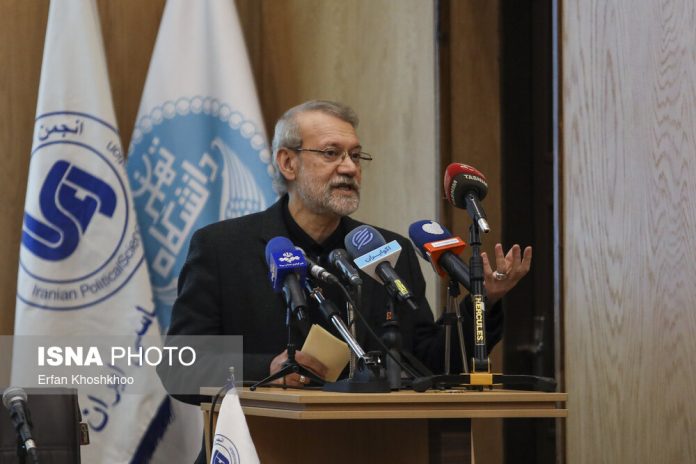
Ali Larijani, talking to Iran’s national TV, discussed the regional developments in a special news program on Wednesday evening.

He noted if the new rulers in Syria act rationally, Iran will have no issues with them.

The political advisor acknowledged the costs incurred by Iran in Syria but highlighted “significant security gains.”

He noted that Iran, before Assad’s fall, had advised the Syrian government to give more opportunities to various ethnic groups.

Larijani stressed the importance of rational behavior in dealing with threats like Daesh, which Iran aimed to suppress outside its borders to avoid higher costs if the enemy reached its territory.

He stated that Syria’s future depends on the actions of its rulers and criticized their silence on American and Israeli occupation.

Larijani also acknowledged that Hezbollah has faced significant challenges, including the assassination of its leader, but added that the Lebanese resistance movement “has successfully rebuilt itself, replacing thousands of members and maintaining its strength.”

Israel seeking to occupy Gaza City: Report

Israeli Army

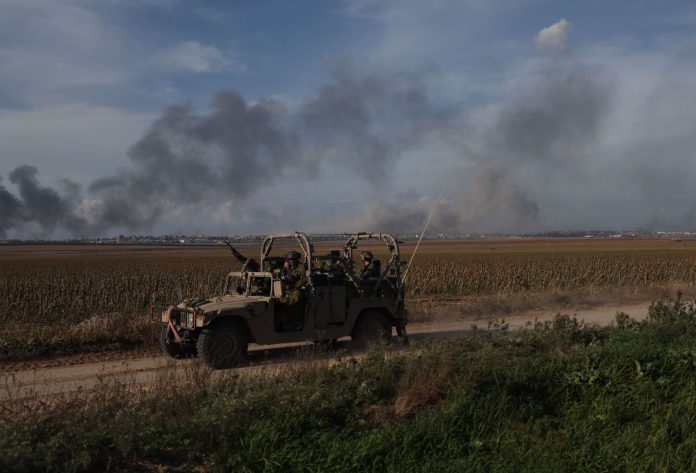
Israeli Channel 14 said the move comes amid a stalemate in indirect negotiations aimed at reaching a Gaza cease-fire and prisoner swap deal with Palestinians.

According to the broadcaster, the government of Prime Minister Benjamin Netanyahu is “satisfied” with the results of its military campaign in northern Gaza.

Israel has continued a large-scale ground offensive in northern Gaza since Oct. 5, allegedly to prevent Palestinian resistance group Hamas from regrouping. Palestinians, however, accuse Israel of aiming to occupy the area and forcibly displace its residents.

“The political echelon is considering issuing an order to the Israeli army to head south and occupy Gaza City in the near future,” the channel added.

“Such an operation is possible now, especially in light of the cease-fire in Lebanon and the availability of more army forces to carry out large-scale and prolonged maneuvers.”

Mediation efforts led by the US, Egypt, and Qatar to reach a cease-fire in Gaza have so far failed due to Netanyahu’s refusal to halt the war.

The Israeli army has continued a genocidal war on Gaza that has killed over 45,500 victims, mostly women and children, since a Hamas attack on Oct. 7, 2023 despite a UN Security Council resolution calling for an immediate cease-fire.

In November, the International Criminal Court issued arrest warrants for Netanyahu and his former Defense Minister Yoav Gallant for war crimes and crimes against humanity in Gaza.

Israel also faces a genocide case at the International Court of Justice for its war on the enclave.

Tehran summons Riyadh envoy to protest execution of 6 Iranian nationals

The Iranian Foreign Ministry

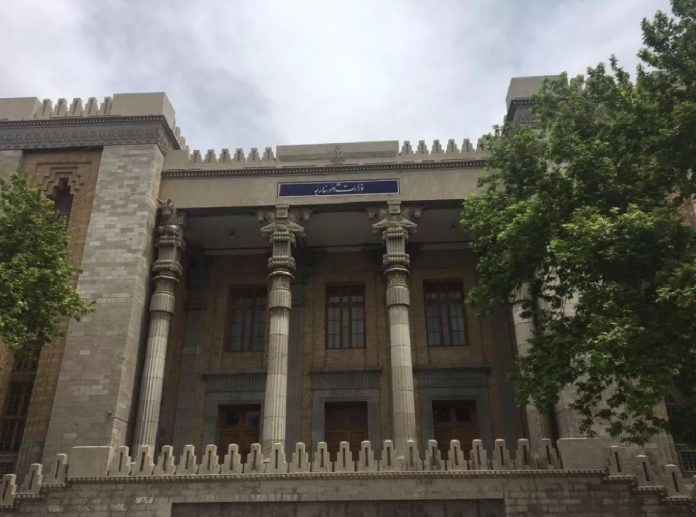
Following the reports of the execution of six Iranians in Saudi Arabia on drug-trafficking charges, Director General of Consular Affairs at the Iranian Foreign Ministry, Karimi Shasti, strongly protested the action.

The Iranian diplomat noted that those people had been sentenced to death by the Saudi judicial system several years ago for drug trafficking charges, and during that time, the Iranian Foreign Ministry had consistently worked to provide consular services to them and seek a commutation of their sentences.

However, he added, carrying out these executions without prior notification to the embassy is completely unacceptable and violates the principles of international law, including the Convention on Consular Relations, the Foreign Ministry’s website reported.

Karimi Shasti also noted that the Saudi ambassador to Tehran has been summoned to the Foreign Ministry, where Iran’s strong protest and the inconsistency of this action with the overall judicial cooperation between the two countries were formally conveyed to him. The necessity for an explanation regarding this matter was also stressed.

Also, a legal and consular delegation from the Foreign Ministry is set to travel to Riyadh to further pursue this issue.

Saudi Arabia carried out at least 338 executions in 2024, sharply up on the 170 recorded in 2023 and the highest number in decades, the AFP tally showed.

Palestinian Authority temporarily bans Al Jazeera, citing “inciting material”

Al Jazeera

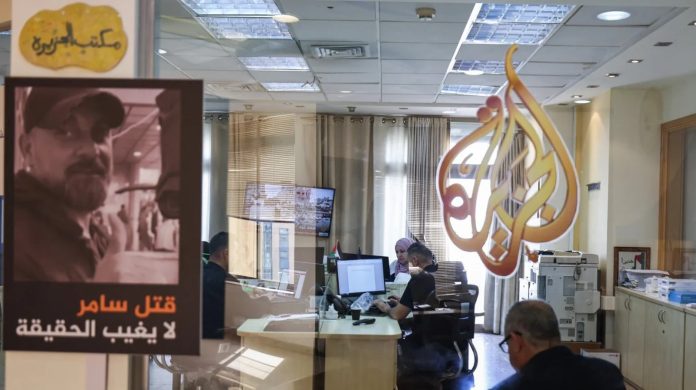
A ministerial committee that includes the culture, interior and communications ministries decided to suspend the broadcaster’s operations for what they described as broadcasting “inciting material and reports that were deceiving and stirring strife” in the country, Wafa reported on Wednesday.

Al Jazeera has deplored the Palestinian Authority’s (PA) decision to close its office in the occupied West Bank, calling it a move that is “in line with the [Israeli] occupation’s actions against its staff”.

“Al Jazeera Media Network denounces the Palestinian Authority’s decision to freeze its work and coverage in the West Bank. It considers this decision nothing but an attempt to dissuade the channel from covering the rapidly escalating events taking place in the occupied territories,” the Qatar-based network said in a statement on Thursday.

“And – unfortunately – such a decision comes in line with the previous action taken by the Israeli government, which closed Al Jazeera’s office in Ramallah,” the statement added, calling on the PA to “immediately retract and cancel the decision” and allow its teams to cover freely from the occupied West Bank “without any threats or intimidation”.

“Al Jazeera stresses that this decision will not deter it from its commitment to continue its professional coverage of events and developments in the West Bank,” it noted.

In its statement, Al Jazeera Media Network said that preventing its journalists from conducting their duties is “an attempt to hide the truth about events in the occupied territories, especially what is happening in Jenin and its camps”.

The network added it was “shocked by this decision, which comes at a time when the war on the Gaza Strip is still ongoing, and the systematic targeting and killing of Palestinian journalists by the Israeli occupation forces”.

It stated it holds the PA “fully responsible for the safety and security” of all its employees in the occupied West Bank.

The decision comes after Fatah, the Palestinian faction which dominates the PA, banned Al Jazeera from reporting from the governorate of Jenin in the northern occupied West Bank, citing its coverage of clashes between the Palestinian security forces and Palestinian armed groups in the area.

Fatah in late December had accused the broadcaster of sowing division in “our Arab homeland in general and in Palestine in particular” and encouraged Palestinians not to cooperate with the network.

In response, the network slammed Fatah, saying it had launched an “incitement campaign” against the network and its journalists in the occupied West Bank for its coverage of the clashes.

Mustafa Barghouti, the secretary-general of the Palestinian National Initiative, stated Palestinians would be “astonished at this decision” to suspend Al Jazeera broadcasts.

“I think it’s a big mistake and this decision should be reversed as soon as possible,” Barghouti told Al Jazeera from Ramallah.

“If the PA has an issue with Al Jazeera, it should discuss it,” he added, especially since Al Jazeera has been “exposing the crimes against the Palestinian people … and [has been] promoting the Palestinian cause in general”.

“But more than that, it is an issue of freedom of … the press.”

Israeli forces in September issued Al Jazeera with a military order to shut down operations after they raided the outlet’s bureau in the West Bank city of Ramallah – where the PA is based.

Meanwhile, the PA, which engages in security coordination with Israel, has continued its crackdown in Jenin – a stronghold for armed groups opposing Israel’s occupation.

Several civilians, PA soldiers and armed fighters have been killed since the start of “Operation Protect the Homeland”, including Jenin Brigades commander Yazid Ja’ayseh.

The fighting has focused Palestinian criticism on the PA, with the Popular Resistance Committees umbrella group accusing the organisation of operating “in line with the Zionist agenda”.

Ex-Israeli defense chief resigns from Knesset

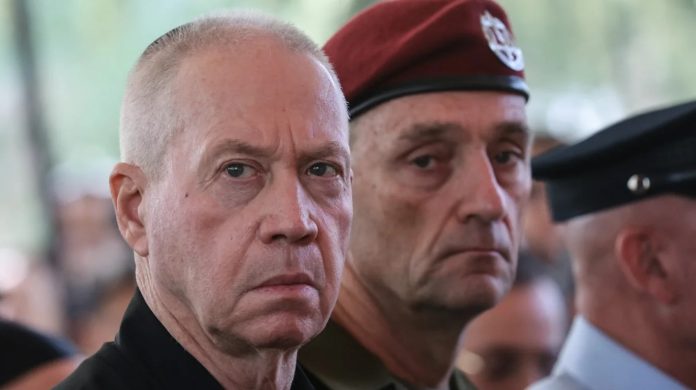
Yoav Gallant

In his statement, Gallant cited a law being promoted by the Israeli government that would exempt draft-age ultra-Orthodox men from the mandatory military service.

“My way is the way of Likud,” Gallant said, referring to his political party and Netanyahu’s, as reported by Haaretz.

“I believe in its principles and trust the members and voters of the Likud movement,” he added.

In response to his announcement, opposition leader Yair Lapid attacked the government’s push to pass a bill exempting ultra-Orthodox men from military service.

“Gallant told the simple truth today: He was fired to pass a disgraceful evasion and insubordination law that is a betrayal of our fighters, our dead, and our wounded,” Lapid said on X, formerly known as Twitter.

Meanwhile, Benny Gantz of the National Unity party urged Gallant against resigning from politics, calling him a “brave man”.

“As long as the government has not gone to elections…you must show the same courage you have always shown, remain in the Knesset, and act according to the dictates of your conscience. Do not lend a hand to passing the evasion law during wartime,” Gantz wrote on X.

On 5 November, Netanyahu fired Gallant from his post as defence minister, citing a lack of mutual trust that had grown since Israel launched its wars on Gaza and Lebanon.

Gallant, a member of Netanyahu’s Likud party since 2019, was replaced by Foreign Minister Israel Katz.

According to a report by the Times of Israel, Netanyahu noted in his decision to remove Gallant that there had been moments in 2024 when Gallant acted out against the decisions of Israel’s cabinet.

At the time of his firing, Gallant said he believed he was ousted for three reasons: “My firm stance on universal conscription, commitment to return the hostages and call for a state commission of inquiry into the failure of October 7”, referring to the Hamas-led attacks on southern Israel in October 2023.

Gallant was Israel’s defence chief at the time of the attacks and led the military’s response, which began as an indiscriminate aerial bombardment campaign that eventually led to a full-scale ground invasion of Gaza.

At the beginning of the war, Gallant described Palestinians as “human animals” and announced the imposition of a complete siege of Gaza, cutting off all electricity, fuel and food to the enclave.

The International Criminal Court issued arrest warrants for Netanyahu and Gallant on the grounds of war crimes and crimes against humanity in Israel’s war on Gaza.

Ukraine’s Navy claims destroyed 37k Russian drones in 2024

Russia Ukraine War

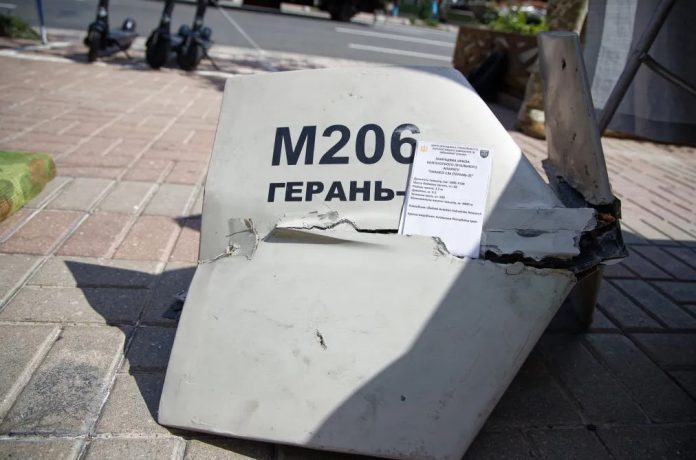
This includes Russian strike drones, operational and tactical unmanned aerial vehicles (UAVs), first-person-view (FPV) drones, strike UAVs, and Shahed-type attack drones, the Navy said in a Facebook post.

Ukrainian naval forces also destroyed five Russian ships and 458 watercraft.

Russia’s UAV losses included 35,670 destroyed FPV drones and 1,140 strike drones, the Navy said. Ukrainian units also eliminated 192 operational and tactical drones and another 164 Shahed-136/131 drones.

Russian drone attacks across Ukraine surged to record levels in the last months of 2024, with Moscow aiming to ramp up UAV production in the new year. Drone strikes have targeted Ukrainian residential neighborhoods and critical energy infrastructure.

Ukrainian forces in turn have targeted Russian military facilites and equipment, both within Russia and in Russian-occupied regions of Ukraine.

A Ukrainian-made Magura V5 naval strike drone on Dec. 31 destroyed a Russian Mi-8 helicopter for the first time.

According to Ukraine’s Commander-in-Chief Oleksandr Syrskyi, Russian forces suffered high losses in 2024. Around 427,000 Russian soldiers were killed or wounded last year, he added.

Iran says new round of talks with E3 to be held in mid-January

Nuclear Talks in Vienna

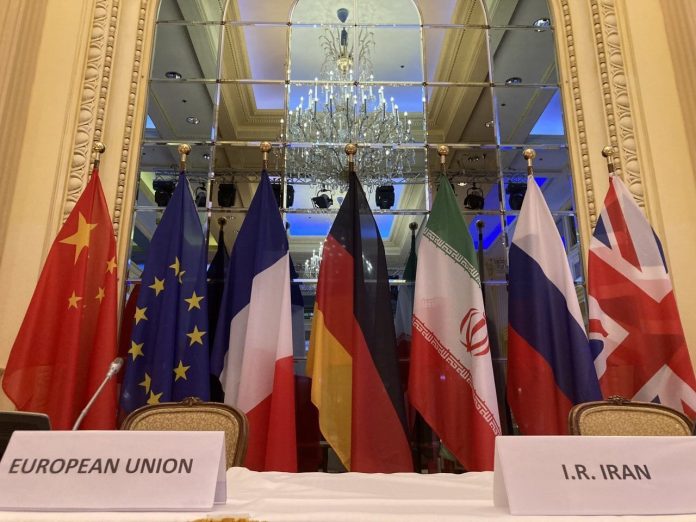
Speaking to reporters on Wednesday, Kazem Gharibabadi said the fresh round of talks between Iran and the EU3 (France, the UK and Germany) will begin in Switzerland’s Geneva on January 13.

He insisted that the upcoming event will be regarded as “talks, not negotiations”, saying various subjects will be mooted in the consultations.

Diplomats from Iran, the UK, France and Germany held discussions in Geneva in late November 2024.

“We discussed and took stock of recent bilateral, regional and international developments, particularly nuclear and sanctions lifting issues,” Gharibabadi stated in late November.

“We are firmly committed to pursue the interests of our people, and our preference is the path of dialogue and engagement,” he continued, adding, “It was agreed to continue diplomatic dialogue in near future.”

Iranian minister: Push for lifting restrictions on social media will continue

Mobile internet

Hashemi was speaking to reporters during his provincial visit to Kohgiluyeh and Boyer-Ahmad, western Iran.

He said the issue of lifting the restrictions is on the agenda of the administration.

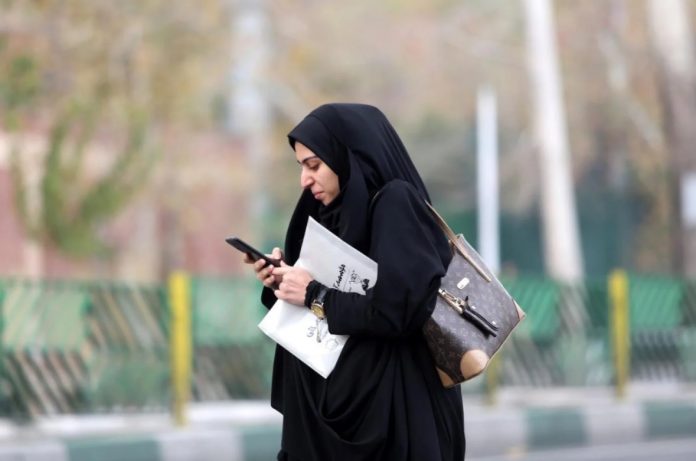
He highlighted the strong cooperation among the leaders of the three branches of government aimed at lifting the filterings, expressing optimism about the capacities within the plan.

The minister of Communications and information expressed hope that the efforts led by President Pezeshkian and other officials in the Supreme Council of Cyberspace will continue robustly.

He reaffirmed his own commitment to persistently pursuing this issue and anticipated tangible advancements in the near future.

The Pezeshkian administration has already made good on his promise to lift the filtering of WhatsApp instant messaging platform and Google Play.

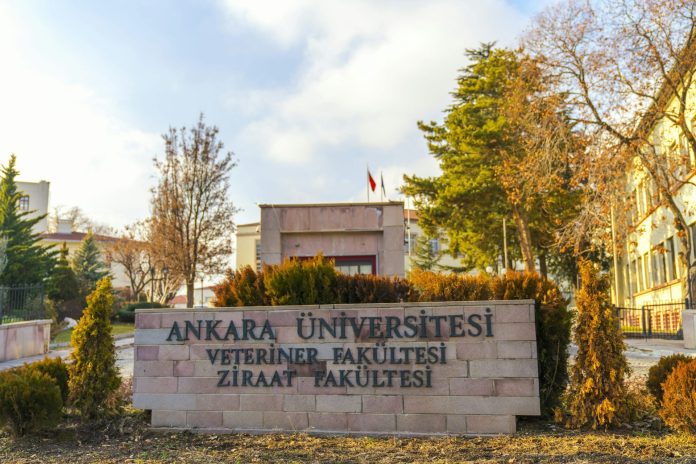
Iran and Ankara University to bolster cultural and scientific ties

According to the Public Relations Office of the Organization of Islamic Culture and Communications, the negotiations between the two sides underscores the significance of the Persian language and literature chair at the university, which has facilitated several cultural events, including Nowruz celebrations and Yalda Night festivities.

At the meeting, Nazemi highlighted the mutual appreciation for literary figures from both nations, noting that many Iranians are familiar with prominent Turkish poets like Mehmet Akif and Nazim Hikmet, while Turkish people recognize Persian poets such as Hafez and Saadi.

He pointed out that the teaching of selected excerpts from the Shahnameh, by the Iranian poet Ferdowsi, in Turkish schools during Atatürk’s era exemplifies the deep-rooted literary connections between Iran and Turkey.

The cultural attaché emphasized Turkey’s historical role in promoting Persian language and culture in Anatolia and the Balkans, noting that numerous Persian words are still used in Turkish language today.

He declared that Iran is ready to strengthen the Persian language programs through guest lecturers and collaborative academic initiatives.

Meanwhile, both Nazemi and Albayrak acknowledged the upcoming designation of 2025 as the Cultural Year of Iran and Turkey, expressing enthusiasm for joint cultural projects throughout this year.

Albayrak spoke about the historical strength of the Persian language chair at Ankara University, underlining the importance of maintaining robust cultural ties despite political ups and downs.