Wednesday, December 31, 2025
Home Blog Page 584

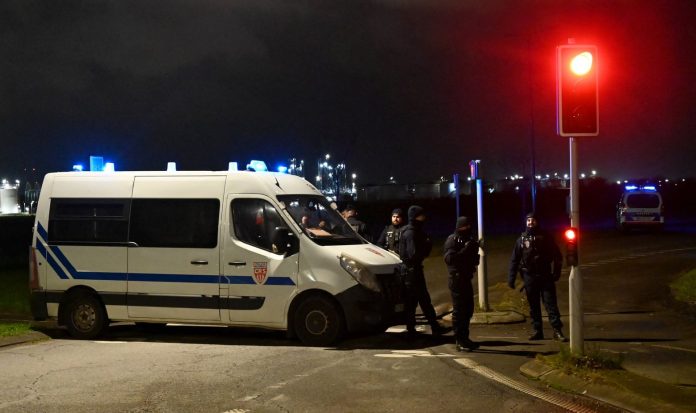
Confirmed: 2 Iranians gunned down in France

The embassy emphasized that the Ministry of Foreign Affairs and its diplomatic and consular missions are committed to supporting and defending Iranian nationals abroad.

Following reports of the fatal shooting, the embassy promptly began investigations and coordinated efforts to address the incident.

The consular officer confirmed the deaths of the two Iranians and extended condolences to their grieving families.

As soon as the news surfaced on local media and social platforms, the embassy reached out to the victims’ families.

The head of the consular section shared the available information about the incident and assured the families of the embassy’s readiness to provide any necessary consular assistance.

The embassy reaffirmed its commitment to supporting the victims’ families during this difficult time and stated that further updates on the case will be provided as investigations proceed.

Iran proposes development fund for D-8 members

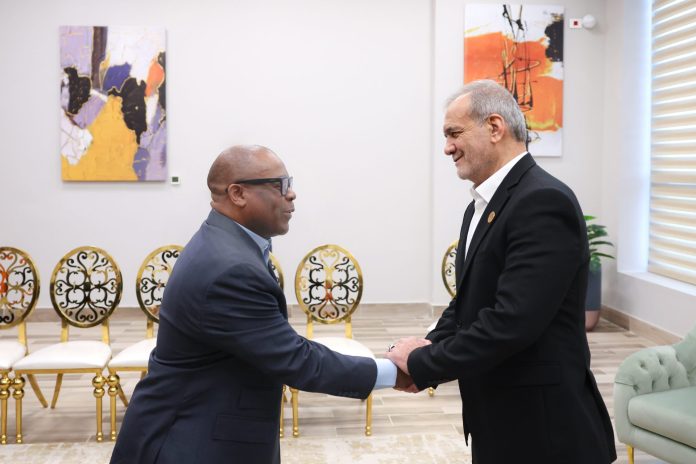
In a meeting with D-8 Secretary General Isiaka Abdulqadir Imam on Thursday, Pezeshkian proposed creating a development fund for joint investments by Islamic countries in the group, declaring Iran’s readiness to lead this initiative.

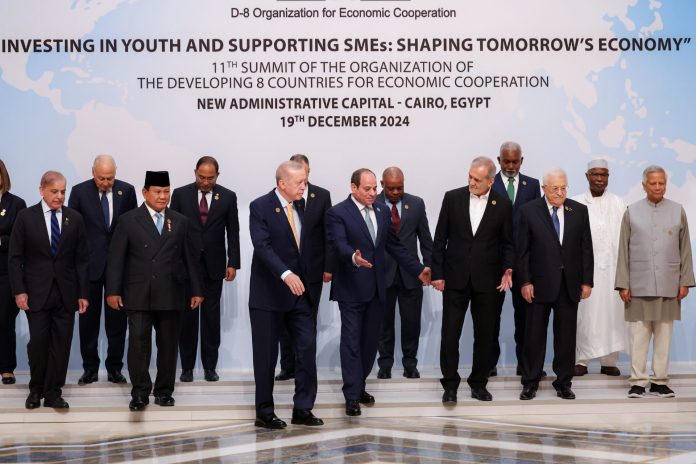
The Iranian president, in Egypt to address the 11th D-8 Summit, described the D-8 as a vast market and a valuable platform for strengthening trade, cultural, and technological cooperation among Islamic countries.

He stressed the importance of implementing the group’s resolutions, stating, “If decisions made by the D-8 were fully followed through, the eight Islamic member states would have maximized their benefits from this organization.”

“If we, the Islamic countries, make a decision within the framework of such an organization, we must be committed to its implementation, and I believe that one of the most important issues facing us at this summit is to emphasize and focus on the implementation of the resolutions,” he added.

Additionally, Pezeshkian reaffirmed Iran’s willingness to host meetings of D-8 energy and communications ministers. He proposed expert-level sessions to identify challenges and opportunities in energy and IT sectors, which would pave the way for ministerial decision-making.

For his part, Imam praised Iran’s active role in the organization and its scientific and technological advancements.

He highlighted Iran’s leadership in D-8 initiatives and expressed commitment to pursue President Pezeshkian’s recommendations, particularly regarding resolution implementation.

The D-8 Organization for Economic Cooperation, also known as Developing-8, is an organization for developing cooperation among Bangladesh, Egypt, Indonesia, Iran, Malaysia, Nigeria, Pakistan, and Turkey.

Leading a high-profile delegation, President Pezeshkian arrived in Cairo on Wednesday to take part in the D-8 summit. It is the first visit by an Iranian president to Egypt in 11 years.

South Korea claims at least 100 North Korean soldiers killed, 1,000 wounded in Russia-Ukraine war

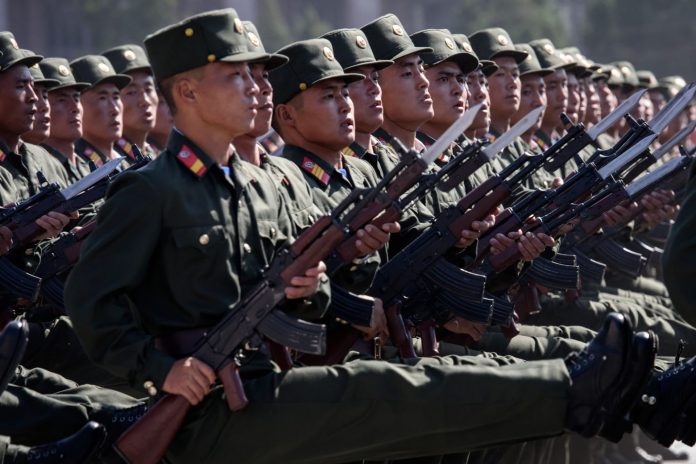
Another 1,000 of Pyongyang’s soldiers have been injured, South Korean MP Lee Sung-kwon told reporters, connecting the high casualty rates to the lack of experience with terrain and drone warfare.

The comments come after an undisclosed U.S. official estimated for the media that “a couple of hundred” of North Korean troops have been injured or killed since joining combat earlier this month.

Pyongyang has dispatched over 10,000 of its soldiers to help oust Ukrainian troops fighting in Russia’s Kursk Oblast since early August, Kyiv and Western officials said.

“Within the Russian military, complaints have reportedly surfaced that the North Korean troops, due to their lack of knowledge about drones, are more of a burden than an asset,” Lee Sung-kwon said in comments quoted by the BBC.

After reporting initial but limited clashes with North Korean troops in the fall, Ukraine said that in December, Russia also began using the soldiers in ground assaults.

The full extent of North Korean losses might be hard to ascertain, as President Volodymyr Zelensky said Russia is trying to hide the casualties.

Pentagon spokesperson Major General Patrick Ryder confirmed on Dec. 16 that North Korean personnel had engaged in combat operations alongside Russian troops in Kursk Oblast and suffered their first losses.

Iranian president calls for Muslim unity against Israeli aggressions

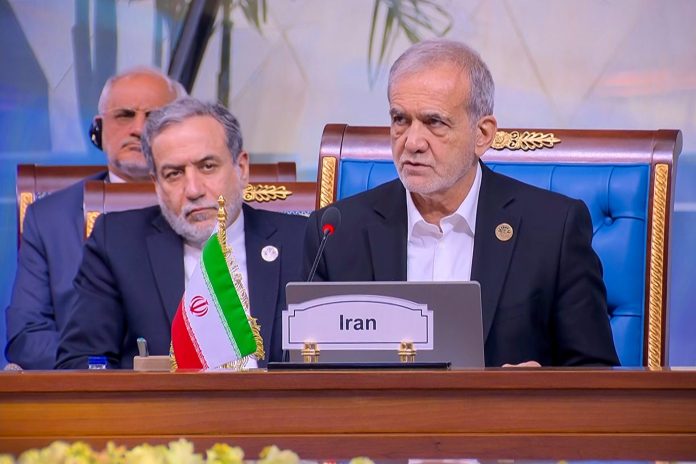
President Pezeshkian, speaking on Thursday at this meeting in Cairo, Egypt, said that for more than 14 months, the West Asia region, particularly Gaza and southern Lebanon, and now the Islamic country of Syria, have been subjected to extensive attacks by the occupying regime of Israel.

Pezeshkian emphasized that maintaining friendships and establishing new ties through multilateral cooperation among Islamic countries based on development and collective benefits is more necessary than ever.

He expressed hope that during Egypt’s rotating presidency of D-8, there would be a deepening of friendship and brotherhood among the members and significant steps be taken towards increasing multilateral cooperation.

The President of the Islamic Republic of Iran highlighted the importance of moving towards multilateralism and creating smart economic and trade networks among D-8 member countries.

President Pezeshkian also regarded the role of the youth as valuable assets and emphasized the need for planning to harness their potential.

He stated that the Islamic Republic of Iran is interested in exchanging experiences and sharing achievements with D-8 members in various fields and will support any initiative and proposal that leads to synergy in economic areas and facilitates youth participation in development-oriented programs.

President Pezeshkian called for the establishment of a joint investment bank for D-8, the creation of shared science and technology houses and parks, the organization of tours and scientific and technological meetings, the provision of educational opportunities and scholarships, the exchange of professors and students, the provision of entrepreneurship facilities for youth, investment in small and medium enterprises to address youth employment issues, and the holding of exhibitions showcasing achievements and knowledge-based productions in collaboration with the members of this organization.

Iran, Turkey, Egypt, Pakistan, Indonesia, Nigeria, Malaysia, and Bangladesh are member states of the D-8 Organization for Economic Cooperation.

Iranian president in Cairo to attend D-8 Summit

Egyptian President Abdel Fattah el-Sisi welcomed President Pezeshkian upon his arrival at the summit venue.

Upon his arrival, President Pezeshkian signed the guest book for the 11th D-8 Summit.

Zelensky says Ukraine won’t ‘rush’ to end war with Russia

Russia Ukraine War
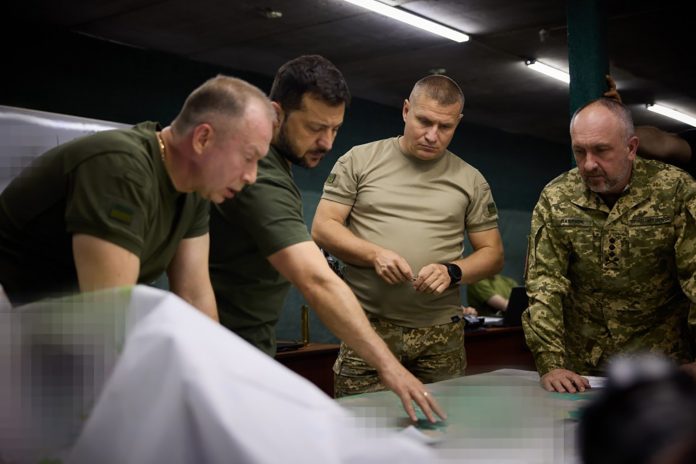
President of Ukraine Volodymyr Zelensky visits combat brigades engaged in offensive operations in the Bakhmut sector, Ukraine, on September 5.

Zelensky has previously insisted that the only viable path to peace with Russia was his ten-point ‘peace formula’, which includes a complete withdrawal of Russian forces from former Ukrainian territories and the restoration of the country’s 1991 borders. Widely touted by the West, the proposal was never taken seriously in Moscow.

However, Zelensky has signaled in recent weeks that he would be willing to relinquish territorial claims if Kiev becomes a NATO member. Recent media reports have also suggested that US President-elect Donald Trump, who met Zelensky in Paris earlier this month, could persuade the Ukrainian leader to ‘freeze’ the conflict along the current line of contact and enforce negotiations between Kiev and Moscow. Trump previously pledged to end the conflict within 24 hours upon returning to the White House in January next year.

“He really wants to move quickly [but] he is not yet in the White House and cannot have access to all the information. He also knows my firm desire to not rush to the detriment of Ukraine,” Zelensky stated.

“No matter how many presidents or prime ministers want to decree an end of the war, we are not going to simply give in and give up our independence,” he added.

Zelensky claimed that freezing the conflict at its current stage would give Russia an opportunity to “attack” Ukraine at a later date.

“Vladimir Putin is a boomerang: he comes back until he gets what he wants… If we do not stop Putin, he will continue to destroy us,” he stated.

He said he would be ready to negotiate peace with Moscow only from “a position of strength”, and in order to get there, Ukraine must become part of the EU and NATO.

Zelensky rejected claims that he would acknowledge the loss of former Ukrainian territories that have joined Russia, namely the regions of Donetsk, Lugansk, Kherson, Zaporozhye, and Crimea.

“We cannot give up our territories. The Ukrainian Constitution forbids us to do so,” he stated, admitting, however, that Kiev does not currently have “the strength to regain” these territories.

Moscow has maintained that freezing the conflict unacceptable. It has repeatedly said it is open to negotiations and would welcome a diplomatic settlement, but insisted that this is only possible if Kiev ceased military operations, withdrew its forces from Russian territory, including former Ukrainian regions, ensured the rights of Russian-speaking residents, and became a neutral, nuclear-free state.

Iran raps intl. community’s failure to stop Israel amid US support

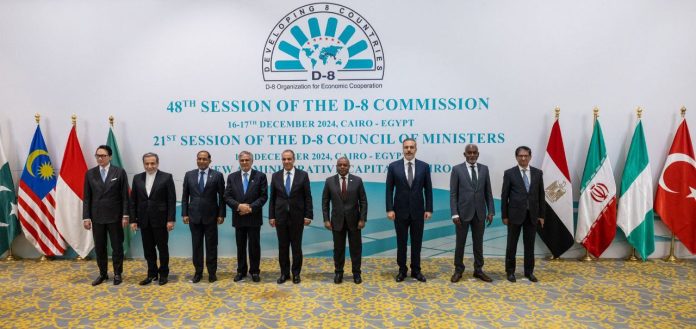
The top diplomat made the remarks in Cairo on Wednesday, addressing the 21st Session of the Council of Ministers of D-8 (Developing-8) Organization for Economic Cooperation.

“The international community has embarrassingly failed to stop acts of aggression, war crimes, crimes against humanity, and genocide by the Zionist regime,” he said.

“This is largely attributed to the political, military, intelligence, and financial support by the US administration to Israel.”

The foreign minister pointed to around 15 months of escalated deadly aggression by the regime against the Gaza Strip, where Tel Aviv has been waging a genocidal war, Lebanon, and Syria.

The war has so far claimed the lives of at least 45,097 Palestinians, mostly women and children.

Around 4,000 people were also killed during the regime’s intensified raids against Lebanon that began shortly after the launch of the brutal military onslaught, and lasted until last month, when a ceasefire took effect. Tel Aviv has violated the truce on many occasions to deadly effects for the Lebanese people.

Additionally, the regime has markedly ramped up its deadly attacks against Syria, especially targeting its military infrastructure, in the aftermath of the country’s takeover by Western and Tel Aviv-backed anti-Damascus militants.

Araghchi likewise noted that the meeting of the developing nations had come at the time when the Muslim world was still suffering from unprecedented cruelty on the part of the regime.

He hoped that the nations’ Special Summit, which is scheduled to go underway on Thursday, gathering representatives from the Islamic Republic, Egypt, Bangladesh, Indonesia, Malaysia, Nigeria, Pakistan, and Turkey, would send a strong message to the world that the Israeli aggression and violations in Gaza, Lebanon, and Syria had to stop immediately.

The event, the official added, also had to convey the message that the regime and those of its allies that have been fueling its aggression, had to be held accountable, and a permanent ceasefire had to be established in Gaza to allow unhindered access to humanitarian assistance by the Gazans.

According to Araghchi, the summit was also expected to underline the imperative that the Palestinian cause and the right of Palestinians to self-determination had to be realized, any attempt for land annexation by the regime be prevented, and Israeli forces be immediately taken out of occupied territories in the coastal sliver, Lebanon, and Syria.

“Last but not the least, that D8 countries are prepared to support Palestine and Lebanon to address economic and related challenges and problems resulting from the current situation,” he stated.

Araghchi, meanwhile, hailed the countries for acting as one of the first groups of nations to condemn the launch of the war on Gaza, adding that the Thursday event “will be the latest testament of our brotherly countries to our continued joint commitment to fraternity, peace, dialogue, justice, and rule of law across the region and the world, as envisaged in the D8 Charter.”

The top diplomat, meanwhile, lauded a declaration that was issued during the Wednesday meeting for presenting a promising landscape for enhanced cooperation among the countries.

He finally advised the nations to focus more on the ways and means to make their economies and peoples more resilient in the face of possible shocks in the future.

Iran, Egypt likely to reopen embassies soon, says Iranian presidential aide

Iran Egypt Flags

Mehdi Sanaei announced on Thursday that both countries have shown the necessary will to resume relations, with hopes of reaching the level of reopening embassies soon.

He noted that Iran and Egypt have not had political relations for over four decades, shortly after the victory of Iran’s Islamic Revolution in 1979, but the past year has seen improved interactions.

The aide added, “A productive dialogue took place between the presidents of the two countries in November, leading to the initiation of political talks and various actions between the countries.”

The announcement came after a rare visit by President Pezeshkian to Cairo, first by an Iranian president in 11 years, to attend the D-8 developing Islamic states summit.

Sanaei stated that the president’s visit to Egypt is not limited to economic issues but also aims to enhance cooperation among member states.

He highlighted that nearly 1.2 billion Muslims live in the D-8 countries and emphasized that the primary focus of the group is on economic matters and business enterprises.

Iran, Turkey, Egypt, Pakistan, Indonesia, Nigeria, Malaysia, and Bangladesh are member states of the D-8 Organization for Economic Cooperation.

UN urges ‘free and fair’ elections in Syria

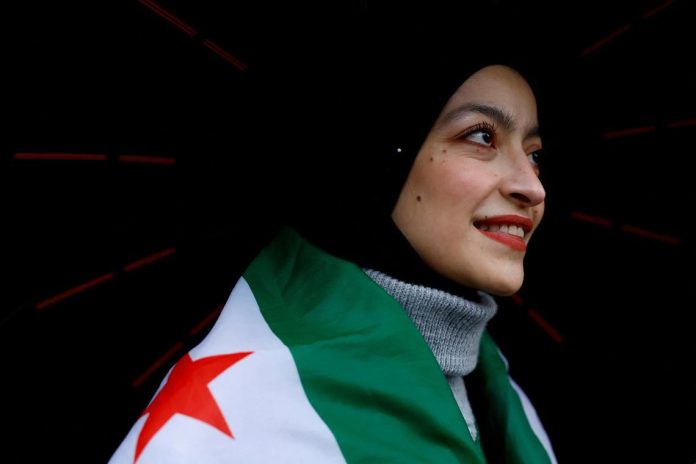
Assad fled Syria following a lightning offensive spearheaded by Hayat Tahrir al-Sham (HTS) earlier this month.

He left behind a country scarred by decades of “torture, disappearances and summary executions”, and the collapse of his rule on December 8 stunned the world and sparked celebrations around Syria and beyond.

Years of war have also left the country heavily dependent on aid, deeply fragmented and desperate for justice and peace.

Addressing reporters in Damascus, UN special envoy Geir Pedersen said “there is a lot of hope that we can now see the beginning of a new Syria”.

“A new Syria that… will adopt a new constitution… and that we will have free and fair elections when that time comes, after a transitional period,” he added.

Calling for immediate humanitarian assistance, he also stated he hoped to see an end to international sanctions levied against Syria over Assad’s abuses.

UN humanitarian chief Tom Fletcher also called for a massive aid boost by donor countries to respond to “this moment of hope” for Syria.

“Across the country, the needs are huge. Seven in 10 people are needing support right now,” Fletcher told AFP in a telephone interview as he visited Syria.

Pedersen noted a key challenge was the situation in Kurdish-held areas in Syria’s northeast, amid fears of a major escalation between the US-backed, Kurdish-led Syrian Democratic Forces (SDF) and Turkey-backed groups.

Turkey accuses the main component of the SDF, the People’s Protection Units (YPG), of being affiliated with Kurdistan Workers’ Party (PKK) militants at home, whom both Washington and Ankara consider a “terrorist” group.

The United States announced Tuesday it had brokered an extension to a fragile ceasefire in the flashpoint town of Manbij and was seeking a broader understanding with Turkey.

But later on Wednesday, a Syria war monitor claimed 21 pro-Turkey fighters had been killed after they attacked a Kurdish-held position near Manbij despite the ceasefire extension.

Turkish Foreign Minister Hakan Fidan later warned Syria’s new rulers to address the issue of Kurdish forces in the country.

He was responding to a question on Al Jazeera about rumours that Turkey could launch an offensive on the Kurdish-held border town of Kobane, also known as Ain al-Arab.

“There is a new administration in Damascus now. I think, this is primarily their concern now,” he said.

“So, I think if they are going to, if they address this issue properly, so there would be no reason for us to intervene,” Fidan added.

He rejected US President-elect Donald Trump’s claim that the ouster of Assad amounted to an “unfriendly takeover” of Syria by Ankara.

Rooted in Syria’s branch of Al-Qaeda and proscribed as a terrorist organisation by several Western governments, HTS has sought to moderate its rhetoric by assuring protection for the country’s many religious and ethnic minorities.

It has appointed a transitional leadership that will run the country until March 1.

Fidan stressed in his interview that it was time for the international community to take HTS off its terror watchlists.

HTS has vowed justice for the crimes committed under Assad’s rule, including the disappearance of tens of thousands of people into the complex web of detention centres and prisons that was used for decades to silence dissent.

According to the Syrian Observatory for Human Rights, more than 100,000 people died or were killed in custody from 2011.

Iran dismisses Canada-sponsored UNGA resolution as politically-motivated

Esmael baghaei

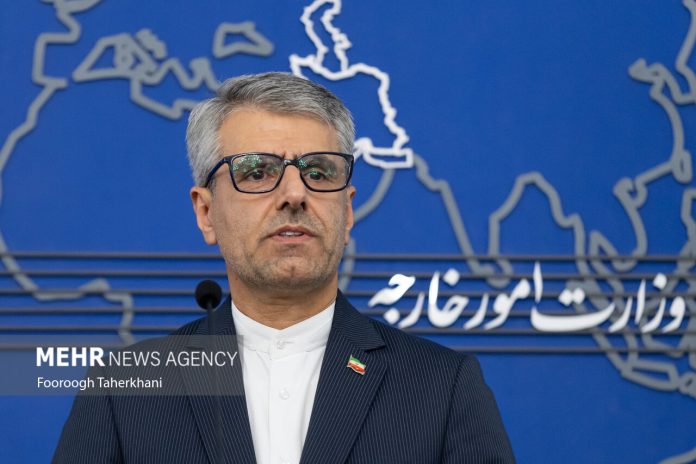
Esmaeil Baqaei made the remarks in reference to a UNGA resolution accusing Iran of human rights violations, which was adopted on Tuesday with only 80 votes in favor, while 27 nations rejected it and 68 abstained from voting.

He noted that the majority of UN member states expressed dissatisfaction with the misuse of the UN General Assembly and the instrumentalization of human rights by voting against, abstaining from, or being absent during the resolution.

He stated that such unjustified measures, sponsored by certain players who themselves have a long history of gross human rights violations—particularly through their military and political support for occupation and genocide in Palestine—fail to promote the global status of human rights.

Instead, these actions reduce the noble concept of human rights to a tool for exerting political pressure on nations, the spokesman said.

Baqaei pointed out that the sponsors of the anti-Iranian resolution, including the Zionist regime, the United States, the United Kingdom, and Canada, are among the most prominent violators of human rights, and this is a source of shame.

He urged Canadian authorities, who initiate such measures against Iran every year, to address their own domestic and international misconduct, including systematic policies aimed at the colonial eradication of Indigenous populations and complicity in genocide committed by Israel against the Palestinian people.

Baqaei emphasized Iran’s commitment to upholding and safeguarding human rights as a legal, religious, and ethical imperative under the country’s constitution, statutory laws, and the principles of Islam.