Saturday, December 27, 2025
Home Blog Page 564

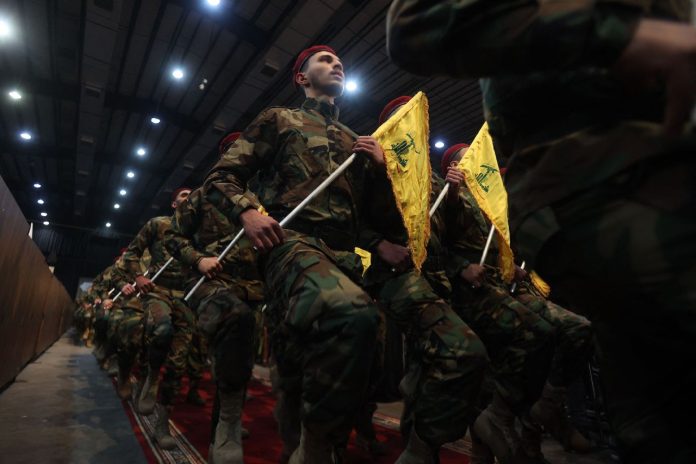
Hezbollah warns its ‘patience might run out’ over Israel violations of cease-fire

Hezbollah

Addressing critics of Hezbollah’s silence on Israel’s violations of the cease-fire agreement, Qassem said in a televised speech that the group’s leadership “is the one that decides when to resist, how to resist, the method of resistance, and the weapons to use”.

Warning further, he stated: “Our patience (regarding these violations) might run out … and when we decide to act, you will see it immediately.”

In this context, Qassem added that the cease-fire agreement “exclusively applies to the area south of the Litani River, and the (Lebanese) state is responsible, along with the sponsors, for restraining Israel and ensuring the agreement’s implementation.”

Under the cease-fire terms, Israel is required to withdraw its forces south of the Blue Line – a de facto border – in phases, while the Lebanese army is to deploy in southern Lebanon within 60 days.

The 1701 resolution, adopted on Aug. 11, 2006, calls for a complete halt to hostilities between Hezbollah and Israel and the establishment of a weapons-free zone between the Blue Line and the Litani River in southern Lebanon, with exceptions for the Lebanese army and UNIFIL.

Data from the Lebanese Health Ministry indicates that since Israel’s onslaught against Lebanon began on Oct. 8, 2023, at least 4,063 people have been killed, including women, children, and health workers, while 16,664 others have been injured.

Families of Israeli captives call for immediate swap deal

Israel Hostages Gaza

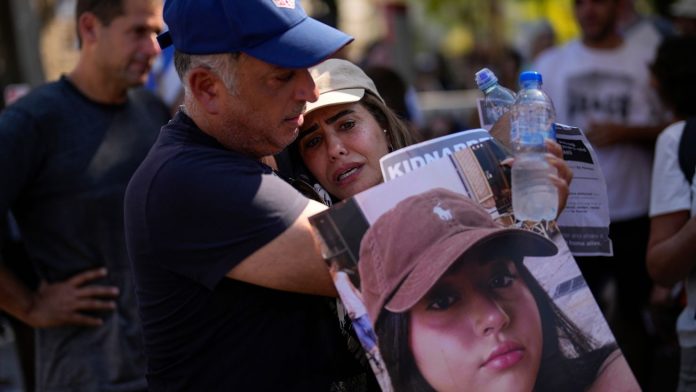
The Al-Qassam Brigades broadcasted a video of captive Liri Albaj, who expressed frustration over being ignored by her government and military, along with other captives in Gaza. She asked to the Israeli government poignantly, “Do you want to kill us?”

During a press conference held outside the Ministry of Defense in Tel Aviv following the release of the video, the families issued a statement: “We have received proof of life for a captive enduring hell, which should be a driving force to finalize an immediate exchange deal.”

They warned saying “any partial deal would amount to a death sentence for many captives”.

The families sharply criticized Israeli Prime Minister Benjamin Netanyahu for obstructing a prisoner exchange agreement with Palestinian factions.

Hours after Hamas released the video, thousands of people also rallied in Tel Aviv and Jerusalem Saturday night to call for a deal to free hostages held in Gaza for over 450 days.

On Friday, Hamas announced the resumption of indirect negotiations with Israel in Qatar’s capital, Doha, focusing on a ceasefire, the withdrawal of Israeli forces from Gaza, and the return of displaced persons.

Mediation efforts led by the US, Egypt, and Qatar to reach a cease-fire in Gaza have so far failed due to Israeli Premier Benjamin Netanyahu’s refusal to halt the war.

Israel holds over 10,300 Palestinian prisoners, while Hamas is said to be holding around 100 Israeli captives in Gaza. The group also said that dozens of captives had died in indiscriminate Israeli airstrikes.

The Israeli army has continued a genocidal war on Gaza that has killed over 45,650 victims, mostly women and children, since Oct. 7, 2023 despite a UN Security Council resolution calling for an immediate cease-fire.

In November 2024, the International Criminal Court issued arrest warrants for Netanyahu and his former Defense Minister Yoav Gallant for war crimes and crimes against humanity in Gaza.

Israel also faces a genocide case at the International Court of Justice for its war on the enclave.

Zahedan prosecutor: Eulogist who undermined Shia-Sunni unity arrested in Qom

Iran Court

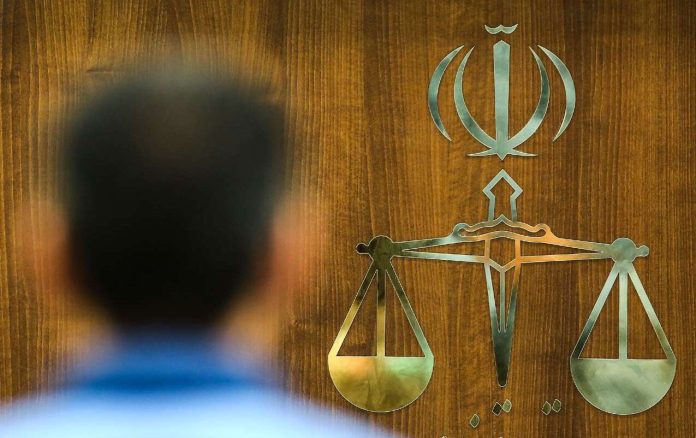
Mehdi Shamsabadi stated in a televised interview on Saturday evening that a case was filed at the provincial center’s prosecutor’s office based on reports from the Sistan and Baluchestan’s IRGC intelligence unit.

After an arrest warrant was issued by the investigating judge, the suspect was detained and handed over to the Qom IRGC intelligence. The suspect will be transferred to Zahedan for further judicial proceedings.

A clip, which is circulated on social media, shows the eulogist insulting iconic Sunni cleric Molavi Abdulhamid, who has been vocally critical of the Iranian government, and the Makki Mosque in Zahedan, which was used by protesters as a shelter against security forces during past years’ unrest and deadly riots.

The clip caused public outrage and was strongly condemned by several figures, including the Iranian Leader’s representative in Sistan and Baluchestan province, who labeled it as an example of “British Shia” and divisiveness.

Hossein Ali Shahriari, a lawmaker representing Zahedan, called for legal action against those who create such issues.

Molavi Abdulhamid himself, the Sunni Friday prayer leader of Zahedan, emphasized the importance of allowing the law to take its course and preventing further exploitation of such conflicts.

Israel set to extend Lebanon presence after ceasefire deadline: Report

Israeli Army

The cease-fire, brokered by the US and France, took effect on Nov. 27, was meant to end 14 months of intense clashes between Israel and Hezbollah – the deadliest conflict there since the 2006 Lebanon War.

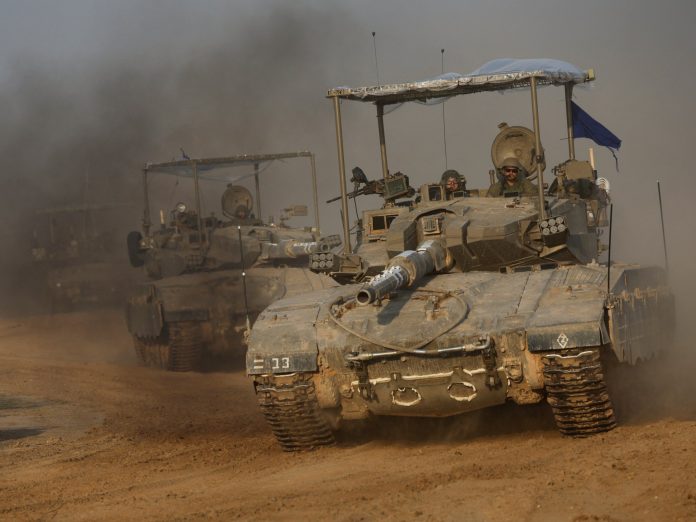
Claiming that the Lebanese Army has not met its obligations under the agreement, Israel sought to justify its extended military presence by pointing to Hezbollah’s efforts to regroup in the region.

“Under the cease-fire agreement, the Lebanese Army was supposed to deploy in the region, but it has done so at a very slow pace,” the report said.

It added: “The Lebanese Army has not targeted Hezbollah sites that Israel identified and shared through a designated mechanism established for this purpose.”

The broadcaster also noted Israel intends to tell the US that it will continue preventing residents of Lebanese villages near the border from returning to their homes.

Lebanon has yet to issue an official response to Israel’s allegations.

The cease-fire agreement outlines key provisions, including a phased withdrawal of Israeli troops to the southern side of the Blue Line de facto border, the deployment of Lebanese military and security forces along the border, and the removal of unauthorized military sites in southern Lebanon.

However, Lebanese officials have documented 353 violations by Israeli forces since the cease-fire was signed, resulting in 32 deaths and 38 injuries.

According to the Lebanese Health Ministry, at least 4,063 people have been killed, including women, children, and health workers, since Israel’s offensive against Lebanon began on Oct. 8, 2023, with another 16,664 people injured.

Iran’s Jalili rapped for blaming Gen. Soleimani’s assassination on ex-pres. Rouhani

Qassem Soleimani

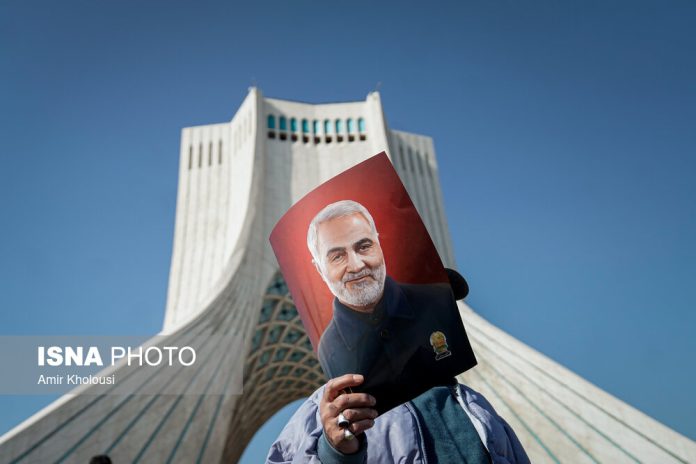
Hesameddin Ashena, addressing Jalili, said, “Your vulnerability and your reliance on delusional analyses regarding your own and the enemy’s capabilities combined with the adversary’s advanced technologies laid the groundwork for the assassination of General Soleimani”.

Ashena also dismissed Jalili’s claim that it was the “strategic patience” of the Rouhani administration that led to the martyrdom of General Soleimani.

The former presidential advisor also told Jalili, “General Soleimani knew your weaknesses in analytical, managerial, and operational levels better than anyone else”.

Following the US withdrawal from the Iran nuclear deal in 2018, then Iranian president Hassan Rouhani urged the adoption of strategic patience.

He however reduced Iran’s commitments under the nuclear deal known as JCPOA but stopped short of ditching the treaty.

Jalili was a staunch opponent of the 2015 nuclear deal from the very beginning.

His critics however dismiss his claims that the Rouhani administration projected weakness in the face of Trump’s pullout from the JCPOA.

They say it was during Jalili’s tenure as the secretary of Iran’s Supreme National Security Council that Iranian nuclear scientists were assassinated inside Iran.

Iranian Nano kit makes rapid detection of colon cancer easy

colon cancer

Zist Tashkhis Sanjeh Company has produced and launched these diagnostic kits, enabling quick identification of the prevalent cancer type. To date, around 600,000 individuals have utilized these kits as part of a nationwide screening program, and usage thereof is expected to increase significantly.

According to the World Health Organization, the incidence of reported cancers in developing countries has risen dramatically, from 15% in 1970 to a projected 70% by 2030. In Iran alone, approximately 12,000 new cases of colon cancer are diagnosed annually.

The Iranian Ministry of Health recommends annual screenings for individuals over 50 and those with a family history of colon cancer.

Traditionally, colonoscopy has been the standard method for detecting colon cancer; however, its invasive nature poses challenges for many patients.

The newly developed rapid test kits offer a non-invasive alternative that is both cost-effective and efficient. Unlike previous reliance on imported kits, which faced difficulties due to sanctions, these locally produced kits boast over 90% accuracy and are designed for easy use without the need for specialized laboratory equipment.

The rapid tests provide results within 10 to 20 minutes, making them accessible even in remote areas.

Early detection is crucial as colon cancer often shows no symptoms in its initial stages. By facilitating early diagnosis, these kits can significantly reduce treatment costs and improve the outcome for patients.

As Iran continues to enhance its healthcare capabilities, this innovative diagnostic tool represents a vital step forward in effectively combating colon cancer.

Biden notifies US Congress of proposed $8bn arms package to Israel: Report

Gaza War

The State Department presented the agreement as a measure to “support Israel’s long-term security by resupplying stocks of critical munitions and air defense capabilities”, Axios reported, citing a source familiar with the matter.

“The President has made clear Israel has a right to defend its citizens, consistent with international law and international humanitarian law, and to deter aggression from Iran and its proxy organizations. We will continue to provide the capabilities necessary for Israel’s defense,” a US official was quoted in the report.

It comes as President Joe Biden approaches the final days of his term before the Jan. 20 inauguration of Donald Trump.

The proposed arms sale, pending congressional approval, includes AIM-120C-8 AMRAAM air-to-air missiles for fighter jets, 155mm artillery shells, small diameter bombs, 500-pound warheads, bomb fuzes and other related equipment, the report added.

The sale will reportedly see munitions delivered from current US stocks, while the majority will take one or more years to be produced and delivered.

The US faces criticism for providing military aid to Israel, as more than 45,650 Palestinians, mostly women and children, have been killed in the Gaza Strip since an attack by Hamas on Oct. 7, 2023.

Nearly 1,200 people were killed in the cross-border attack led by the Palestinian group, according to Israeli figures.

Several human rights groups, former State Department officials and Democratic lawmakers have urged the Biden administration to halt arms transfers to Israel, citing violations of US laws, including the Leahy Law, as well as international laws and human rights. Israel denies these allegations.

The Leahy Law, named after former Sen. Patrick Leahy, requires the US to withhold military assistance from foreign military or law enforcement units if there is credible evidence of human rights violations.

Biden halted shipments of 1,800 2,000-pound bombs and 1,700 500-pound bombs to Israel in May because of its offensive on the southern Gaza city of Rafah, citing civilian casualties in the enclave as a consequence of the bombs. In July, he decided to move ahead with the shipment of 500-pound bombs to Israel after a two-month pause.

The flow of other military equipment to Israel continued, however, including $20 billion in fighter jets and other military supplies that were approved by the State Department in August.

The US, which provides $3.8 billion in annual security assistance to Israel, is by far the biggest supplier of arms to Tel Aviv, with more than 70% of Israel’s arms imports coming from the US, according to the Stockholm International Peace Research Institute.

US-made weapons have been documented in several Israeli strikes on Gaza that resulted in civilian casualties, although American authorities have declined to confirm the fact.

A State Department report in May said it is “reasonable to assess” that Israel used US-made weapons in ways that are inconsistent with international humanitarian law. The report stopped short of reaching a definitive conclusion, adding it does not have “complete information”.

US says China may have stopped Russia from using nuclear weapons

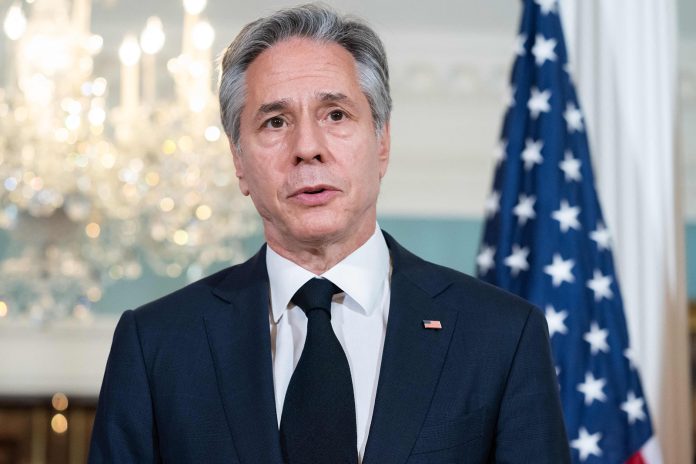
Antony Blinken

Beijing has emerged as Moscow’s leading ally and financial backer since the full-scale invasion of February 2022, though China has denied accusations of supporting Russia’s military efforts.

China may have exerted its influence over Russia to intervene when Putin was considering nuclear escalation, Blinken told the FT.

“We have reason to believe that China engaged Russia and said: ‘Don’t go there,'” he added.

Blinken said the US had been “very concerned” because Putin appeared to be considering nuclear weapons.

“Even if the probability went from 5 to 15%, when it comes to nuclear weapons, nothing is more serious.”

Blinken also claimed that China may have intervened in a similar manner after the US warned Beijing that Putin was planning to launch a nuclear weapon into space.

Fear of escalating hostilities with nuclear-armed Russia has been a driving factor behind the current US administration’s policy toward Ukraine. Under President Joe Biden, the White House delayed deliveries of certain weapons and withheld permission for Kyiv to launch deep strikes within Russian territory, citing Putin’s “red lines”.

Putin began a new round of nuclear saber-rattling in late November after Biden allowed Ukraine to attack some Russian targets with US-made long-range weapons. Putin revised Russia’s nuclear doctrine, expanding the criteria under which the country can launch a nuclear strike.

Despite these steps, US intelligence sources have stated that the risk of a Russian nuclear strike has not increased and remains unlikely.

Blinken defended Biden’s record on Russia and Ukraine, noting that Putin suffered a “strategic defeat” and that NATO has grown stronger.

Biden’s term ends later this month when US President-elect Donald Trump takes office on Jan. 20. Republican Senator Marco Rubio will replace Blinken as secretary of state.

Former Iranian minister calls for reconsidering decision regarding FATF

FATF

Yahya Ale Es-hagh told ILNA News Agency that Iran’s leader has given authorities the go-ahead to reconsider Iran’s policy toward FATF and this has been necessitated by economic realities of the current period.

The former minister of commerce in Iran’s sixth government also spoke about the potential impact of accepting the FATF regulations on Iran’s economy.

He noted that the issue had previously been examined by various state bodies, including elites and the Expediency Council, which ultimately rejected it. However, Ale Es-hagh emphasized that the current economic conditions differ significantly from those at that time.

He highlighted the necessity for a serious reconsideration of the FATF issue, stating that recent economic realities demand a new perspective. Ale Es-hagh expressed hope that decision-makers would thoroughly evaluate the implications of FATF acceptance, considering national interests and global conditions in their deliberations.

When asked if ratifying FATF would resolve economic issues, Ale Es-hagh affirmed that prompt decisions are essential, as the matter has lingered for too long.

His comments reflect a growing feeling among some Iranian officials that engaging with international financial standards through FATF could potentially alleviate economic challenges and enhance transparency in financial transactions, ultimately benefiting the nation amidst ongoing sanctions and economic pressures faced by Iran.

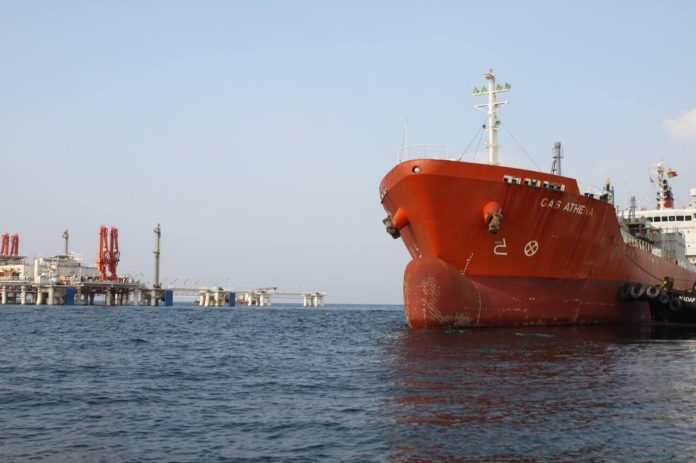
First private oil dock in Iran’s South Pars commences operations

Iran oil dock

According to IRNA news agency, “The largest ship designed for transporting warm and pressurized liquefied gas docked and loaded in the shortest possible time with the highest standards and safety at the 100,000-ton Parsa Fidar Paydar dock in South Pars.”

The operational commencement of Iran’s first private oil dock was supervised by representatives from the Customs Administration of the Islamic Republic of Iran, the Ports and Maritime Organization, the National Iranian Gas Company, and a special representative of the minister of oil for export oversight in Kangan.

The Parsa Fidar Paydar dock received its operational license two years after construction.

The official opening of the dock is expected to increase the export capacity of warm liquefied gas by up to 50% and annually handle up to three million tons of cold gas at the dolphin model dock.