Friday, December 26, 2025
Home Blog Page 555

At least 74 children killed in Gaza in 2025 first week: UNICEF

Gaza War

“For the children of Gaza, the new year has brought more death and suffering from attacks, deprivation, and increasing exposure to the cold,” Executive Director Catherine Russell said in a statement, adding, “A cease-fire is long overdue.”

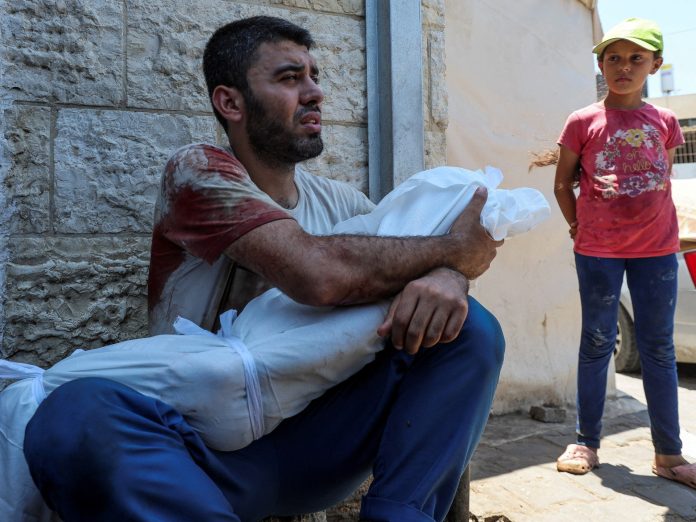
Highlighting the worsening humanitarian crisis in Gaza, the agency noted that more than 1 million children are living in makeshift tents, with many families displaced for months.

“Since December 26, eight infants and newborns have reportedly died from hypothermia – a major threat to young children who are unable to regulate their body temperature,” it said.

Noting that the destruction of civilian infrastructure and overwhelmed hospitals add to the crisis, UNICEF added the shutting down of the Kamal Adwan Hospital, the only pediatric hospital in northern Gaza, after an Israeli raid last month.

“UNICEF has long warned that inadequate shelter, lack of access to nutrition and healthcare, the dire sanitary situation, and now the winter weather put the lives of all children in Gaza at risk,” stated Russell.

UNICEF urged an end to attacks on civilians and allowing life-saving aid to reach those in need. It further emphasized the importance of the delivery of aid and supplies for the survival of children in Gaza.

Calling for immediate action to improve security so aid workers can safely deliver supplies to families, Russell stressed: “Families need an end to this unimaginable suffering and heartbreak.”

Intl. charity sounds alarm over lack of fuel, warns patients in Gaza hospitals ‘at risk’

Israel Army Gaza Hospital

Nasser Hospital, Al-Aqsa Martyrs Hospital and the European Hospital in Gaza are on the verge of closure due to the lack of fuel, MSF warned in a statement.

The lack of fuel “could be catastrophic for those who need machines to stay alive”, MSF said.

Health officials in Gaza have been pleading for the entry of much-needed fuel required for electricity to keep hospitals operational.

The group said its teams are transferring fuel to Nasser Hospital and to Al-Aqsa Hospital, serving only as a temporary solution for the next 36 to 48 hours.

“MSF is alarmed by this catastrophic situation, which could have tragic and serious consequences as the situation is unlikely to improve,” it added.

“We call on all parties to facilitate the entry of fuel into Gaza and to ensure its safe delivery to medical facilities.”

Israeli soldiers have repeatedly raided hospitals in Gaza. Since October 2023, Israel has killed over 1,150 healthcare workers and detained 300, according to the Palestinian health ministry.

The Israeli army has continued a genocidal war on Gaza that has killed over 45,900 victims, mostly women and children, since Oct. last year despite a United Nations Security Council resolution calling for an immediate cease-fire.

In November 2024, the International Criminal Court issued arrest warrants for Netanyahu and his former Defense Minister Yoav Gallant for war crimes and crimes against humanity in Gaza.

Israel also faces a genocide case at the International Court of Justice for its war on the enclave.

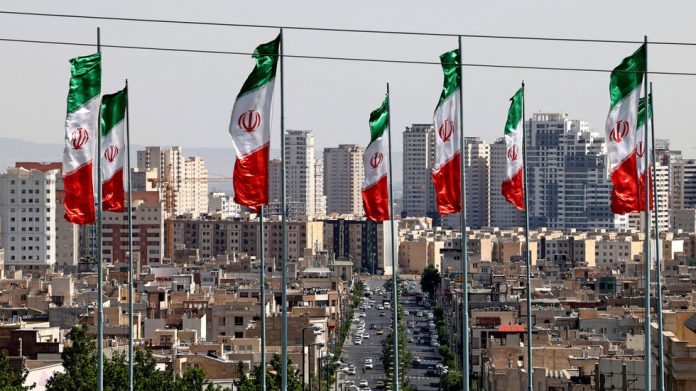
Concerns grow over environmental impact of relocating Iran’s capital to Makran

Iran Flag

The newspaper has compared the decision to other significant infrastructural projects in the country that have caused long-term environmental issues, such as the Gotvand Dam, the Bushehr Nuclear Power Plant, and the Urmia Lake Highway.

A project, initiated in 1980 within Urmia Lake and later expanded to the Urmia Lake Highway, is highlighted as a prime example of environmental neglect in Iran’s development projects, which according to experts, contributed significantly to the drying up of the lake by disrupting its ecosystem.

Similarly, the Gotvand Dam, completed in 2012, faced criticism for its location on salt beds, which increased salinity in the Karun River and Khuzestan Plain. Despite previous studies warning against this location, the project continued due to economic justifications.

The article also cites the Bushehr Nuclear Power Plant’s site selection before the Islamic Revolution, influenced by the Shah’s preference and consultations with a Dutch military advisor, leading to potential seismic and tsunami risks that were not initially considered.

The newspaper warns that such unexamined decisions should not be repeated for selecting the location of the new capital, emphasizing the need for comprehensive environmental and risk management assessments to prevent future ecological crises.

The spokesperson for the Iranian government has recently announced that the capital of Iran will be relocated to the Makran coast in the southeastern part of the country due to a lack of resources, including water, as well as various other problems such as air pollution and the high population of Tehran.

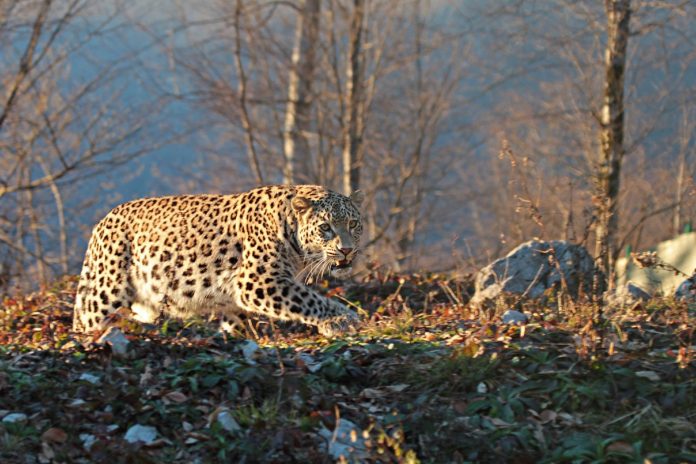
Leopard spotted roaming with cubs in Iran’s Savadkuh

Persian Leopard

In the photos, the leopards are seen feeding on the carcass of a dog.

About four years ago, the same mother leopard was filmed with her three cubs in the same area, feeding on a wild goat, by ranger Ali Akbar Imani.

Officials say these images highlight the vibrancy of wildlife and the importance of protecting natural habitats in this region.

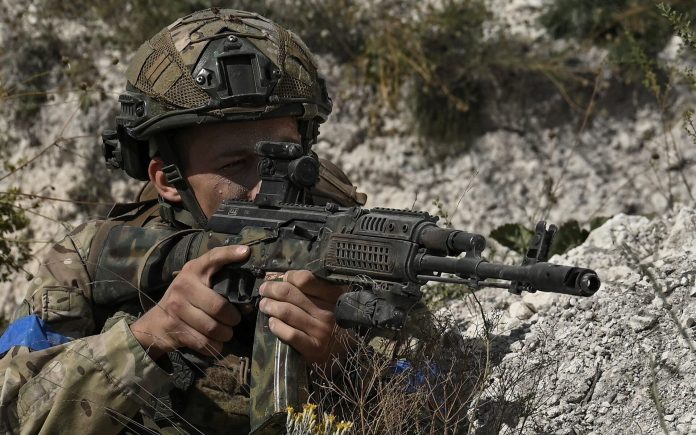
Trump’s aide sets 100-day timeline to end Ukraine war

Russia Ukraine War

“I know I’m on the clock,” retired US Army lieutenant general Keith Kellogg told Fox News on Wednesday.

“I would like to set a goal on a personal level, on a professional level. I would say let’s set it at 100 days and move your way back.”

Kellogg stressed that Trump remains committed to restarting negotiations between Russian President Vladimir Putin and Ukrainian leader Volodymyr Zelensky to find a settlement to the fighting, which has claimed “enormous” casualties on both sides.

“He’s not trying to give something to Putin or to the Russians. He’s actually trying to save Ukraine and save their sovereignty. And he’s going to make sure that it’s equitable and that it’s fair,” Kellogg added.

He argued that “the biggest mistake President [Joe] Biden made is the fact that he’s never engaged in any conversations with Putin.”

“He hasn’t talked to him in over two years,” Kellogg said, adding that Trump “does talk to adversaries and allies alike.”

Trump has repeatedly vowed to quickly mediate a successful peace deal, but offered little specifics. According to media reports, his team is considering freezing the conflict along the current front line.

Negotiations between Moscow and Kiev broke down in spring 2022, with both sides accusing each other of making unrealistic demands. Putin stated that for any settlement to work, Ukraine must abandon its plans to join NATO and renounce its claims on Crimea and four other former Ukrainian territories that have joined Russia.

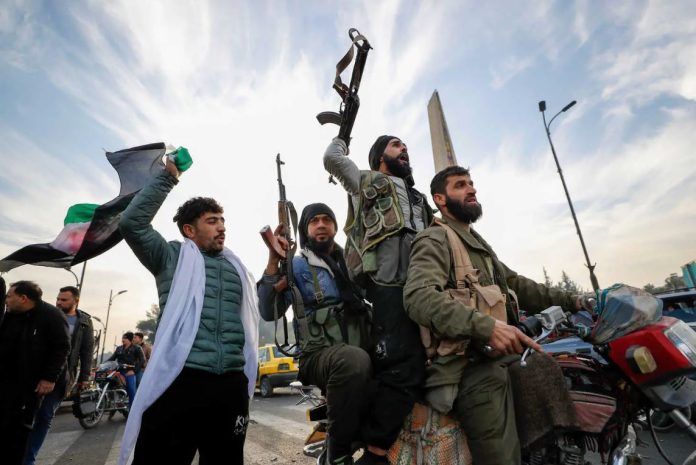
Food prices in Syria falling since collapse of al-Assad: Report

Many food items are now half their pre-revolution prices, whilst some goods that were previously unavailable – such as higher quality meat and Jordanian lemons – are back on market stalls.

According to shop owners, deflation has been a result of the reduction in transport costs after the removal of thousands of military checkpoints across the country.

Military personnel would routinely demand payment for safe passage through checkpoints, significantly increasing the cost of getting food from farms to the market.

“Between Damascus and the agricultural areas in Daraa there were hundreds of checkpoints. It was the same for Homs,” said Abu Jamil, 47, a greengrocer at the Souk al-Hal in central Damascus.

“They were all controlled by the Fourth Division,” he added, referring to the army unit commanded by Bashar al-Assad’s notoriously rapacious brother, Maher al-Assad.

During the war, with state revenues in tatters, the Fourth Division asserted control over many areas of the economy in a bid to extract rent from any available opportunity.

But with the checkpoints gone, the prices for many goods has plummeted.

Potatoes are less than half their former price, falling from SYP 9,000 per kilogram ($0.75) to SYP 4,000 ($0.33).

Bananas from Lebanon have fallen by a third, whilst olive oil from the northern province of Idlib is just a quarter of the price Damascenes were paying in November last year.

According to the FX tracking website, black market dollar rates for the Syrian lira surged to 22,000 around the time of Assad’s downfall, but have since stabilised at approximately 12,000 this week.

Other popular consumables such as cigarettes, where wholesale was monopolised by the Fourth Division, have also fallen dramatically. A pack of 20 cigarettes that cost SYP 13,000 just a month ago, now sells for SYP 7,000.

Experts have pointed to two other factors easing the prices of foodstuffs. The sustained decrease in the exchange rate of the Syrian lira has allowed imports to become less expensive.

Meanwhile, the collapse of the Assad government’s armed forces has increased the amount of available food for sale on domestic markets.

“The basic goods that used to be prioritised for the 170,000 soldiers are now diverted into the market and this in turn has increased the supply,” said Mohamad Ahmad, an economist at Karam Shaar Advisory.

“The decrease in prices could be sustainable,” added Ahmad, “especially if other factors remain stable such as customs and taxes, and certainly the stability of the exchange rate.”

Whilst the falling cost of putting meat and vegetables on the table certainly helps make daily life more affordable for many Syrians, there is a risk that new government policies could make bread prices double in the near future.

In the last week, the interim minister for internal trade and consumer protection, Maher Khalil al-Hasan, announced a controversial plan to scrap the bread subsidy in Syria within the next two months.

Bread had been one of the few goods which the former government continued to subsidise throughout the conflict.

Meanwhile, the news on food prices is also tempered by the wider economic malaise that poses serious challenges for Syrians in the immediate future.

Syria’s economy collapsed during the conflict, contracting by 84 percent according to World Bank data, pushing nearly 90 percent of Syrians into poverty.

Economic recovery is hampered by far-reaching sanctions imposed by the West on individuals and institutions associated with the former government and entities designated as a terrorist organisation, notably Hay’at Tahrir al-Sham, which led the offensive against Assad.

In an interview with Reuters, Hasan warned that Syria faces a “catastrophe” if sanctions are not lifted, as they prevent the import of vital goods such as fuel, wheat, and other essentials.

The most comprehensive of these sanctions regimes is the Caesar Syria Civilian Protection Act, passed by the US Congress in 2019. It severely restricts Syria’s ability to import or export nearly all goods.

The Joe Biden administration has announced some sanctions waivers for activities crucial to providing humanitarian assistance and supporting economic recovery, such as energy provision.

However, with many sanctions still in effect, the full impact of these waivers remains to be seen.

UN warns of ‘very real threats’ to Syria’s sovereignty after Assad fall

Syria War

“Syria seeks to chart a new course following the fall of the former regime just one month ago. Decisions taken now will determine the future for a long time to come. There are great opportunities and real dangers,” UN Special Envoy for Syria Geir Pedersen told the Security Council.

Pedersen expressed the UN’s readiness to provide support to Syria to “get the next phase right.”

Highlighting the new government’s meetings with a “very broad range” of representatives and groups in Syria, he urged the administration to “extend the hand of reassurances and trust to all communities in Syria, fostering the active engagement of all in building Syria.”

“There are also very real threats to Syria’s sovereignty, unity and territorial integrity,” Pedersen added, warning about continued attacks by the PKK/YPG and its affiliate SDF.

“The northeast, as well as part of Aleppo city, remain under the control of SDF and YPG,” he said.

“I continue to call for and support the further development of all channels of dialog, and to urge all parties to find a way forward without military confrontation,” he added.

Pedersen expressed concern over “continued Israeli military presence and activity, including beyond the area of separation, in violation of the 1974 disengagement agreement.”

Calling on the Israeli army to end restrictions on freedom of movement, the UN envoy stressed that “attacks on Syria’s sovereignty and territorial integrity must stop.”

He also demanded Israel to end attacks on civilians and warned that the attacks “further jeopardize the prospects for an orderly political transition.”

“I welcome the recent issuance of a new temporary general license by the United States government, but much more significant work in fully addressing sanctions and designations will inevitably be necessary,” he said.

Pedersen noted Security Council Resolution 2254, which encourages a cease-fire and political settlement, can no longer “be applied in the literal manner” as he stated that the Assad government will not be included in any future talks.

“Clearly, there is a need for a new approach, and months of thinking on many fronts,” he added.

The collapse of the Syrian government on Dec. 8 coincided with an escalation of Israeli military attacks on the country.

The Israeli army began destroying military infrastructure and facilities left by the Syrian army and expanded its occupation of the Syrian Golan Heights.

Israeli forces, which entered the buffer zone around the Golan Heights, carried the occupation further and penetrated as far as 25 kilometers (15.53 miles) from Damascus.

Evidence shows US seeking to expand presence in Iraq: Iran’s Leader

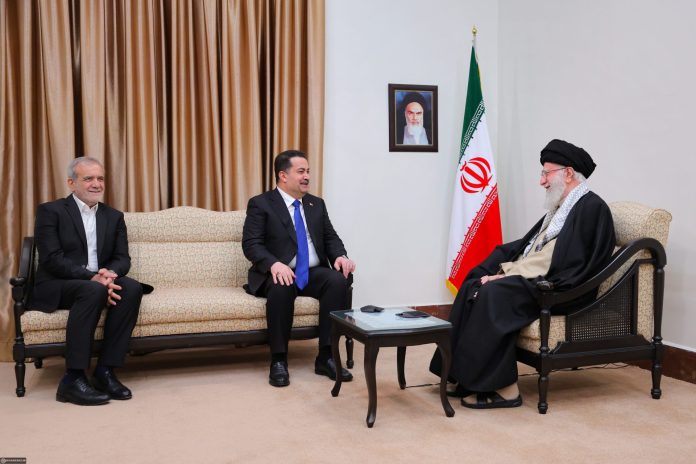
During the meeting, Ayatollah Khamenei commended al-Sudani for his commendable efforts in fostering development and ensuring security in Iraq.

“The more developed and secure Iraq is, the more it will also benefit the Islamic Republic of Iran,” he stated.

Ayatollah Khamenei emphasized the importance of the good relationship between the government and the people of Iraq, highlighting the necessity of unity and cohesion among the various sects and ethnicities within the country.

Addressing Al-Sudani, he stated, “As you have pointed out, Hashd al-Shaabi is a crucial component of power in Iraq, and more efforts should be made to preserve it and to strengthen it even further.”

The Leader of the Islamic Revolution described the presence of US occupying forces in Iraq as illegal and contrary to the interests of both the people and the government of Iraq.

He underscored the presence of clear indications and evidence pointing to America’s efforts to solidify and expand its presence and occupation in Iraq, which he asserted, must be firmly opposed.

Ayatollah Khamenei also pointed to the latest developments in the region, particularly regarding the situation in Syria.

“The role of foreign governments in these matters is completely evident,” he remarked.

During this meeting, which also included the participation of Iranian President Masoud Pezeshkian, al-Sudani voiced his satisfaction with the discussions held in Tehran. He expressed optimism that the negotiations and agreements reached would further expand and deepen the bilateral relations between the two countries.

The Iraqi prime minister identified “the people,” “Hashd al-Shaabi,” “national unity and cohesion,” and “Marja’iyyah [religious authority]” as components of power in Iraq.

While referring to the aggressions of the Zionist regime in Gaza and Lebanon, he emphasized that Iraq’s fundamental position has been to support the people of Gaza and Lebanon and the Resistance in the region.

Al-Sudani highlighted the situation in Syria and the influence of foreign powers on these events, reiterating Iraq’s consistent stance of supporting the will of the Syrian people while upholding the nation’s independence and territorial integrity.

He also underlined the importance of establishing a government that is inclusive of all citizens.

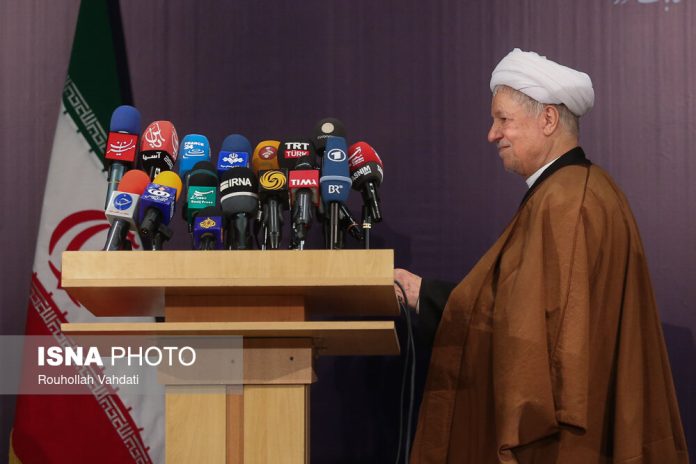
Newspaper criticizes media boycott of former Iranian president Hashemi on his death anniv.

Jomhuri-e Eslami, in an editorial on Thursday, highlighted an “inexplicable silence” and boycott of the significant figure of the Islamic Revolution and Iran.

The publication accused “partisan rightist government media, especially the state IRIB broadcaster”, of attempting to “erase Ayatollah Hashemi’s legacy as if he never existed.”

The newspaper slammed removing Ayatollah Hashemi’s name from streets with “irrelevant” justifications and excluding his name and image from historical and political programs as a “clear historical distortion.”

The daily argued that the move “has devalued other narratives presented by program makers and sacrificed the media authority for vindictiveness.”

A newspaper funded by public revenue, not named in the article, deliberately omitted Ayatollah Hashemi’s name in reports on December events, which the publication labeled as “vindictive and immoral.”

Hashemi Rafsanjani, one of Iran’s most influential political figures, died of a heart attack on January 8, 2017.

He was given the title the “Commander of Construction” for his vast efforts to reconstruct the nation after the Iran-Iraq war, but his policies are not appreciated by princplists in Iran.

Iranian para taekwondo athlete buys father trailer truck, using medals

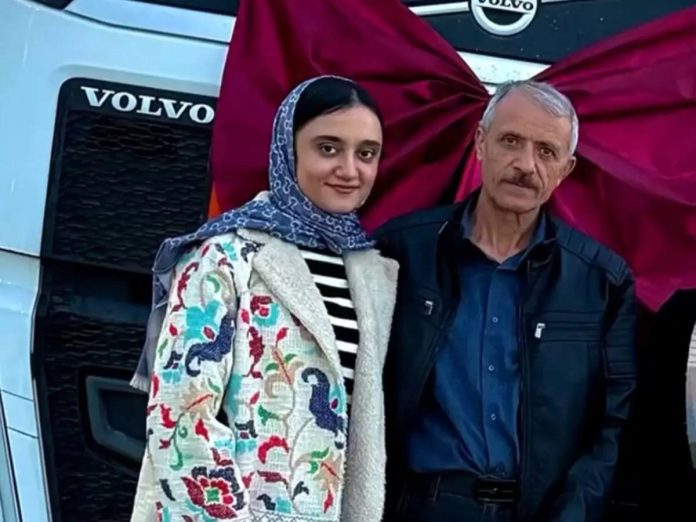
Rahimi who has just turned 16 represented Iran at the 2024 Summer Paralympics, where she achieved a significant milestone by winning a silver medal in the women’s 52 kg weight category.

Now she has bought the trailer truck with the prizes she received in the tournament, thus making her father happy.

Etemadonline earlier interviewed the teenage athlete on this occasion. She told the online news outlet that she chose to spend the money she received for her family.

Asked what she bought for her mother, Rahimi replied, “A gold bracelet”.

She also named Iranian veteran taekwondo athlete Hadi Saei, and Portuguese football legendl Cristiano Ronaldo, as her role-models and said she is a fan of Traktorsazi Football Club in Iran.